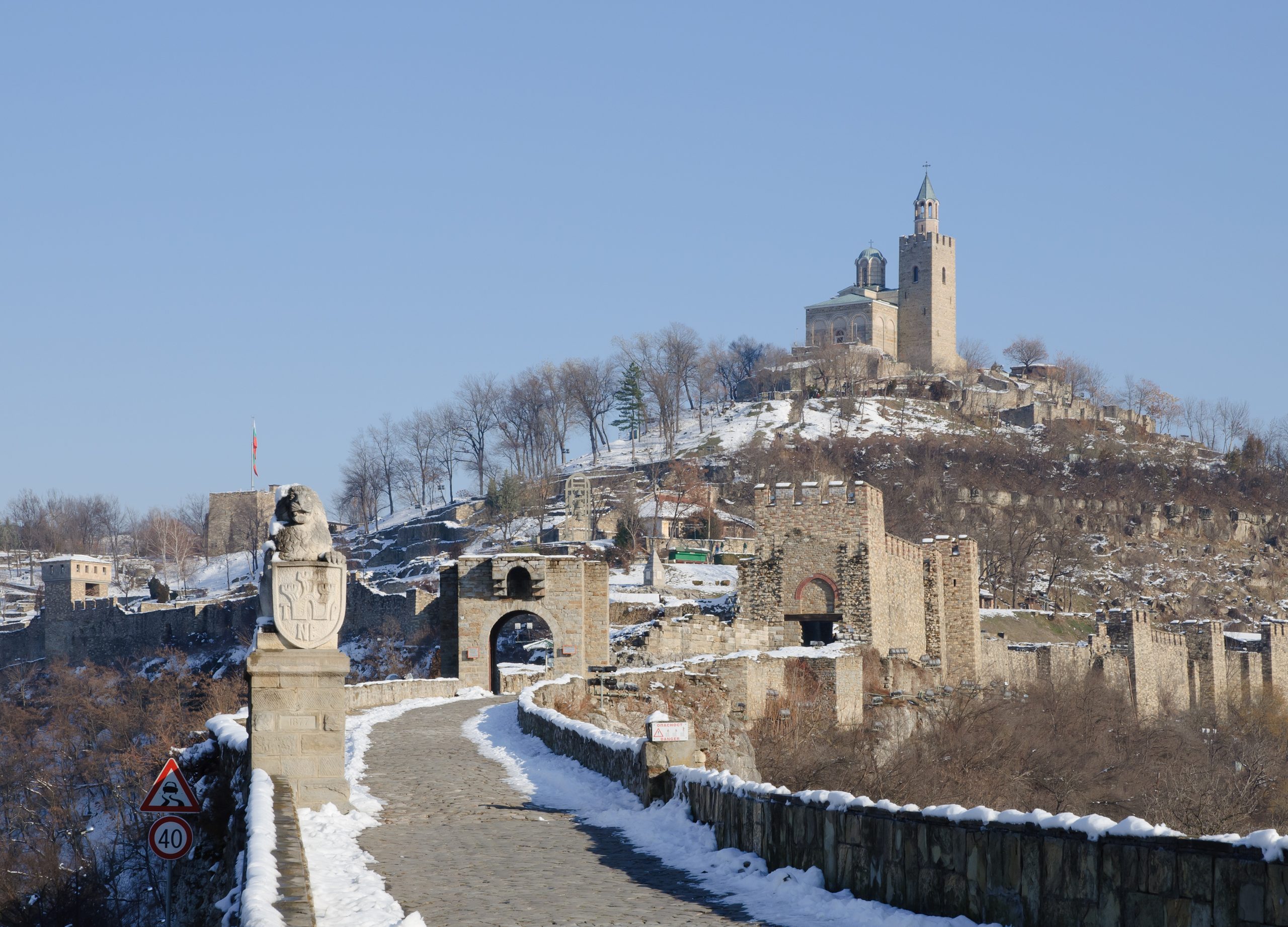
Veliko Tarnovo: My Favourite Things to Do in Bulgaria's Old Capital
Veliko Tarnovo was Bulgaria's capital for more than 200 years, and it still looks the part: old houses stacked up the cliffs of the Yantra gorge and a walled fortress hill sitting in a loop of the river. It's the town I send friends to when they ask for one night away from Sofia. Here's what I'd see, what the tickets cost, how I get there and how I'd spend 24 hours.
Is Veliko Tarnovo worth visiting?
Yes, and after Plovdiv it's my favourite town in Bulgaria. Veliko Tarnovo was the capital of the Second Bulgarian Empire from 1185 until 1393, when the Ottomans took it after a three-month siege, and Bulgaria's medieval history makes far more sense once you've walked its walls. The Yantra river bends through town in tight loops, and the houses of the old town climb the cliffs above it in tiers.
Plovdiv's Old Town has a Roman theatre in the middle of a modern city. Veliko Tarnovo has two fortified hills, a gorge, medieval churches down by the river and a craft street, and you see the lot on foot in a day and a half.
Skip it if you only have a weekend in Sofia. Six hours on a coach for one afternoon on the fortress is a poor swap for a second day in the capital, and the town is at its best in the evening and the early morning, which you only get with a night there.
How to get to Veliko Tarnovo from Sofia
I take the coach. The coach from Sofia to Veliko Tarnovo leaves from Sofia Central Bus Station, beside the railway station north of the centre, and takes about 3 hours. Departure boards and the cards in coach windscreens show the name in Cyrillic, Велико Търново, so it helps to know the shape of the word.
The train is slower, with a change on the way. Trains on the Sofia to Varna line stop at Gorna Oryahovitsa, the junction for Veliko Tarnovo, where you change for the short hop into town. When I take Bulgaria's trains instead, I check the BDZ timetable the night before for the onward train. Veliko Tarnovo's station sits at the foot of the hills, about 25 minutes' walk below the centre, so I take a taxi up with a bag.
| Option | Leaves from | Time | My verdict |
|---|---|---|---|
| Coach | Sofia Central Bus Station | About 3 hours | My pick: direct, with no change |
| Train | Sofia Central Railway Station, change at Gorna Oryahovitsa | Longer than the coach | For train lovers; take a taxi up from the station |
| Car | Sofia, with an e-vignette for the motorways | About 3 hours | Best if you're adding Arbanasi or Buzludzha |
A direct bus from Plovdiv takes about 3 hours, so Veliko Tarnovo is the last stop on a week in Bulgaria: Sofia, then Plovdiv, then here, then the coach home. Coming from Romania, the train from Bucharest takes about 7 hours, via Ruse and Gorna Oryahovitsa.
Once you're here, the old town, Tsarevets and Samovodska Charshiya are all walkable, and I only use a taxi for the stations and Arbanasi. On the local buses you pay the conductor on board.
Tsarevets fortress
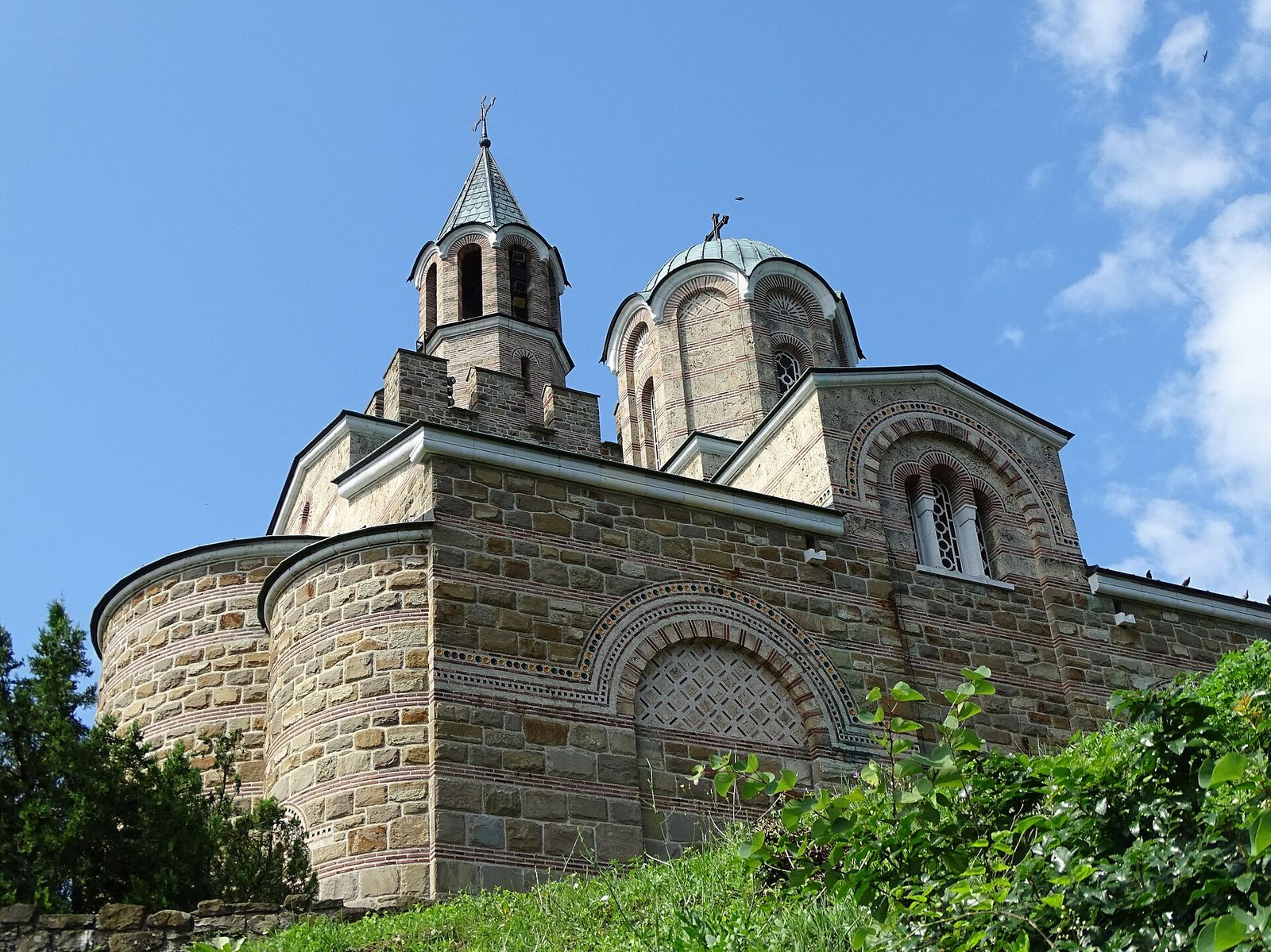
Tsarevets is the reason to come. It was the main fortress of the Second Bulgarian Empire, a steep hill in a bend of the Yantra with walls along the edge, and the tsars' palace and the patriarch's church stood inside them. You come in at the west end, along a narrow neck of rock to the main gate, where a drawbridge once stood, then climb through the foundations of the medieval town towards the cathedral on the summit.
I walk the walls before the summit. Baldwin's Tower stands on the south-east side, a 1930 rebuild on the site of the medieval tower where Baldwin of Flanders, the Latin emperor of Constantinople, died as Tsar Kaloyan's prisoner after his capture in 1205. Execution Rock is the cliff above the Yantra where, the story goes, traitors were thrown into the river. Then I climb to the Patriarchal Cathedral of the Ascension for the view over both hills.
The family ticket covers two parents and up to three children aged 7 to 18, and you can buy Tsarevets tickets online or at the gate. There's no cafe inside the walls, only vending machines below the cathedral, so bring water and, in summer, a hat.
The first church of the Ascension on the summit went up in the 12th century. Today's building is a reconstruction finished in 1981, and its murals were completed in 1985.
The same museum runs Tsarevgrad Tarnov, a multimedia visitor centre about the Second Bulgarian Kingdom, for another €7.67. I'd keep it for a wet afternoon.
The Sound and Light show over Tsarevets
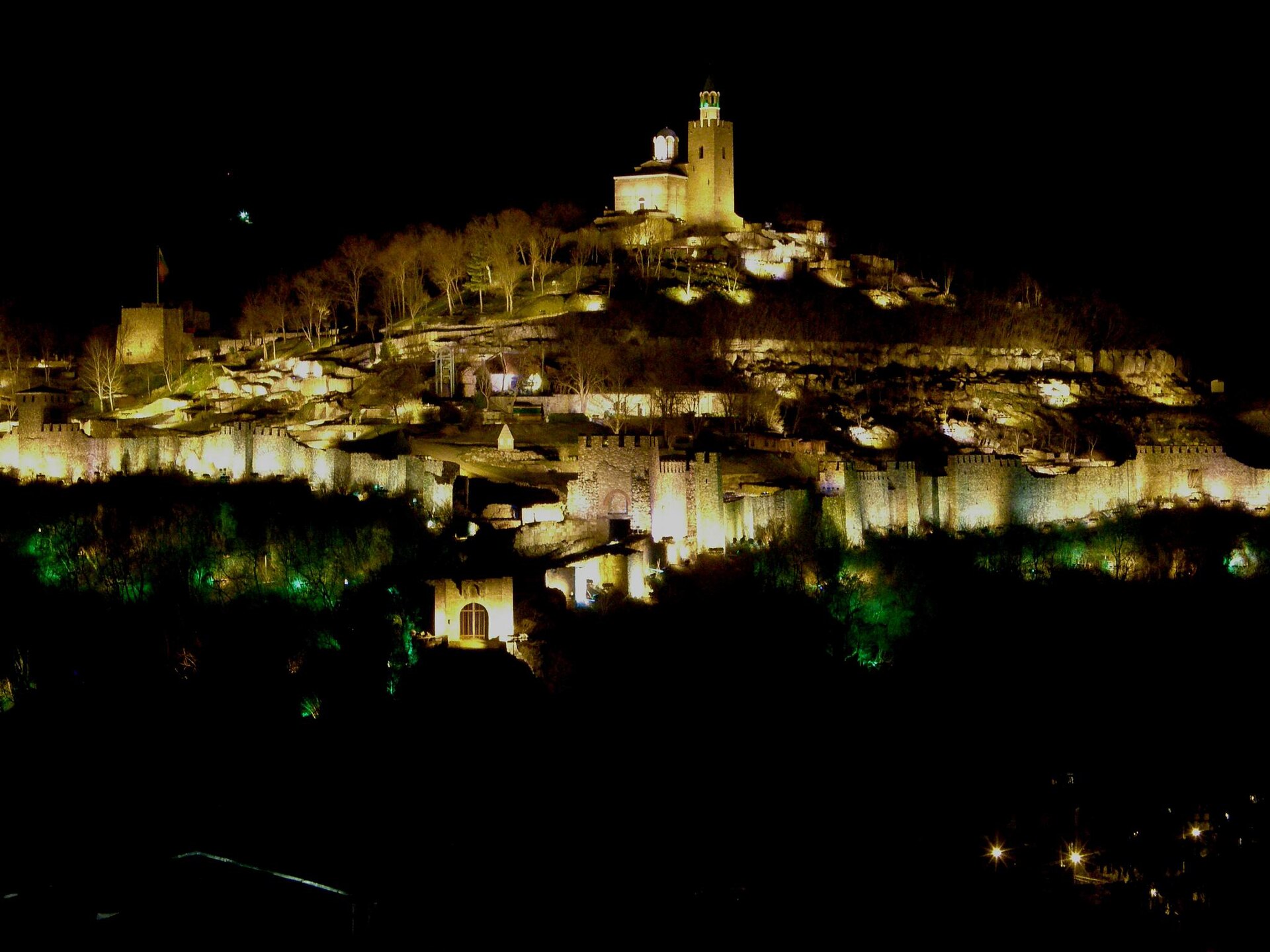
After dark on show nights, Tsarevets turns into a stage. The Sound and Light show (Звук и светлина) has run since 1985: lasers, coloured lights, music and church bells play across the walls, the towers and the cathedral to tell the story of Tarnovo's fall to the Ottomans, and the lit hill is visible from much of the old town. The show doesn't run every night, and some shows are paid for while others are free, so I check the Sound and Light website for the dates before I go.
If it's on during my stay, I build the evening around it: an early dinner, then out onto the street to watch.
Trapezitsa hill
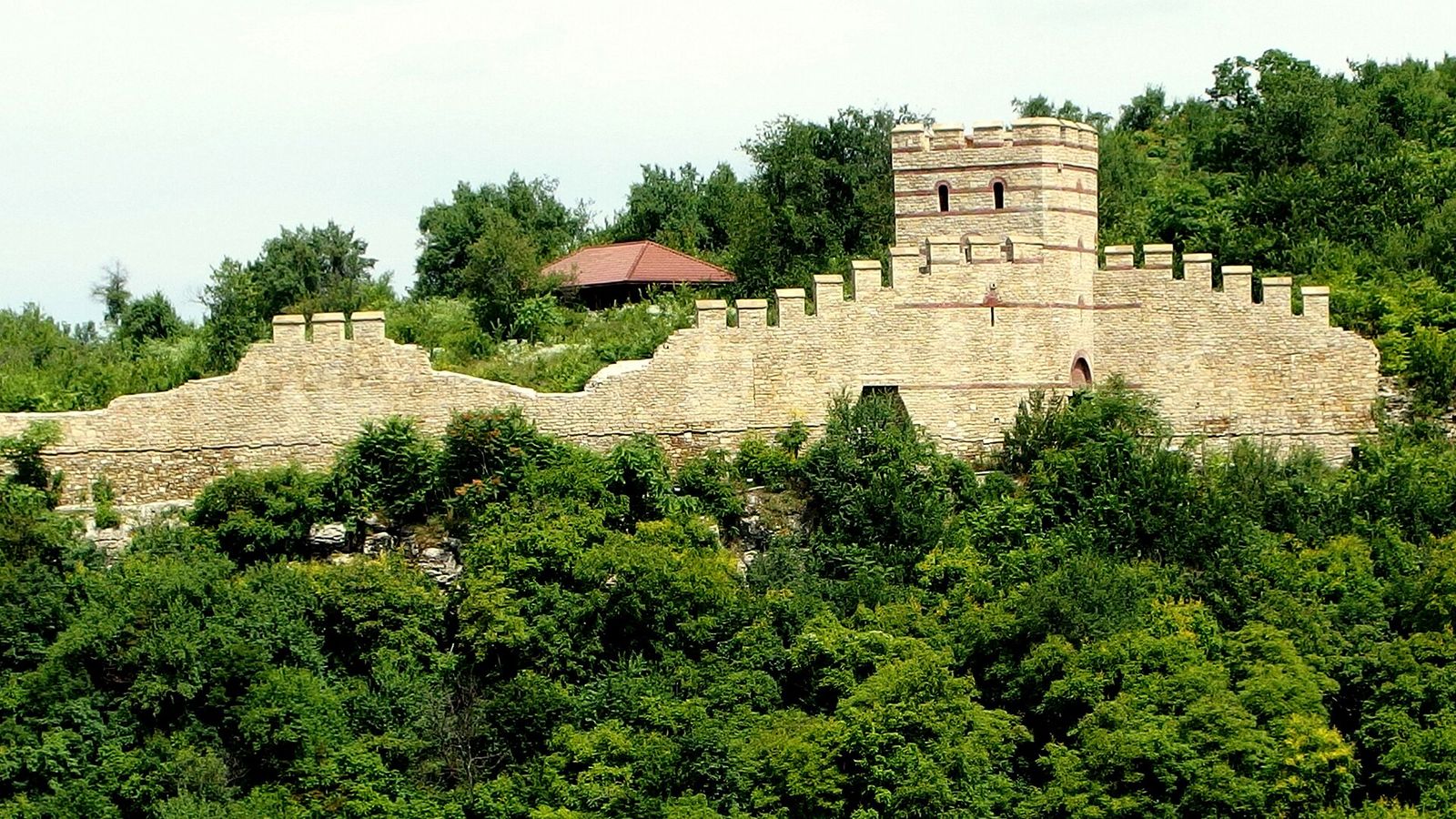
Trapezitsa is the other fortified hill, across a loop of the Yantra from Tsarevets and about 81 metres above the river. In the medieval city it was the second citadel after Tsarevets, and its main entrance on the south-east side was once joined to Tsarevets by a bridge over the river.
Excavations between 1879 and 1884 found the foundations of 17 churches on the hill. New digs from 2008 to 2015 restored the south tower and rebuilt some of the churches.
You can walk up in about 30 minutes from the centre, or ride the funicular from the visitor centre at the foot of the hill. I ride up and walk down. The view is my favourite part: Tsarevets across the river, walls and cathedral together, which you can't see while you're standing on it.
The Church of the Holy Forty Martyrs
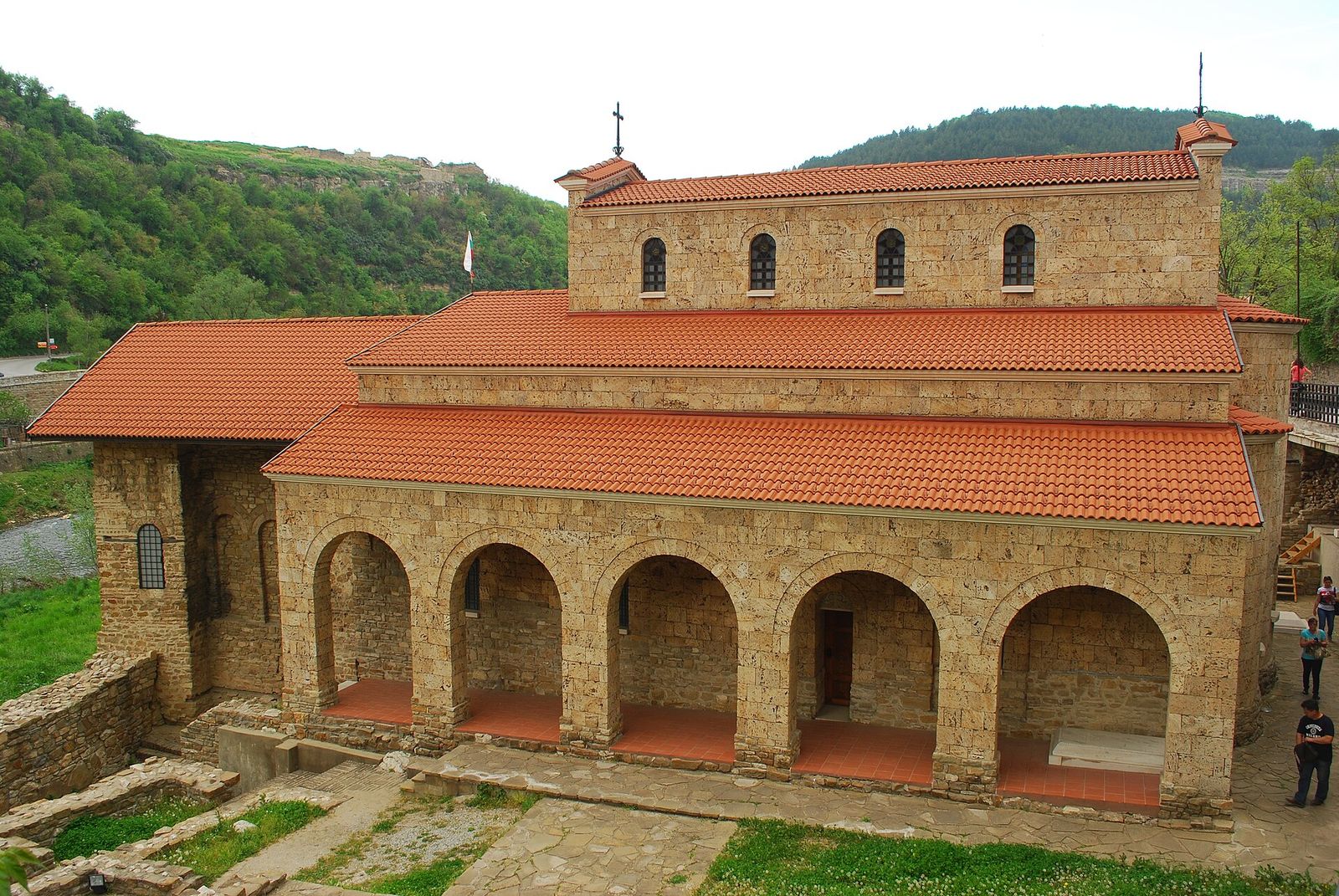
The Church of the Holy Forty Martyrs stands down by the river in the Asenova quarter (Асенова махала), the old district below Tsarevets and Trapezitsa. Tsar Ivan Asen II built it to mark his victory over Theodore Comnenus in 1230, as the main church of the Great Lavra monastery, and a stone column inside carries his own inscription about that battle.
The church costs €5.11, or €7.67 for parents with up to three children. It opens at 9am and closes at 6pm from April to October and 5pm from November to March, with last entry at 4.30pm in winter. I go first thing on my second morning, then cross the river for Trapezitsa.
Gurko Street and the Varosha quarter
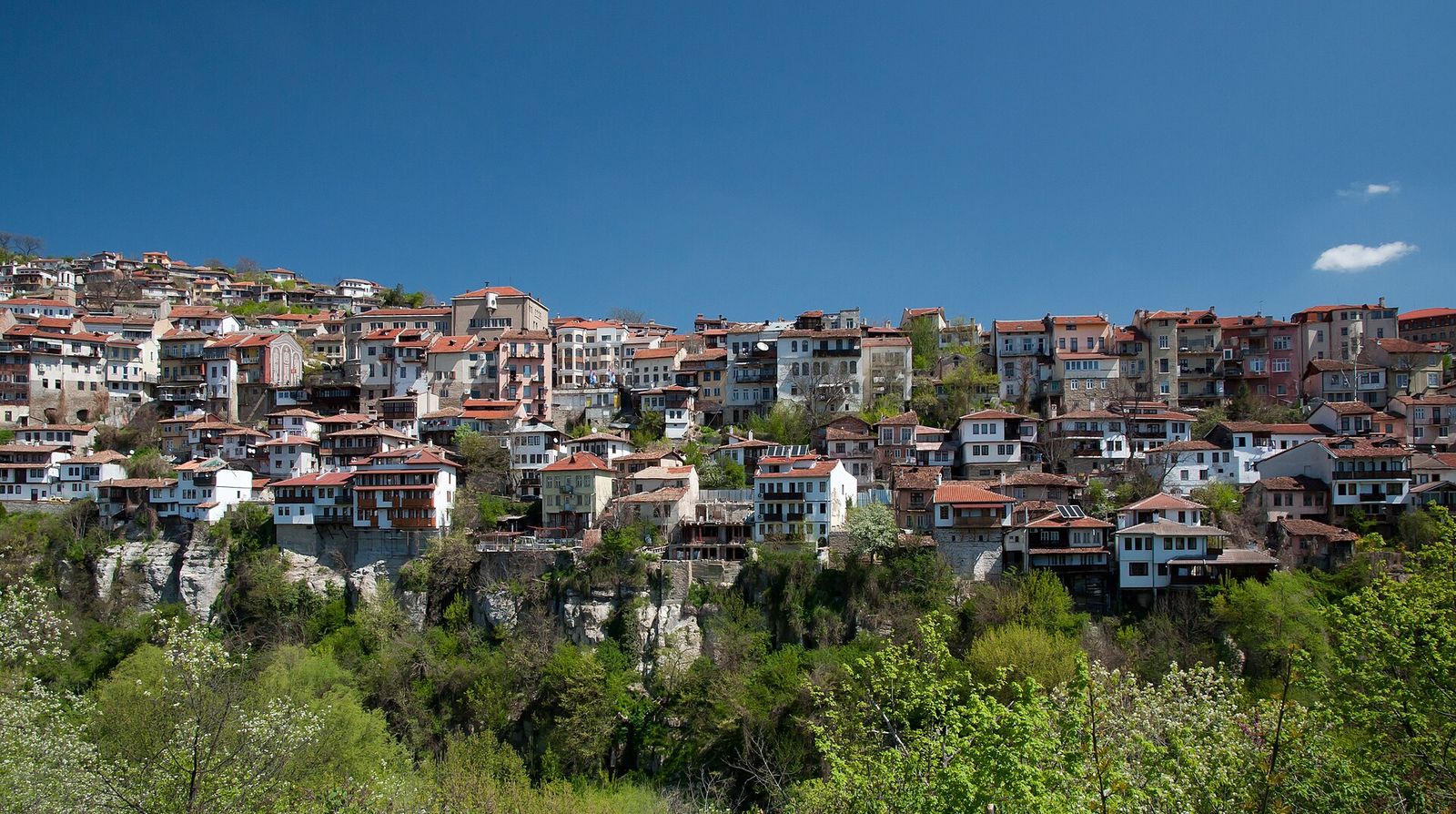
Varosha is the old town of the 18th and 19th centuries, and its houses perch on the very edge of the cliffs above the Yantra. Gurko Street is the lane I walk first: cobbles, overhanging upper floors and gaps between the houses where the gorge opens up below you.
The Cathedral of the Nativity of the Virgin went up between 1842 and 1848. St Nikolay dates from 1836, and the Vladishki bridge over the river from 1774. I give each of them about 10 minutes on the way through.
Samovodska Charshiya, the craft street
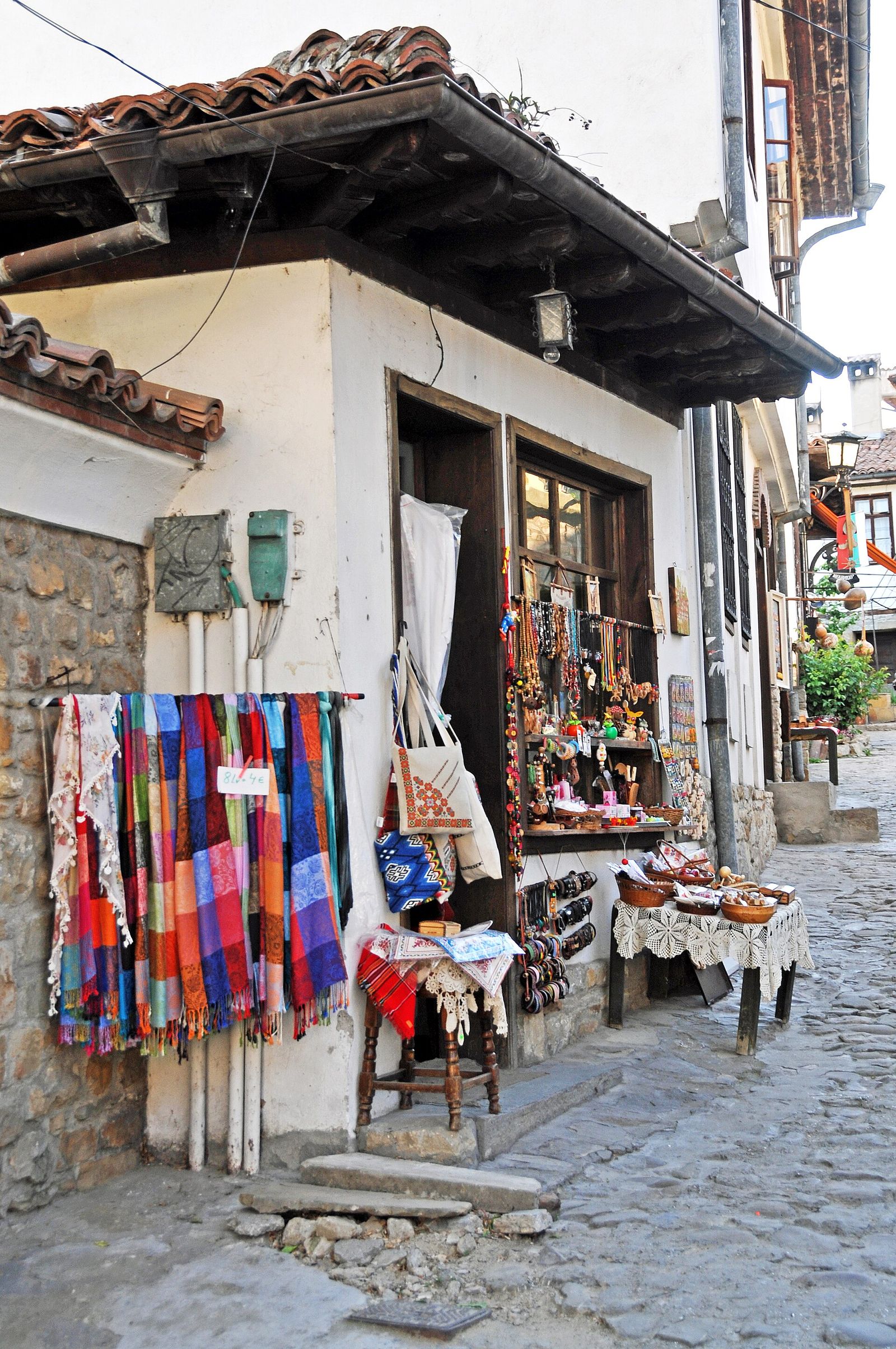
Samovodska Charshiya (Самоводска чаршия) is the old market street of the craftsmen in the old town: cobbles, low white houses and a workshop behind almost every door. The shops sell pottery, woven scarves and embroidery, and one potter here still works in a medieval technique called sgraffito, scratching the pattern through a layer of coloured clay.
This is where I buy presents, because you see traditional Bulgarian crafts made in the room you're standing in. I give it an hour on my second morning.
The Asenevtsi Monument and the Yantra bend
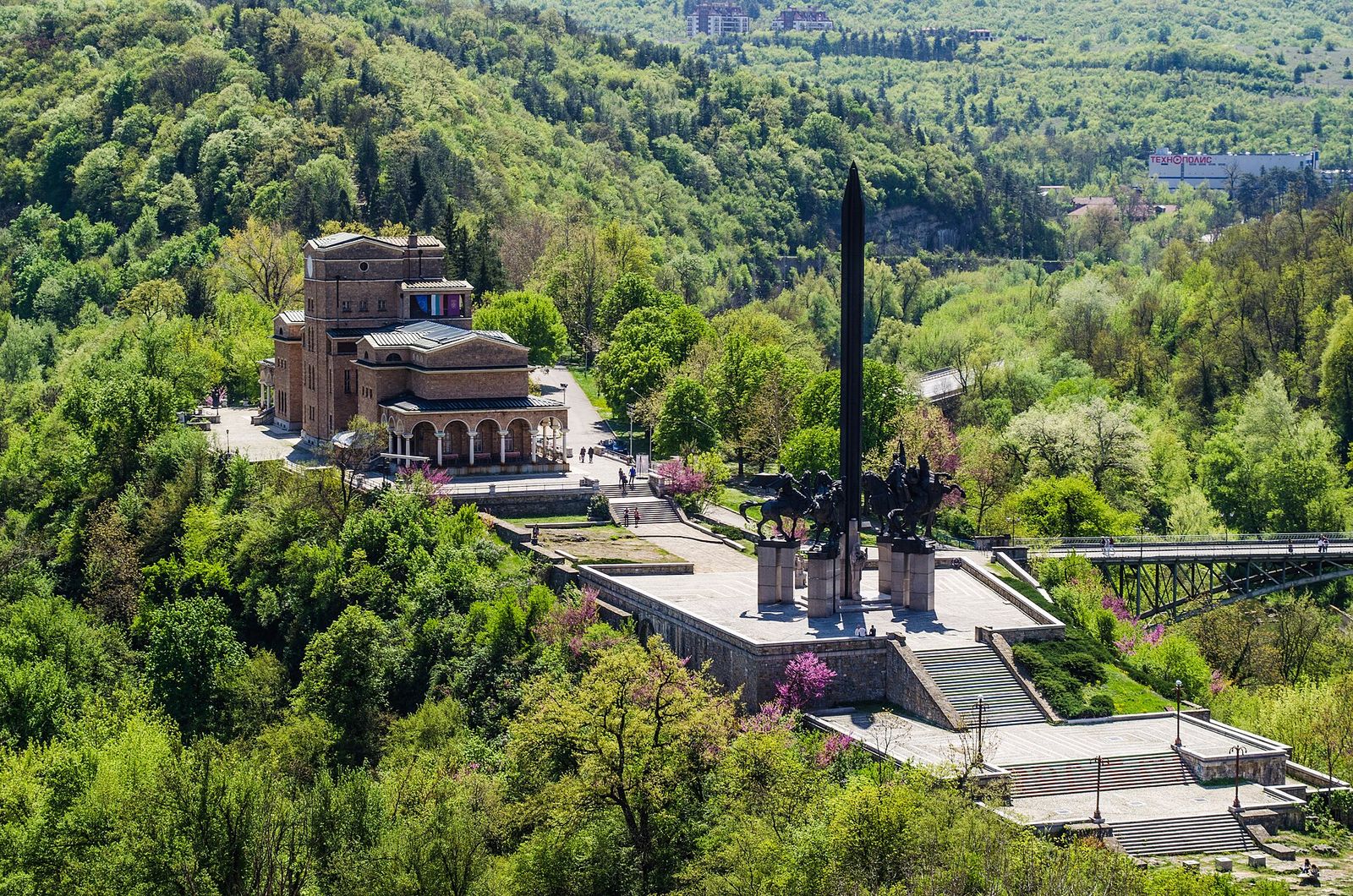
The Asenevtsi Monument stands on a terrace inside the tightest bend of the Yantra: four bronze tsars of the Asen dynasty on horseback around a tall central spire shaped like a sword. It went up in 1985 for the 800th anniversary of the 1185 rising, and the Boris Denev art gallery beside it occupies a building from 1931.
For the best view, walk along Stefan Stambolov Street in the old town and look down over the bend: the monument, the gallery, the river curling round them and the wooded hills behind. I go at dusk, between the fortress and dinner.
Arbanasi, the merchants' village above town
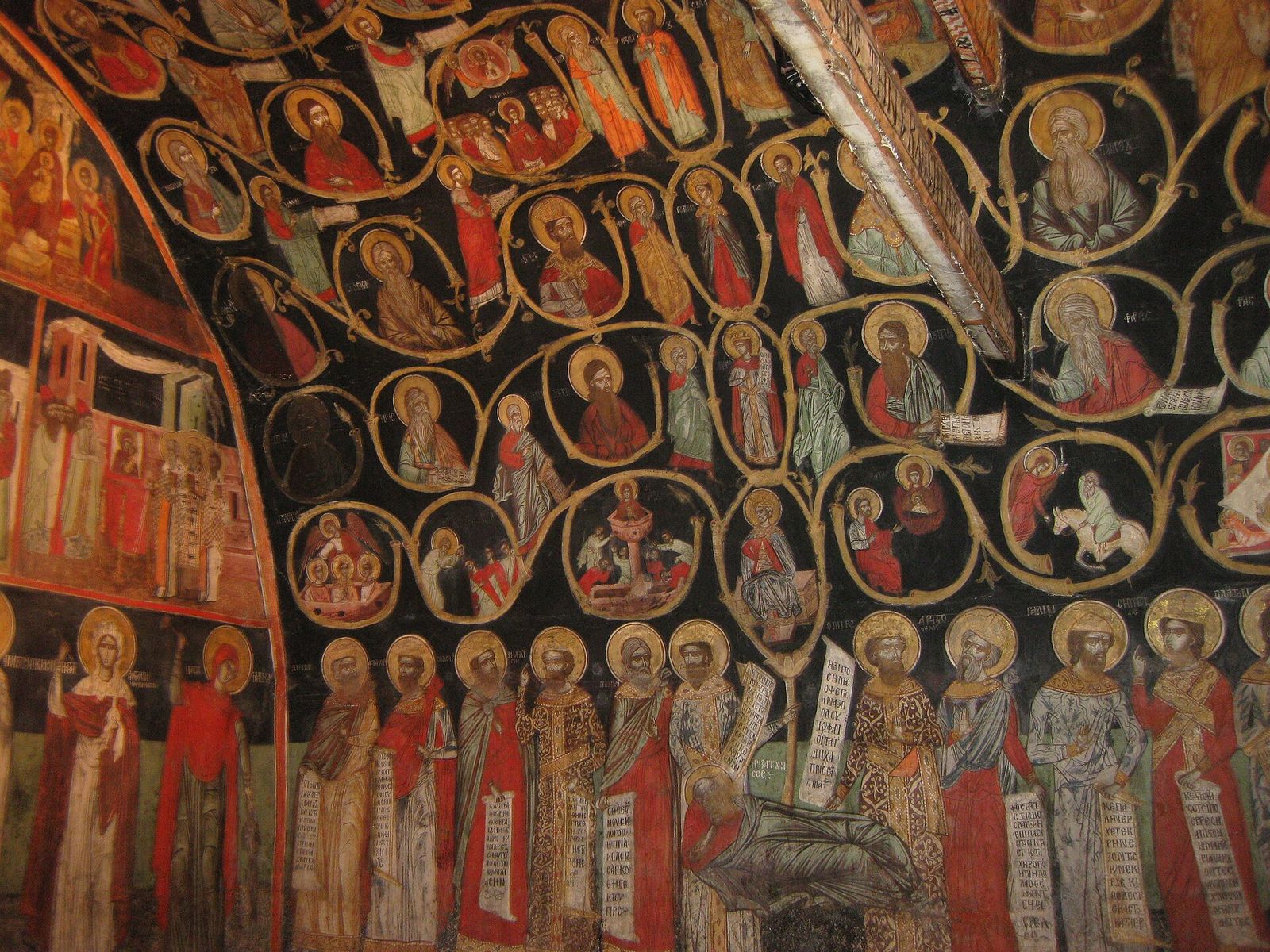
Arbanasi sits on a high plateau about 4 km from Veliko Tarnovo, a village of walled stone houses built by wealthy merchant families, and I go by taxi. The Church of the Nativity looks plain from the street, and inside, its walls and ceilings are covered in painted saints and Bible scenes. The Church of the Archangels Michael and Gabriel dates from the 16th to the 18th centuries, and Konstantsalieva House is a merchant's home kept as a museum of how those families lived.
| Site | Ticket | April to September | November to March |
|---|---|---|---|
| Church of the Nativity | €7.67, family €12.78 | 9am to 6pm | 10am to 4pm |
| Church of the Archangels Michael and Gabriel | €7.67, family €12.78 | 9am to 6pm | 10am to 4pm |
| Konstantsalieva House | €7.67, family €12.78 | 9am to 6pm | 10am to 4pm |
In October all three open from 9am to 5pm, and last entry is half an hour before closing.
Further out from Veliko Tarnovo
With a car or a second night, 3 more places fit around Veliko Tarnovo.
| Place | What it is | How far | How I'd go |
|---|---|---|---|
| Monastery of the Transfiguration | An Orthodox monastery north of town | About 7 km | Taxi or car |
| Buzludzha | The communist party's concrete monument on a 1,432 m peak | About 75 km, 1 hour 45 by car | Car only |
| Plovdiv | The Roman theatre and the painted Old Town, my stop before or after | About 3 hours | Direct bus, with a night there |
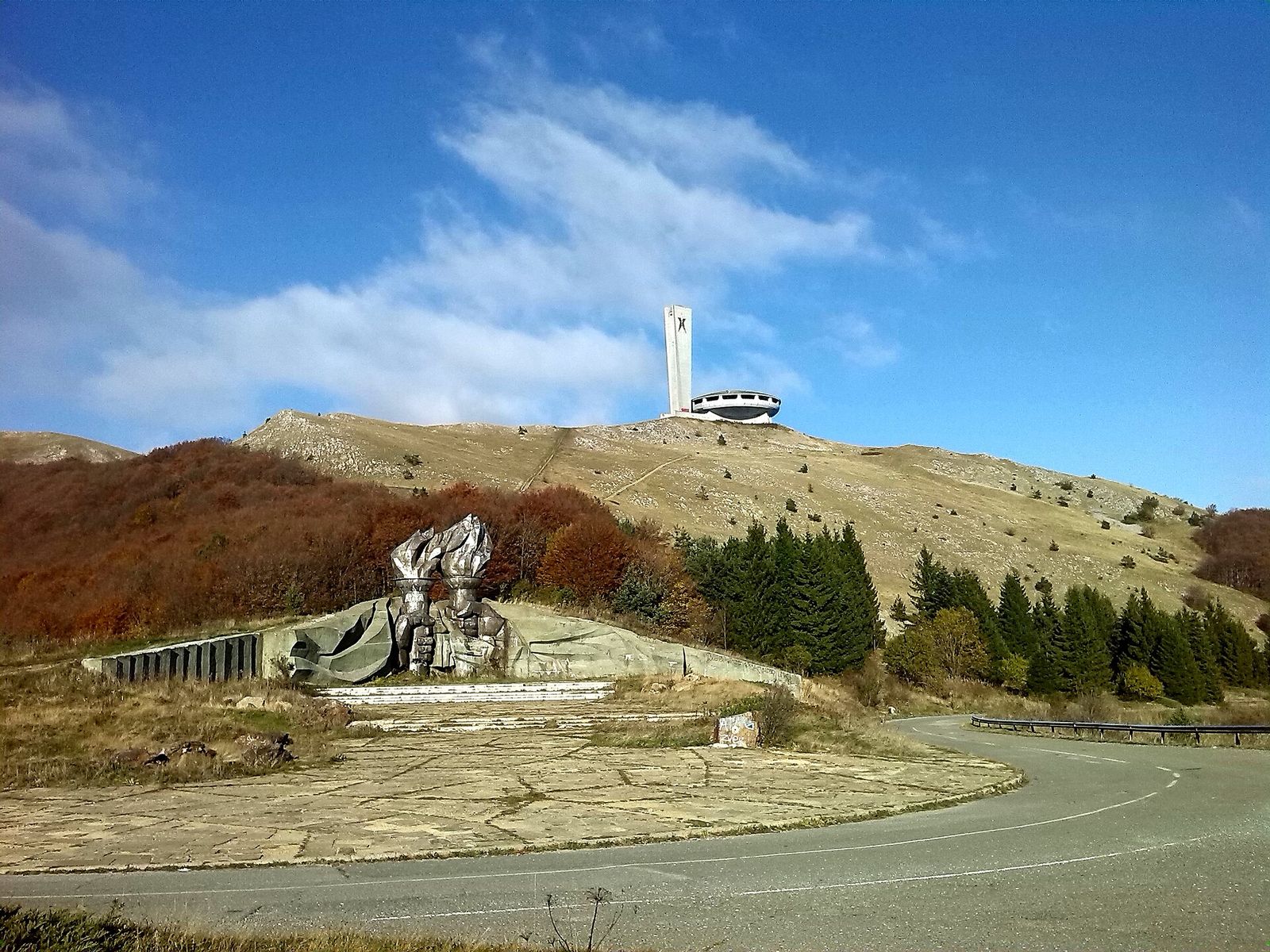
The Buzludzha Monument is sealed, so you see it from outside: a walk round takes about an hour, and I fit it into the drive between Plovdiv and Veliko Tarnovo.
My one night in Veliko Tarnovo
This is the plan I give friends who have one night. It works from April to October, when Tsarevets stays open until 6pm or later.
| When | What I do |
|---|---|
| Day 1, morning | Coach from Sofia Central Bus Station, about 3 hours |
| Day 1, lunchtime | Check in in the old town, lunch, then Gurko Street and the Varosha lanes |
| Day 1, 4pm | Tsarevets, about 2 hours, with the cathedral last |
| Day 1, dusk | The Asenevtsi Monument from Stefan Stambolov Street |
| Day 1, evening | Dinner, then the Sound and Light show if it runs that night |
| Day 2, 9am | The Church of the Holy Forty Martyrs as it opens |
| Day 2, 10am | Trapezitsa by funicular, then the walk down |
| Day 2, late morning | Samovodska Charshiya and a coffee |
| Day 2, afternoon | Coach back to Sofia, about 3 hours |
With a second night, I'd add Arbanasi on a slower Day 2 and take the coach back the morning after.
Where to stay and eat in Veliko Tarnovo
I stay in the old town, within walking distance of Tsarevets, so I can wander back after the light show without a taxi. I pick a guesthouse in one of the old 19th-century houses, ideally with a window over the gorge.
The taverns serve the usual Bulgarian food: shopska salad, grilled meat and stews baked in clay pots. The local beer is Bolyarka, brewed in Veliko Tarnovo, and the town's wine tasting centre pours your first sample free, then sets of 3 or 5 wines. It's an easy hour of Bulgarian wine before dinner, and I go for the reds from the north of the country.
When to go to Veliko Tarnovo
Spring and autumn are my favourite seasons here. The cobbles and the fortress walls are cool enough to walk all day, and the woods on the hills turn green in April and gold in October.
Summer gives you the longest hours, with Tsarevets open until 8pm, but the walls hold the heat and there's no shade on the climb to the cathedral. Winter brings the odd snowfall on the walls and the shortest opening hours, so I put Tsarevets first in the day.
Key takeaways
- A night in the old town beats a same-day return: 6 hours on the coach leaves you one afternoon.
- Tsarevets opens every day, but I avoid Tuesday mornings, when 9.10am to 11am is kept for maintenance.
- The Forty Martyrs church opens at 9am, so I start Day 2 there, then Trapezitsa and the craft street.
- Ring the Church of the Nativity or Konstantsalieva House at least 30 minutes before you head up to Arbanasi.
- Check the Sound and Light dates before you book your room.
Frequently asked questions
What was the ancient capital of Bulgaria?
Pliska was Bulgaria's first capital, from 681, and Preslav followed it. Veliko Tarnovo, then called Tarnovo, was the capital of the Second Bulgarian Empire from 1185 until the Ottomans took it in 1393.
What was the Second Bulgarian Empire and when did it exist?
It was the Bulgarian state revived in 1185, when the brothers Peter and Asen led a revolt against Byzantium and made Tarnovo their capital. It peaked under Ivan Asen II, who reigned from 1218 to 1241, and the Ottomans ended it in stages, taking Tarnovo in 1393 and Vidin in 1396.
Is Veliko Tarnovo expensive?
No. Tsarevets costs €7.67, the Forty Martyrs church €5.11 and each of the three Arbanasi sites €7.67, so all five come to €35.79, less than one good seat in a London theatre. Gurko Street, Samovodska Charshiya, the Asenevtsi view and the Nativity cathedral are free.
How many days do you need in Veliko Tarnovo?
One night, which gives you an afternoon on Tsarevets and a morning in the old town and on Trapezitsa. Two nights let you add Arbanasi without rushing.
Can you visit Veliko Tarnovo as a day trip from Sofia?
You can, but I don't. With about 3 hours on the coach each way you get one afternoon on the fortress and nothing else, so I keep the shorter day trips from Sofia, such as Plovdiv and Rila Monastery, for single days and give Veliko Tarnovo a night.
Which is the most beautiful city in Bulgaria?
Plovdiv gets my vote for its painted Old Town above a Roman theatre, and Veliko Tarnovo is a very close second for its houses hanging over the Yantra gorge. Both sit near the top of my list of the best places to visit in Bulgaria.
12 Best Places to Visit in Bulgaria: My Favourites for 2026
My 12 favourite places in Bulgaria beyond Sofia, ranked, with the time from Sofia and how I get to each one.
Read the guide
Sofia to Veliko Tarnovo: Bus, Train or Car, and the One I Take
How I get from Sofia to Veliko Tarnovo: the coach times, the train change, the drive and why I stay a night.
Read the guide
The Bulgarian Black Sea Coast: My Favourite Places, North to South
My favourite places on the Bulgarian coast, north to south, the beaches I pick and how I get there from Sofia.
Read the guide