Bulgarian Yoghurt: What Makes It Special and Where to Eat It in Sofia
Bulgaria is famous for its yoghurt, and it turns up in cold soup, on top of baked dishes, whisked into a salty drink and by the bowl with honey. I've lived in Sofia long enough to have a favourite tub, so this is what kiselo mlyako is, why it tastes different, the dishes to order and where I eat them.
What is Bulgarian yoghurt?
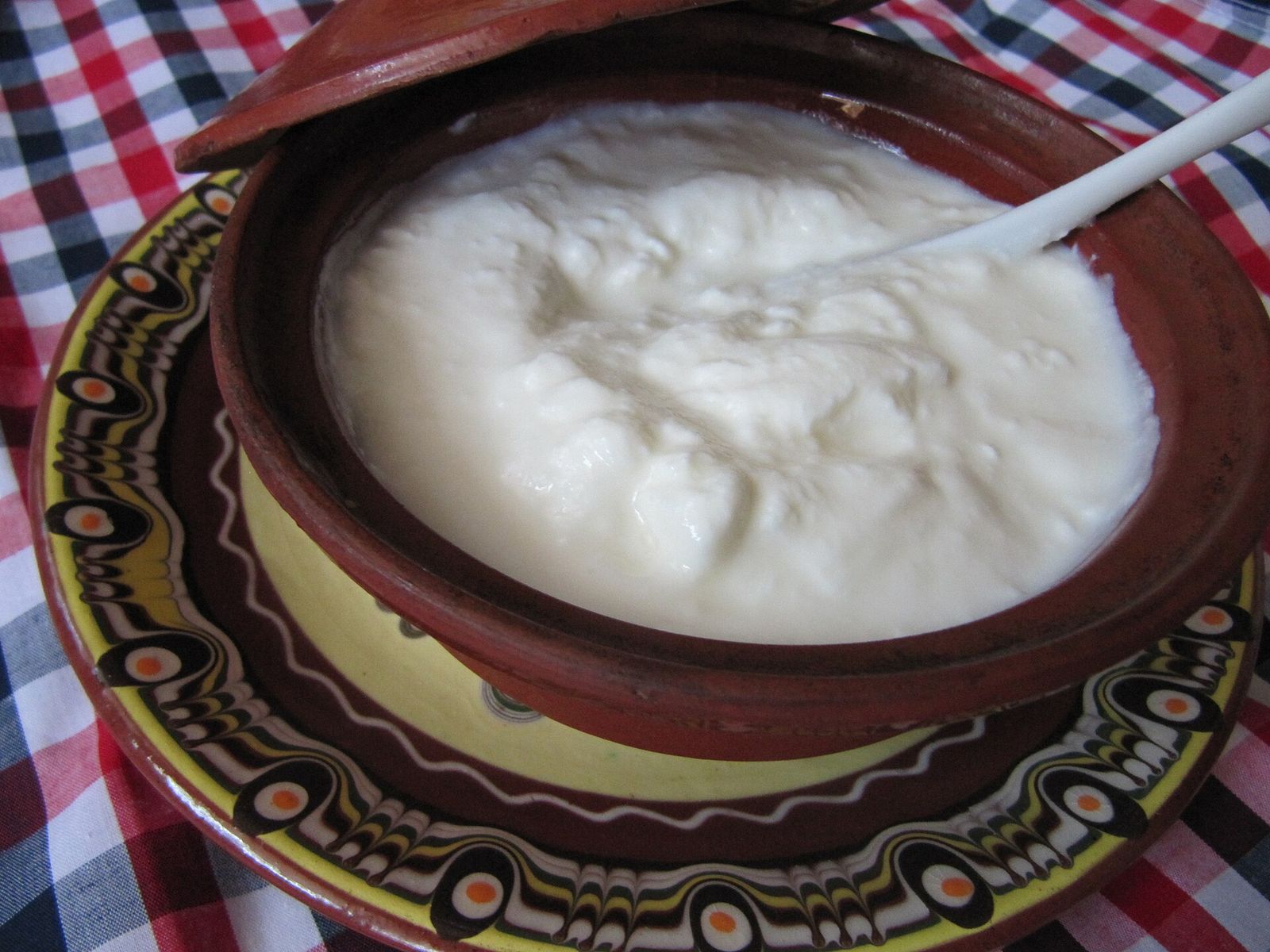
Kiselo mlyako (кисело мляко) means sour milk, and that's how it tastes: thick, white and sharp enough to make you blink on the first spoonful. It's set in the pot and sold unstrained, so it keeps its whey and wobbles a little in the tub.
Two bacteria do the work, and the first was named after Bulgaria. Lactobacillus bulgaricus and Streptococcus thermophilus turn warm milk into yoghurt as a pair, and a tub of kiselo mlyako always has both.
Why is Bulgarian yoghurt so special?
Its bacteria make it special: yoghurt made to Bulgaria's state standard has to be set with strains of L. bulgaricus and S. thermophilus that were isolated in Bulgaria and never genetically modified. The current version, BDS 12:2024, replaced a 2010 one, and it allows cow's, sheep's, buffalo or goat's milk, or a mix of them.
A spoon of Bulgarian yoghurt is sharper than a pot of natural yoghurt from a British supermarket, and Bulgarians like it that way: they eat it with garlic and salt in soups and salads, and with honey for pudding.
Stamen Grigorov and the bacterium named after Bulgaria
In 1905 Stamen Grigorov, a Bulgarian doctor working as an assistant to the bacteriology professor Léon Massol in Geneva, studied a sample of Bulgarian sour milk and found the rod-shaped bacterium that sets it. He called it Bacillus A, and he published it in a Swiss medical journal, the Revue Médicale de la Suisse Romande. In 1907 it was named Lactobacillus bulgaricus, after his country. Ten years later, in 1917, the Danish microbiologist Sigurd Orla-Jensen showed that a second bacterium, Streptococcus thermophilus, takes part too.
Grigorov presented his results at the Pasteur Institute in Paris, where Ilya Metchnikov confirmed them. Metchnikov linked the number of Bulgarians living past 100 to all that yoghurt, ate it regularly for the last 10 years of his life and drew the world's attention to Bulgarian yoghurt. A 1920 study doubted that the bacterium survives in the human gut, but by then the name had stuck.
Grigorov turned down a professorship in Geneva and went home at the end of 1905 to work as a district doctor in Tran, near the Serbian border, where the hospital now carries his name. He was born in 1878 in Studen Izvor, a village in the Tran area, and a restored house in the village centre is now a museum of kiselo mlyako, a short walk from the house where he was born. In Sofia, a street in the Iztok district is named after him, and so is a glacier in Antarctica.
Why Japan buys Bulgarian yoghurt bacteria
At Expo '70 in Osaka, executives from the Japanese dairy company Meiji tasted the yoghurt at the Bulgarian pavilion and went home to make their own. Meiji launched a plain yoghurt in March 1971, Bulgaria's government let it use the country's name in 1972, and in December 1973 it became Meiji Bulgaria Yogurt. It now takes about 30% of Japan's yoghurt market.
Meiji still imports its bacteria from Bulgaria on a regular schedule, because the strains change character when they're cultured abroad, and exporting them needs the Bulgarian government's permission. Japan, the US and the EU are among the biggest buyers of the bacterium. Bulgarians living in Japan say Meiji's version is sweeter and less sour than the yoghurt at home, so expect more bite from a tub in Sofia.
Bulgarian yoghurt vs Greek yoghurt and kefir
The difference is in the starter and the straining. Greek yoghurt is strained to drain off the whey, and kefir uses kefir grains, small clumps of yeasts and bacteria, in place of a yoghurt starter.
| Bulgarian yoghurt | Greek yoghurt | Kefir | |
|---|---|---|---|
| How it's made | Milk set with L. bulgaricus and S. thermophilus | Yoghurt strained to remove the whey | Milk fermented with kefir grains |
| Texture | Set and spoonable, a little loose | Dense and thick | Pourable, often slightly fizzy |
| Taste | Sharp and sour | Mild and creamy | Sour, with a yeasty tang |
| Where it comes from | Bulgaria | Greece | The Caucasus |
Bulgarians strain yoghurt too. Цедено кисело мляко (tsedeno kiselo mlyako), strained yoghurt, is as thick as the Greek kind, and it's the base for snezhanka.
Yoghurt on a Bulgarian menu
Yoghurt turns up in so many Bulgarian dishes that you'll eat it at most meals without ordering it on purpose. These are the ones to look for, with the Cyrillic so you can find them on a menu.
| Dish | On the menu | What it is |
|---|---|---|
| Tarator | таратор | Cold soup of yoghurt, cucumber, dill, garlic and walnuts |
| Snezhanka | снежанка | Strained yoghurt with cucumber, garlic, dill and walnuts |
| Ayran | айрян | Yoghurt whisked with water and salt |
| Musaka | мусака | Potato and mince baked under yoghurt and egg |
| Panagyurski eggs | яйца по панагюрски | Poached eggs on garlicky yoghurt with paprika butter |
| Yoghurt with honey and walnuts | кисело мляко с мед и орехи | A bowl of yoghurt for pudding |
| Banitsa | баница | Filo pie, often with yoghurt in the egg and cheese filling |
Tarator (таратор)
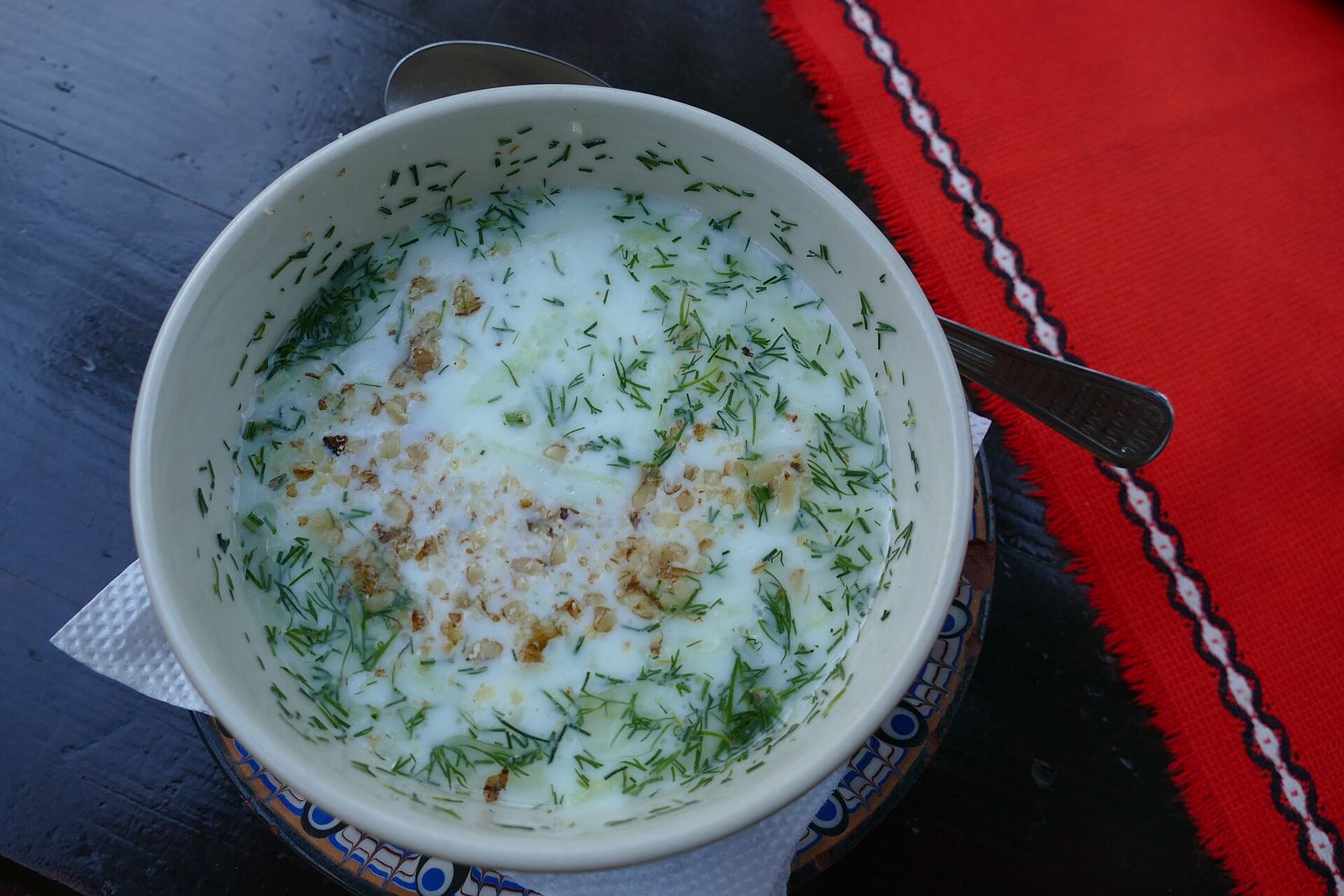
Tarator is a cold soup of thinned yoghurt, chopped cucumber, dill, garlic and crushed walnuts, with a splash of oil on top. It's a summer dish, served as a starter or a light lunch, and on a 35-degree day in July it's the only thing I want to eat. I order it with a basket of bread and nothing else.
Snezhanka (снежанка)
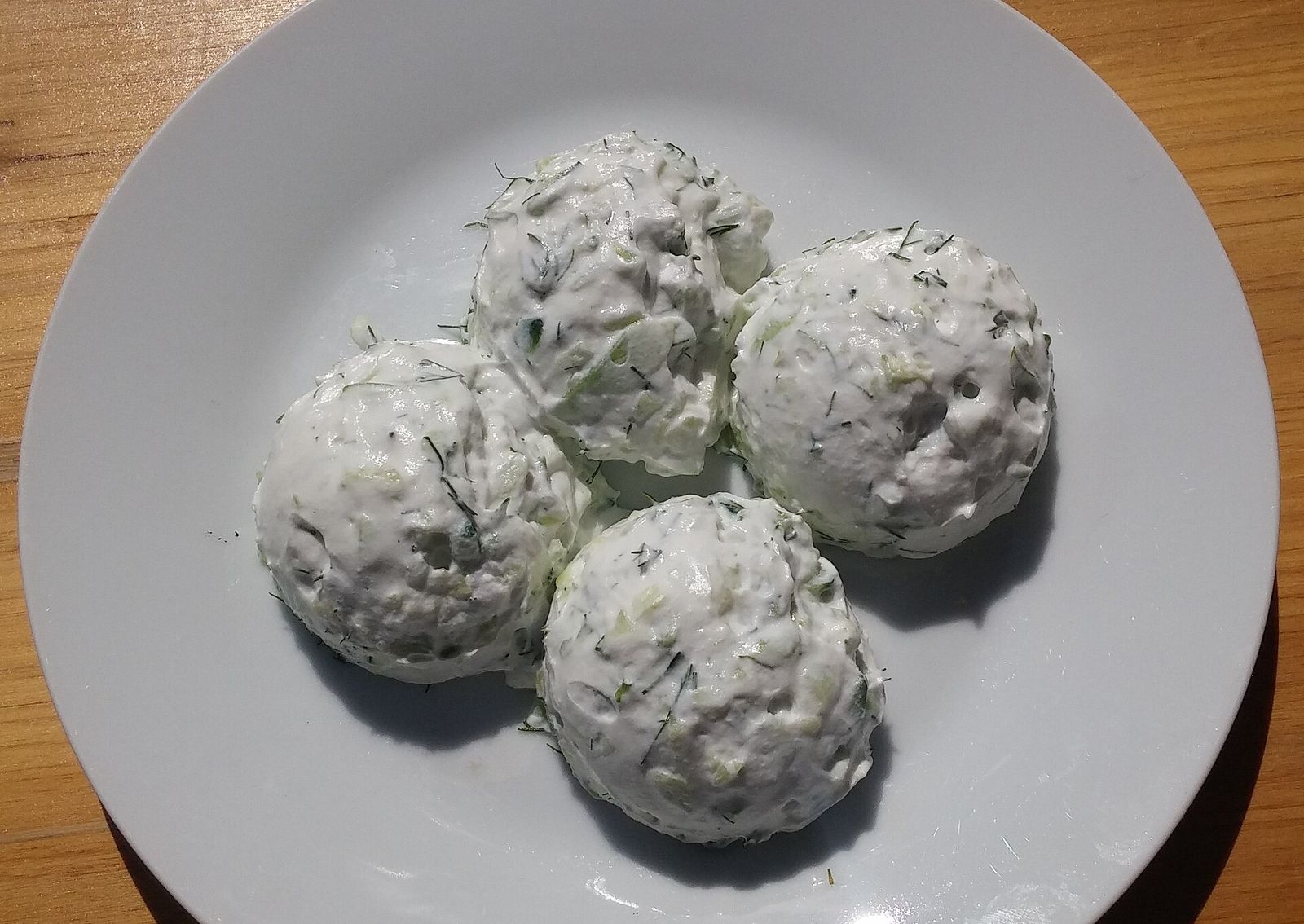
Snezhanka means Snow White, after the colour. It's strained yoghurt stirred with chopped cucumber, garlic, dill and walnuts, thick enough to stand a spoon in, a lot like tzatziki with nuts. It goes on the table with bread and the other salads at the start of dinner, and I order it with the first rakia.
Ayran (айрян)
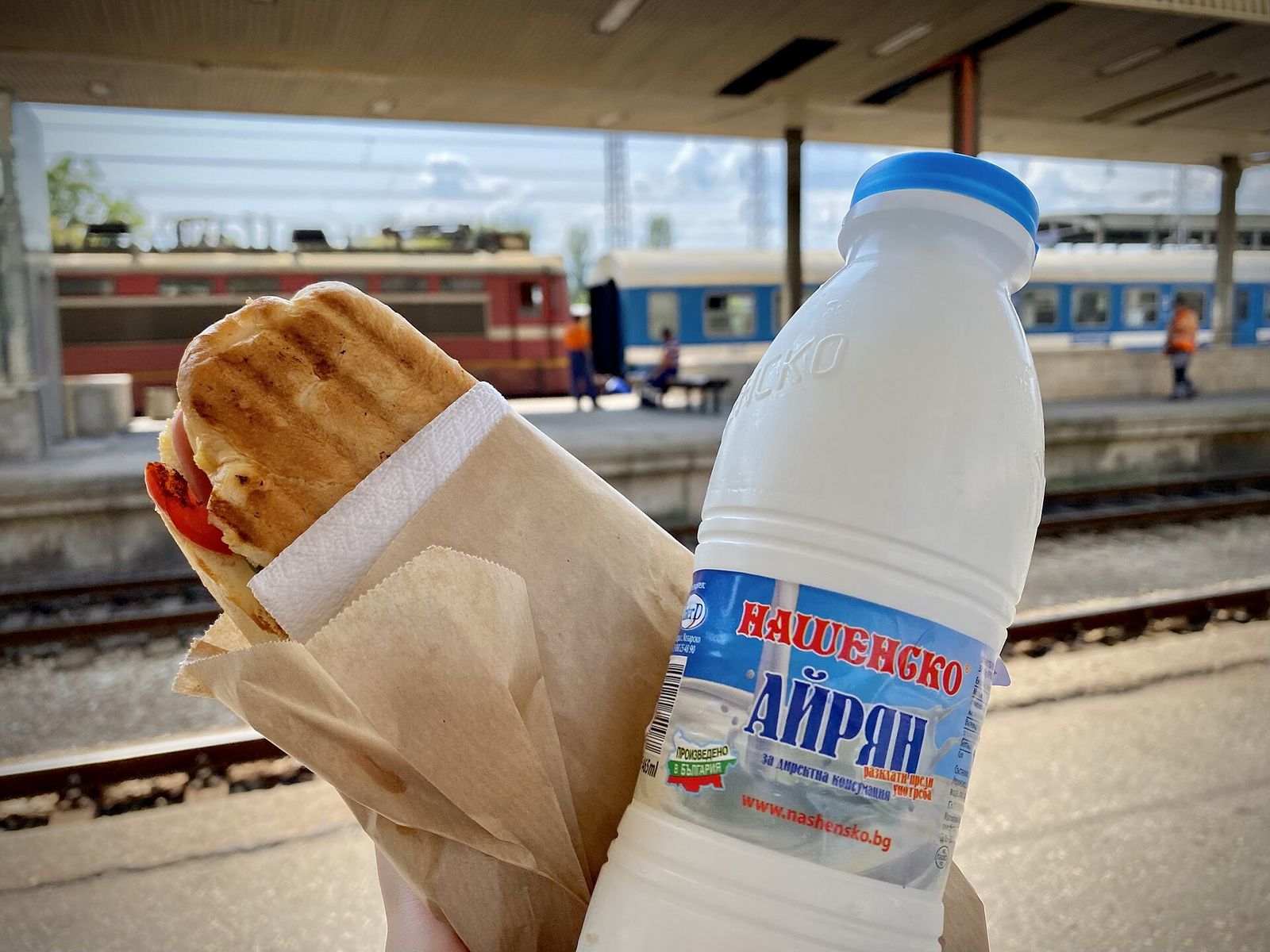
Whisk yoghurt with cold water and a pinch of salt and you have ayran. It's sharp, salty and cooling, and Bulgarians drink it with grilled kebapche at lunch and with banitsa at breakfast, where its rival is boza, a thick fermented grain drink. In summer I pick ayran every time.
Musaka (мусака)
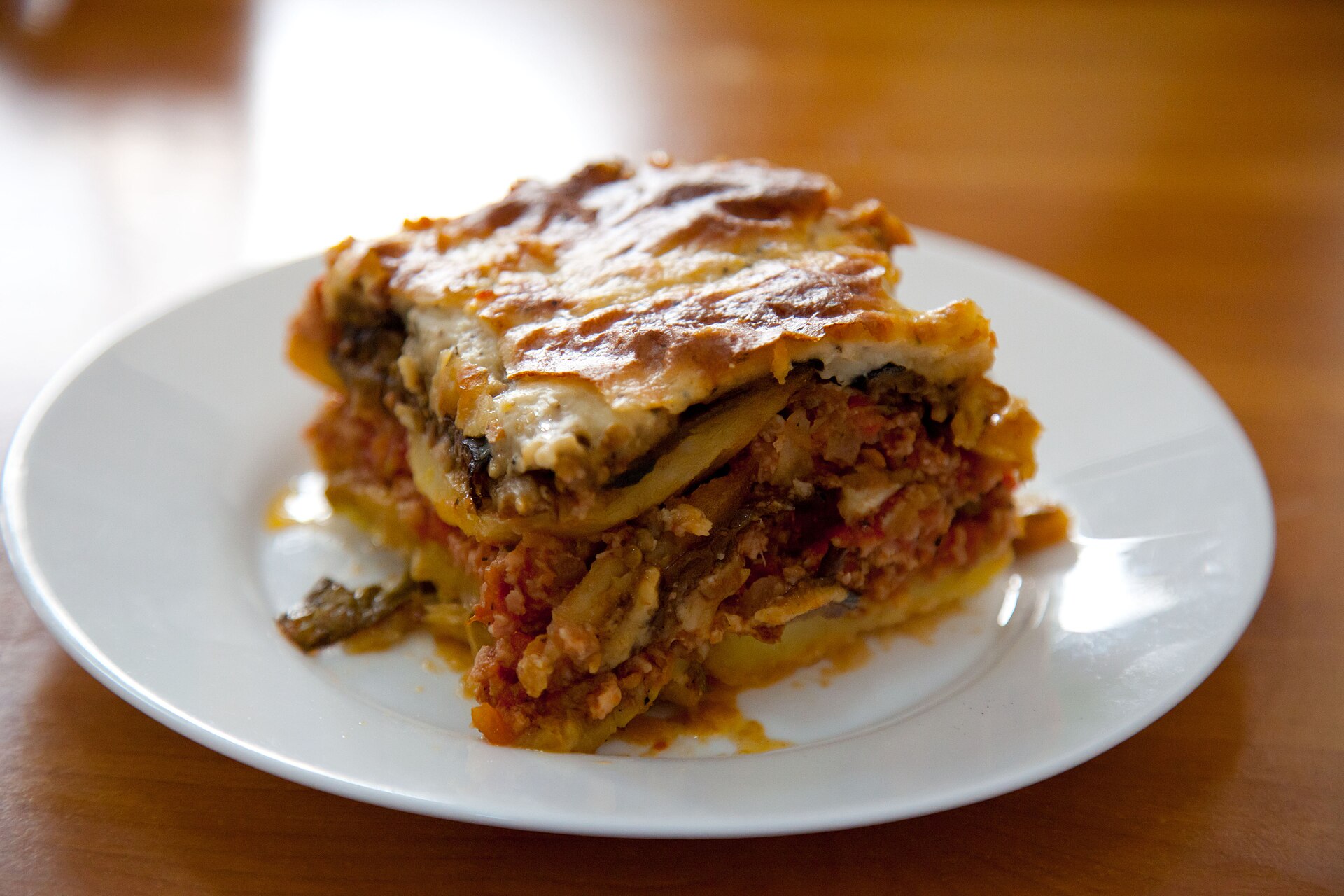
In Bulgaria, musaka means potato and minced meat baked in a tray, then covered with yoghurt beaten with eggs and baked again until the top goes brown and puffy. It's home cooking and canteen food, and it's the dish I hope to see on a weekday lunch menu, where soup and a main cost about €6 to €7.
Panagyurski eggs (яйца по панагюрски)
The town of Panagyurishte gave its name to this brunch dish: poached eggs on a bed of yoghurt beaten with garlic, with hot butter and paprika poured over. Sofia's cafes put them where a British menu has eggs Benedict, and they're the dish I order first at any of the brunch places in Sofia that serve them.
Yoghurt with honey and walnuts (кисело мляко с мед и орехи)
This is a bowl of thick yoghurt with a spoon of honey and a handful of walnuts over the top. It's the lightest of the Bulgarian desserts on a mehana menu, the one I order after a clay-pot dinner, and the pudding I make at home most nights.
Where I eat yoghurt dishes in Sofia
Yoghurt is on every traditional menu in town, so it finds you wherever you eat in Sofia. These are the places I go to for the yoghurt dishes in particular.
Supa Star, for tarator to take away
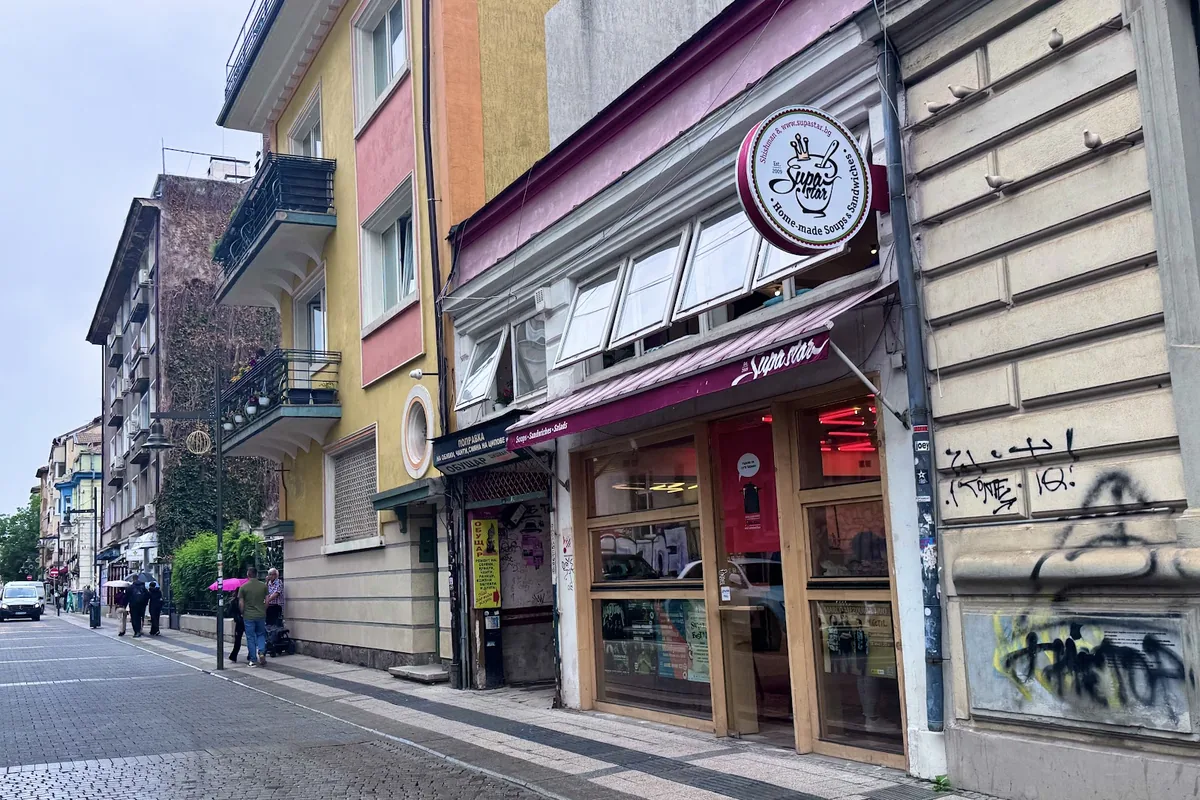
Supa Star is a tiny soup bar on Tsar Shishman Street that cooks six soups a day, tarator among them, to eat in or take away. The room fits a handful of people, so on a sunny day I take my tarator away in a cup and eat it on a bench. It's my cheap lunch on a sightseeing day.
Cafe 1920, for panagyurski eggs
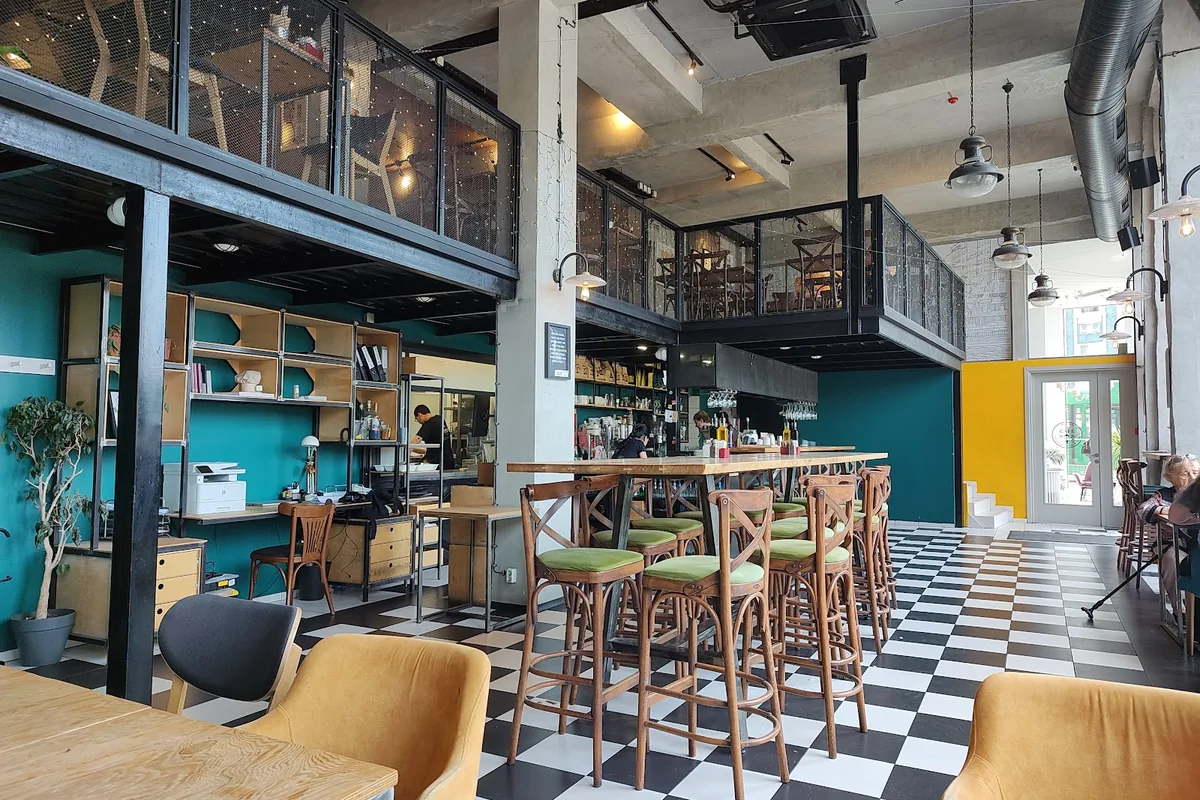
Cafe 1920 has one cafe at Knyaginya Maria Luiza 60, by Lions' Bridge, and a second at Shishman 24 in the centre. Panagyurski eggs are on the menu, and theirs are my favourite plate of them in Sofia: thick yoghurt, plenty of garlic and a pool of paprika butter. Go early at the weekend, because the queue builds fast.
A banitsa shop, for ayran at breakfast
Banitsa shops (баничарница, banicharnitsa) sell banitsa by the piece from a hot tray, with ayran in the fridge by the till. I buy a slice of cheese banitsa and an ayran and eat them on the walk to the metro. My favourite places for banitsa in Sofia bake through the morning, and I go before 10am, while the trays are fresh.
A mehana, for snezhanka and musaka
A mehana is a traditional Bulgarian tavern, and the yoghurt dishes sit in the salad and main sections of its menu, with the honey and walnut bowl under desserts. For a visitor's first Bulgarian dinner I book a mehana with live folk music, my favourite kind of restaurant in Sofia, because the band does half the hosting for me.
How to buy Bulgarian yoghurt in a Sofia shop
Every supermarket and corner shop in Sofia has a fridge of kiselo mlyako, and 2 words on the label tell you what's inside. The first is the milk.
| On the label | Milk | What it's like |
|---|---|---|
| краве (krave) | Cow | The everyday tub, the cheapest and the easiest to find |
| овче (ovche) | Sheep | Richer and creamier |
| биволско (bivolsko) | Buffalo | Rich and very thick |
| козе (koze) | Goat | Tangy, with a goaty edge |
The second is масленост (maslenost), fat content, printed big on the lid. Cow's yoghurt comes at 2%, 3%, 3.6% and 4.5%, usually in 400g or 500g tubs, and I buy the 4.5%.
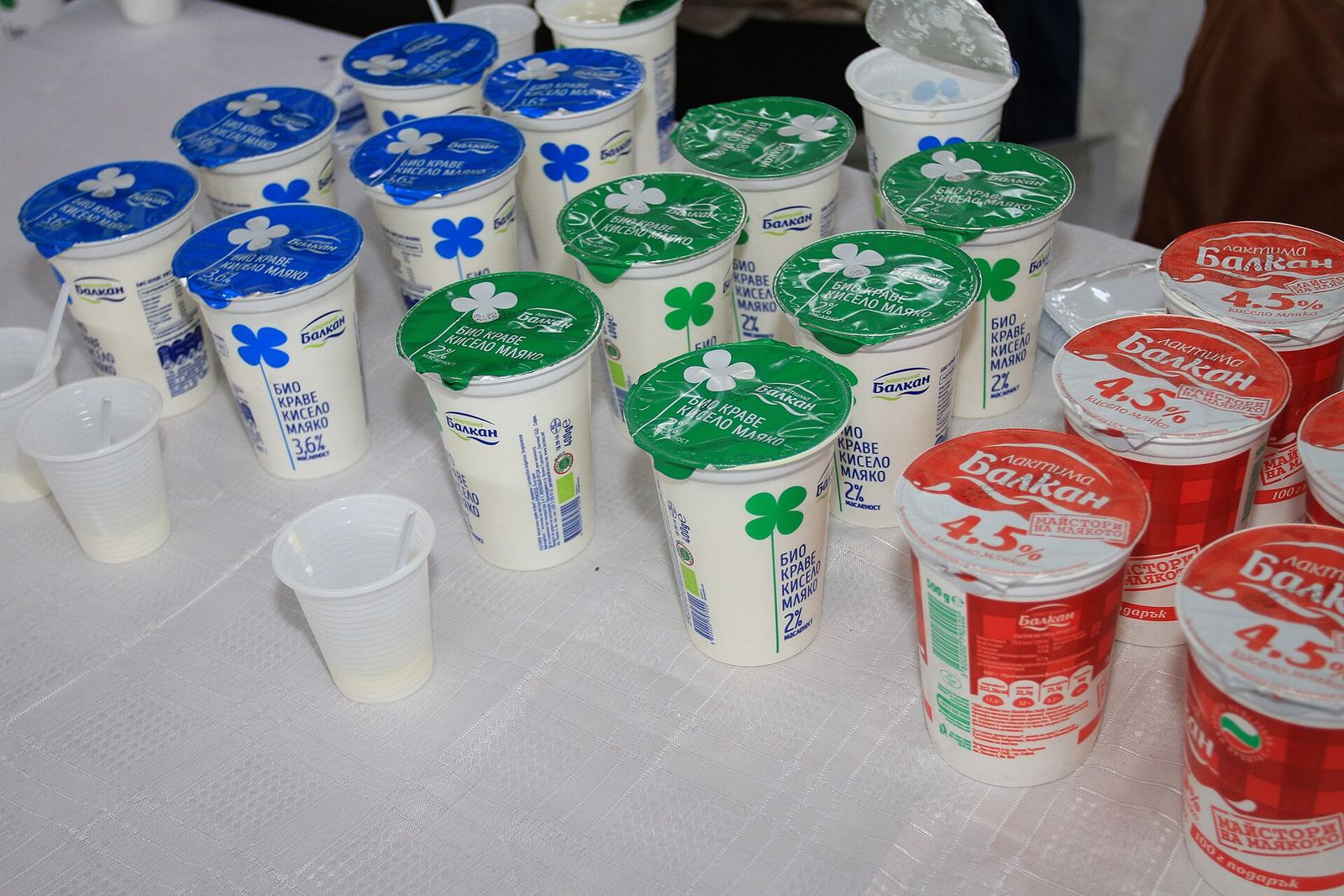
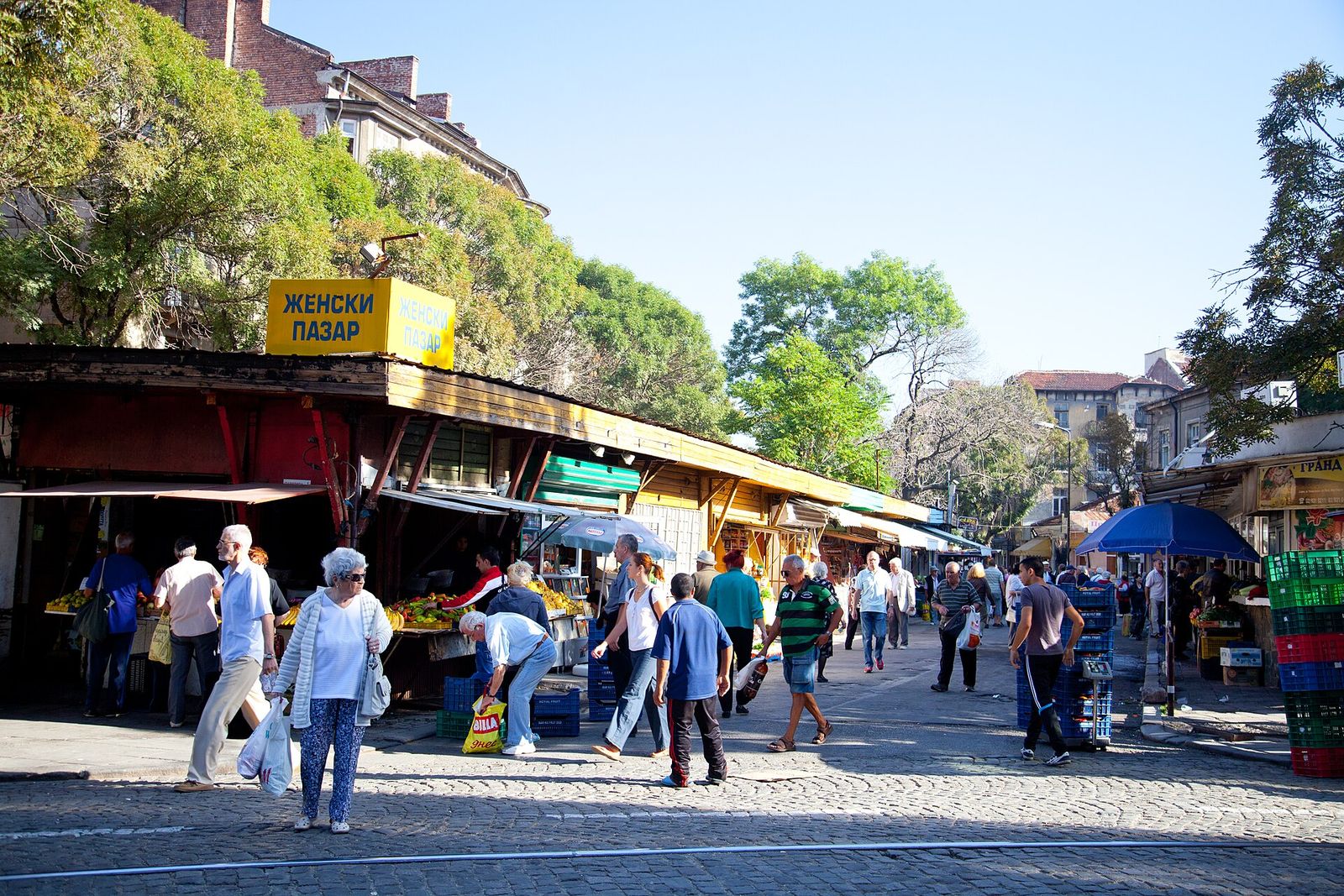
For a market, go to Zhenski Pazar (Женски пазар), the open-air market along Stefan Stambolov Boulevard near Lavov Most metro. Its stalls sell dairy alongside the fruit, vegetables and spices, and I go on a weekday morning for white cheese, yoghurt and whatever fruit is in season.
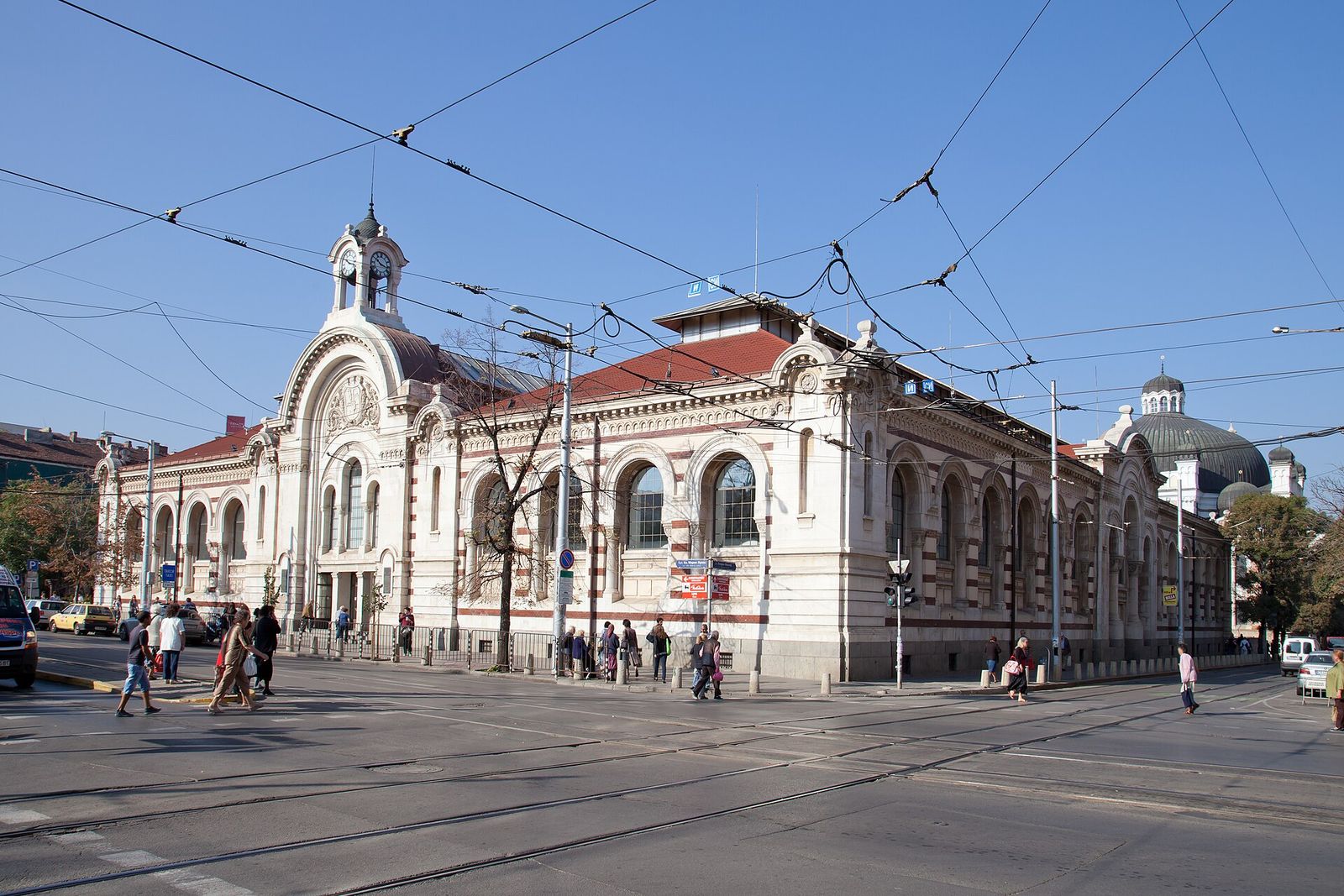
Between sights, Central Market Hall (Халите, Halite) on Knyaginya Maria Luiza Boulevard is the easiest place in the centre to grab a tub. The 1911 hall reopened on 23 May 2024 after a renovation, as a supermarket with an art stage, and it's across the road from Banya Bashi Mosque.
Making Bulgarian yoghurt at home
Bulgarian home cooks make yoghurt with nothing but milk and a spoonful of the last batch. The warm milk takes the starter, and the pot stays wrapped up at 30 to 45°C for 4 to 12 hours until it sets, then goes in the fridge.
Back in the UK, you can buy freeze-dried Bulgarian starter cultures online, and that's the way I'd get close to the Sofia taste in a British kitchen. Use full-fat milk, the closest thing in a British supermarket to the 4.5% tubs in Sofia.
Key takeaways
- Kiselo mlyako is sour, unstrained yoghurt set with Bulgarian strains of L. bulgaricus and S. thermophilus.
- Stamen Grigorov identified L. bulgaricus in Geneva in 1905, and Meiji Bulgaria Yogurt, with about 30% of Japan's yoghurt market, still uses bacteria imported from Bulgaria.
- Order tarator in summer, snezhanka with the salads, ayran with banitsa and panagyurski eggs at brunch.
- Buy sheep's or 4.5% cow's yoghurt in any supermarket, and eat it in Sofia, because it can't travel home in your bag.
Frequently asked questions
What is Bulgarian yoghurt called in Bulgarian?
Kiselo mlyako (кисело мляко), which means sour milk. It's the word on every tub and every menu, and кисело мляко с мед и орехи is the version with honey and walnuts.
What's the difference between yoghurt and kefir?
The starter. Yoghurt is milk fermented by bacteria alone, in Bulgaria's case L. bulgaricus and S. thermophilus, and kefir is fermented with kefir grains, a mix of yeasts and bacteria. Kefir comes out thinner and slightly fizzy, and yoghurt sets in the pot.
Is Bulgarian yoghurt the same as Greek yoghurt?
No. Greek yoghurt is strained to drain off the whey, so it's dense and mild, and Bulgarian yoghurt is left unstrained, so it's looser and sharper. Bulgarians strain it for snezhanka and call that tsedeno kiselo mlyako.
Can I bring Bulgarian yoghurt back to the UK?
No. Great Britain bans dairy products from EU countries in personal luggage, and that includes yoghurt and Bulgarian white cheese. Eat it in Sofia, or buy a freeze-dried Bulgarian starter culture online at home.
Where can I buy Bulgarian yoghurt in Sofia?
Any supermarket or corner shop sells it in tubs labelled кисело мляко. Zhenski Pazar has dairy stalls, and Central Market Hall on Maria Luiza Boulevard has a supermarket inside, a short walk from the main sights.
Who discovered the Bulgarian yoghurt bacterium?
Stamen Grigorov, a Bulgarian doctor working in a Geneva laboratory, identified it in 1905, and it was named Lactobacillus bulgaricus in 1907. His home village, Studen Izvor, has a museum of kiselo mlyako.
How do Bulgarians eat yoghurt?
In tarator soup, in snezhanka salad, whisked into ayran, baked on top of musaka, under panagyurski eggs and by the bowl with honey and walnuts. A spoon of plain yoghurt beside sarmi or stuffed peppers is normal too.
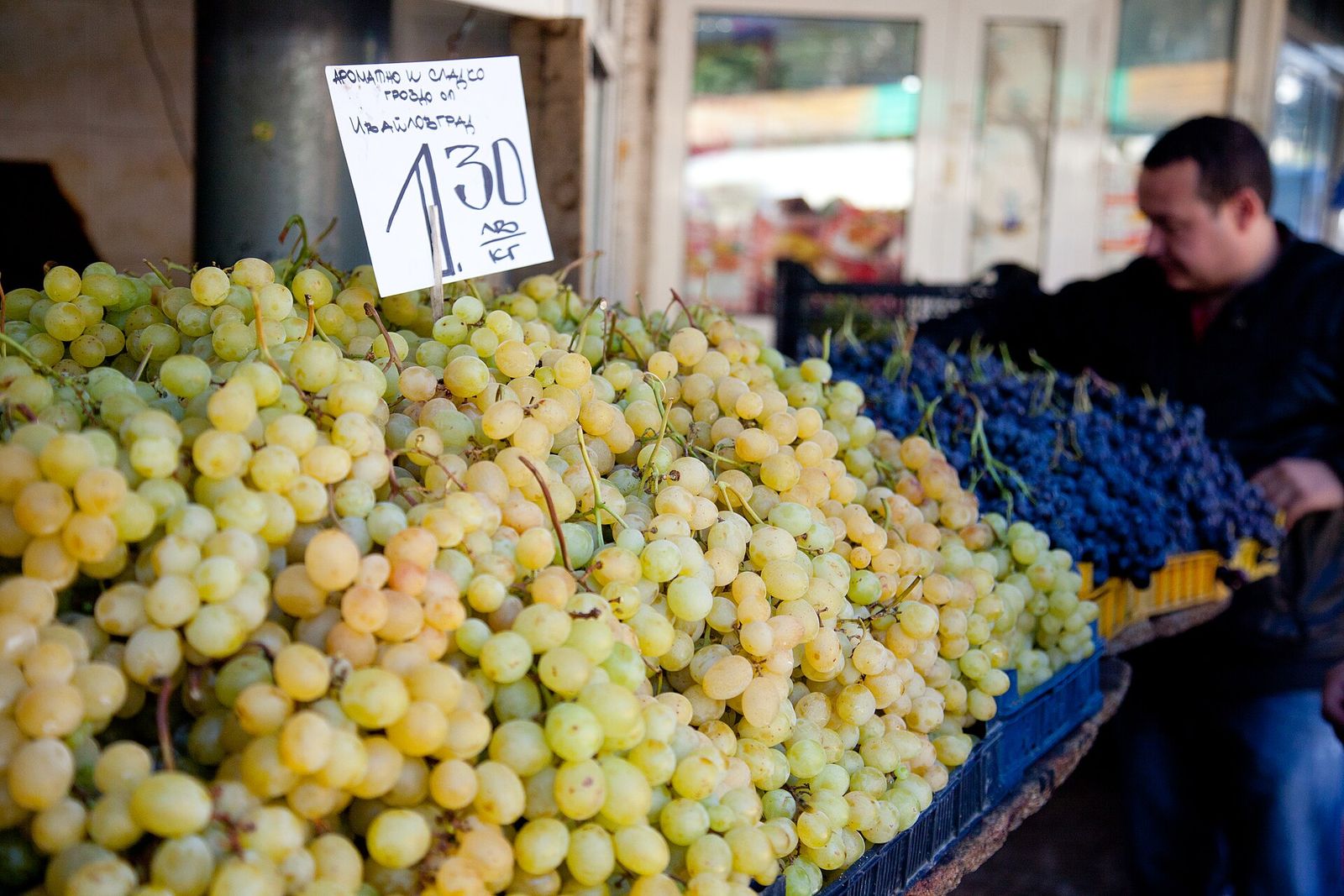
Sofia Food Guide: What to Eat and Where
Banitsa, shopska and rakia: what to eat in Sofia, the places I eat it, and what a meal costs in euros.
Read the guide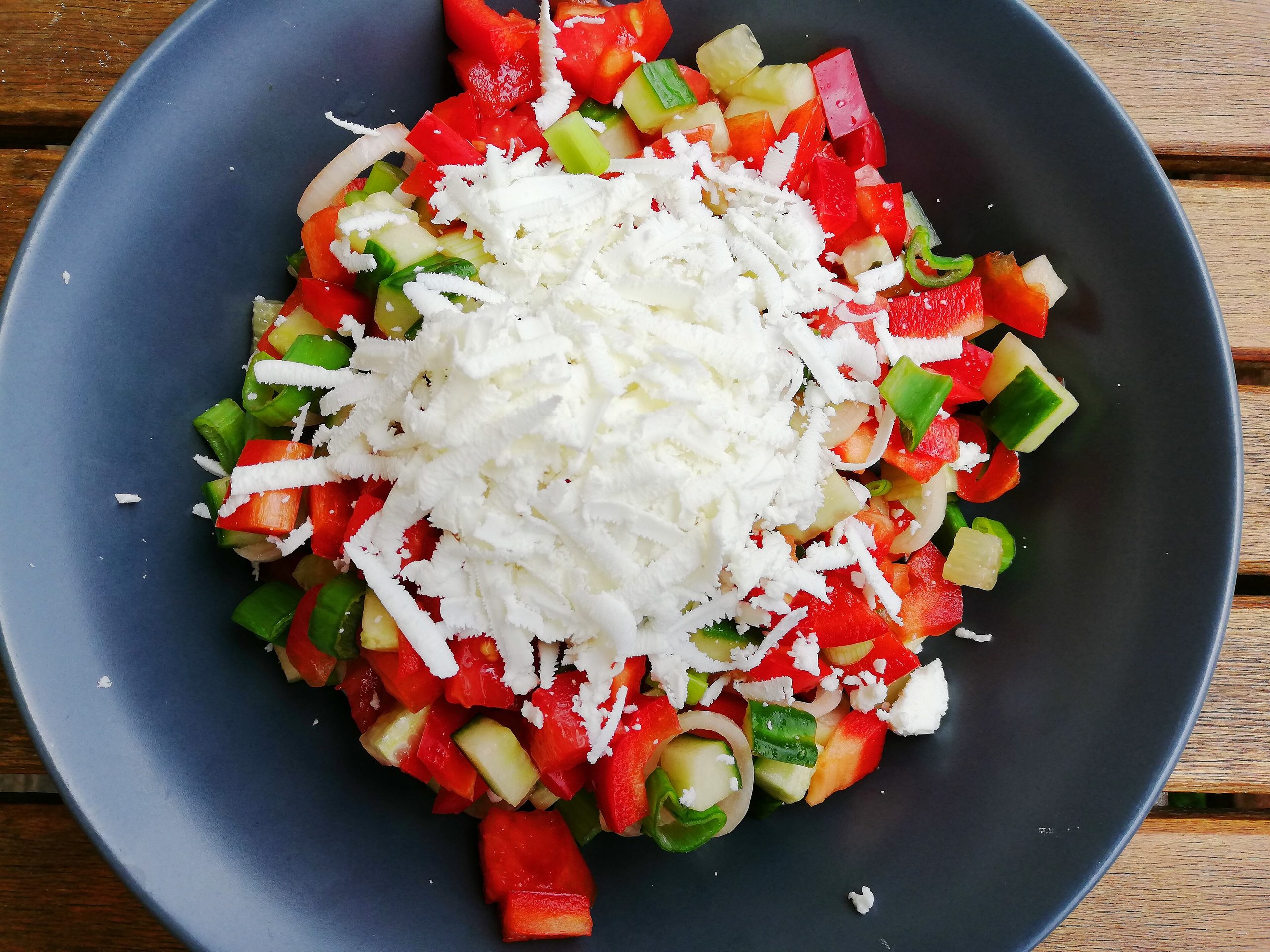
Bulgarian Food: The Dishes I Tell Every Visitor to Try
Salads, white cheese, yoghurt, grills and clay pots: the Bulgarian dishes I order, with the menu word for each.
Read the guide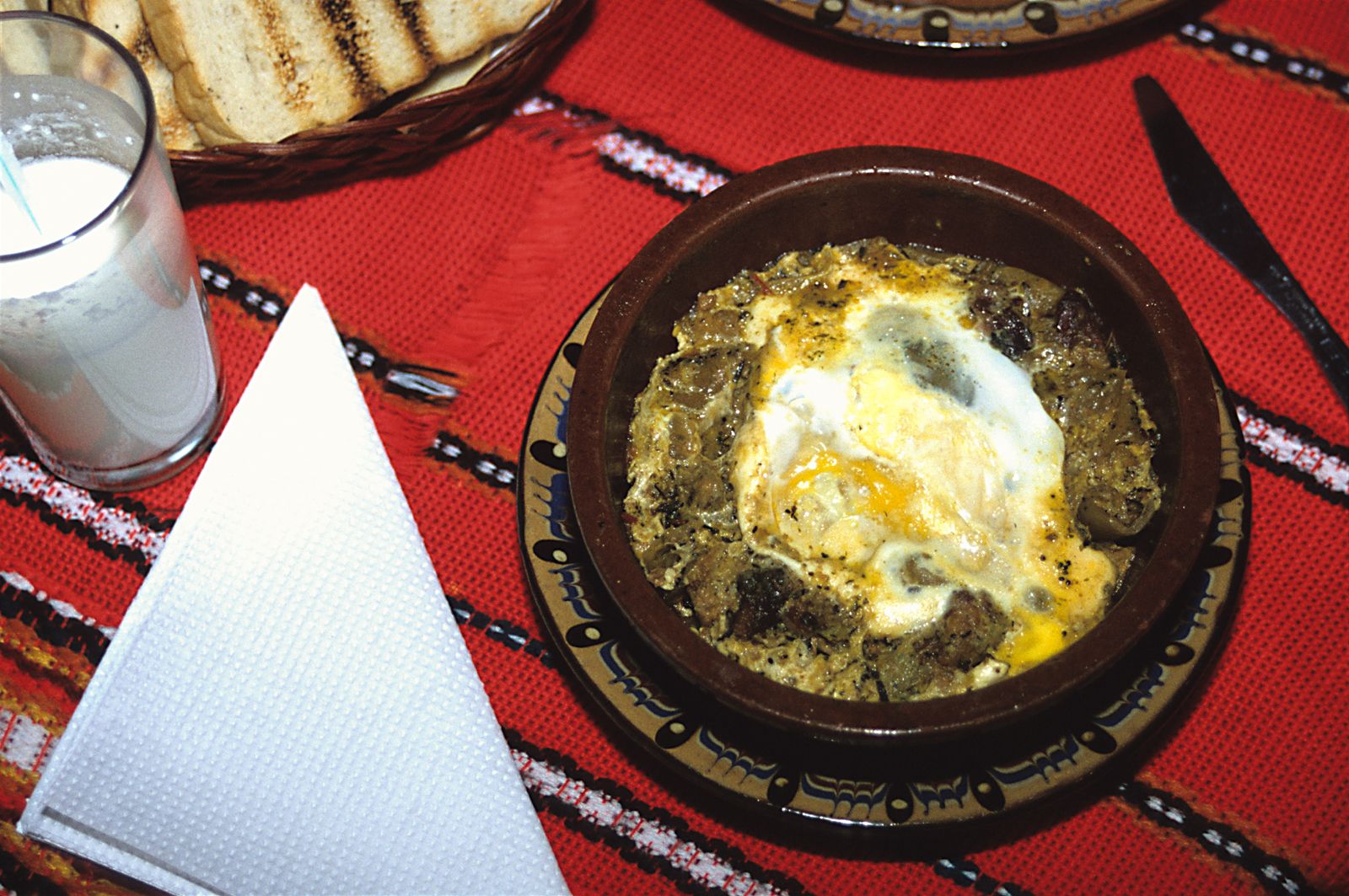
The Best Restaurants in Sofia: 11 Places I Send Friends
The 11 Sofia restaurants I send friends to, from folk-music cellars to award-winning fine dining, and what to order.
Read the guide