Sofia Synagogue: Visiting Europe's Third-Largest Synagogue
The Sofia Synagogue is the striped Moorish building with the dark domes behind Central Market Hall, and it's the third-largest synagogue in Europe. It opened in 1909, it's still a working synagogue, and visitors can go in six days a week. Here's what the €10 ticket gets you, what to look for under the dome, the 1943 story behind it and what I pair it with nearby.
What the Sofia Synagogue is
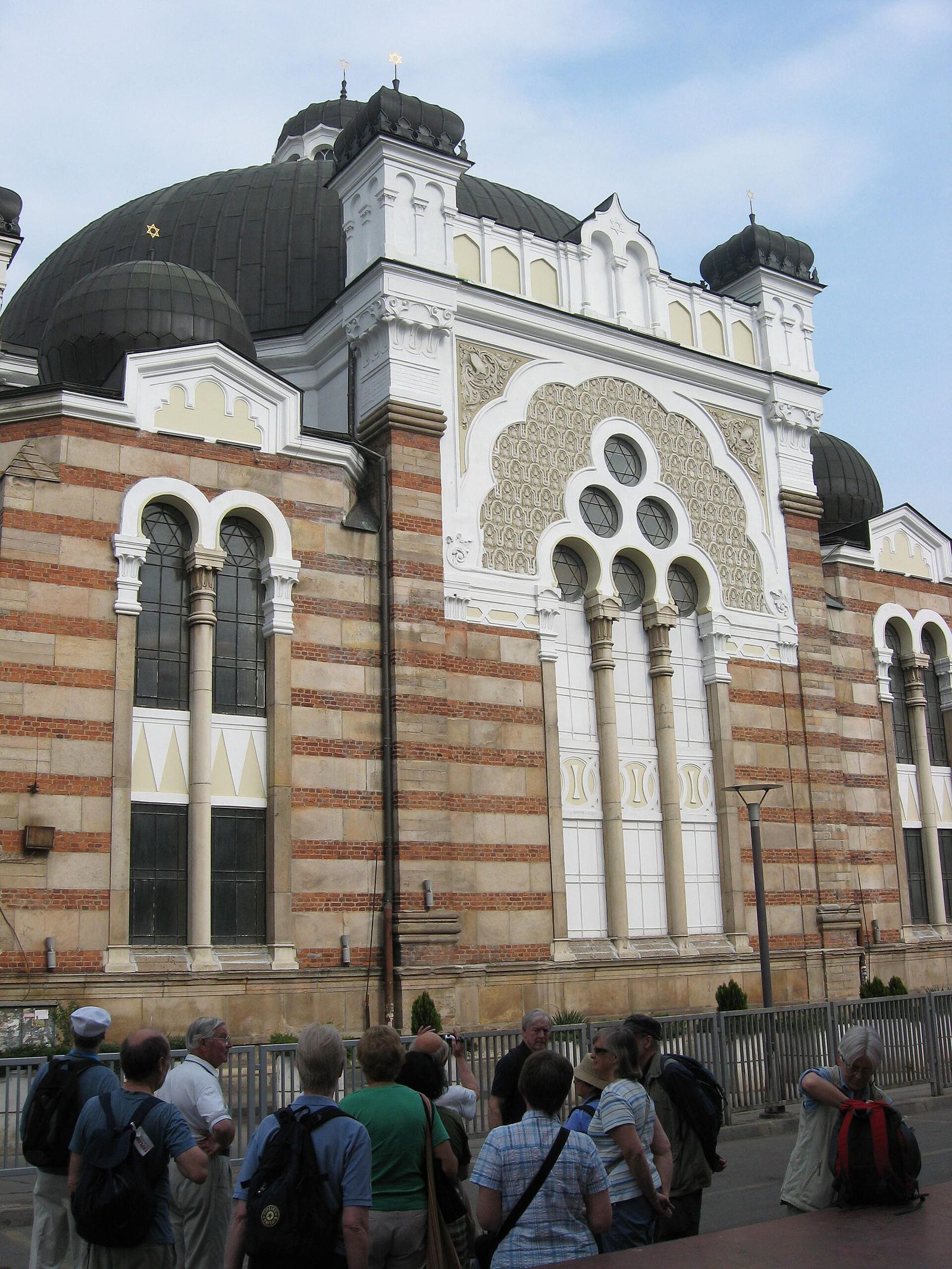
The Sofia Synagogue (Софийска синагога) stands at 16 Exarch Joseph Street, in the old centre between Serdika metro and the Women's Market. Its dome rises straight behind Halite, the covered market hall, and you can see both from the same spot on Maria Luiza Boulevard. It's the largest synagogue in South-eastern Europe, and only two in Europe are bigger, with Budapest's Dohány Street Synagogue the biggest of all.
It's also one of only two active synagogues left in Bulgaria. The congregation is small now, so the big hall feels very quiet on a weekday morning, and that's when I like it best. The synagogue is one of the four houses of worship in #3 on my list of things to do in Sofia, alongside an Orthodox church, a mosque and a Catholic cathedral, all within a few minutes of each other.
From the street, look for the stripes: rows of pale stone and red brick, white Moorish window arches, and a cluster of dark domes on top. The style mixes Spanish-Moorish and Venetian touches with Vienna Secession detail, and the main front faces east.
Sofia Synagogue opening hours and tickets
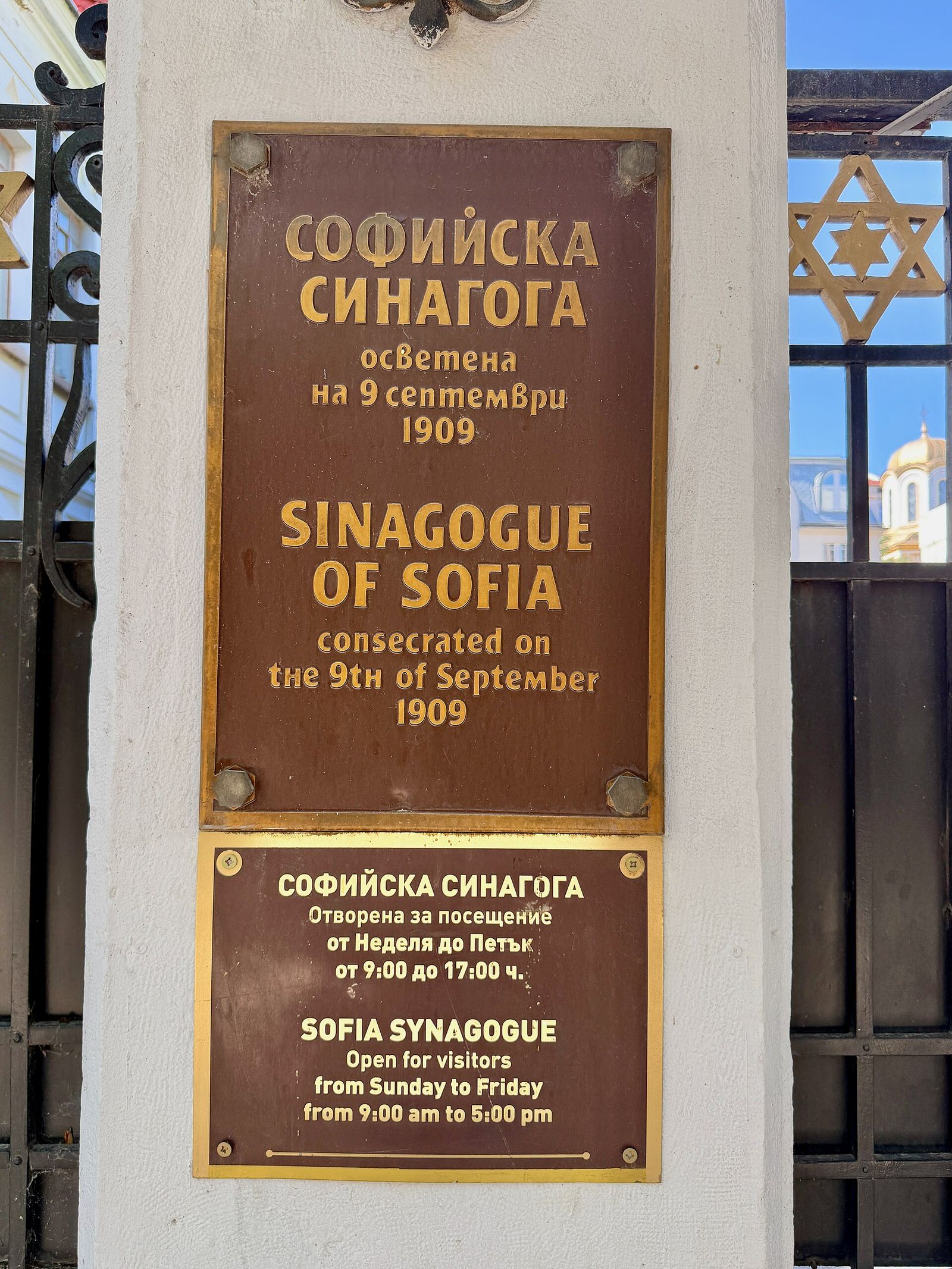
Visits run Sunday to Friday from 9am to 5pm, and the desk takes Visa and Mastercard.
| Ticket | Price |
|---|---|
| Adult | €10 |
| Students and seniors | €8 |
| Groups of 10 or more | €6 each |
Every ticket includes The Niche exhibition, the interactive audio guide and permission to take photos inside. I'd use the audio guide: it explains the symbols in the hall, and most of them are easy to miss without it.
To attend a service, contact the synagogue office at least 3 days ahead. Daily prayers happen in a small room to the right of the entrance, and the main hall is used for bigger services.
I dress as I would for any place of worship: shoulders covered, nothing too short. Men who want to cover their heads can bring a cap or a kippah.
Inside the synagogue: the dome, the chandelier and the number eight
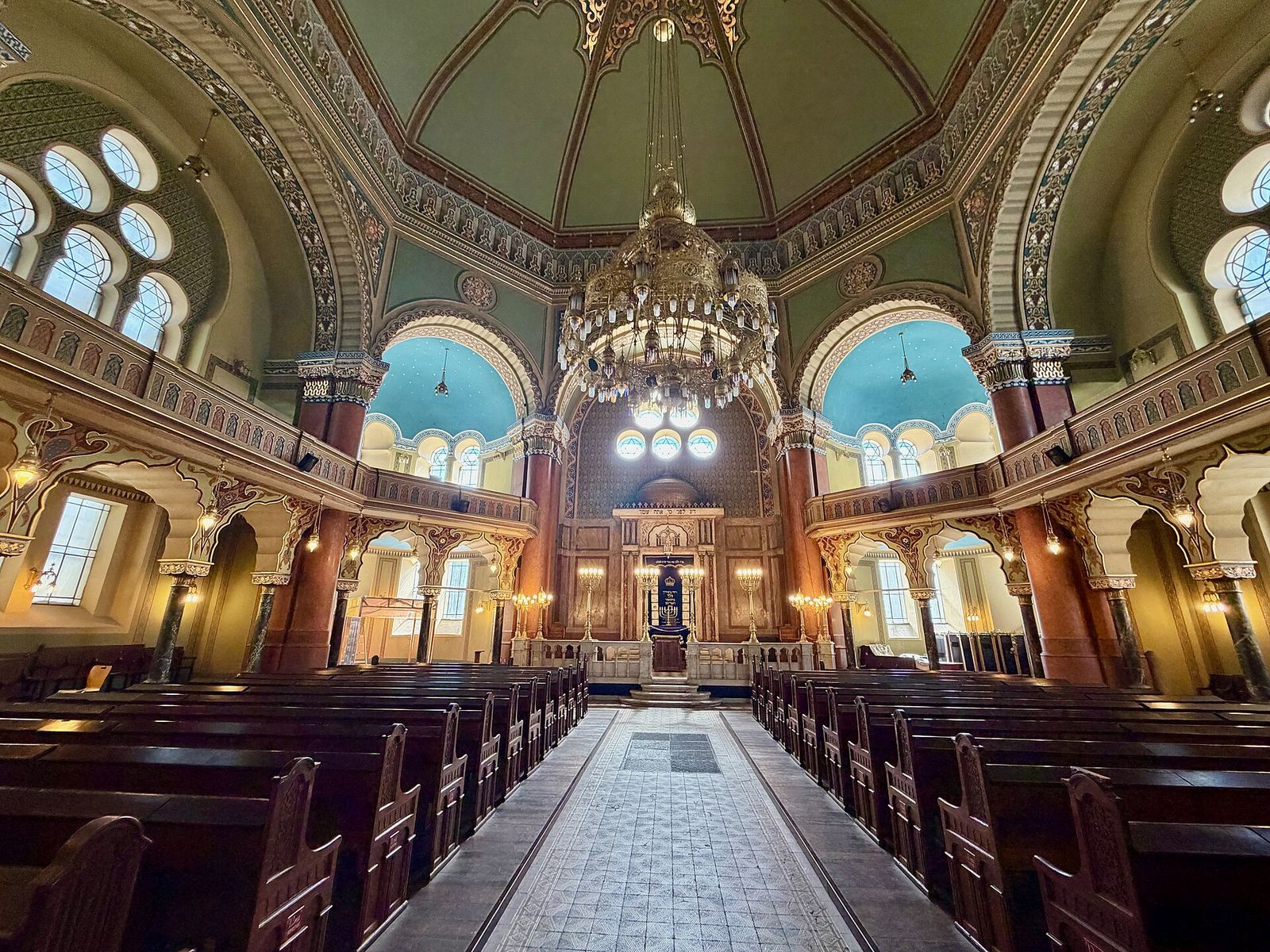
The main hall is an octagon with four half-domes around a central dome. The inner dome is 23 metres high, and the building stands 31 metres tall. The ceiling is painted as the heavens, and there are no human faces anywhere, in keeping with Jewish tradition.
Grünanger designed the brass chandelier himself, and it was made in Vienna. It weighs 1,700 kg and carries about 400 six-pointed stars. It's the largest chandelier in Bulgaria, and I always stand right underneath it and look straight up.
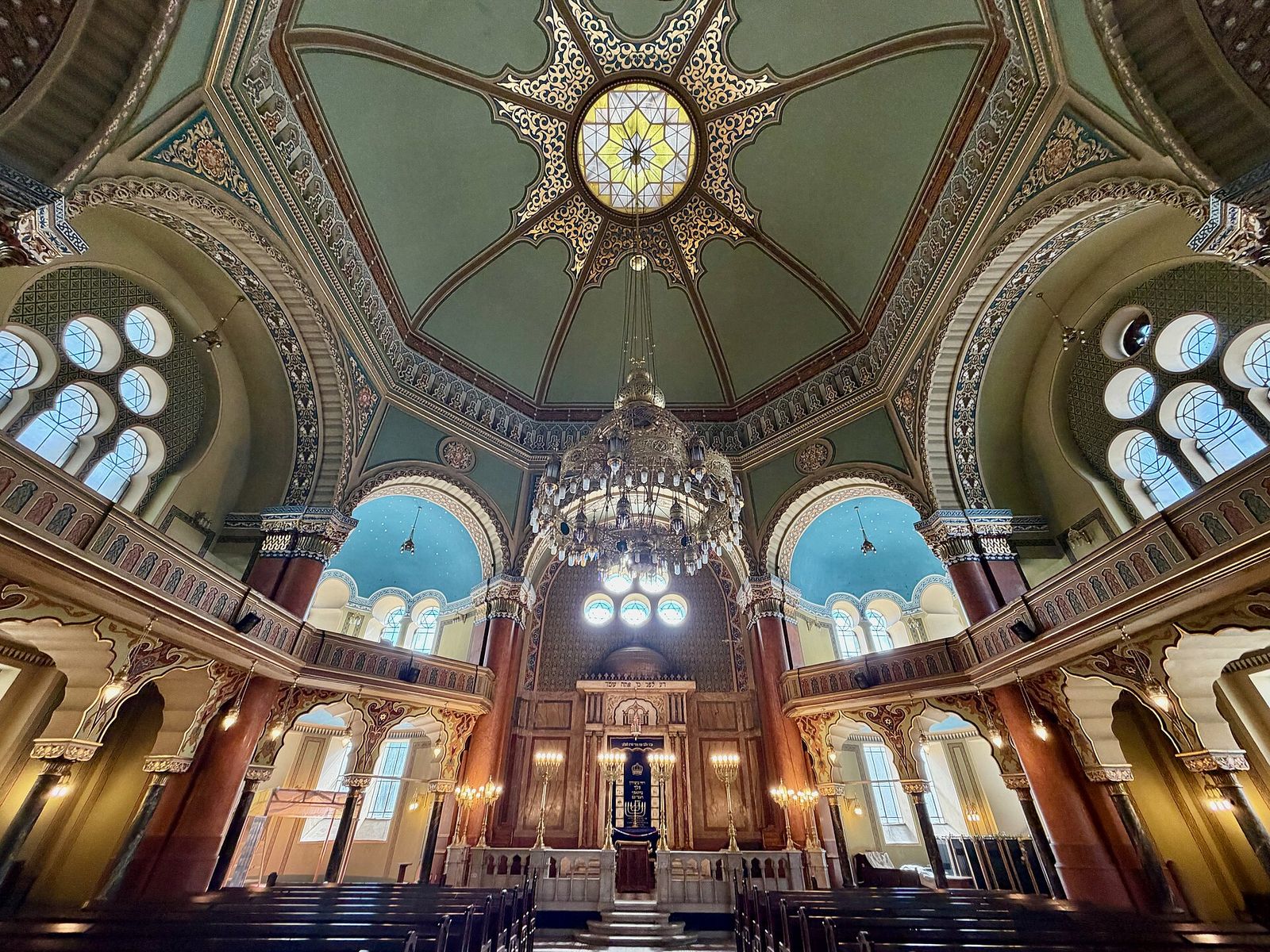
The columns are Carrara marble, the mosaics are Venetian, and the seats are Slavonian oak. The Torah ark stands on a white marble base at the far end, under three round windows.
The number eight runs through the design. You'll see it in the octagon of the hall and in the central mosaic on the floor, where an eight-pointed star surrounds a flower with eight petals.
Of the 1,170 seats the hall first held, about 400 are in use today, with women on the left and men on the right, and the balcony stays empty.
The Niche, the synagogue's museum exhibition
A museum has lived in the building since 8 May 1992, when the Jewish Museum of History opened here. Its current exhibition, The Niche (Нишата), opened in 2026 and comes with your ticket. It's a selection of religious objects, personal stories and symbols of Bulgarian Jewish life, set out on tall wooden panels beside the pews in the main hall.
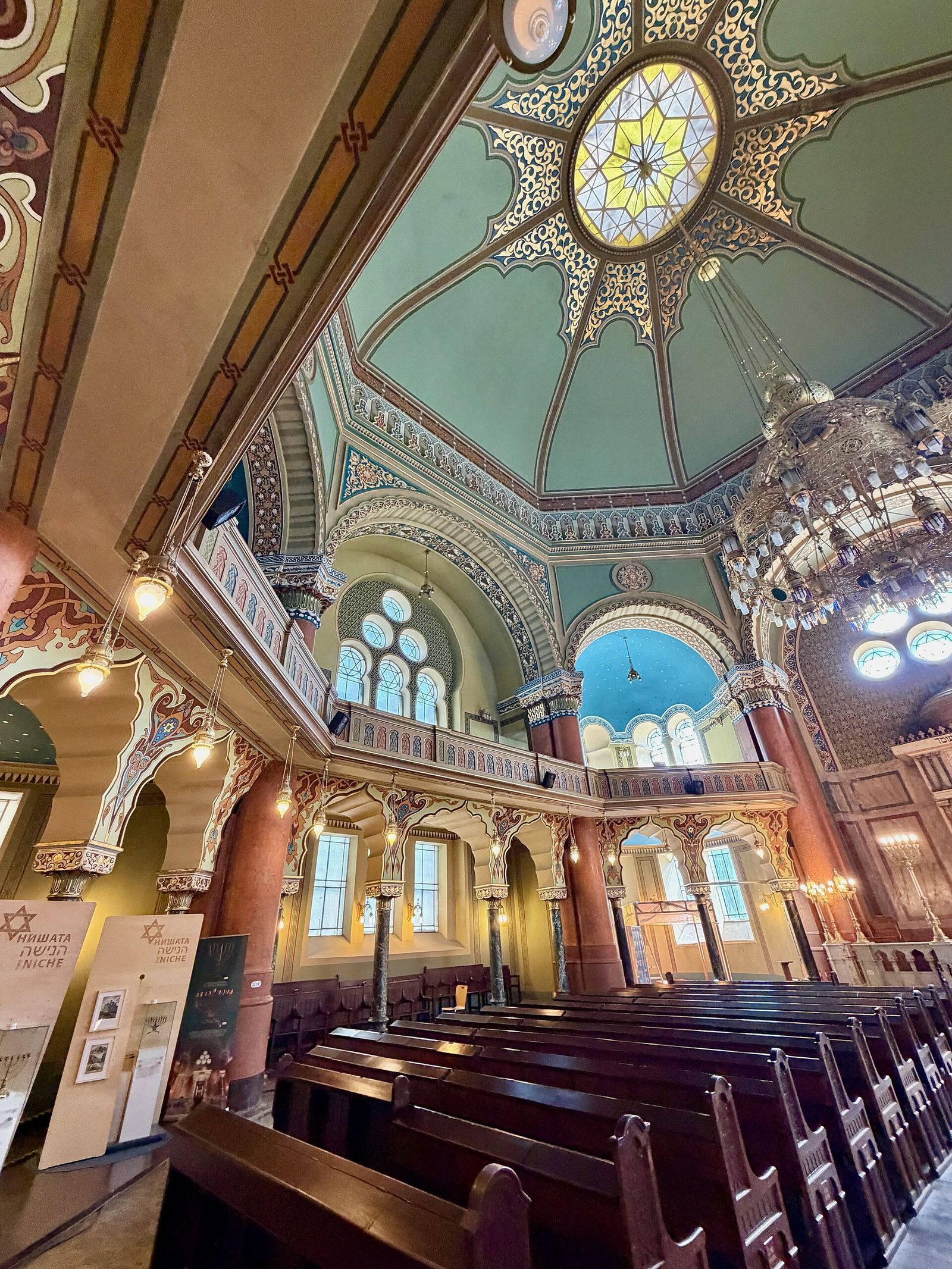
It's small, and you'll get round it in 15 to 20 minutes. Because it sits inside the prayer hall, you read the panels with the chandelier hanging over you. Among the best museums in Sofia, it's the one that shows a community's own objects in the room where that community still prays.
Sofia Synagogue history, from 1905 to today
Chief Rabbi Marcus Ehrenpreis and the community's leaders commissioned the building on the site of an older synagogue called Ahava ve Chesed. Grünanger's design resembles the Leopoldstädter Tempel in Vienna. It cost 437,000 golden leva, and tombstones from an old Jewish cemetery went into its foundations.
Sofia had been Bulgaria's capital for barely 30 years, and this stretch of Bulgarian history gave the city its synagogue in 1909, the market hall in 1911 and the bath house in 1913, all within a few streets.
| Date | What happened |
|---|---|
| 13 November 1905 | Construction begins |
| 9 September 1909 | The synagogue opens with Tsar Ferdinand, Queen Eleonore and Prime Minister Malinov there |
| 1941 | The Law for the Protection of the Nation comes into force |
| 1943 | Deportations of Jews from Bulgaria's pre-war lands are stopped |
| 13 April 1944 | A bomb hits the north-east corner, fails to explode and shatters the stained glass |
| 1982 | The Minister of Culture tries to turn the hall into a concert hall, and the community refuses |
| 8 May 1992 | The Jewish Museum of History opens inside |
| 2026 | The Niche exhibition opens |
Look up at the balcony for the stained glass window by Professor Gredi Assa. He made it later as a reminder of the 1944 bomb that hit the building and never went off.
How Bulgaria's Jews were saved in 1943
Bulgaria sided with Nazi Germany in the Second World War, and its Law for the Protection of the Nation, in force from January 1941, was modelled on the Nuremberg Laws. It barred Jews from voting, holding office and serving in the army, and took a one-off 20% of their net worth.
In March 1943, all 11,343 Jews from the lands Bulgaria occupied in Macedonia, Thrace and around Pirot were deported. Twelve of them survived. The Jews of Bulgaria's own pre-war lands were next.
On 8 March a delegation from Kyustendil told Dimitar Peshev, the deputy speaker of parliament, about the plan. On 9 March he and others made Interior Minister Petar Gabrovski call it off. Peshev then sent Prime Minister Bogdan Filov a letter of protest signed by 43 MPs, and he lost his post as deputy speaker for it. Metropolitan Stefan of Sofia protested too, and in May 1943 the tsar suspended the deportations indefinitely.
That May the government still expelled about 20,000 Jews from Sofia to the provinces, each allowed 30 kg of belongings. But the roughly 48,000 Jews within Bulgaria's pre-war borders were not sent to the camps. Yad Vashem named Peshev one of the Righteous Among the Nations in January 1973, and a plaque marks the Sofia house he lived in from 1939 to 1973.
After the war most of the community left. Between 1948 and 2006, 43,961 people emigrated from Bulgaria to Israel, and the 2021 census counted 1,153 Jews in the country.
Is the Sofia Synagogue worth visiting?
Yes, for most people, and it's one of my favourite interiors in the city. It suits:
- History readers, because the 1943 story and the 1944 bomb are right there in the building.
- Architecture fans, who get Moorish arches, Vienna Secession detail and a painted octagonal dome in one room.
- Rainy-day planners, as it sits a minute from Halite and a few minutes from the baths museum.
- Jewish heritage travellers, who can arrange to attend a service with 3 days' notice.
Skip the inside if:
- You're only in town on Saturday, when it's shut. The outside is still worth the 5-minute detour.
- You've got half a day for all of Sofia, in which case I'd spend the €10 at Alexander Nevsky's crypt instead and admire the synagogue from the street.
How to get to the Sofia Synagogue and how long to spend
Take the metro to Serdika, where lines M1, M2 and M4 meet, and walk north up Maria Luiza Boulevard. Getting around by Sofia metro is the quickest way into the old centre from NDK, the railway station or the airport. From Serdika it's about 5 minutes on foot to the synagogue gate.
| From | On foot |
|---|---|
| Serdika metro | About 5 minutes |
| Central Market Hall | About 1 minute |
| Banya Bashi Mosque | About 3 minutes |
| St Nedelya Church | About 7 minutes |
| Alexander Nevsky Cathedral | About 20 minutes |
Allow 45 minutes to an hour inside: 20 minutes for the hall with the audio guide, 15 to 20 for The Niche, and a few more under the chandelier.
What to see near the Sofia Synagogue
An Orthodox church, a mosque, a synagogue and a Catholic cathedral stand within about 10 minutes' walk of each other here, with Roman Serdica under the pavements, and I string them together after the synagogue.
Central Market Hall
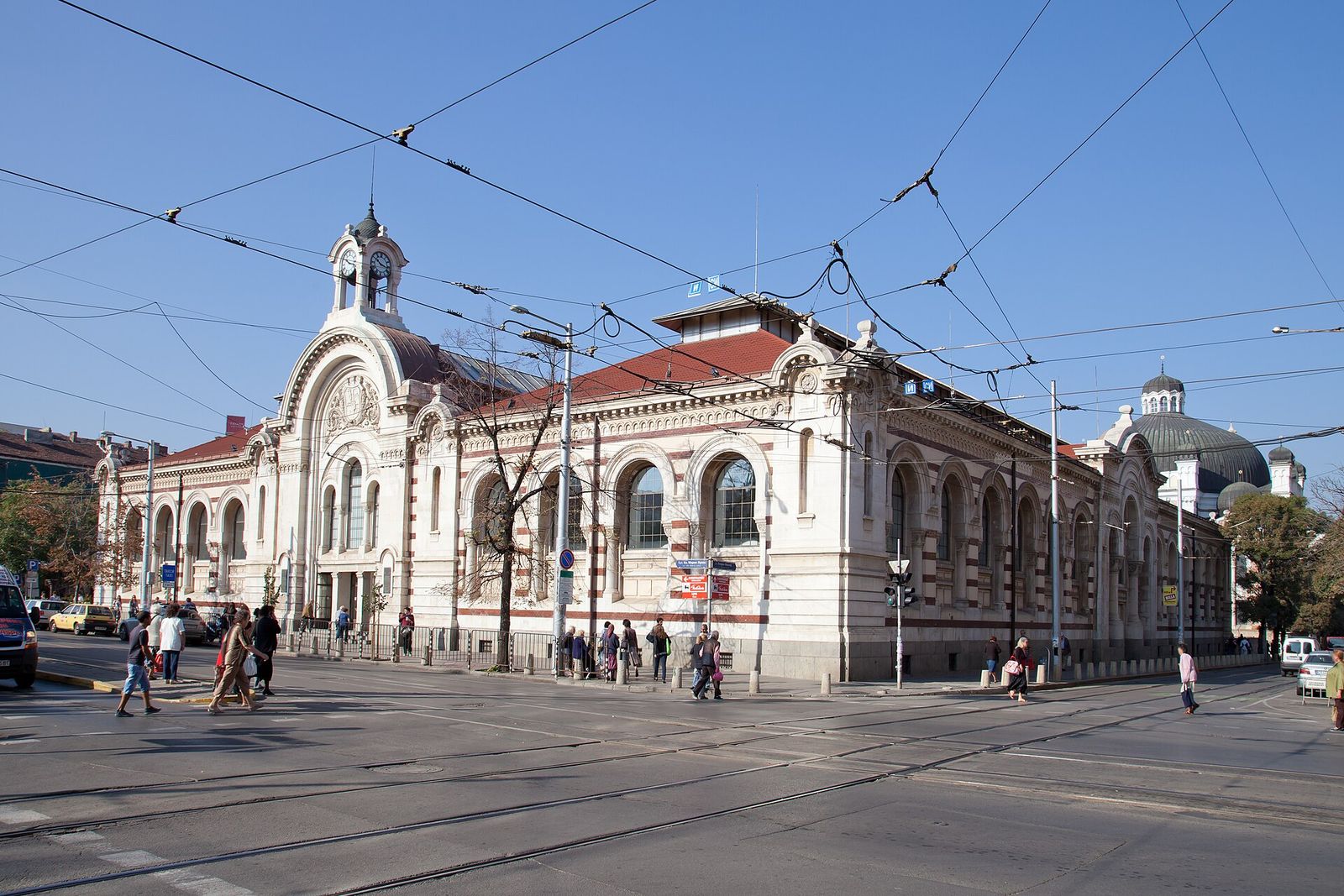
The Central Market Hall, Halite to locals, is the striped 1911 market building right in front of the synagogue. It reopened on 23 May 2024 with a supermarket, Roman excavations in the basement and a stage, and walking in costs nothing.
Banya Bashi Mosque
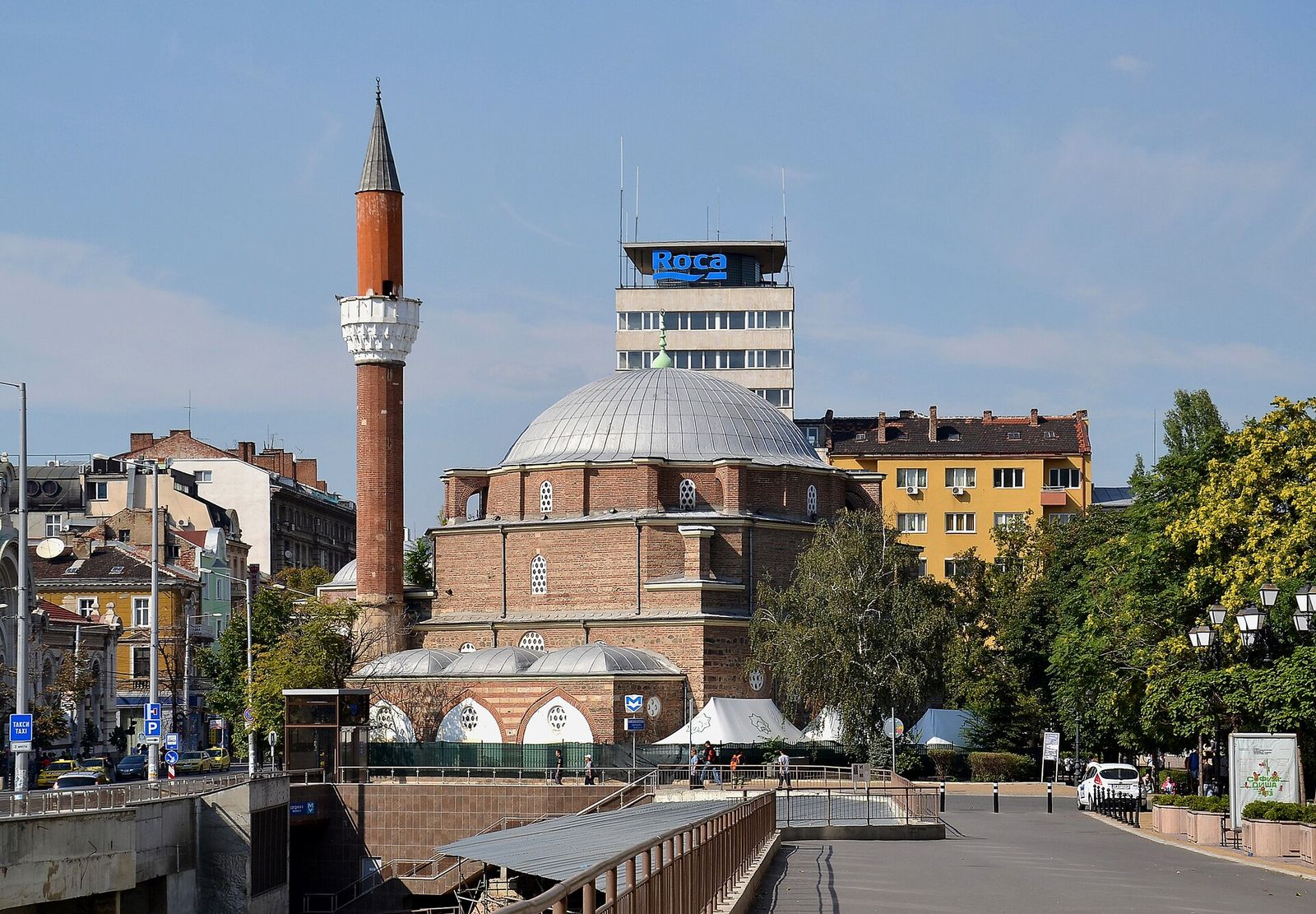
Across Maria Luiza Boulevard stands Banya Bashi Mosque, built in 1566 and the only working mosque in Sofia. Visitors are welcome between prayers if they dress modestly, and its name comes from the baths beside it.
The hot mineral taps
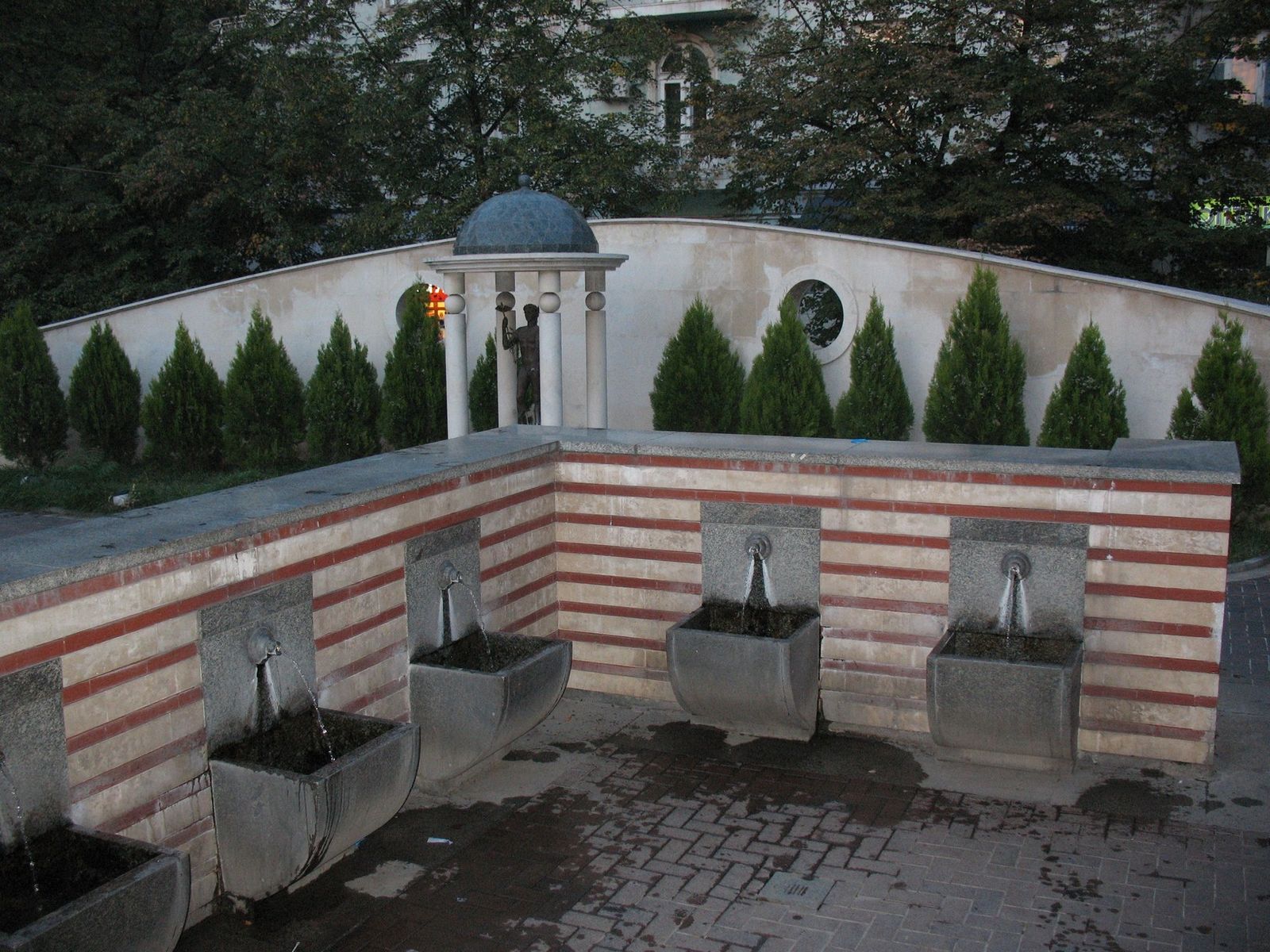
Beside the mosque, locals fill big plastic bottles with hot spring water from free spouts set in striped walls. The building behind them is the old Central Mineral Baths, now the Museum of the History of Sofia, €5 for adults.
St Nedelya Church
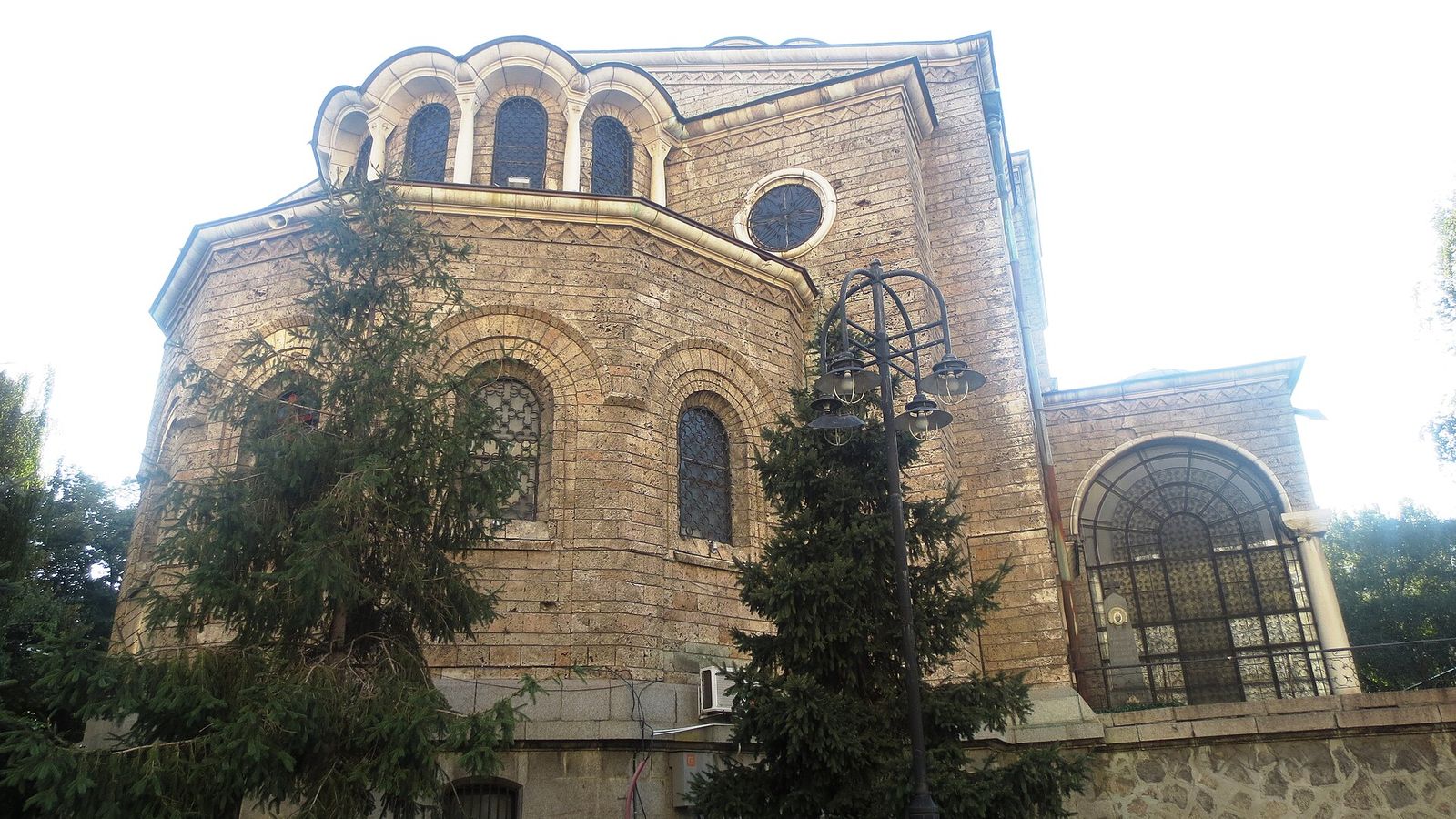
St Nedelya, the Orthodox church on St Nedelya Square, stands where a church has stood since the 10th century, and a bomb attack inside it killed 150 people in 1925. It's one of the churches in Sofia I walk into most often, and it sits right beside the free Roman streets of Ancient Serdica around the metro station.
St Joseph's Cathedral
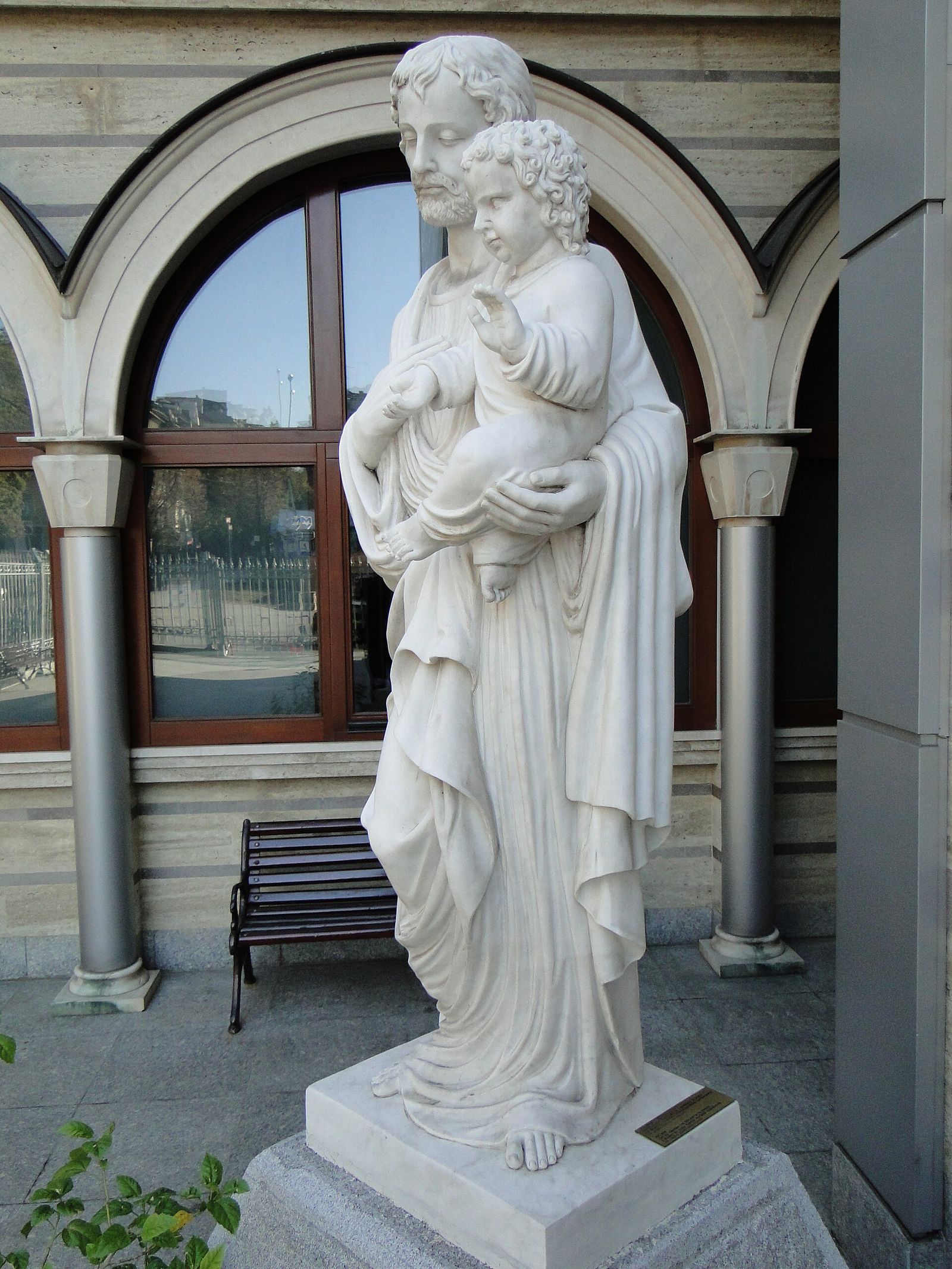
The fourth house of worship is St Joseph's, Sofia's Catholic cathedral, on Todor Alexandrov Boulevard. The old cathedral was wrecked in the bombing of 1944, and today's modern building has the excavated Western Gate of Serdica right beside it. A white marble statue of St Joseph holding the infant Jesus stands outside.
This is the morning loop I give friends, and it costs €15 in tickets: €10 for the synagogue and €5 for the history museum, with every other stop free.
| Time | Stop | Cost |
|---|---|---|
| 9am | Sofia Synagogue and The Niche | €10 |
| 10am | Coffee and a wander round Halite | Free to walk in |
| 10.30am | Banya Bashi Mosque, between prayers | Free |
| 10.50am | Fill a bottle at the hot mineral taps | Free |
| 11am | Museum of the History of Sofia | €5 |
| 12pm | St Nedelya, the Serdica ruins and St Joseph's | Free |
Key takeaways
- On a Friday to Sunday weekend, go on Friday or Sunday at 9am, because Saturdays and Jewish holidays are closed.
- Use the audio guide that comes with the €10 ticket, and allow 45 minutes to an hour inside.
- Look up at the balcony for Gredi Assa's window, which marks the 1944 bomb that hit the building and never went off.
- The mosque, the mineral taps, St Nedelya and St Joseph's are all within about 10 minutes' walk.
Frequently asked questions
Is the Sofia Synagogue open on Saturdays?
No. It closes every Saturday for Shabbat, and on Bulgarian national holidays and Jewish holidays. Visits run Sunday to Friday, 9am to 5pm.
How much does it cost to visit the Sofia Synagogue?
An adult ticket costs €10, and students and seniors pay €8. Groups of 10 or more pay €6 each. Every ticket includes The Niche exhibition, the audio guide and permission to take photos, and cards are accepted.
Can tourists attend a service at the Sofia Synagogue?
Yes, if you arrange it first. Contact the synagogue office at least 3 days before the service you'd like to attend.
What are the biggest synagogues in Europe?
Budapest's Dohány Street Synagogue is the largest in Europe, and the Sofia Synagogue is the third-largest. It's also the largest in South-eastern Europe, with 1,170 seats when it opened in 1909.
Who designed the Sofia Synagogue?
The Austrian architect Friedrich Grünanger designed it, and it resembles the Leopoldstädter Tempel in Vienna. Building started on 13 November 1905, and it opened on 9 September 1909.
What is Sofia, Bulgaria famous for?
Sofia is known for Alexander Nevsky Cathedral, Vitosha mountain on its southern edge and its hot mineral springs. It's also famous for four houses of worship a few minutes apart: an Orthodox church, a mosque, this synagogue and a Catholic cathedral.
Is Sofia the oldest city in the world?
No, but it is very old. People were using its hot springs by the 6th century BC, and the Romans built the city of Serdica on the same spot.
How long do you need at the Sofia Synagogue?
Plan on 45 minutes to an hour. That covers the hall with the audio guide, The Niche exhibition and time under the chandelier.
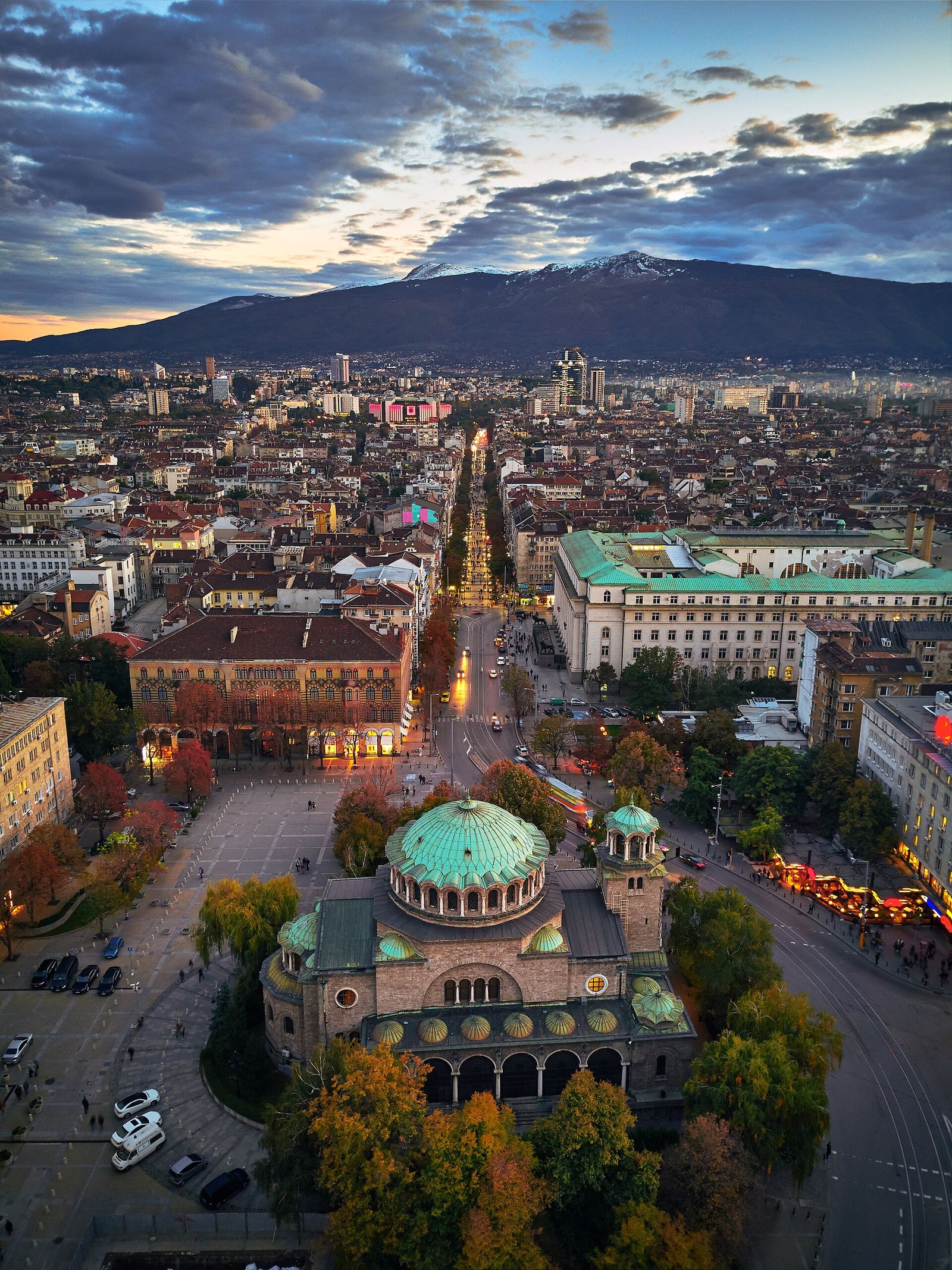
11 Best Things to Do in Sofia: My Personal Favourites
The best sights in Sofia sit close together and most are free. My 11 favourites, with prices, hours and a weekend plan.
Read the guide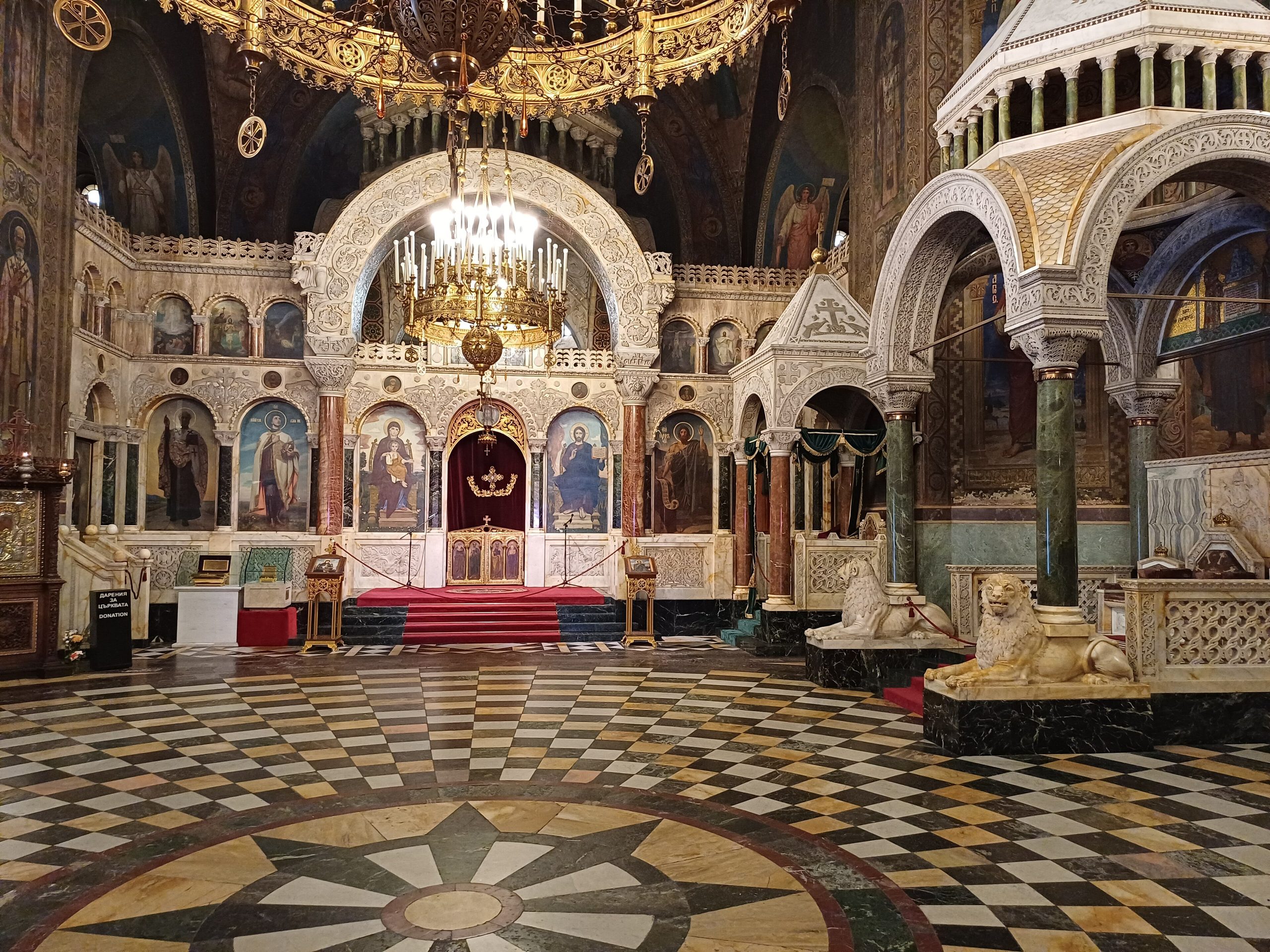
Alexander Nevsky Cathedral in Sofia: My Guide to Visiting
Sofia's gold-domed cathedral is free and open every day. How I visit it, from the crypt icons to the market outside.
Read the guide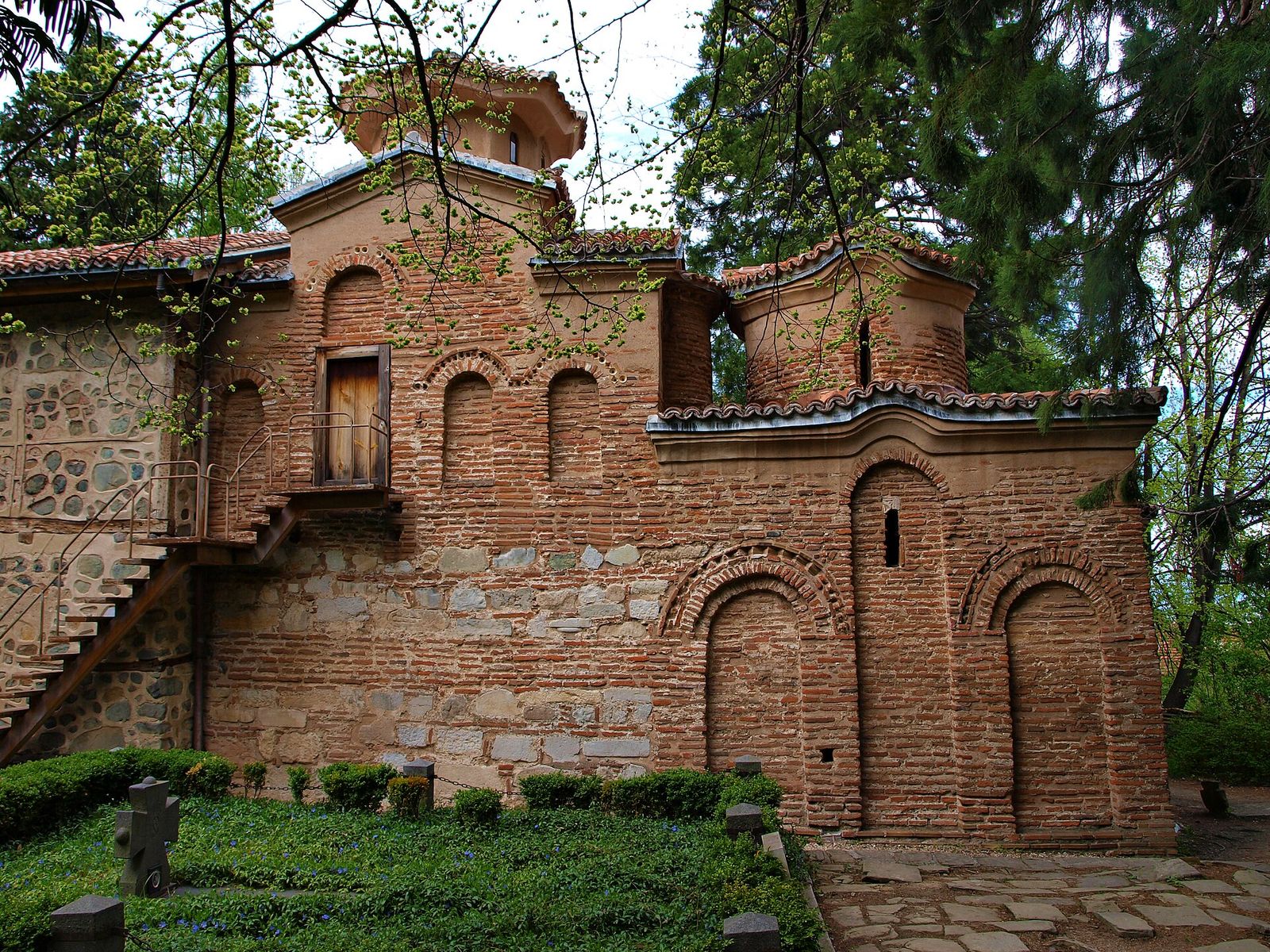
Boyana Church in Sofia: The Frescoes and How I'd Visit
A tiny UNESCO church at the foot of Vitosha, painted in 1259. What it costs, the rules and how I fit it in.
Read the guide