Melnik, Bulgaria: Wine Cellars, Sand Pyramids and Rozhen Monastery
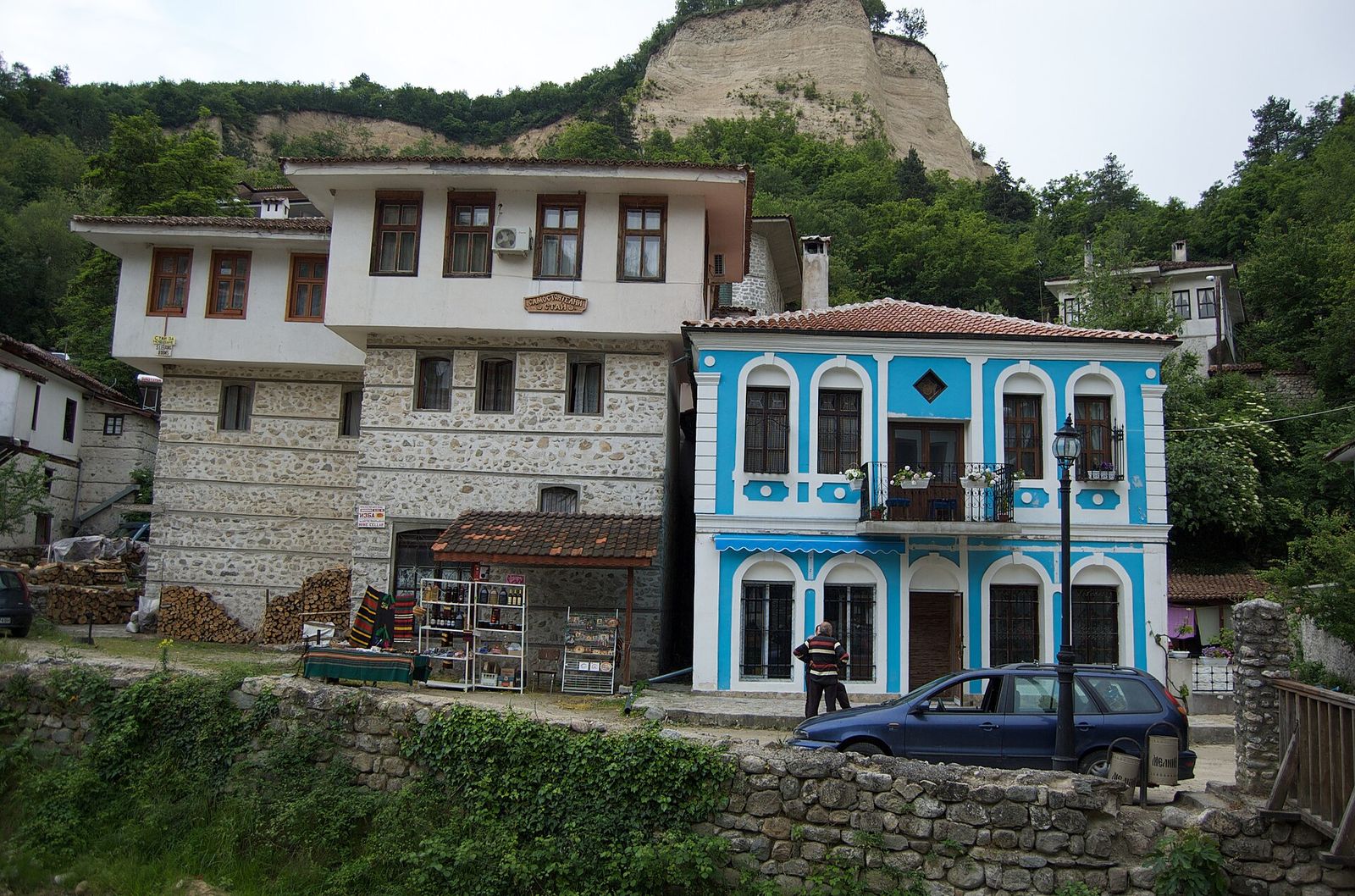
Melnik is Bulgaria's smallest town and one of its oldest wine names: a few hundred people, white stone houses and wine cellars dug into sandstone cliffs, about 180 km south of Sofia near the Greek border. It's where I go when I want good wine and a proper walk on the same weekend. Here's how I get there, what I see, where I taste and how I time the walk through the sand pyramids to Rozhen Monastery.
Is Melnik worth the trip from Sofia?
Yes, if you give it a night. Melnik is the trip on my list of day trips from Sofia that I always turn into an overnight. It had 385 residents in 2008, which makes it the smallest town in Bulgaria, and it sits 440 metres up in the foothills of the Pirin Mountains with 96 buildings listed as cultural monuments.
In 1209 Melnik became the capital of Despot Alexius Slav's own small principality. By the late 18th century it had about 20,000 people, 1,300 houses and 70 churches. Then a fire destroyed most of it, and at the end of the Second Balkan War in 1913 its Greek families left for Greece. What's left is one long street of white houses along a creek, with sandstone cliffs on both sides.
Wine is why Melnik is famous. Wine-making here goes back to at least 1346, and in the 17th and 18th centuries the town sold its wine mainly to England and Austria. Local legend makes it Winston Churchill's favourite.
Skip it if you only have a weekend in Sofia and no car. The round trip takes most of two days by bus, while Plovdiv and Koprivshtitsa are easy day trips by bus or train.
How to get from Sofia to Melnik
Melnik sits in the south of the Struma valley, towards the Greek border. A car is the easy way. Public transport works if you change in Sandanski, the nearest sizeable town.
| Option | How it works | Time from Sofia | Best for |
|---|---|---|---|
| Hire car | Struma motorway south past Dupnitsa and Blagoevgrad, then the road east to Melnik | 2.5 to 3 hours | Most people, and anyone stopping at Rila Monastery |
| Bus and local bus | Bus from Sofia to Sandanski, then one of 3 local buses a day | Depends on the Sandanski connection | Travellers without a car and with time |
| Bus and taxi | Bus from Sofia to Sandanski, then a taxi for 24 km | About 30 minutes from Sandanski by taxi | A missed local bus or a late arrival |
| Direct bus | One bus a day between Sofia and Melnik | Confirm the time locally | Arriving without a change |
Sofia to Melnik by car
I drive: south out of Sofia on the Struma motorway past Dupnitsa and Blagoevgrad, off near Sandanski, then a smaller road east into Melnik. Allow 2.5 to 3 hours each way with a coffee stop.
Bulgaria's roads outside towns need the e-vignette, the electronic road toll, and hire cars normally come with one. Once I've parked at my guesthouse, the car stays put until I leave.
Sofia to Melnik by bus via Sandanski
Buses run from Sofia to Sandanski, and from there 3 local buses a day carry on to Melnik and Rozhen. On the 2023 timetable they left Sandanski at 7.40am, 11.40am and 3.30pm and headed back about 1 hour 20 minutes later, so ask for the current times when you buy your Sofia ticket and pick a bus that connects.
If you miss the last local bus, a taxi from Sandanski covers the 24 km in about 30 minutes. Agree the fare before you get in. One bus a day also links Melnik with Sofia directly, and I'd ask in town for its time the day before I need it.
What to see in Melnik
Melnik takes about 15 minutes to cross on foot. I give the town one afternoon and keep the next morning for Rozhen.
The old town along the creek
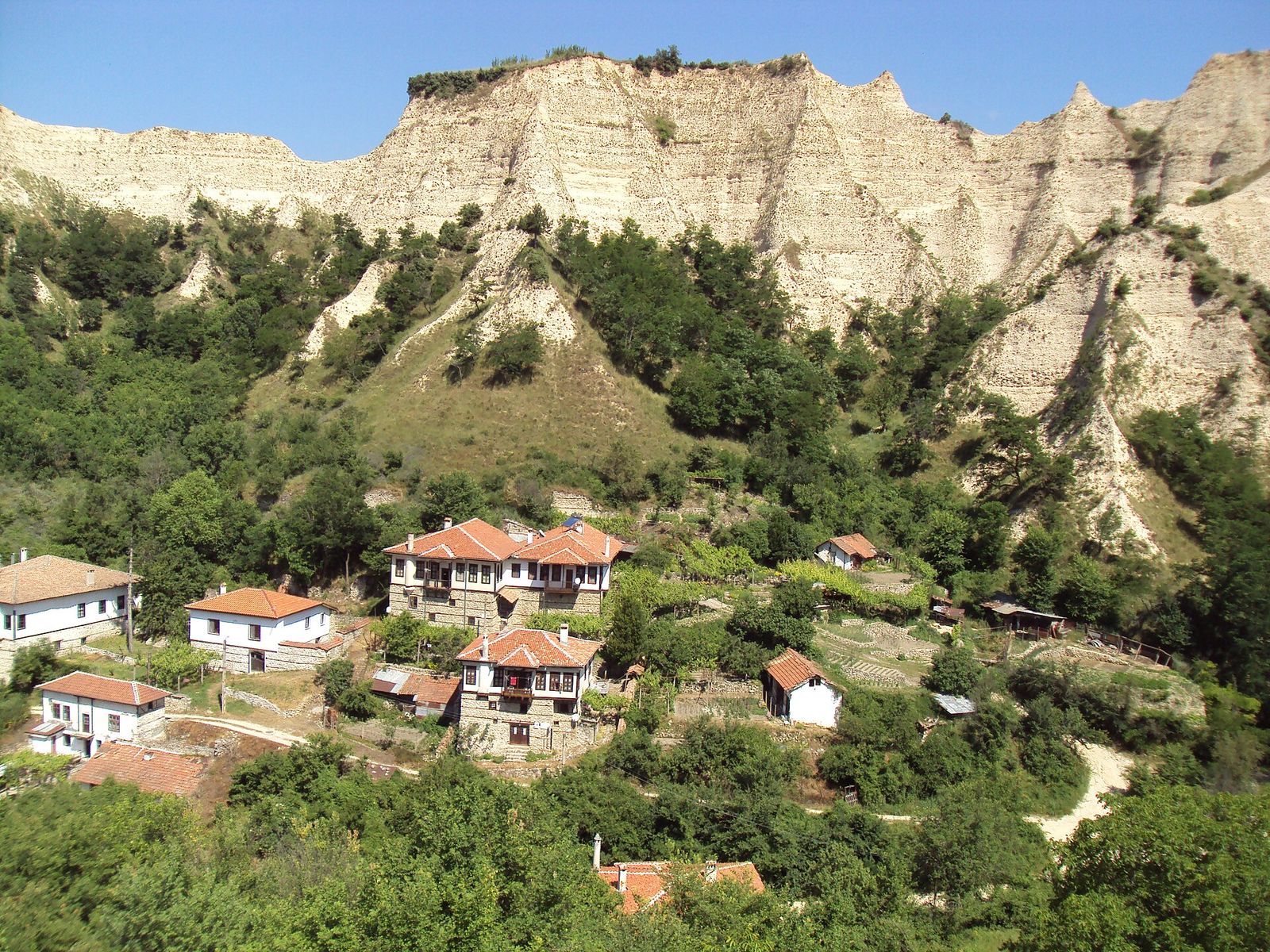
Melnik's houses line both banks of the creek through the middle of town: white upper floors over grey stone, cellar doors at street level and pale sandstone cliffs behind. The Romans left a bridge here that still stands.
In the little park at the entrance to town, across from the town hall, stands a statue of the rebel leader Yane Sandanski, with a plane tree several centuries old beside it. Pashov House, built in 1815, holds the town's history museum. St Petka church sits in the forest a 5 to 10 minute walk from town, and I take that lane when I want ten quiet minutes under the trees.
The Byzantine House
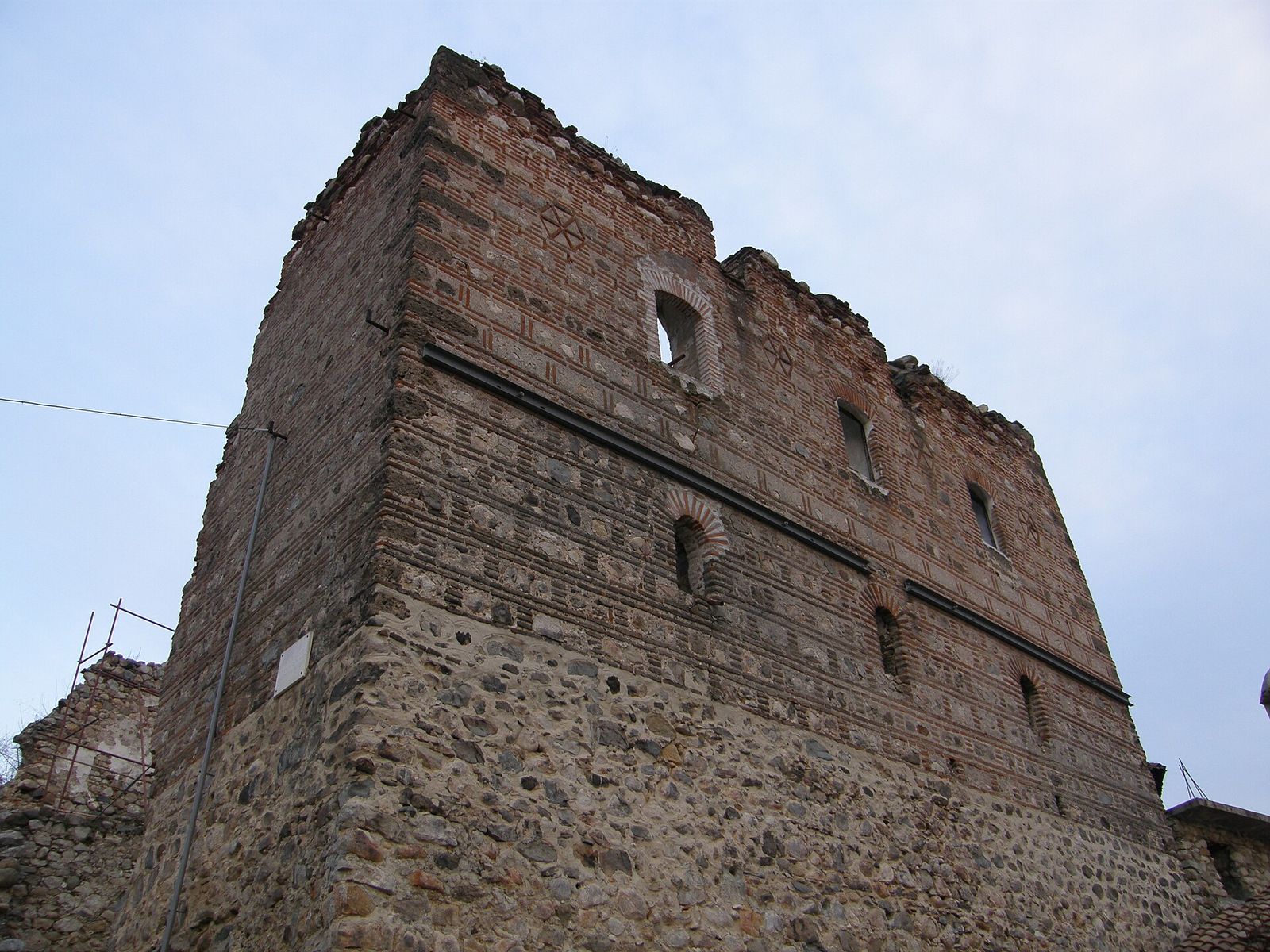
The Byzantine House, also known as the Boyar House (Болярска къща), is one of the oldest civilian buildings in the Balkans. It was probably built in the 12th or 13th century as a fortified house, and people reportedly lived in it until the 20th century. Its tall walls of stone striped with red brick still stand.
Despot Slav's fortress and the hill above town
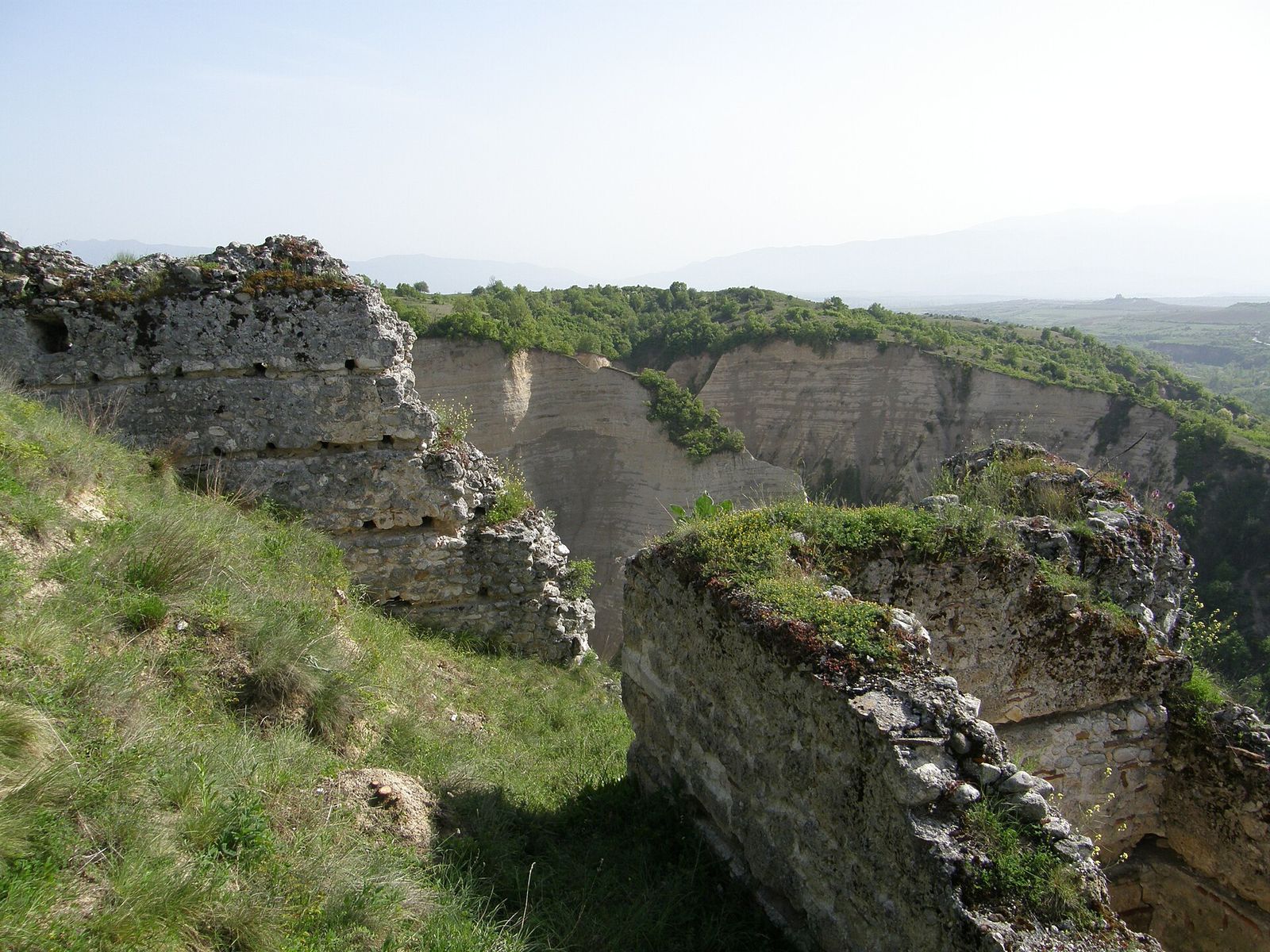
The hill on the south side of town holds what's left of medieval Melnik: the ruins of Despot Slav's fortress, about 15 minutes' walk from the centre, the 13th-century church of St Nicholas, the restored Spiliotissa chapel and the foundations of the monastery of St Charalampius. Two paths go up, a steep one behind Kordopulov House and an easier one behind the road bridge.
From the top you get the best view in town: red roofs, the creek and the sandstone cliffs across the valley.
The Melnik sand pyramids
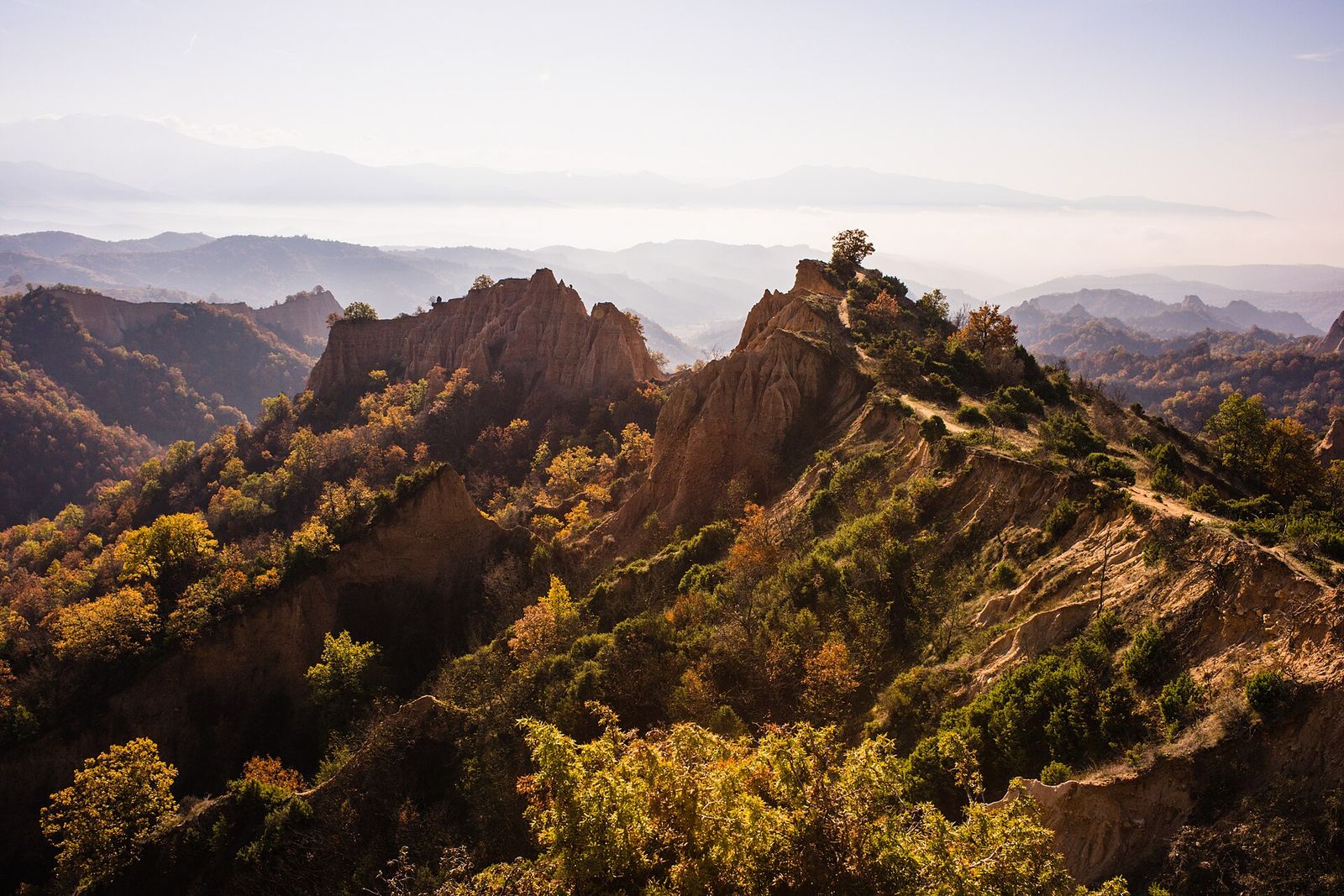
The Melnik sand pyramids (Мелнишки пирамиди), also called the earth pyramids, are the cliffs, spires and knife-edge ridges around the town, carved by heavy rain out of sand and clay. They cover about 17 square kilometres between Melnik, Kurlanovo and Rozhen, and the tallest rise to about 100 metres.
From the street you see them as pale walls above the roofs. The best views are from the ridge on the path to Rozhen, where you look down on rows of sandy peaks with forest growing in the gullies between them.
Walking from Melnik to Rozhen Monastery
The walk to Rozhen is my favourite thing to do in Melnik. The monastery is only about 3 km away as the crow flies, the trail is about 4 km, and it takes a little under 2 hours at an easy pace with photo stops. By road it's 7 km through Rozhen village.
From the Melnik Wine Museum, the trail follows the dry stream bed out of town between old stone walls: you go round the first wall through the grass on the left, then take the small path on the right up and over a second wall 3 to 4 metres high. Where the bed forks, keep right, past a small rock pyramid, then leave it at a bench on the left bank and climb through the forest. The first trail sign comes after 20 to 30 minutes, and the climb up to the ridge is the only hard part.
On the ridge the path splits. Right goes to a narrow viewpoint over the pyramids, the view I walk for, and left carries on to the monastery. The monastery path is narrow in places, with a flimsy handrail on the worst stretches, and then it widens. At a small hut, take the track to the left down to Rozhen.
| Plan | How | Walking time |
|---|---|---|
| Trail there, road back | Trail to Rozhen, then 7 km back on the road through Rozhen village | Half a day |
| Trail there and back | The same trail both ways, with the viewpoint twice | About 4 hours, so half a day |
| Bus there, trail back | Local bus to Rozhen, then the trail back to Melnik | About 2 hours |
In summer I'm on the trail by 9am, because the Struma valley gets hot by midday.
Rozhen Monastery
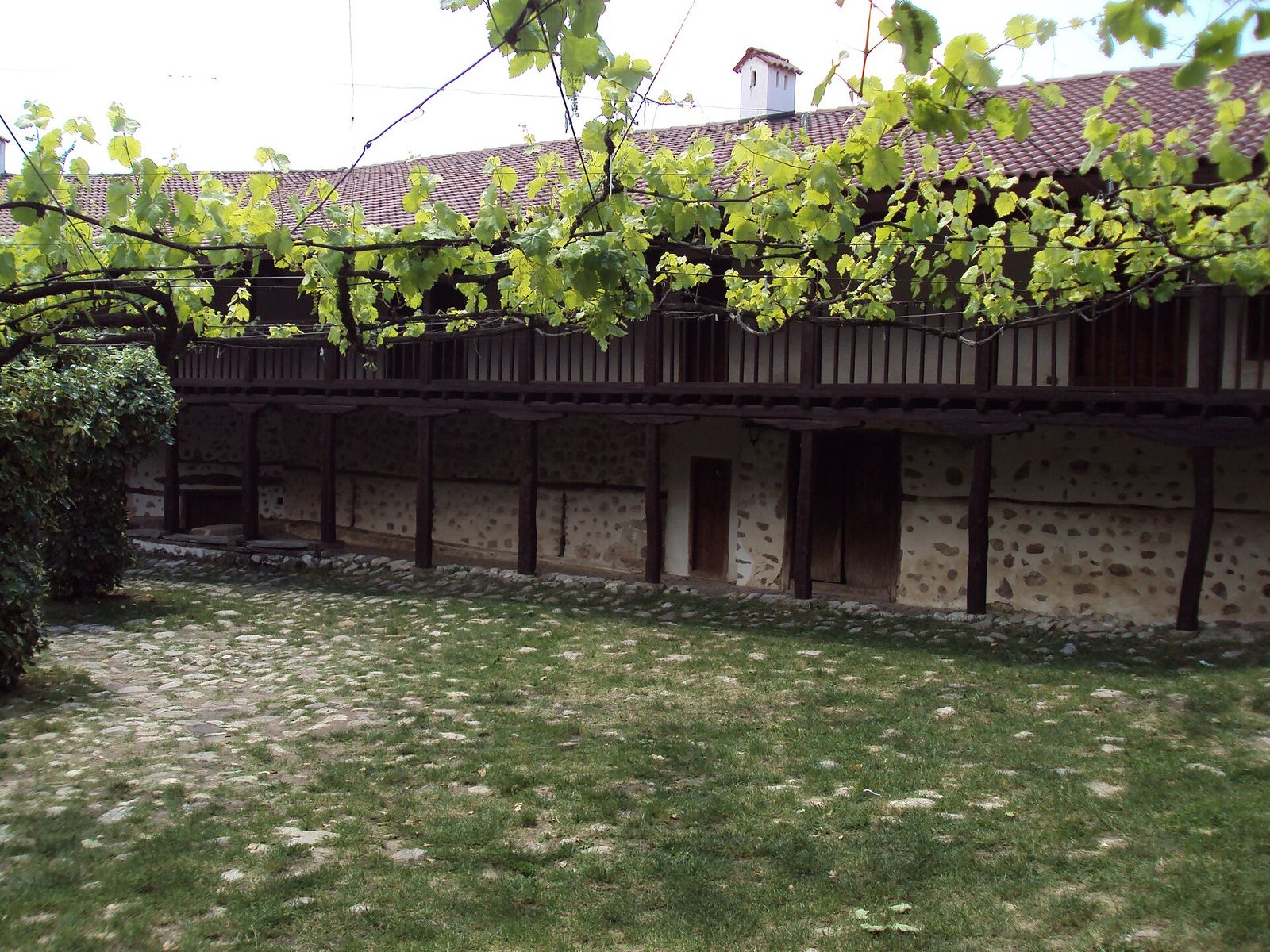
Rozhen Monastery, properly the Monastery of the Nativity of the Mother of God (Рождество Богородично), is the biggest monastery in the Pirin Mountains. It dates from the 13th century: the earliest grave found here held coins of the Byzantine emperor Michael VIII Palaiologos, who reigned from 1259 to 1282. Fire wrecked it between 1662 and 1674 and destroyed its library, and wealthy Bulgarians from across the country paid to rebuild it between 1715 and 1732.
I love it because it's small and plain next to Rila: a cobbled courtyard, wooden galleries round it, a grapevine overhead and the church in the middle. The church is the treasure. Its walls were painted in 1597 and some of those frescoes survive, along with the paintings on its south side from 1611. Above the church's central doorway runs a marble frieze from the 13th or 14th century.
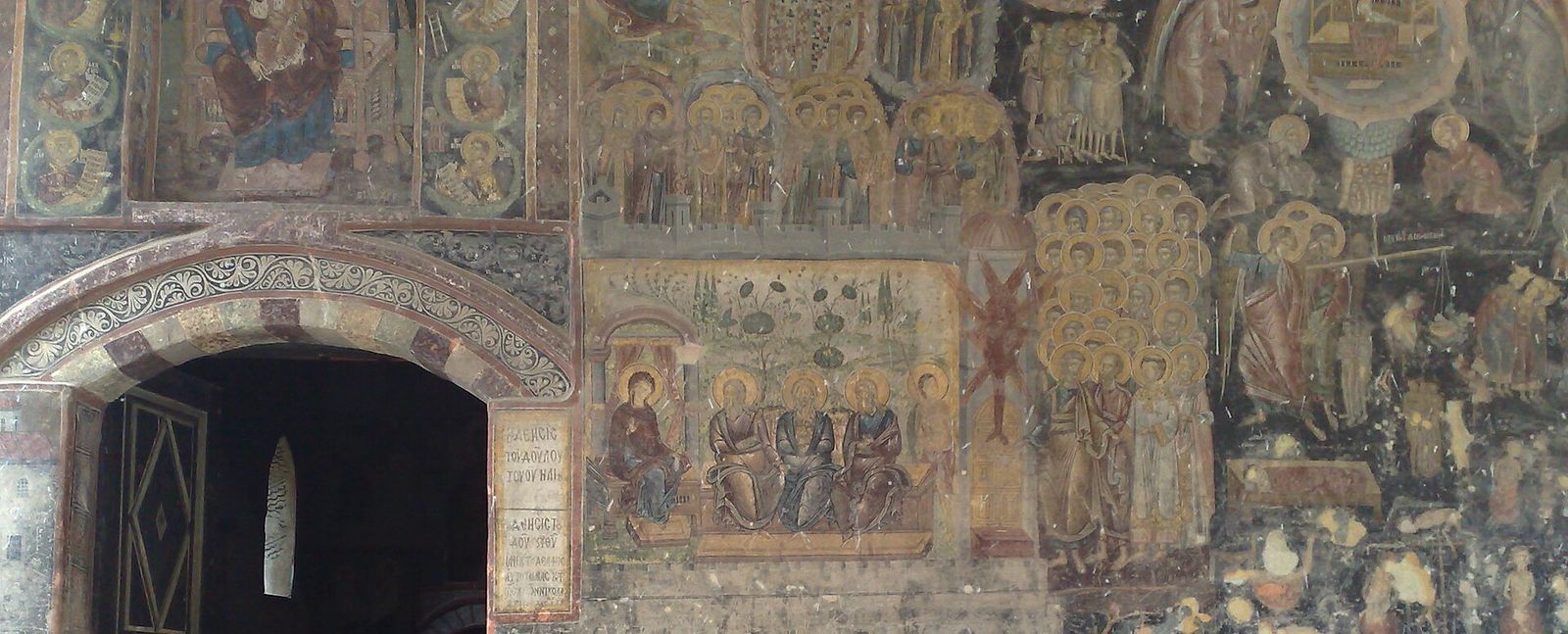
Rozhen is a working monastery with monks in residence, so cover your shoulders and knees and keep your voice down. Photos aren't allowed inside the church. Yane Sandanski, whose statue stands in Melnik, was killed near the monastery in 1915 and is buried beside it.
Rozhen village sits just below, with old houses, somewhere small for a drink or a bite and its own views over the pyramids. I stop there for a coffee before the walk back.
Where to taste wine in Melnik
Melnik wine comes from the Struma Valley, the warm south-western corner of Bulgaria's wine country, and two grapes carry the town's name. They're the Bulgarian grape varieties I'd taste here first, because they're rarely grown anywhere else.
| Grape | Colour | What it tastes like | A bottle to look for |
|---|---|---|---|
| Broad-leaved Melnik (Широка мелнишка лоза) | Red | Pale, high in acidity, cherry and tobacco; I like it with a few years in bottle | Orbelia Melnik Estate Reserve |
| Melnik 55, or Early Melnik Vine | Red | Riper and fruitier, sometimes off-dry; ripens towards the end of September | Logodaj Melnik 55, 14% |
| Keratsuda | White | A rare local white grape of the Struma Valley | Villa Melnik's orange wine, with Sauvignon Blanc, 12% |
Kordopulov House
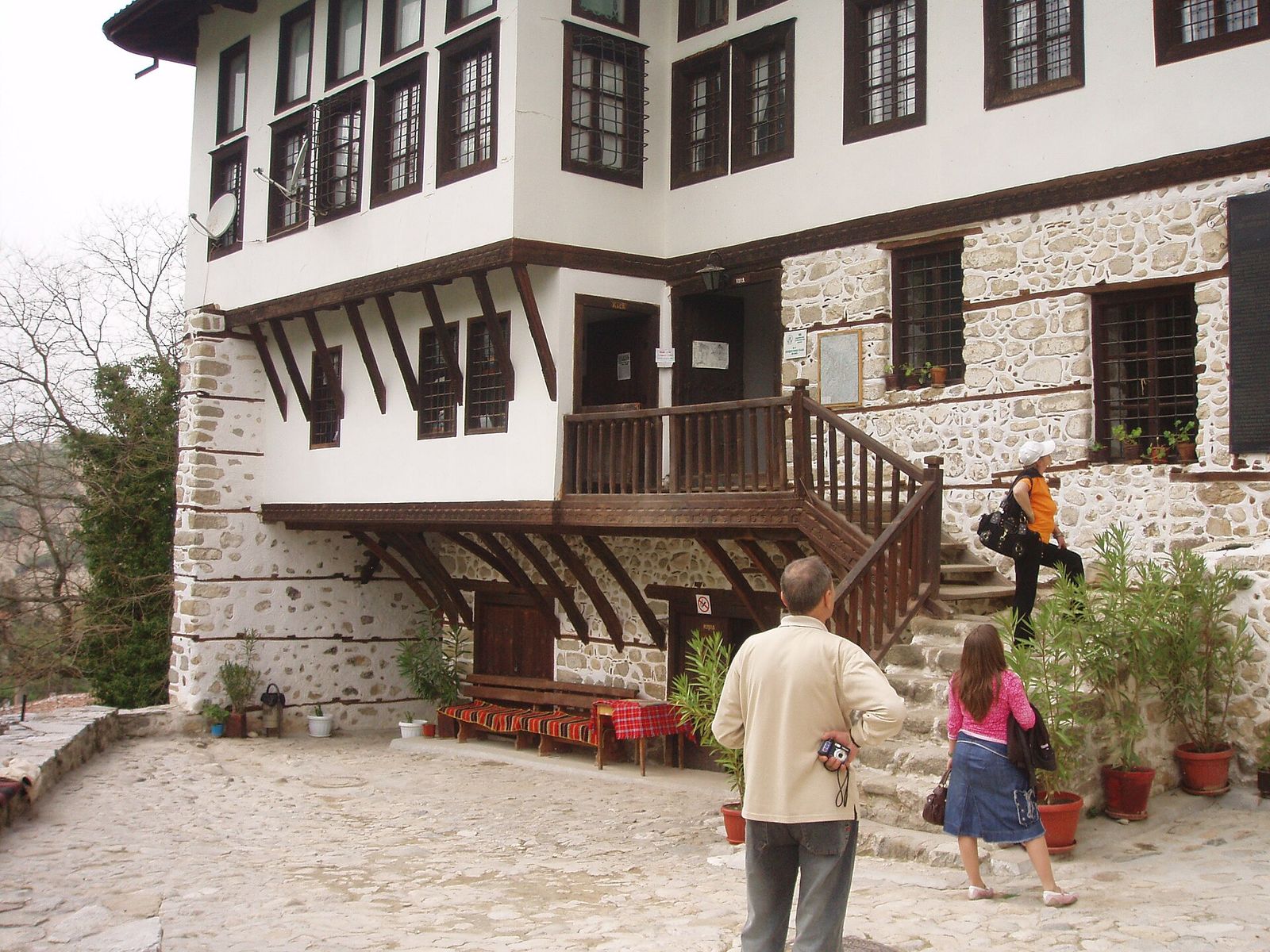
Kordopulov House is a wine merchant's mansion built in 1754 and named after Manolis Kordopulou, and its cellar, dug into the rock, is one of the biggest in Melnik. It's now a privately run museum and winery above the ruins of St Barbara's church. Upstairs, one bedroom has stained-glass windows and a ceiling patterned with Bulgarian, Greek, Turkish and oriental motifs, and rugs cover the wooden floors.
The entry ticket includes a taste of the house wine, and a fuller tasting of 3 to 5 wines with snacks is on offer too. It sits at the foot of the steep path up the fortress hill, so I pair the two in one afternoon.
The Melnik Wine Museum
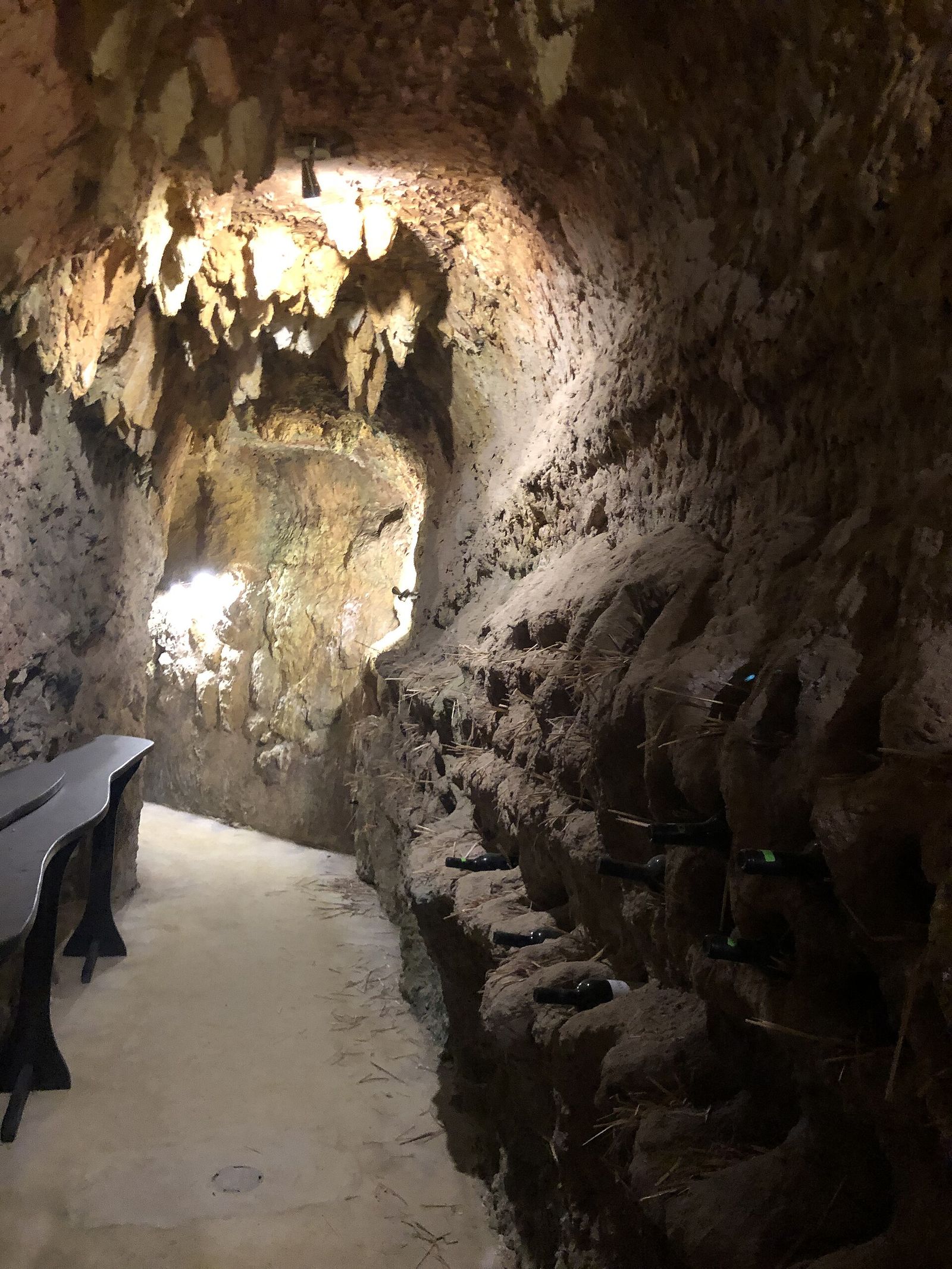
The privately run Museum of Wine keeps its bottles in niches along a tunnel cut into the sandstone, which is how Melnik's cellars keep wine: underground, at a steady temperature. I give it half an hour on my first afternoon.
The street cellars and the valley wineries
Along the main street, small cellars dug into the clay sell wine poured straight from the barrel, under signs reading Изба (cellar). The barrel wine is meant for drinking young, so in a tavern I order the house wine. The cheapest bottles on the street stalls are the ones I skip.
Around Melnik, Villa Melnik, a family winery that moves its wine by gravity, opens every day for tastings, and Sintica and Orbelus also make wine nearby. Villa Melnik's AplauZ Mavrud Reserve is one of the best Bulgarian wines I buy, at €14.27 a bottle in a Sofia wine shop in November 2026. Back in Sofia, the city's wine bars pour Broad-leaved Melnik by the glass.
Where to stay and eat in Melnik
Most rooms in Melnik are in traditional houses run by local families, and I pick one with a view of the cliffs. If Melnik is full, Sandanski, 24 km away, has far more choice.
The taverns serve traditional Bulgarian food: grilled meat, stews baked in clay pots, shopska salad and sirene cheese.
My two-day plan: Rila Monastery, Melnik and Rozhen
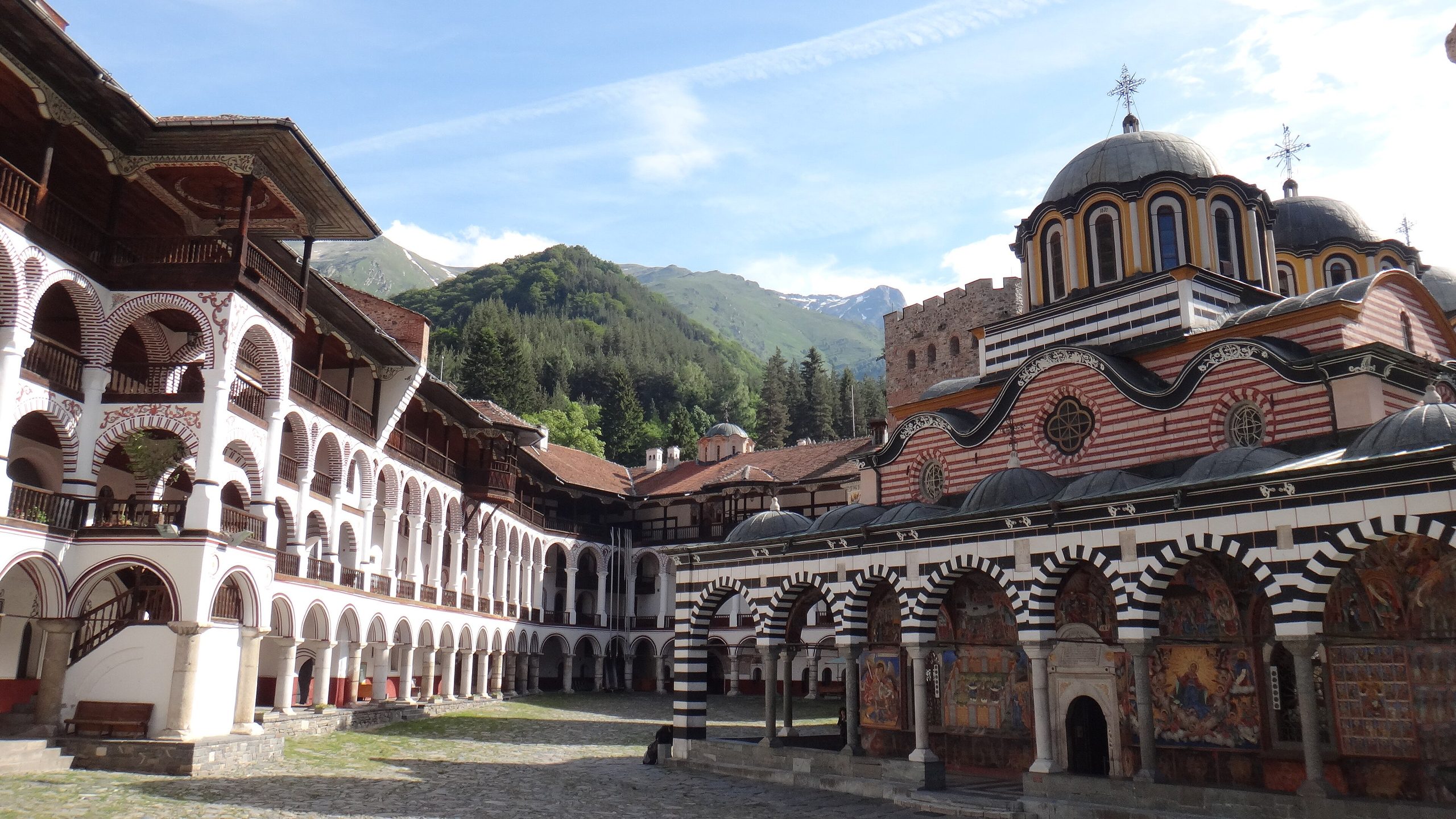
Rila is a detour off the same road south, so I join the two up. Rila Monastery is about 120 km from Melnik, about 2 hours 20 minutes by car, which makes it the obvious stop on the drive down.
| When | What I do |
|---|---|
| Day 1, 8am | Leave Sofia and drive about 2 hours to Rila Monastery |
| Day 1, 10am | 2 to 3 hours at Rila: the courtyard and church are free, and €12 covers the museums |
| Day 1, 1pm | Drive about 120 km south to Melnik |
| Day 1, late afternoon | Check in, the wine museum and Kordopulov House, then the fortress hill for sunset |
| Day 1, evening | A street cellar, then dinner |
| Day 2, 9am | The trail to Rozhen Monastery, a little under 2 hours |
| Day 2, late morning | The monastery, then coffee in Rozhen village |
| Day 2, early afternoon | The road back to Melnik and a late lunch |
| Day 2, 3pm | Drive about 180 km back to Sofia |
If you're heading on to Greece, the road carries on south to the border at Kulata, so Melnik makes a good overnight stop on the drive from Sofia to Thessaloniki. Bansko and the high Pirin sit on the far side of the mountains from Melnik, and I treat them as a separate trip.
When to go to Melnik
Spring and autumn are my favourite seasons here: the walk to Rozhen is cooler, and in autumn the forest between the pyramids turns gold. Late September brings the harvest, when Melnik 55 ripens.
The Rozhen trail starts up a dry stream bed, so after heavy rain I ask my guesthouse whether it's passable before setting off.
Key takeaways
- Melnik is about 180 km south of Sofia: drive in 2.5 to 3 hours, or take a bus to Sandanski and a local bus or taxi for the last 24 km.
- Stay at least one night, because the town, the fortress hill and the Rozhen walk fill two half days.
- The trail to Rozhen Monastery takes a little under 2 hours, and the right fork on the ridge gives the best view of the sand pyramids.
- Taste Broad-leaved Melnik and Melnik 55 at Kordopulov House and the street cellars, and pay in euro cash.
- Stop at Rila Monastery on the drive down, about 120 km from Melnik.
Frequently asked questions
Is Melnik worth visiting?
Yes, for a night. Bulgaria's smallest town has 96 protected buildings, wine cellars cut into sandstone and a 2-hour trail through the sand pyramids to Rozhen Monastery. It sits high on my list of the best places to visit in Bulgaria.
Can you do Melnik as a day trip from Sofia?
Only by car, and it's a long day: about 180 km and 2.5 to 3 hours each way. That leaves time for the town or the Rozhen walk, but rarely both, so I stay a night, and without a car a night is the only realistic plan.
How do you get from Sofia to Melnik?
Drive south on the Struma motorway, about 180 km and 2.5 to 3 hours. Without a car, take a bus to Sandanski, then one of 3 local buses a day or a 24 km taxi ride to Melnik. One bus a day also runs directly between Sofia and Melnik.
How long is the walk from Melnik to Rozhen Monastery?
A little under 2 hours each way on the trail through the sand pyramids, which is about 4 km long. The road is 7 km through Rozhen village, and the round trip takes about half a day.
What is Melnik famous for?
Wine, sand pyramids and its size. Melnik has made wine since at least 1346, sandstone pyramids up to 100 metres tall surround it, and with 385 people in 2008 it's the smallest town in Bulgaria.
What are the main wine regions in Bulgaria?
Bulgaria has two official wine regions, the Danubian Plain and the Thracian Lowlands, and people usually talk about five: the Danube Plain, the Black Sea Coast, the Rose Valley, the Thracian Lowlands and the Struma Valley. Melnik sits in the Struma Valley, the southernmost, near the Greek border. Each of the five Bulgarian wine regions has its own grapes: Mavrud in the Thracian Lowlands, Gamza in the Danube Plain and Melnik here.
What should you avoid doing in Bulgaria?
Don't take a nod for yes: many Bulgarians nod for no and shake their heads for yes, so confirm with words. Cover your shoulders and knees in monasteries such as Rozhen and Rila, and carry euro cash in small towns like Melnik.
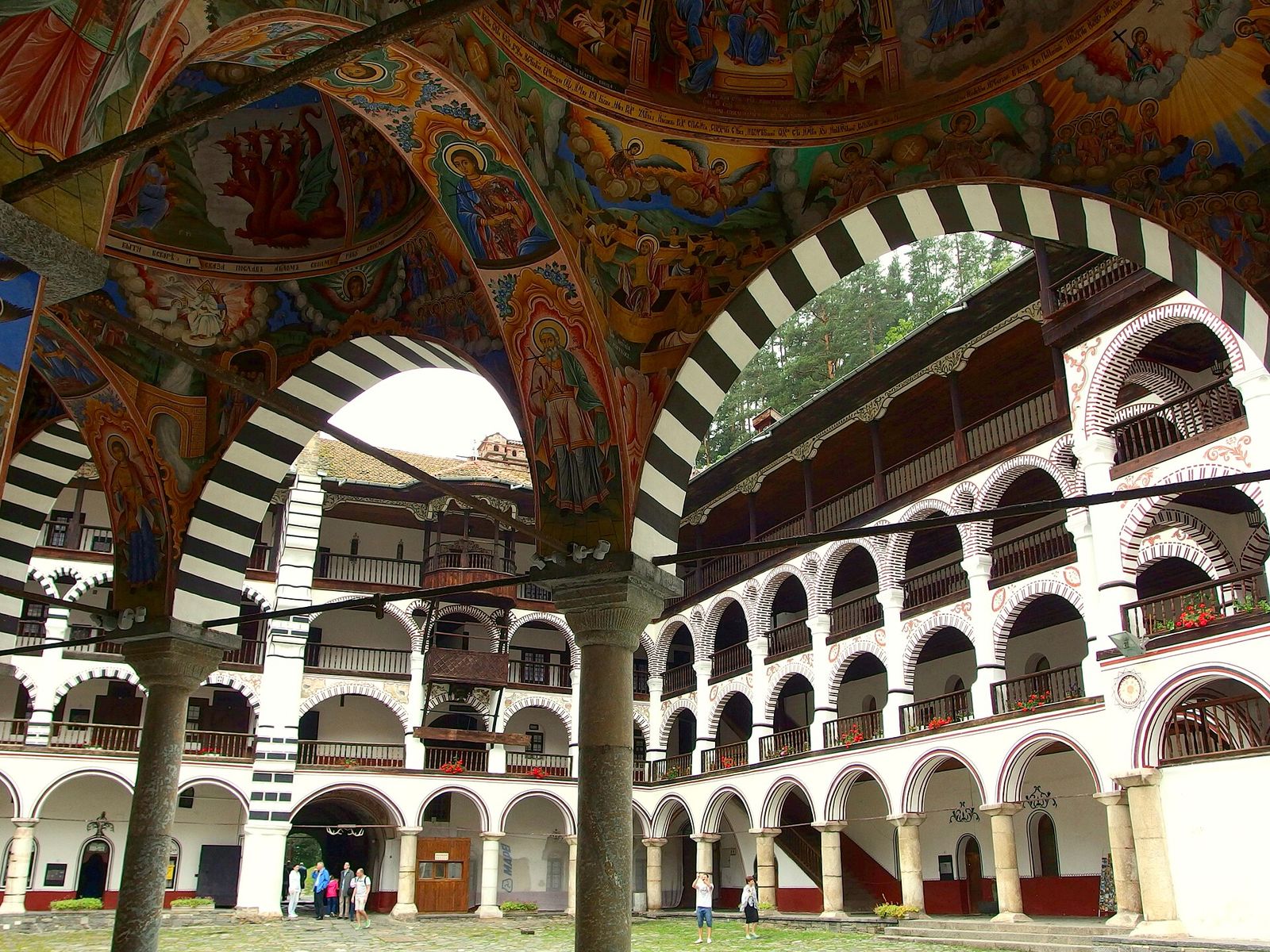
12 Best Day Trips from Sofia (and How I Get There)
My 12 favourite trips out of Sofia by bus, train and hire car, and the ones that deserve a night away.
Read the guideRila Monastery Day Trip from Sofia: Bus, Car and Timings
Bulgaria's biggest monastery is free to walk into and 2 hours from Sofia. How I get there myself, and what to see.
Read the guide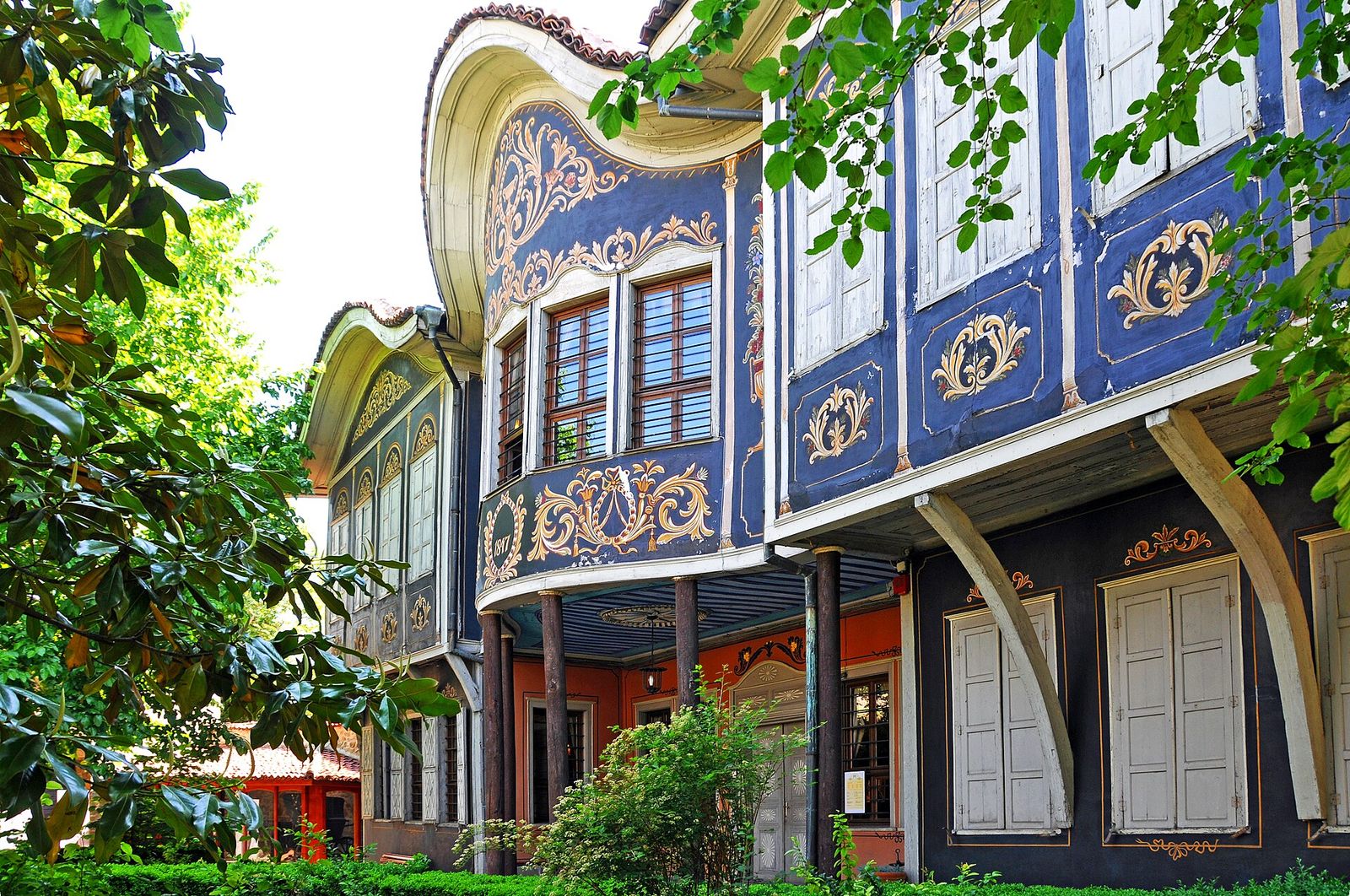
Plovdiv Day Trip from Sofia: Bus, Train and My One-Day Route
Plovdiv by bus or train from Sofia, and the route I walk to fit the Old Town, the Roman theatre and Kapana into one day.
Read the guide