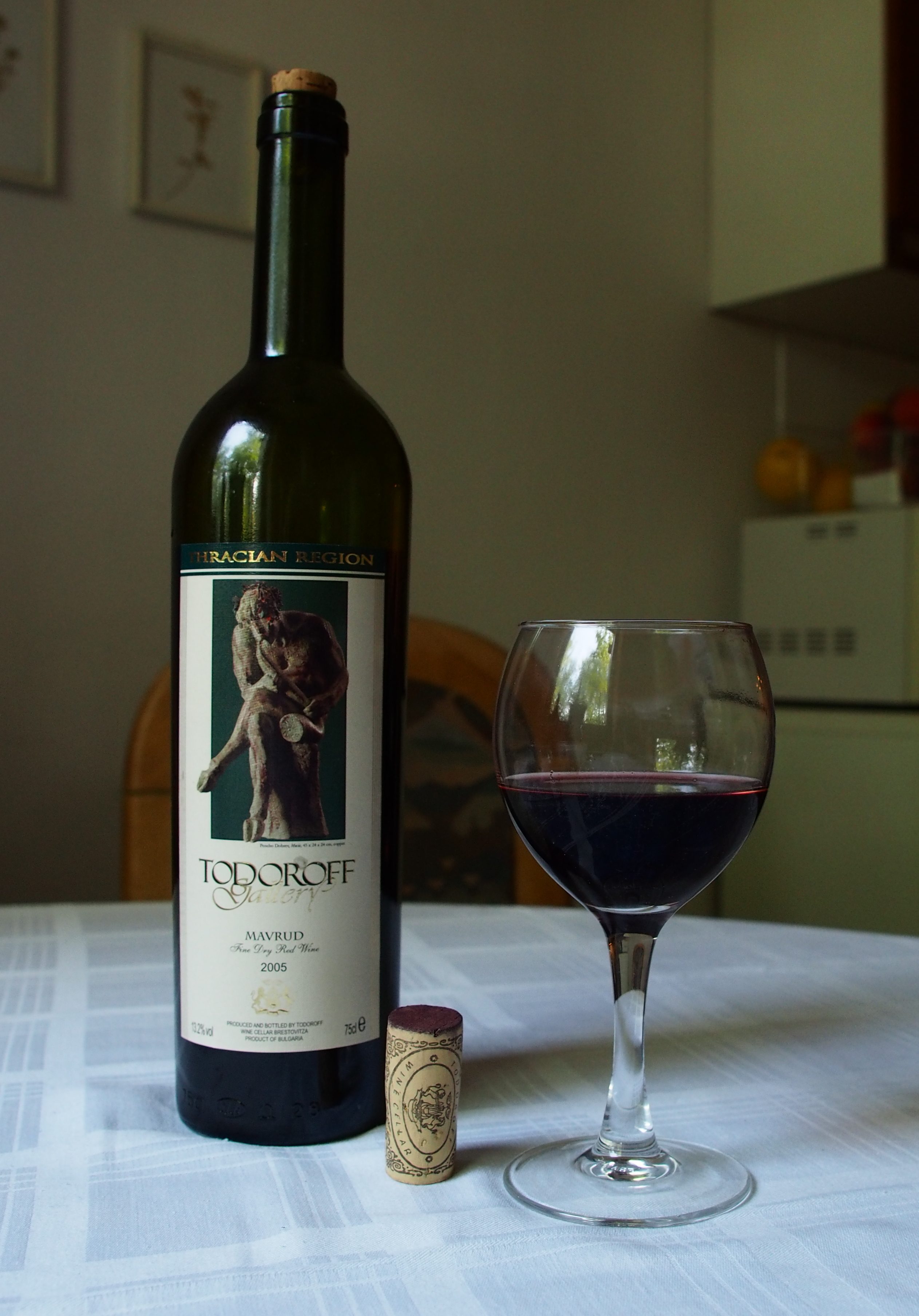
Bulgarian Wine: A Visitor's Guide to What to Order and Buy
Bulgaria filled British supermarket shelves with cheap Cabernet in the 1980s, and plenty of us haven't given its wine a thought since. Living in Sofia cured me of that. The bottles worth ordering now come from local grapes such as Mavrud, Melnik and Misket. This is my visitor's guide: what to order, how to read the label, what a bottle costs and how much you can carry home to the UK.
Is Bulgarian wine any good?
Yes, and the best of it is very good. Bulgaria has more than 260 registered winemakers, and the ones I rate work with local grapes you'll rarely see on a British wine list.
House wine in a tavern ranges from lovely to something I'd cook with, and supermarket Merlot tastes the same here as anywhere. Spend a few euros more on a local grape from a small estate and you get a dark, plummy Mavrud from the plains around Plovdiv or a firm, cherry-scented Melnik from the warm south-west.
My one rule for visitors is to order the grape they've never heard of.
A short history of Bulgarian wine
The Thracians made wine in these valleys long before there was a Bulgaria, and their kings drank from gold.
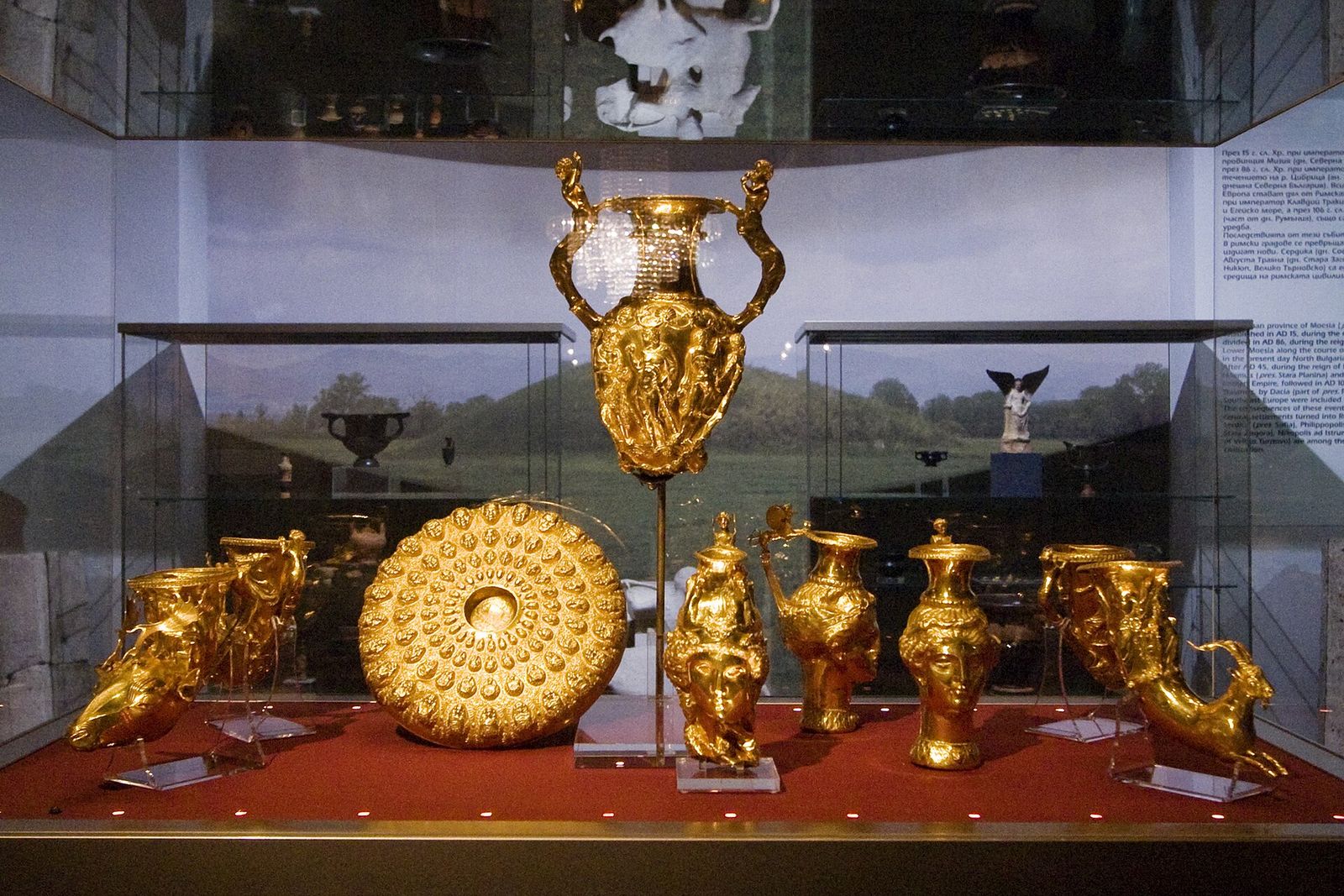
The Panagyurishte Treasure is a Thracian royal drinking set of nine vessels in 24-carat gold, 6.164 kilograms of it, made at the turn of the 4th and 3rd centuries BC. Three brothers working at a tile factory near Panagyurishte found it on 8 December 1949. The real set travels to exhibitions abroad. While it's away, replicas stand in for it in Sofia, Plovdiv and Panagyurishte, so check before you go looking for it at the National Historical Museum.
Around 1980 Bulgaria was the biggest wine producer in the Eastern Bloc, and in the early 1980s its cheap Cabernet Sauvignon and Merlot were the budget red in every British supermarket. Then it fell apart. Gorbachev's anti-alcohol campaign hit the Soviet market, and land reform after communism split the big state vineyards into small plots. Many vines were pulled up, and Chile took over as Britain's budget red.
Bulgaria's harvested vineyard area fell from 85,320 hectares in 2007, the year it joined the EU, to 36,551 hectares in 2016. What grew back is smaller and more interesting: family estates, organic growers such as Zagreus (organic since 2010) and an urban winery, Odessos, whose first vintage was 2020.
The Bulgarian grapes to order
Bulgarian wine lists name the grape, so seven names get you a long way. This is the table I'd want on my phone at a wine bar.
| Grape | On the label | Colour | What it tastes like | If you like this at home |
|---|---|---|---|---|
| Mavrud | Мавруд | Red | Dark, plummy, firm tannins | Malbec or Shiraz |
| Broad-leaved Melnik | Широка мелнишка лоза | Red | Pale, high acidity, cherry and tobacco | Nebbiolo |
| Melnik 55 | Мелник 55 | Red | Softer and rounder, ready younger | Merlot |
| Rubin | Рубин | Red | Deep colour, black fruit, pepper | Syrah |
| Gamza | Гъмза | Red | Red berries | Pinot Noir |
| Dimyat | Димят | White | Light and floral, dry or sweeter | Pinot Grigio |
| Misket | Мискет | White | Scented and grapey | Muscat or Gewürztraminer |
Mavrud is the flagship. It's dark enough to stain the glass, and it grows in the Thracian Lowlands around Plovdiv. Broad-leaved Melnik comes from the Struma Valley in the south-west, around the town it's named after, and Melnik 55 is its earlier-ripening offspring. My favourite Bulgarian wines to try are Mavrud and Melnik from small estates such as Rumelia, Zagreus and Logodaj.
For whites, Dimyat is the everyday white of the Black Sea coast and Misket the scented one. Red Misket has pink skins but makes white wine, and the Sungurlare Valley is known for it. In the south-west, look for Keratsuda, a rare local white that Villa Melnik turns into an orange wine with Sauvignon Blanc.
Merlot is the most planted grape in the Thracian Lowlands, followed by Cabernet Sauvignon, so a lot of Bulgarian wine is made from grapes you already know. Breeders have crossed the local ones too: Bouquet (Mavrud with Pinot Noir) and Gergana (Muscat Ottonel with Dimyat) are two more of the Bulgarian grape varieties you'll meet on a long wine list.
Bulgarian wine regions at a glance
Officially Bulgaria has two wine regions, both Protected Geographical Indications: the Danubian Plain in the north and the Thracian Lowlands in the south. Below them sit more than 50 Protected Designations of Origin, the village and district names. In conversation, Bulgarians talk about five regions.
| Region | Where | Grapes it's known for | Producers to look for |
|---|---|---|---|
| Danube Plain | North, along the Danube | Gamza, Rubin, Misket | Bononia Estate, Telish |
| Black Sea Coast | North-east | Dimyat, Misket, Chardonnay | Tsarev Brod, Odessos |
| Rose Valley | Centre, below the Balkan range | Red Misket | Chateau Copsa |
| Thracian Lowlands | South, around Plovdiv | Mavrud, Merlot, Cabernet Sauvignon | Rumelia, Zagreus, Bessa Valley, Terra Tangra |
| Struma Valley | South-west, around Melnik | Broad-leaved Melnik, Melnik 55, Keratsuda | Logodaj, Villa Melnik, Damianitza |
Of the Bulgarian wine regions, the two a visitor can reach from Sofia without much fuss are the Struma Valley and the Thracian Lowlands. Most of the country's Melnik grapes grow in the first, and Mavrud's heartland is the second.
How to order wine in a Sofia restaurant
In a mehana, the traditional Bulgarian tavern, dinner starts with a salad and a small glass of rakia, and the wine arrives with the main course. I order the bottle when the salad lands, so it's open and breathing by the time the grilled meat arrives.
House wine is наливно вино (nalivno vino), poured from a barrel or a tap and sold by the carafe. It's the cheapest wine on the menu and the most variable. I taste a glass before committing to a carafe. Bulgarian menus print the measure in millilitres beside the price, so read that number before you compare two drinks.
For two people over dinner I order a bottle from the list, which opens up the small estates. Bulgarians toast with наздраве (nazdrave) and look each other in the eye while they say it.
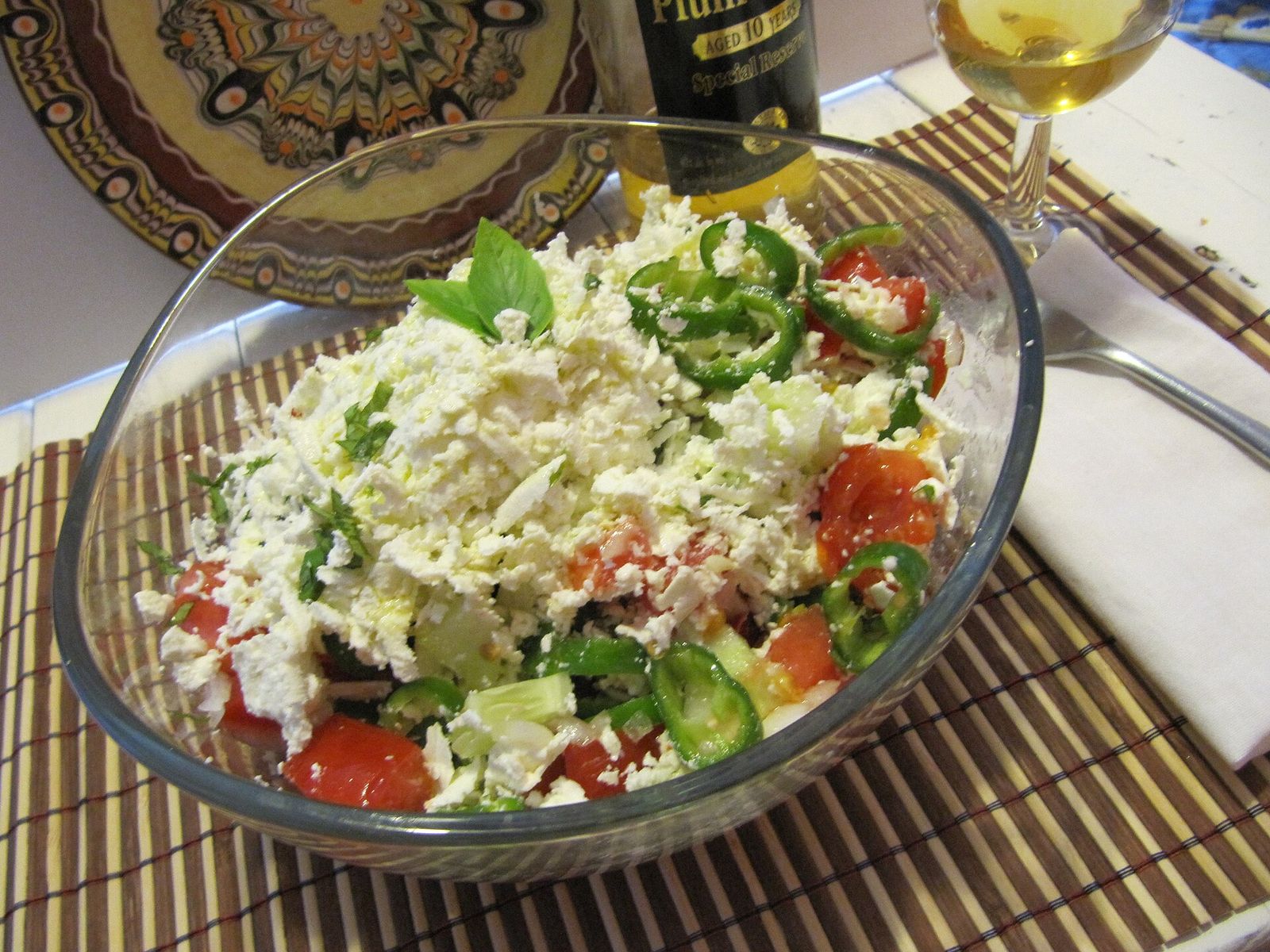
Shopska salad, grilled kebapche and kavarma in a clay pot are the Bulgarian food I order most, and each has a local grape that suits it.
| Dish | What I drink with it |
|---|---|
| Shopska salad (tomato, cucumber, white cheese) | A cold Dimyat or a dry Misket |
| Tarator (cold yoghurt and cucumber soup) | A dry rosé |
| Kebapche and kyufte from the grill | Gamza or Melnik 55 |
| Sarmi (stuffed cabbage or vine leaves) | Broad-leaved Melnik |
| Kavarma (pork stewed in a clay pot) | Mavrud |
| Sirene cheese and lukanka sausage | Rubin |
How to read a Bulgarian wine label
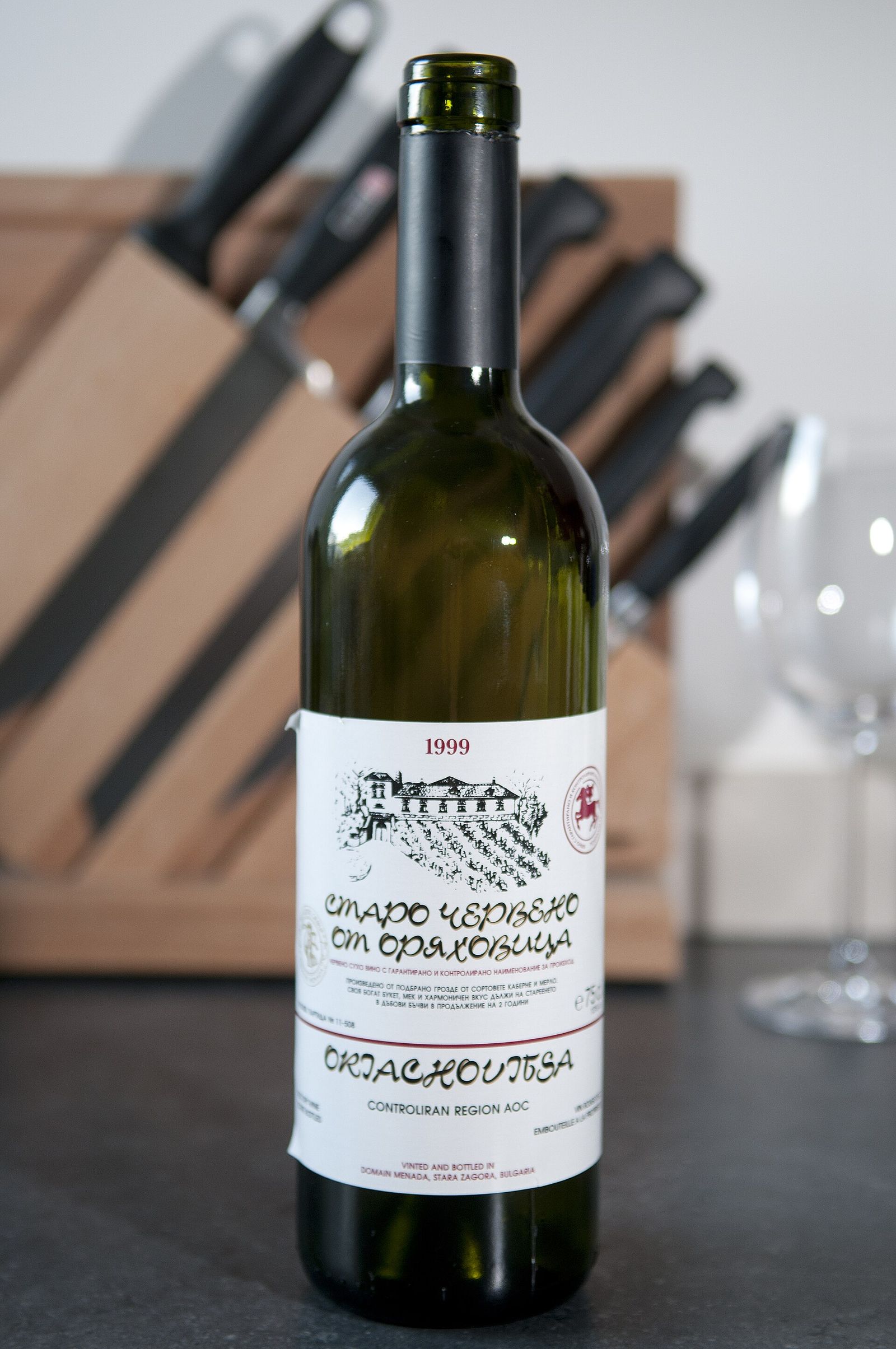
Labels are printed in Cyrillic, and ten words cover most of what you need. The bottle below says "Старо червено от Оряховица", old red from Oryahovitsa, a controlled appellation, made by Domaine Menada in Stara Zagora.
| On the label | Say it | Means |
|---|---|---|
| вино | vino | Wine |
| червено | cherveno | Red |
| бяло | byalo | White |
| розе | roze | Rosé |
| сухо | suho | Dry |
| полусухо | polusuho | Off-dry |
| полусладко | polusladko | Medium-sweet |
| реколта | rekolta | Vintage (the harvest year) |
| сорт | sort | Grape variety |
| изба | izba | Winery or wine cellar |
Grape names appear in the same Cyrillic as the grape table above. Spot Мавруд and сухо on one label and you've found a dry Mavrud.
What Bulgarian wine costs in Sofia
Wine is cheap here by British standards: a mid-range bottle costs about €6.60 in a Sofia shop.
Supermarkets such as Fantastico and Billa stock the big brands and a shelf of Mavrud and Melnik. Specialist wine shops carry the small estates, and that's where I buy the bottles I carry home.
Shop wine fits the rest of Sofia prices: a metro ride costs €0.80 and a cappuccino about €3.
Where I drink Bulgarian wine in Sofia
I drink Bulgarian wine in two kinds of place: an old-style mehana with dinner, and one of the wine bars in Sofia when the wine is the point. These are the two I'd start with, one of each.
Dinner in the cellars at Hadjidraganovite Izbi
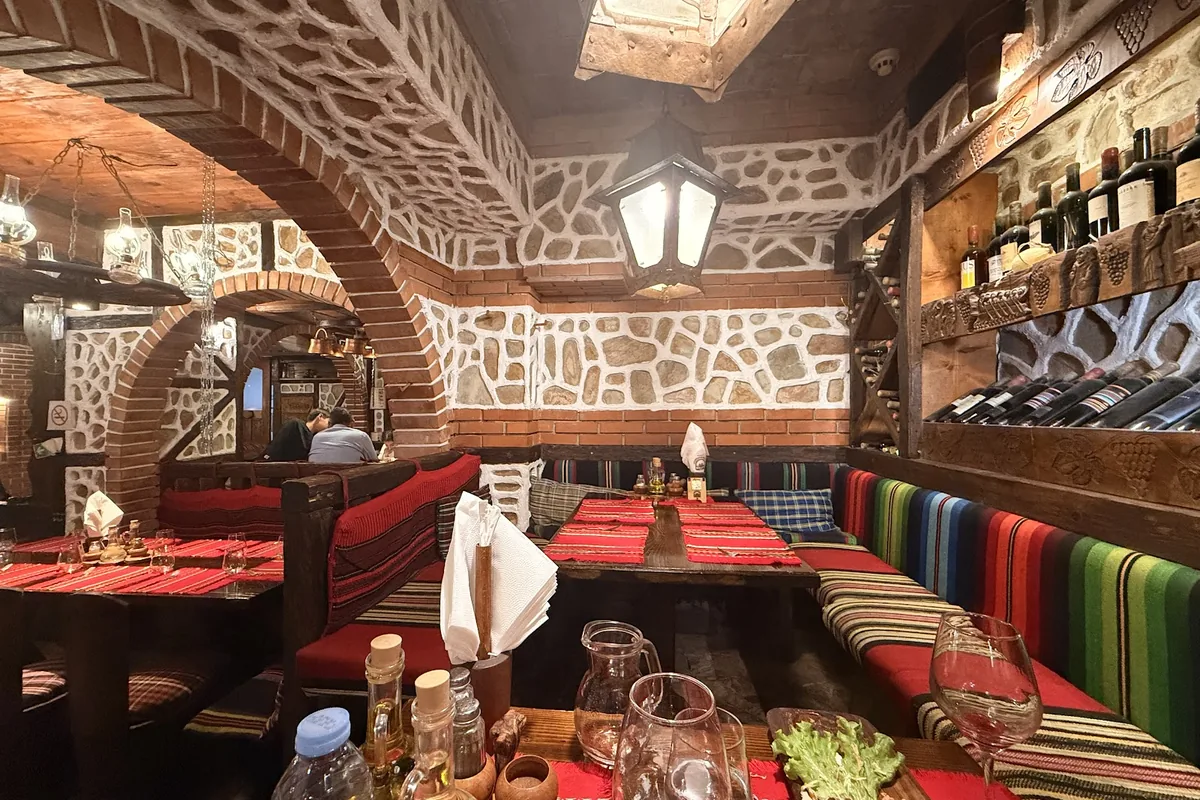
Hadjidraganovite Izbi (Хаджидрагановите изби) means Hadjidraganov's Cellars, and it's a traditional mehana at Hristo Belchev 18, on the corner with Solunska, a few minutes' walk from Vitosha Boulevard. It opens every day from 11.30am to 11.30pm, with live folk music every evening except Monday from 8pm to 11pm. It's where I take visitors for a first Bulgarian dinner with a bottle of red and a band, and I book music nights ahead through its website.
Natural wine at Nectar
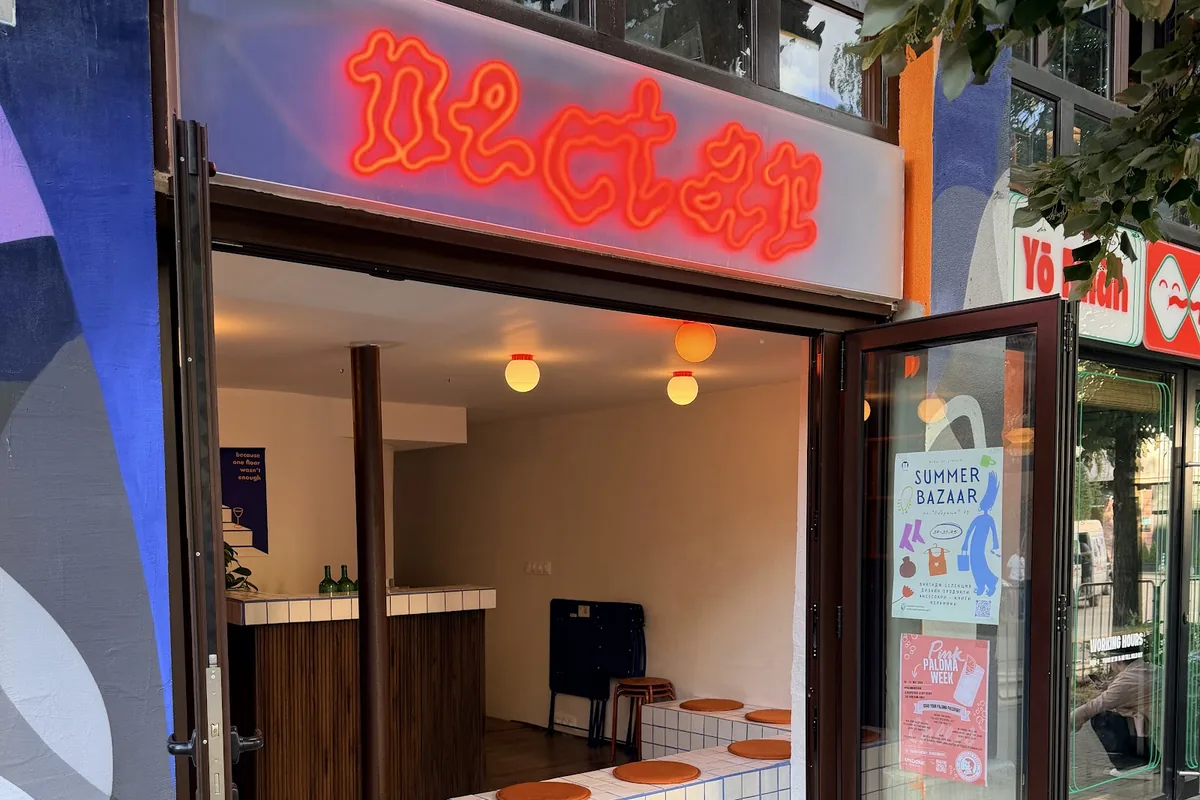
Nectar is a small bar at Iskar 11 that pours natural wines and mixes cocktails. It opens Wednesday to Saturday from 5pm to midnight and on Sunday from 5pm to 10pm. Monday and Tuesday aren't on the list. I go when I want something odd by the glass before dinner, and I ask what Bulgarian bottle is open that night.
Visiting Bulgarian wine country from Sofia
Plenty of Bulgarian wineries welcome visitors for tastings, and two of the best wine areas are easy to reach on your own: Melnik by car, Plovdiv by train or bus.
Melnik and the Struma Valley
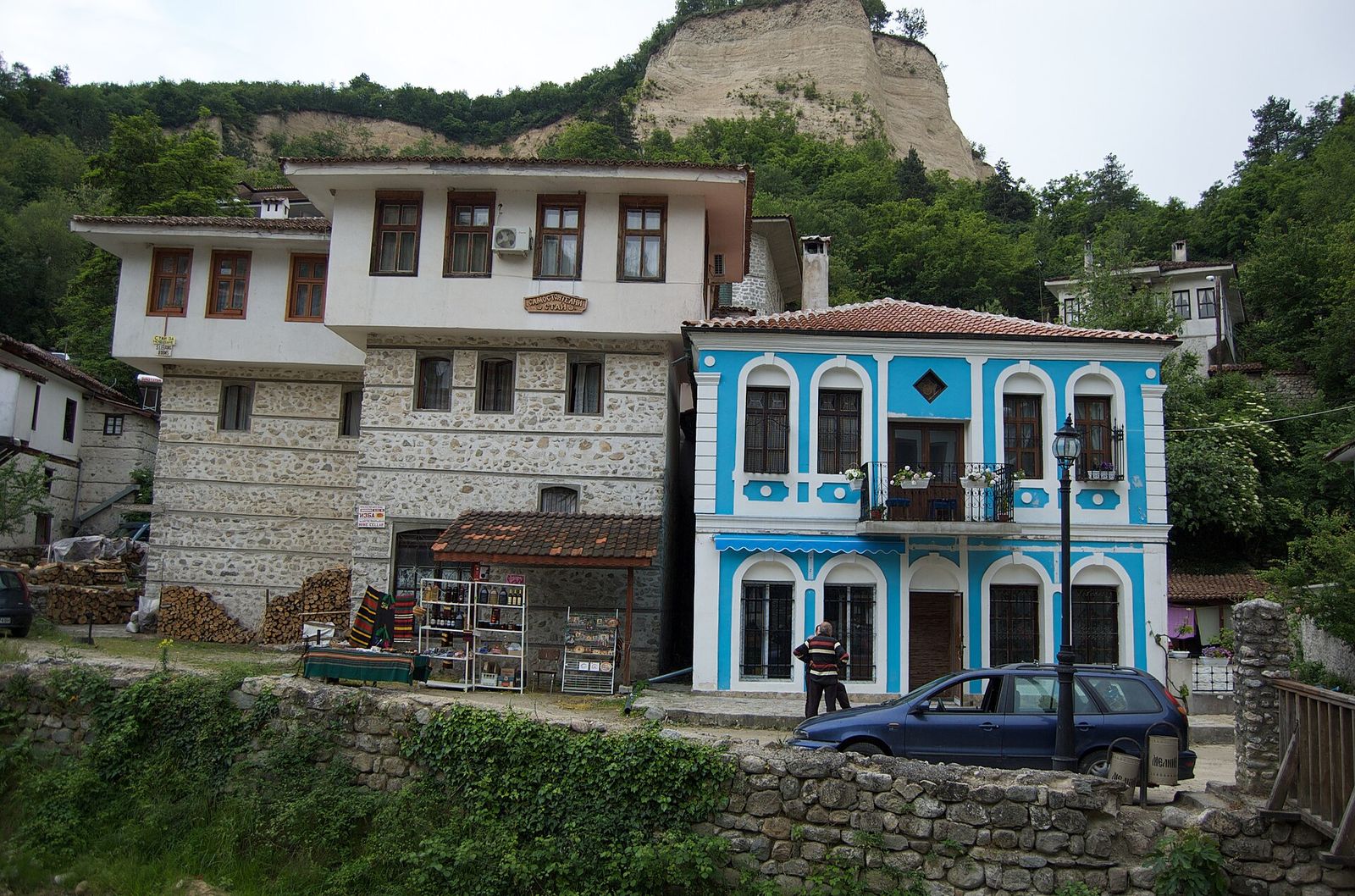
Melnik is a tiny town of old stone houses under sandstone cliffs in the far south-west. Its cellars open straight onto the street, with signs reading изба (wine cellar). The town likes the story that Melnik wine was Winston Churchill's favourite. In the Struma Valley I look for Logodaj (founded in 1994 and known for its Melnik 55), Villa Melnik and Damianitza.
I treat Melnik as an overnight trip: a tasting in the afternoon, dinner in town, and Rozhen Monastery the next morning. A car makes it far easier, and whoever drives does the spitting.
Plovdiv and the Thracian Lowlands
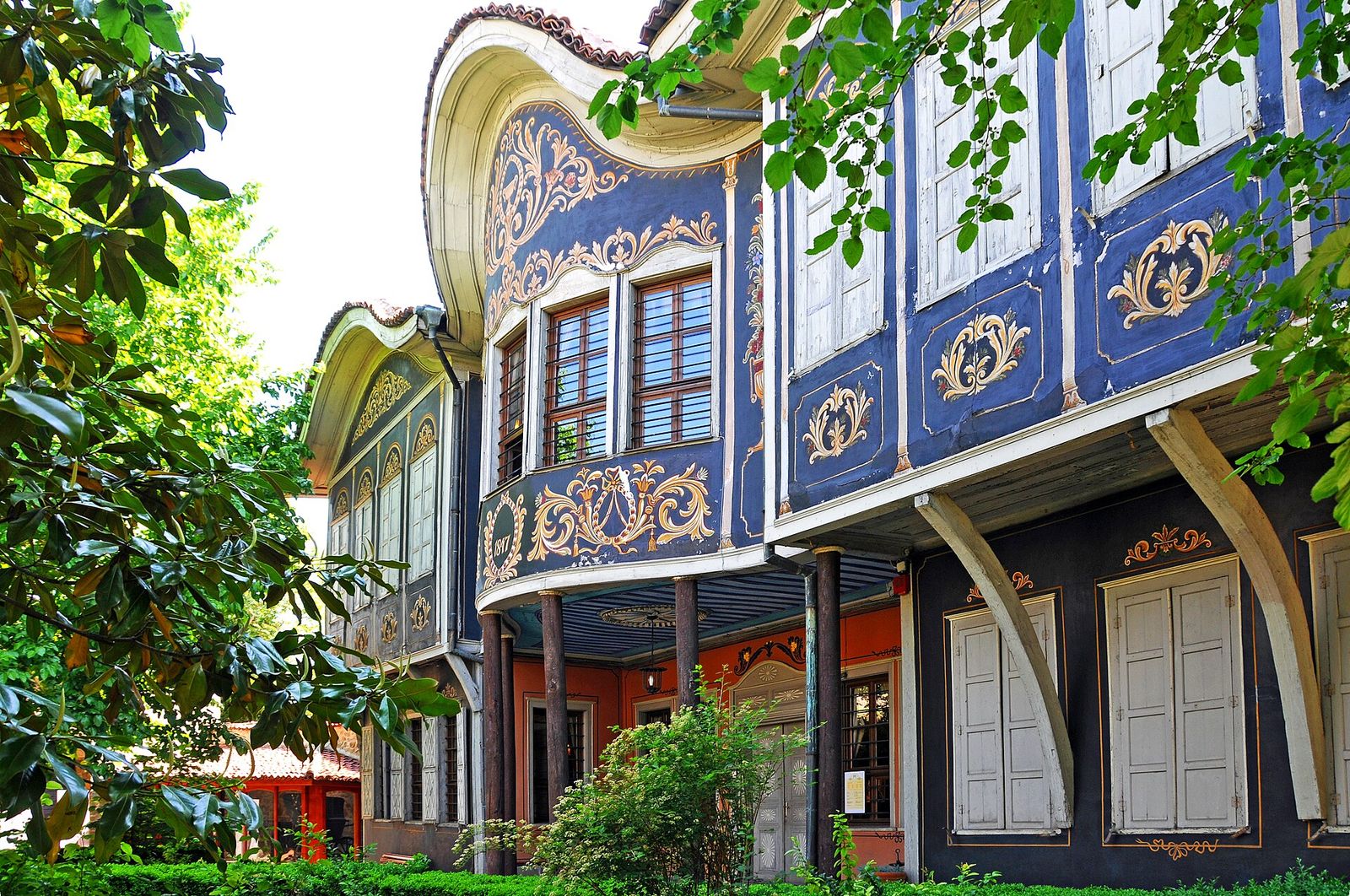
Plovdiv is the easy one. It sits in the middle of Mavrud country. A Plovdiv day trip works with no car: the train costs about €5.60 and takes about 3 hours, and the bus costs €8.50 to €11 and takes about 2 hours. I spend the day in the Old Town and order a Mavrud with lunch, since this is where it grows. The estates themselves, Rumelia, Zagreus and Bessa Valley among them, sit out in the countryside and need a car or a taxi.
Bulgarian wine festivals and dates
Of all the festivals and holidays in Bulgaria, Trifon Zarezan is the one built entirely around wine. On 14 February, vine growers gather in the vineyards outside their villages for the first pruning of the season, then share food and wine among the vines. Some villages celebrate on 1 February instead, St Trifon's day in the Bulgarian church calendar.
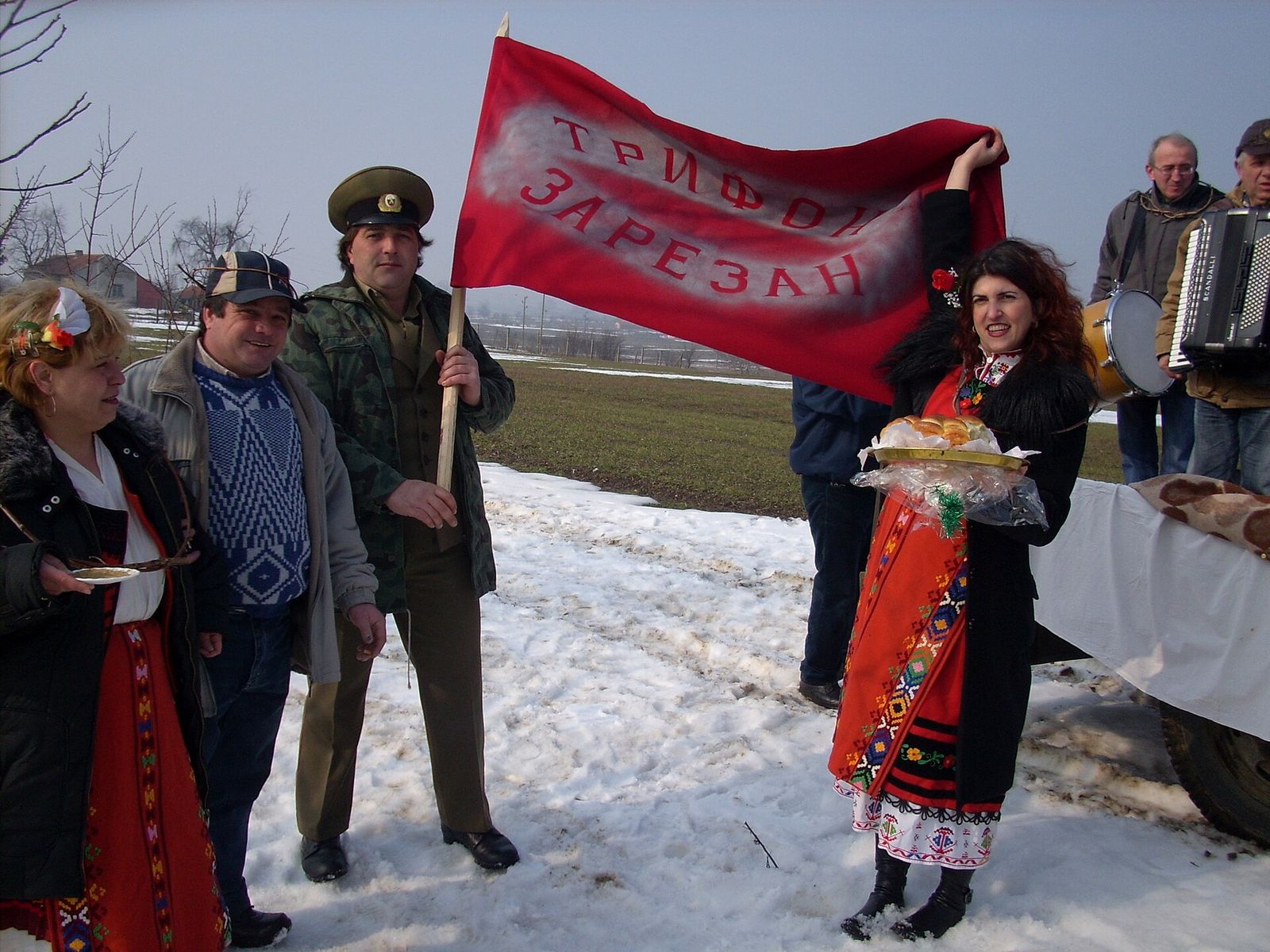
It falls on Valentine's Day, so a February weekend in Sofia comes with two excuses for a bottle. The second wine date is 26 October, International Mavrud Day, Bulgaria's day for its flagship red. If your trip lands in late October, that's the night to order a glass of it.
Taking Bulgarian wine home to the UK
Arriving in Great Britain from Bulgaria, you can bring 18 litres of wine, still or sparkling, without paying UK duty, as long as it's for your own use and you're 17 or over. That's 24 standard 75cl bottles. Bring 19 litres and you pay tax and duty on all 19.
I wrap each bottle in a jumper and pack it in the middle of my hold bag. A bottle of Mavrud is my favourite of the Bulgarian souvenirs that fit in a suitcase, next to a jar of lyutenitsa.
Key takeaways
- Order local grapes by name: Mavrud or Broad-leaved Melnik for red, Dimyat or Misket for white.
- Check a house wine for полусладко (medium-sweet) and ask for сухо (dry) if that's what you want.
- Shop prices start low, with a mid-range bottle at about €6.60, and the small estates live in specialist wine shops.
- Plovdiv is a train ride into Mavrud country, and Melnik makes a good overnight trip into the Struma Valley.
Frequently asked questions
Are Bulgarian wines any good?
Yes. The best are made from local grapes such as Mavrud, Broad-leaved Melnik and Rubin by small estates like Logodaj, Rumelia and Zagreus. House wine is hit and miss, so I spend a little more and order by grape.
What is the most famous Bulgarian wine?
Mavrud is the most famous Bulgarian wine, a dark red from the Thracian Lowlands around Plovdiv. Melnik, from the Struma Valley in the south-west, comes a close second, helped by the legend that it was Churchill's favourite.
What are the main wine regions in Bulgaria?
Bulgaria has two official wine regions, the Danubian Plain in the north and the Thracian Lowlands in the south. Bulgarians also speak of five: the Danube Plain, the Black Sea Coast, the Rose Valley, the Thracian Lowlands and the Struma Valley.
Is Bulgarian wine sweet or dry?
It comes both ways, so read the label. Сухо (suho) is dry, полусухо (polusuho) is off-dry and полусладко (polusladko) is medium-sweet, and asking for "suho" gets you a dry house wine.
How much is a bottle of wine in Bulgaria?
A mid-range bottle costs about €6.60 in a Sofia shop. Small-estate wines from specialist shops cost more, and restaurants add their own mark-up on top.
How much wine can I bring back to the UK from Bulgaria?
You can bring 18 litres of still or sparkling wine into Great Britain without paying duty, which is 24 standard bottles. Spirits such as rakia have a separate 4-litre allowance, and neither allowance applies if you're under 17.
When is the wine festival in Bulgaria?
Trifon Zarezan, the vine growers' festival, falls on 14 February, when villages prune the first vines of the year. Wine lovers also mark International Mavrud Day on 26 October.
Bulgarian Drinks: What to Drink in Bulgaria and Where to Try It in Sofia
Rakia, wine, beer, boza and ayran: what Bulgaria drinks, how locals drink it and where I order each one in Sofia.
Read the guide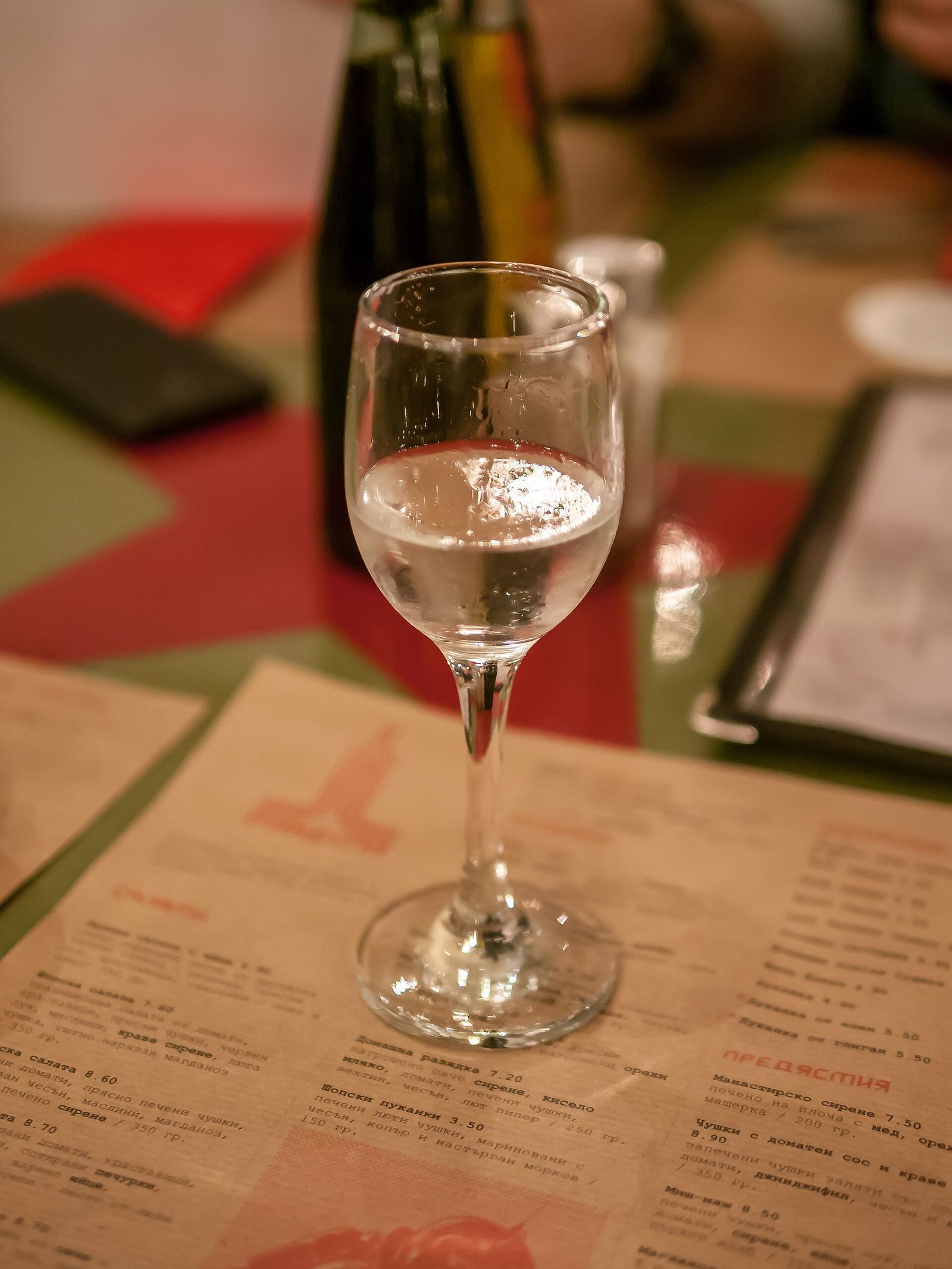
Rakia: Bulgaria's Fruit Brandy, and How I Drink It in Sofia
Bulgaria's fruit brandy, from grape to quince: the types, how to sip it, and where I drink and buy it in Sofia.
Read the guide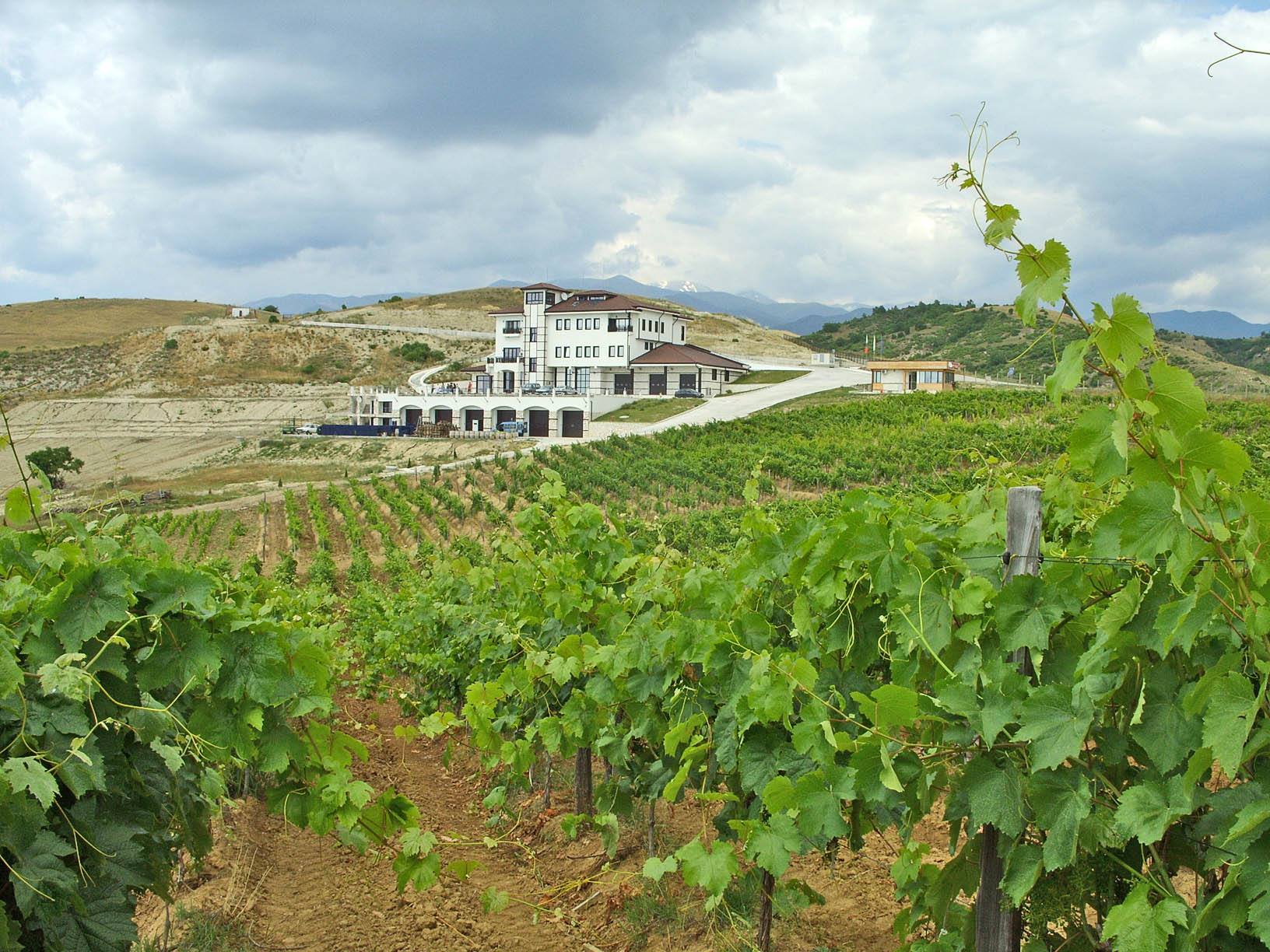
The Best Bulgarian Wines to Try: 12 Bottles I Buy in Sofia
Mavrud, Melnik, Rubin and Red Misket: the 12 Bulgarian bottles I buy in Sofia, and where I buy them.
Read the guide