The Bulgarian Alphabet: How I Read Cyrillic in Sofia
Cyrillic took shape in Bulgaria more than 1,100 years ago, and Sofia still writes nearly everything in it, from street signs to the specials board. The Bulgarian alphabet has 30 letters and spells words the way they sound, so one evening of practice gets you reading. I'd learn it like this: every letter with its sound, the six that fool English readers, the Sofia signs to practise on and 24 May, the alphabet's own holiday.
The Bulgarian alphabet at a glance
Bulgarian is written in Cyrillic (кирилица, kirilitsa), and its alphabet has 30 letters. Most of them keep one sound wherever they sit in a word, so once the letters stick you can sound out a menu even when you have no idea what the words mean. Stress is the one thing the spelling hides, because it can land on any syllable.
The 30 have been fixed since a spelling reform in 1945 dropped two old letters, yat (Ѣ) and the big yus (Ѫ). Since 1 January 2007, when Bulgaria joined the European Union, Cyrillic has been the EU's third official script after Latin and Greek.
All 30 letters of the Bulgarian alphabet and how to say them
Here are all 30 in alphabetical order, with the official Latin spelling, the nearest English sound and a word you'll meet in Sofia. Each row gives the capital and the small letter, because a few small letters change shape on signs.
| Letter | Latin | Sounds like | A word you'll see in Sofia |
|---|---|---|---|
| А а | a | a in "father" | аптека (apteka), pharmacy |
| Б б | b | b in "bed" | баница (banitsa), cheese pastry |
| В в | v | v in "van" | вход (vhod), entrance |
| Г г | g | g in "go" | гара (gara), railway station |
| Д д | d | d in "dog" | дръпни (drapni), pull |
| Е е | e | e in "bed" | евро (evro), euro |
| Ж ж | zh | s in "measure" | Женски пазар (Zhenski Pazar), the Women's Market |
| З з | z | z in "zoo" | затворено (zatvoreno), closed |
| И и | i | ee in "see" | изход (izhod), exit |
| Й й | y | y in "yes" | чай (chay), tea |
| К к | k | k in "kit" | каса (kasa), till or ticket desk |
| Л л | l | l in "lamp" | летище (letishte), airport |
| М м | m | m in "map" | метро (metro), metro |
| Н н | n | n in "no" | НДК (NDK), the National Palace of Culture |
| О о | o | o in "pot" | отворено (otvoreno), open |
| П п | p | p in "pot" | пазар (pazar), market |
| Р р | r | a rolled r | ракия (rakia), fruit brandy |
| С с | s | s in "sun" | сирене (sirene), white cheese |
| Т т | t | t in "top" | тоалетна (toaletna), toilet |
| У у | u | oo in "food" | улица (ulitsa), street |
| Ф ф | f | f in "fig" | фурна (furna), bakery |
| Х х | h | ch in "loch" | хляб (hlyab), bread |
| Ц ц | ts | ts in "cats" | църква (tsarkva), church |
| Ч ч | ch | ch in "chip" | чорба (chorba), soup |
| Ш ш | sh | sh in "shop" | шопска салата (shopska salata), shopska salad |
| Щ щ | sht | sht in "ashtray" | поща (poshta), post office |
| Ъ ъ | a | u in "but" | път (pat), road |
| Ь ь | y | softens the letter before it | шофьор (shofyor), driver |
| Ю ю | yu | "you" | юли (yuli), July |
| Я я | ya | ya in "yard" | ябълка (yabalka), apple |
Ъ is a short "uh", the vowel in "but", and it turns up in everyday words like път and in the country's own name, България. Ь never stands alone: it only appears before о, where it softens the consonant in front, so шофьор sounds like "sho-FYOR".
Й is a quick y that glides off a vowel. Чай rhymes with "eye", and the -ей at the end of музей (muzey, museum) sounds like the "ay" in "say".
The Cyrillic letters that trick English readers
A British reader meets three kinds of Bulgarian letter: the ones that look and sound like ours, the false friends that look like ours and say something else, and the new shapes.
| Group | Letters | What to remember |
|---|---|---|
| Same look, same sound | А, Е, К, М, О, Т | Read them as you would at home |
| False friends | В, Н, Р, С, У, Х | В is v, Н is n, Р is r, С is s, У is oo, Х is the ch in "loch" |
| New shapes | Б, Г, Д, Ж, З, И, Й, Л, П, Ф, Ц, Ч, Ш, Щ, Ъ, Ь, Ю, Я | Learn these as fresh letters, a pair at a time |
The false friends are the six to drill first, because your brain reads them wrongly without asking. РЕСТОРАНТ looks like gibberish until you read Р as r, С as s and Н as n, and then it's restorant, a restaurant. ХОТЕЛ is hotel, with the Х said in the back of the throat.
Pictures helped me with the new shapes. Ж is a beetle buzzing "zh", Ш is a three-pronged fork for "sh" and Щ is the same fork with a tail for "sht". И is a backwards N that says "ee", and Я is a backwards R that says "ya". Ц is a "ts" with a little hook at the bottom right.
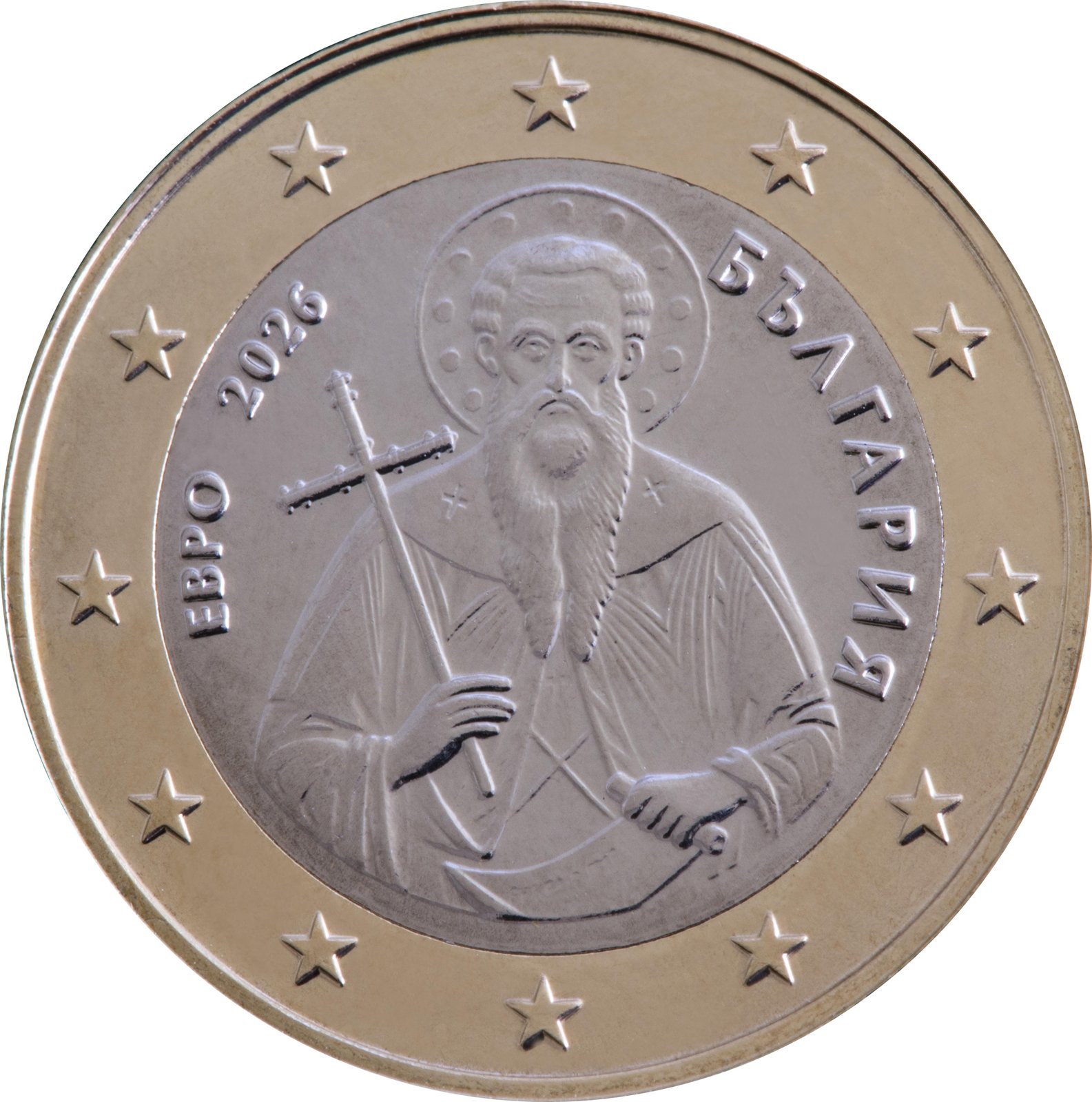
Your change makes a handy set of flashcards. Bulgaria joined the euro on 1 January 2026, and its coins carry the country's name, БЪЛГАРИЯ, on the back. The €1 and €2 coins add ЕВРО, and the cent coins say стотинки (stotinki), or стотинка on the 1 cent, the old name for the lev's small change. The new money in Bulgaria is the same euro you'd spend in Spain, so a coin from another country's mint is just as good in a Sofia shop.
Bulgarian letter shapes on street signs, menus and handwriting
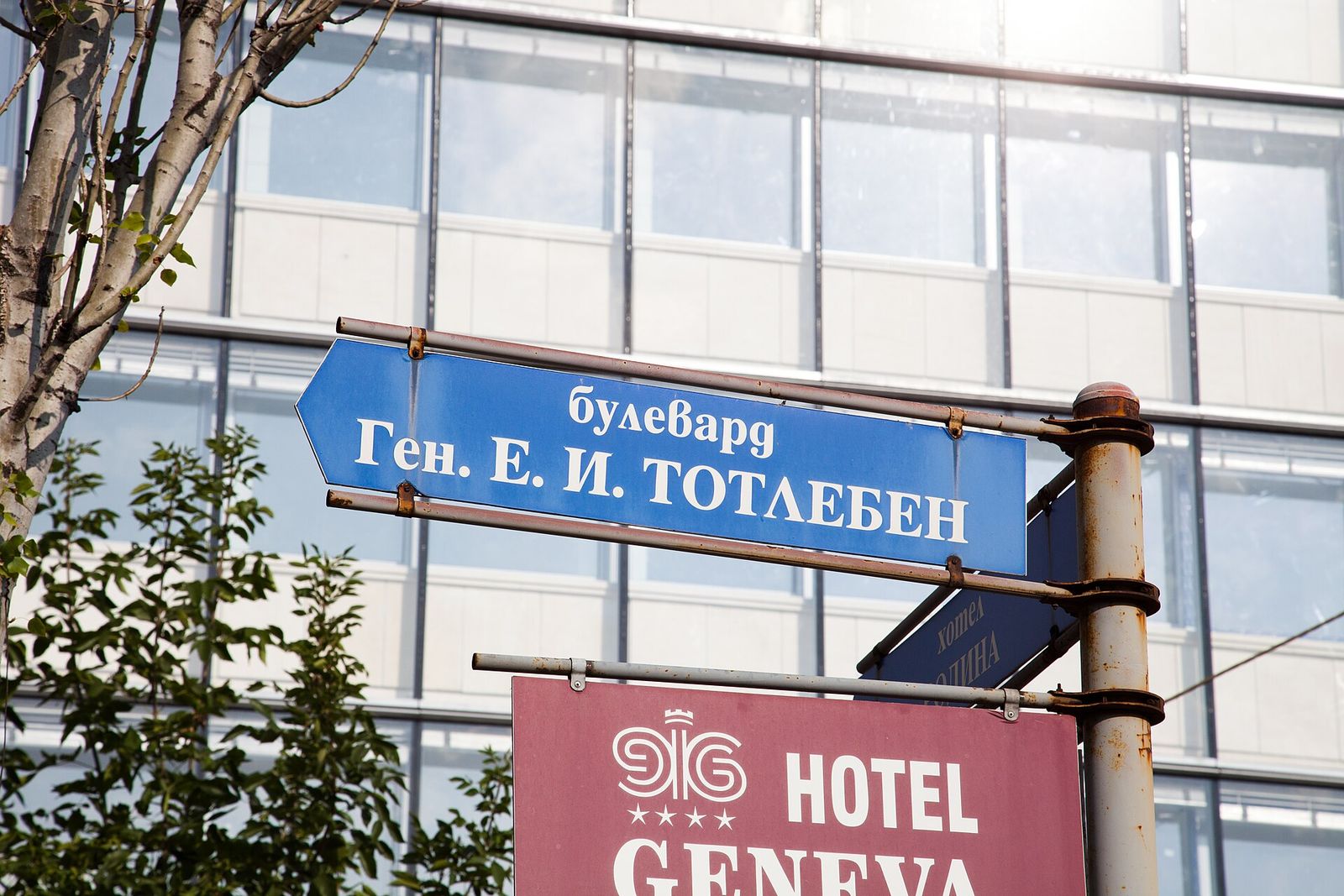
Small letters are where Bulgarian gets sneaky. Most lowercase Cyrillic letters are smaller copies of the capitals, so вход on a door is the same word as ВХОД, and н, т and к look like little capitals. A few letters take a different shape in Bulgarian lettering, and some of Sofia's blue street signs show it: the word булевард (bulevard, boulevard) is printed with a д that looks like a Latin g.
Italics and handwriting go further. These are the shapes that catch people out on chalkboards, café menus and shop signs:
| You see | It looks like | It is | How it shows up |
|---|---|---|---|
| т in italics and handwriting | m | t | таратор (tarator, cold yoghurt soup) chalked as "mapamop" |
| и in italics | u | i | пица (pitsa, pizza) in italics looks like "nuца" |
| п in italics | n | p | the same пица |
| д in italics and some print | g | d | булевард on street signs |
| б in print and handwriting | 6 | b | баница on bakery windows |
Reading Sofia's signs and place names
Sofia is a good classroom, because you often know what a sign says before you read it. These are the words I'd sound out letter by letter on a first walk round the centre.
| On the sign | Sound it out | What it is |
|---|---|---|
| МЕТРО | m-e-t-r-o | The metro, with a big М over the entrances |
| ВХОД and ИЗХОД | v-h-o-d, i-z-h-o-d | Entrance and exit |
| НДК | en-de-ka | The National Palace of Culture |
| БАНИЦА | b-a-n-i-ts-a | Cheese pastry, on bakery windows |
| РАКИЯ | r-a-k-i-ya | Fruit brandy |
| ВИТОША | v-i-t-o-sh-a | The mountain, and the boulevard named after it |
| СЕРДИКА | s-e-r-d-i-k-a | The metro stop over Roman Serdica |
| АЛЕКСАНДЪР НЕВСКИ | a-l-e-k-s-a-n-d-a-r n-e-v-s-k-i | The cathedral |
| ПОЩА | p-o-sht-a | Post office |
| ЛЕТИЩЕ | l-e-t-i-sht-e | Airport |
НДК is how everyone in Sofia writes the National Palace of Culture, and it's said letter by letter, "en-de-KA", the Bulgarian names for Н, Д and К. Баница is the word I spot most: it's painted on bakery windows across the centre, and a slice of banitsa with a glass of ayran is my favourite cheap breakfast.
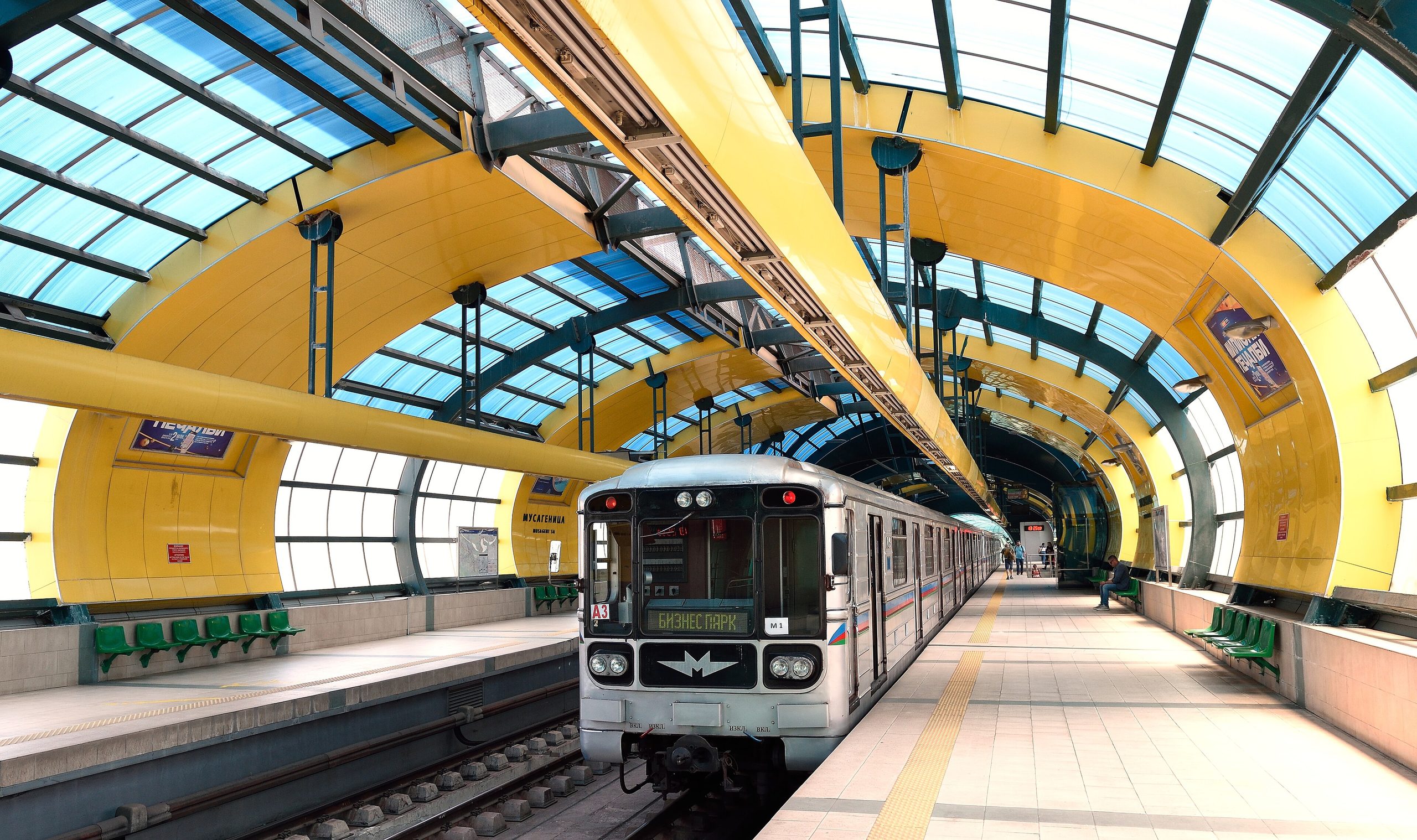
The Sofia metro is the easiest practice ground in town. Station names are on the walls in Cyrillic with the Latin spelling underneath, so you can check your reading against the answer. The trains show the end of the line on the front in Cyrillic only, and БИЗНЕС ПАРК, biznes park, is a good one to sound out while you wait on the platform.
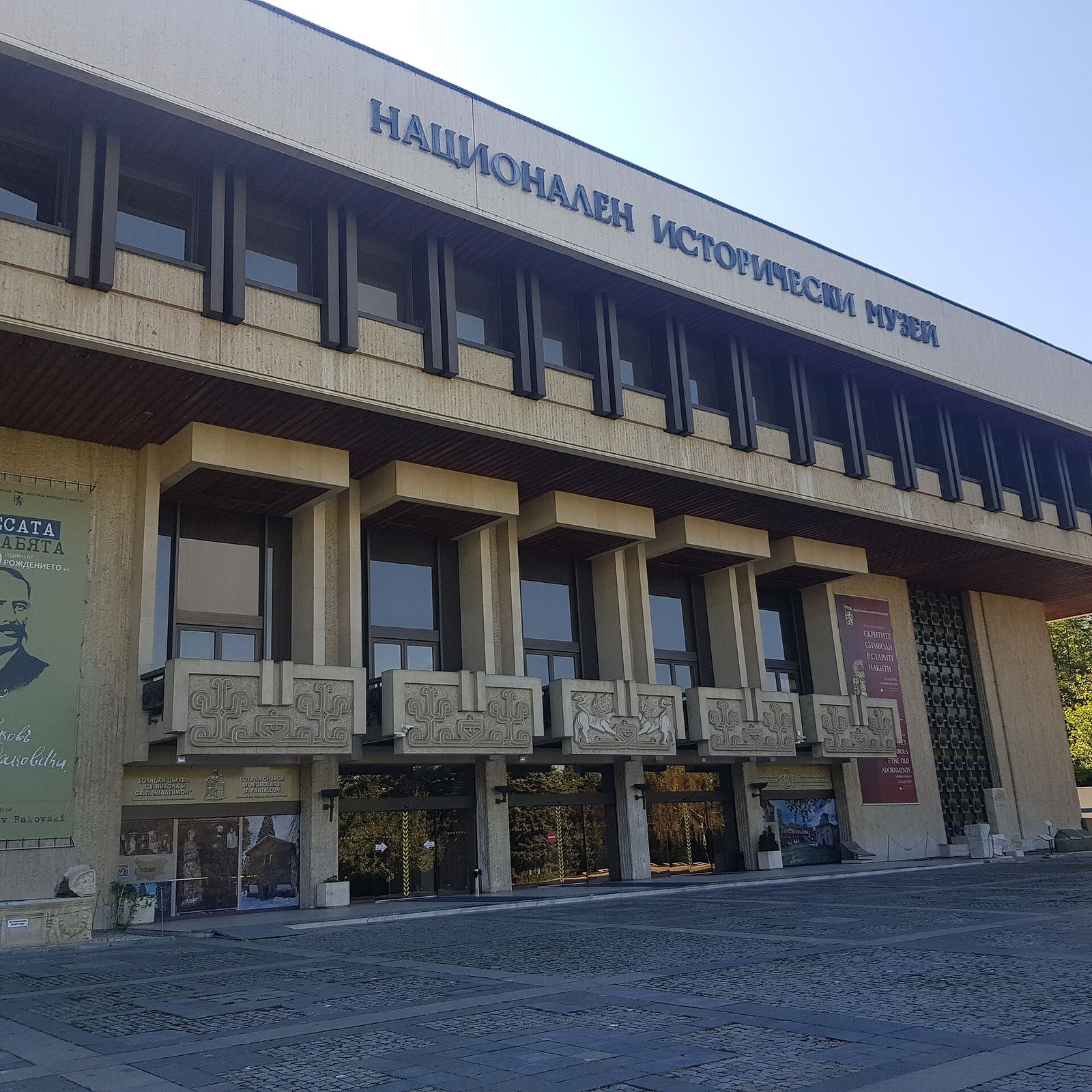
Big buildings make good practice too. Out at Boyana, the National History Museum spells its name in capitals along the top of the facade: НАЦИОНАЛЕН ИСТОРИЧЕСКИ МУЗЕЙ, natsionalen istoricheski muzey. Say it "na-tsee-o-NA-len ees-to-REE-ches-kee moo-ZAY".
How Bulgarian is spelt in English letters
Bulgaria has one official way to write its words in Latin letters, set by the Transliteration Act of 2009, and it's the system on road signs and identity documents. It's why Ж comes out as zh, Ц as ts and Щ as sht, so Женски пазар becomes Zhenski Pazar, the Women's Market. These are the rules that explain most of the spellings you'll see:
| Rule | Cyrillic | Official Latin |
|---|---|---|
| Ъ is written a | Търново | Tarnovo |
| -ия at the end of a word is -ia | София | Sofia |
| The country keeps its English spelling | България | Bulgaria |
| Щ is sht | Пещера | Peshtera |
| Ц is ts | Цар Освободител | Tsar Osvoboditel |
| Й is y | Николай | Nikolay |
Ъ is the rule that muddles searches. The official spelling writes it as a, which gives Veliko Tarnovo, but you say it closer to "TUR-no-vo", and older books and maps spell the same town Turnovo or Tirnovo. If a place won't come up in your maps app, try another spelling of the Ъ, or type the name in Cyrillic.
A Bulgarian keyboard, added in your phone's settings, lets you copy a street name straight off a sign, letter by letter, which beats guessing at the Latin.
Bulgarian vs Russian Cyrillic: what's different
Bulgarian and Russian share most of their letters, so a Russian speaker can sound out a Bulgarian sign. Russian has 33 letters to Bulgarian's 30, and a couple of shared letters sound different.
| Bulgarian | Russian | |
|---|---|---|
| Number of letters | 30 | 33 |
| Ё, Ы and Э | Not used | Used |
| Щ | "sht", as in "ashtray" | A long, soft "shch" |
| Ъ | A vowel, the u in "but" | A silent hard sign |
The quickest tell is a missing letter. If you spot Ы or Э on a menu or a label, it isn't Bulgarian. Bulgarians are proud that Cyrillic took shape here before it spread to Serbia and Russia, and that pride is a big part of Bulgarian culture: the alphabet has its own public holiday.
Where the Cyrillic alphabet comes from
Two brothers from Thessaloniki, Cyril and Methodius, devised the Glagolitic script in the 9th century to write a Slavonic language for church books. Their pupils carried the work to the First Bulgarian Empire, and at the Preslav Literary School, at the end of the 9th century, a new alphabet took shape. It borrowed heavily from Greek capitals and added letters for Slavonic sounds, and it was in official use from 893. It took Cyril's name in his honour.
| Year | What happened |
|---|---|
| 9th century | Cyril and Methodius devise the Glagolitic script |
| 893 | Cyrillic, developed at Preslav, is in official use in Bulgaria |
| 1259 | Boyana Church near Sofia is painted, with inscriptions in medieval Bulgarian |
| 1851 | Plovdiv holds a celebration of the brothers, the start of the 24 May tradition |
| 1878 | The National Library is founded in Sofia on 4 April |
| 1945 | A spelling reform cuts the alphabet from 32 letters to 30 |
| 1990 | 24 May becomes an official public holiday |
| 2007 | Cyrillic becomes the third official script of the EU |
| 2009 | The Transliteration Act fixes the official Latin spellings |
| 2026 | Bulgarian euro coins arrive, lettered in Cyrillic |
Sofia University, across the road from the National Library, is named after St Kliment Ohridski, one of the brothers' pupils who taught in Bulgaria. The metro stop beside it shares the name, Софийски университет (Sofiyski universitet).
24 May in Bulgaria: the day of the alphabet
24 May is Bulgaria's public holiday for its alphabet, and it's one of my favourite days in the Sofia calendar. Its official name is the Day of the Saintly Brothers Cyril and Methodius, of the Bulgarian Alphabet, Education and Culture and of Slavic Literature, which Bulgarians shorten to 24 май (dvadeset i chetvarti may).
The tradition goes back to a celebration in Plovdiv on 11 May 1851 by the old calendar, started by the teacher and writer Nayden Gerov, and 24 May has been an official public holiday since 1990. Schools and universities make the most of it, with flowers for teachers, speeches and wreaths at statues of the two brothers.
When 24 May falls on a Saturday or Sunday, the day off moves to the next working day, and I check the government's list of Bulgarian public holidays before I book anything in May. In 2027 it falls on a Monday, which makes a long weekend for Bulgarians, so I'd book any train or bus out of Sofia for that weekend ahead. It's May's third fixed public holiday, after Labour Day on 1 May and St George's Day on 6 May, and in 2027 Orthodox Easter Sunday and Monday land on 2 and 3 May as well, which makes May a good month to see festivals and holidays in Bulgaria up close.
The Cyril and Methodius statue at the National Library
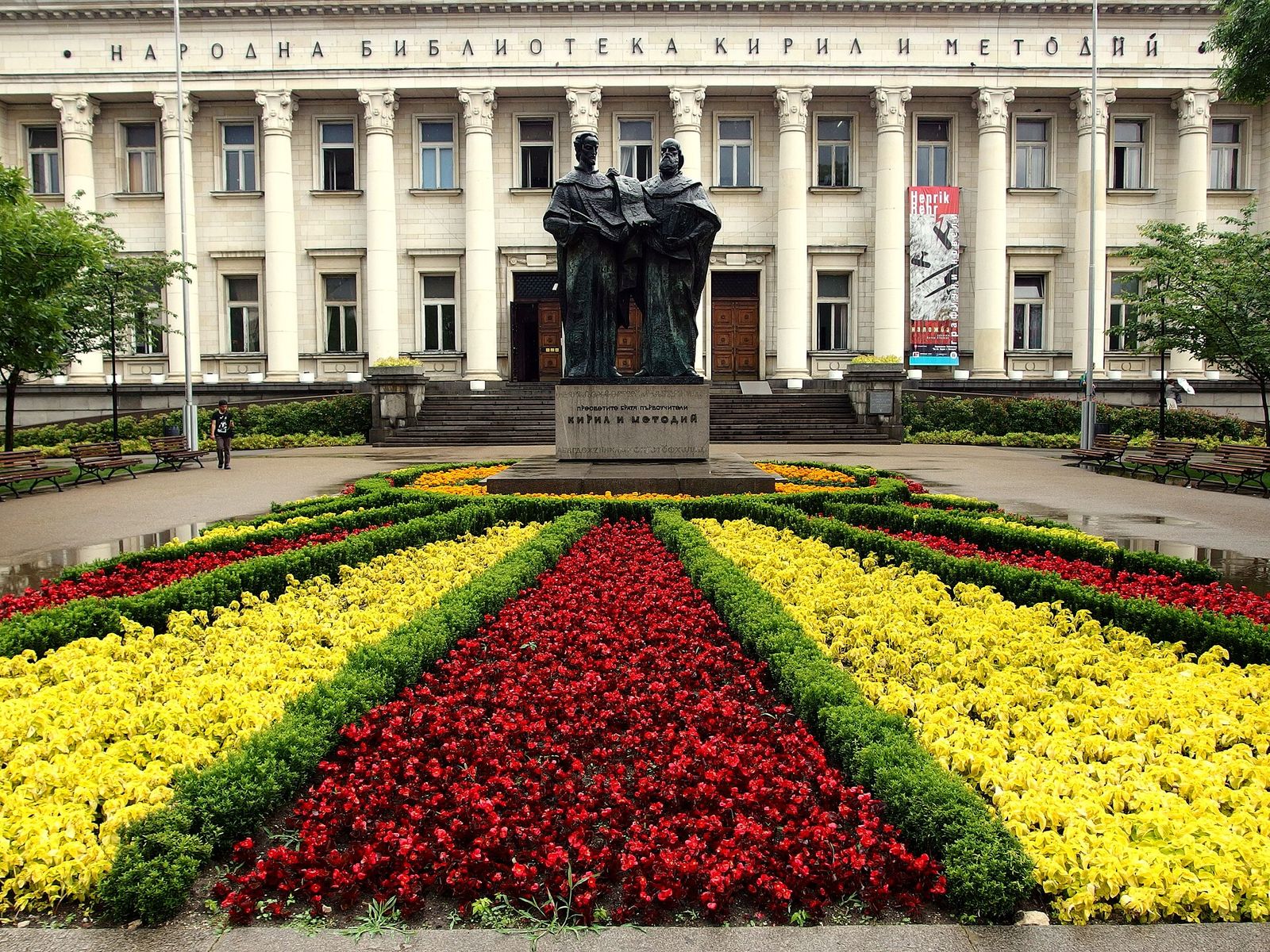
The bronze brothers stand in front of the SS. Cyril and Methodius National Library on Vasil Levski Boulevard, and on 24 May this is where Sofia lays its wreaths. Look up from the statue and the library's name runs above the columns: НАРОДНА БИБЛИОТЕКА КИРИЛ И МЕТОДИЙ, narodna biblioteka Kiril i Metodiy, the "people's library". It's a decent reading test, with a Й at the end of Методий.
The library was founded on 4 April 1878, and its building was finished in 1953. It holds more than 1,700 Slavonic manuscripts from the 11th to the 19th centuries. The rest of the year I pair the statue with Alexander Nevsky Cathedral, a few minutes' walk away.
Old Cyrillic at Boyana Church
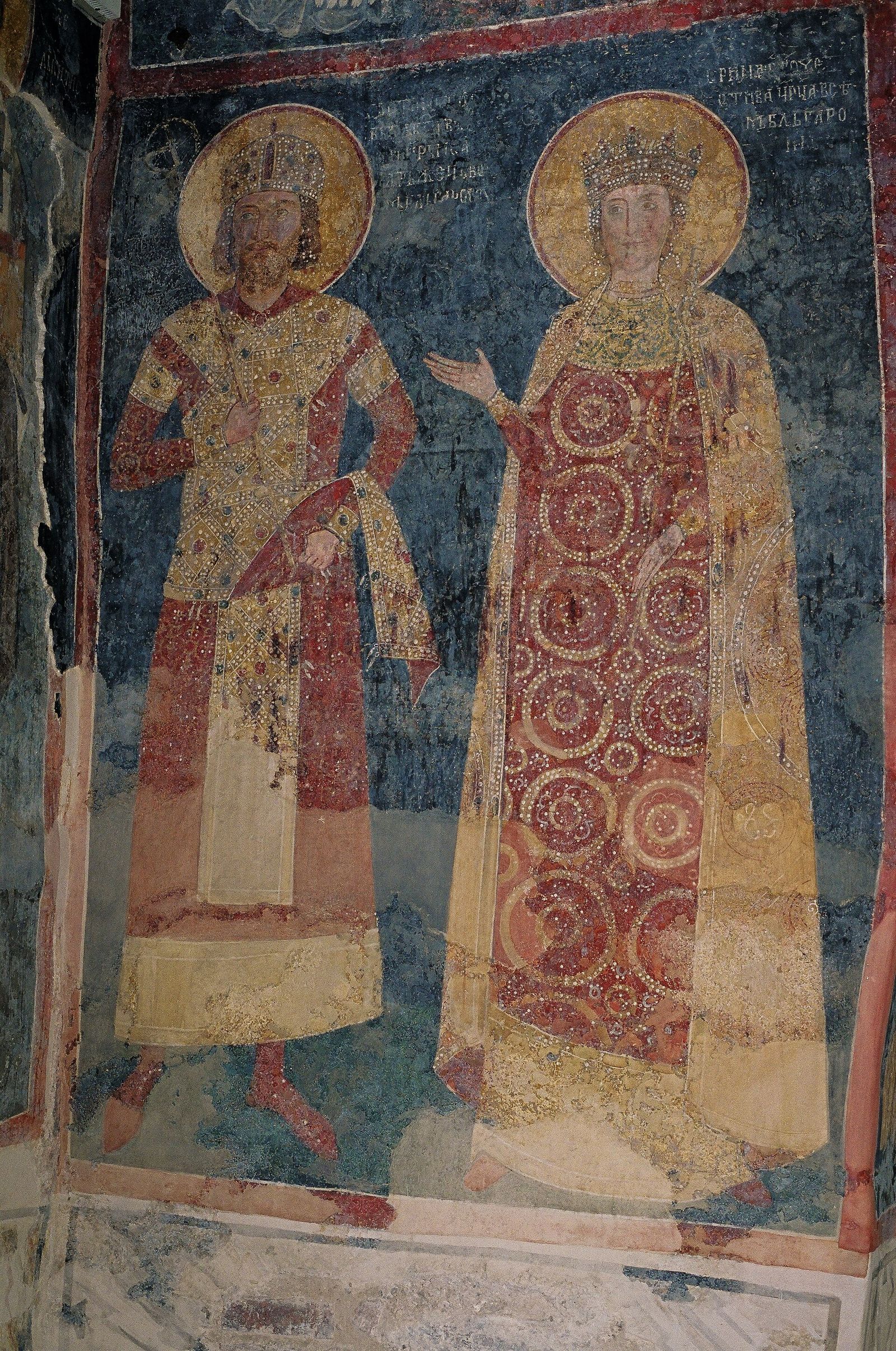
For Cyrillic as it looked in the Middle Ages, I go to Boyana Church at the foot of Vitosha. Its frescoes were painted in 1259, and the portraits of Tsar Constantine Tikh Asen and Tsaritsa Irina carry their names and titles in medieval Bulgarian. Beside Irina's crown you can pick out ЦРЦА, short for царица (tsaritsa), and on the line below it the old word for Bulgarians, close enough to България to spot once you know your letters.
Entry is €10 and you get 10 minutes inside with no camera, so I read the inscriptions on a photo before I go in.
How long the Bulgarian alphabet takes to learn
One evening gets most people reading slowly, and a weekend of signs does the rest. I'd learn it in this order: the six false friends first, because they cause most mistakes, then the new shapes in pairs, Ш with Щ, Ц with Ч and Ю with Я. The six letters that look and sound like English take care of themselves.
Writing beats flashcards for me. Spell your own name in Cyrillic, then words you already know: бира (bira, beer), вино (vino, wine) and банка (banka, bank). Once the letters stick, a dozen Bulgarian phrases get you through a café: здравейте (zdraveyte) for hello, благодаря (blagodarya) for thank you and сметката, моля (smetkata, molya) for the bill.
Key takeaways
- The Bulgarian alphabet has 30 Cyrillic letters, each with a steady sound, and one evening gets you reading slowly.
- Drill the six false friends first: В v, Н n, Р r, С s, У oo, Х h.
- In italics and handwriting, т looks like m, и like u and п like n.
- Official Latin spellings follow the 2009 Transliteration Act, so Ъ becomes a and Щ becomes sht.
- 24 May is the public holiday for the alphabet, and Sofia marks it at the Cyril and Methodius statue outside the National Library.
Frequently asked questions
Is the Bulgarian and Russian alphabet the same?
No, they're close relatives with different line-ups. Bulgarian uses 30 letters and Russian 33, because Bulgarian has no Ё, Ы or Э. Shared letters can sound different too: Щ is "sht" in Bulgarian, and Ъ is a full vowel, the u in "but".
How many letters are in the Bulgarian alphabet?
The Bulgarian alphabet has 30 letters. It had 32 until a spelling reform in 1945 dropped yat (Ѣ) and the big yus (Ѫ).
Is Bulgarian more Russian or Greek?
Bulgarian is a Slavic language, so its grammar and most of its words are family to Russian, and its closest relative is Macedonian. The Greek link is in the alphabet: Cyrillic was built largely on Greek capitals, which is why Г, Д, Л, П and Ф look Greek.
How do Bulgarians say "I love you"?
Bulgarians say обичам те (obicham te), said "o-BEE-cham teh". It's the phrase for a partner, and Bulgarians say it to close family too.
How do Bulgarians say "hi"?
Здрасти (zdrasti) is the casual "hi", and здравей (zdravey) is a friendly hello to one person. With strangers and shop staff I use здравейте (zdraveyte).
Who invented the Cyrillic alphabet?
Cyrillic was developed by pupils of Saints Cyril and Methodius at the Preslav Literary School in Bulgaria at the end of the 9th century. The brothers themselves devised the earlier Glagolitic script, and Cyrillic was named after Cyril in his honour.
What is celebrated on 24 May in Bulgaria?
24 May is the Day of the Saintly Brothers Cyril and Methodius, of the Bulgarian Alphabet, Education and Culture and of Slavic Literature. It's a public holiday, marked with flowers, speeches and wreaths at the brothers' statues, and in Sofia the main one stands outside the National Library.
Are the signs in Sofia in English?
Metro stations, the airport and the big sights carry Latin spellings under the Cyrillic. Many street signs, shopfronts, bakery windows and menus are Cyrillic only, which is where the alphabet pays off.
Bulgarian Culture and Traditions: A Visitor's Guide
Nods that mean no, rakia sipped with salad and masked kukeri: the Bulgarian customs I'd want you to know before a trip.
Read the guide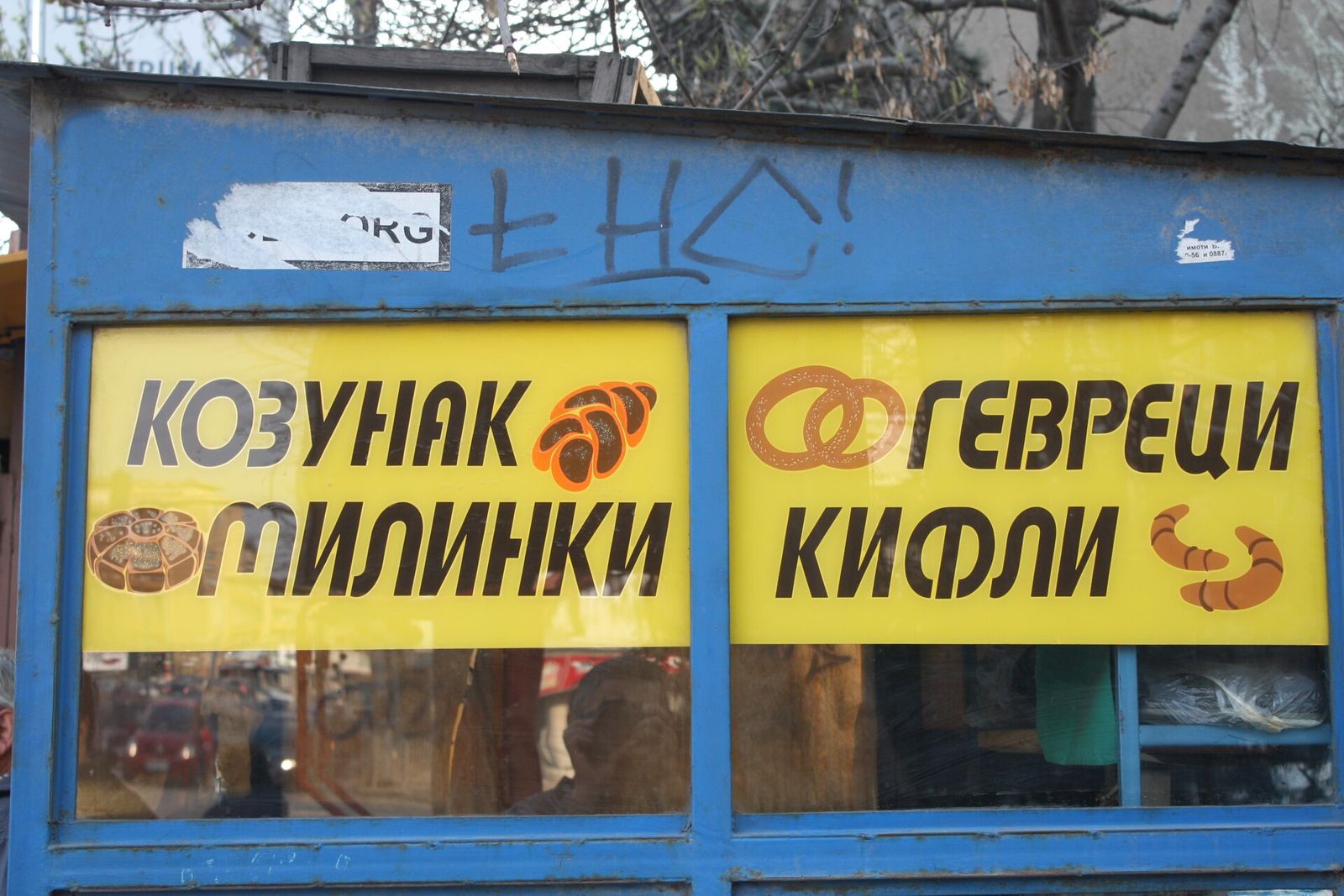
Bulgarian Phrases for Travellers: The Words I Use Every Day in Sofia
Hello, thank you, cheers and the bill: the Bulgarian words I use every day in Sofia, and how to say each one.
Read the guide
A Short History of Bulgaria (and Where to See It in Sofia)
Thracian gold to the euro: Bulgarian history era by era, and the Sofia sights where I see each chapter.
Read the guide