The Antiques Market at Alexander Nevsky: Sofia's Flea Market
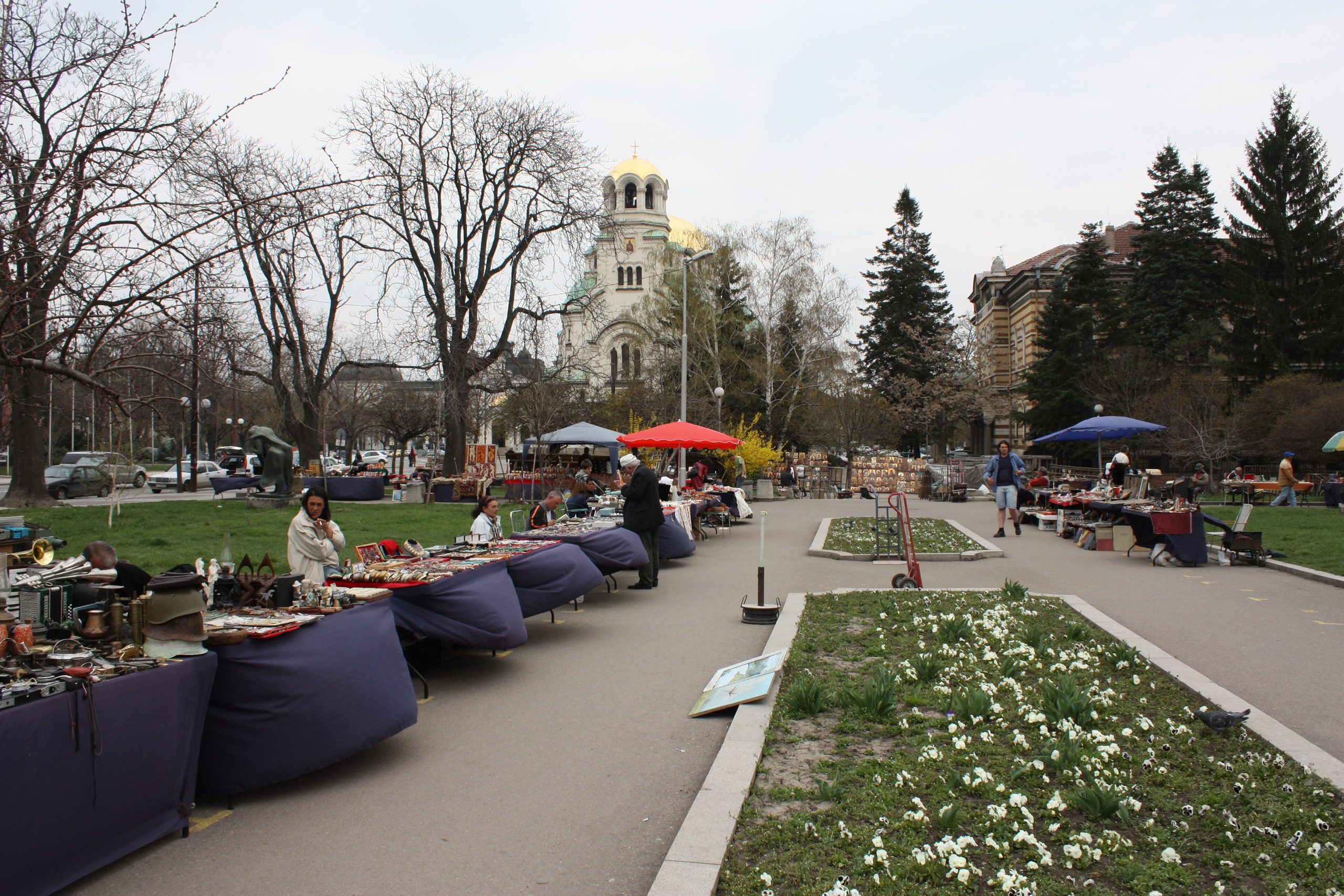
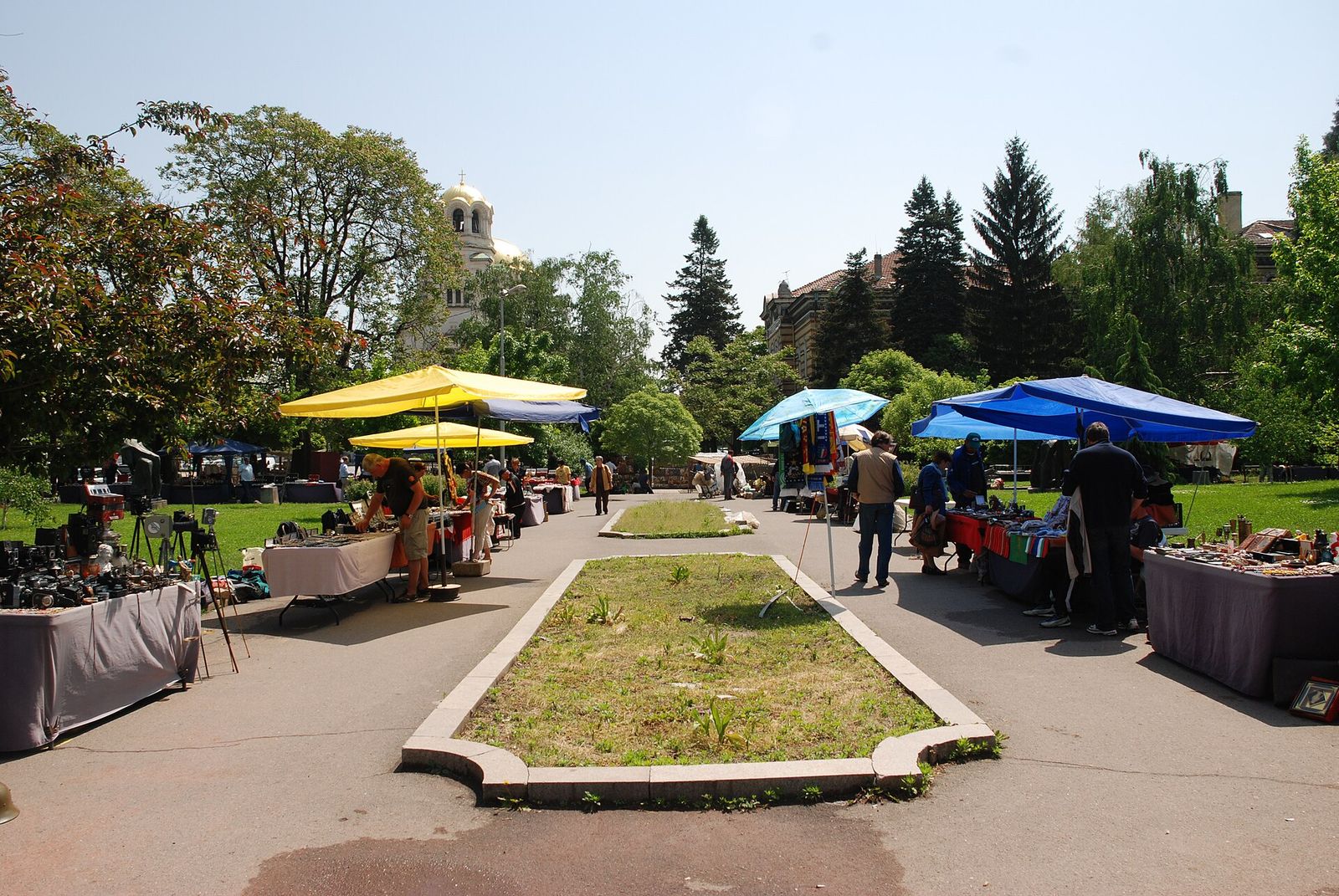
Sofia's flea market is a line of tables in the park beside Alexander Nevsky Cathedral, selling painted icons, Soviet badges, handmade lace, old cameras and a good deal of glorious junk. It's my favourite hour of browsing in the city, and looking costs nothing. Here's when the stalls are out, what's real and what's reproduction, how I haggle, what you can fly home with and what else to see on the square.
Where and when the antiques market runs
The antiques market lines the paths of the small park between Alexander Nevsky Cathedral and St Sofia Basilica, in the middle of Sofia. Sellers put out folding tables under umbrellas and gazebos from about 10am every day, weather permitting. There are no official hours and no fixed closing time, so I treat 10am to mid-afternoon as the safe window.
Weekends bring the most tables. On a wet weekday in February you might find a handful of hardy sellers and a lot of tarpaulin, so if the market is the reason you're on the square, come on a dry Saturday or Sunday. It's part of the first stop on my list of the 11 things I'd do in Sofia, because the cathedral and the stalls make one visit: you browse your way along the path with the gold domes in front of you.
Sofia University station, on metro lines M1 and M4, is a 5 to 10 minute walk away. Serdika, where lines M1, M2 and M4 meet, is about 15 minutes on foot along Tsar Osvoboditel Boulevard. A single ticket costs €0.80 and you can tap a contactless bank card at the barriers, which makes the Sofia metro the easy way in from most hotels.
What you'll find on the stalls
Each seller has a speciality and the tables change from week to week, but the same five groups of things turn up every time I go.
Painted icons
Icons are the reason most visitors stop. Sellers lean hundreds of them against wooden racks: the Virgin and Child, St George on horseback, St Nicholas and rows of saints with gold haloes, painted on wooden boards in every size from a postcard to a tea tray.
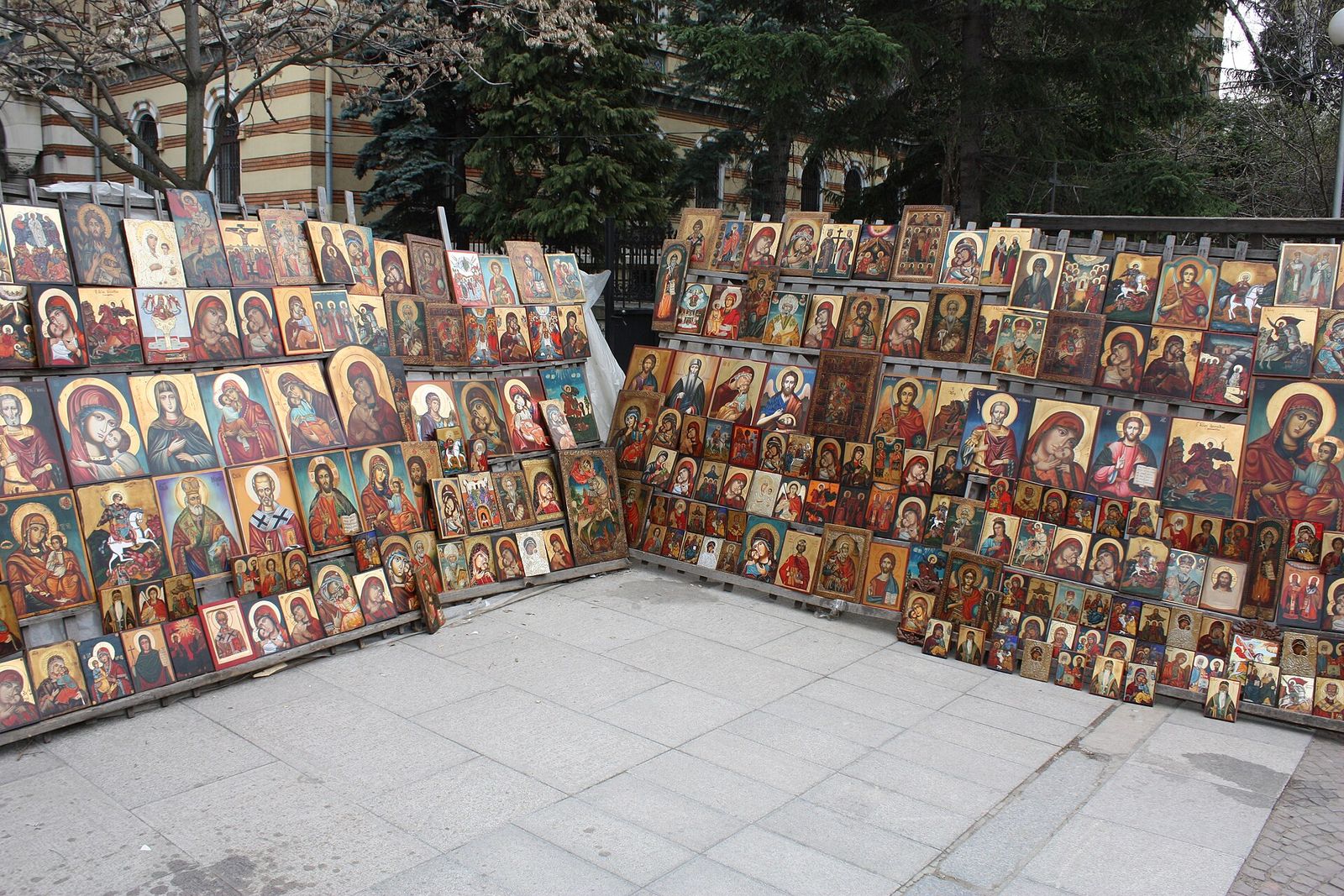
Almost all of them are new, and that suits me fine. A small hand-painted icon is one of the best presents you can bring home from Bulgaria, and it packs flat. Look closely before you haggle: real brushwork shows ridges and tiny slips up close, while a printed icon on a board has a flat, glossy surface.
Soviet badges, medals and army kit
Tables carry trays of Soviet and Bulgarian socialist-era badges, medals on striped ribbons, officer hats with red stars, army helmets, gas masks, belt buckles, compasses and metal signs from the communist years. Lenin busts come in every size, and a few stalls sell First and Second World War shells and cartridges.
Nazi-era pieces turn up on some tables too, almost all of them reproductions, and I walk straight past them. If you want one souvenir of the communist years from this corner, make it a tin badge with a red star: it weighs nothing and goes in a pocket.
Old cameras, typewriters and gramophones
My favourite tables look like somebody emptied a grandparent's loft onto them. Film cameras, dial telephones, typewriters, alarm clocks, sewing machines, accordions and gramophones with brass horns all sit jumbled together under one gazebo.
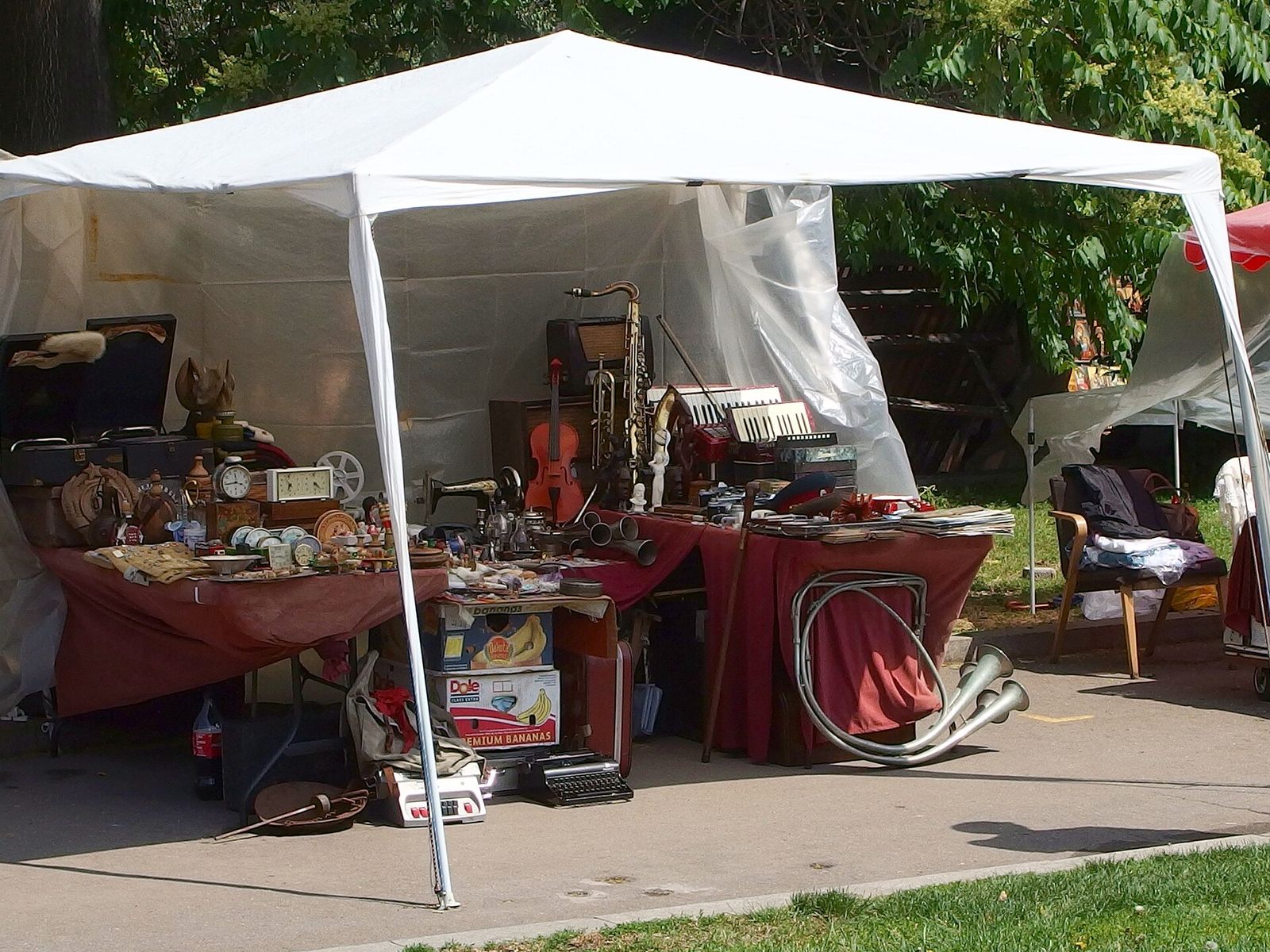
On these tables the old things really are old. Before agreeing a price, I fire the camera shutter, turn the phone dial and press a few typewriter keys, because nothing comes with a guarantee and there are no returns.
Lace, embroidery and wool socks
Along one path, older women sit beside tables of white lace, crocheted cloths, embroidered tablecloths and thick hand-knitted wool socks. This row feels the least touristy of the lot, and it's where I buy presents.
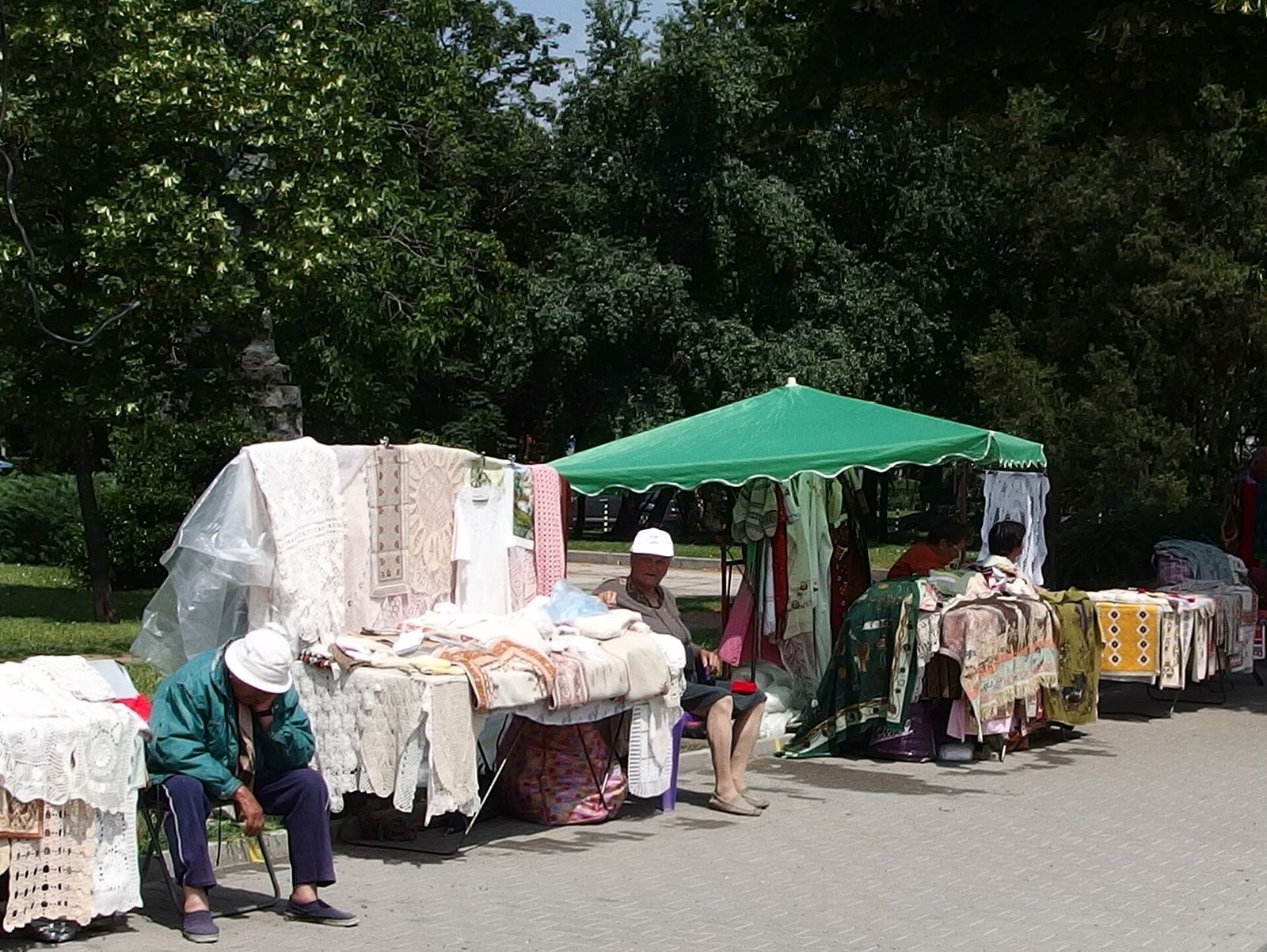
Cross-stitch embroidery is one of the Bulgarian crafts you still see on folk costumes, and on these tables it comes on tablecloths, runners and cushion covers. Turn a piece over before you buy it. Hand embroidery has small knots and loose thread ends on the back, while machine work looks almost as tidy underneath as on top.
Paintings, matryoshkas and souvenirs
The rest is a mix: amateur oil paintings, woodcarvings, chess and backgammon sets in wooden boxes, Russian matryoshka dolls, old coins and banknotes, and fake Montblanc pens. The matryoshkas are a Russian tradition, so I'd spend the money on something Bulgarian instead. Old leva banknotes have become a favourite small buy of mine since Bulgaria swapped the lev for the euro on 1 January 2026: a socialist-era note is a piece of history that fits in a wallet.
Real or reproduction: what to check before you pay
Assume everything is a reproduction until it proves otherwise. The market sells decoration with a story, so I pay what a piece is worth to me on a shelf at home, never what it would fetch if it were genuine.
| What you'll see | What it usually is | What I check |
|---|---|---|
| Painted icons | New, hand-painted or printed | Raised brushwork; a flat, glossy surface means a print |
| Soviet badges and medals | Mostly modern copies | A tray of 50 identical badges means copies; a worn, mixed handful is more promising |
| Officer hats and helmets | Old pieces and copies side by side | The lining, the stitching and sweat marks inside the band |
| Shells and cartridges | Old casings and copies | Nothing: airport security can refuse them, so I leave them |
| Cameras, phones and typewriters | Real, and decades old | The shutter, the dial and the keys all work |
| Lace and embroidery | Handmade and machine-made together | The back of the cloth: knots and loose ends mean handmade |
| Montblanc pens | Fakes | Nothing: they're fakes |
How to haggle at the antiques market
Nothing has a price tag, so every purchase starts with a question. I point at the piece, ask "Колко струва?" (kolko struva, how much is it?) and hear the number before I pick anything up. Then I offer a good bit less, settle somewhere in the middle, and walk away smiling if the number doesn't move.
A few Bulgarian phrases, even just "благодаря" (blagodarya, thank you), go down well with sellers who hear English all day. Sellers also size you up: a well-dressed visitor speaking English gets a higher opening price than a Bulgarian pensioner. I dress down, look at three or four stalls selling the same kind of thing, and only then buy.
Bring cash in small euro notes and coins. The stalls work in cash and don't give receipts, and plenty of sellers have no change for a €50 note. Bulgaria has used the euro since 1 January 2026, so money in Bulgaria now means the same notes and coins you'd spend in Spain or Greece.
Getting your finds home to the UK
Most of what's on these tables flies home without a second look. Icons, lace, badges, hats, cameras and paintings all go in a suitcase. The trouble starts with anything that looks like a weapon or ammunition, and the UK airport rules on weapons and explosives are blunt about it.
| Item | Hand luggage | Hold luggage |
|---|---|---|
| Icons, lace, badges, hats, cameras | Yes | Yes |
| Grenades, mines and replica explosives | No | No |
| Knives and bayonets with a blade over 6cm | No | Yes, after checking with your airline |
Empty shell cases aren't on that list by name, but airport security staff won't let through anything they consider dangerous, even when it's normally allowed. I pack to the same list at Sofia Airport on the way home and leave every shell on the table.
Antiques raise a separate question. Under the EU rules on exporting cultural goods, some categories need an export licence to leave the EU, issued by the last EU country where the object was lawfully kept, and a flight to the UK leaves the EU. Most categories come with a minimum age or value, and a country can demand its own licence on top for anything it protects as a national treasure. A real antique is paperwork waiting to happen, which is one more reason I buy new icons and leave the "antiques" alone.
What else to see on Alexander Nevsky Square
The market sits in the densest bit of sightseeing in Sofia. Alexander Nevsky, St Sofia and the Russian Church are all within about 300 metres of each other, so the stalls fit between them without any planning.
Alexander Nevsky Cathedral
Alexander Nevsky Cathedral is free to enter and open every day from 7am to 7pm, so I always step inside before or after the stalls. The inside is dark, gold and candlelit, with a marble iconostasis, murals on every vault and two carved lions guarding the royal throne.
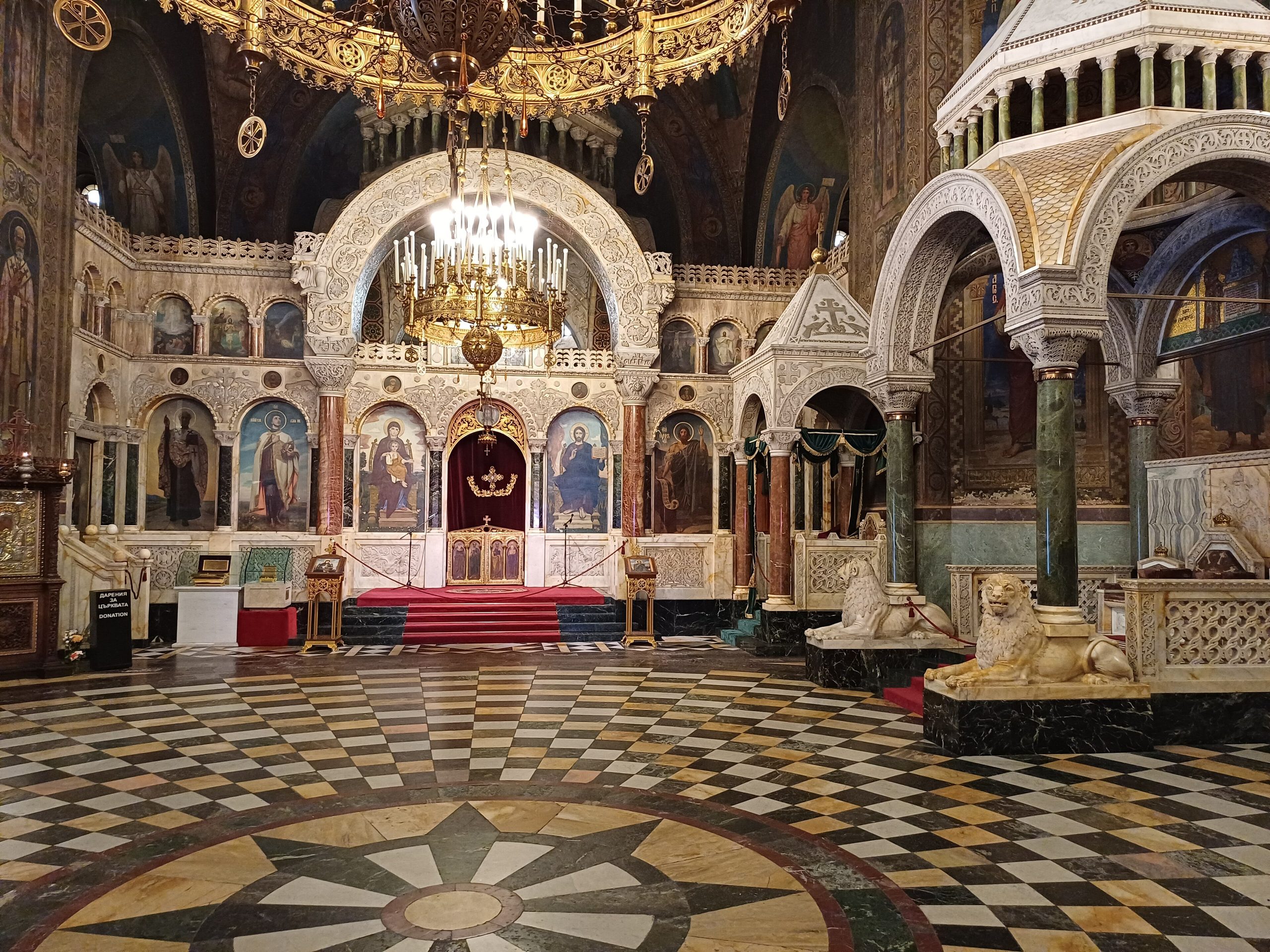
Cover your shoulders and knees, and buy the camera permit of about €5 at the candle stand if you want to use a proper camera inside.
The crypt icon museum
Under the cathedral, the crypt holds the National Gallery's Museum of Christian Art, with icons several hundred years old. I'd go down before you buy anything at the stalls: ten minutes with the real thing shows you what a good icon looks like, and that makes the stalls far easier to judge.
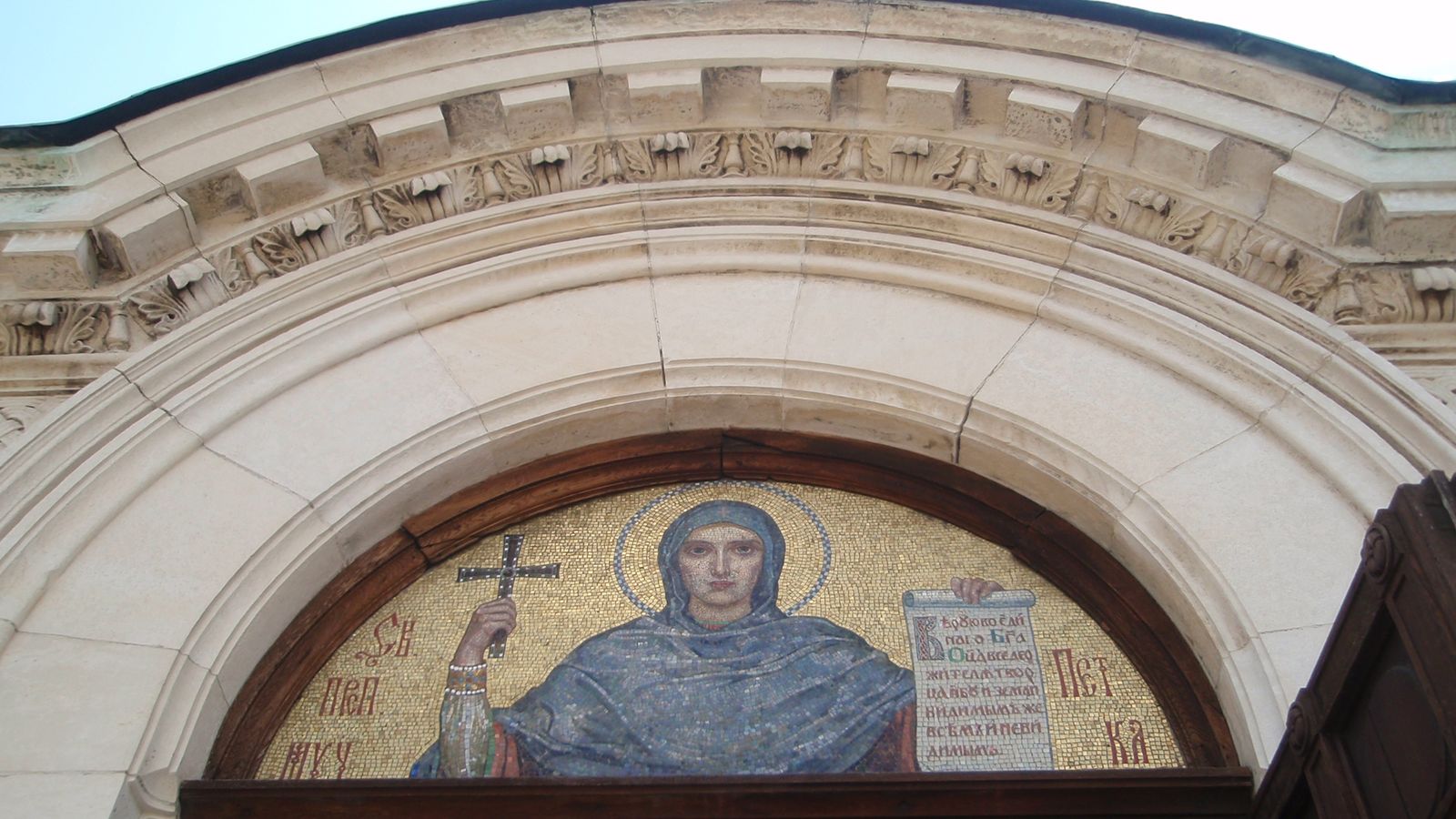
The entrance is on the outside of the cathedral, under a gold mosaic of St Petka. The museum opens Tuesday to Sunday from 10am to 6pm, tickets cost €10, and every Thursday they drop to €2.
St Sofia Basilica
St Sofia Basilica is the red-brick church at the far end of the market, built in the 6th century over older churches and a Roman cemetery. The city took its name from it. The church is free, and the underground level with the tombs costs €4.
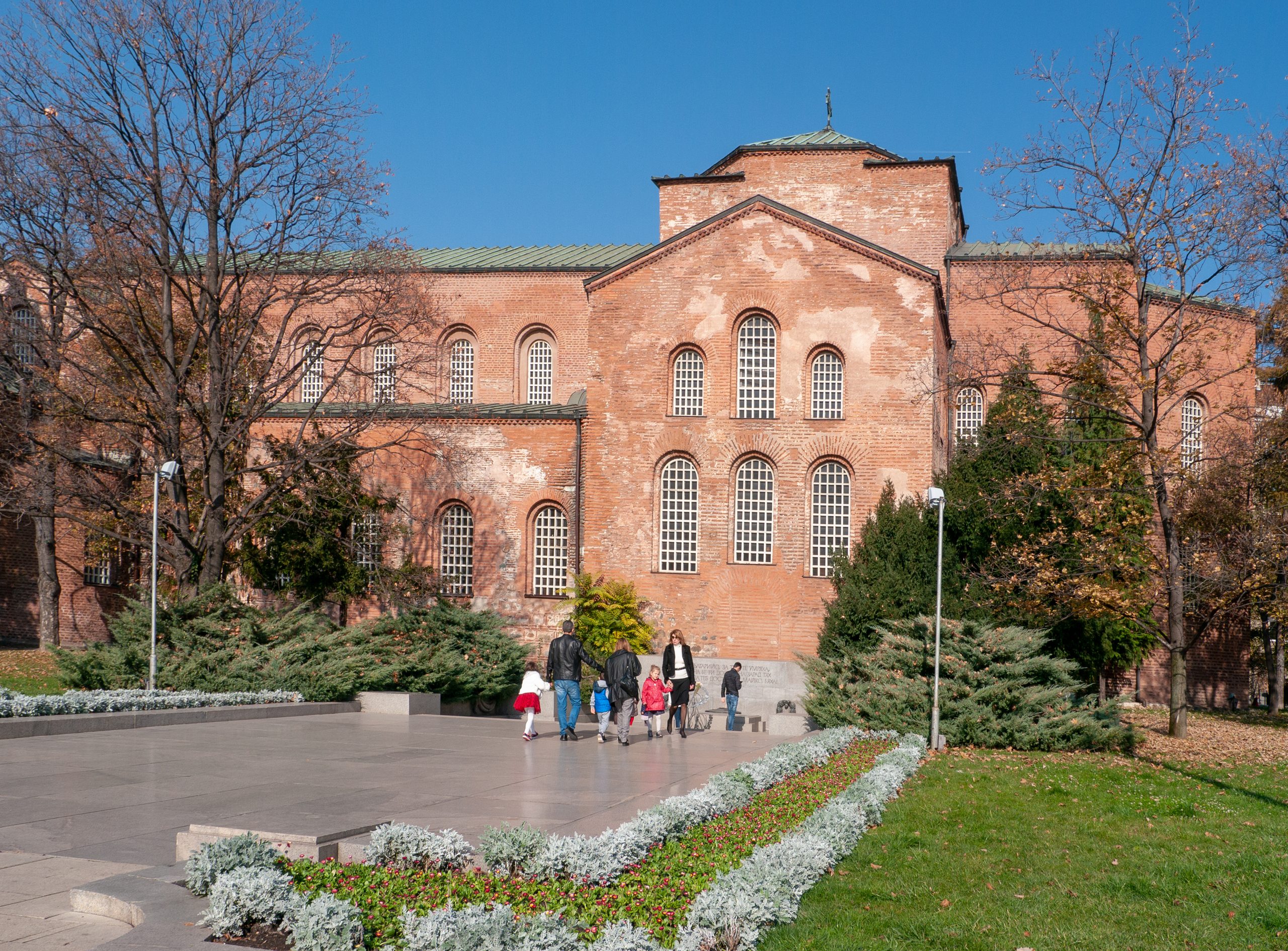
The eternal flame of the Monument to the Unknown Soldier burns beside the church, two minutes from the last stall.
The Russian Church
Five minutes west along Tsar Osvoboditel Boulevard, the Russian Church has gold onion domes and green tiles that look lifted from Moscow. Entry is free, photos aren't allowed inside, and down in the crypt people leave handwritten wishes at the tomb of Archbishop Seraphim.
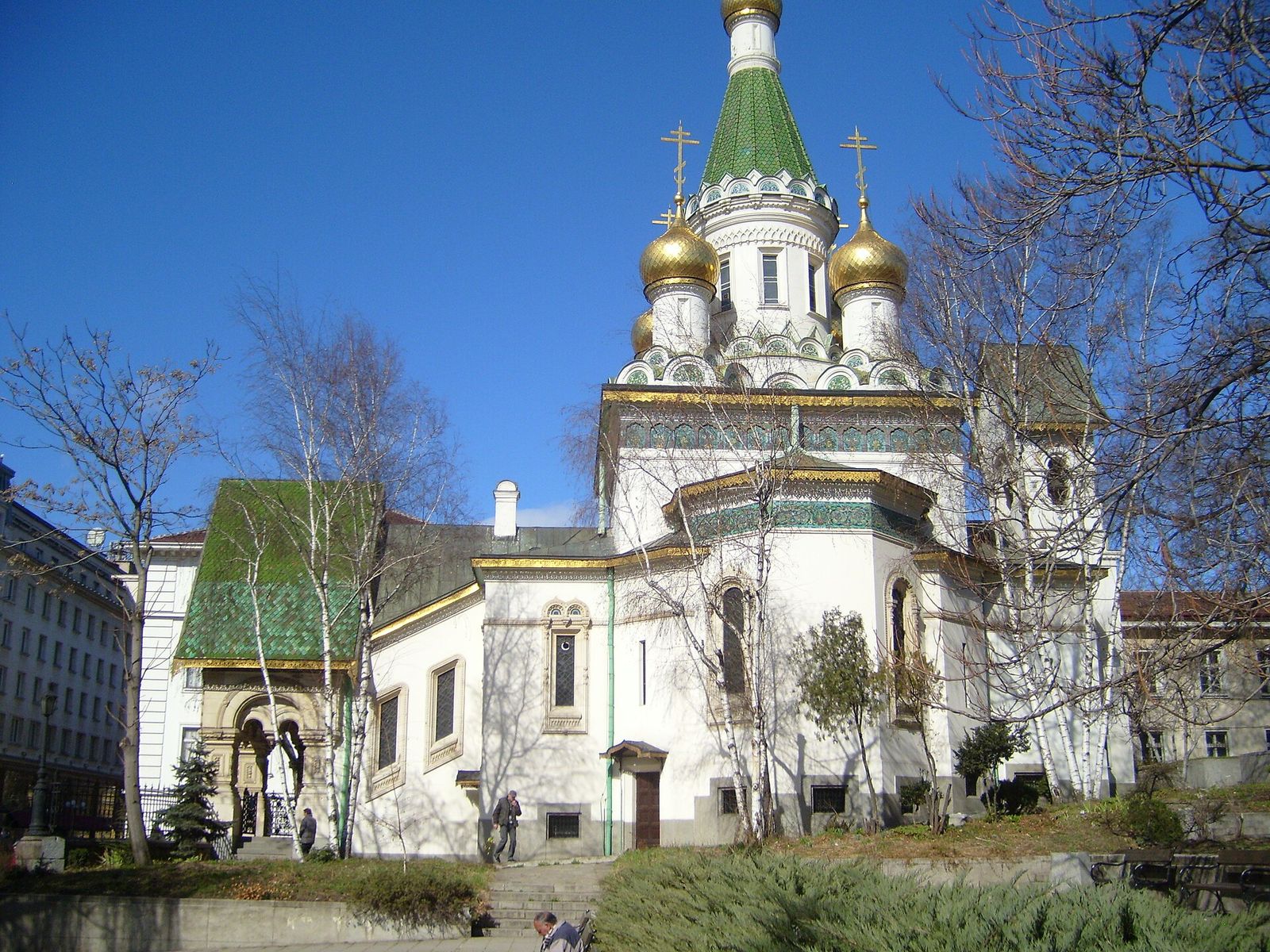
If you come from Serdika metro, you pass it on the walk to the stalls.
A morning at the market: how I'd plan it
The stalls, the three churches and the crypt fill a morning without rushing. This is the order I'd use on a weekend in Sofia with one free morning.
| Time | Stop | Notes |
|---|---|---|
| 10am | Crypt icon museum | Opens at 10am, shut on Mondays; 45 minutes |
| 10.45am | The antiques market | Tables fully out by now; 45 minutes to an hour |
| 11.45am | Alexander Nevsky Cathedral | Free; 30 minutes |
| 12.15pm | St Sofia Basilica | 2 minutes' walk; add the underground level for €4 |
| 12.45pm | The Russian Church | 5 minutes' walk, then lunch in the centre |
The Museum of Socialist Art for the full-size Lenins
If the Lenin busts were your favourite bit, the Museum of Socialist Art is where many of the full-size statues ended up: a sculpture park of communist-era figures plus an indoor gallery, run by the National Gallery. It's at 7 Lachezar Stanchev Street, by G.M. Dimitrov metro station on lines M1 and M4, a short ride from Sofia University.
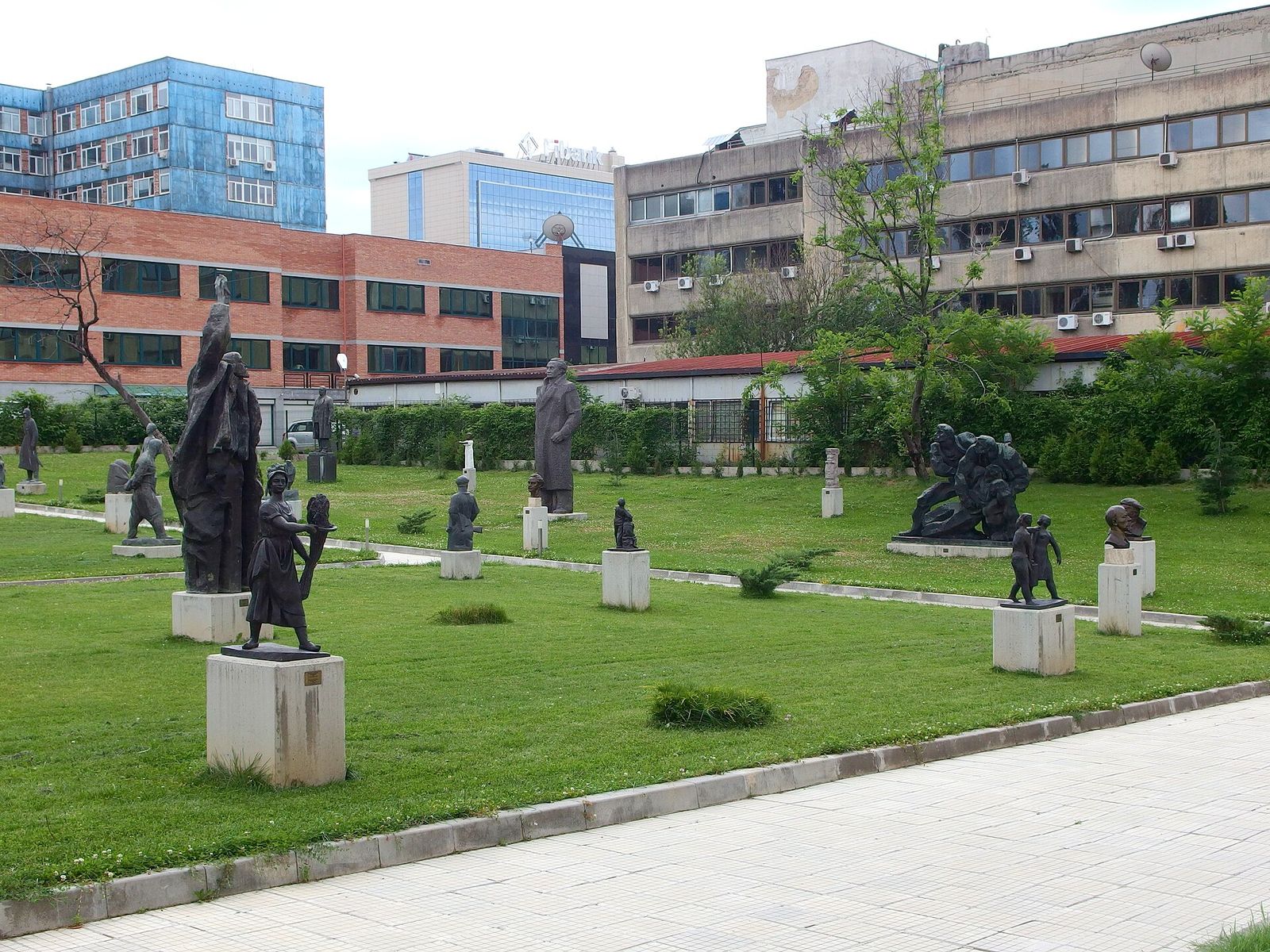
Tickets cost €8, or €2 on a Thursday, and it opens Tuesday to Sunday from 10am to 6pm.
Sofia's other flea markets
The antiques market is the flea market most visitors mean, and on a short trip it's the only one I'd send you to. Sofia also has a big weekend second-hand market that locals call Bitaka (Битака, from битак, the Bulgarian word for a flea market), where old things share the ground with second-hand clothes, tools and electronics. It's on the edge of the city, and older listings give different places and days for it, so ask at your hotel for the current spot before you set off.
For food shopping, Zhenski Pazar, the Women's Market (Женски пазар), is Sofia's oldest and biggest open-air market, set up around 1878 so village farmers could sell in town. I buy honey, nuts and spices there to bring home.
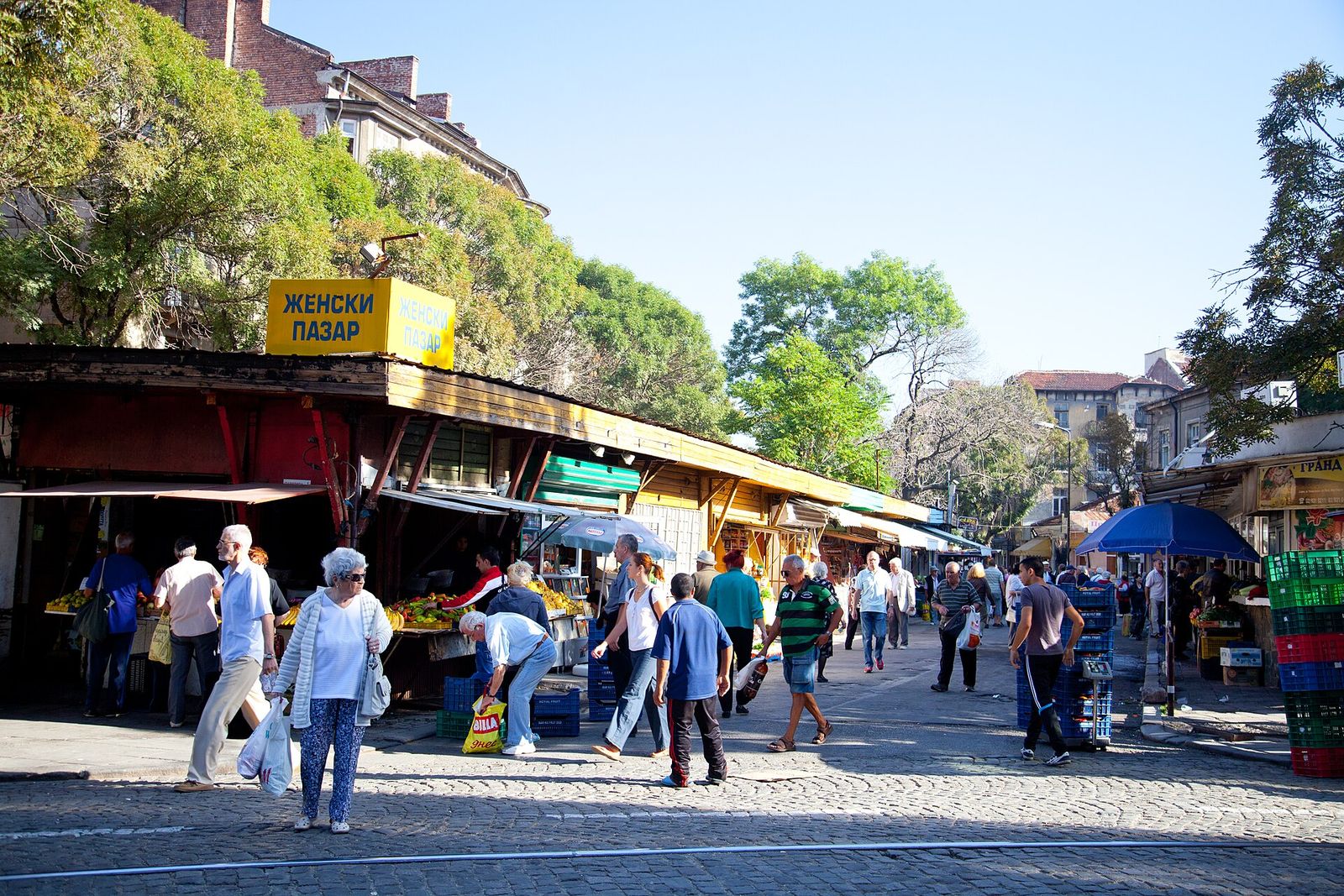
Central Market Hall and the Saturday morning farmers' market by the Roman Wall in Lozenets round out the markets in Sofia I'd fit into a long weekend.
Key takeaways
- The antiques market sets up between Alexander Nevsky Cathedral and St Sofia Basilica from about 10am every day, weather permitting, and it's fullest at weekends.
- New icons, lace, embroidery and old cameras are the best buys, and most "Soviet" and "wartime" pieces are reproductions.
- Ask "kolko struva?", offer less, pay cash in euros and expect no receipt.
- Leave grenades, shells and anything sold as ancient on the table: grenades are banned from flights, shells can be refused at security and ancient finds can need an export licence.
- The crypt icons, the cathedral, St Sofia and the Russian Church fit around the stalls in one morning.
Frequently asked questions
When is the flea market at Alexander Nevsky open?
The stalls set up from about 10am every day, weather permitting, and they're fullest on Saturday and Sunday. There are no official hours and no fixed closing time, so I aim to arrive by late morning and treat heavy rain as a reason to come back another day.
Are there any markets in Sofia, Bulgaria?
Yes, several. Zhenski Pazar is the big open-air food market, Central Market Hall is the covered one on Maria Luiza Boulevard, and the antiques market by Alexander Nevsky sells icons, lace and Soviet souvenirs. A farmers' market also runs on Saturday mornings by the Roman Wall in Lozenets.
Where is the largest flea market in Sofia?
The big one is Bitaka, a weekend second-hand market on the edge of the city, but older listings give different locations and days for it, so ask at your hotel before you go. For a visitor, the antiques market by Alexander Nevsky is the one worth the trip, because it's in the centre and sells the icons, lace and Soviet pieces people come for.
Is Sofia a cheap city to visit?
Yes, by UK standards. A coffee costs €2 to €3, a half-litre of beer in a plain local bar about €2 and a metro ride €0.80, and most of the big sights, Alexander Nevsky Cathedral included, are free. The paid ones around this square cost €4 to €10, and Sofia prices for food and drink sit well below London's.
What is famous to buy in Bulgaria?
Rose oil and rose cosmetics, Troyan pottery, hand-painted icons, embroidery and lace, and rakia are the classic buys. At the antiques market I'd go for a small icon or a lace tablecloth, and the other Bulgarian souvenirs I bring home come from shops and supermarkets in the centre.
Are the Soviet badges at the market real?
Some are, most aren't. Modern copies come in trays of identical pieces, while genuine badges turn up in small, worn, mixed handfuls. I buy the ones I like the look of and price them as souvenirs.
Can I pay by card at the antiques market?
No, bring cash. The stalls work in euro notes and coins and don't give receipts, so carry small notes and keep the big ones for shops with card machines.
Shopping in Sofia: Where I Shop and What I Buy
Where I shop in Sofia, from the big brands on Vitoshka to icons, embroidery, market honey and rose oil.
Read the guide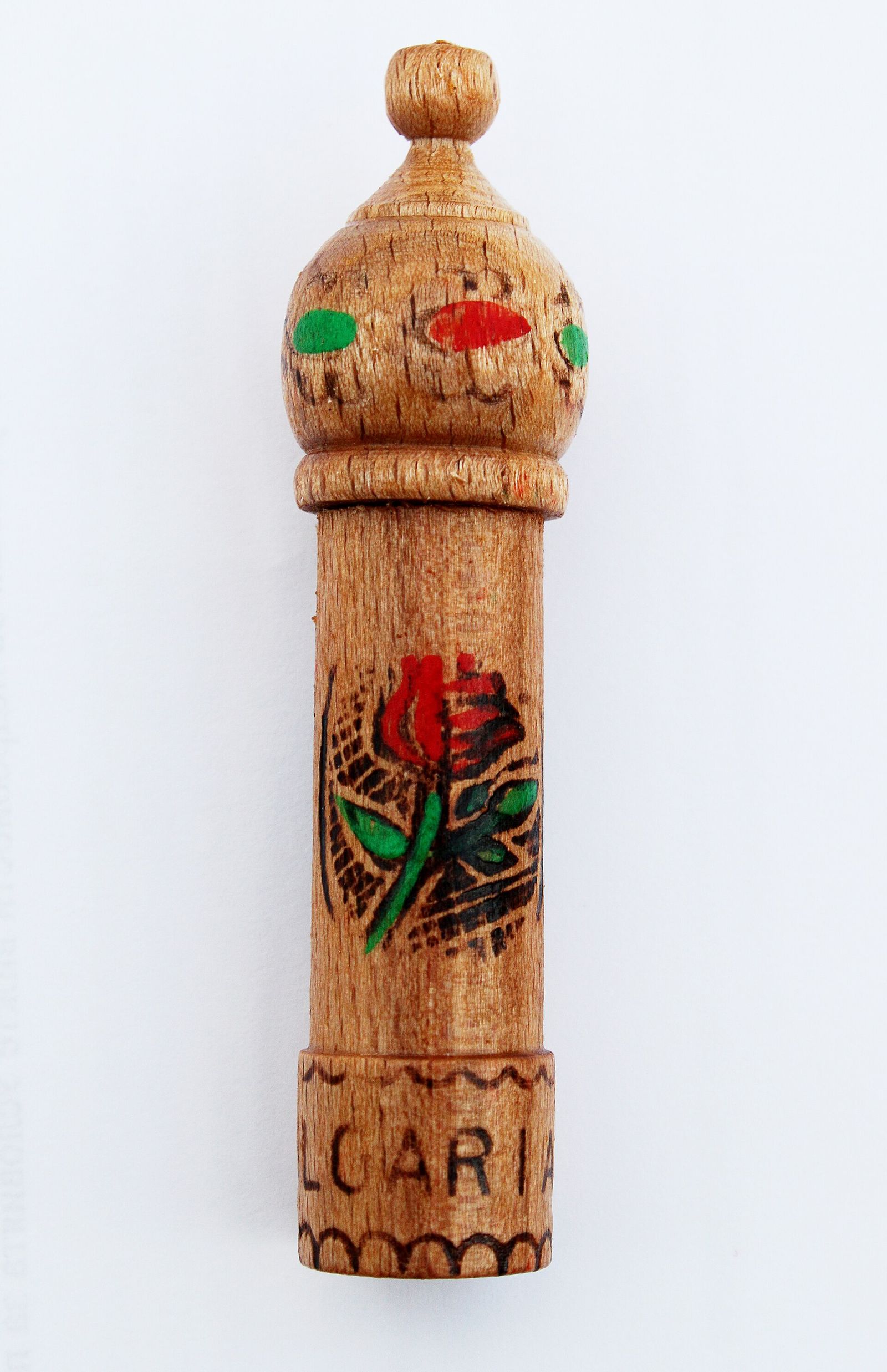
Bulgarian Souvenirs Worth Buying, and Where I Find Them in Sofia
Rose oil, Troyan pottery, rakia and lyutenitsa: the Bulgarian souvenirs I buy in Sofia and how I get them home.
Read the guideZhenski Pazar: My Guide to Sofia's Women's Market
Sofia's oldest open-air market for fruit, cheese, honey and spices: what I buy, when I go and what sits nearby.
Read the guide