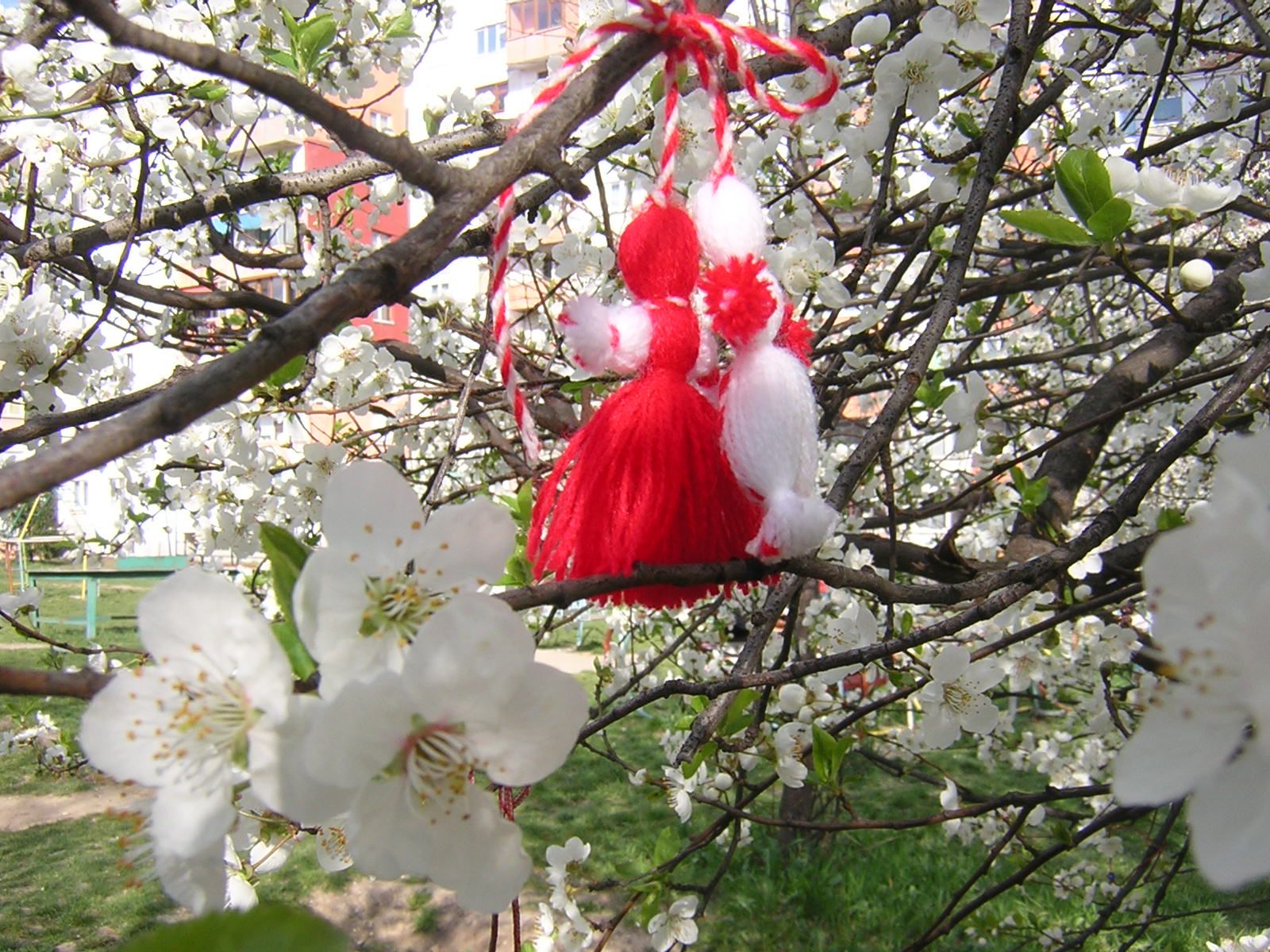
Martenitsa and Baba Marta: What 1 March Means in Bulgaria
Bulgaria greets spring on 1 March with the martenitsa (мартеница), a twist of red and white wool that friends pin on each other for health, and with Baba Marta, the moody old woman behind it. It's my favourite day in the Bulgarian year. Here's what the threads mean, how to wear one, when to take it off and where I buy mine in Sofia.
What is a martenitsa?
A martenitsa is a small token of red and white thread, usually wool, twisted into a cord and given on 1 March. The plural is martenitsi (мартеници). You wear it for health and luck until spring arrives, then hand it on to a tree.
White stands for purity and a long, happy life, red for health and life itself. The classic martenitsa is a pair of little woollen dolls called Pizho and Penda. Pizho is the boy, mostly white, and Penda is the girl, mostly red, with a skirt.
By the first week of March I see red and white thread on wrists all over the Sofia metro, from toddlers to pensioners.
Who is Baba Marta?
Baba Marta means Granny March. In Bulgarian folklore she is the month of March as an old woman, sunny and kind one hour and vicious the next, which sums up March in Sofia: sunshine at lunch, sleet by six. Her brothers are Golyam Sechko and Malak Sechko, Big Sechko and Little Sechko, the months of January and February. In the stories they've drunk her wine or caused some other trouble, she's forever cross with them, and her temper turns the weather.
Red and white is how you get on her good side. The colours ask her for mercy, so winter leaves sooner and spring comes in. The first stork or swallow of the year is the sign that she has cheered up.
The legend of the borrowed days
The best-known Baba Marta story is about an old goatherd. In the last days of March the old woman drove her goats up into the mountains, sure that Baba Marta would send her fine weather. Baba Marta grew angry, borrowed a few days from her brother February and buried the mountain in snow and blizzards. The goatherd and her flock froze and turned into a pile of stones, and healing water began to flow from the rocks.
Those extra days are the borrowed days, zaemni dni (заемни дни), also called the counted days, broeni dni (броени дни).
Martenitsa shapes and colours
The basic martenitsa is two threads, one red and one white, twisted into a cord. Everything else is decoration, and these are the shapes I see on the stalls every February.
| Shape | What it looks like | How it's worn |
|---|---|---|
| Bracelet | A red and white cord, sometimes plaited, with a bead or a slip knot | Tied round the wrist |
| Pizho and Penda | Two small woollen dolls, a white boy and a red girl | Pinned to a coat or a jumper |
| Tassel | A red and white tassel on a loop of cord | Pinned on, or hung in the car or on the house |
| Pompom | A ball of red and white wool | Pinned to clothing |
| Necklace | A longer cord, often with a bead or a small charm | Worn round the neck |
Modern ones add coloured beads and other trimmings. The handmade ones below are the old style, all wool and nothing shiny.
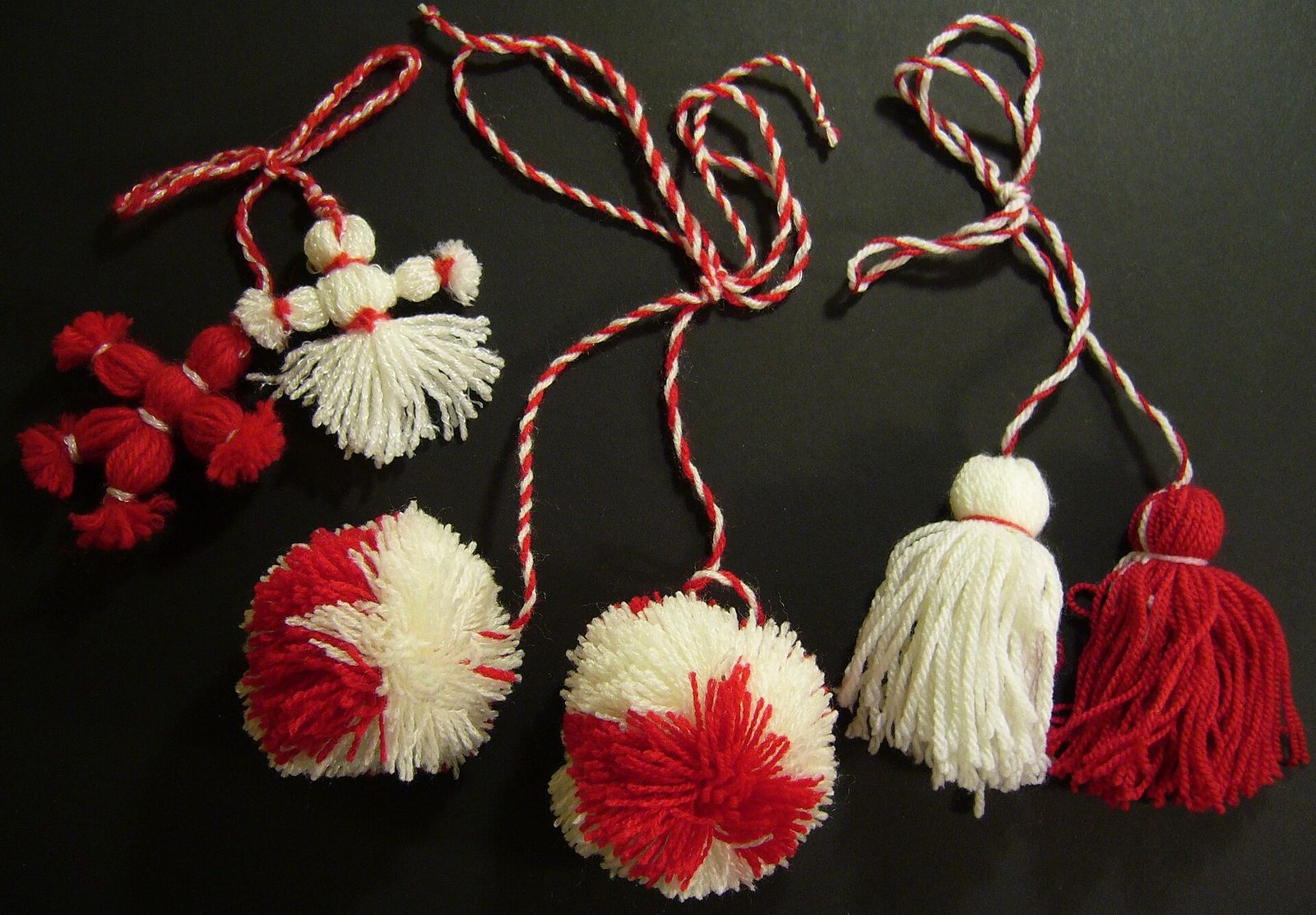
Red and white are the rule almost everywhere. In Shopluk, the region around Sofia, and around Sandanski in the south-west, the old martenitsa swapped the white thread for a blue one, to ward off the evil eye. In the Rhodope mountains people twist in extra colours. Some regions have their own word for it: martinka, marta or martichka.
How Bulgarians celebrate 1 March
Baba Marta Day starts early in a traditional house. The oldest woman cleans the house before sunrise, then spreads something red outside, a tablecloth, a rug, a belt or an apron, to put Baba Marta in a good mood. She ties twisted red and white threads round the children's wrists for health and against the evil eye, and round the wrists of young women and new brides. A martenitsa tied on a sleeping child is a present from Baba Marta herself.
The young are sent outdoors so Baba Marta can see them and cheer up, while old women stay in so they don't anger her. In many villages people also light fires and walk round the yard banging metal pots and tools, to chase off snakes and lizards. Some families tie martenitsi on their animals and fruit trees as well.
In Sofia, colleagues hand them round the office, and children come home from school with a wrist full. Men and older people wear them now too, where the old custom kept them for children, girls and brides. Ending 1 March with several on one wrist is normal.
1 March is a normal working day, and shops, offices and schools stay open. The public holiday comes two days later, on 3 March.
Martenitsa etiquette for visitors
You don't need to be Bulgarian to join in, and Bulgarians love it when a visitor does. If a friend, host or colleague gives you a martenitsa, put it on there and then and say thank you. These are the rules I go by.
| Question | The custom |
|---|---|
| Who gives one? | Anyone: family, friends, colleagues, hosts |
| Who do I give one to? | People I'm close to, and the children I know |
| When does it go on? | On 1 March, or as soon as someone gives you one |
| What do I say? | Честита Баба Марта (chestita Baba Marta), Happy Granny March |
| Where do I wear it? | On the wrist, on your coat or round your neck |
The greeting is the first of the Bulgarian phrases I'd learn for a trip in early March, and you'll hear it in every shop and office on the day. A martenitsa follows the same instinct as the rest of Bulgarian etiquette around gifts: the gesture counts, and a plain cord from a street stall is a perfectly good present.
When to take off your martenitsa
You wear a martenitsa until spring proves it has arrived: the first stork, the first swallow or the first tree in blossom you see.
White storks build big stick nests on top of electricity poles in Bulgarian villages, like this one.

If spring is slow, the end of March is the cut-off, and in some regions people keep theirs on until then whatever the weather. I take mine off at the first blossom, because I can go weeks in central Sofia without seeing a stork.
What to do with your martenitsa afterwards
Once it comes off, the martenitsa goes on a tree, ideally a branch of a fruit tree in blossom. By April, trees and bushes across Bulgaria, Sofia's parks included, are hung with faded red and white thread.
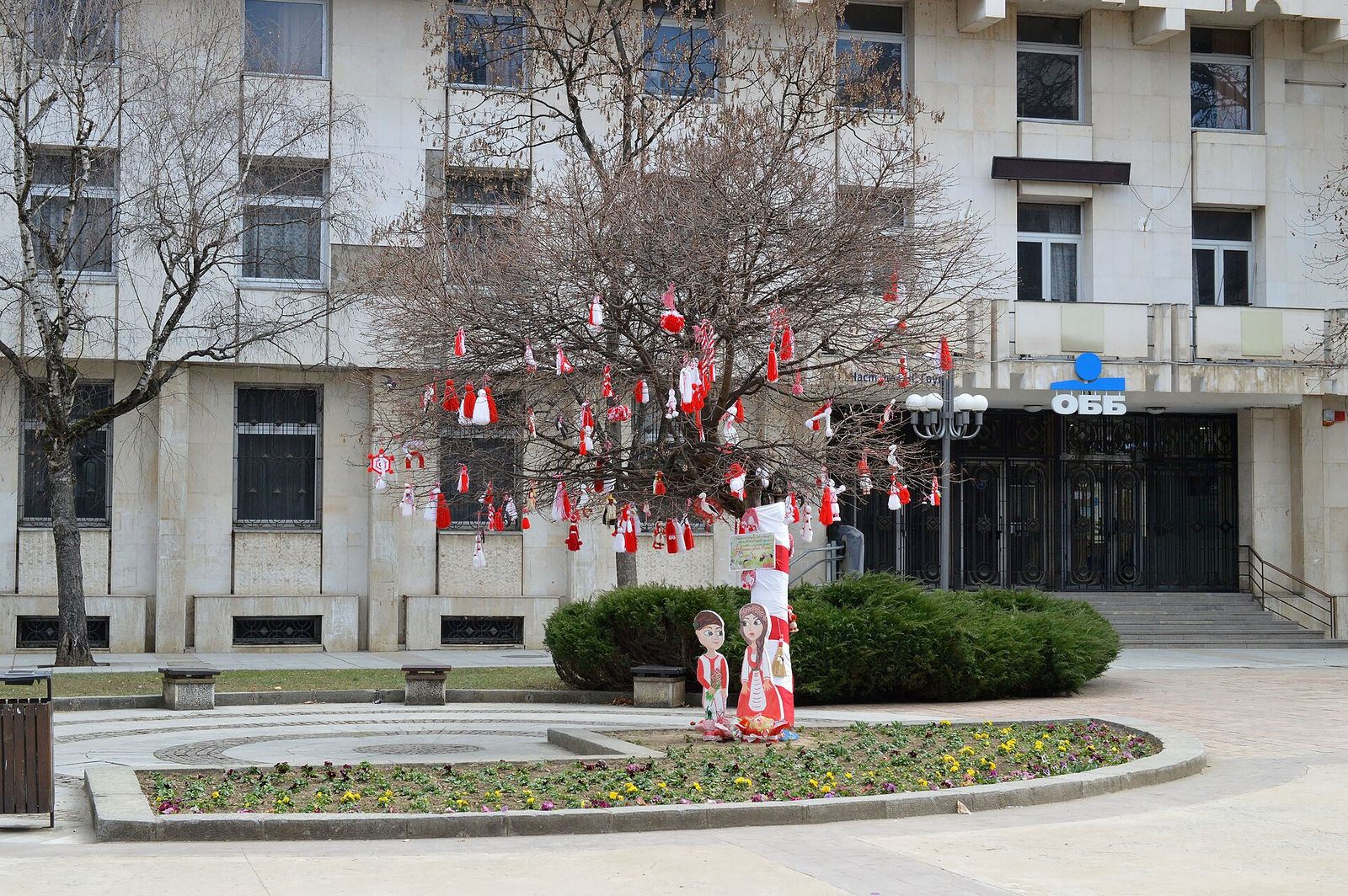
Some towns dress a tree on purpose, like this one in Botevgrad. The other custom is to put the martenitsa under a stone. Some people drop theirs in the nearest river, so life flows on the way the river does.
The history of Baba Marta and the martenitsa
The red and white thread is far older than Bulgaria. Historians trace it to Thracian and ancient Greek custom. In the late 4th century, under the emperor Theodosius I, the Roman writer Lutatius Placidus described a twig wound with red and white thread carried at a festival of Pallas Athena, and a Byzantine encyclopaedia from about 1150 describes such branches hung with dried fruit as well.
Rome explains the date: the early Roman year began on 1 March, the month named after Mars, the Roman god of war.
The best-known origin story is much younger. It links the first martenitsa to Khan Asparuh, founder of the first Bulgarian state in 681: doves carried white threads to announce his victory over the Byzantines, and the threads turned red with blood on the way. The tale took off in the 1930s, from a book by Nikolai Raynov first published in 1918.
In 2017 UNESCO added the cultural practices of 1 March to its list of the intangible cultural heritage of humanity. Older women still teach girls to twist martenitsi by hand.
Martenitsa, mărțișor and martinka across the Balkans
Bulgaria shares 1 March with its neighbours, and each one has its own name and its own rules.
| Country | Name | What's different |
|---|---|---|
| Bulgaria | Martenitsa (мартеница) | Everyone wears one from 1 March, men included |
| North Macedonia | Martinka | Much the same customs as in Bulgaria |
| Romania and Moldova | Mărțișor | Given to women and small children; a man may hide one, in his shoe for instance |
| Greece | Mártis | Tied on children's hands |
| Albania | Verore | Worn on 14 March, the old 1 March, for Summer Day (Dita e Verës) |
If you carry on from Sofia in early March, the red and white thread follows you over the border. Cross into Romania on the trip from Sofia to Bucharest and the martenitsa becomes the mărțișor.
March in Bulgaria: the dates around Baba Marta
A trip in late February or early March lands in the busiest stretch of the Bulgarian spring calendar. These are the dates I'd plan round.
| Date | What it is | What a visitor sees |
|---|---|---|
| February | Martenitsa season opens | Stalls on the busiest streets of central Sofia |
| 1 March | Baba Marta Day | Martenitsi on every wrist |
| 3 March | Liberation Day, the national holiday | A day off for offices, and flags on the buildings |
| 9 March | Mladentsi (Младенци) | One of three days that honour Baba Marta, with 1 and 25 March |
| 25 March | Blagovets (Благовец), the Annunciation | The day the migratory birds are said to return; yards swept and bonfires lit |
| 31 March | End of the month | The last day to wear a martenitsa where the end-of-March rule holds |
In 2027, 1 March falls on a Monday and 3 March on a Wednesday, so a Friday to Wednesday trip catches both. Liberation Day marks the Treaty of San Stefano, signed on 3 March 1878 at the end of the war that ended Ottoman rule in Bulgaria.
Baba Marta also lands near the end of the winter's masked season. Kukeri, the dancers in fur and bells, parade through villages from New Year until the start of Lent, which is 15 March in 2027. Between the kukeri and Baba Marta, late winter makes my list of the best times to visit Sofia. After March, the next big date in Bulgaria's festival calendar is Orthodox Easter, on 2 May in 2027.
Where to buy a martenitsa in Sofia
In the weeks before 1 March, martenitsa stalls pop up all over central Sofia, wherever the crowds are. A stall hangs everything from plain cords and bracelets to tassels and big Pizho and Penda pairs, pinned to cards in long rows.
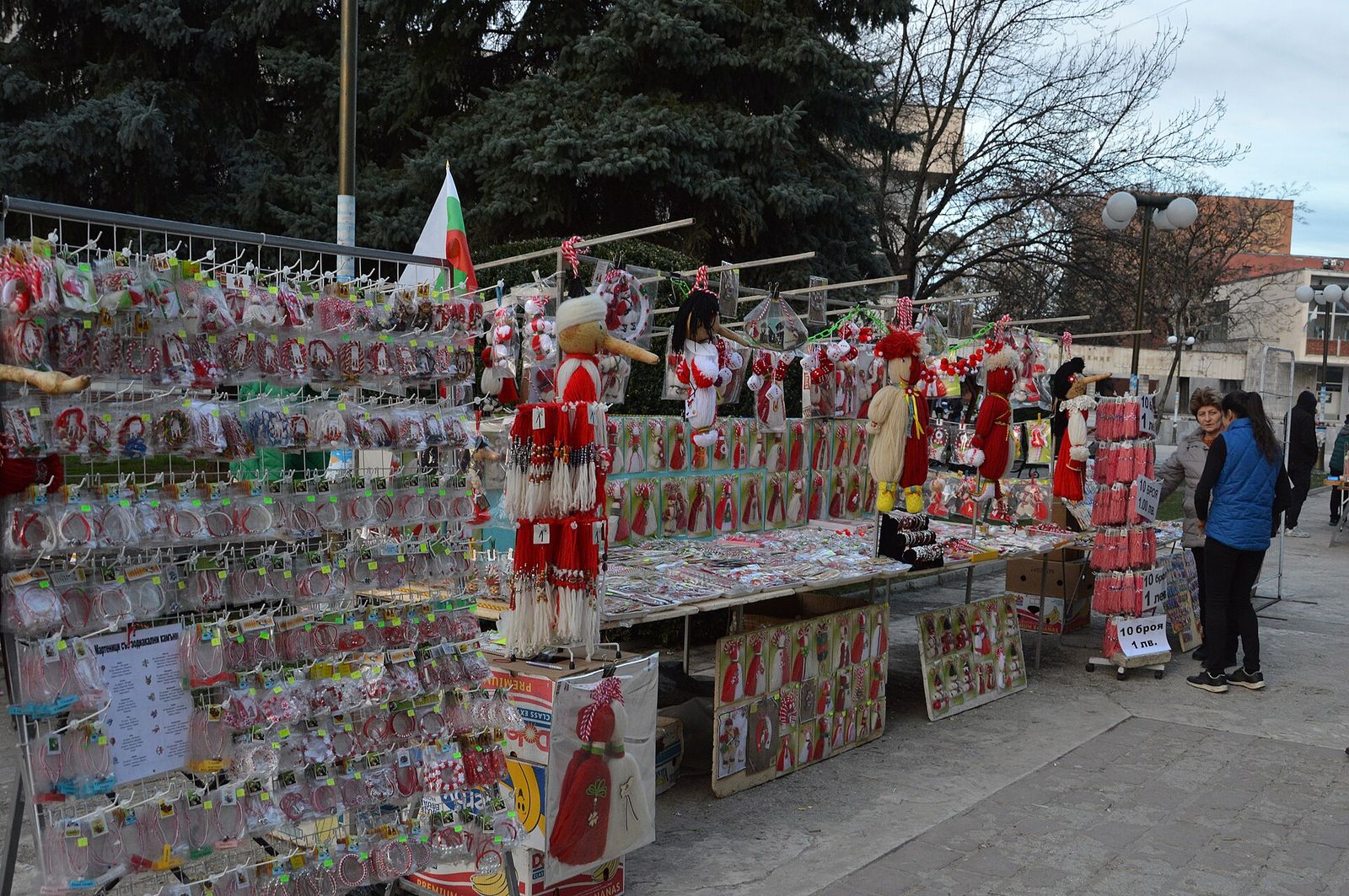
Bulgarian towns fill with stalls like this one in Botevgrad. Many of the martenitsi on them are factory-made and imported, and some are still made by hand. I buy the factory ones by the dozen for the office and look for handmade woollen ones for friends. For a martenitsa you make yourself, ethnographic museums and chitalishta, Bulgaria's community cultural centres, run workshops in the run-up to 1 March.
Martenitsi are the lightest of the Bulgarian souvenirs I bring back to the UK, small enough to post in a card. If your trip ends before 1 March, give them out at home on the day, and your friends can wear theirs until the first blossom in their own street.
Key takeaways
- A martenitsa is a red and white token for health, given on 1 March and never bought for yourself.
- Wear it on your wrist or coat until you see a stork, a swallow or a blossoming tree, or until the end of March.
- Then tie it to a blossoming tree or put it under a stone.
- In Sofia the stalls go up in the weeks before 1 March, and Liberation Day on 3 March is a public holiday.
Frequently asked questions
Why do Bulgarians wear a martenitsa?
Bulgarians wear a martenitsa for health and good luck, and to welcome spring. The red and white thread is meant to soften Baba Marta, Granny March, so that winter leaves quickly, and in traditional families the oldest woman ties it on the children against the evil eye.
What is Baba Day?
Baba Day, Babinden (Бабинден), falls on 21 January (8 January in some places) and is the old feast of midwives and of women who have given birth; baba means both grandmother and midwife in Bulgarian. In the village custom, young mothers helped the midwife wash and brought her bread, banitsa and wine, and she tied a red and white thread bracelet with a silver coin on every child she had delivered. In the evening a horo, the folk line dance, saw her home.
What is the history of Baba Marta?
Baba Marta comes from Bulgarian folklore as March in the form of a moody old woman whose temper makes the weather. The red and white threads go back to Thracian and ancient Greek custom and to the Roman new year on 1 March, while the Khan Asparuh story is a 20th-century addition.
What are some Bulgarian traditions?
The best known are the martenitsa on 1 March, the kukeri masked dancers in winter, red eggs and the midnight service at Orthodox Easter, the horo line dance and name days, celebrated on the feast of your saint. Add the head nod for no and the shake for yes, and you have the first things I explain about Bulgarian culture to friends who visit.
Can foreigners wear a martenitsa?
Yes. If someone gives you a martenitsa, put it on straight away and wear it until the first blossom. Just don't buy one for yourself: buy a few to give away, and someone will tie one on you soon enough.
When do you take off a martenitsa?
You take it off when you first see a stork, a swallow or a tree in blossom. If none of them turns up, take it off at the end of March, then tie it to a blossoming tree or put it under a stone.
Is 1 March a public holiday in Bulgaria?
No. Shops, offices and schools all open as usual on 1 March. The national holiday is Liberation Day on 3 March, which falls on a Wednesday in 2027.
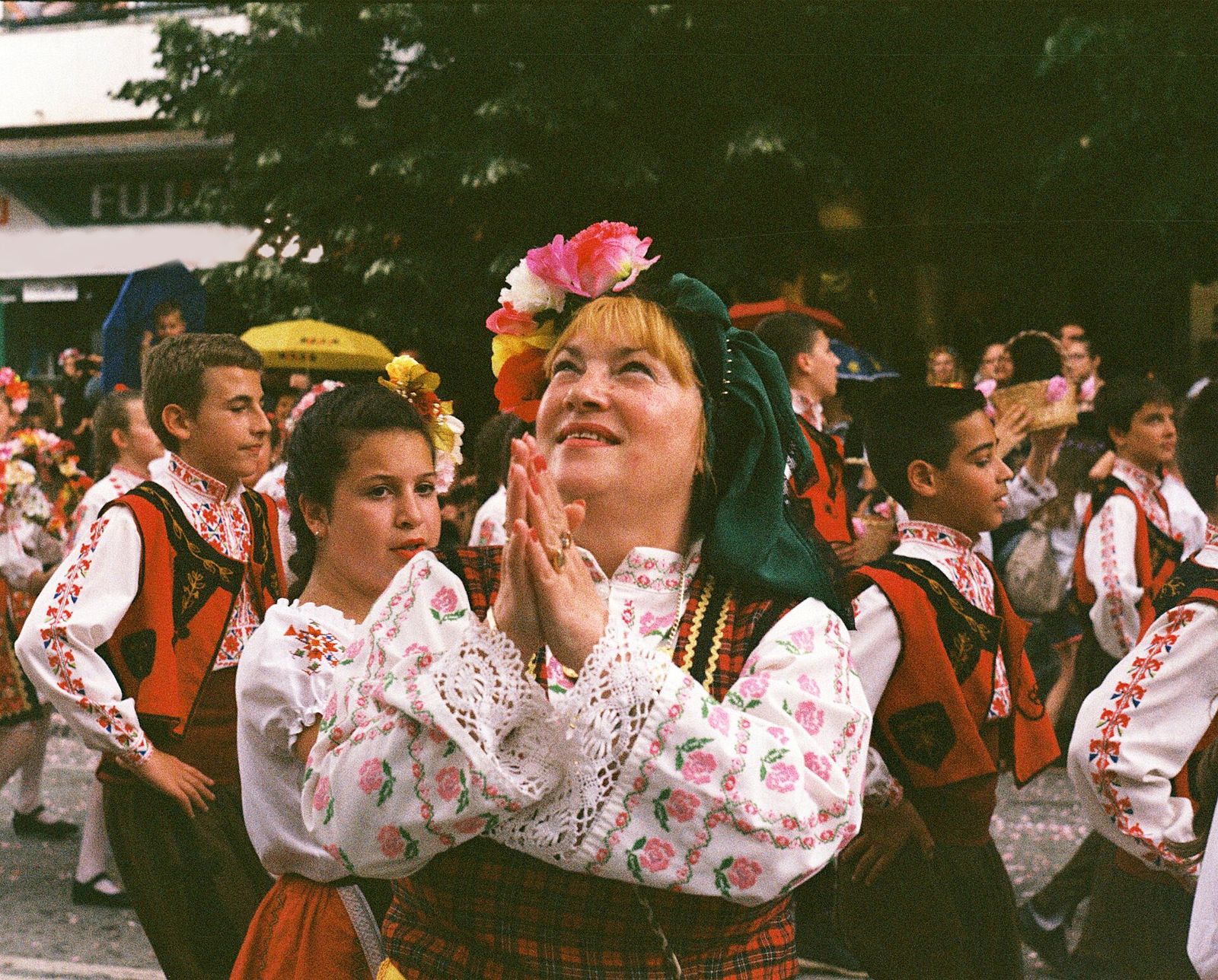
Bulgarian Culture and Traditions: A Visitor's Guide
Nods that mean no, rakia sipped with salad and masked kukeri: the Bulgarian customs I'd want you to know before a trip.
Read the guide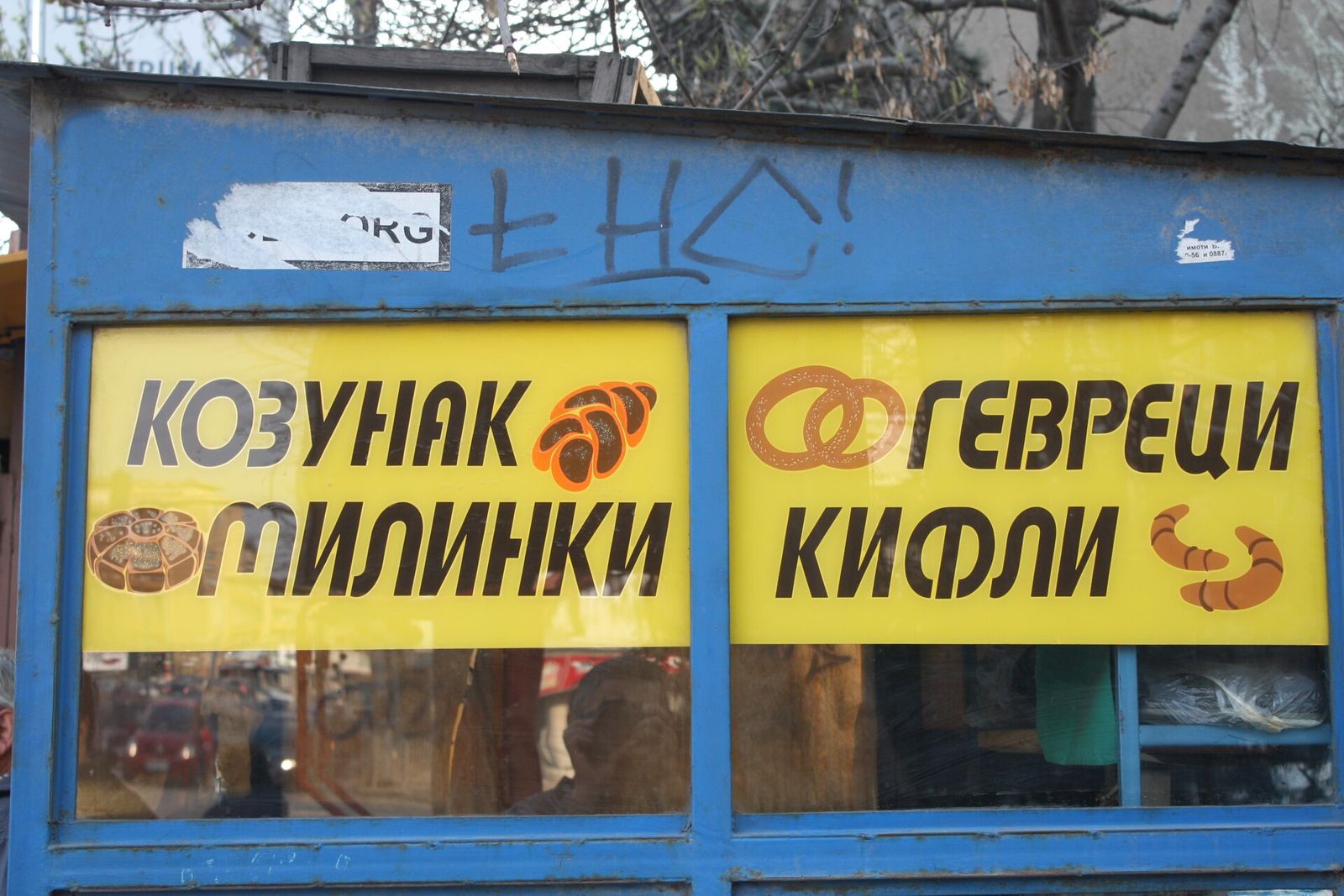
Bulgarian Phrases for Travellers: The Words I Use Every Day in Sofia
Hello, thank you, cheers and the bill: the Bulgarian words I use every day in Sofia, and how to say each one.
Read the guide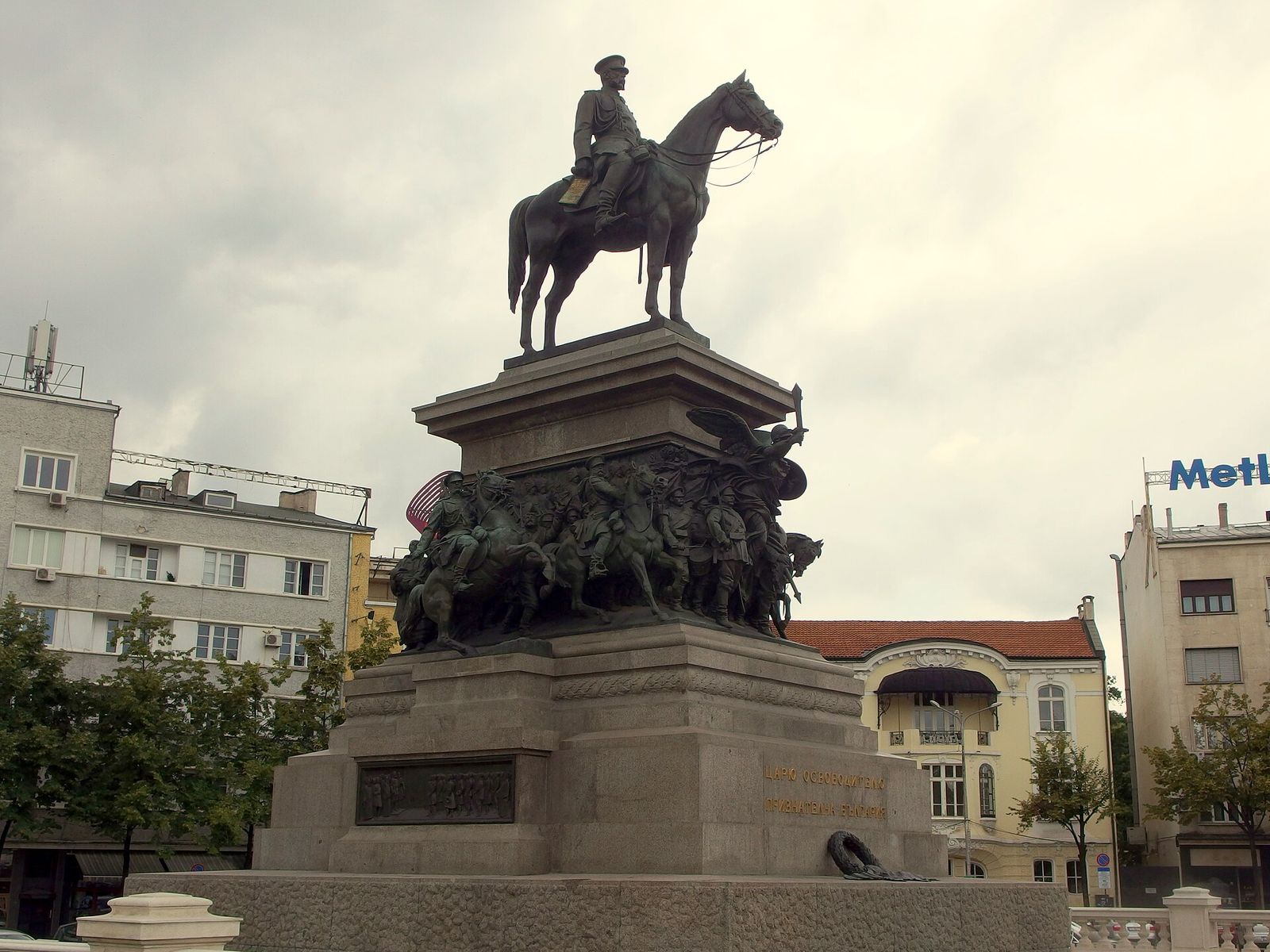
A Short History of Bulgaria (and Where to See It in Sofia)
Thracian gold to the euro: Bulgarian history era by era, and the Sofia sights where I see each chapter.
Read the guide