Rotunda of St George in Sofia: Frescoes, Ruins and How I'd Visit
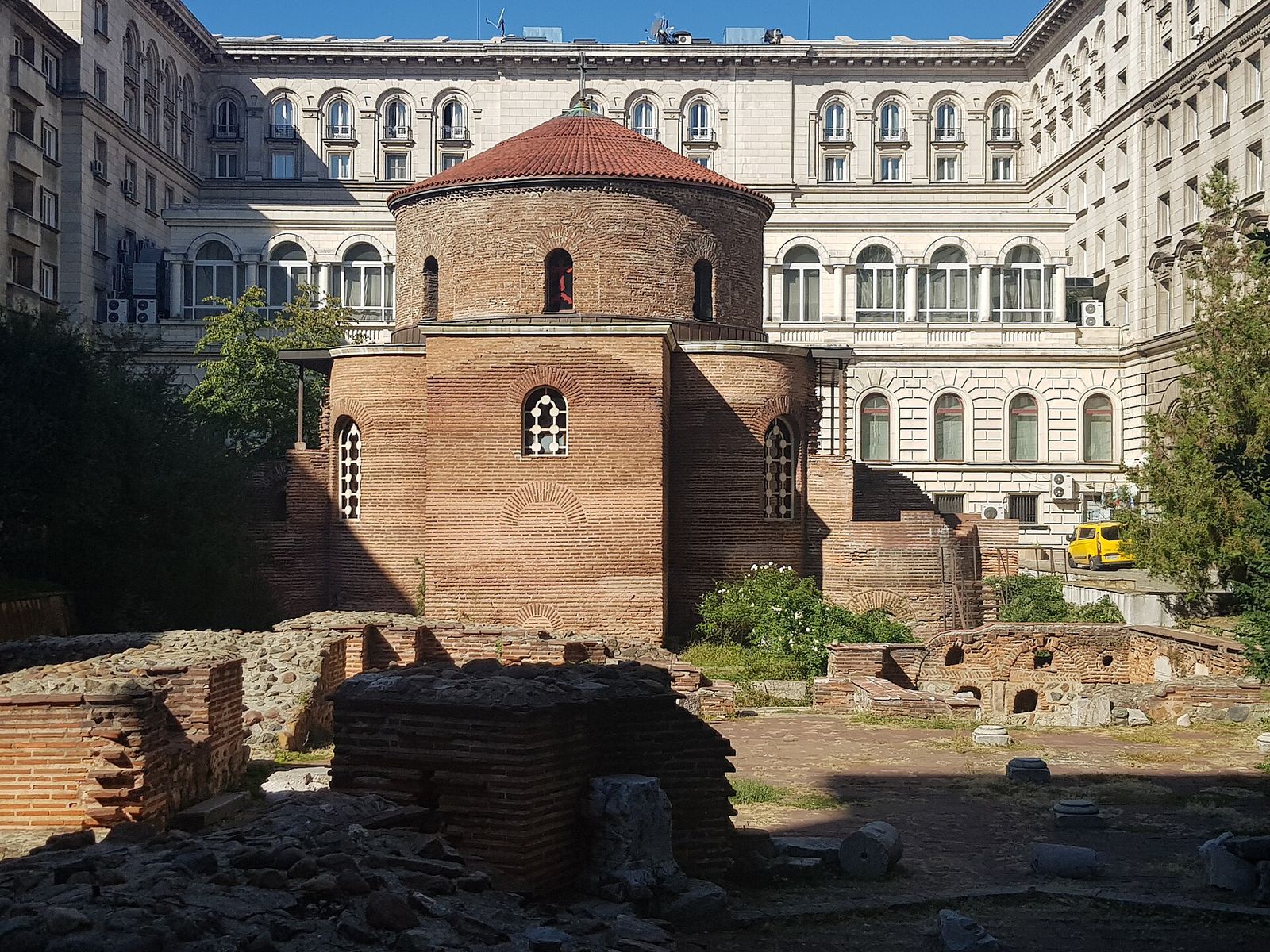
The Rotunda of St George is Sofia's oldest standing building: a round red-brick church from the 4th century, sunk a few metres below the street in a courtyard behind the Presidency. It's free, it takes 20 minutes, and it's my favourite quick stop in the centre. Here's what to look for inside, the Roman ruins around it, how to find the way in and what I pair it with.
Why the Rotunda of St George is famous
The Rotunda of St George is the oldest building still standing in Sofia. The Romans built it in the early 4th century, when the city was Serdica, and it has outlasted the Roman Empire, the medieval tsars and the Ottomans. In the 1950s the communists built the stone government blocks of the Largo around it.
It's small. Inside is one round room on a square base, with a semicircular niche in each corner and a dome 13.7 metres high. The brick walls sit a few metres below today's pavements, because Roman Serdica's ground level was that much lower.
The Romans most likely built it as part of a bath complex, and early in its Christian life it became the place for baptisms.
Of all the churches in Sofia, this one is the oldest, about 200 years older than the 6th-century St Sofia. It's also part of #3 on my list of things to do in Sofia, together with the Roman ruins and the four places of worship a few minutes away.
Rotunda of St George opening hours, entry and rules
Neither the church nor the ruins charge for entry. The church opens daily from about 8am to 7.30pm. The Roman remains around it belong to the Museum of the History of Sofia, which lists them as open 24 hours on its page for the site.
The Rotunda is a working Bulgarian Orthodox church, so church manners apply: cover your shoulders and knees, men take their hats off, and voices stay low. In Bulgarian churches the candles for the living go in the upper stand and the ones for the dead in the lower tray of sand, so watch where locals put theirs before you light one.
The Russian Church bans photos inside, and Alexander Nevsky sells a photo permit for about €5. At the Rotunda, look for a sign by the door, and if there isn't one, ask at the candle stand before you raise your phone. Never photograph people while they pray.
Christenings happen here too, and now and then a concert or a military ceremony, so the room isn't always open to wander.
How to find the Rotunda behind the Presidency
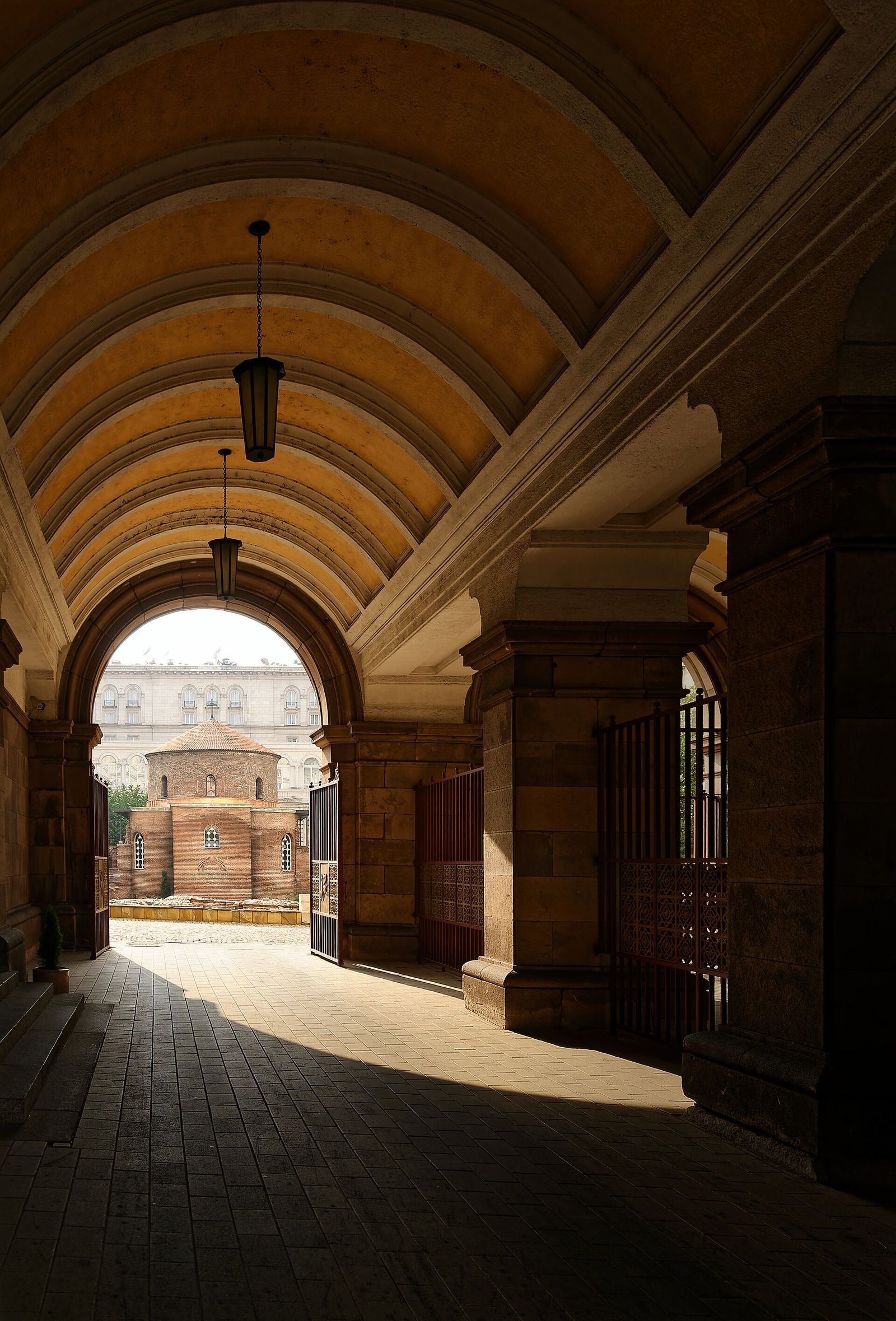
The Rotunda of St George (Ротонда „Свети Георги“) hides in the inner courtyard of the huge stone block that holds the Presidency and the Balkan hotel, at the St Nedelya end of the Largo. From the Largo you can't see it at all.
The way in is an arched passage through the Presidency building. Walk into it and the brick dome appears at the far end, framed by the arch, and then you go down a few steps to Roman ground level.
Serdika metro station sits under the Largo, about 3 minutes' walk from the passage. A single ride on Sofia's metro, trams and buses costs €0.80, and if you tap a contactless card at the barrier, the system stops charging you at €2 for the day. From Vitosha Boulevard it's a 5-minute walk north past St Nedelya Church.
The Rotunda of St George frescoes, layer by layer
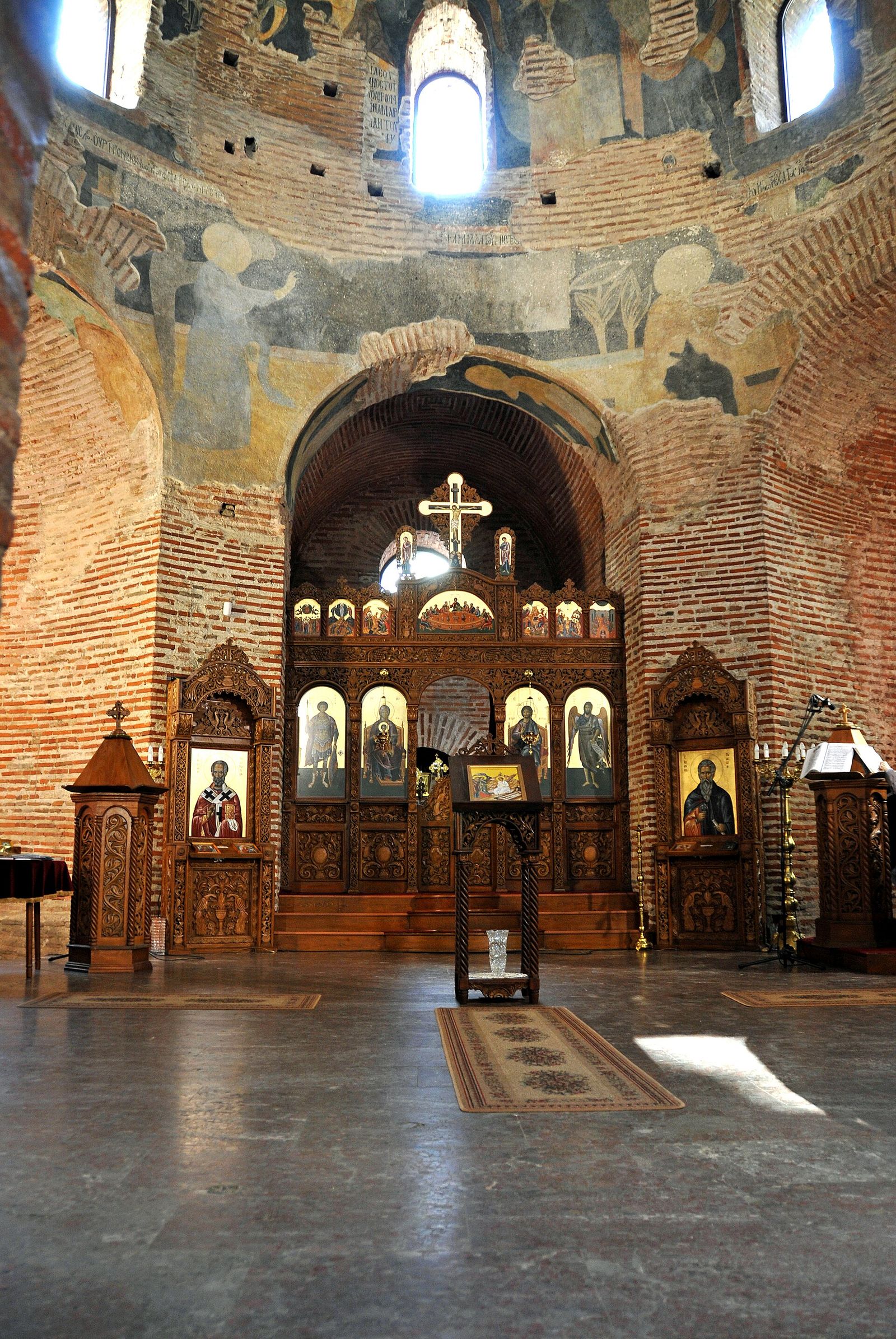
A carved wooden iconostasis stands across the apse. Around it the walls are a patchwork of bare brick where the plaster fell away and painted saints where it held, with paint running from the 10th century to the Ottoman years.
| When | What you see | Where to look |
|---|---|---|
| 10th century | Angels, the oldest painting you can make out | Just under the dome |
| 11th to 12th century | The 22 prophets, plus scenes of the Ascension and the Dormition of the Virgin | The prophets ring the dome |
| 14th century | A bishop who paid for a round of painting | North of the entrance |
| 16th to 19th century | Islamic ornamental patterns from the mosque years | Scraps on the walls |
The 22 prophets in the dome
Stand in the middle of the floor and look straight up. A ring of 22 prophets runs round the dome, each figure more than 2 metres tall and most of them holding an unrolled scroll. They're usually dated to the 11th or 12th century, and they're the paintings the Rotunda is known for.
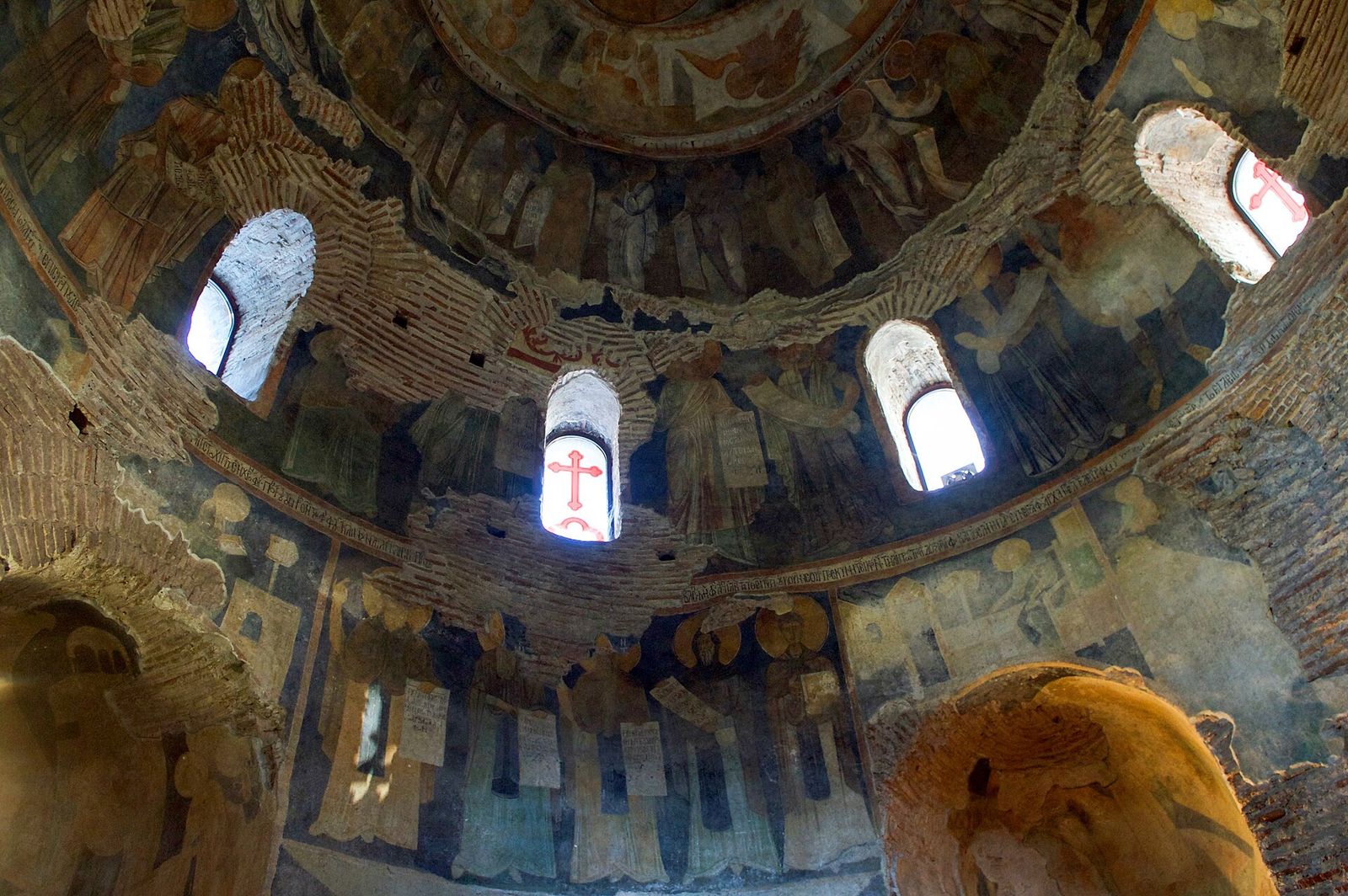
The small windows in the drum light them unevenly, so walk a slow circle under the dome. A prophet who looks like a shadow from the door turns into a face with a beard and a scroll once the light catches him.
The 10th-century angel
The oldest painting you can see clearly dates from the 10th century, the golden age of the First Bulgarian Empire under Tsar Simeon. Look for the angel's face just under the dome. It's counted among the finest Bulgarian painting of those years, and it's the face I always go back to before I leave.
The bishop by the door and the Ottoman years
North of the entrance is a 14th-century portrait of a bishop, the donor who paid for that round of work. In the 16th century the Ottomans turned the church into a mosque and plastered over the saints, and a few of the Islamic patterns they painted still show.
The Muslim congregation left in the mid-19th century, and the church went back to the Orthodox. The Ottoman plaster kept the prophets out of sight until restorers uncovered them in the 20th century.
The Roman ruins around the Rotunda
The courtyard is an open-air piece of Serdica. Behind the church's apse runs a stretch of Roman street with its drainage still in place. Beside it lie the foundations of a large three-nave basilica, probably a public building, and the bases of several smaller buildings, all from the end of the 3rd century to the start of the 4th.
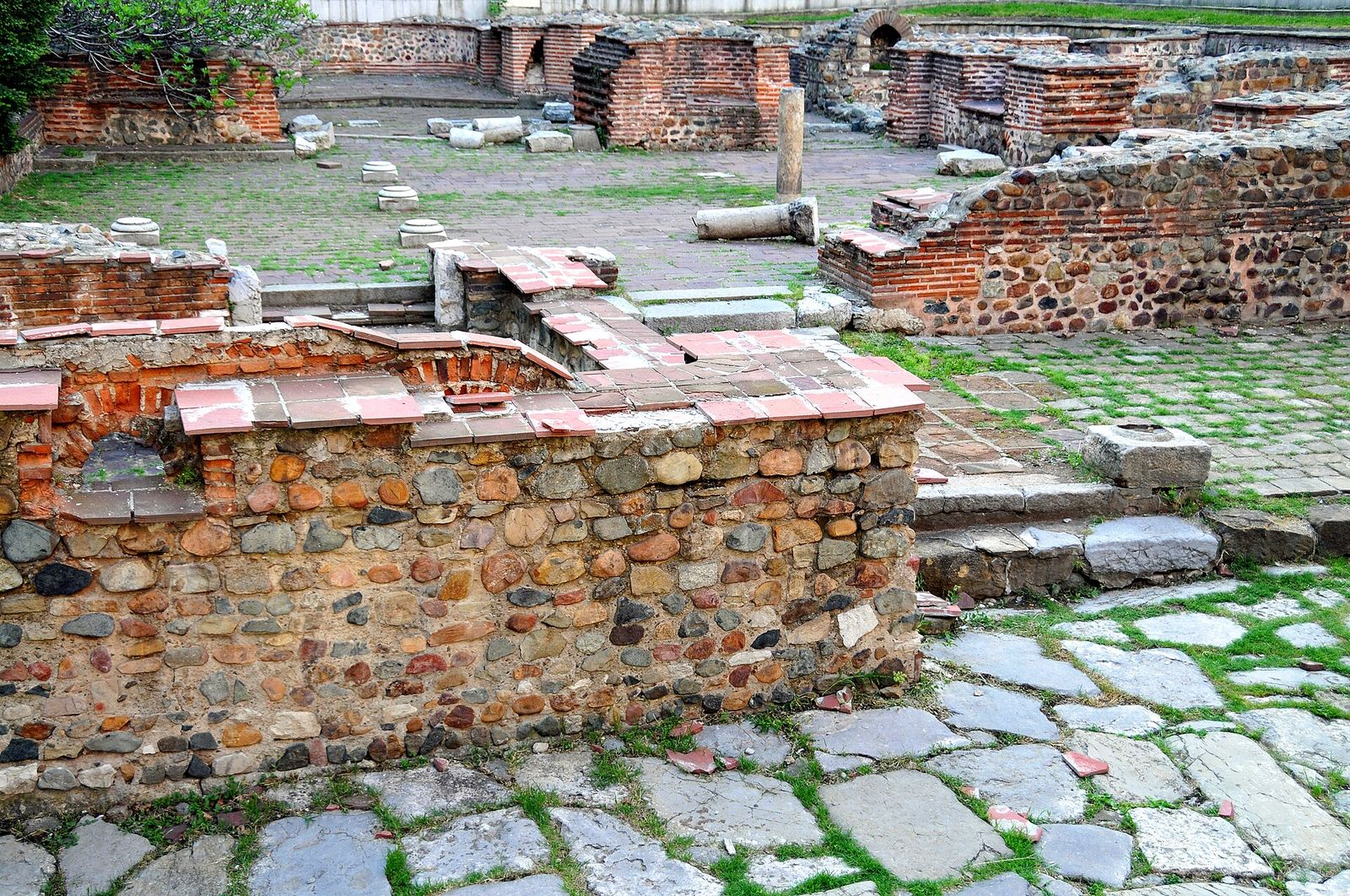
One of the smaller buildings had a hypocaust, and the tile stacks that held its floor up are still there. The courtyard doesn't close, so this is the part you can still see after the church shuts for the evening.
Historians call this part of the city Constantine's quarter, because the palace of Emperor Constantine the Great stood here. Centuries later the same quarter held the palace of Sebastocrator Kaloyan, the lord who paid for the 1259 frescoes at Boyana Church.
The courtyard is one stop on a longer trail through Roman Serdica, which runs through Serdika metro station, across St Nedelya Square and on to the Western Gate by St Joseph's Cathedral.
A short history of the Rotunda of St George
| Date | What happened |
|---|---|
| Late 3rd to early 4th century | The Roman quarter around the Rotunda is built |
| Early 4th century | The Rotunda goes up, most likely as part of a Roman bath complex |
| 343 | The Council of Serdica meets in the city |
| 10th century | The oldest surviving layer of medieval painting |
| 11th to 12th century | The 22 prophets are painted in the dome |
| 1183 | The Hungarian king Béla III carries off the relics of St Ivan of Rila |
| 14th century | The bishop's donor portrait is painted |
| 16th century | The Ottomans turn the church into a mosque and plaster over the frescoes |
| Mid-19th century | The mosque is abandoned and the building returns to the Orthodox Church |
| 20th century | The frescoes are uncovered and restored |
For a time the Rotunda kept the relics of St Ivan of Rila, the hermit behind Rila Monastery and Bulgaria's patron saint. Legend says they cured the Byzantine emperor Manuel Komnenos. Béla III took them to Hungary in 1183, they came back to Bulgaria in 1187, and they've rested at Rila since 1469.
King Stefan Milutin of Serbia rested here too, before his relics moved across the square to St Nedelya Church, where they still are.
Bulgaria spent nearly 500 years under Ottoman rule until 1878, a stretch of Bulgarian history in which several of Sofia's churches became mosques, St Sofia Church among them.
The changing of the guard at the Presidency
The Presidency's guards of honour stand at its front door on the Largo, a short walk from the Rotunda passage, and they change every hour. Their full dress is a scarlet hussar-style tunic with white braid, dark breeches, black boots and a grey fur cap topped with an eagle feather. The scarlet uniform dates from 1883, when Bulgaria was still ruled by a prince.
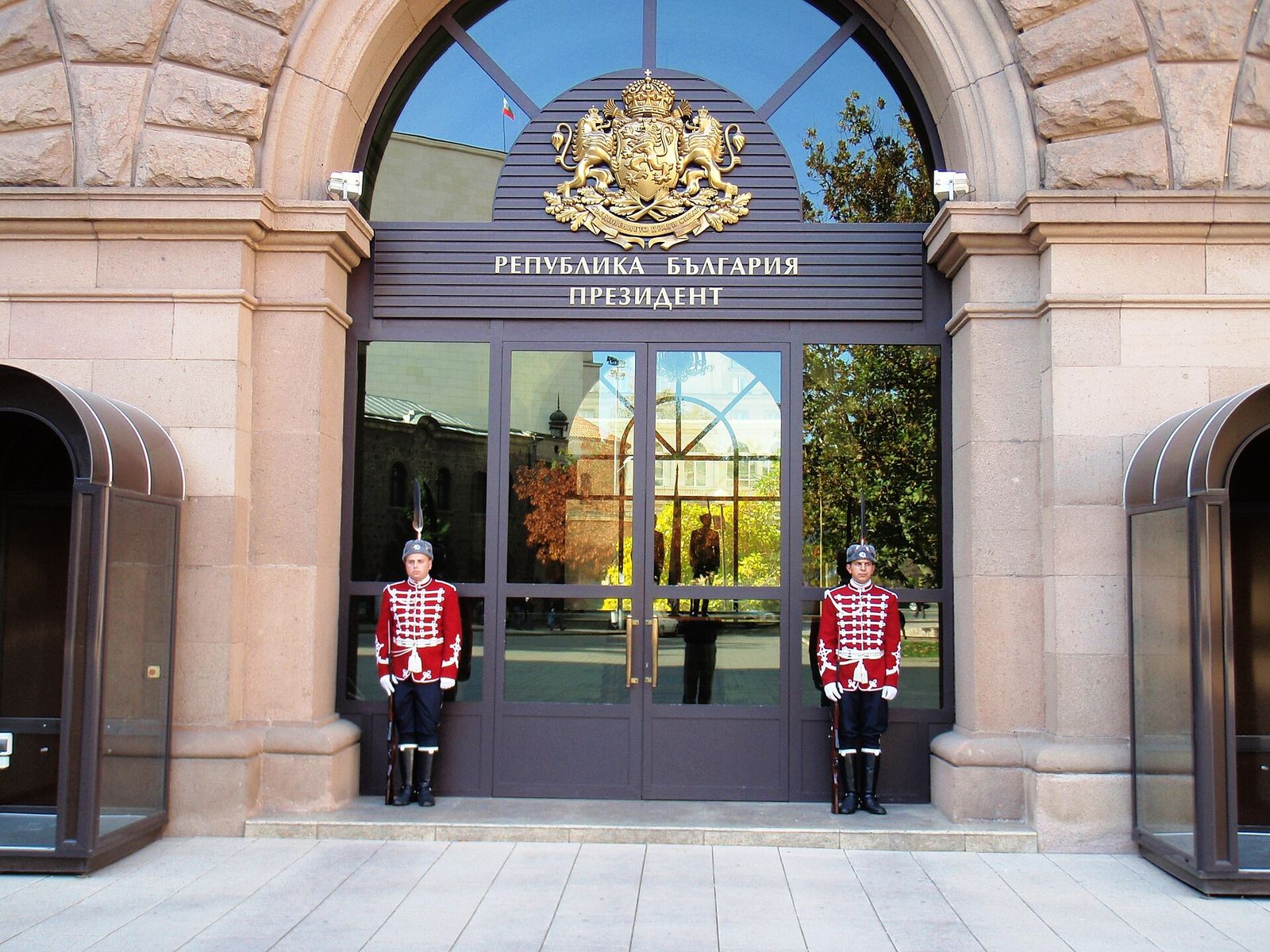
The change is over in a few minutes, it costs nothing to watch, and you can photograph it from the pavement. Keep your hands off the guards and stay out of their path.
What's near the Rotunda of St George
The Rotunda sits in the middle of the old centre, and 8 of my favourite sights are within 12 minutes on foot.
| Sight | Walk from the Rotunda | Entry |
|---|---|---|
| National Archaeological Museum | About 2 minutes | €6 |
| St Nedelya Church | About 3 minutes | Free |
| Serdica complex, Serdika metro | About 3 minutes | Free to walk through |
| Banya Bashi Mosque | About 6 minutes | Visitors welcome outside prayer times |
| Russian Church | About 6 minutes | Free |
| Central Mineral Baths | About 7 minutes | Museum €5, hot taps outside free |
| Sofia Synagogue | About 8 minutes | €10, closed Saturdays |
| Alexander Nevsky Cathedral | About 12 minutes | Free |
St Nedelya is one of four places of worship of four faiths a few minutes apart. The others are Banya Bashi Mosque, built in 1566, the Sofia Synagogue and St Joseph's Catholic Cathedral. Beside the mosque, locals fill big plastic bottles at the free hot taps outside the Central Mineral Baths, which now hold the Museum of the History of Sofia and close on Mondays from November to April.
Walk east along Tsar Osvoboditel Boulevard instead and in 6 minutes you reach the gold domes of the Russian Church. St Sofia Church and Alexander Nevsky Cathedral stand a few minutes beyond it, within about 300 metres of each other.
St Nedelya Church
St Nedelya is the big domed church on the square in front of the hotel, and there's been a church on the spot since the 10th century. In 1925 a bomb attack during a funeral service killed 150 people inside it. The church was rebuilt under a 31-metre dome and reopened in 1933.
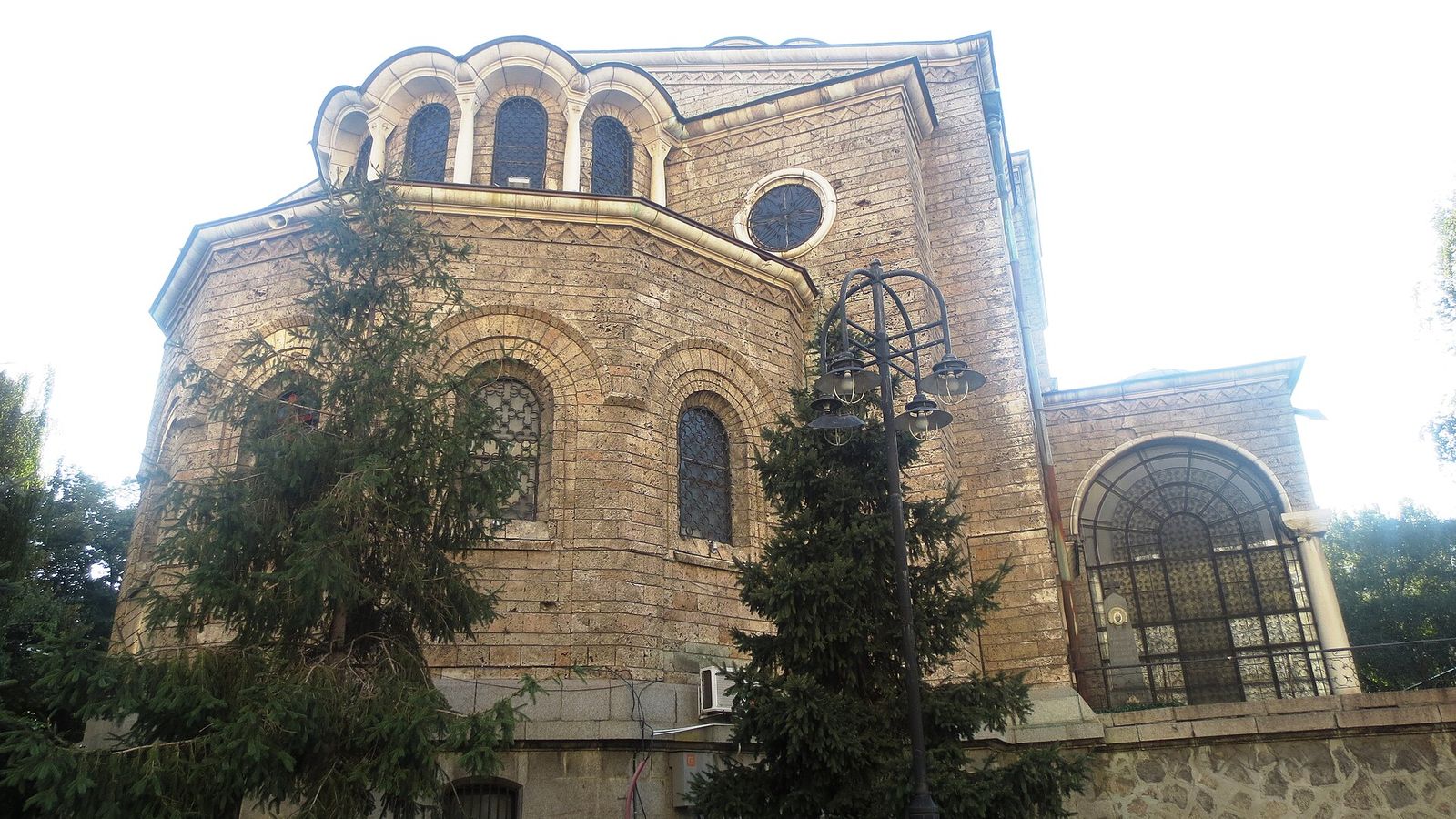
It's free and open from 7am to 7pm, which makes it my easy first stop of the morning.
The National Archaeological Museum
Two minutes away, behind the Presidency at 1 Atanas Burov Square, the National Archaeological Museum fills a former Ottoman mosque with Thracian, Roman and medieval finds. It's one of my favourite museums in Sofia, and the place I send anyone who leaves the Rotunda wanting more of Serdica.
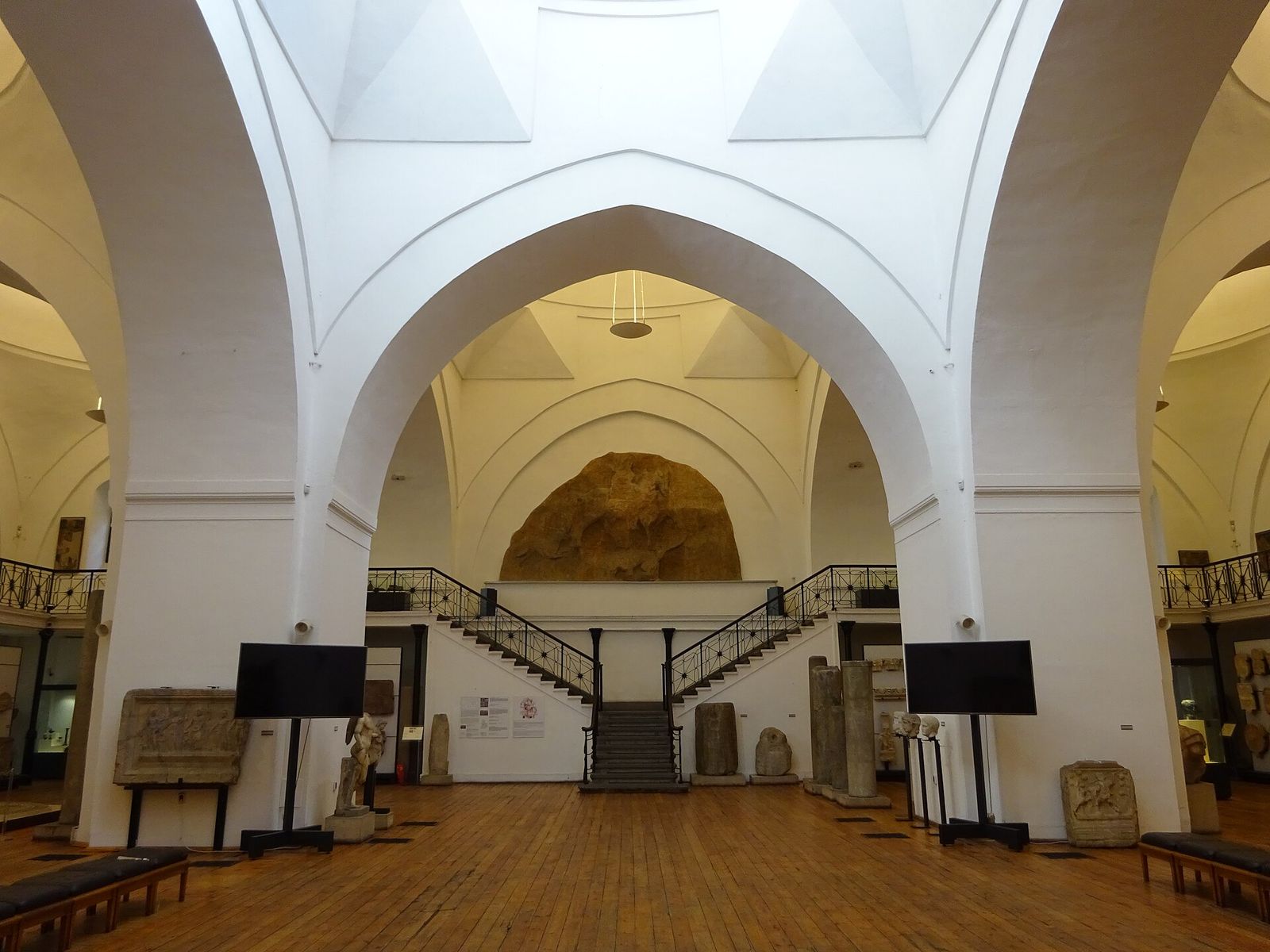
Allow about an hour. From November to April it opens from 10am to 5pm and closes on Mondays, and from May to October it opens daily from 10am to 6pm. Adults pay €6 and students €1.50.
The Serdica complex in Serdika metro
Under the Largo, the Serdica complex lays out 8 Roman streets, an early Christian basilica and a set of baths, all found while Serdika metro station was being built between 2010 and 2012. Most of the remains date from the 4th to the 6th century.
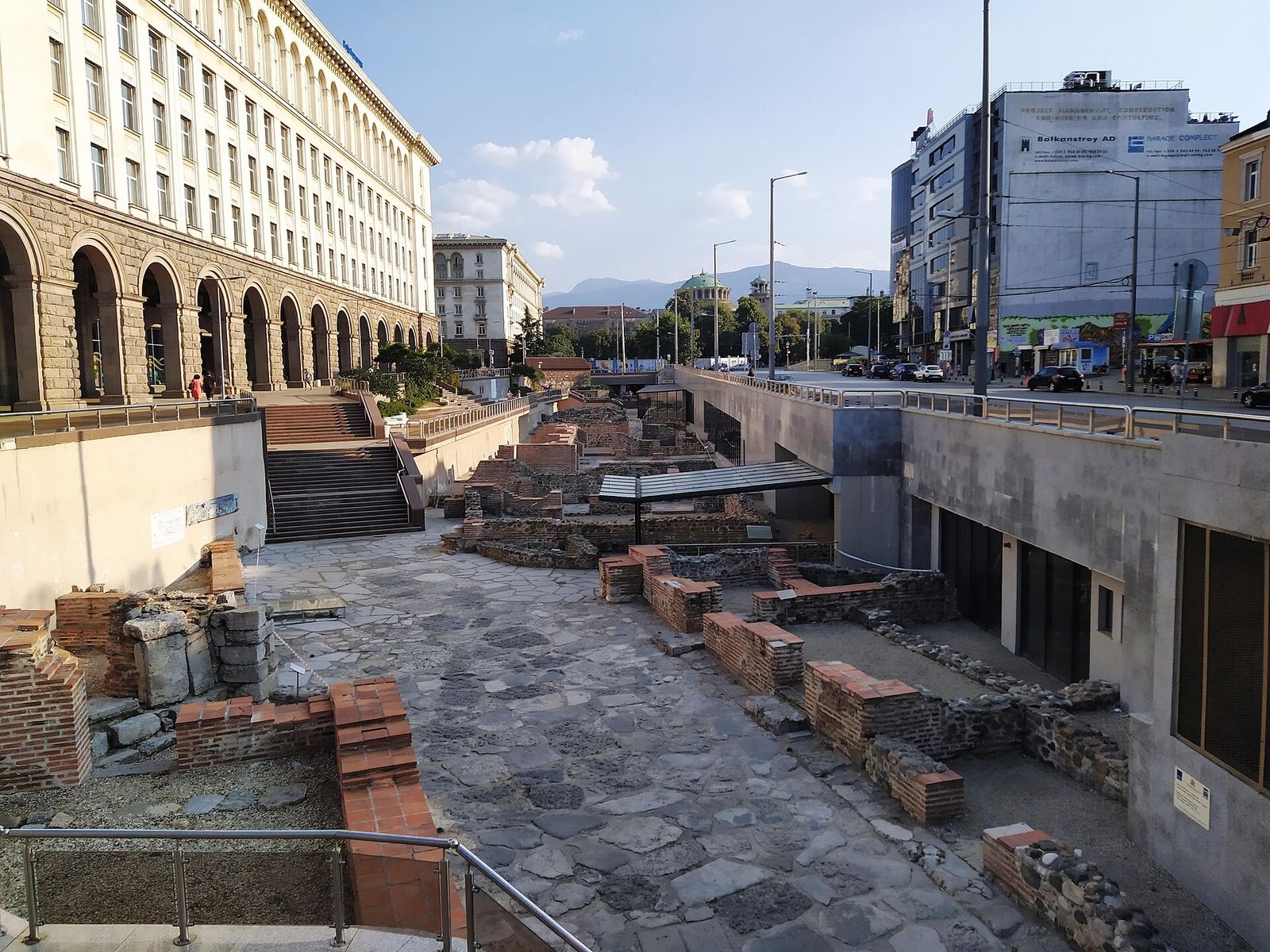
The open-air streets around the station concourse are free to walk through, and you'll pass them anyway if you arrive by metro.
A morning around the Rotunda: my plan
This is the order I use when friends visit and want old Sofia in one go. It costs €6 if you include the museum, plus a metro fare to get there.
| Time | Stop | Cost |
|---|---|---|
| 10am | St Nedelya Church | Free |
| 10.20am | The Serdica complex in Serdika metro | Free |
| 10.55am | The Presidency door for the 11am guard change | Free |
| 11.05am | The Rotunda of St George and the Roman courtyard | Free |
| 11.40am | National Archaeological Museum | €6 |
| 12.40pm | Lunch near Vitosha Boulevard | Your choice |
From November to April, do this on any day but Monday, when the museum is shut.
Key takeaways
- Go in through the arched passage in the Presidency at 2 Dondukov Boulevard, because the church can't be seen from the Largo.
- Allow 20 to 30 minutes, cover shoulders and knees, and avoid Sunday morning if you want the frescoes without a service.
- Stand under the middle of the dome for the 22 prophets, then find the 10th-century angel just below them.
- Reach the Presidency door at five to the hour for the guard change, then walk through the arch to the church.
- Pair it with St Nedelya, the Serdica complex and the National Archaeological Museum (€6), all within 3 minutes' walk.
Frequently asked questions
Why is the Rotunda of St George famous?
It's the oldest building still standing in Sofia, a Roman brick rotunda from the early 4th century. It's also known for its medieval frescoes, above all the 22 prophets in the dome, and for the Roman street and ruins around it.
Is the Rotunda of St George free to visit?
Yes, the church and the Roman ruins around it are both free. The church opens daily from about 8am to 7.30pm, and the ruins in the courtyard are open 24 hours.
How old is the Rotunda of St George?
It's about 1,700 years old. The Romans built it in the early 4th century, and the oldest paintings inside date from the 10th century.
Where is the Rotunda of St George in Sofia?
It's in the inner courtyard of the Presidency at 2 Dondukov Boulevard, by the Largo and Serdika metro station. You reach it through an arched passage in the Presidency building, and the church sits a few metres below street level.
Do Orthodox Christians celebrate St George's Day?
Yes. In Bulgaria St George's Day, Gergyovden, falls on 6 May, and it's a public holiday that doubles as the Day of Valour and of the Bulgarian Armed Forces. Families roast lamb for it. In England St George's Day is 23 April, so the two fall 13 days apart.
Is Bulgaria Catholic or Orthodox?
Bulgaria is mainly Orthodox Christian, and the Bulgarian Orthodox Church runs the Rotunda, St Nedelya and Alexander Nevsky Cathedral. There's a small Catholic community too, and its cathedral, St Joseph's, is a few minutes' walk from the Rotunda.
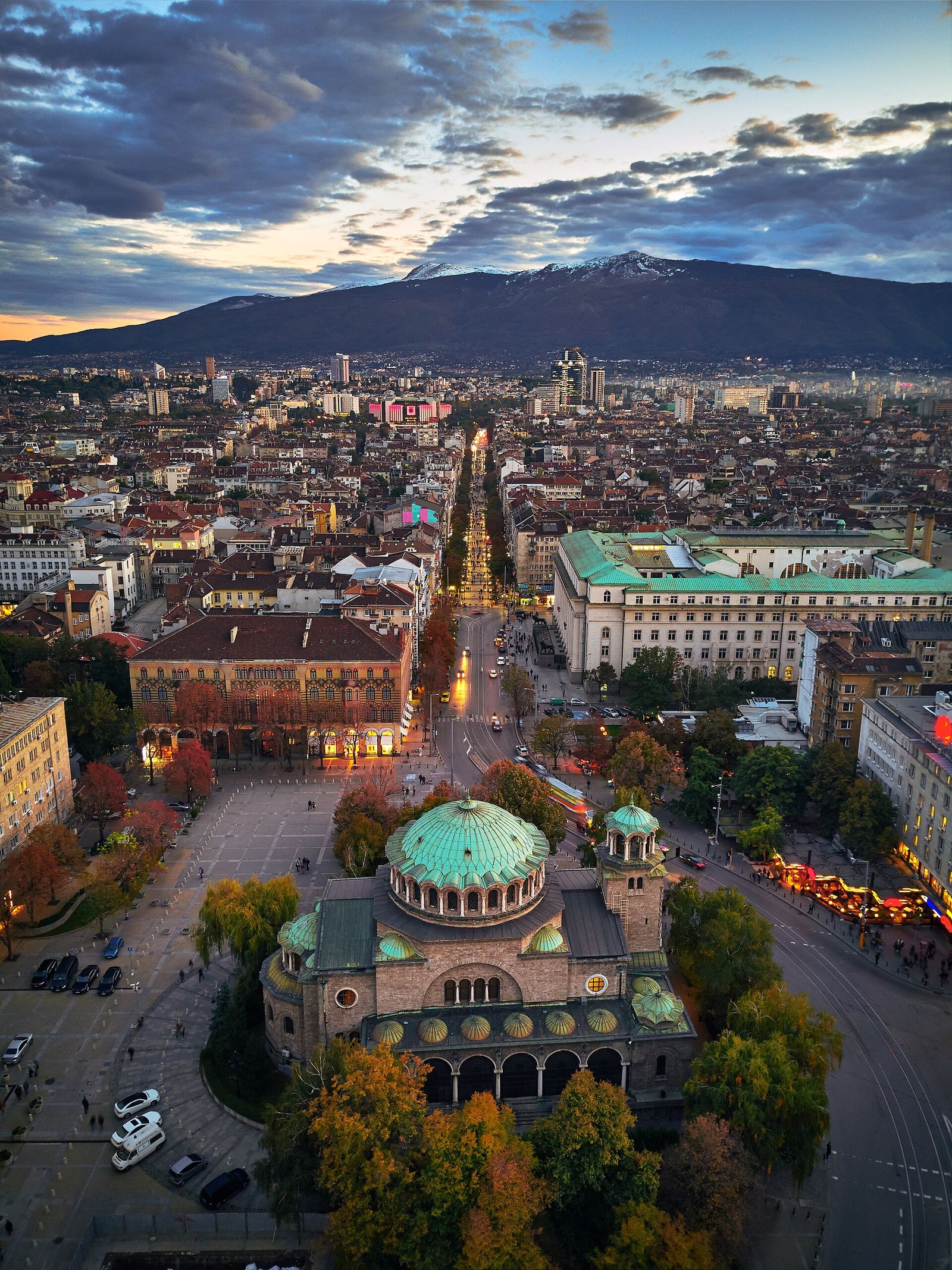
11 Best Things to Do in Sofia: My Personal Favourites
The best sights in Sofia sit close together and most are free. My 11 favourites, with prices, hours and a weekend plan.
Read the guide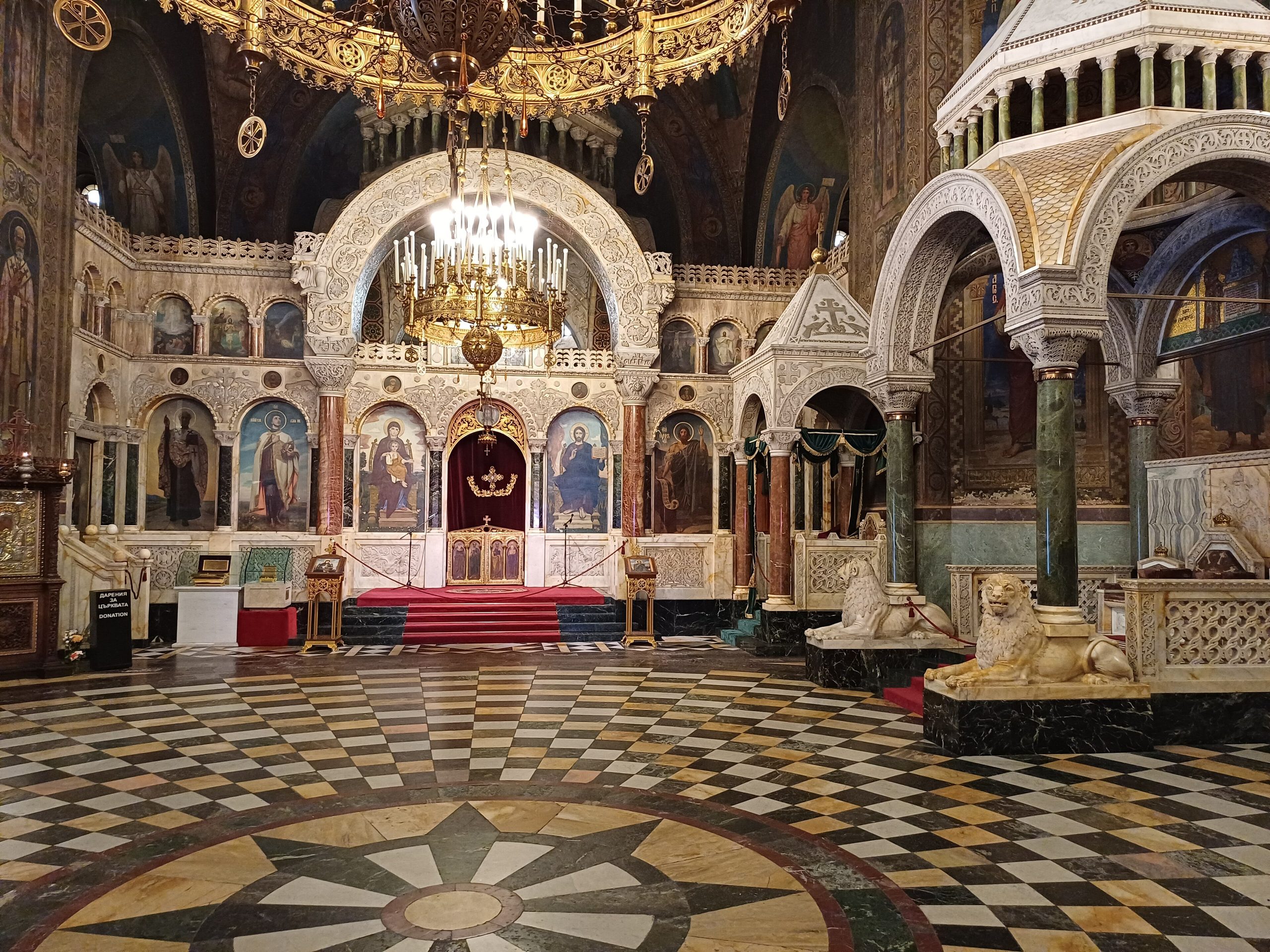
Alexander Nevsky Cathedral in Sofia: My Guide to Visiting
Sofia's gold-domed cathedral is free and open every day. How I visit it, from the crypt icons to the market outside.
Read the guide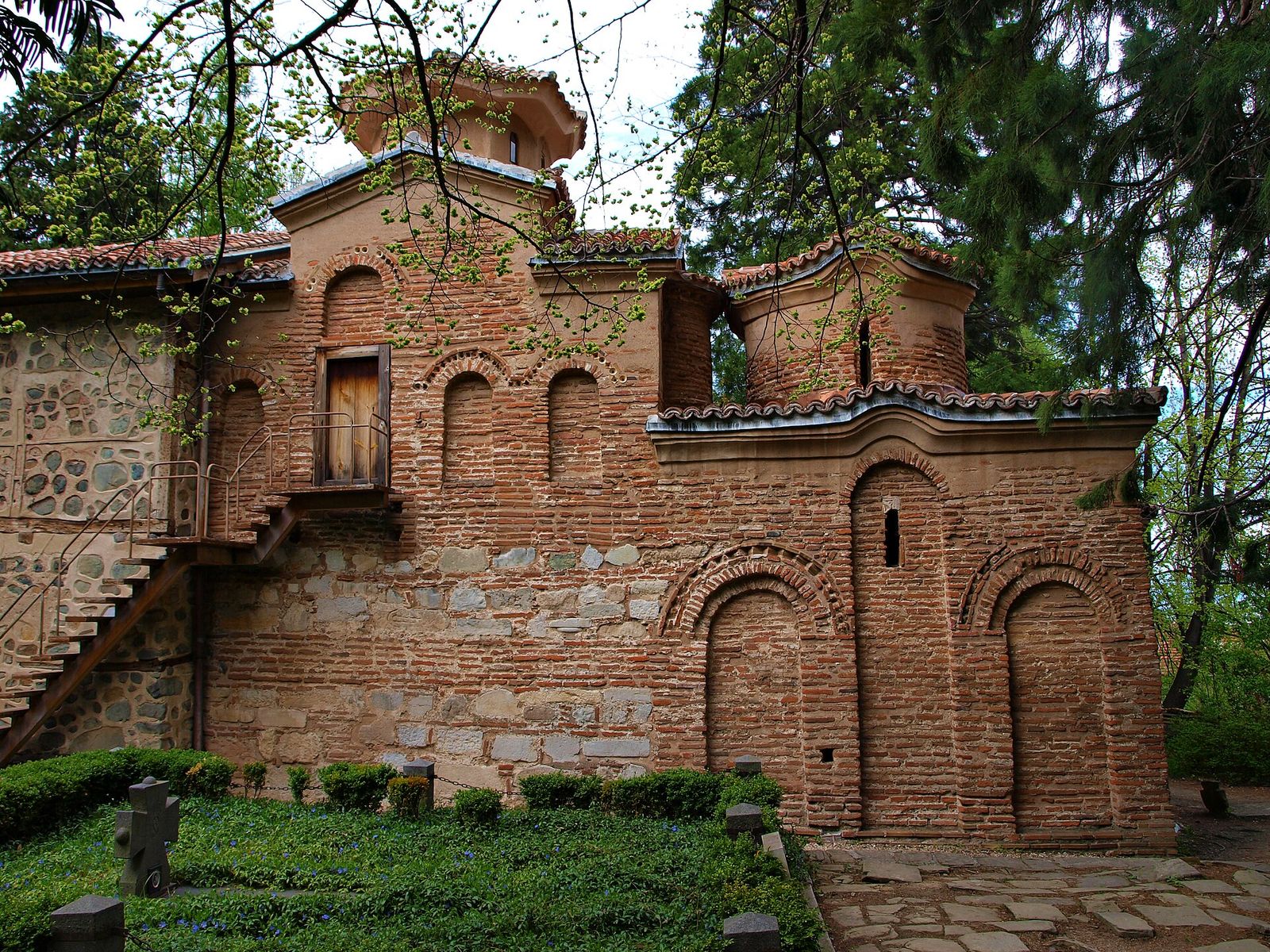
Boyana Church in Sofia: The Frescoes and How I'd Visit
A tiny UNESCO church at the foot of Vitosha, painted in 1259. What it costs, the rules and how I fit it in.
Read the guide