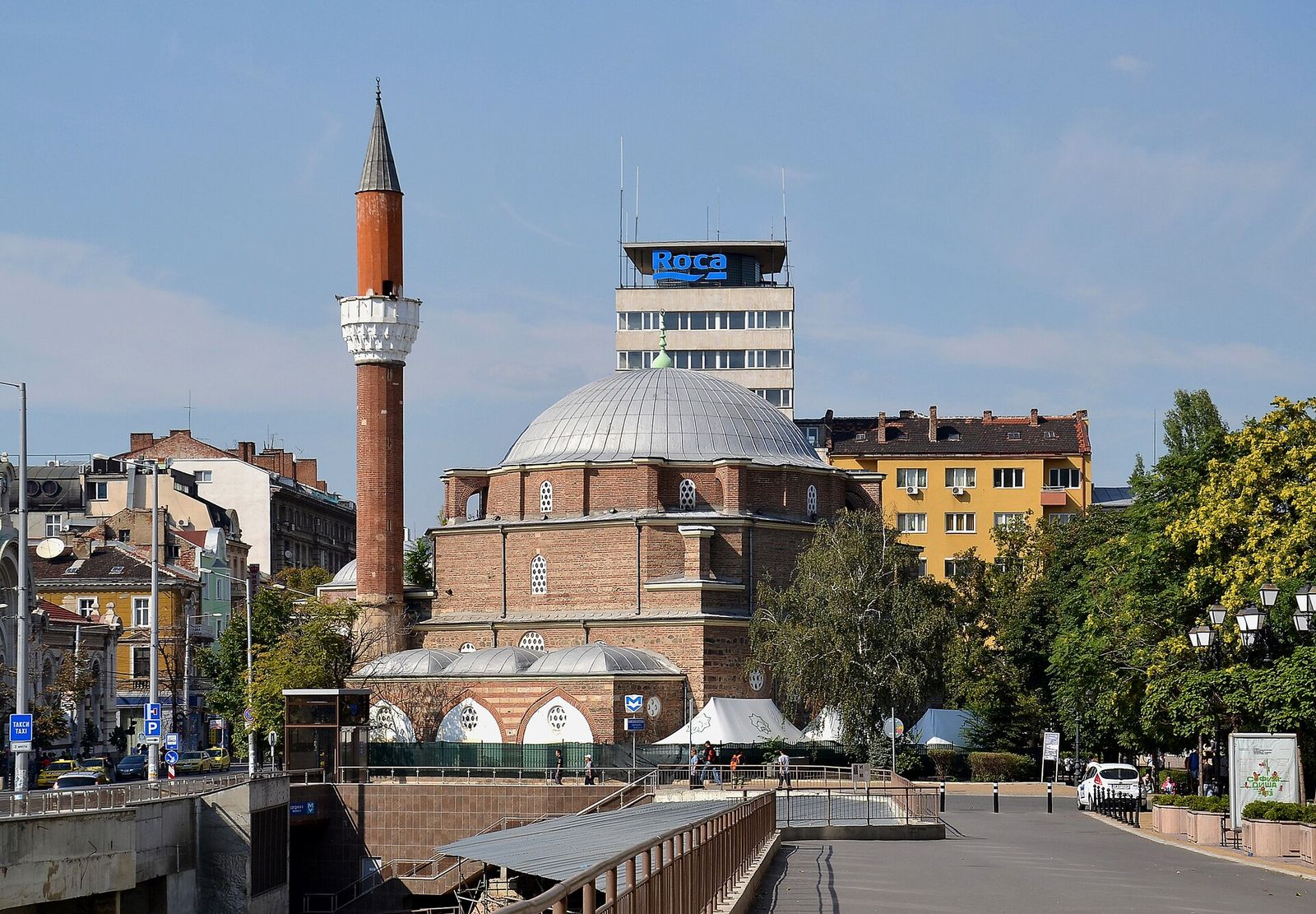
Banya Bashi Mosque, Sofia: Visiting the City's Only Working Mosque
Banya Bashi is Sofia's one working mosque, a stone and red-brick building from 1566 under a 15-metre dome, sitting on the hot springs the city grew up around. It's free, it opens from 5am to 8pm, and I take nearly every visiting friend inside. Below is when to go, what to wear, what to look at once you're in, and what stands within five minutes of the door.
Banya Bashi Mosque at a glance
Banya Bashi Mosque (Баня баши джамия) stands in a small garden at 2 Knyaginya Maria Luiza Boulevard, between Serdika metro and the striped bath house of the Central Mineral Baths. It's the only mosque in Sofia still used for prayer, run by and for the city's Muslim community, so you're a guest in a working place of worship.
The mosque is one of the four places of worship in #3 on my list of things to do in Sofia, and it's the one I'd walk into first. Allow 15 to 20 minutes inside, or an hour if you add the springs and the neighbours.
Can tourists visit Banya Bashi Mosque?
Yes, outside prayer times. There are five prayers a day and their times move with the sun through the year, so I check a prayer-time app for Sofia before I go. If I turn up as people are lining up inside, I wait in the garden until the hall empties.
The prayer hall holds 500 to 700 people. About 700 come to Friday midday prayer, and close to 1,200 at each of the two bayrams, Ramazan Bayram at the end of Ramadan and Kurban Bayram, when the rows spill out onto the pavement.
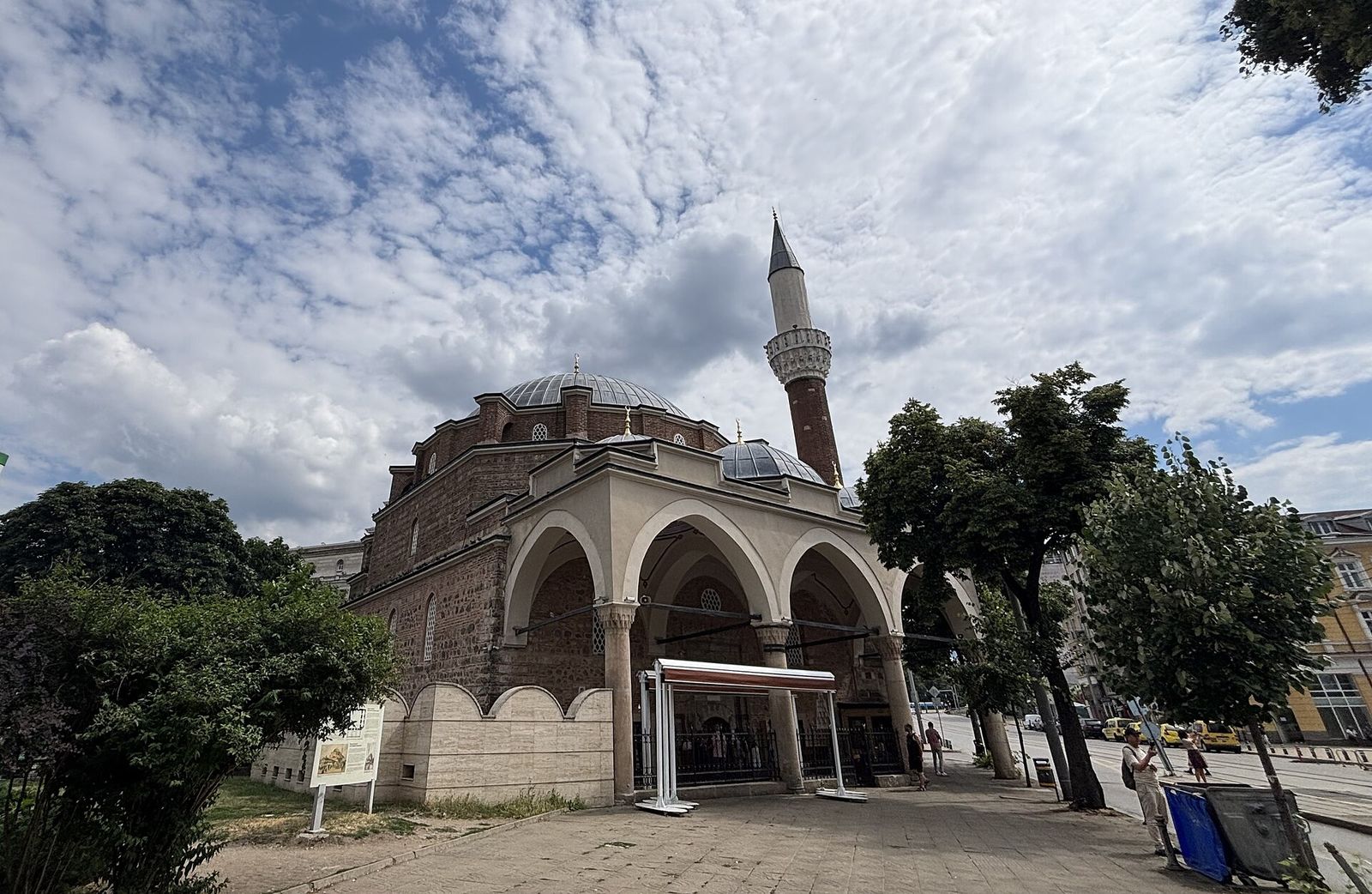
You go in through a porch of three wide stone arches. Shoes come off before you step onto the carpet. Socks are fine.
What to wear and mosque etiquette
Dress the way you would for an Orthodox church here, then add a scarf. Everyone covers shoulders and knees, so no shorts or vest tops, and women cover their hair. I keep a thin cotton scarf in my bag for Banya Bashi and the city's churches, and I don't count on spares being handed out at the door.
Inside, keep your voice low and walk behind anyone praying. I photograph the dome and the prayer niche and keep worshippers out of the frame. These manners carry over to Sofia's churches too, and the piece of Bulgarian etiquette that catches out most of my visitors happens outside any building: a nod here means no.
Inside the prayer hall
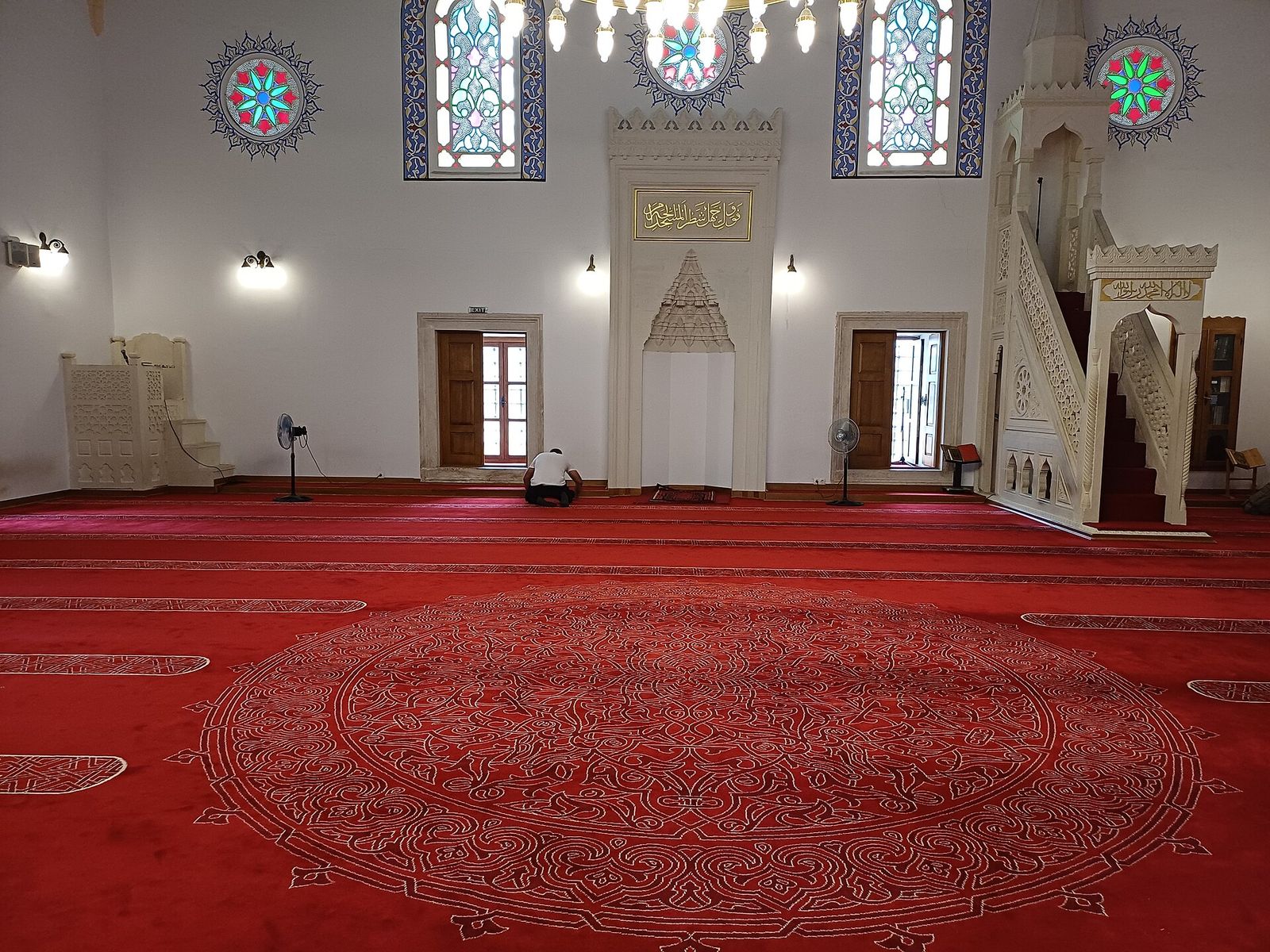
The prayer hall is one square room under the dome, carpeted wall to wall in red with a big patterned medallion in the middle. Light comes in through tiers of windows, many of them stained glass in blues, greens and reds. A huge gold-coloured ring chandelier hangs low in the centre, and the dome and the arches under it are painted with red zigzags on white, set with blue roundels of Arabic calligraphy.
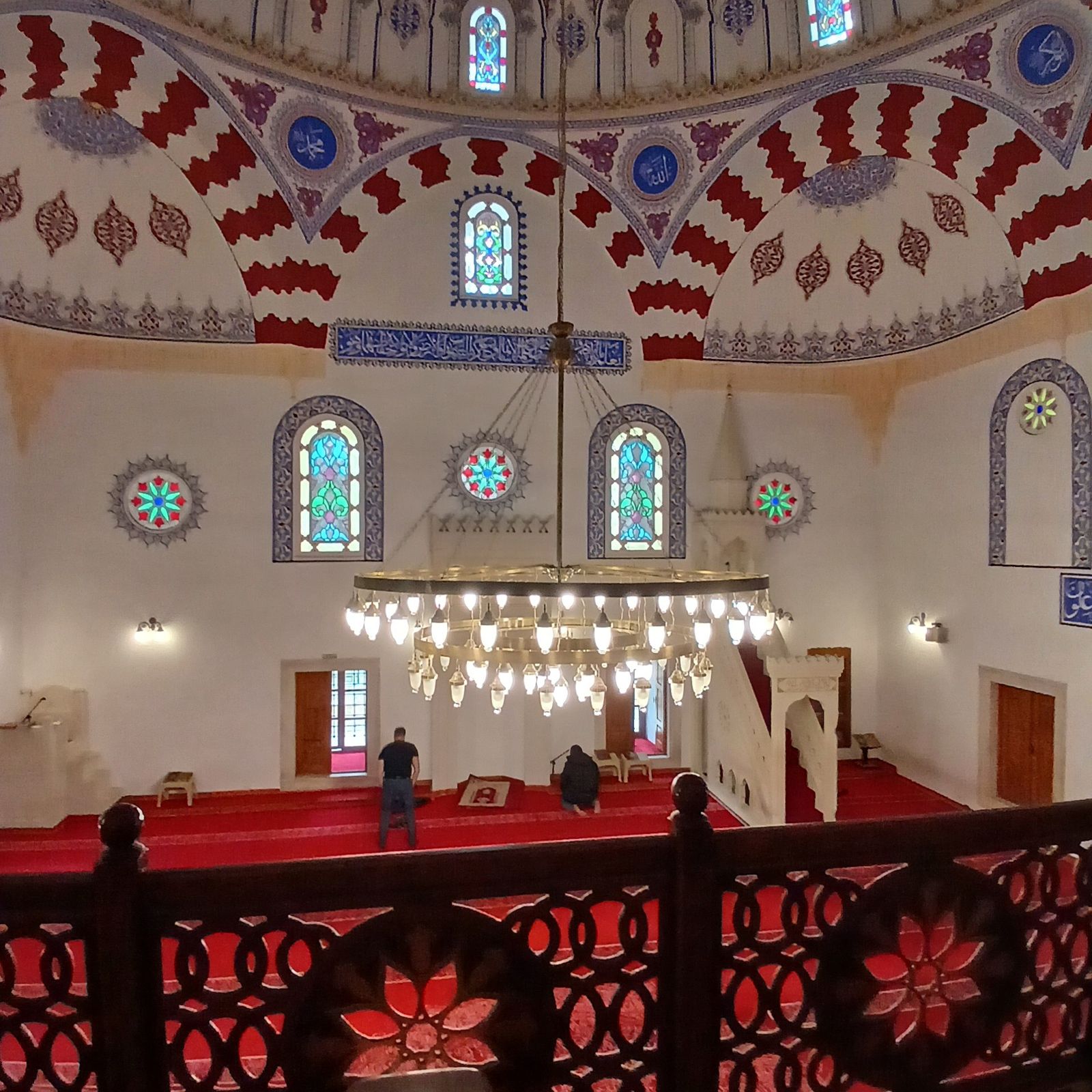
Turn round and you'll see the women's gallery, a wooden balcony on columns above the entrance. On the far wall, facing Mecca, the mihrab is a white prayer niche under a carved stalactite hood with a gold calligraphy panel above it. To its right, a carved white staircase climbs to the minbar, the pulpit for the Friday sermon. Turkish and Arab charities have paid for repairs in recent decades, underfloor heating among them, which your socks will thank them for in January.
The dome, the brick walls and the minaret
Banya Bashi is a classic Ottoman square under one big dome, 15 metres across inside and covered in lead sheet. Paired buttresses at the four corners carry its weight down through half-arches.
Outside, the walls run in courses of cut stone between rows of red brick. The stone columns are each cut from a single block and topped with stalactite carving, and the founder added the front section, with its three small domes, in memory of his late wife.
The mosque is credited to Mimar Sinan, the Ottoman court architect behind the Süleymaniye Mosque in Istanbul and the Selimiye in Edirne, with more than 300 buildings to his name. A plaque in Bulgarian and Turkish names him as the architect.
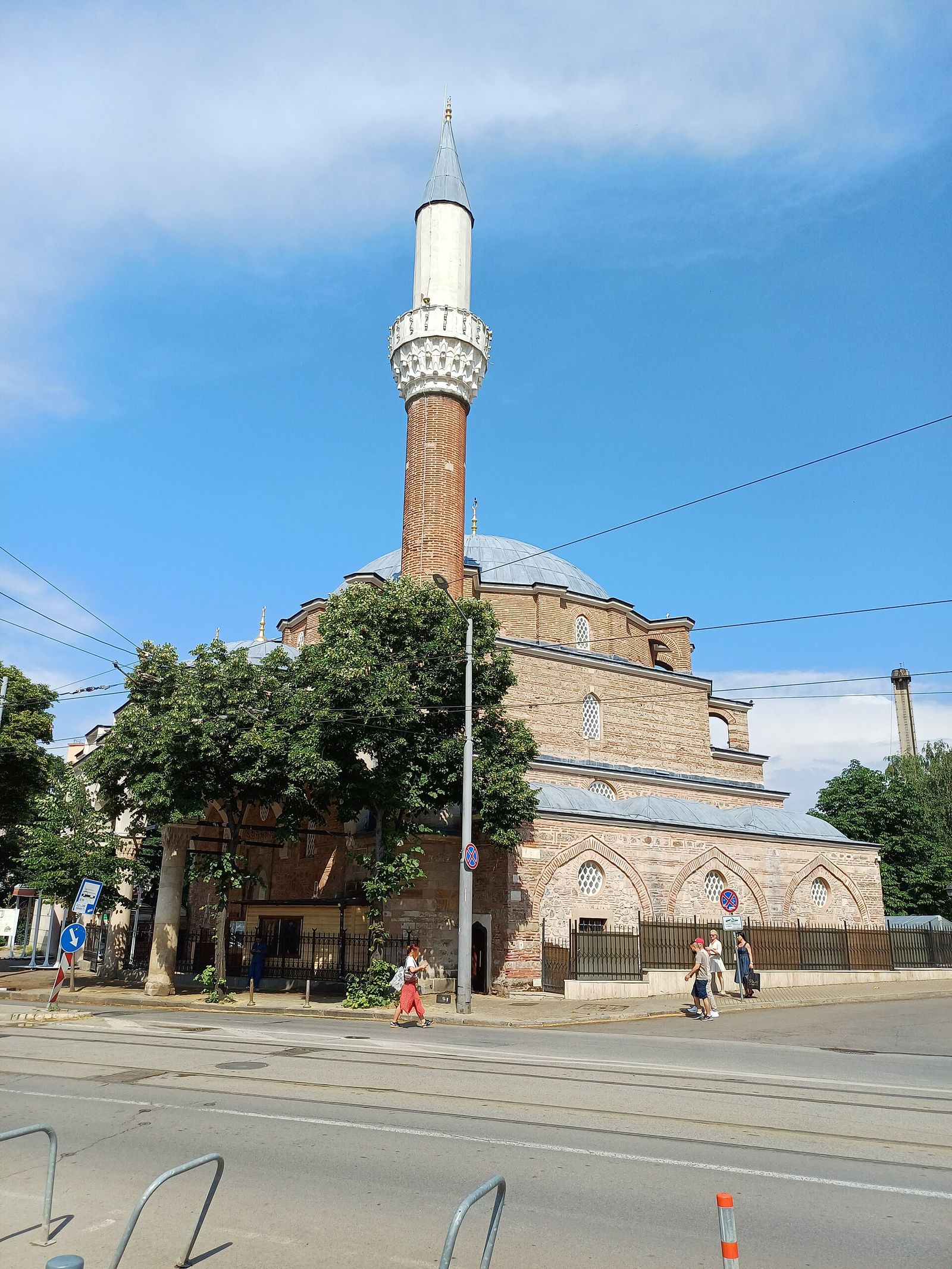
The minaret has a single balcony, ringed with white stalactite carving. Some of the outside stalactite work was plastered over in an early 1900s repair and only came back in the 1983 restoration. The 17th-century Ottoman traveller Evliya Çelebi wrote that no minaret in Sofia matched its beauty, though the one you see is shorter than his: an earthquake in 1858 brought down the finial on its tip, and the repairs of 1915 to 1917 reshaped and shortened it.
Banya Bashi Mosque history, from 1566 to today
Banya Bashi went up in 1566 to 1567, during the Ottoman rule of Bulgaria from 1396 to 1878. It was paid for by Molla Efendi Kadi Seyfullah, a kadi, or Islamic judge, so it's also known as the Seyfullah Efendi Mosque or the Molla Mosque. The name everyone uses comes from the baths beside it: banya means bath, and bashi comes from the Turkish baş, head, so it's roughly the mosque at the head of the baths.
Before the war of 1877 to 1878, Sofia had 41 mosques and 3 smaller prayer houses. Banya Bashi is the only one of them still used as a mosque.
| Year | What happened |
|---|---|
| 1566 to 1567 | Built for the judge Molla Efendi Kadi Seyfullah |
| 1858 | An earthquake damages the mosque and topples the finial on the minaret |
| 1878 | Ottoman rule ends and Sofia becomes the capital the next year |
| 1882 | Prince Alexander gives 15,000 francs for repairs |
| 1890 and 1906 | Plans to demolish the mosque are stopped by Ottoman protests, but the old bath beside it is lost in 1906 |
| 1915 to 1917 | Major repairs: the minaret is reshaped and shortened, and 36 tonnes of lead arrive in 1917 |
| 1983 | Full restoration of the outside, bringing back stalactite carving plastered over in the early 1900s |
| 2012 | A new restoration starts with Turkish state aid |
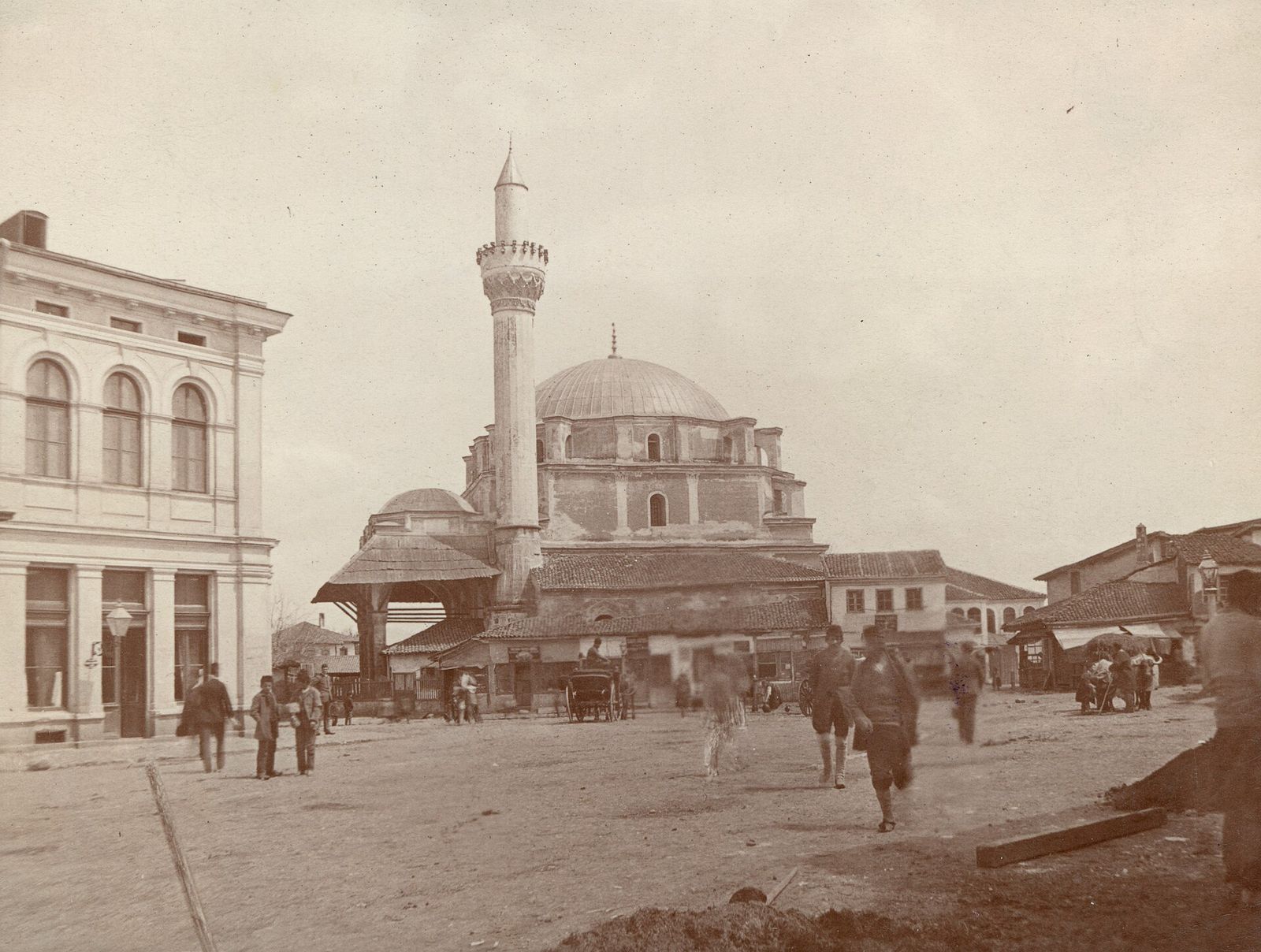
Old photographs show a slender white minaret, a timber-roofed pavilion out front and a square that was still unpaved. The city's new Central Mineral Baths opened next door in 1913, and the mosque has shared the square with them ever since.
The hot springs under the mosque
Banya Bashi sits on Sofia's thermal springs, the water the Romans built Serdica beside, and on top of a Roman bath-house. On cold days you can see steam rising from vents in the ground near the walls. A few steps away, between the mosque and the Central Mineral Baths, a row of free taps pours hot mineral water, and locals queue there with big plastic bottles and canisters to carry it home.
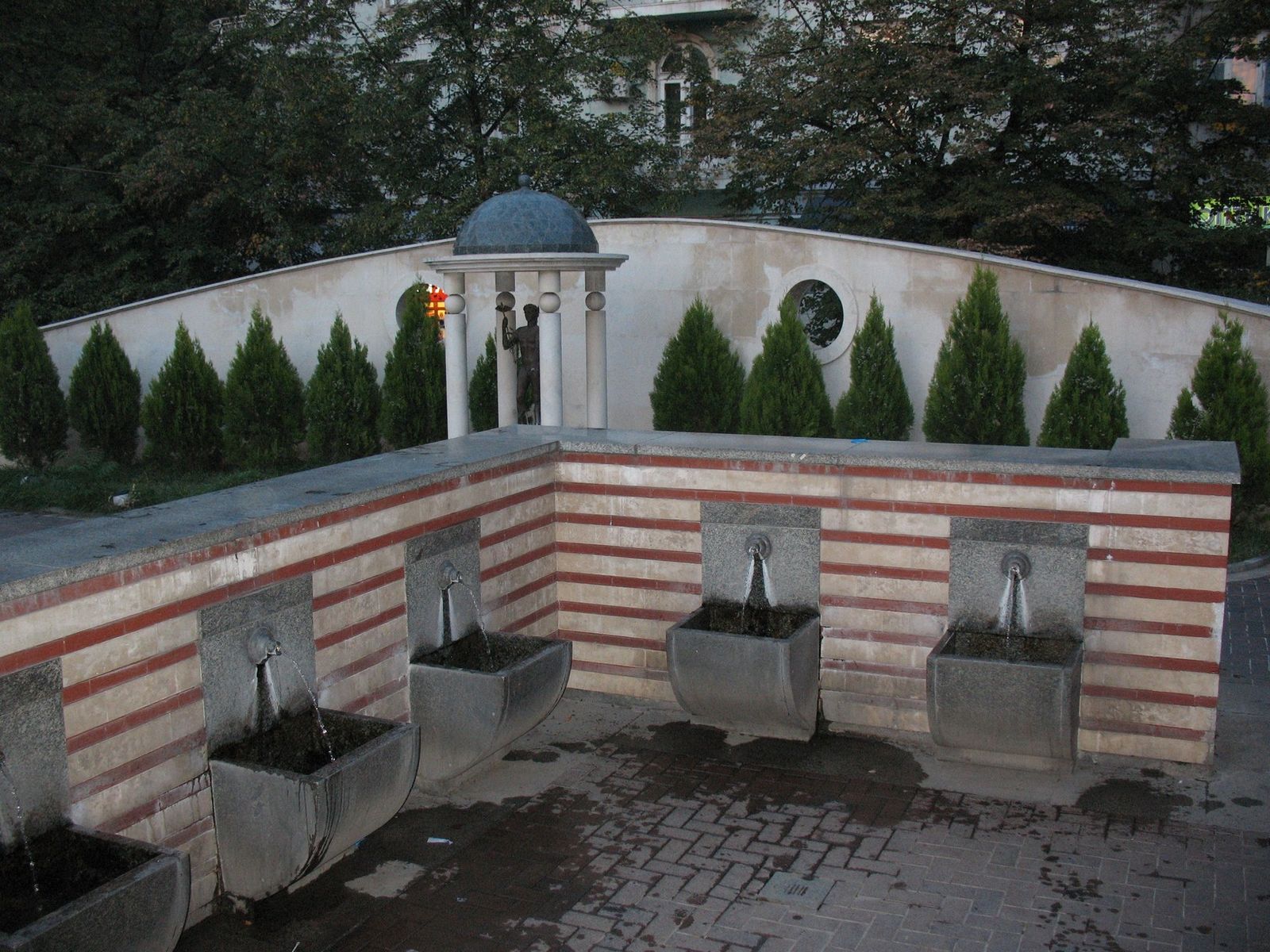
The water runs hot and tastes faintly of minerals. Locals drink it, so the spouts are for filling bottles and nothing else.
Sofia's former mosques you can still walk into
Four more buildings that served as mosques under the Ottomans are open to visitors today, as three churches and a museum.
| Building | Its mosque years | What it is today | Entry |
|---|---|---|---|
| Seven Saints Church | Built around 1547 as the Black Mosque, also credited to Sinan | Orthodox church since 1903 | Free |
| National Archaeological Museum | An Ottoman mosque at 1 Atanas Burov Square | Archaeological museum | €6 |
| Rotunda of St George | A 4th-century church used as a mosque | Orthodox church | Free |
| St Sofia Basilica | A 6th-century church used as a mosque | Orthodox church | Free; €4 for the tombs underneath |
The Archaeological Museum is my favourite of the four. The old prayer hall under its domes is lined with ancient statues and stone reliefs, and it tops my list of museums in Sofia. The Russian Church, 10 minutes east, went up between 1907 and 1914 on the site of a mosque pulled down in 1882.
Four faiths within five minutes of Banya Bashi
Banya Bashi is one corner of what Sofia calls the square of religious tolerance: an Orthodox church, a mosque, a synagogue and a Catholic cathedral, all a few minutes apart around Serdika metro. St Joseph's, the Catholic one, stands a few minutes north-west of St Nedelya beside the excavated Western Gate of Serdica. Allied bombing destroyed the old cathedral in the Second World War, and the new one opened in 2006.
St Nedelya Church
St Nedelya fills its own square at the top of Vitosha Boulevard, about 5 minutes' walk south of the mosque. There has been a church on the spot since the 10th century. A bomb attack in 1925 killed 150 people inside, and the rebuilt church reopened in 1933 under a 31-metre dome. It's free and open from 7am to 7pm, and it's where my walk around Sofia's churches ends.
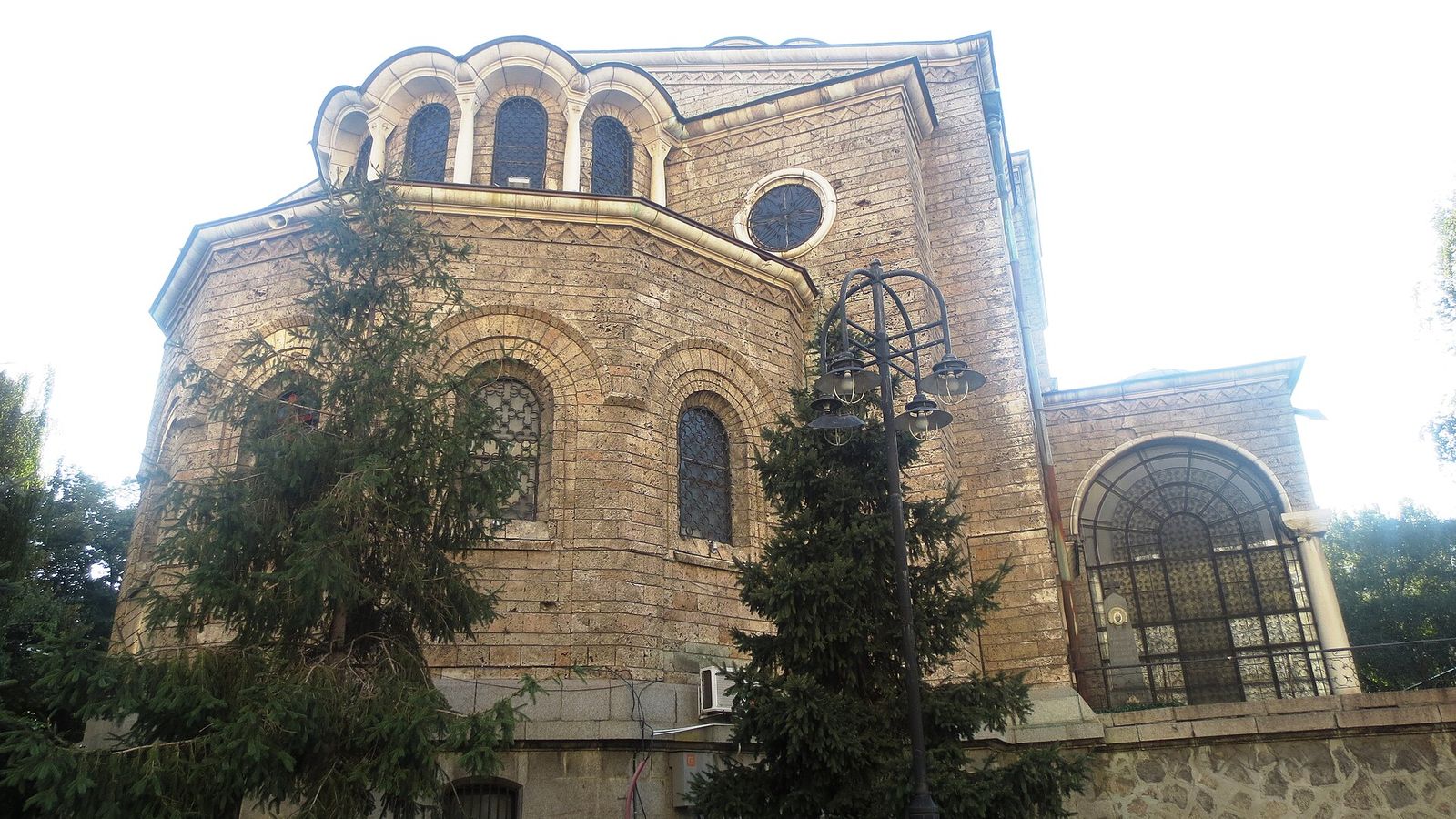
Sofia Synagogue
The Sofia Synagogue is a couple of minutes from the mosque at 16 Exarch Joseph Street. It opened in 1909, and the painted dome and the huge brass chandelier hanging under it are the reasons to go in. It opens Sunday to Friday from 9am to 5pm.
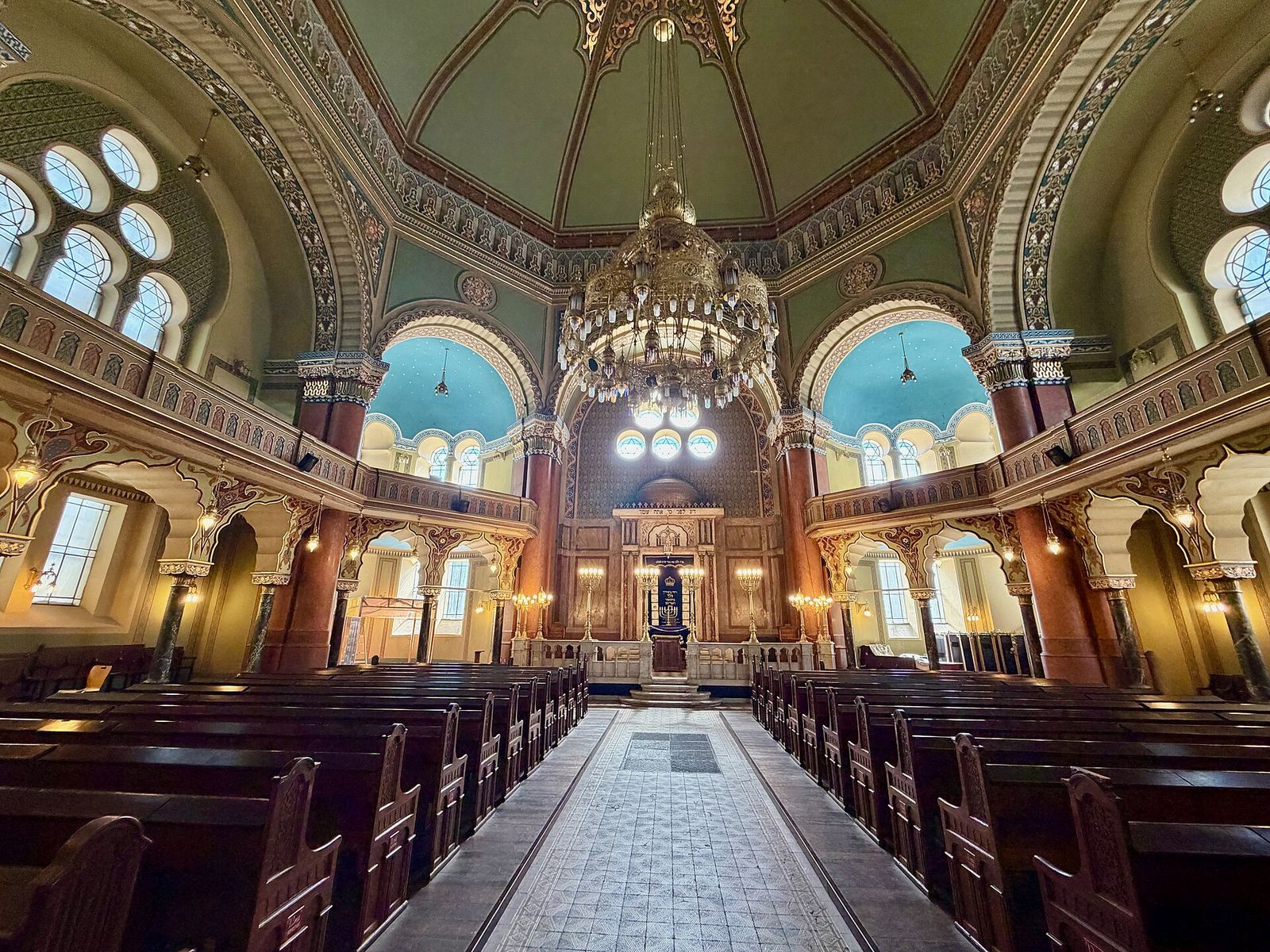
A €10 ticket covers the small museum, an audio guide and permission to take photos, students and seniors pay €8, and cards are accepted at the desk.
What else is next to Banya Bashi Mosque
The Museum of the History of Sofia
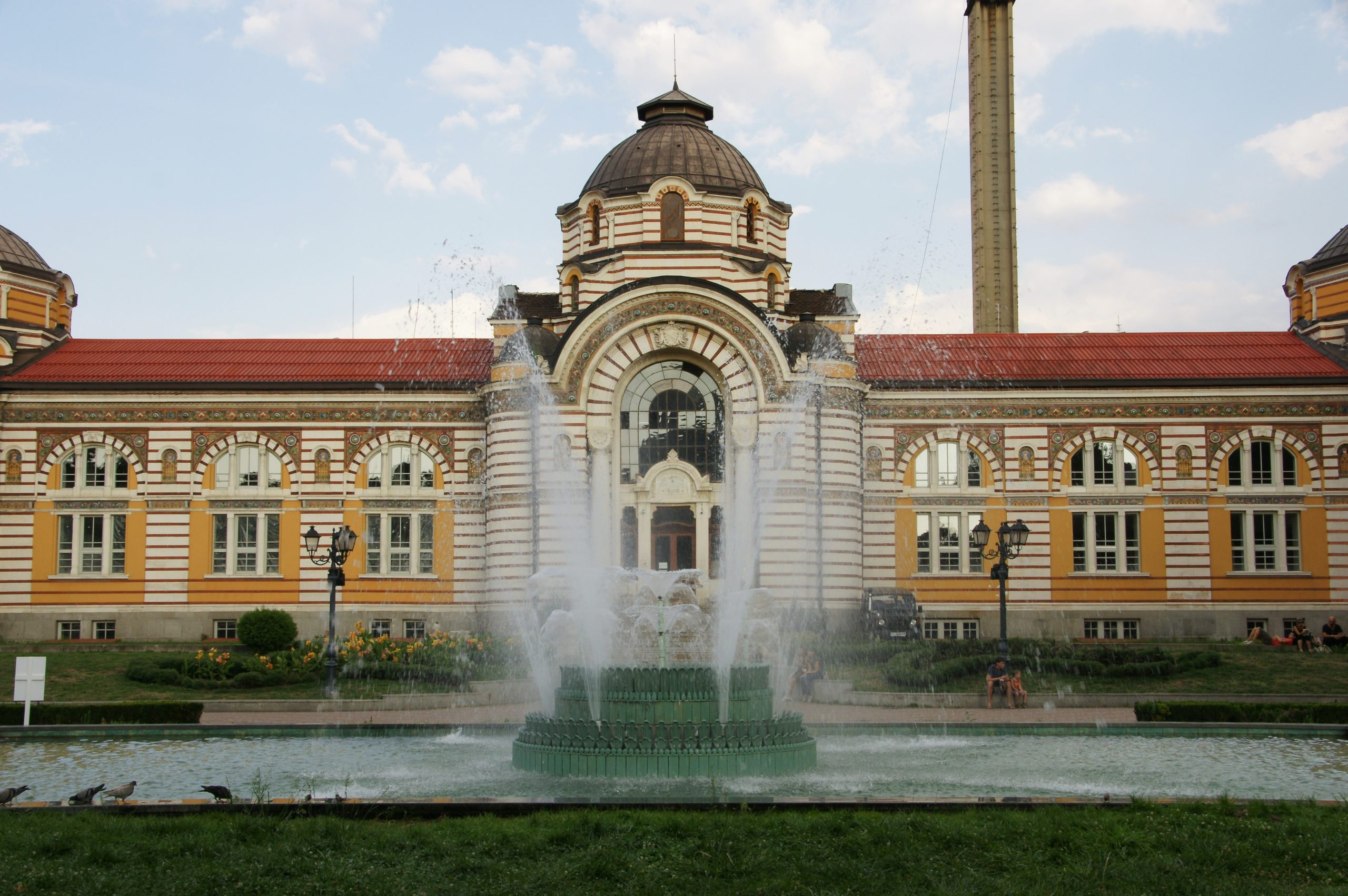
The striped 1913 bath house across the little square was Sofia's main public bath until 1986, and since 2015 it has held the Museum of the History of Sofia. Adults pay €5, entry is free on the first Thursday of the month, and it closes on Mondays from November to April. I give it an hour, mostly for the old bath halls under their white domes.
Central Market Hall
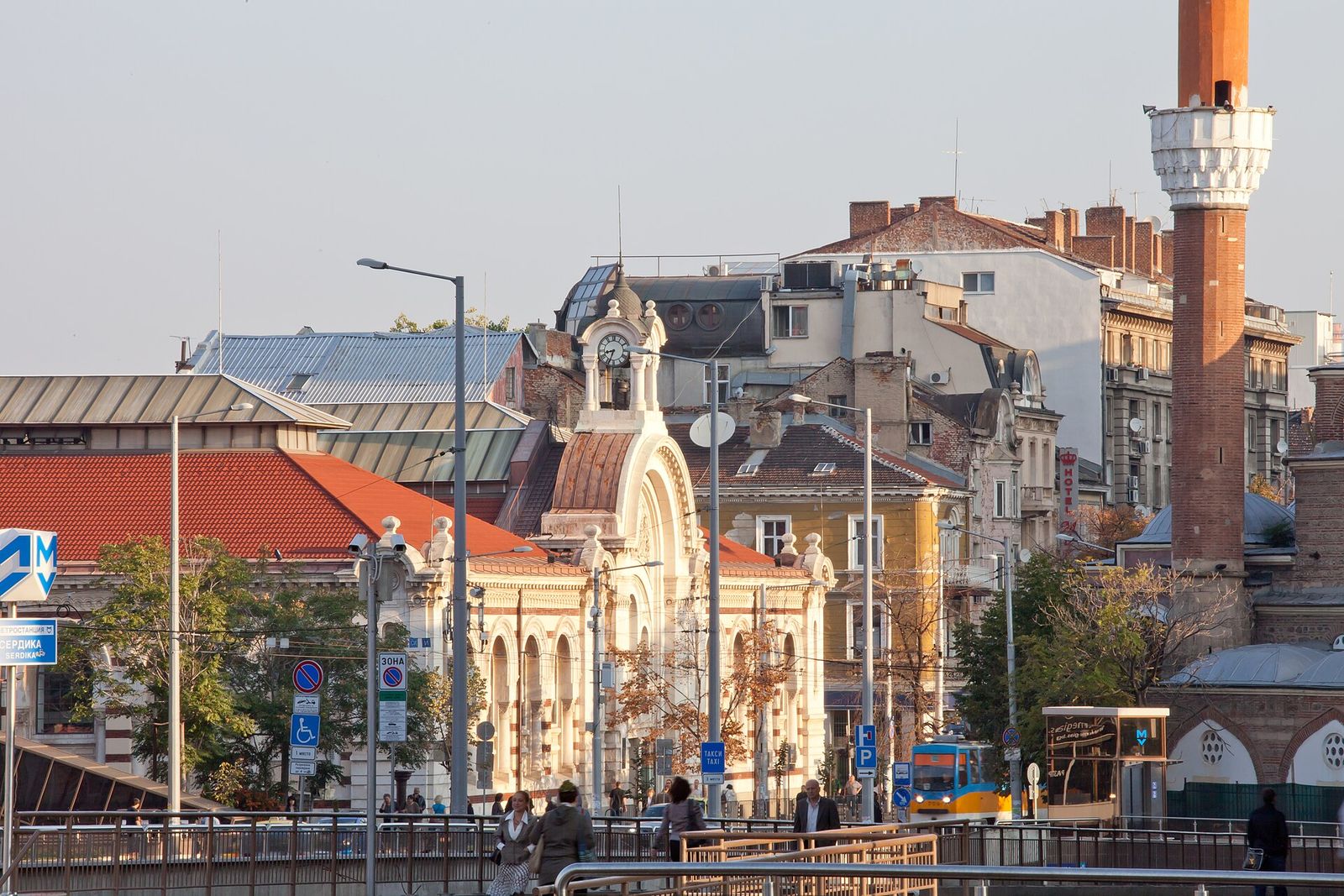
Across Maria Luiza Boulevard, the Central Market Hall, Halite to locals, has traded since 1911 and reopened in May 2024 after a renovation, with a supermarket inside. Remains of a Roman wall and baths survive in its basement. From the pavement by the metro you get the classic view of the hall's clock tower with Banya Bashi's minaret beside it.
Ancient Serdica in the metro
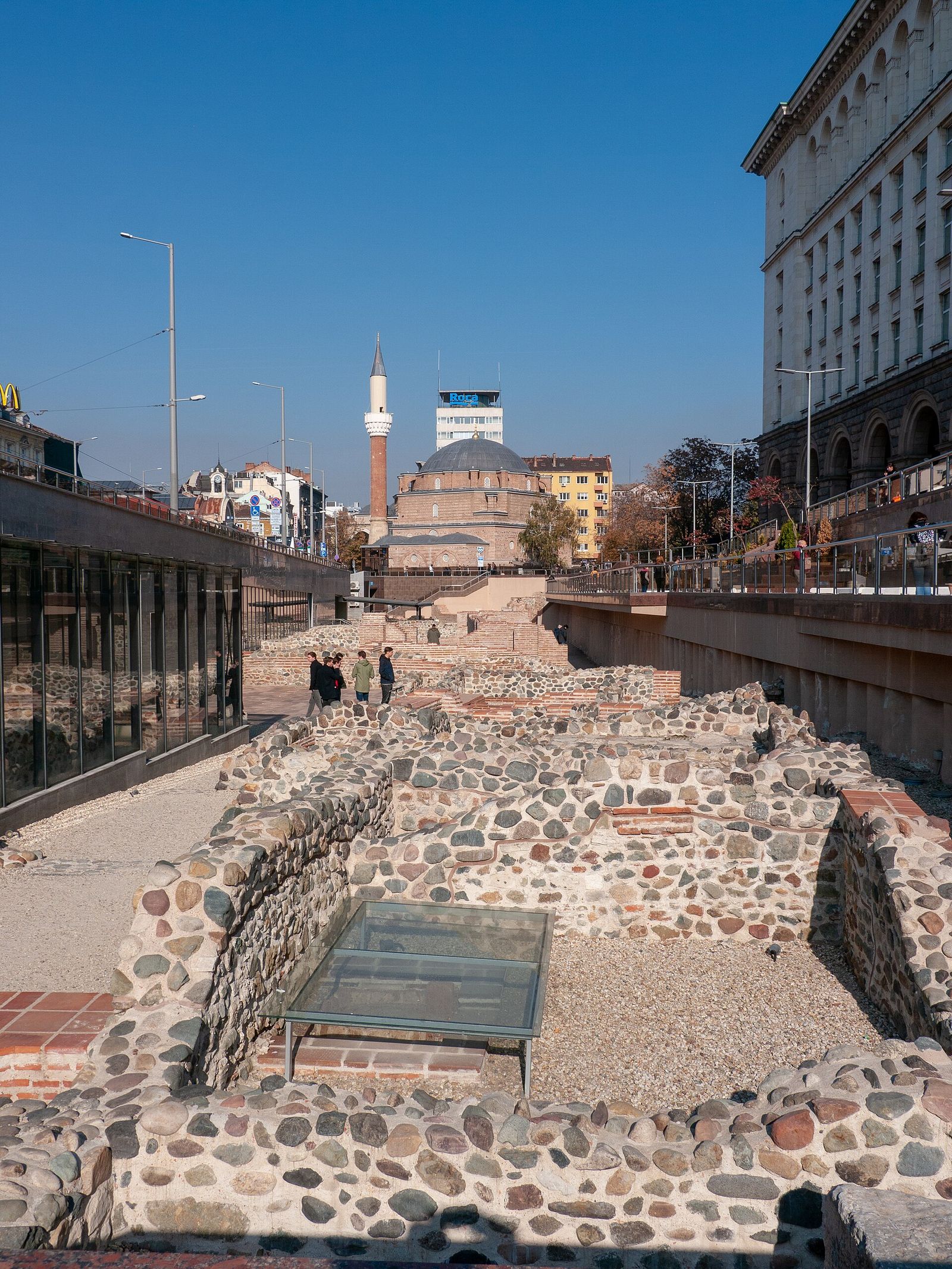
Two minutes south, in the Serdika metro concourse, the Roman streets of ancient Serdica lie open to the sky. They turned up during the metro works of 2010 to 2012, they date from the 4th to 6th centuries, and walking through them costs nothing.
How to get to Banya Bashi Mosque
Serdika metro station, where lines M1 and M4 meet and Serdika II serves M2, is 2 to 3 minutes' walk from the mosque. A ride on Sofia's metro, trams and buses costs €0.80, and tapping the same contactless card stops charging at €2 for the day.
On foot, it's about 5 minutes north from St Nedelya at the top of Vitosha Boulevard. From Alexander Nevsky Cathedral it's about 15 minutes west, past the Russian Church and the Presidency, and the minaret is the landmark once you reach Maria Luiza Boulevard.
My 2-hour loop around Banya Bashi
This is the morning I give friends who want the old centre in one go. Everything is free except the synagogue, and I do it on a Sunday or a weekday so the synagogue is open.
| Time | Stop | Cost |
|---|---|---|
| 10am | St Nedelya Church | Free |
| 10.15am | Serdica's Roman streets in Serdika metro | Free |
| 10.30am | Banya Bashi Mosque, between prayers | Free |
| 10.50am | Hot taps by the Central Mineral Baths | Free |
| 11am | Central Market Hall | Free to walk in |
| 11.20am | Sofia Synagogue | €10 |
From the synagogue, Zhenski Pazar, the Women's Market, is a few minutes west along Exarch Joseph Street for fruit, white cheese, honey and spices. On a weekend in Sofia, I'd give this loop the Sunday morning, when the mosque is at its quietest.
Key takeaways
- Banya Bashi is Sofia's only working mosque, free to enter and open daily from 5am to 8pm.
- Visit between prayers, ideally in the morning, and avoid Friday around midday.
- Cover shoulders and knees, leave shoes at the carpet's edge, and women bring a scarf for their hair.
- The springs, the history museum, the market hall, the synagogue, St Nedelya and Roman Serdica are all within about 5 minutes on foot.
Frequently asked questions
Can tourists visit Banya Bashi Mosque?
Yes, visitors are welcome every day from 5am to 8pm, outside prayer times. Prayer times shift with the sun, so check a Sofia prayer-time app first, and avoid Friday midday, when about 700 people come to pray.
Is Banya Bashi Mosque free to enter?
Yes, there's no ticket. On my loop round it, only the Sofia Synagogue (€10) and the Museum of the History of Sofia (€5) charge.
What should I wear to Banya Bashi Mosque?
Wear clothes that cover your shoulders and knees, and women should cover their hair with a scarf. You'll walk on the carpet in socks, since shoes come off at the door.
When was Banya Bashi Mosque built?
It was built in 1566 to 1567, the year 974 in the Islamic calendar. The mosque has since come through an earthquake in 1858, two demolition plans and several restorations.
Did Mimar Sinan design Banya Bashi Mosque?
It's credited to Mimar Sinan, the Ottoman court architect of the Süleymaniye Mosque in Istanbul, and a plaque in Bulgarian and Turkish names him, though the attribution has never been confirmed. The judge Molla Efendi Kadi Seyfullah paid for it.
Is Banya Bashi the only mosque in Sofia?
It's the only mosque in Sofia still used for prayer. Sofia had 41 mosques before the war of 1877 to 1878, and survivors such as Seven Saints Church and the National Archaeological Museum serve as a church and a museum today.
What is the population of Muslims in Bulgaria?
The 2021 census counted 638,708 Muslims, 9.8% of the population. Most are Turks, living mainly in the provinces of Kardzhali, Razgrad, Targovishte and Shumen, and Bulgarian-speaking Muslims live mostly in the Rhodopes.
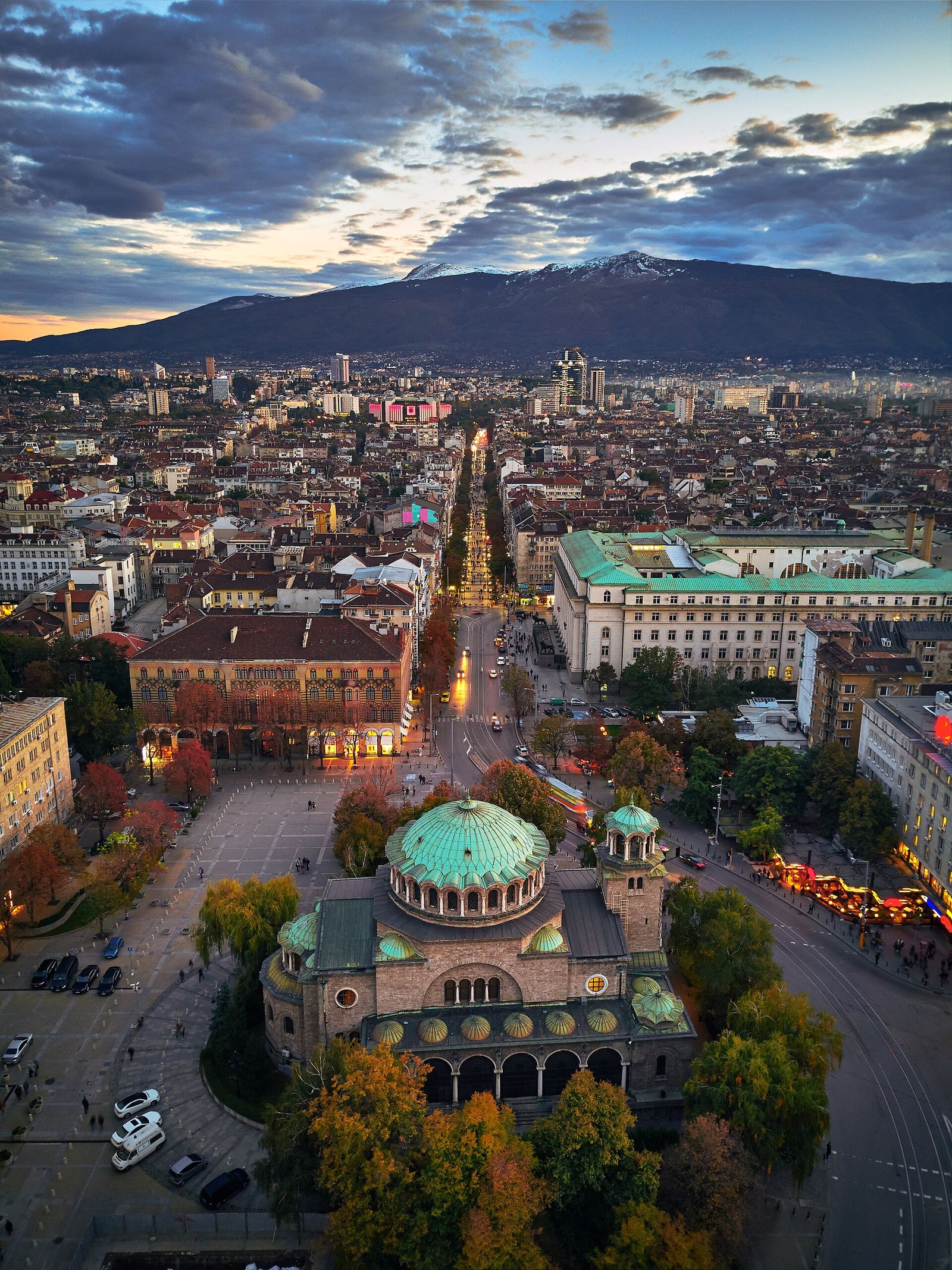
11 Best Things to Do in Sofia: My Personal Favourites
The best sights in Sofia sit close together and most are free. My 11 favourites, with prices, hours and a weekend plan.
Read the guide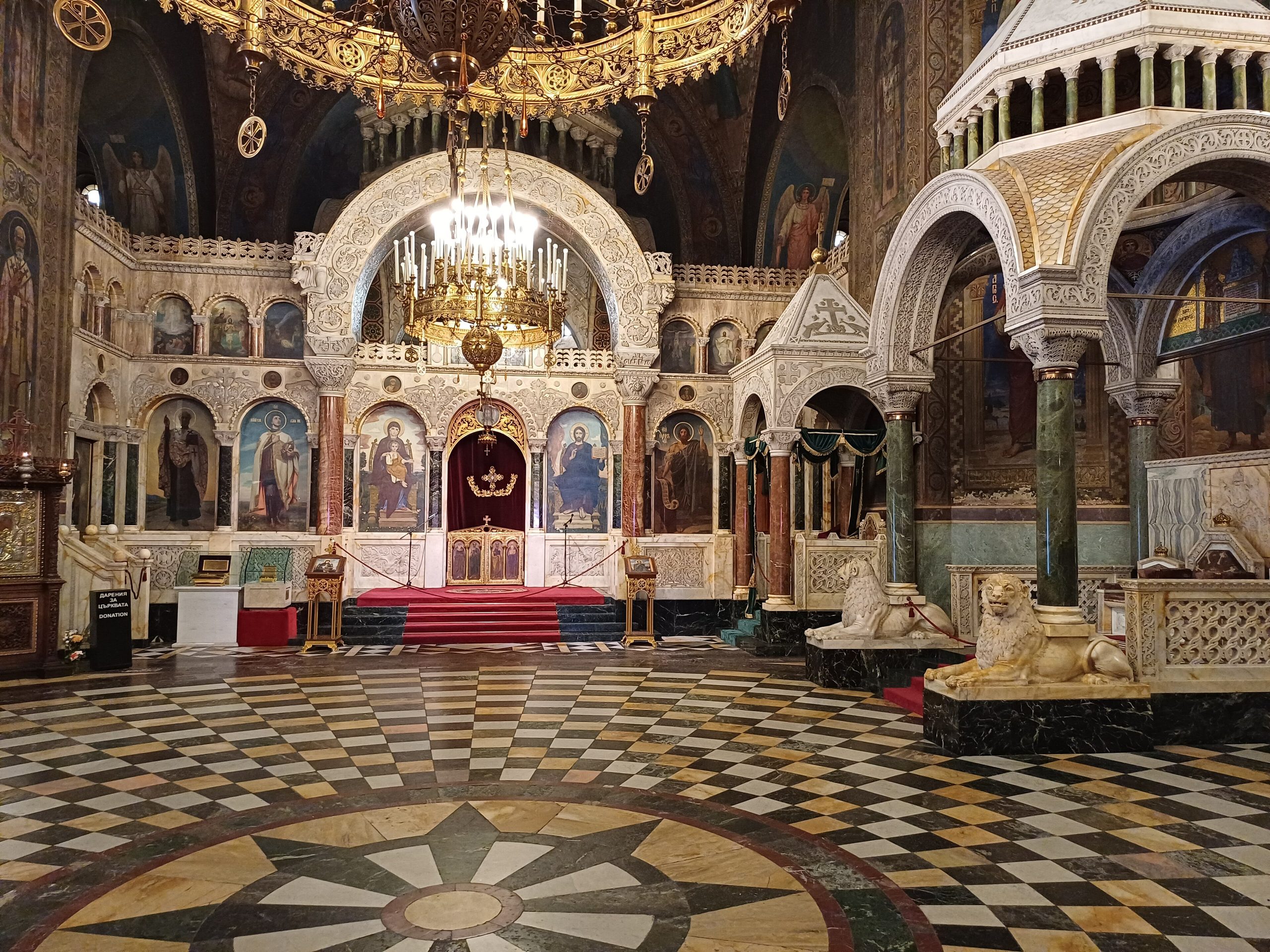
Alexander Nevsky Cathedral in Sofia: My Guide to Visiting
Sofia's gold-domed cathedral is free and open every day. How I visit it, from the crypt icons to the market outside.
Read the guide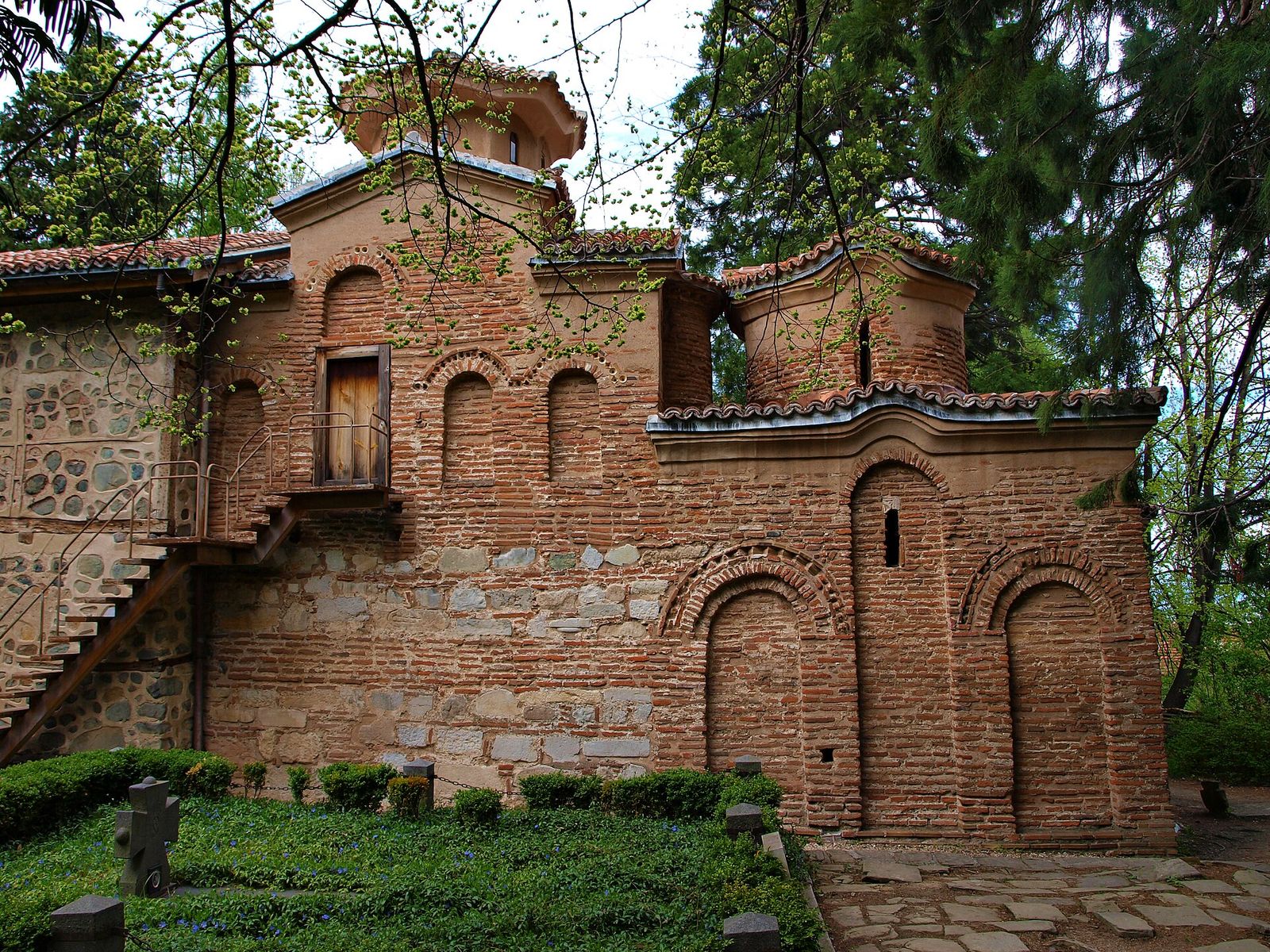
Boyana Church in Sofia: The Frescoes and How I'd Visit
A tiny UNESCO church at the foot of Vitosha, painted in 1259. What it costs, the rules and how I fit it in.
Read the guide