Bulgarian Grape Varieties: The Local Grapes I Order in Sofia
Bulgaria grows plenty of Merlot and Cabernet, but the bottles I open for visitors come from grapes most Brits have never met: Mavrud, Melnik, Gamza and Red Misket. I've listed the nine local Bulgarian grape varieties worth knowing: how each one tastes, where it grows, the crossings Bulgarian breeders made and the bottles I buy.
Bulgarian grape varieties at a glance
These are the nine local grapes to know on a Bulgarian wine list. The prices come from a Sofia wine shop's online list on 2 November 2026.
| Grape | On the label | Colour | Where it grows | What it tastes like | One bottle to try |
|---|---|---|---|---|---|
| Mavrud | Мавруд | Red | Thracian Lowlands, south of Plovdiv | Dark, spicy, firm tannins | Rumelia Merul Mavrud, €7.11 |
| Broad-leaved Melnik | Широка мелнишка лоза | Red | Struma Valley, around Melnik | Pale, high acidity, cherry and tobacco | Orbelia Melnik Estate Reserve, €17.38 |
| Melnik 55 | Мелник 55 | Red | Struma Valley | Riper and fruitier, sometimes off-dry | Logodaj Melnik 55 |
| Rubin | Рубин | Red | Thracian Lowlands and the Danube Plain | Deep colour, dark cassis, pepper | Dragomir Rubin Reserve |
| Gamza | Гъмза | Red | Danube Plain, mostly in the north-west | Deep aroma | Borovitza Gamza, €11.25 |
| Pamid | Памид | Red | Thracian Lowlands and the Danube Plain | Light, soft, low in acidity | Rarely named on a label |
| Dimyat | Димят | White | Black Sea Coast | Light, very aromatic, dry or sweeter | Tsarev Brod Gergana, its offspring |
| Red Misket | Червен мискет | White, from pink grapes | Rose Valley and the Sungurlare Valley | Flowers, pear, stone fruit | Chateau Copsa AXL |
| Keratsuda | Керацуда | White | Struma Valley | Dry and aromatic as an orange wine | Villa Melnik orange wine |
Bulgaria's local red grapes
Six of the nine local grapes are red. Mavrud and Broad-leaved Melnik are the two I'd taste first, and both grow in the warm south.
Mavrud
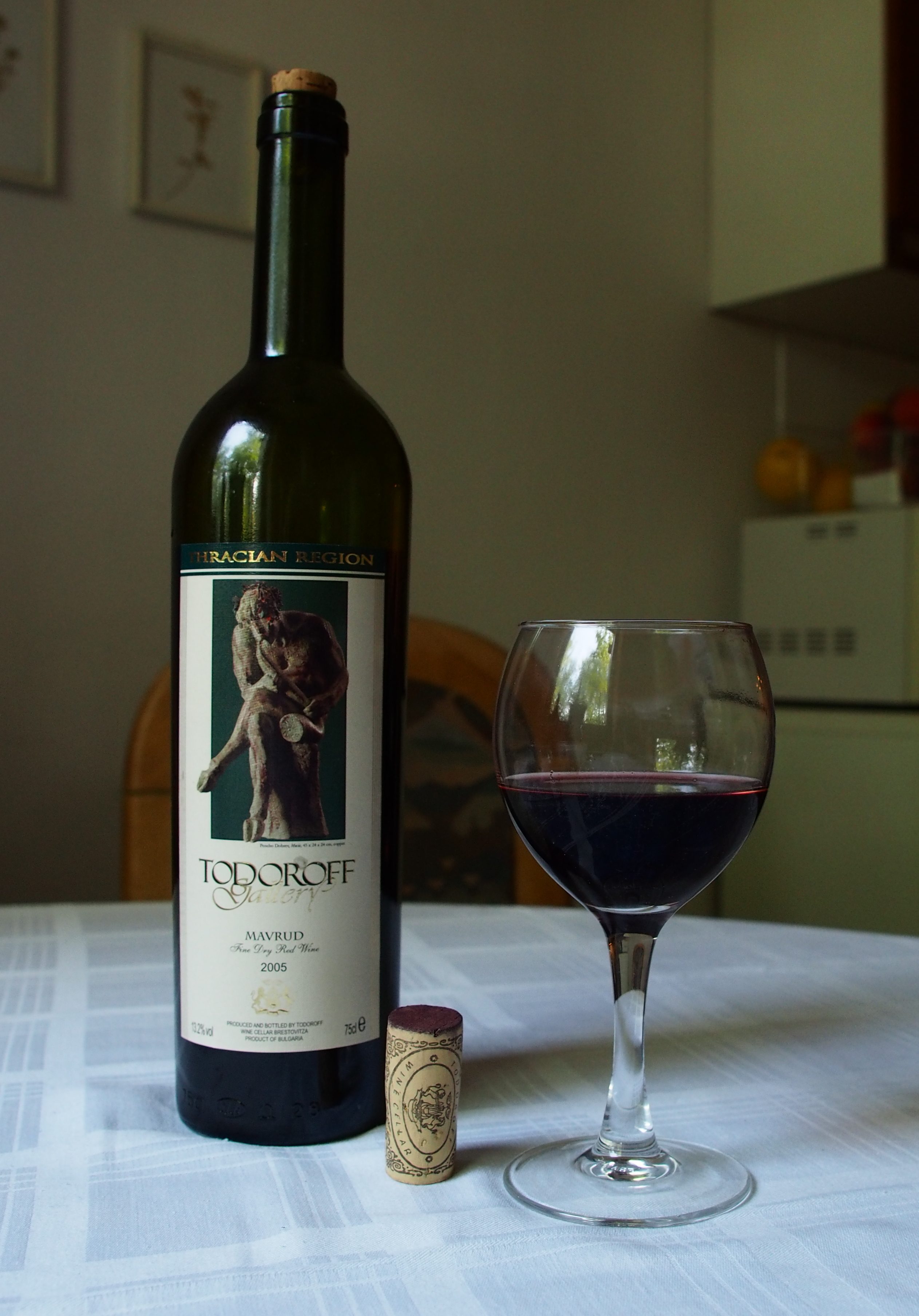
Mavrud (Мавруд) is Bulgaria's flagship red, grown on the Thracian plain south of Plovdiv, mostly around Asenovgrad, Perushtitsa and Brestovitsa. The name comes from the Greek mavro, black, and the wine is dark enough to stain the glass. It's spicy and high in alcohol, with firm tannins. The grape ripens late, with small berries and low yields. The best bottles age for years.
The legend behind the name goes back to Khan Krum, who ordered every vineyard in his kingdom destroyed. A lion then escaped and terrorised the city, and a young man called Mavrud killed it. Krum asked his mother where her son found such strength, and she admitted she'd hidden a vine and made wine from it. Krum had the vineyards replanted, and the grape took the hero's name.
I open Mavrud with kavarma, pork stewed in a clay pot and one of the Bulgarian food classics I order most in a mehana. Rumelia, a Thracian winery that built its name on this grape, makes my favourite of the best Bulgarian wines I buy: the Merul Mavrud Reserve 2021, smooth and rich, at €12.73. Zagreus, organic since 2010, makes Santimenti, a purple, peppery Mavrud at 13.5%.
Broad-leaved Melnik
Broad-leaved Melnik (широка мелнишка лоза, shiroka melnishka loza) is the old vine of the Struma Valley, the warm south-western corner of Bulgaria near the Greek border. Labels often shorten it to Melnik, after the little town it grows around. The wine is paler than Mavrud, with high acidity and flavours of cherry and tobacco, and I like it with a few years in bottle.
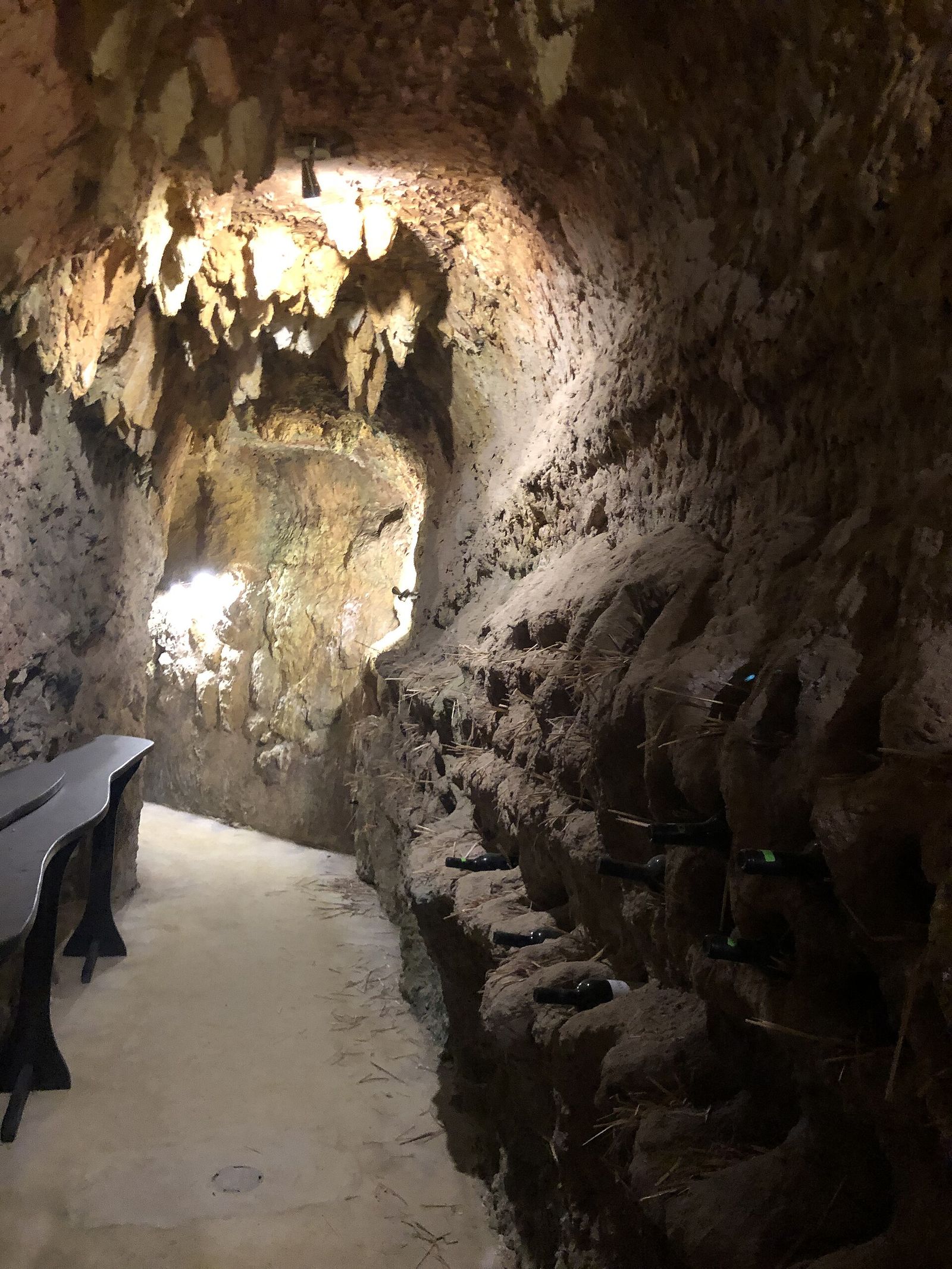
Town legend makes Melnik wine Winston Churchill's favourite. I taste it where it grows: Melnik is about 180 km south of Sofia, 2.5 to 3 hours by car, and its cellars are cut into the sandstone. In Sofia, Orbelia's Melnik Estate Reserve 2019 is the bottle I'd pick up, and Logodaj makes a sparkling Broad-leaved Melnik in Brut and Rosé.
Melnik 55
Melnik 55 (Мелник 55), also called Early Melnik Vine (ранна мелнишка лоза), was bred from Broad-leaved Melnik and pollen from other varieties. It ripens towards the end of September, earlier than its parent. That gives riper, rounder, fruitier wine that drinks well young.
Logodaj, founded in 1994 in the Struma Valley, makes the one I buy. It's 14% and off-dry, with raisins and fruitcake on the nose and tobacco, red cherry and blackcurrant in the glass.
Rubin
Rubin (Рубин) is a Bulgarian crossing of Syrah and Nebbiolo, created in 1944, and it grows in the Thracian Lowlands and the Danube Plain. It makes deep-coloured, peppery reds with dark fruit. If Australian Shiraz is your usual supermarket red, start with Rubin.
Dragomir's Rubin Reserve comes from vines planted in 1974 and tastes of dark cassis, with firm but rounded tannins. For summer, Georgiev/Milkov make Pink Side of Rubin, a dry salmon-pink rosé at 12.5% from a 40-year-old Rubin vineyard in the Thracian Valley.
Gamza
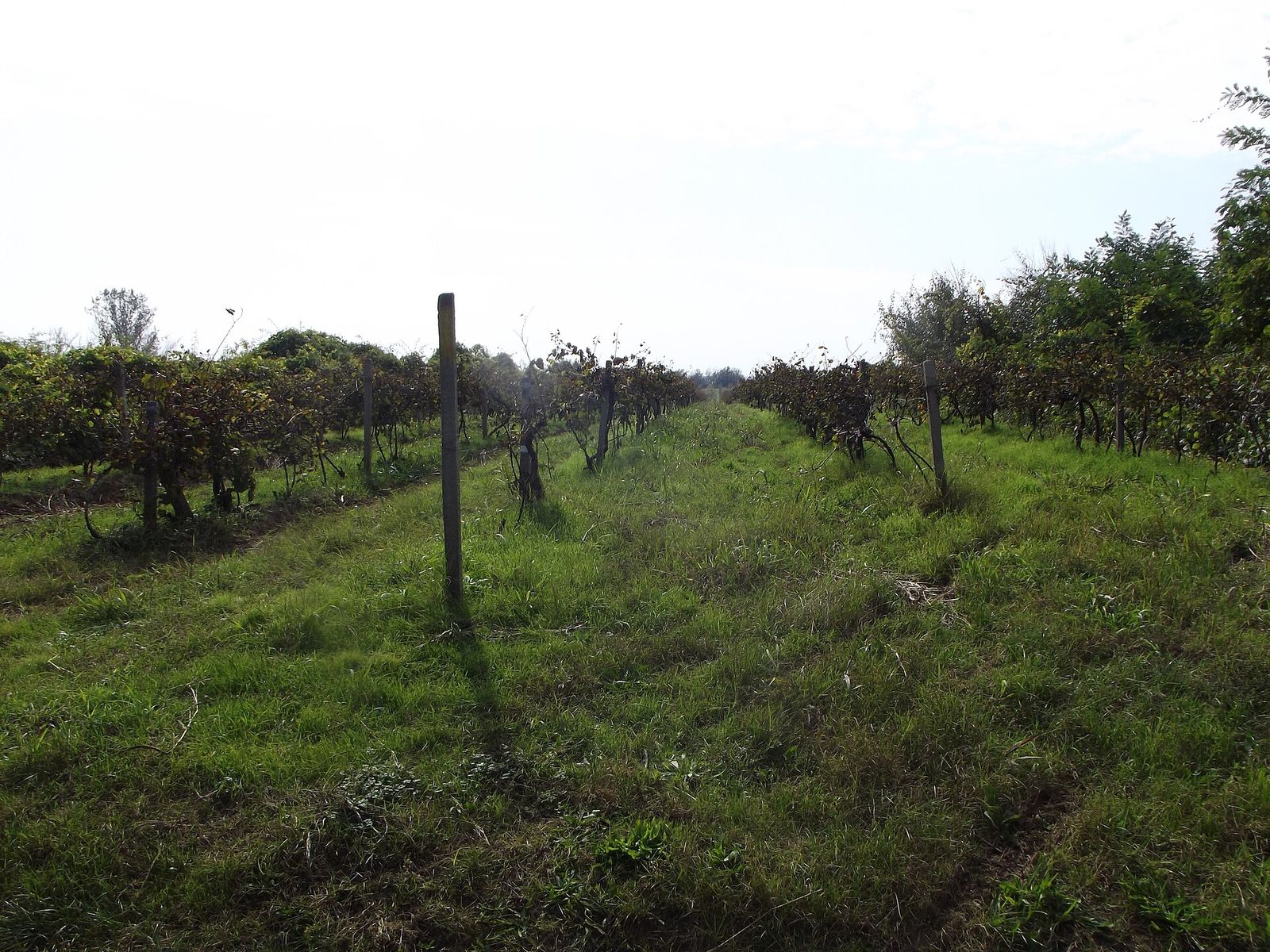
Gamza (Гъмза) is the red of the Danube Plain, grown mostly in the north-west and centre-north of the country, and it's the same grape Hungary calls Kadarka. Its dark-skinned grapes make a red with a deep aroma. On a hot evening I put the bottle in the fridge for a short spell before I pour it.
Novo Selo, a village near Vidin on the Danube, gives its name to a local Gamza, Novoselska Gamza. In Sofia, Borovitza's Gamza 2023 is my everyday bottle, and Medi Valley's Great Bulgaria 2024 blends Gamza with Mavrud and Rubin for €14.
Pamid
Pamid (Памид) is the old everyday red. It's been grown here since Thracian times and was once the most widespread grape in Bulgaria, though far less of it is planted now. It has thin skins and low acidity, and it makes light, soft table wine to drink young.
I rarely see Pamid named on a wine list in Sofia. If a village cellar pours you a light red from a jug, ask whether it's Pamid.
Bulgaria's local white grapes
The three local whites are Dimyat, Red Misket and Keratsuda. I order the first two with a shopska salad on a hot day, and I save the third for a bottle to take home.
Dimyat
Dimyat (Димят) is the everyday white of the Black Sea coast. It's light and very aromatic, and it comes both dry and sweeter, so I look for сухо on the label when I want it dry. It's the white I order by the carafe with grilled fish by the sea.
Bulgarian breeders crossed it with Muscat Ottonel to make Gergana, which Tsarev Brod bottles. The winery planted its first vines in 2001 in the north-east, and it's also behind a natural sparkling Riesling.
Red Misket
Red Misket (червен мискет, cherven misket) has pink skins and makes white wine, scented and grapey. It grows in the Rose Valley below the Balkan range and in the Sungurlare Valley further east.
The Minkov family founded Chateau Copsa in the Rose Valley in 1998, and its AXL is 100% Red Misket. It's dry and medium-bodied, smells of flowers and pear, and tastes of stone fruit at 13%. Only 1,300 bottles of the 2023 were made.
Keratsuda
Keratsuda (керацуда) is a rare white grape of the Struma Valley, grown around Melnik alongside the two Melnik reds. Villa Melnik, a family winery that moves its wine by gravity, leaves Keratsuda and Sauvignon Blanc on their skins to make an orange wine, dry and aromatic at 12%.
It's one of the Bulgarian souvenirs I pack for friends who think they've tried every wine going.
Bulgarian crossings: Rubin, Melnik 55, Bouquet and Gergana
A crossing is a new grape variety bred by pollinating one vine with pollen from another, in the same way gardeners breed a new rose. Bulgaria has made several, and these four turn up on labels.
| Crossing | Parents | Colour | Producer to look for |
|---|---|---|---|
| Rubin | Syrah and Nebbiolo | Red | Dragomir, Damianitza, Logodaj |
| Melnik 55 | Broad-leaved Melnik and pollen from other varieties | Red | Logodaj |
| Bouquet | Mavrud and Pinot Noir | Red | Borovitza |
| Gergana | Muscat Ottonel and Dimyat | White | Tsarev Brod |
Rubin is the crossing I'd taste first. Dragomir, Damianitza, Logodaj and Georgiev/Milkov all bottle it on its own, and Damianitza's Uniquato Rubin is organic and full of fruit. Logodaj calls its Rubin Nobile.
Bouquet is one I've only seen from Borovitza, a winery in red sandstone country that also makes my Gamza pick. Gergana belongs to Tsarev Brod alone, so buy it when you see it.
Merlot, Cabernet and the international grapes in Bulgaria
Merlot is the most planted grape in the Thracian Lowlands, followed by Cabernet Sauvignon, so a lot of Bulgarian wine comes from grapes you already know. In the early 1980s, cheap Bulgarian Cabernet Sauvignon and Merlot filled British supermarket shelves, and that's the Bulgarian wine plenty of us still remember.
When I want a grape I already know, I pick one of these four bottles.
| Grape | Where it grows in Bulgaria | A Bulgarian bottle |
|---|---|---|
| Merlot and Syrah | Thracian Lowlands | Bessa Valley Enira 2019: 42% Merlot, 36% Syrah, 12% Petit Verdot, 10% Cabernet Sauvignon |
| Chardonnay | Danube Plain and the Black Sea Coast | Bononia Gomotartzi Chardonnay, unoaked |
| Riesling | Black Sea Coast | Tsarev Brod Pet-Nat Riesling Extra Brut, 11.5% |
| Cabernet Franc | Black Sea Coast | Odessos Cabernet Franc Kavarna Single Vineyard |
Bulgarians distil grapes as well. Grozdova, a grape brandy, is the most common kind of rakia in Bulgaria, and a muscat rakia smells of flowers.
A short history of grape growing in Bulgaria
Grapes have grown in these valleys since the Thracians, long before there was a Bulgaria.
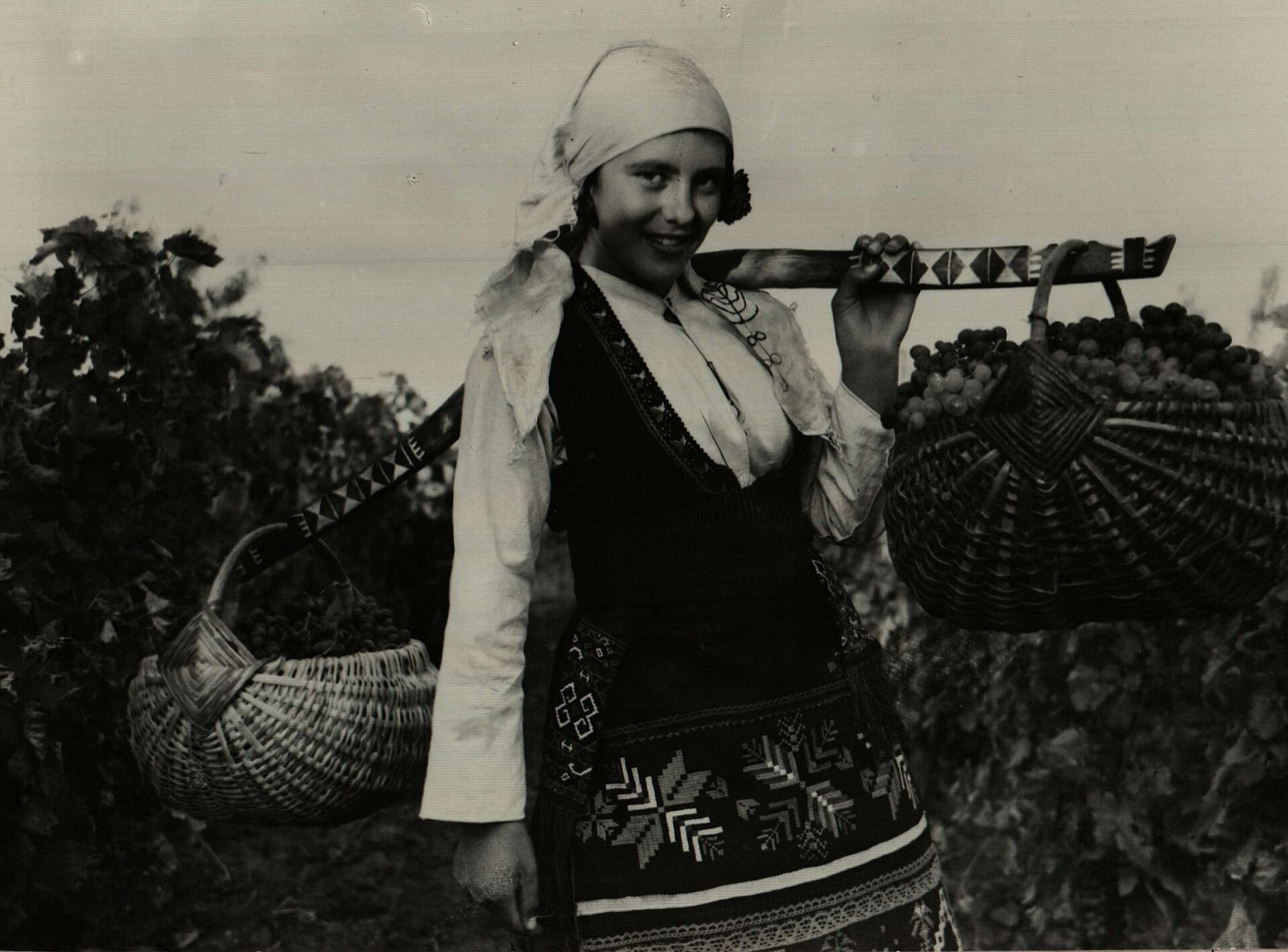
At the 1936 harvest in Lyaskovets, near Veliko Tarnovo, grapes were picked by hand into wicker baskets and carried on a wooden yoke. By around 1980, Bulgaria was the biggest wine producer in the Eastern Bloc.
Then it fell apart. Gorbachev's anti-alcohol campaign hit the Soviet market, and land reform after communism split the big state vineyards into small plots. Bulgaria's harvested vineyard area fell from 85,320 hectares in 2007, the year it joined the EU, to 36,551 hectares in 2016.
What grew back is smaller and more local. Bulgaria has more than 260 registered winemakers, and the ones I rate put Mavrud, Melnik and Rubin on the front of the label.
Where each grape grows in Bulgaria
Officially Bulgaria has two wine regions, the Danubian Plain in the north and the Thracian Lowlands in the south, with more than 50 smaller protected designations below them. Bulgarians talk about five regions, and each has its own grapes.
| Region | Where | Local grapes | International grapes |
|---|---|---|---|
| Danube Plain | North, along the Danube | Gamza, Rubin, Pamid | Chardonnay, Muscat Ottonel, Cabernet Sauvignon |
| Black Sea Coast | North-east | Dimyat, Misket | Chardonnay, Riesling, Cabernet Franc |
| Rose Valley | Centre, below the Balkan range | Red Misket | Rkatsiteli, Riesling |
| Thracian Lowlands | South, around Plovdiv | Mavrud, Rubin, Pamid | Merlot, Cabernet Sauvignon, Syrah |
| Struma Valley | South-west, around Melnik | Broad-leaved Melnik, Melnik 55, Keratsuda | Merlot, Cabernet Sauvignon |
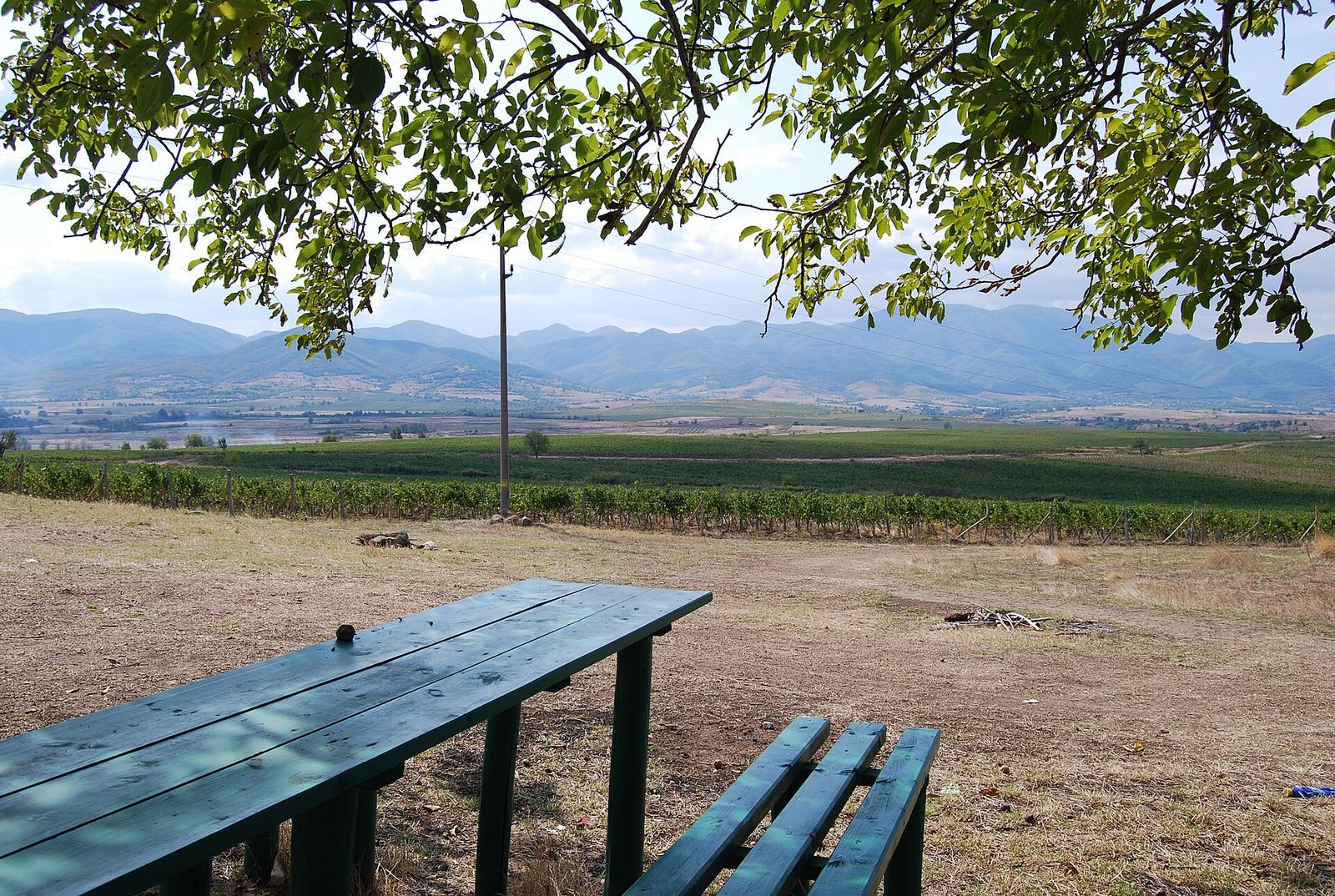
Two of the Bulgarian wine regions are easy to reach from Sofia on your own. Plovdiv sits in the middle of Mavrud country, and a day trip to Plovdiv takes about 3 hours by train for about €5.60, or about 2 hours by bus for €8.50 to €11. The estates themselves, such as Rumelia, Zagreus and Bessa Valley, sit out among the vineyards and need a car or a taxi. Melnik is the other trip, and I'd stay a night there.
Where to taste Bulgarian grapes in Sofia
I taste new Bulgarian grapes in two places in Sofia: a natural-wine bar for single glasses and a wine shop for bottles.
Nectar, for Bulgarian wine by the glass

Nectar is a small bar at Iskar 11 that pours natural wines and mixes cocktails. It opens Wednesday to Saturday from 5pm to midnight and on Sunday from 5pm to 10pm. Of all the wine bars in Sofia, it's the one where I ask which Bulgarian bottle is open that night and order a glass of a grape I haven't tried.
Seewines in Lozenets, for bottles by grape
Seewines is a Bulgarian wine-shop chain with a Sofia branch at ul. Zlaten Rog 20 in Lozenets, south of the centre, and another in Plovdiv. Its online shop sorts wine by grape, and its Mavrud list runs to 40 bottles, up to Dragomir's Grand Reserve 2018 at €72.
Supermarkets such as Billa and Fantastico stock the big Bulgarian labels, and a mid-range bottle in a Sofia shop costs about €6.60. For Rubin, Keratsuda or a single-estate Melnik, go to a wine shop.
Key takeaways
- Order Mavrud for a dark, spicy red and Broad-leaved Melnik for a paler, sharper one, then try Melnik 55 and Rubin.
- Gamza is Kadarka under its Bulgarian name, a red from the Danube Plain that I drink cool on a hot day.
- Red Misket makes a scented white from pink grapes, and Keratsuda is the rare white behind Villa Melnik's orange wine.
- Plovdiv puts you in Mavrud country by train, and Melnik's cellars pour the two Melnik grapes where they grow.
Frequently asked questions
What grapes are native to Bulgaria?
Bulgaria's local red grapes are Mavrud, Broad-leaved Melnik, Pamid and Gamza, and its local whites are Dimyat, Red Misket and Keratsuda. Bulgarian breeders added crossings such as Rubin, Melnik 55, Bouquet and Gergana.
What is the most famous Bulgarian grape?
Mavrud is the most famous Bulgarian grape, a dark, spicy red from the Thracian Lowlands south of Plovdiv. Broad-leaved Melnik from the Struma Valley comes a close second, helped by the story that it was Churchill's favourite.
What are the main wine regions in Bulgaria?
Bulgaria has two official wine regions, the Danubian Plain in the north and the Thracian Lowlands in the south. In everyday use Bulgarians name five: the Danube Plain, the Black Sea Coast, the Rose Valley, the Thracian Lowlands and the Struma Valley.
What is Bulgaria famous for producing?
Bulgaria is famous for rose oil from the Rose Valley, for yoghurt and for wine made from local grapes such as Mavrud and Melnik. Its national spirit is rakia, and the most common kind is distilled from grapes.
Is Gamza the same as Kadarka?
Yes. Gamza is the Bulgarian name for the grape Hungary calls Kadarka. In Bulgaria it grows mostly in the north-west of the Danube Plain, and its dark-skinned grapes make red wine.
What is the difference between Melnik and Melnik 55?
Broad-leaved Melnik is the old local vine of the Struma Valley, pale and high in acidity. Melnik 55 was bred from it and ripens earlier, towards the end of September, so its wine is riper and fruitier and sometimes off-dry.
Is Rubin a Bulgarian grape?
Yes. Rubin was created in Bulgaria in 1944 by crossing Syrah with Nebbiolo, and it grows in the Thracian Lowlands and the Danube Plain. It makes deep-coloured, peppery red wine.
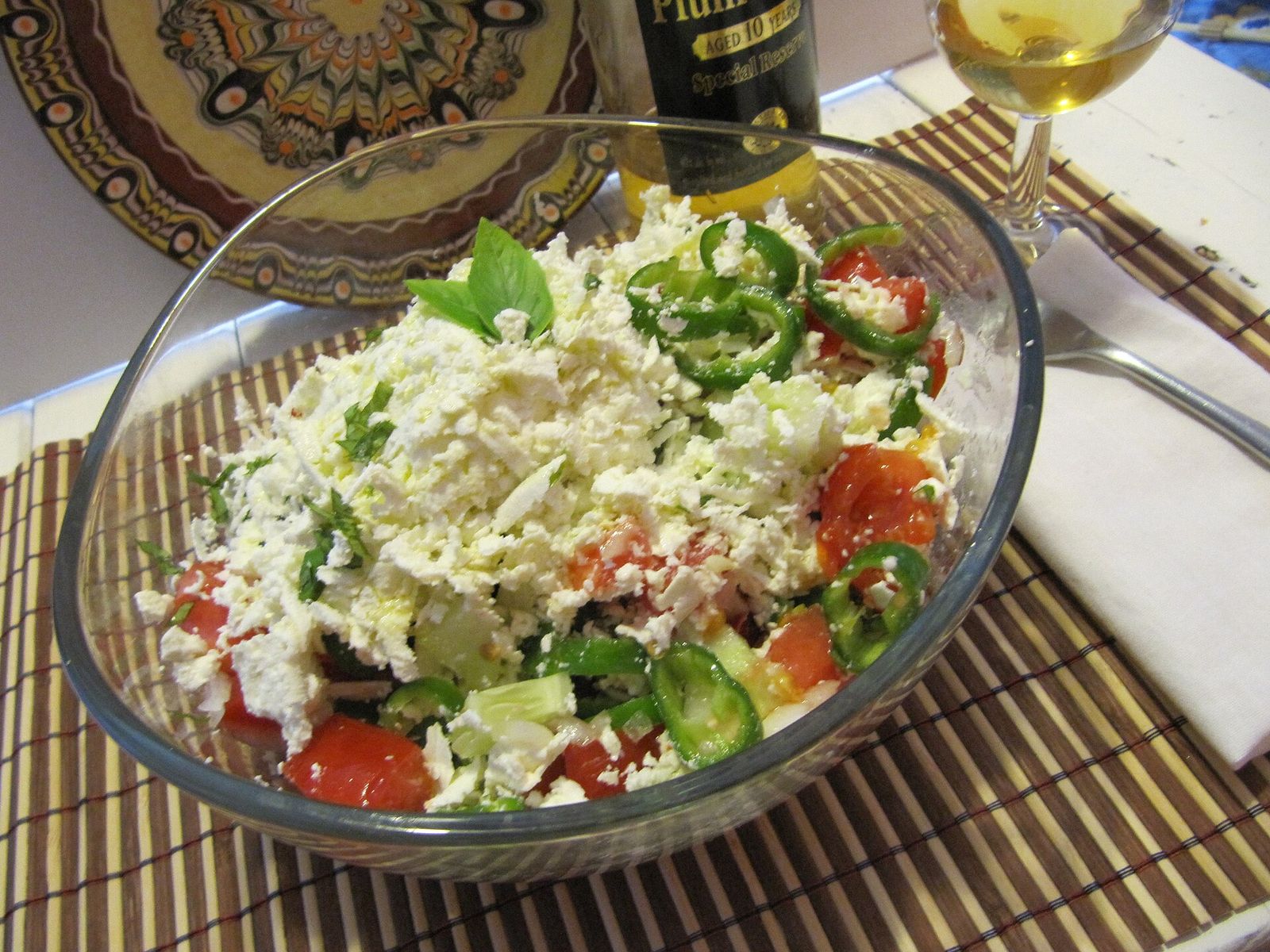
Bulgarian Drinks: What to Drink in Bulgaria and Where to Try It in Sofia
Rakia, wine, beer, boza and ayran: what Bulgaria drinks, how locals drink it and where I order each one in Sofia.
Read the guideBulgarian Wine: A Visitor's Guide to What to Order and Buy
Mavrud, Melnik and Misket: the Bulgarian wines I order in Sofia, what a bottle costs and how many to carry home.
Read the guide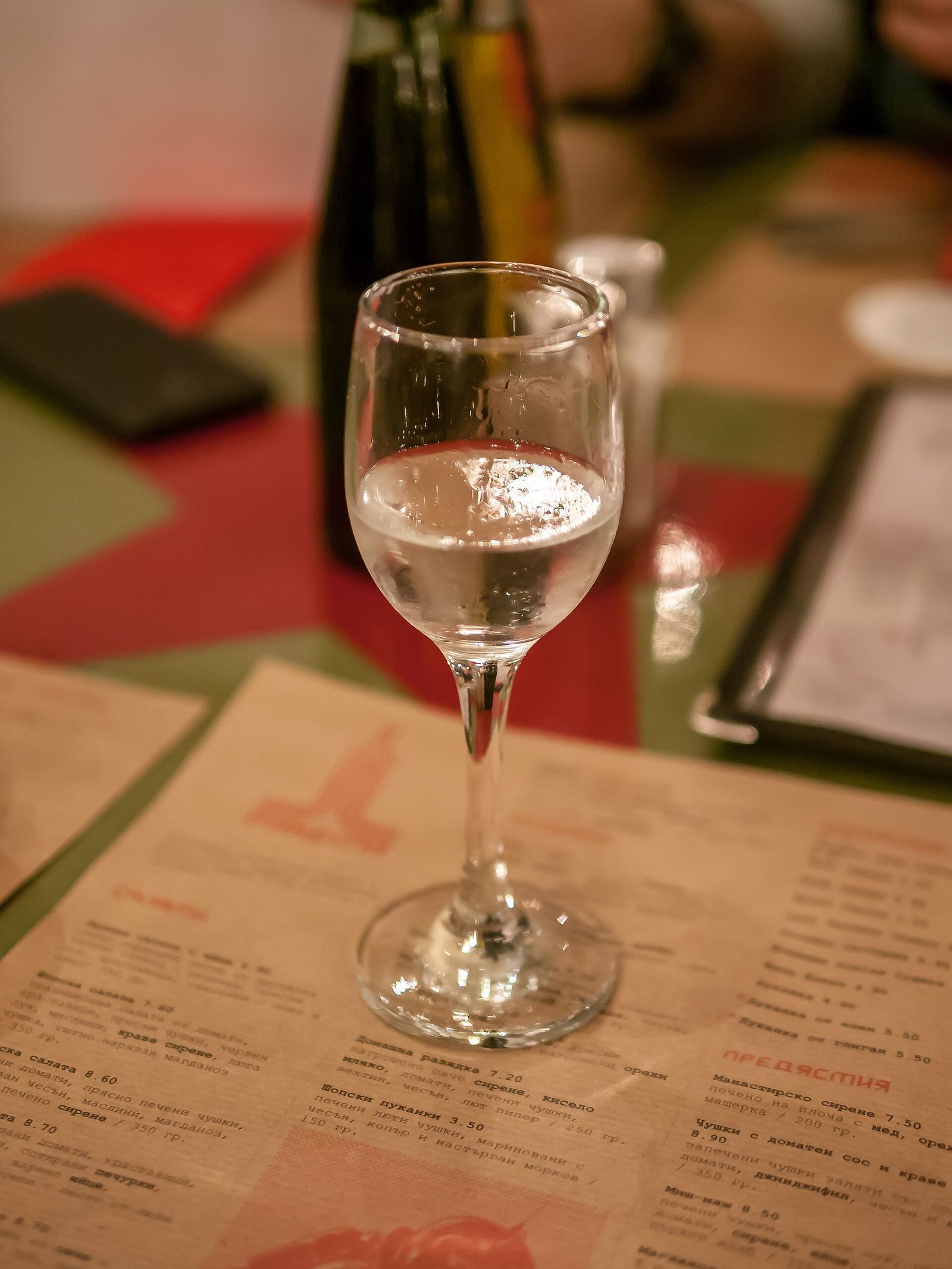
Rakia: Bulgaria's Fruit Brandy, and How I Drink It in Sofia
Bulgaria's fruit brandy, from grape to quince: the types, how to sip it, and where I drink and buy it in Sofia.
Read the guide