Shopping in Sofia: Where I Shop and What I Buy
Sofia is known for one long high street, Vitosha Boulevard, and for markets that still sell what Bulgarians buy every week. The good shopping sits in the second group: icons and Soviet badges outside the cathedral, embroidery from the Ethnographic Museum shop, honey and spices at the Women's Market. Here is where I go for what, what I'd bring home, how to pay and what the UK border lets through.
Where to shop in Sofia at a glance
Everything except the malls sits within a 25-minute walk of Serdika metro station, so one day covers the lot.
| Where | What I buy there | Nearest metro or stop |
|---|---|---|
| Vitosha Boulevard | Big-brand clothes, rose cosmetics, a coffee between shops | Serdika at the top, NDK at the bottom |
| Antiques market, Alexander Nevsky Square | Icons, Soviet badges, lace, old cameras | Sofia University |
| Ethnographic Museum shop | Handmade folk crafts and embroidery | Serdika, then a 10-minute walk |
| Zhenski Pazar | Fruit, honey, spices, cheap textiles | Lavov Most or Serdika |
| Central Market Hall | Lyutenitsa, rakia and wine under one roof | Serdika, then a 5-minute walk |
| The big malls | High-street chains, supermarkets, a cinema on a wet day | Opalchenska, Vitosha or a tram |
The best places to shop in Sofia
Vitosha Boulevard for the big brands
Vitosha Boulevard, Vitoshka to everyone here, is Sofia's high street. It runs 2.7 km from St Nedelya Square to South Park, and the stretch from Alabin Street to Patriarh Evtimiy Boulevard is car-free, with shops and glassed-in cafe terraces down both sides. Max Mara, Emporio Armani, Boss, Tommy Hilfiger and Lacoste all trade on the boulevard or the streets around it.
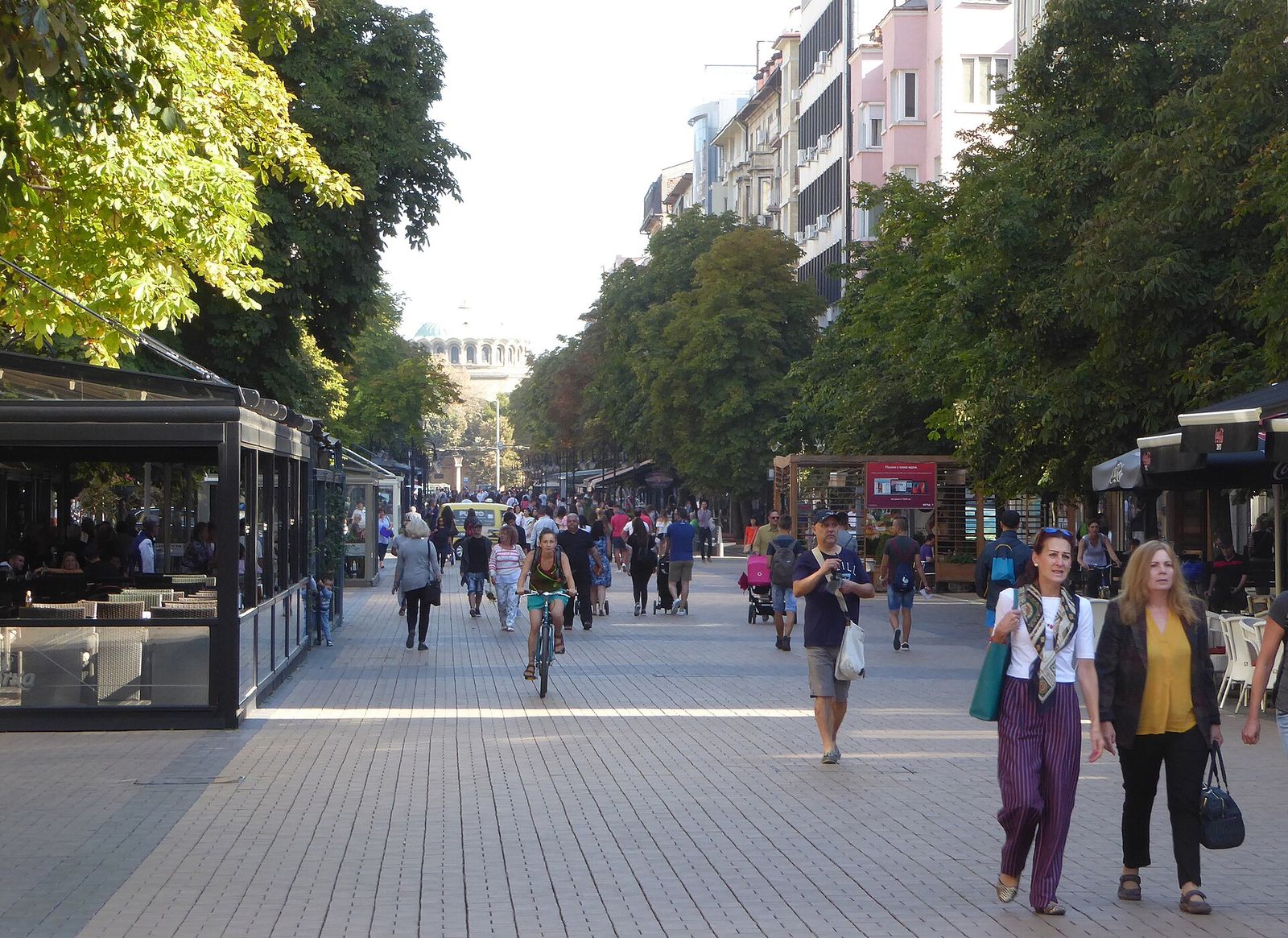
I come to Vitoshka for the chains I know from home and a coffee on a terrace, and it's where I'd send you to replace the jumper you forgot to pack. Rose cosmetics and souvenir shops sit between the fashion labels, handy for a last-minute present on the way to dinner.
The antiques market at Alexander Nevsky
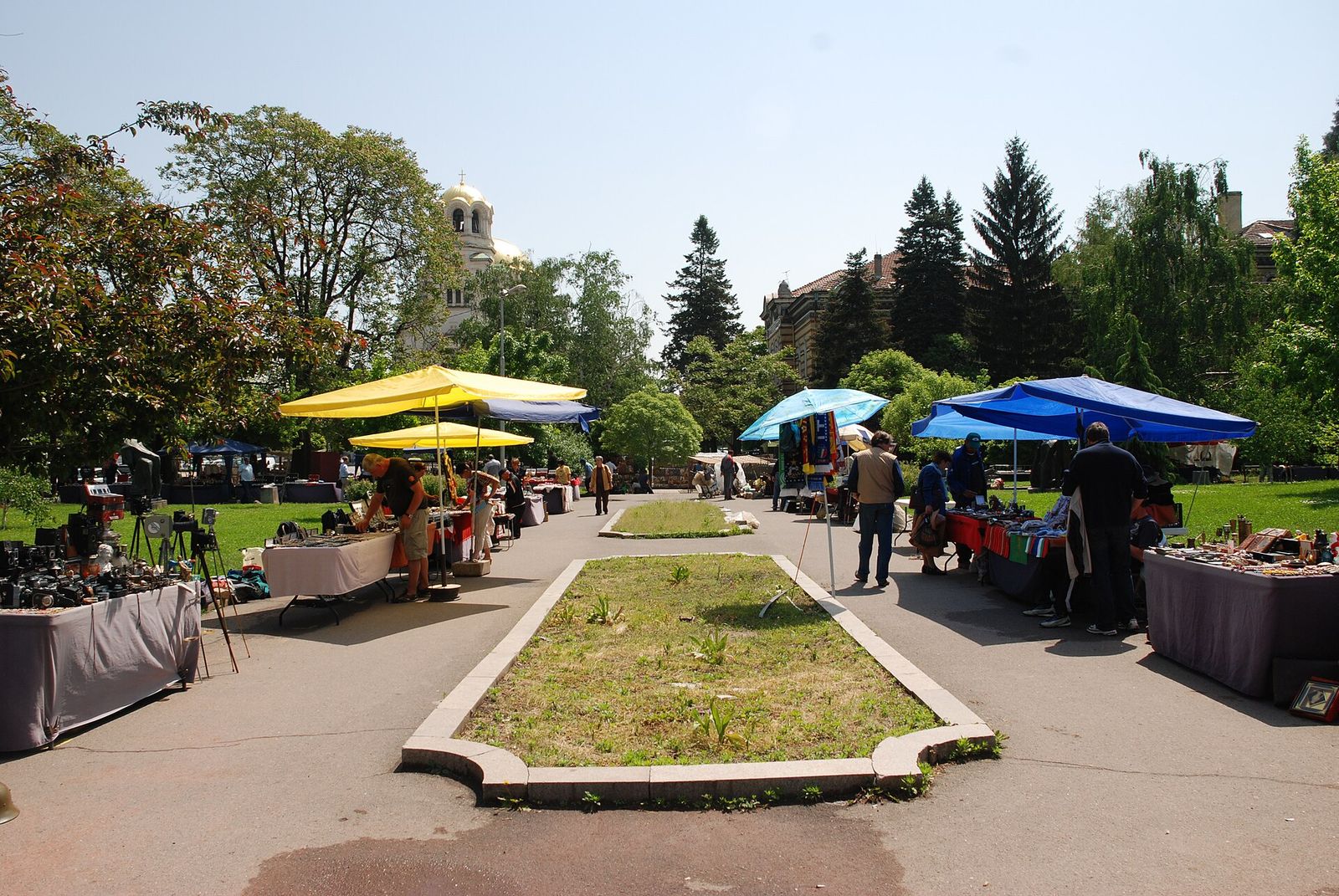
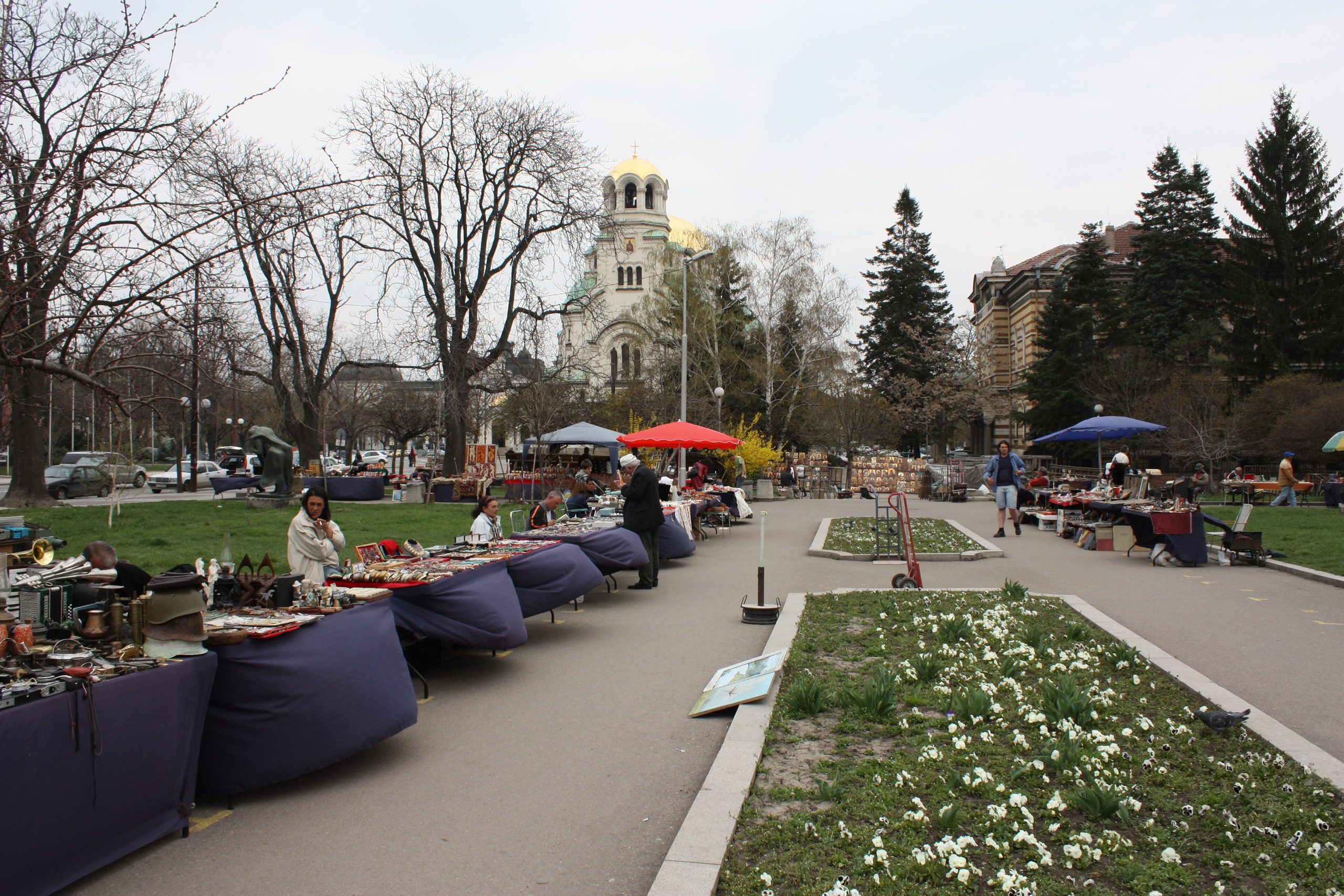
The stalls of the antiques market at Alexander Nevsky set up in the garden beside the cathedral from about 10am every day, weather permitting. It's the most fun I have shopping in Sofia. Tables carry Soviet badges and officer hats, old helmets and gas masks, dial telephones, typewriters, film cameras, amateur paintings and rows of Orthodox icons.
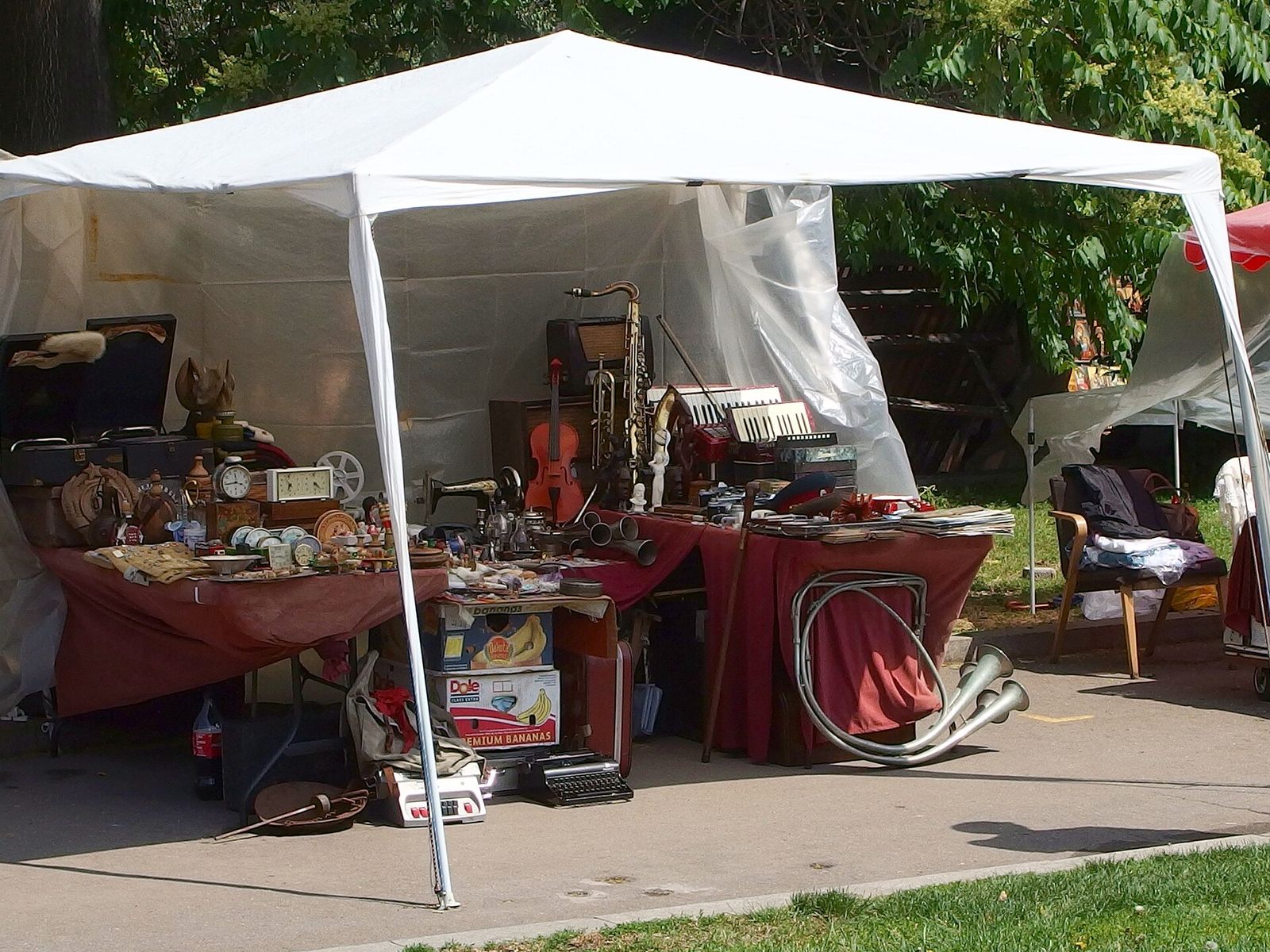
A separate row of older women sells handmade lace, embroidered tablecloths and knitted wool socks, and that's where I buy presents to take home. Alexander Nevsky Cathedral is free to enter, so I pair the two. The nearest metro is Sofia University.
The Ethnographic Museum shop for handmade crafts
For crafts I'd trust as handmade, I go to the shop at the National Ethnographic Museum. The museum shares the former royal palace on Knyaz Alexander I Square with the National Art Gallery, under ten minutes on foot from Serdika. Its shop sells pieces by master craftspeople, including embroidered shirts and other parts of folk costume.
This is where I buy an embroidered present for someone who'll keep it for years. The stalls outside the cathedral sell embroidery too, and the museum is the place to see what the real thing looks like before you haggle for it.
Zhenski Pazar for food and spices
Zhenski Pazar, the Women's Market (Женски пазар), is Sofia's oldest market, set up around 1878 so village farmers could sell in town. It runs for several blocks along Stefan Stambolov Boulevard, between Todor Aleksandrov and Slivnitsa boulevards, and its central stretch was renovated in 2014. The stalls sell fruit and vegetables, honey, white cheese, nuts and spices.
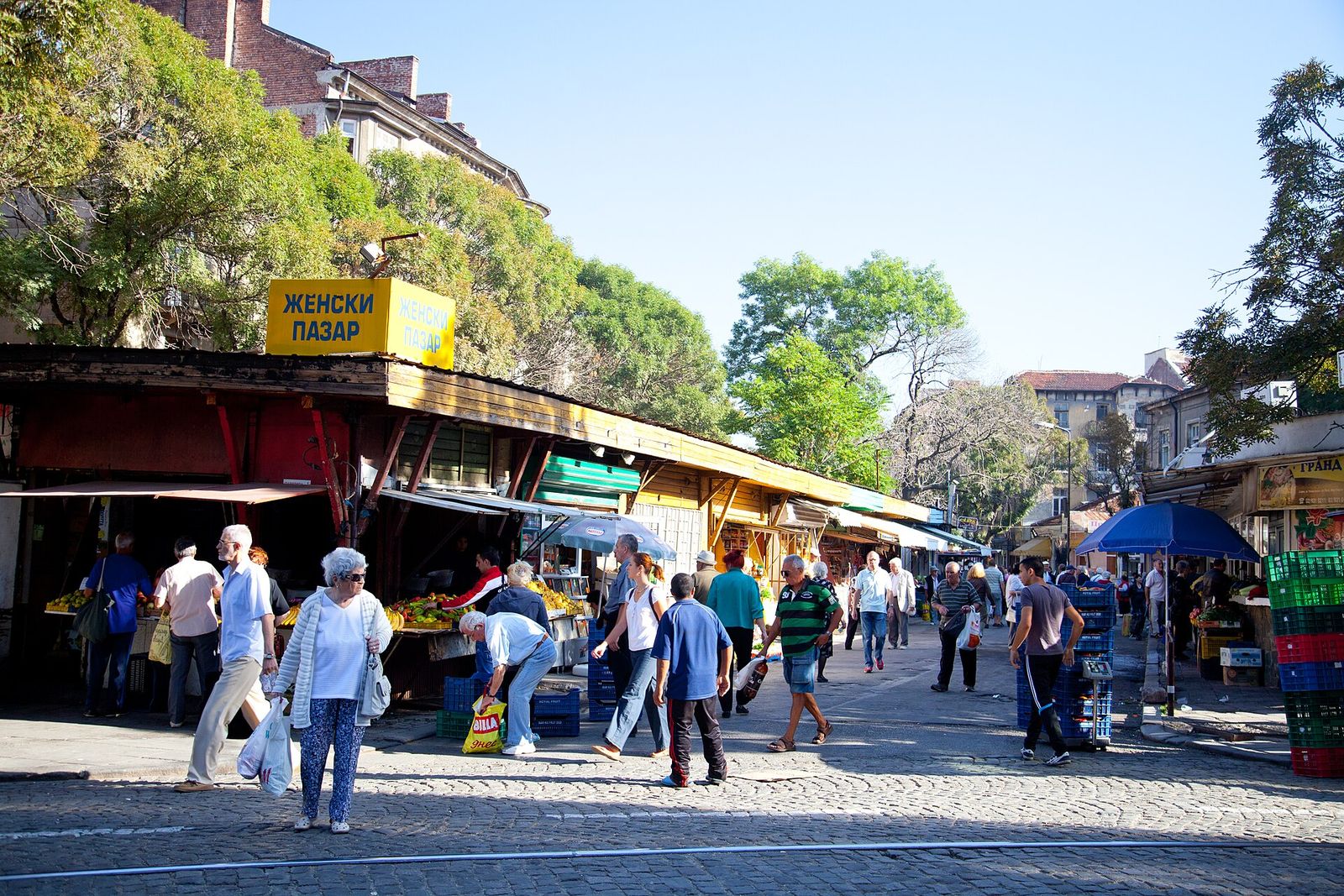
Some stalls sell cheap clothes, textiles and the odd stack of pottery, and the streets around it have Arabic grocers and halal butchers. It's the city's largest open-air market, and of all the markets in Sofia it's the one I'd pick if you only have time for one. Lavov Most and Serdika metro stations are both a short walk away.
Central Market Hall on a rainy day
Central Market Hall, Halite to locals, is the covered market at Knyaginya Maria Luiza Boulevard 25, in a 1911 building designed by Naum Torbov. It reopened on 23 May 2024 after a renovation, with a supermarket inside, an archaeology and history zone and a stage for events.
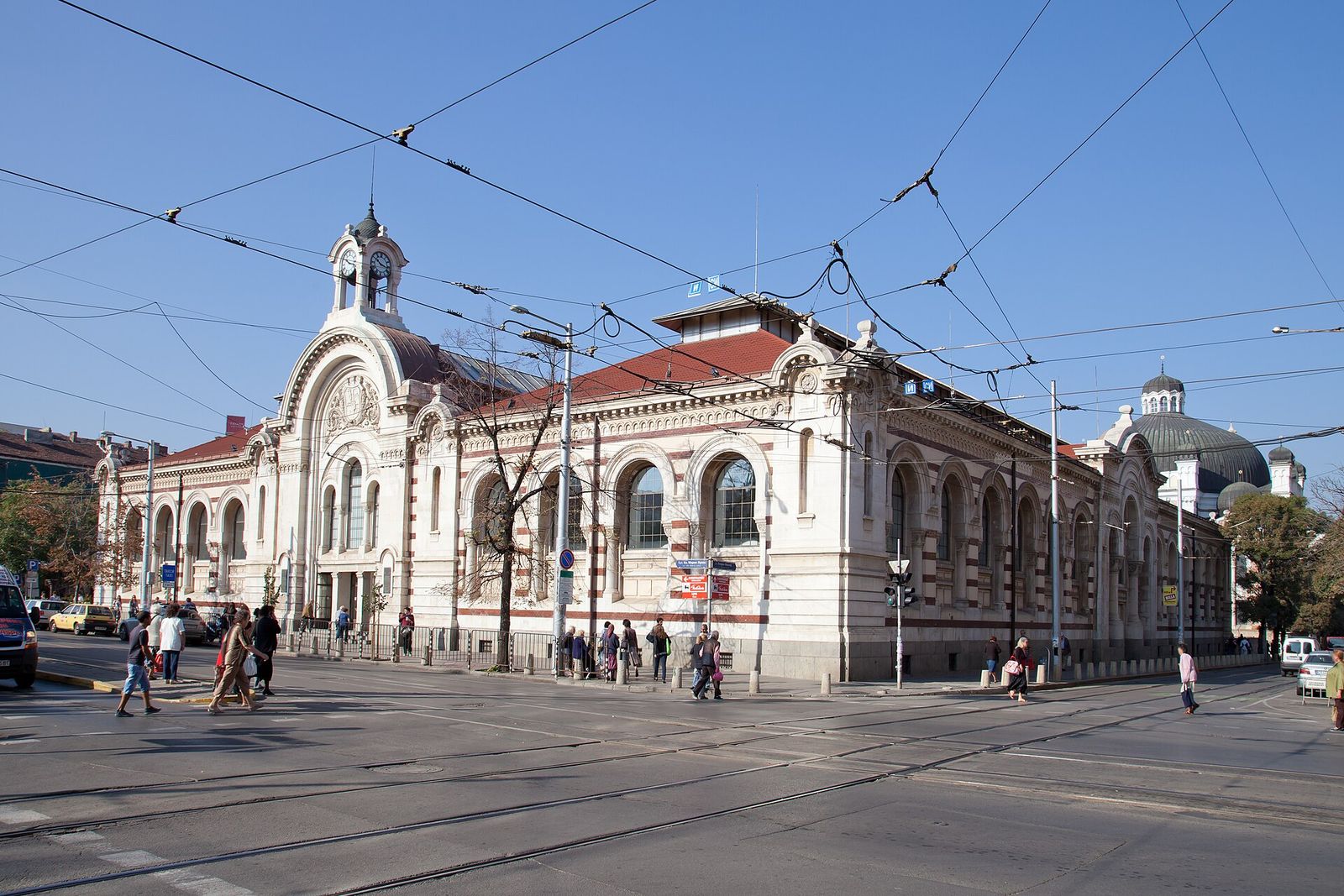
I use it for food gifts on a wet day: jars of lyutenitsa, a bottle of rakia and a Mavrud from the supermarket shelves, all under one roof. Banya Bashi Mosque is a minute's walk away, and Zhenski Pazar starts five minutes to the west.
Sofia's shopping malls
Sofia's big malls sit a metro or tram ride out of the centre, and all four I use open every day.
| Mall | Where | Getting there | Hours |
|---|---|---|---|
| Mall of Sofia | Aleksandar Stamboliyski Boulevard 101-103 | Opalchenska metro | Shops 10am to 9pm, supermarket 8am to 10pm |
| Paradise Center | Cherni Vrah Boulevard, south Sofia | Vitosha metro (M2) | 10am to 10pm, Billa 8am to 10pm |
| Serdika Center | Sitnyakovo Boulevard | Trams 20 and 22 | 10am to 10pm, Billa 9.30am to 9pm |
| The Mall | Tsarigradsko Shose 115z | Buses to the Hermes Park stop | 10am to 10pm |
Paradise Center is the one I use, because it sits by Vitosha station at the end of line M2, one train from Serdika, and it has a Cinema City for a wet afternoon. Mall of Sofia is the closest to the old centre and has an IKEA inside, open 10am to 8pm. Serdika Center covers 52,000 square metres, and The Mall, out east, has its own Cinema Arena. The shopping malls in Sofia carry much the same chains, so pick the one nearest your hotel.
What to buy in Sofia
Seven Bulgarian souvenirs cover most of the presents I give, and I buy all of them in the centre.
| Buy | Where in Sofia | Packing it |
|---|---|---|
| Rose oil, rose cream and rose soap | Souvenir shops on and off Vitosha Boulevard | Bottles and jars in the hold bag |
| Hand-painted pottery | Souvenir shops on Vitosha Boulevard, Zhenski Pazar stalls | Wrapped in a jumper in your hand luggage |
| Icons painted on wood | Antiques market at Alexander Nevsky | Flat, light, hand luggage |
| Lace and embroidery | Antiques market, Ethnographic Museum shop | Flat, light, hand luggage |
| Rakia and wine | Supermarkets and wine shops | Hold bag, within the UK allowance |
| Lyutenitsa, honey, mountain tea | Zhenski Pazar, supermarkets | Jars in the hold bag |
| Martenitsa | Street stalls in late February | Fits in a pocket |
Rose oil and rose cosmetics
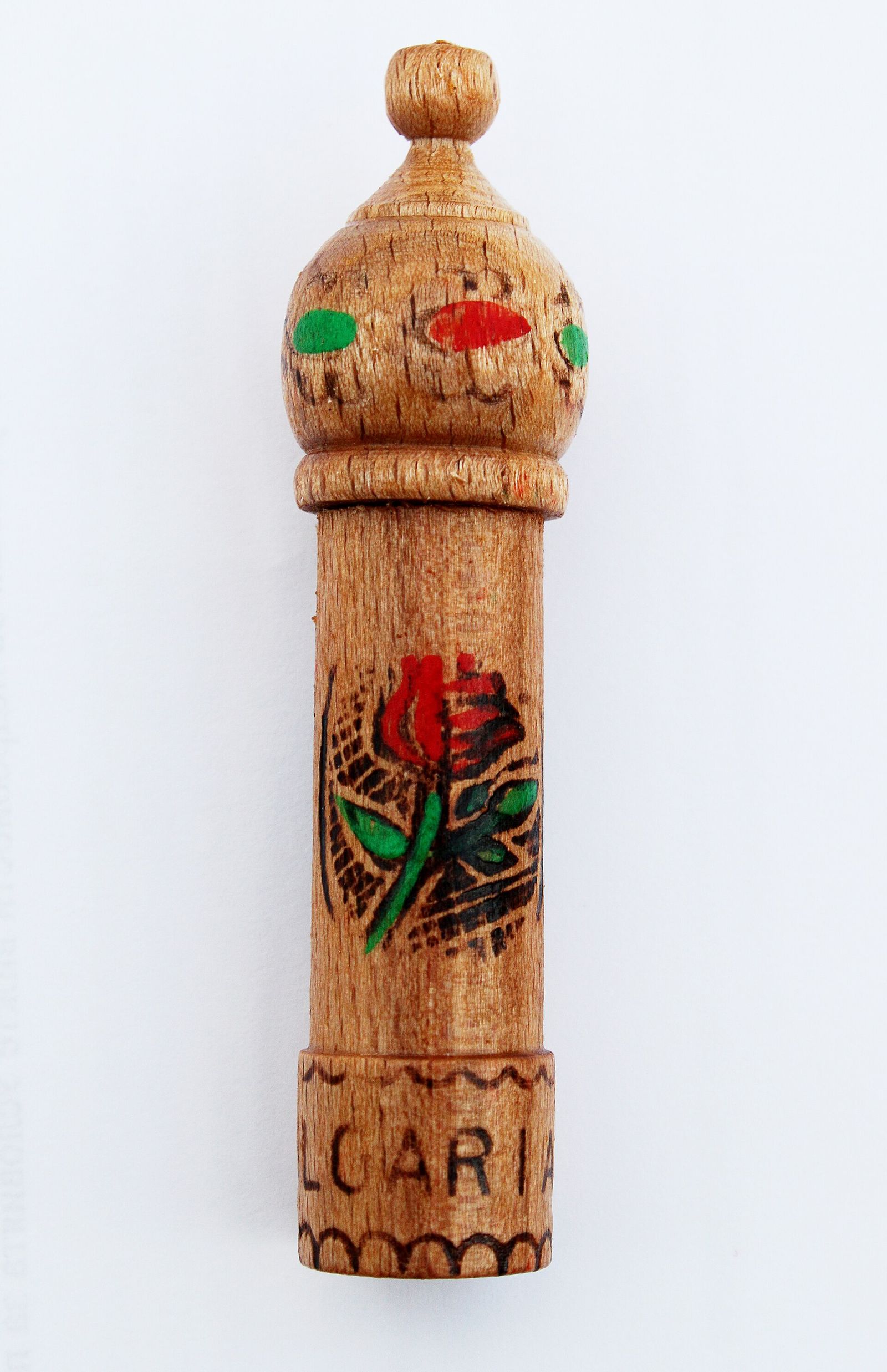
Bulgaria grows roses for oil in the Rose Valley around Kazanlak, and the classic present is a few drops of rose oil in a glass phial tucked inside a small carved wooden bottle. Rose creams, soaps and rose water fill the shelves of the souvenir shops in the centre. Pure rose oil is expensive, so a cheap phial almost always holds rose-scented perfume oil. Read the label before you pay.
Troyan pottery
The glazed pottery on every souvenir table follows the style of Troyan, a crafts town about 160 km north-east of Sofia. It's red clay glazed in yellow, brown and green, with the paint smeared into a raindrop pattern or drawn into peacock-eye and butterfly designs with a bull's horn and a feather. I buy small bowls and a gyuvech, the lidded clay pot that goes in the oven for stews.
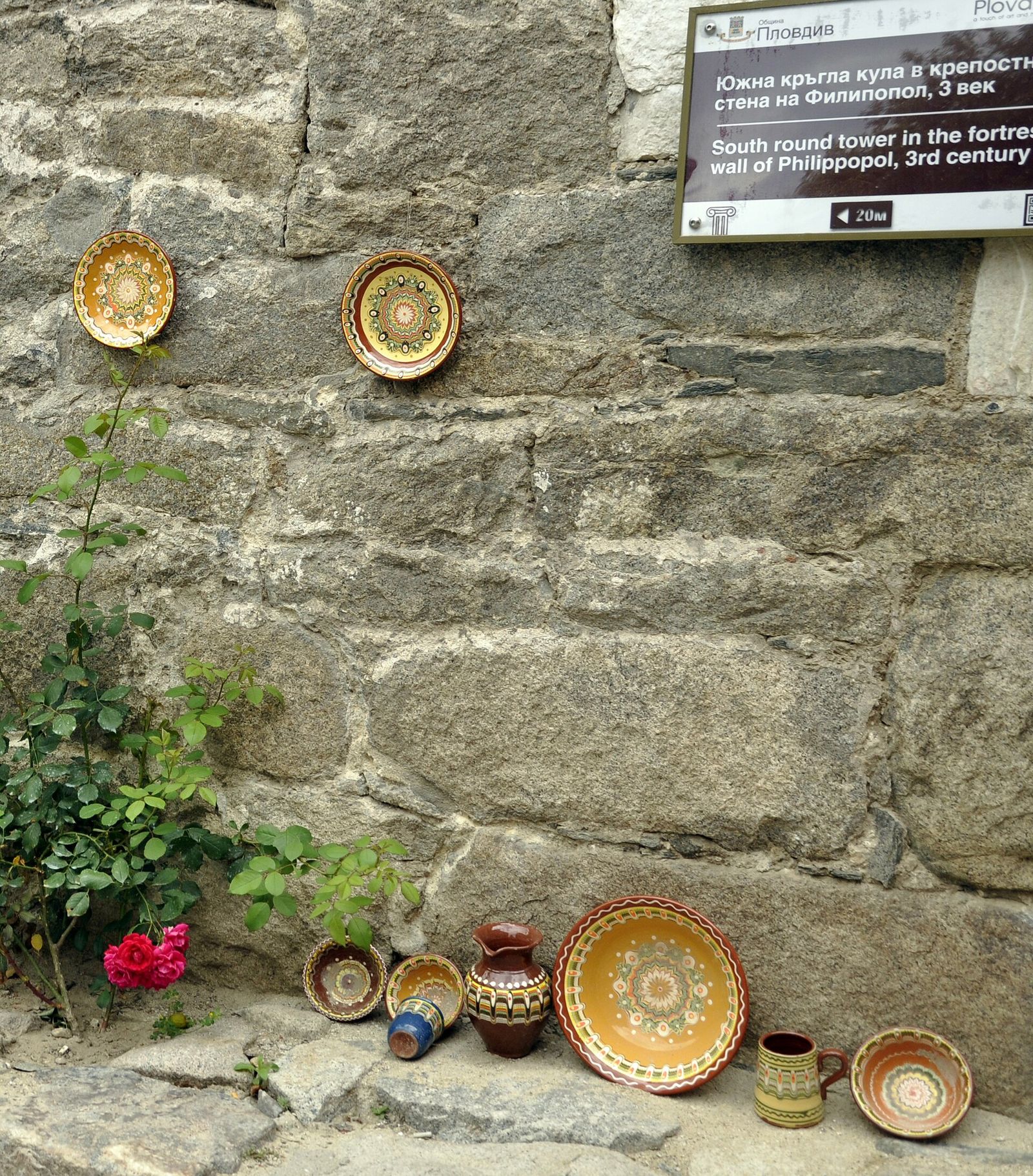
Hand-painting leaves small wobbles in a pattern, and that's how I tell real Bulgarian crafts from the printed copies.
Orthodox icons
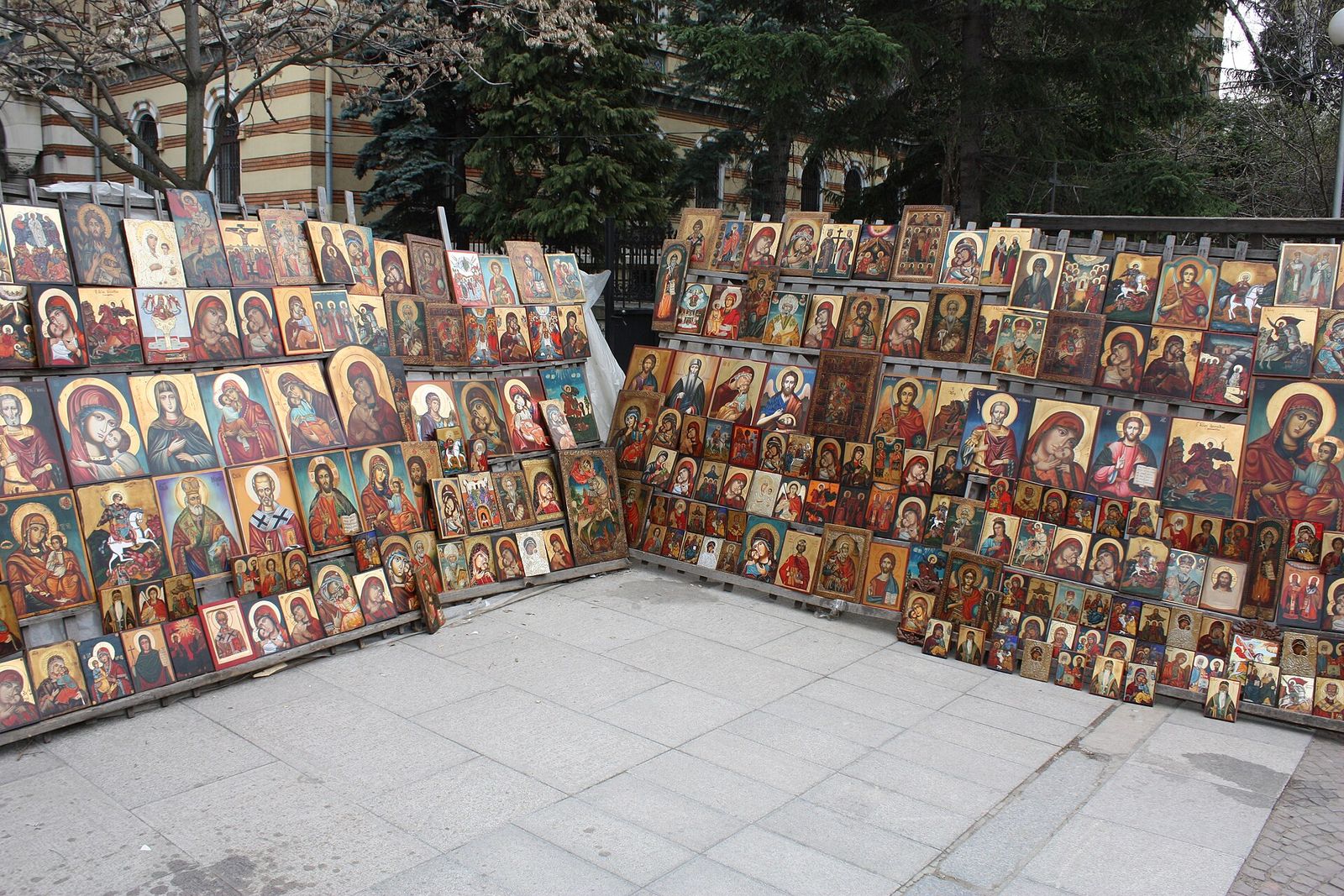
Small icons painted on wood pack flat, and they're the souvenir I'd carry home for my own wall. The antiques market lays out hundreds of them along the pavement. Tilt one to the light before you buy. A painted icon shows brushstrokes, and a print has a smooth sheen.
Rakia and wine
Sofia's supermarkets have a long rakia shelf, mostly 70cl bottles at 40%, with names such as Burgas 63, Karnobatska and Sungurlarska. Ask for гроздова (grozdova) if you want grape rakia, the kind I'd pour for someone's first taste.
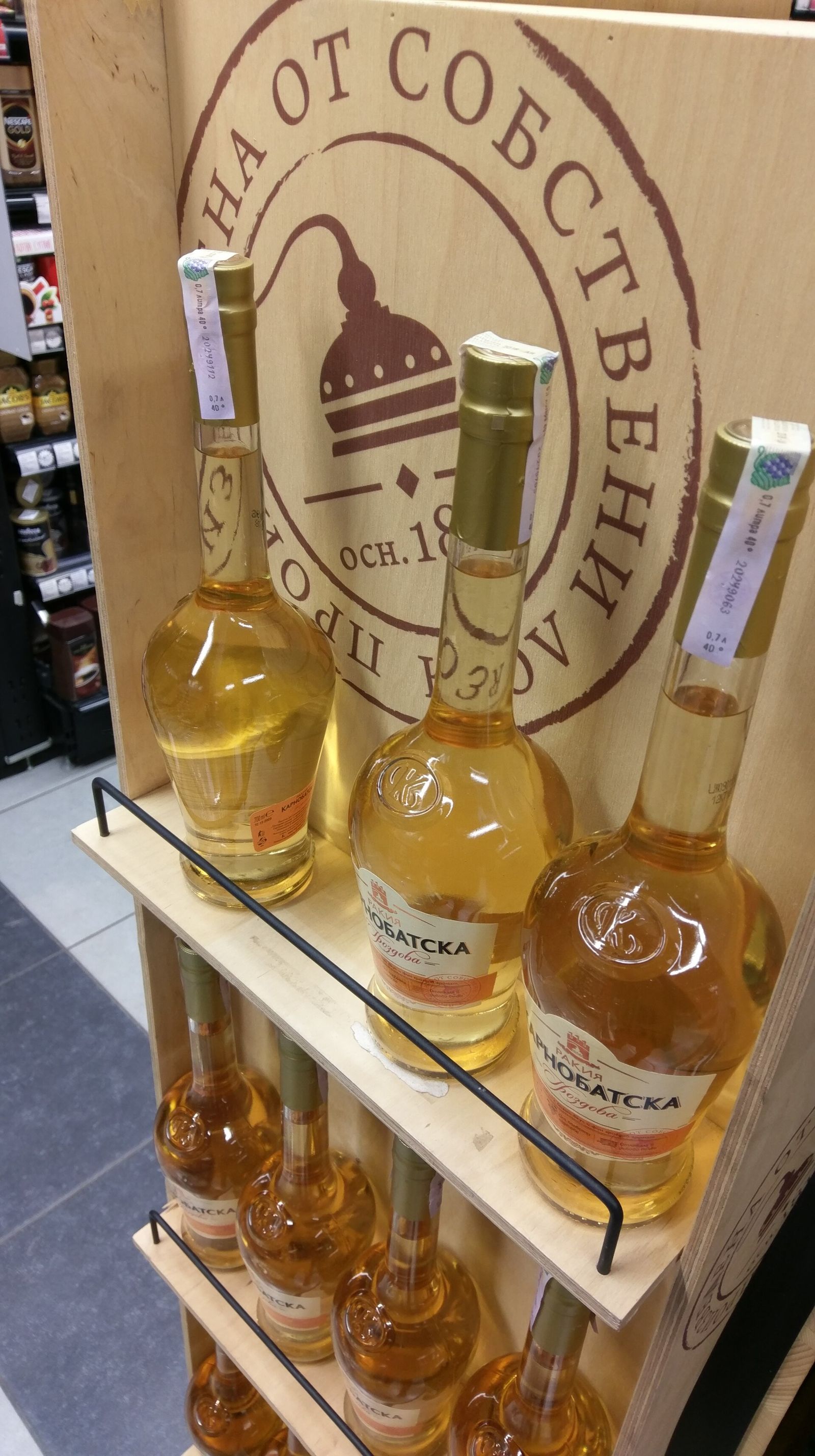
Fantastico and Billa stock the big wine brands and a shelf of Mavrud and Melnik, the local reds. For small-estate bottles of Bulgarian wine, I go to a specialist wine shop instead.
Lyutenitsa, honey and mountain tea
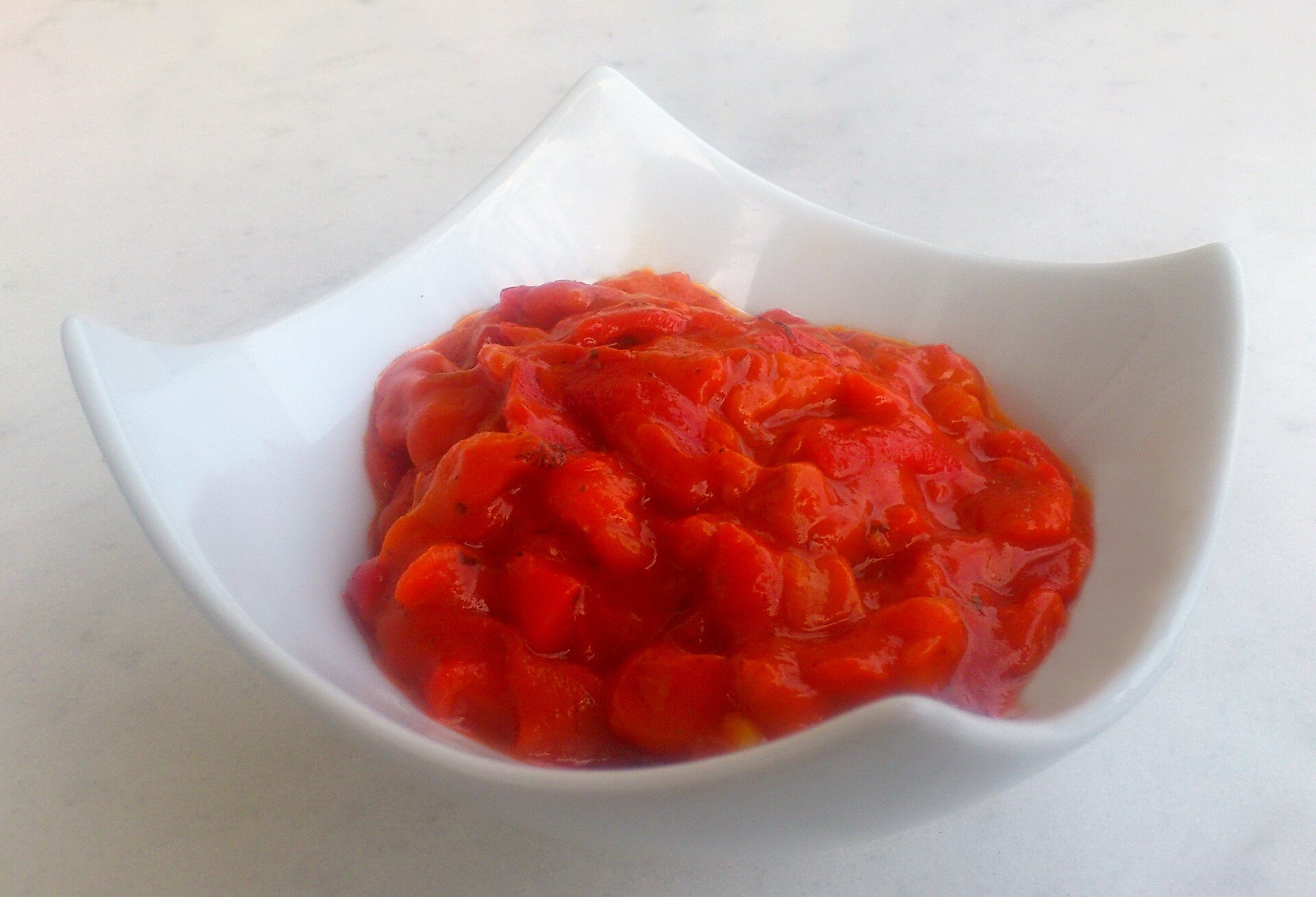
The food gifts I pack most are a jar of lyutenitsa, the roast red pepper and tomato relish, a jar of honey from Zhenski Pazar and a box of mountain tea from any supermarket. Of all Bulgarian food, lyutenitsa is the taste I miss first on a trip back to the UK. Spread it thick on toast.
A one-day shopping route through central Sofia
This is the route I'd walk with a friend who wants to shop. Food comes first, while the market is at its best, and the day ends on Vitoshka as the shops light up.
| Time | Stop | What I buy | Walk to the next stop |
|---|---|---|---|
| 9.30am | Zhenski Pazar | Honey, spices, fruit for the day | 5 minutes |
| 10.30am | Central Market Hall | Lyutenitsa, rakia, a bottle of Mavrud | 20 minutes |
| 11.15am | Antiques market at Alexander Nevsky | A small icon, lace, a Soviet badge | 10 minutes |
| 12.30pm | Ethnographic Museum shop | An embroidered piece | 10 minutes |
| 2.30pm | Vitosha Boulevard, after lunch | Rose cream, a coffee, anything I forgot | End of the route |
Jars and bottles get heavy, so if your hotel is central, drop the morning's shopping off before lunch. Then finish by walking the rest of Vitoshka down to the National Palace of Culture for sunset, and ride the M2 back from NDK for €0.80.
Paying, haggling and opening hours
Bulgaria has used the euro since 1 January 2026. Old guidebooks still quote leva, the money in Bulgaria before the switch, so divide by 1.95583 to get euros. Cards, contactless included, work in almost every shop, cafe and mall in the centre, while market stalls, kiosks and the antiques market want cash. I keep about €20 in small notes and coins for them, and when a card machine offers to charge me in pounds, I pick euros.
Haggle at outdoor stalls, never in shops. At the antiques market and the textile stalls, ask the price, offer less and meet in the middle with a smile. In shops and malls the price on the tag is the price. A coffee between shops costs €2 to €3 and a half-litre of draught beer about €3.50, two of the Sofia prices that keep a long shopping day cheap.
Taking your shopping home to the UK
The UK allowance for alcohol bought in the EU is 4 litres of spirits, 18 litres of wine and 42 litres of beer, all duty-free. Five 70cl bottles of rakia come to 3.5 litres, inside the limit. A sixth takes you to 4.2 litres, and going over means duty on all your spirits, so I stop at five. Wrap bottles and jars in clothes and pack them in your hold bag.
If a seller says an icon is a genuine antique, ask whether it comes with export papers before you pay, and walk away if the answer is vague.
Key takeaways
- Shop for brands on Vitosha Boulevard and for Bulgarian things off it: the antiques market, Zhenski Pazar, Central Market Hall and the Ethnographic Museum shop.
- Go to Zhenski Pazar in the morning and the antiques market from about 10am, then end on Vitoshka.
- Carry €20 in small notes for stalls, pay by card everywhere else and haggle only outdoors.
- Rose oil, hand-painted pottery, a small icon, lace and a bottle of rakia are the presents I'd pack.
- Bring home up to 4 litres of spirits duty-free, and leave the cheese and lukanka in Sofia.
Frequently asked questions
What is famous to buy in Bulgaria?
Rose oil and rose cosmetics from the Rose Valley around Kazanlak are Bulgaria's best-known souvenir. Hand-painted Troyan pottery, icons, lace and embroidery, rakia and a jar of lyutenitsa follow close behind. In late February and early March, the red and white martenitsa is everywhere.
What is the main shopping street in Sofia?
Vitosha Boulevard is Sofia's main shopping street, running 2.7 km from St Nedelya Square to South Park. Its car-free stretch between Alabin Street and Patriarh Evtimiy Boulevard holds the international fashion labels, souvenir shops and cafe terraces. Serdika metro is at the top and NDK at the bottom.
What are the major supermarkets in Bulgaria?
Kaufland, Billa, Lidl and Fantastico are the big supermarket chains you'll see in Sofia. Kaufland runs the supermarket inside Central Market Hall, and Billa has branches in Paradise Center and Serdika Center. Their shelves carry rakia, wine and lyutenitsa at local prices.
Can I pay by card in Sofia?
Yes, in almost every shop, cafe, restaurant and mall in the centre, contactless included. Market stalls, kiosks and the antiques market take cash only, so carry about €20 in small notes. If a card machine offers pounds, choose euros.
Are shops open on Sundays in Sofia?
Yes. Mall of Sofia, Paradise Center, Serdika Center and The Mall all open every day, the last three from 10am to 10pm. The antiques market by Alexander Nevsky Cathedral trades every day too, from about 10am.
Can you haggle in Sofia?
At outdoor stalls, yes: the antiques market and the textile stalls expect it, and a polite counter-offer is normal. In shops, malls and supermarkets the marked price is fixed. Pay in cash when you haggle.
How much rakia can I bring back to the UK?
You can bring 4 litres of spirits into the UK duty-free, which is five 70cl bottles of rakia. Go over and duty applies to every bottle in that category. Pack the bottles in your hold bag.
Can I bring Bulgarian cheese back to the UK?
No. Great Britain bans cheese, milk, butter, yoghurt and pork, beef or lamb products such as sausage from EU countries in personal luggage, and they're confiscated at the border. Honey, eggs and fish are allowed.
The Antiques Market at Alexander Nevsky: Sofia's Flea Market
Icons, Soviet badges, lace and old cameras outside the cathedral. What I buy, what's fake and how I haggle.
Read the guideBulgarian Souvenirs Worth Buying, and Where I Find Them in Sofia
Rose oil, Troyan pottery, rakia and lyutenitsa: the Bulgarian souvenirs I buy in Sofia and how I get them home.
Read the guideZhenski Pazar: My Guide to Sofia's Women's Market
Sofia's oldest open-air market for fruit, cheese, honey and spices: what I buy, when I go and what sits nearby.
Read the guide