National History Museum Sofia: Thracian Gold and How I'd Visit
The National Historical Museum is Bulgaria's biggest museum: three floors of Thracian gold, medieval treasures and folk costume in a stone-clad building in Boyana, at the foot of Vitosha. It's where I send anyone who wants Bulgarian history in one sitting. Here's what each hall holds, the 2026 tickets and hours, how I get out there by bus or taxi, and how I fit Boyana Church into the same morning.
What the National Historical Museum is
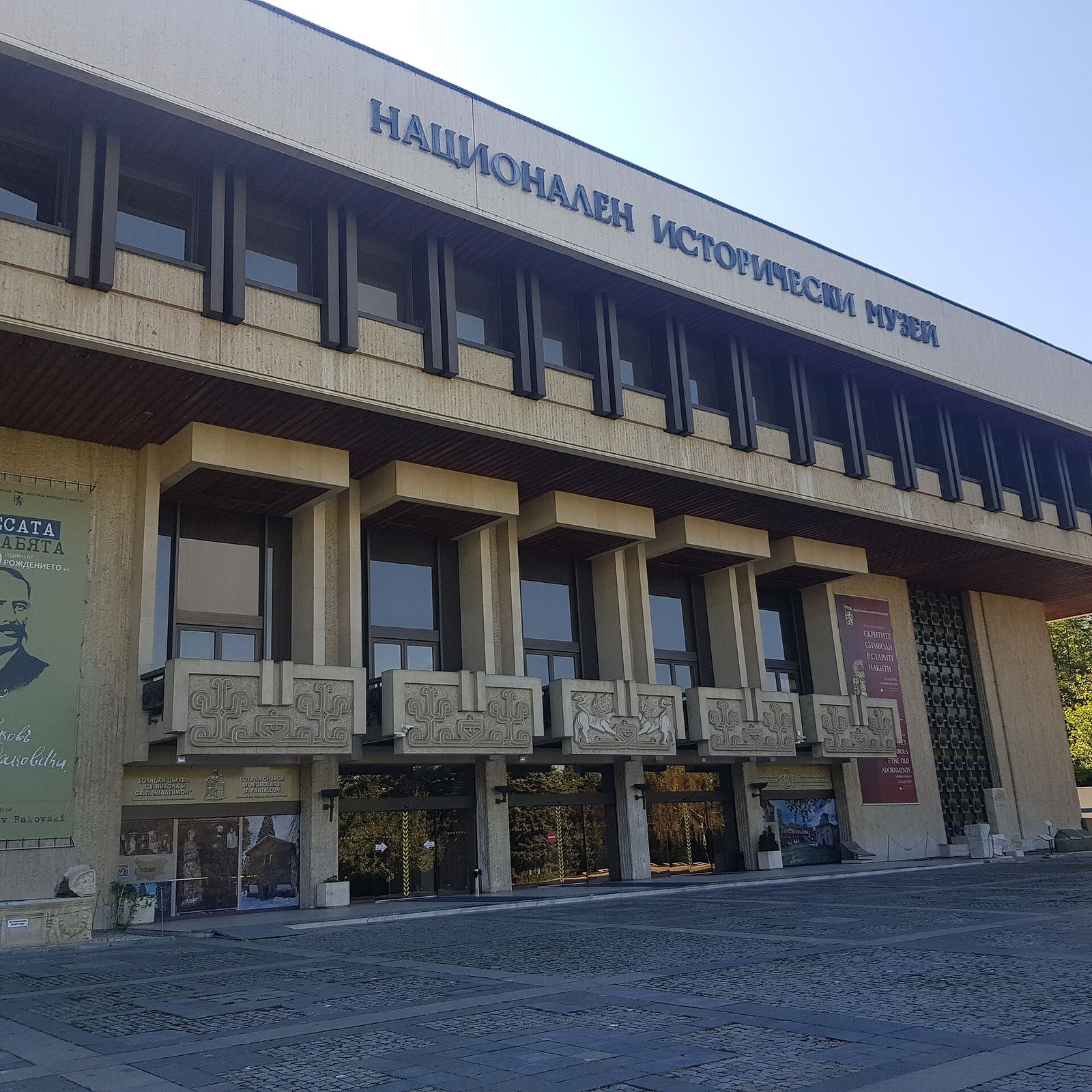
The National Historical Museum (Национален исторически музей) holds Bulgaria's national collection, and it lives at 16 Vitoshko Lale Street in the Boyana district, well south of the centre.
Founded on 5 May 1973, the museum opened its first big exhibition in 1984 inside the Palace of Justice on Vitosha Boulevard, to mark 1,300 years of the Bulgarian state. In 1998 the government handed the museum House No. 1 of the state residence at Boyana, and the new exhibition opened there on 29 June 2000.
The building is a long, stone-clad block with carved panels under the first-floor windows and its name in tall Cyrillic letters along the roofline.
With over 650,000 objects it's the largest museum in Bulgaria, and only about 10% of them are on show at any one time. Of all the museums in Sofia, it's the one I'd pick if you only do one, because 8,000 years fit under a single roof.
The museum also runs three places outside the building: Boyana Church up the hill, the Monastery of St John the Theologian at Zemen, and the Radetzky, a steamship at Kozloduy on the Danube. The museum is number 58 on Bulgaria's list of 100 National Tourist Sites.
National Historical Museum, Sofia History Museum or Natural History Museum?
The National Historical Museum is the only one of these four outside the centre, and at €9 for an adult it's also the dearest.
| Museum | Where | What's inside | Adult ticket |
|---|---|---|---|
| National Historical Museum | 16 Vitoshko Lale Street, Boyana | Bulgaria's national collection, from prehistory to 1946, with the Thracian gold | €9 |
| Sofia History Museum | 1 Banski Square, in the old Central Mineral Baths | The story of Sofia itself | €5 |
| National Museum of Natural History | 1 Tsar Osvoboditel Boulevard | Nearly 1.5 million specimens: minerals, birds, mammals and insects | €6.50 |
| National Archaeological Museum | 1 Atanas Burov Square, behind the Presidency | Archaeology in a former mosque | €6 |
If you pictured a museum in a grand old bathhouse covered in coloured tiles, you want the Sofia History Museum, which shares its building with the Central Mineral Baths and stands beside the hot springs where locals fill their bottles.
National History Museum tickets and opening hours
The museum publishes its 2026 prices and hours in euros, and the cash desk takes cash or card.
| Ticket | Price |
|---|---|
| Adult | €9 |
| Students and pupils | €2 |
| Pensioners and over-65s | €3 |
| Adult visiting with children | €3 each |
| Child over 7, visiting with a parent | €2 |
| Group of 10 or more | €6 each |
| Preschool children, and visitors with special needs plus a companion | Free |
The family rate is the bargain. Two adults and two children over 7 pay €10 between them, about £8.30, which is less than two pints at the average UK pub.
Everyone gets in free on 18 May, International Museum Day. On 17 September, Sofia's city day, and on 1 November, children, pupils and students go free and everyone else pays €2.
From 1 April to 30 September the doors are open from 9.30am to 7pm, and the ticket office closes at 6.15pm. From 1 October to 31 March it's 9.30am to 6pm, with last tickets at 5.15pm. It opens every day and closes only on 1 January, Easter Sunday and 24 and 25 December.
The museum's own guides charge €20 for a 90-minute overview in a foreign language, or €18 for a one-hour visit built around children. I go without one, since the case labels are in Bulgarian and English.
What's inside the National History Museum, hall by hall
The museum lists its permanent halls in date order, from Hall 1 and the 6th millennium BC to Hall 5 and 1946, with rooms for the Early Iron Age, Late Antiquity and folk costume in between.
Hall 1: prehistory and the Dabene gold
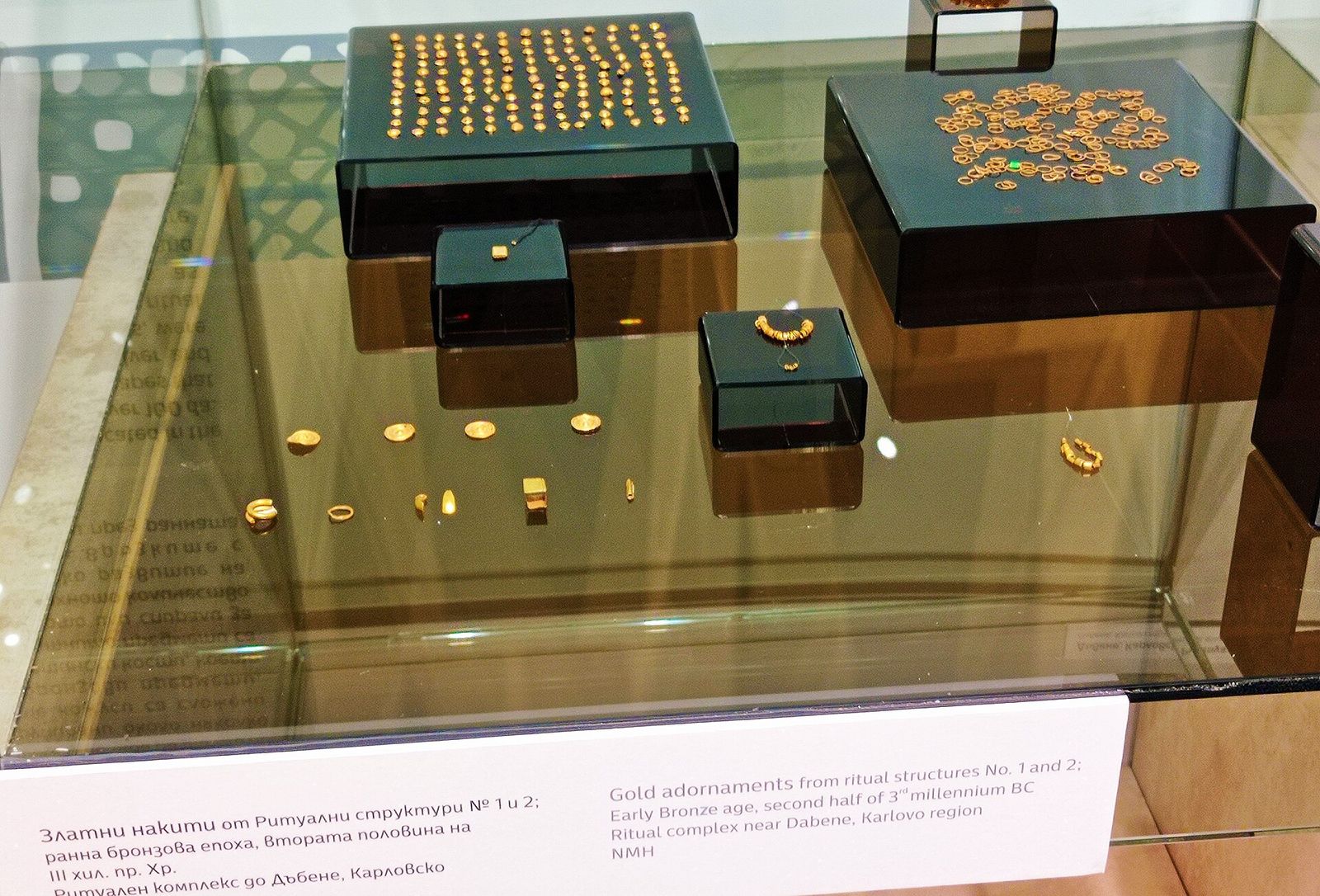
Hall 1 covers the Bulgarian lands from the start of the 6th millennium BC to the end of the 2nd, roughly 8,000 to 3,000 years ago. My favourite case here holds the gold from a ritual complex near Dabene, in the Karlovo region, made in the Early Bronze Age, in the second half of the 3rd millennium BC.
The beads and rings are tiny, and they sit in rows on black blocks like gold sprinkles on liquorice.
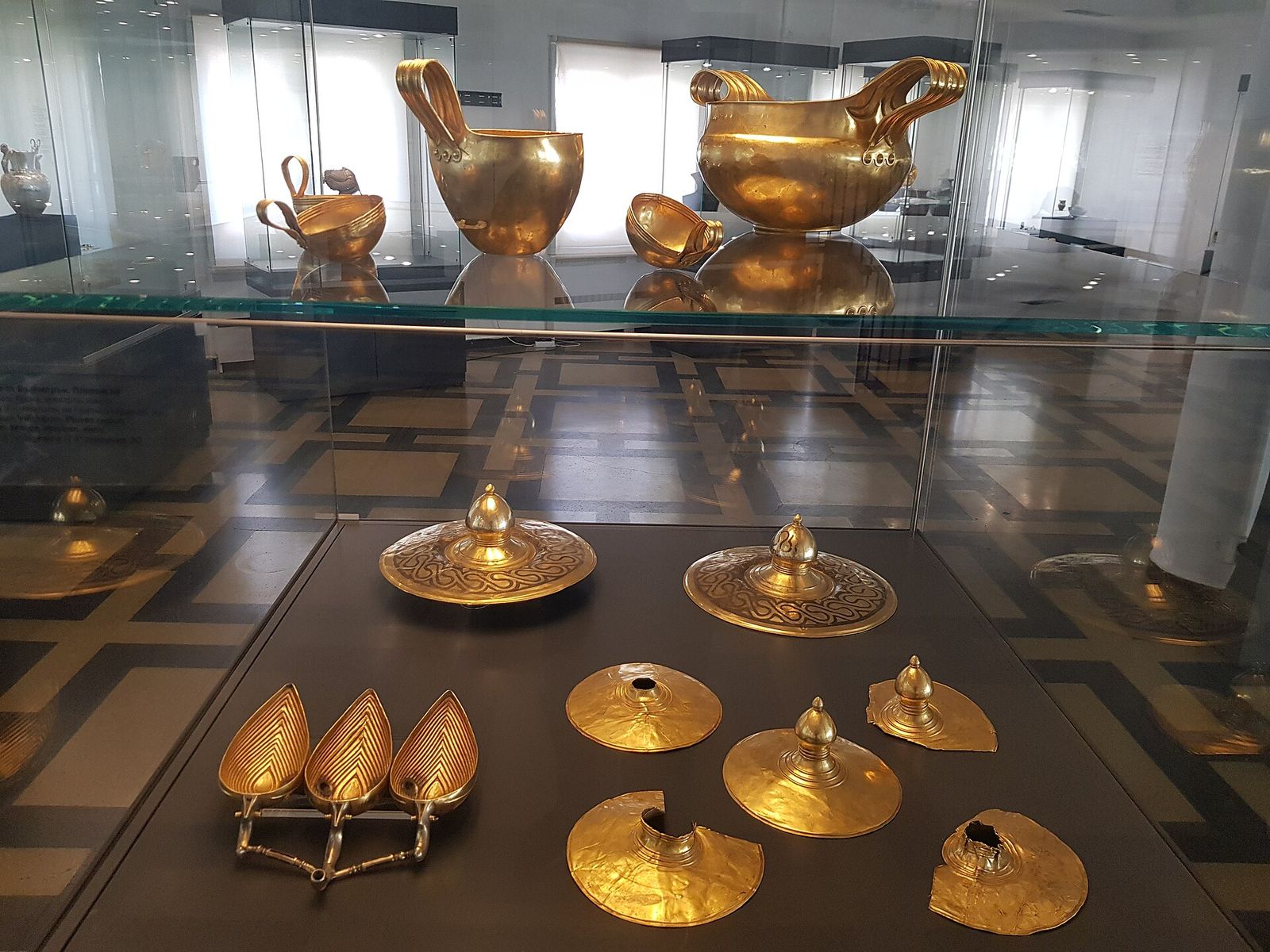
The other Bronze Age gold I always look for is the Valchitran treasure. Its big two-handled vessel is the showpiece, with cups, round lids and an odd triple cup made of three boat-shaped bowls joined together.
The Early Iron Age hall
Next comes the Early Iron Age, from the 11th century BC to the middle of the 6th. Thracian culture comes into view around 1000 BC and lasts until Rome made Thrace a province in AD 46, so this hall shows its first chapter. I treat it as the warm-up for Hall 2.
Hall 2: Thracian gold and silver
Hall 2 runs from the 5th century BC to the 3rd century AD, through the Thracian kingdoms and then Roman rule. It's the hall I'd cross town for.
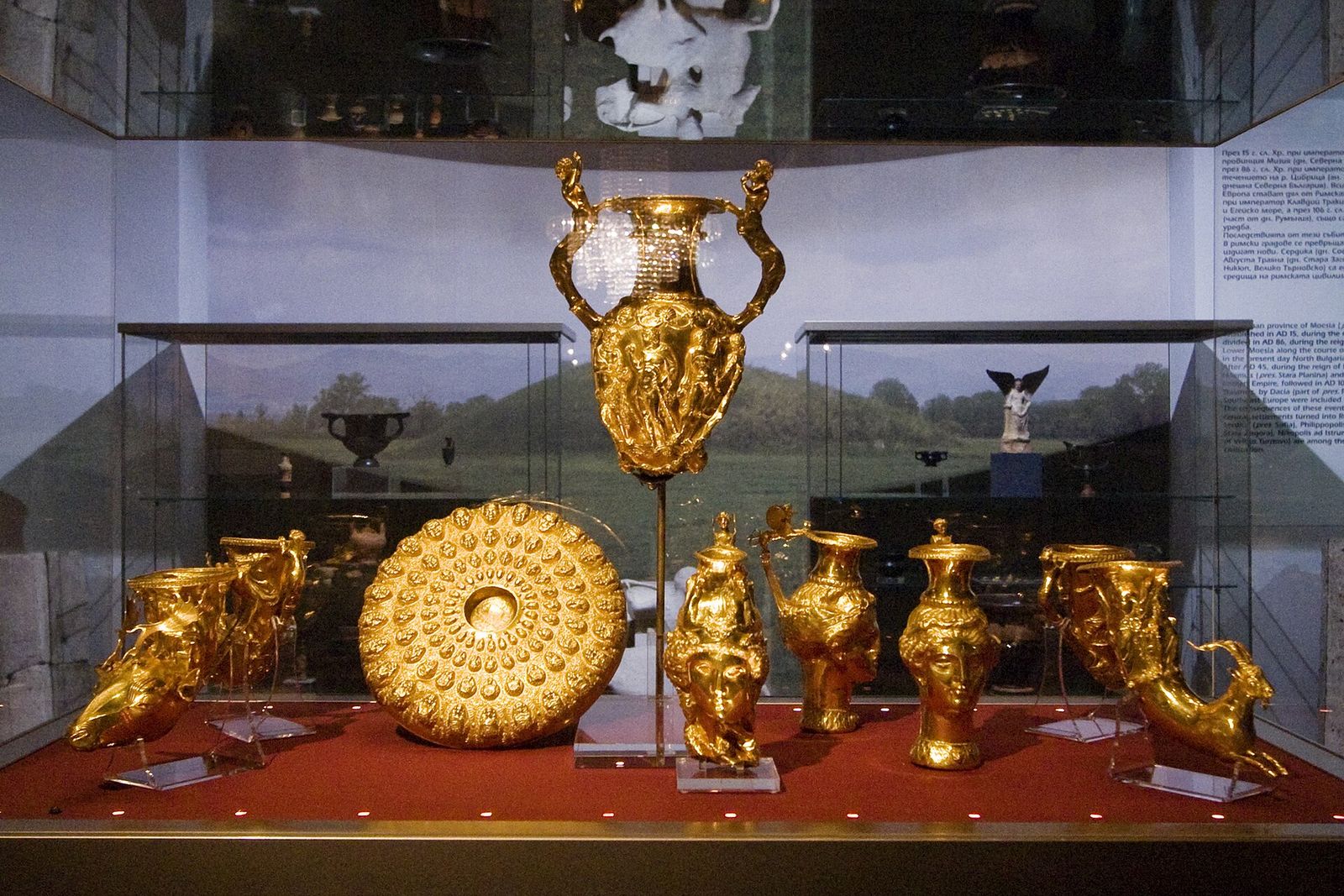
The headline is the Panagyurishte treasure: a drinking set of nine vessels in 24-carat gold, 6.164 kg of it, made at the turn of the 4th and 3rd centuries BC. Three brothers working at a tile factory near Panagyurishte found it on 8 December 1949. Look for the horn-shaped rhyta that end in the heads of animals, and the jugs shaped like women's heads. The Thracians drank wine from sets like this, and it's the first case I show friends who come to Sofia for Bulgarian wine.
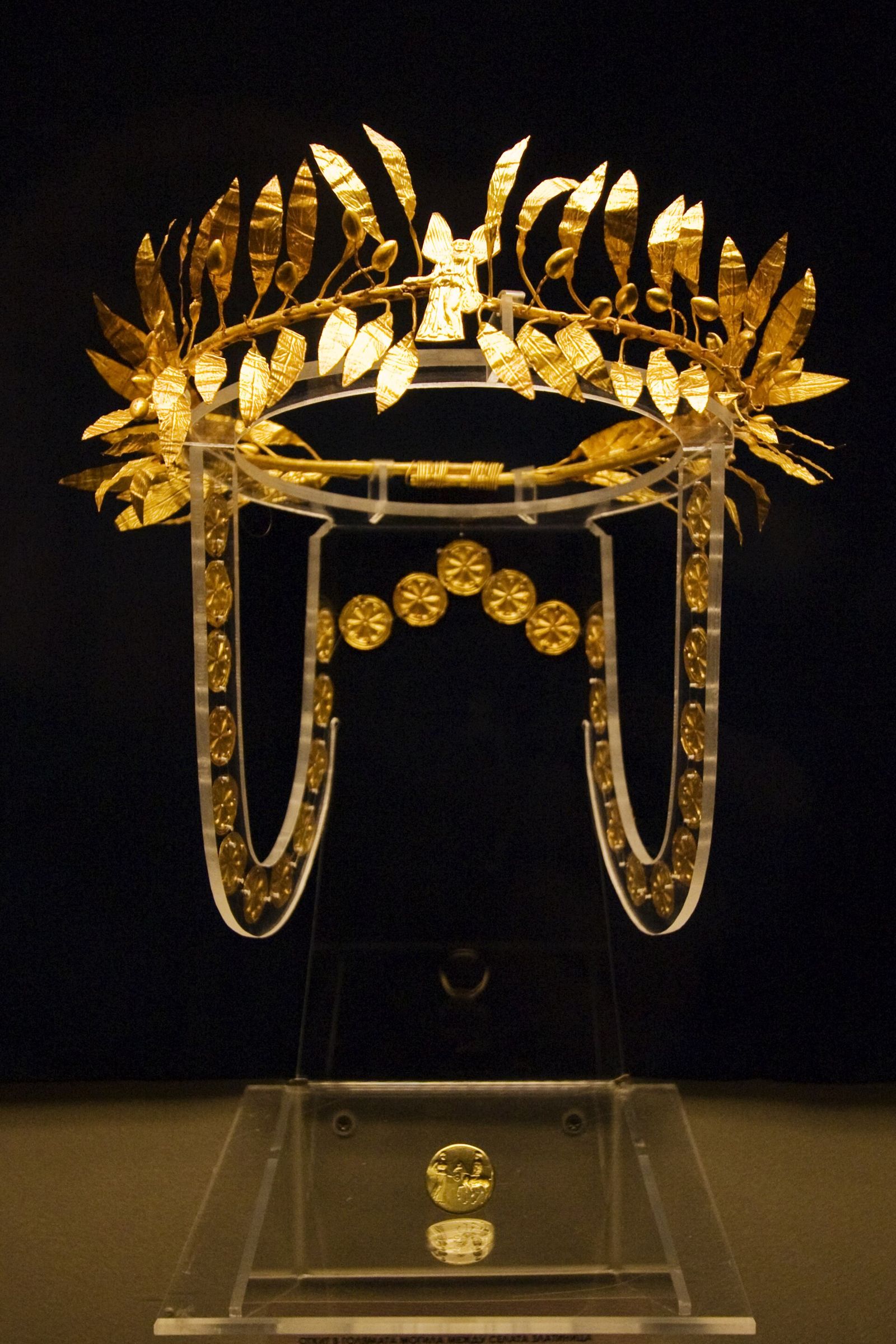
My own favourite in this hall is smaller: a gold wreath from the Golyamata Mogila tumulus, buried with an aristocrat of the Odrysian kingdom, a Thracian state, in the middle of the 4th century BC. A tiny winged figure stands at the front, and the thin gold leaves still look ready to wear.
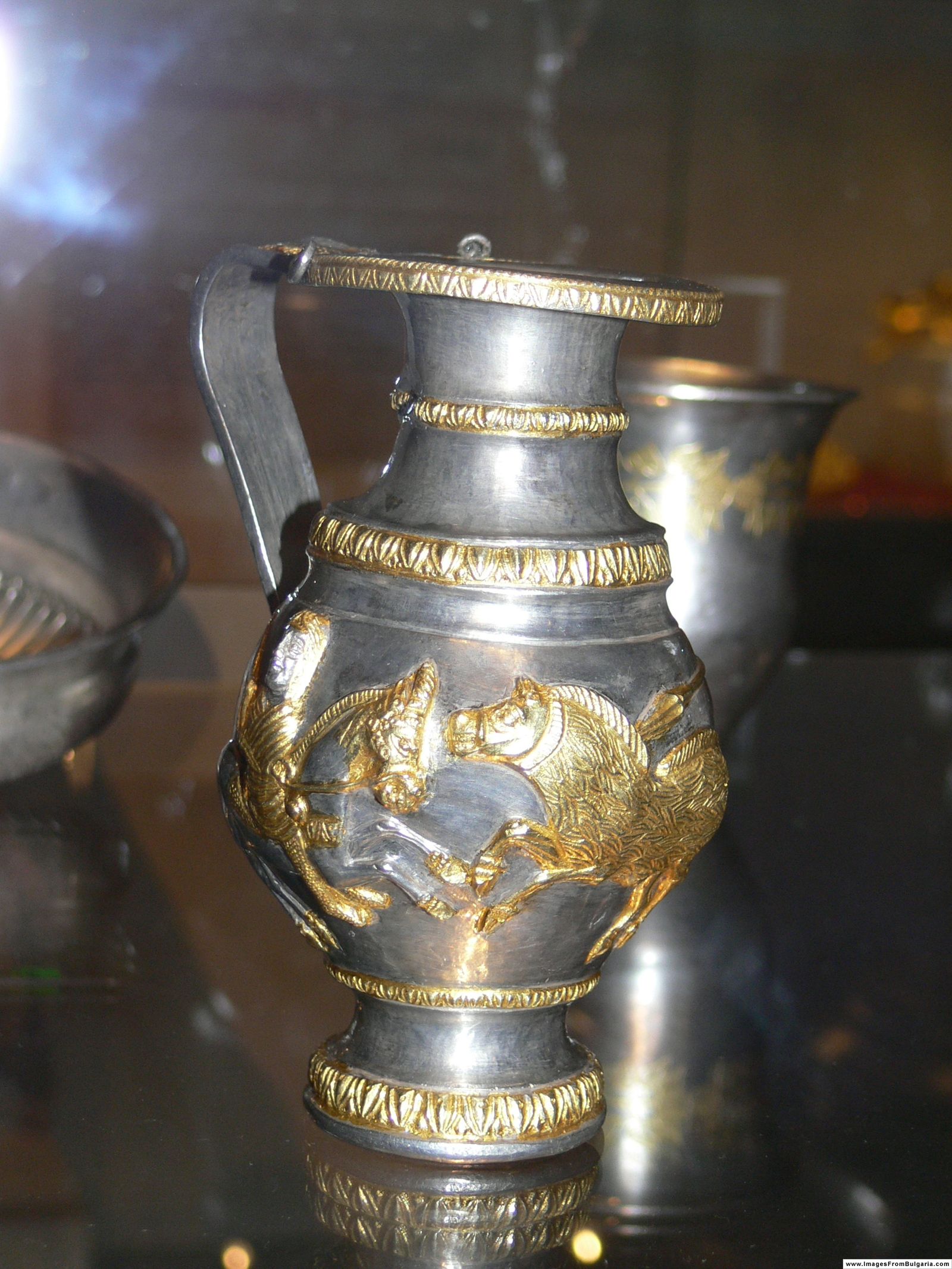
Part of the Rogozen treasure is here too, Thracian silver from the Vratsa region in the north-west, with gilded figures worked into the metal. More of the hoard is on show in the regional museum in Vratsa. The jug I always stop at has gilded animals wrapped round its belly and gold bands at the neck and foot.
The Roman end of the hall moves on to the province of Moesia and to cities such as Serdica, Sofia's Roman name. You can walk Serdica's Roman streets back in town, around Serdika metro station, where they turned up while the metro was being built.
The Late Antiquity hall
Late Antiquity gets a room of its own, with objects from today's Bulgarian lands that track the big political, economic and religious changes of the late Roman world. In Sofia, the same period gave the city the 4th-century Rotunda of St George, still standing in a courtyard behind the Presidency.
Hall 3: medieval Bulgaria, 7th to 14th century
Hall 3 covers the Bulgarian state in the Middle Ages. That's the stretch of Bulgarian history from Khan Asparuh founding the state in 681, through the Golden Age of Simeon I, who ruled from Preslav between 893 and 927, to the Second Bulgarian Empire, with its capital at Tarnovo from 1185. Cyrillic took shape at the Preslav Literary School at the end of the 9th century and has been in official use since 893.
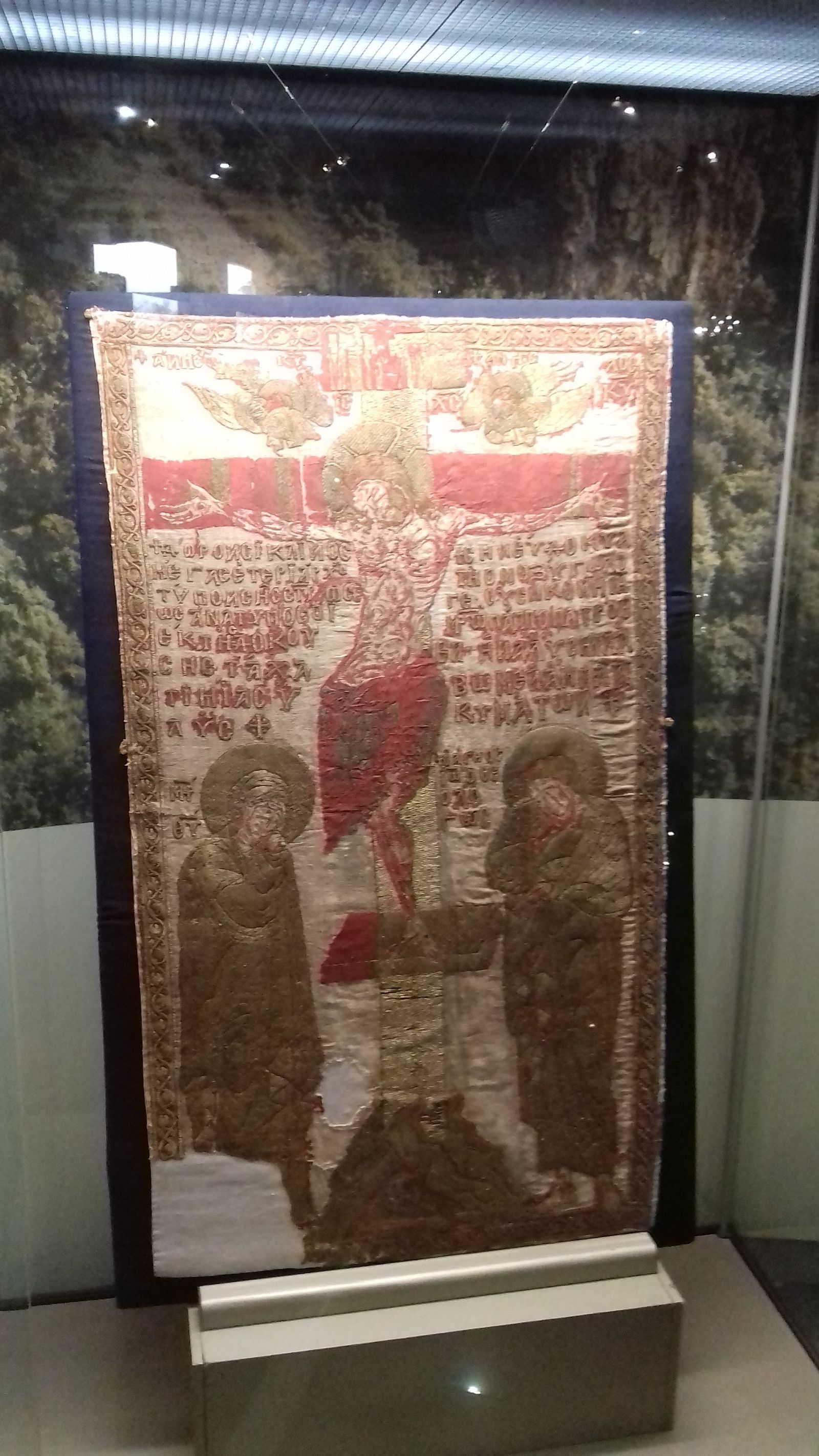
The piece I go back for is a 13th-century podea, the embroidered cloth that hung beneath an icon, from the Church of the Holy Mother Perivleptos in Ohrid. Its Crucifixion is worked in red and gold, and the lettering around the cross is still sharp after more than 700 years.
Hall 4: Bulgaria under Ottoman rule
Hall 4 covers the 15th to the 19th century, when Bulgaria was part of the Ottoman Empire. Tarnovo fell in 1393 and Vidin in 1396, and Ottoman rule lasted until 1878. The hall follows the Bulgarian national movement through those centuries, up to the April Uprising of 1876. It was crushed. It also turned opinion in Britain, Gladstone's included, towards the Bulgarian cause.
The ethnography hall: folk costumes
The ethnography hall is the most colourful room in the building, with Bulgarian folk costumes from the late 19th and early 20th centuries and displays on the customs of the calendar year. The calendar displays cover the customs behind Bulgaria's festivals and holidays, so they're worth a slow lap if your trip lands on one.
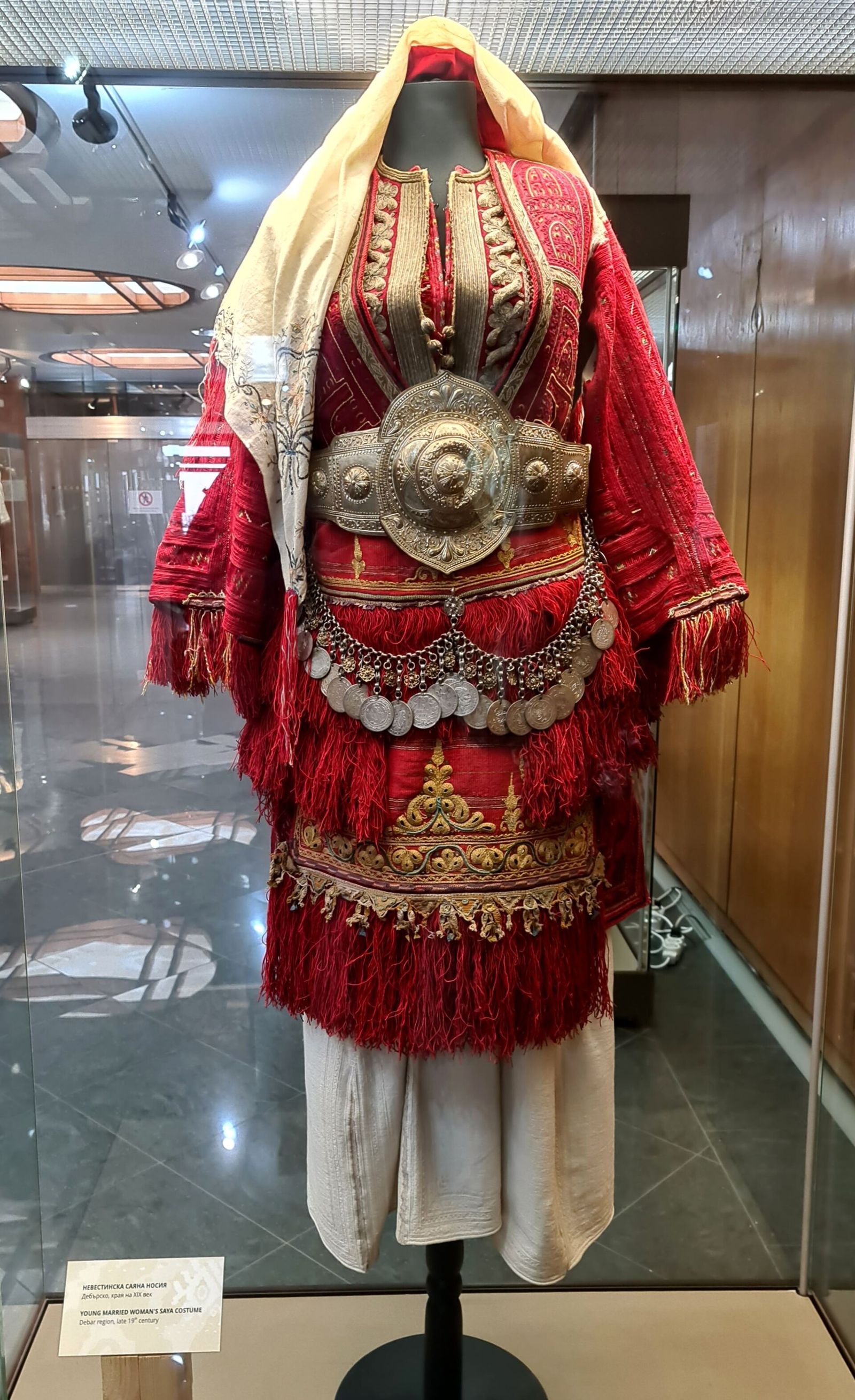
The costume I'd point you to is a young married woman's sayan from the Debar region, late 19th century. It has deep red fringes, a silver belt buckle the size of a side plate and rows of coins hanging at the waist.
Hall 5: the Third Bulgarian Kingdom, 1878 to 1946
Hall 5 picks up at the Liberation in 1878 and runs to 1946, the years of the Third Bulgarian Kingdom. Inside that span sit the union with Eastern Rumelia in 1885, independence on 22 September 1908, the Balkan Wars of 1912 and 1913, and both world wars. For the communist decades that came after, I go to the Museum of Socialist Art, where Lenin and Georgi Dimitrov stand in a sculpture garden.
The smaller rooms and collections
The museum keeps a run of smaller permanent displays, and I'd give them 20 minutes at the end.
| Room | What's in it |
|---|---|
| The Boyan Radev donation | Sports awards and cultural pieces collected by Boyan Radev, twice Olympic champion in classical wrestling |
| Antarctica, the Bulgarian icy tale | On show since 2012: a group of young Bulgarian scientists and their Antarctic dream |
| Anchors and stocks | A lapidarium of the earliest finds from ancient shipping along the western Black Sea coast |
| Zemen Monastery | Icons and church furnishings from its Church of St John the Theologian |
How long you need at the National History Museum
I give it 2 hours. That covers Halls 1 to 5 at a steady pace with a proper stop at the Thracian gold. There's a cafe and a cloakroom, and souvenirs are sold at the cash desk, so a longer visit with a coffee in the middle is easy.
| Time you have | What I'd see |
|---|---|
| 1 hour | Hall 2 for the Thracian gold and silver, then the Dabene and Valchitran gold in Hall 1 |
| 2 hours | Halls 1 to 5 in order, with the longest stop in Hall 2 |
| 3 hours | Everything above, plus the ethnography hall, the smaller rooms and every label |
How to get to the National History Museum
The museum is at 16 Vitoshko Lale Street in Boyana. I take a taxi out: it's about 20 minutes from Serdika in the centre, and on the OK Supertrans day tariff of €1.50 to start and €0.75 a kilometre it comes to about €8 to €10. I use a yellow cab with its tariff printed on the side window, the way licensed Sofia taxis show it, and ask for the meter.
Buses 63, 111 and 304 and trolleybus 2 all serve the museum. A ride costs €0.80 with a Ticket 30 plus or a tap of your bank card at the validator, and the contactless fares stop at €2 a day however many rides you take. Bus 63 starts from Tsar Boris III Boulevard and carries on up to Golden Bridges on Vitosha, so it suits a day that ends on the mountain.
| Option | Details | Cost |
|---|---|---|
| Taxi | About 20 minutes from Serdika; ask for the Национален исторически музей | About €8 to €10 by day |
| Bus 63 | From Tsar Boris III Boulevard, continuing to Golden Bridges | €0.80 |
| Buses 111 and 304, trolleybus 2 | All stop by the museum | €0.80 |
| On foot from Boyana Church | About 25 minutes downhill, or 10 minutes by car | Free |
The National History Museum and Boyana Church in one morning
Boyana Church joined the museum in 2003, and it's number 9 on my list of favourite things to do in Sofia. Most of its frescoes were painted in 1259, and UNESCO listed it in 1979.
| Time | What | Cost |
|---|---|---|
| 9.30am | Museum opens: Hall 2 first, then Halls 1, 3, 4 and 5 | €9 |
| 11.30am | Coffee at the museum cafe, then the walk uphill to the church, about 25 minutes | Free on foot |
| 12.15pm | Boyana Church: 10 minutes with the 1259 frescoes, then the garden | €10 |
| 12.45pm | Taxi back to the centre for lunch | About €8 to €10 |
Only 9 people go into the church at a time, for at most 10 minutes in the medieval rooms, and photos are banned outright, phones included. The church's visiting rules let individuals and groups of up to 5 turn up without booking. Adults pay €10, and students and children over 7 pay €3. Giant sequoias stand in the park around it, and Queen Eleonore, the wife of Tsar Ferdinand, is buried beside the church.
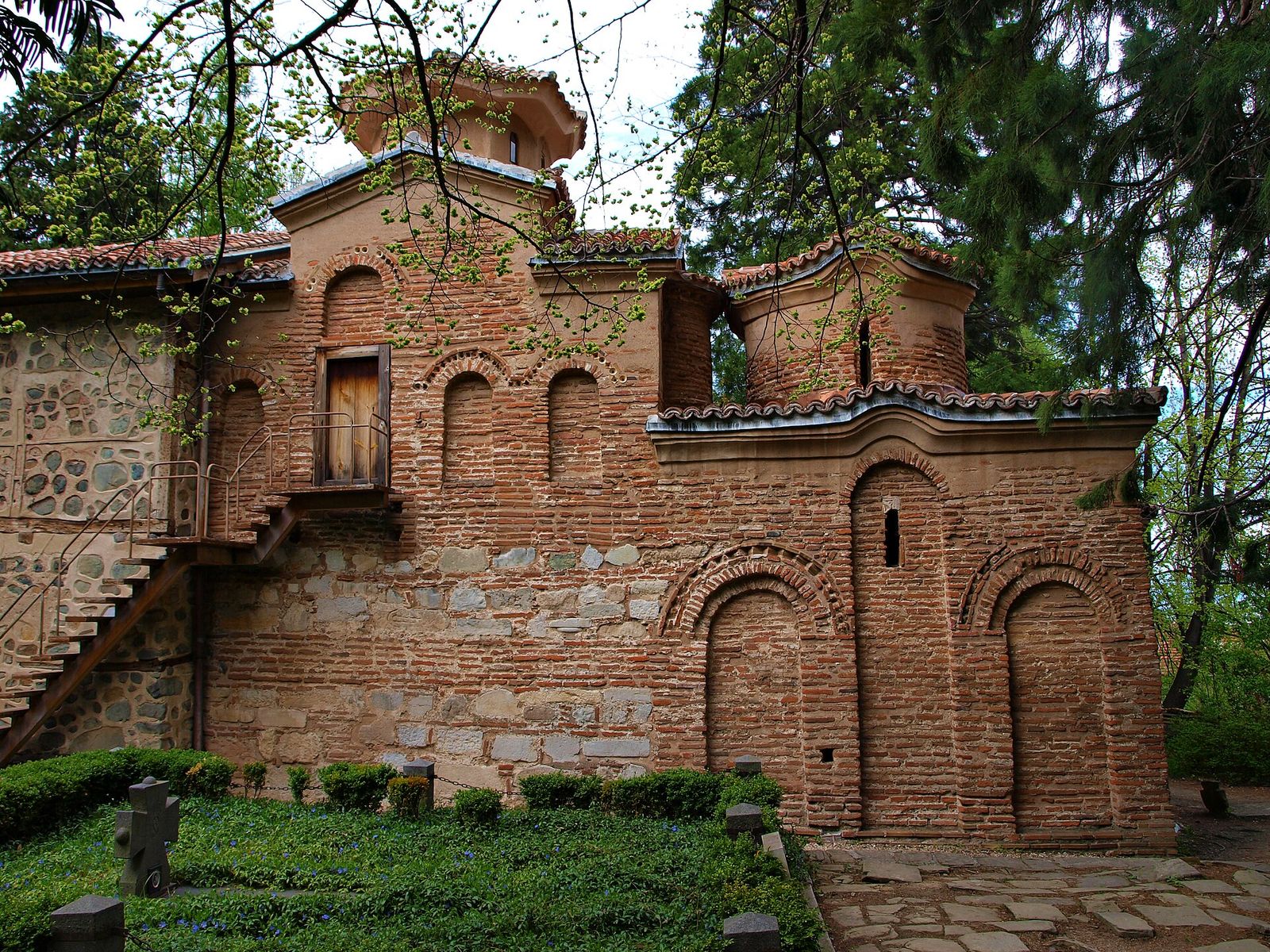
With a full day, the trail to Boyana Waterfall starts in the same neighbourhood, about 3 hours up, and it's one of my favourite day hikes near Sofia.
A few dates make the pair cheaper.
| Date | National Historical Museum | Boyana Church |
|---|---|---|
| 18 May, International Museum Day | Free | Free |
| 17 September, Sofia Day | €2, free for children and students | Free |
| 1 November | €2, free for children and students | Free |
| Last Monday of the month, after 3pm | €9 | Free |
Key takeaways
- The National Historical Museum in Boyana is Bulgaria's largest museum, and 10% of its 650,000 objects fill three floors.
- Hall 2 is the highlight, with the Panagyurishte set, the Golyamata Mogila wreath and Rogozen silver.
- Tickets are €9 for adults, or €3 per adult and €2 per child over 7 on the family rate, and the doors open daily at 9.30am, Mondays included.
- A taxi from Serdika takes about 20 minutes, and Boyana Church is a 25-minute walk uphill for €10 more.
Frequently asked questions
How long does it take to walk around the National History Museum?
About 2 hours covers Halls 1 to 5 with a proper stop at the Thracian gold. One hour is enough for Hall 2 and the Bronze Age gold, and three hours lets you add the ethnography hall and read every label.
Why is the National Historical Museum important?
It holds Bulgaria's national collection, more than 650,000 objects from the 6th millennium BC to the 20th century, which makes it the largest museum in the country. It also looks after Boyana Church, on the UNESCO list since 1979.
Is the National History Museum in Sofia open on Mondays?
Yes, it opens every day from 9.30am. It closes only on 1 January, Easter Sunday and 24 and 25 December.
Is the Panagyurishte treasure in the National History Museum?
The museum shows the Panagyurishte set in Hall 2, though the real gold goes out on loan abroad and replicas stand in while it's away. Ask at the cash desk on the day if the originals are what you came for.
How do I get to the National History Museum from Sofia centre?
A taxi from Serdika takes about 20 minutes and costs about €8 to €10 by day. Buses 63, 111 and 304 and trolleybus 2 also stop at the museum, at €0.80 a ride.
Is the National History Museum the same as the Sofia History Museum?
No. The National Historical Museum is the national collection out in Boyana, and the Sofia History Museum tells the city's own story inside the old Central Mineral Baths at 1 Banski Square. Adults pay €9 at the first and €5 at the second.
What are some interesting historical facts about Bulgaria?
Bulgaria dates its state to 681, so it has more than 1,300 years of history as a country. Cyrillic took shape in the Bulgarian Empire at the end of the 9th century, and Ottoman rule lasted from 1396 to 1878. The Panagyurishte gold in Hall 2 is older than all of that, made around 300 BC.
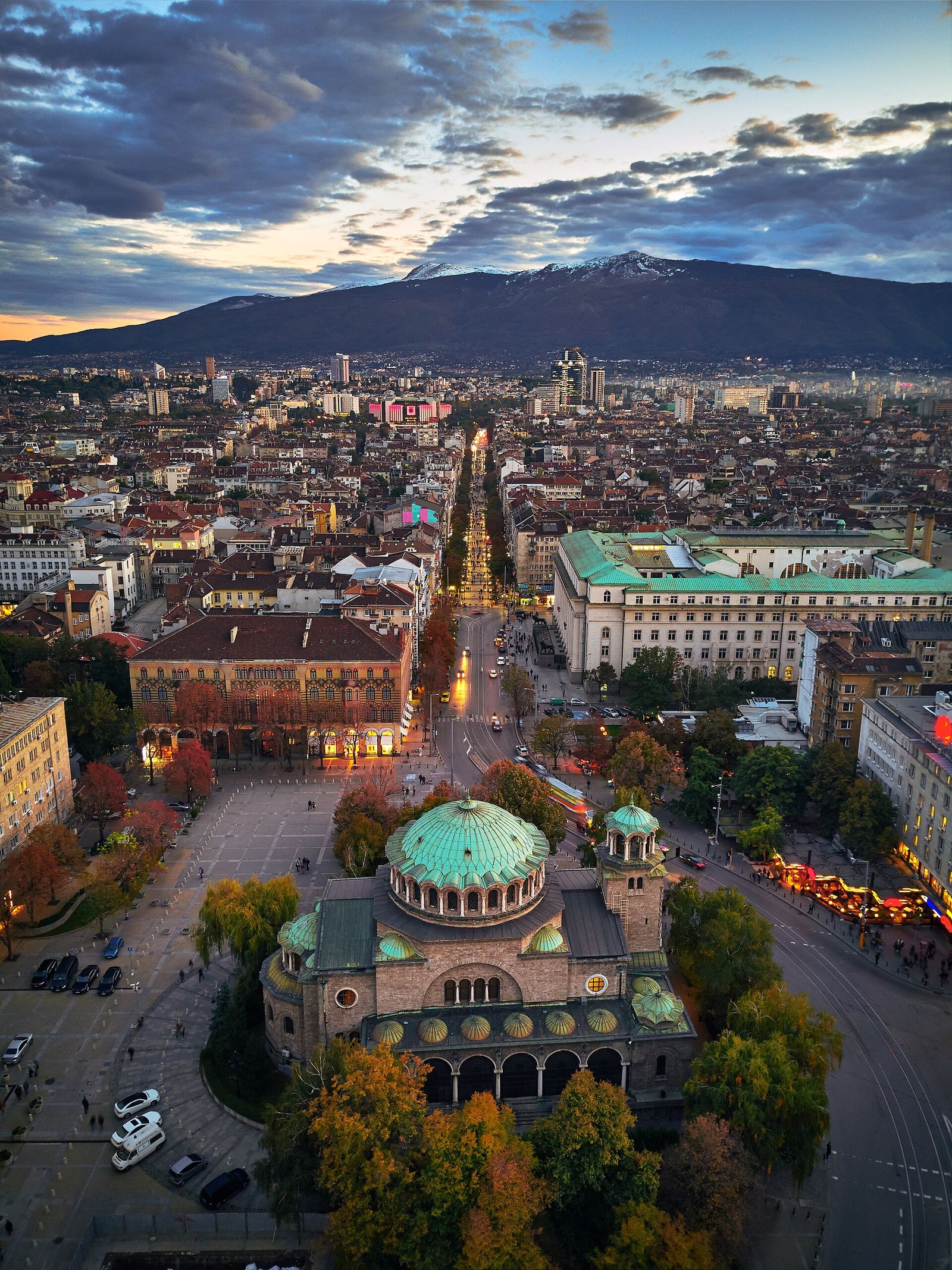
11 Best Things to Do in Sofia: My Personal Favourites
The best sights in Sofia sit close together and most are free. My 11 favourites, with prices, hours and a weekend plan.
Read the guide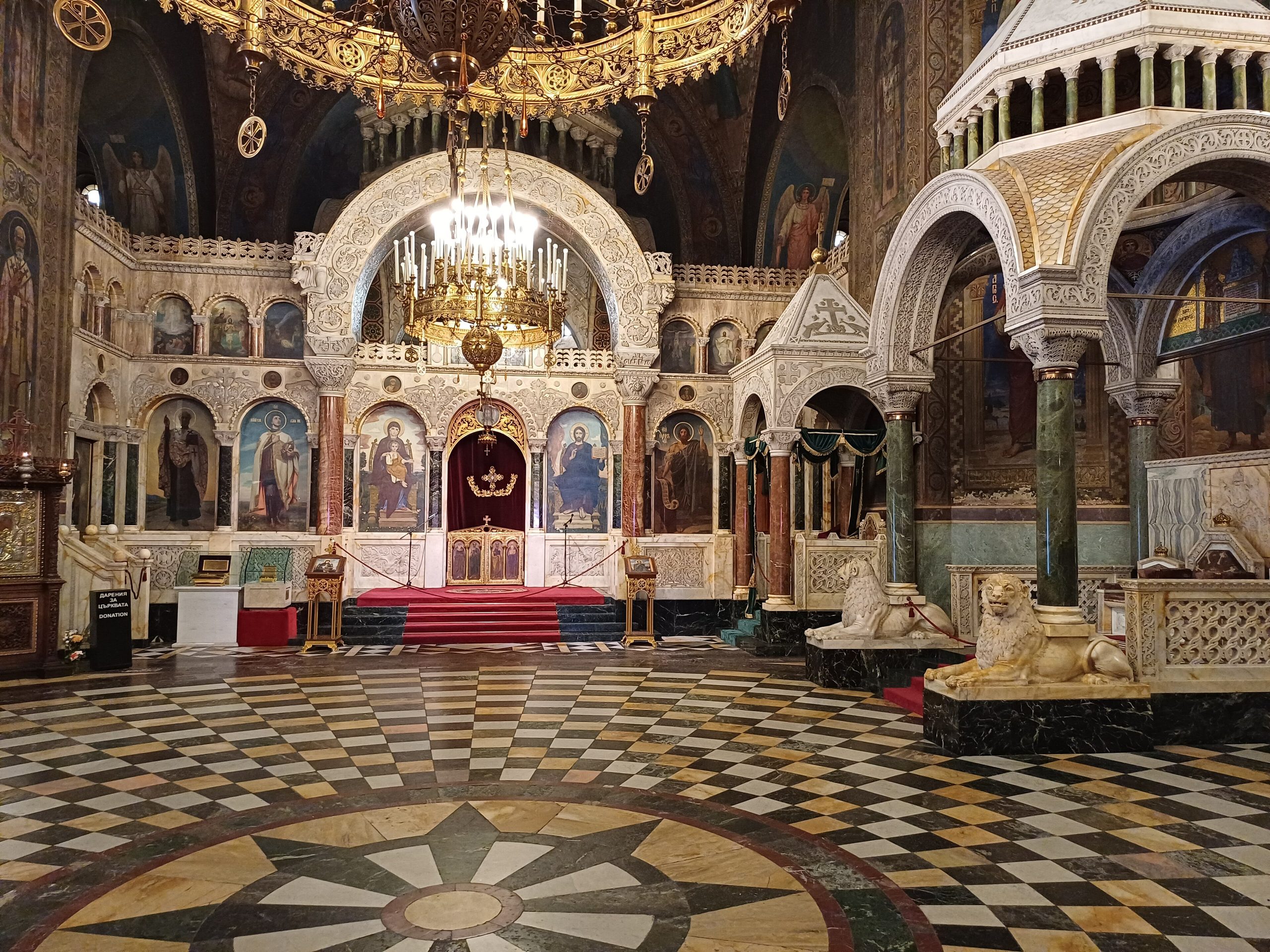
Alexander Nevsky Cathedral in Sofia: My Guide to Visiting
Sofia's gold-domed cathedral is free and open every day. How I visit it, from the crypt icons to the market outside.
Read the guideBoyana Church in Sofia: The Frescoes and How I'd Visit
A tiny UNESCO church at the foot of Vitosha, painted in 1259. What it costs, the rules and how I fit it in.
Read the guide