Ancient Serdica in Sofia: Where to See the Roman Ruins
Sofia is built on a Roman city, and the best of it lies open in and around Serdika metro station. You can walk Ancient Serdica's streets on the Largo for nothing and pass a Roman gate on the way to your train, and the covered dig next door costs €3. Here's how I do it: hours and tickets, both gates, the mosaics, the tombs under St Sofia and my route round the lot.
What the Serdica ruins are
Serdica was the Roman city under today's Sofia, built beside the hot springs where the old Central Mineral Bath stands now. It sat on the Via Militaris, the Roman army road across the Balkans, and grew into a city of paved streets, churches and baths. Its best years ran from the 4th to the 6th centuries, with older parts from the 2nd and 3rd.
The big find came between 2010 and 2012, when work on the second metro line opened up the ground around Serdika station. The Museum of the History of Sofia now runs the site as the Serdica Ancient Cultural and Communicative Complex, a mouthful I've never heard anyone say out loud. Everyone I know calls it Serdika, after the station, or the ruins on the Largo.
Ancient Serdica sits at number 3 on my list of the 11 things I'd do in Sofia, because you walk a 1,600-year-old Roman street on your way to catch a train.
Serdica opening hours and tickets
The ruins come in two parts. The open-air Largo zone, under Nezavisimost Square (площад Независимост), is free and open every day from 7am to 10pm. The covered archaeological exhibition, at 2 Maria Luiza Boulevard where the boulevard leaves the Largo, is the ticketed part, open Tuesday to Sunday from 10am to 6pm with last entry at 5.30pm.
The open-air remains cost nothing. Three stops on my route have a ticket desk, and none charges more than €5.
| Roman site | Price | Where |
|---|---|---|
| Largo open-air streets | Free | Nezavisimost Square |
| Eastern Gate | Free | Underpass by Serdika metro |
| Roman street at the Rotunda | Free | Courtyard behind the Presidency |
| Covered Serdica exhibition | €3 adults, €1.50 reduced | 2 Maria Luiza Boulevard |
| Roman tombs under St Sofia | €4 adults, €1.50 reduced | 2 Parizh Street |
| Museum of the History of Sofia | €5 adults, €2 reduced | 1 Banski Square |
At the covered exhibition, children under 7 go in free, a family ticket for 2 adults and up to 3 children costs €6, and groups of 10 to 20 pay €2 a head.
The Largo: Serdica's free open-air streets
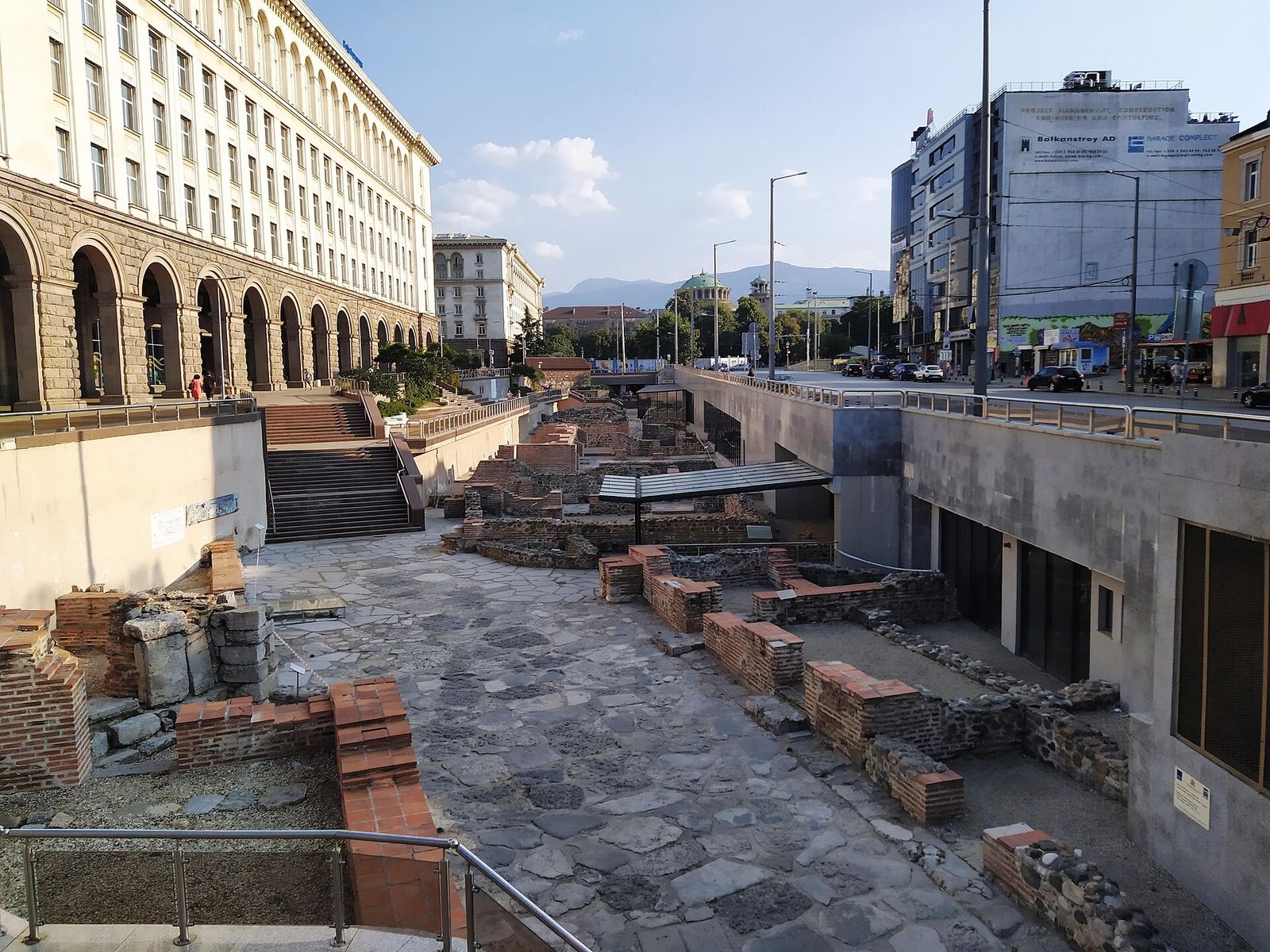
The Largo is the big square at the centre of Sofia, lined with the stone government blocks of the communist years. The Presidency stands on one side, the Council of Ministers on the other, and the former Communist Party House closes the far end, with НАРОДНО СЪБРАНИЕ (National Assembly) now written across its front.
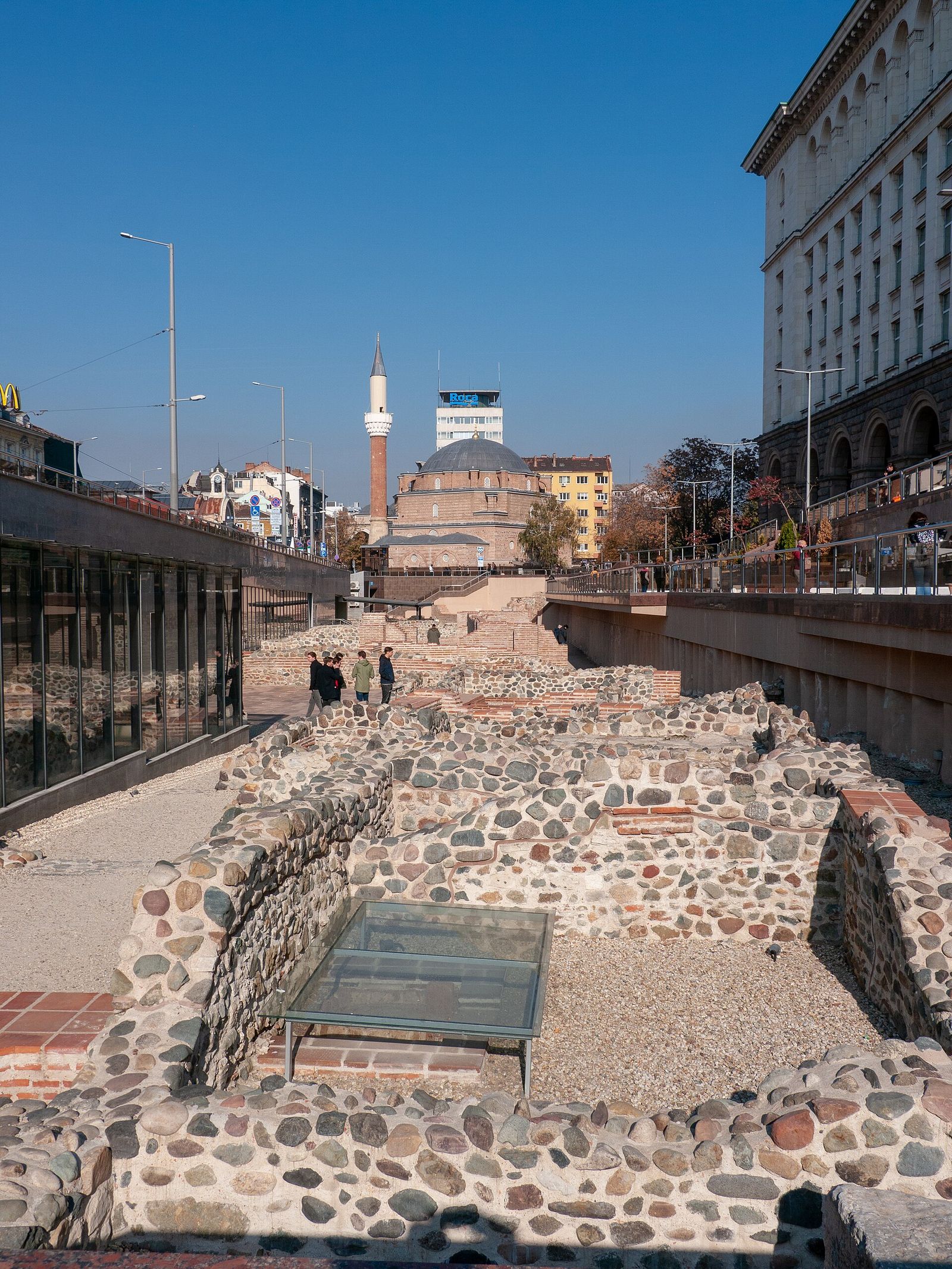
In the sunken dig on the square lies a stretch of the decumanus maximus, the main Roman street that ran between Serdica's eastern and western gates. Along it you'll see a large house that filled a city block, with small shops, and a lapidarium, a yard of carved Roman stones. You look down on it from the railings first, then take the steps down and walk the old paving yourself.
The Eastern Gate in the underpass
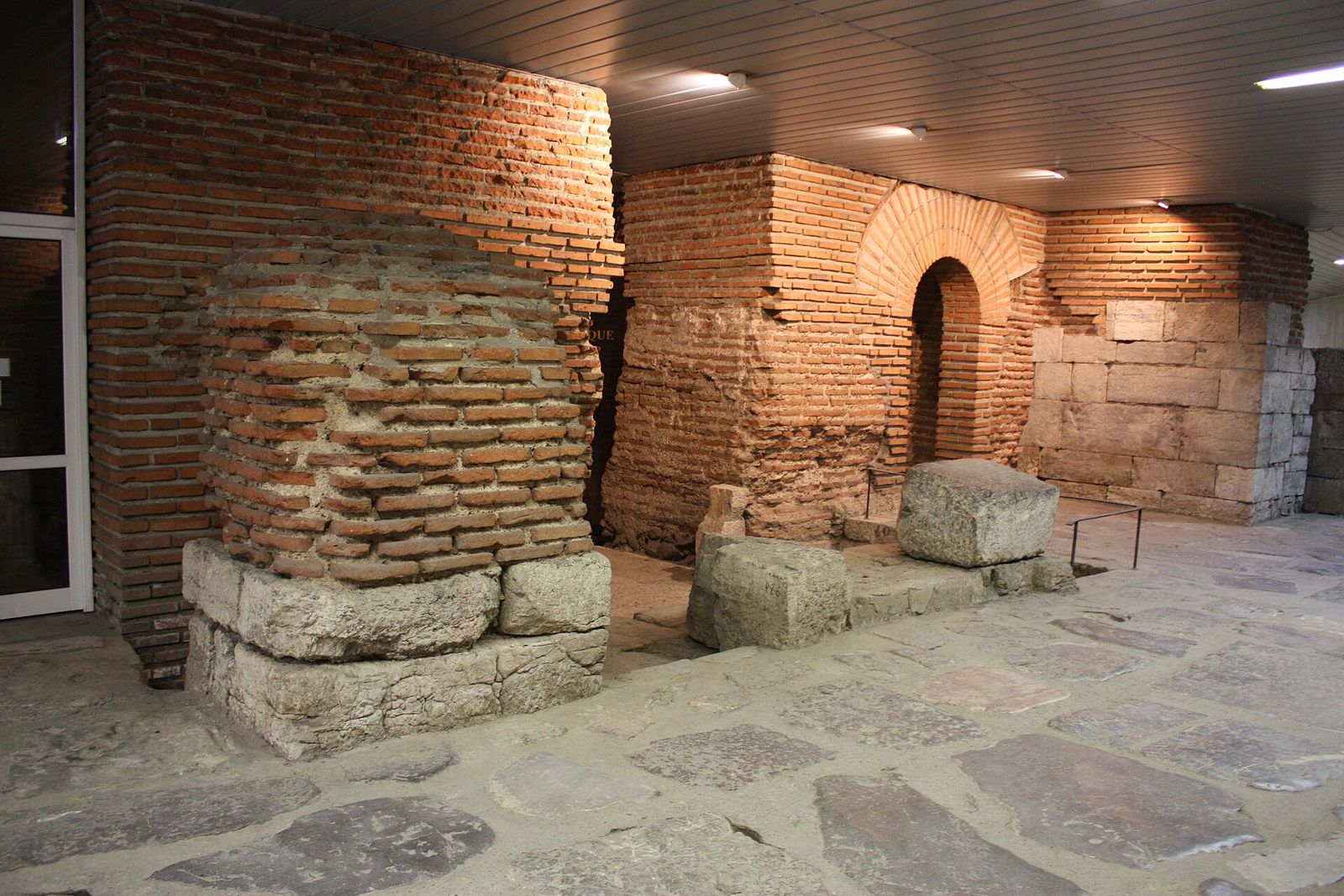
Head down into the underpass and the Eastern Gate of Serdica stands right in the passage on the way to the trains. You get brick towers on big stone bases, a brick archway and the stone slabs of the road that came in through it.
St Petka of the Saddlers
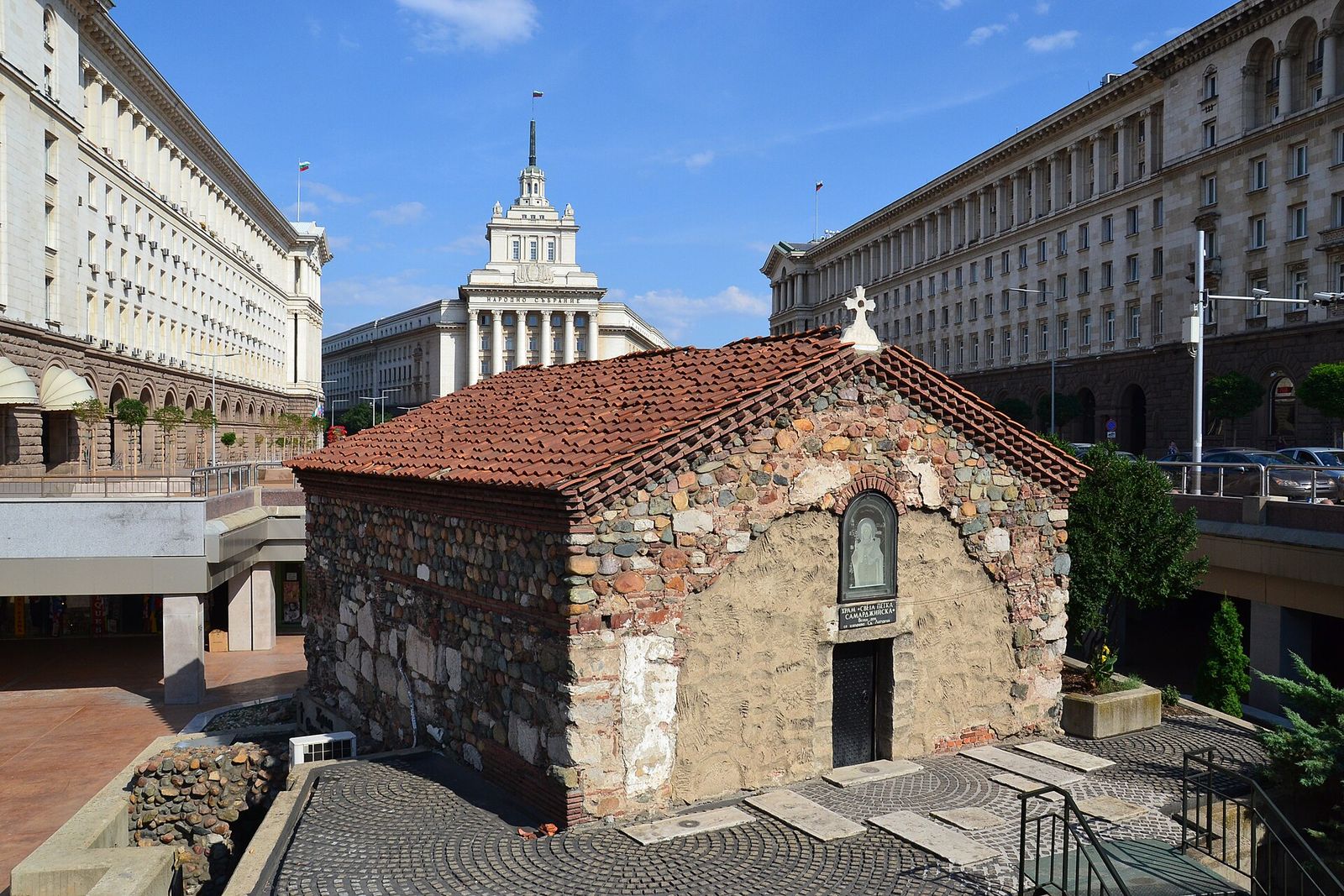
Sunk below street level in the middle of the Largo sits St Petka of the Saddlers (Света Петка Самарджийска), a tiny church of river stones and brick under a tiled roof. The present building dates from the 11th century, and the frescoes inside run from the 14th to the 19th. It's my favourite of the small churches in Sofia, and from its steps you see the Party House framed between the government blocks.
The covered Serdica exhibition on Maria Luiza Boulevard
The ticketed part covers about 6,000 square metres under a roof where Maria Luiza Boulevard leaves the Largo. It holds parts of 6 Roman streets, 2 early Christian basilicas, a bath house and 5 buildings that were homes, workshops and shops. Most of the buildings had their own heating system and a private bath.
One of the basilicas is the Episcopal basilica of Protogenes, where the Council of Serdica probably met in 343, and at the end of the 6th century Archbishop Leontius had his residence on the site. The piece I come back for is the Felix mosaic, preserved complete in one of the buildings.
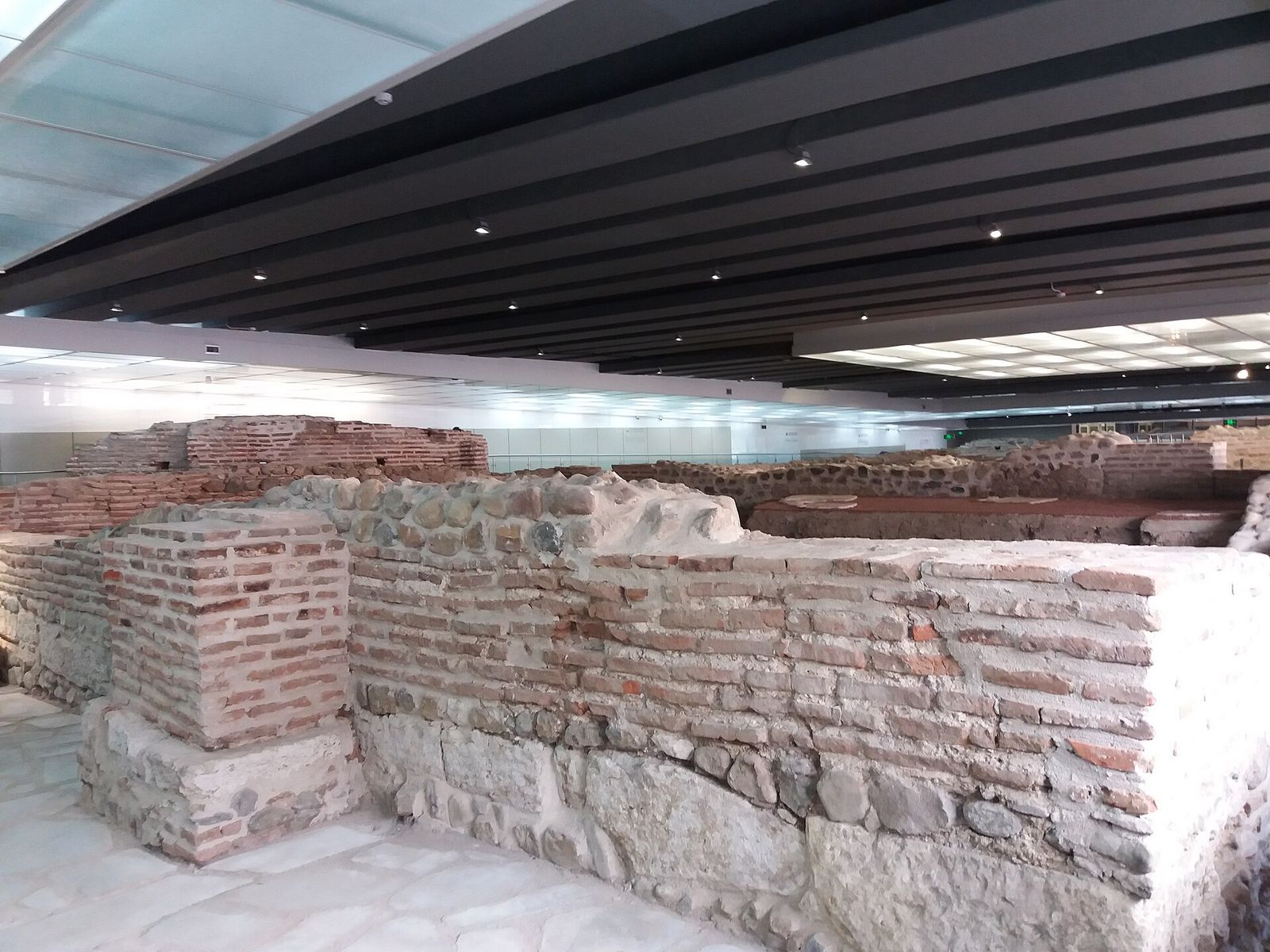
At €3, it's the cheapest of the three tickets on my route, and I give it 40 minutes. Before a bank holiday, I check the hours for both zones on the museum's Serdica complex page.
My route round Roman Sofia
Every Roman site in the centre sits within about 10 minutes' walk of Serdika metro, except the tombs under St Sofia, about 15 minutes east. This is the order I walk them in: west to east along the old main street, then north to the springs.
| Stop | What to look for | Time |
|---|---|---|
| 1. Western Gate | Gate tower, Roman road, basilica floor | 10 minutes |
| 2. St Nedelya Square | St Nedelya church, on Roman ground | 5 minutes |
| 3. Rotunda of St George | A 4th-century church and a paved Roman street | 15 minutes |
| 4. The Largo | The decumanus, a house with shops, carved stones | 15 minutes |
| 5. Eastern Gate and St Petka | Gate towers in the underpass, a medieval church | 10 minutes |
| 6. Covered exhibition | 6 streets, 2 basilicas, the Felix mosaic | 40 minutes |
| 7. Banya Bashi and the springs | A mosque over a Roman bath-house, hot taps | 15 minutes |
| 8. Central Market Hall | Roman wall and bath remains in the basement | 10 minutes |
Without the covered exhibition, that's about 80 minutes of walking and looking for €0. With it, call it 2 hours and €3.
The Western Gate beside St Joseph's Cathedral
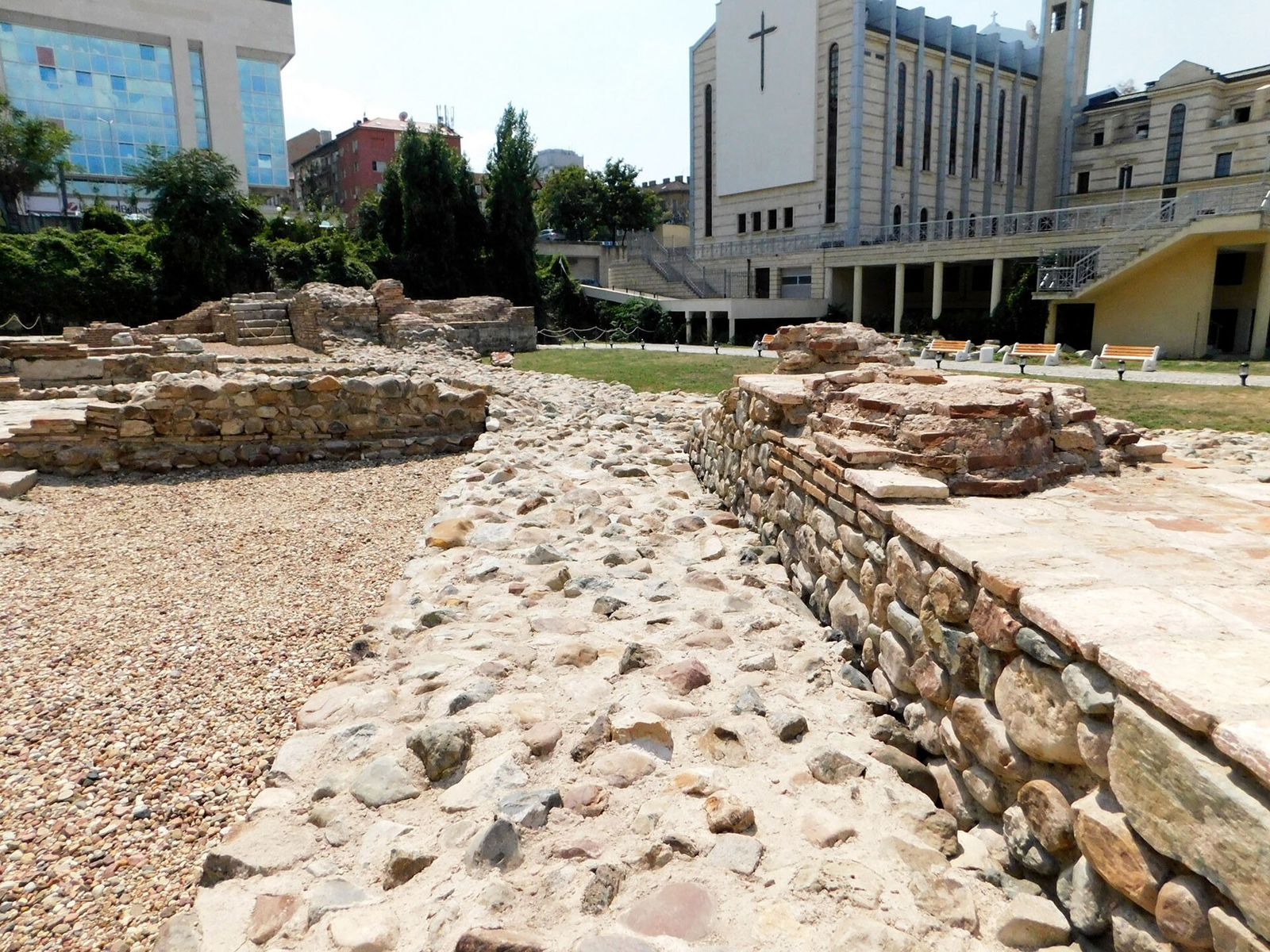
I start at the Western Gate, beside St Joseph's, Sofia's Catholic cathedral, on Todor Alexandrov Boulevard. It was dug out in the 1970s, and the museum now runs it as the West Gate of Serdica archaeological park. On a lawn with benches round the edge lie the base of a gate tower, a stretch of Roman road and the floor of a basilica with mosaics.
St Nedelya Square
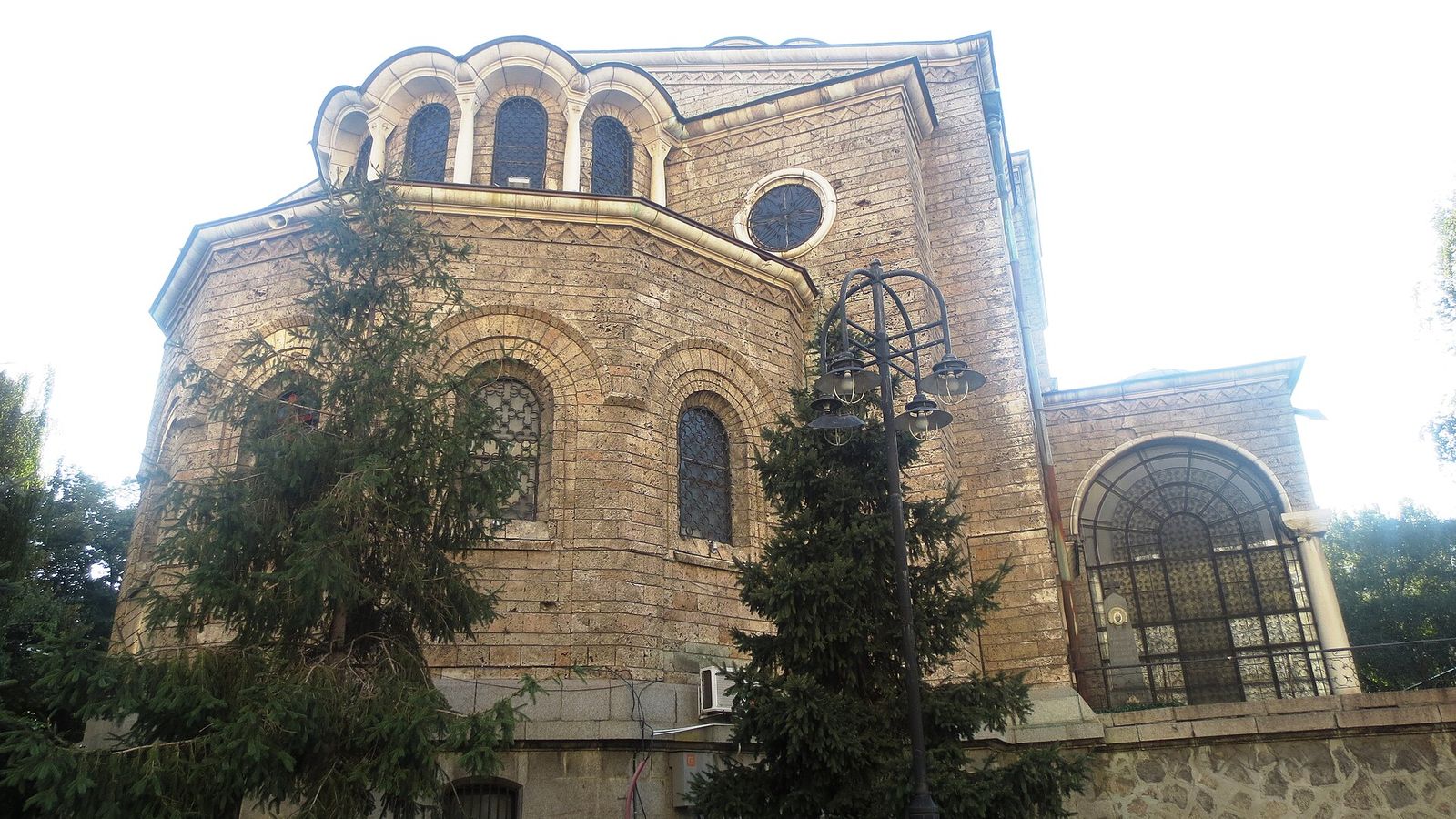
A few minutes south, St Nedelya Square sits on Roman Serdica too. Digs on the square in 2015 and 2016 found buildings from the 2nd to the 6th centuries and a hoard of coins. St Nedelya, the Orthodox church in the middle, has had a church on its site since the 10th century, and it's free to go in from 7am to 7pm.
The Roman street round the Rotunda of St George
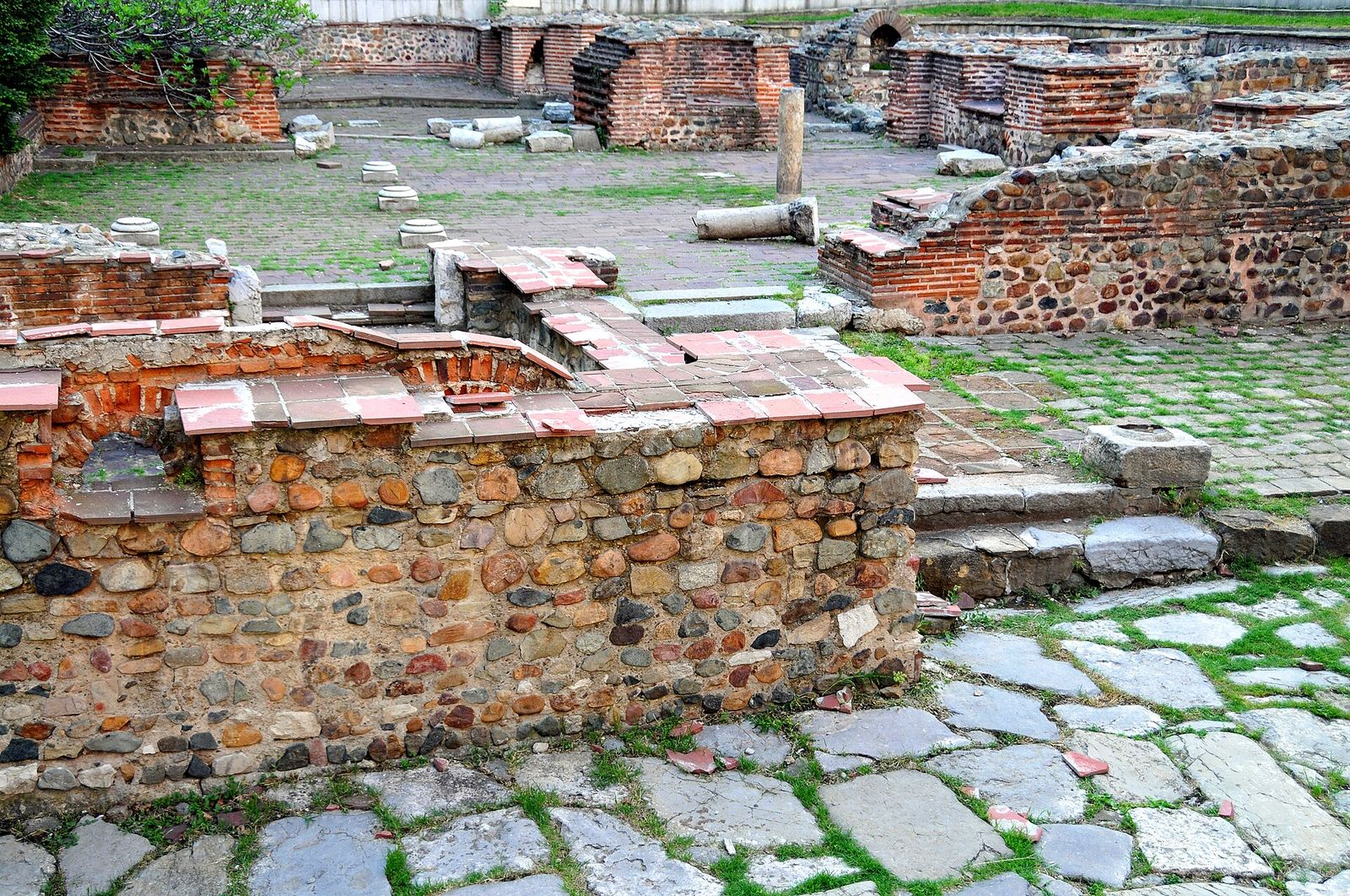
Round the corner, in the courtyard behind the Presidency, the Rotunda of St George is the oldest building still standing in Sofia, a red-brick church from the 4th century. Around it lie more of Serdica's remains: paved Roman street, walls of brick and river stones, and a few column bases. The church is free, from 8am to 7.30pm.
From the Rotunda it's 2 minutes back to the Largo, its gate and the covered exhibition.
Banya Bashi Mosque and the Roman baths under it
A 2-minute walk north up Maria Luiza Boulevard, Banya Bashi Mosque stands on top of a Roman bath-house, and its name refers to the baths. Built in 1566 and credited to the Ottoman architect Mimar Sinan, it's the only working mosque in Sofia. Visitors are welcome between prayers from 5am to 8pm, dressed modestly.
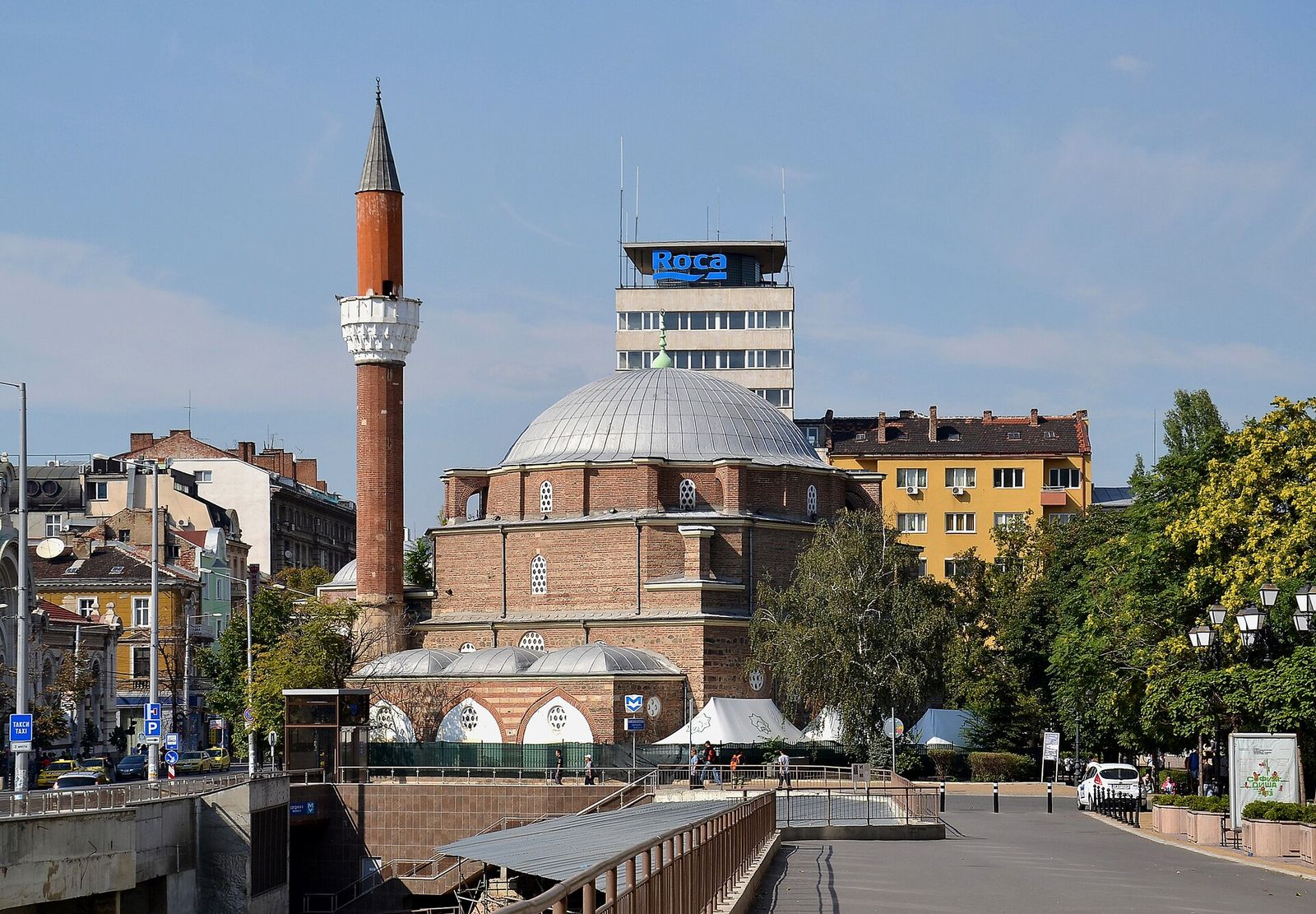
The hot springs and the Museum of the History of Sofia
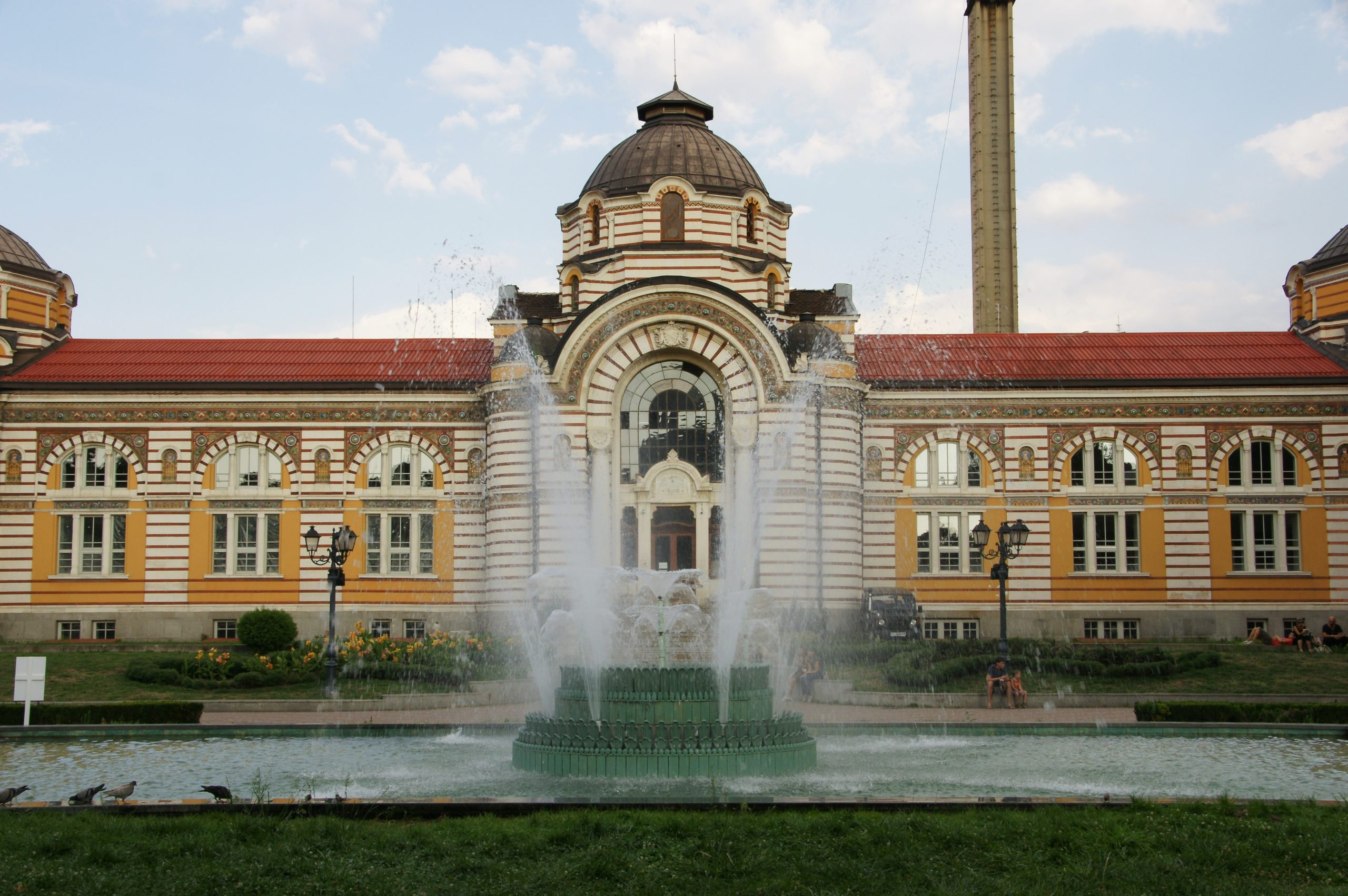
Behind the mosque are the hot mineral springs that put Serdica here in the first place. People have used them since the 6th century BC, and they still run from free taps in the square, where locals queue to fill big plastic bottles.
The striped building beside the taps is the old Central Mineral Bath, the city's main public bath until the 1980s and now the Museum of the History of Sofia. Tickets cost €5, it's free on the first Thursday of the month, and its exhibition tells the city's story from prehistory on, Roman Serdica included. Close by stands the north-eastern corner tower of Serdica's walls, from the 2nd century, another of the museum's sites.
The Central Market Hall basement
Across the boulevard, the Central Market Hall keeps a piece of Roman wall and the remains of a bath in its basement. Upstairs it's a working market, so I pair the stop with a coffee. The dome of the Sofia Synagogue rises right behind it, which puts an Orthodox church, a mosque, a synagogue and a Catholic cathedral within a few minutes of the Largo.
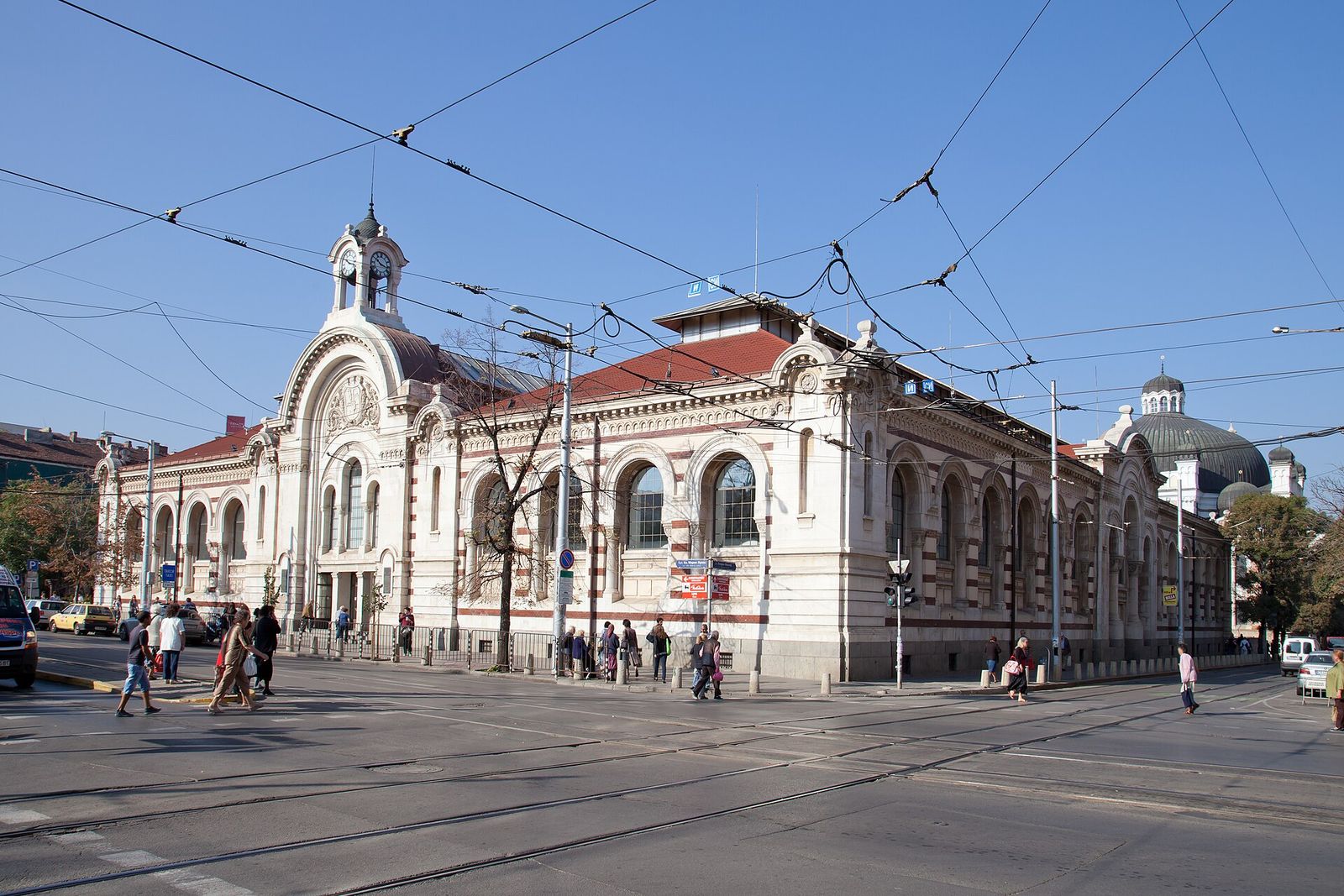
The Roman amphitheatre in the Arena di Serdica hotel
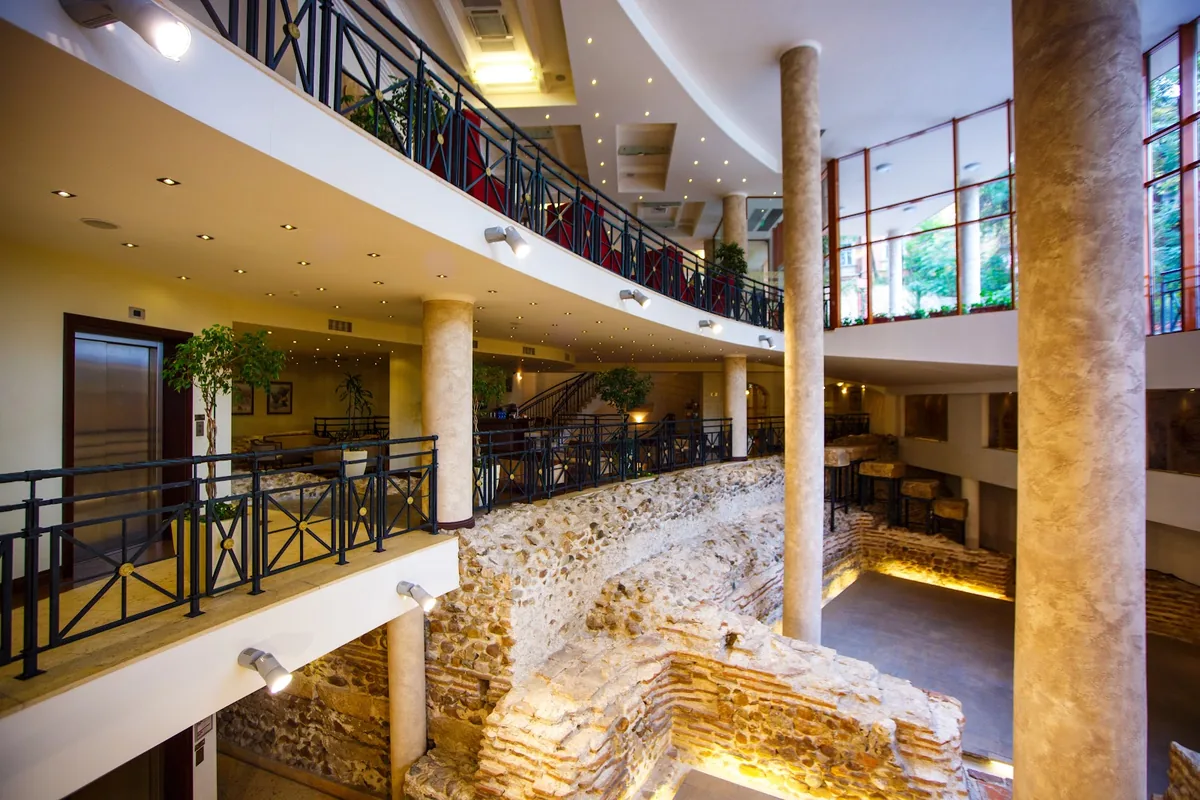
Serdica's amphitheatre sits inside the Arena di Serdica hotel, a short walk from the Largo. Builders found it in 2004 while putting the hotel up, and the remains are on show inside, with visitors welcome. If you want to sleep beside an arena, it's one of the five-star hotels in Sofia I'd book.
For a Roman theatre with its stone seats and stage still standing, I take the bus to Plovdiv for the day, about 2 hours and €8.50 to €11 each way.
The Roman tombs under St Sofia
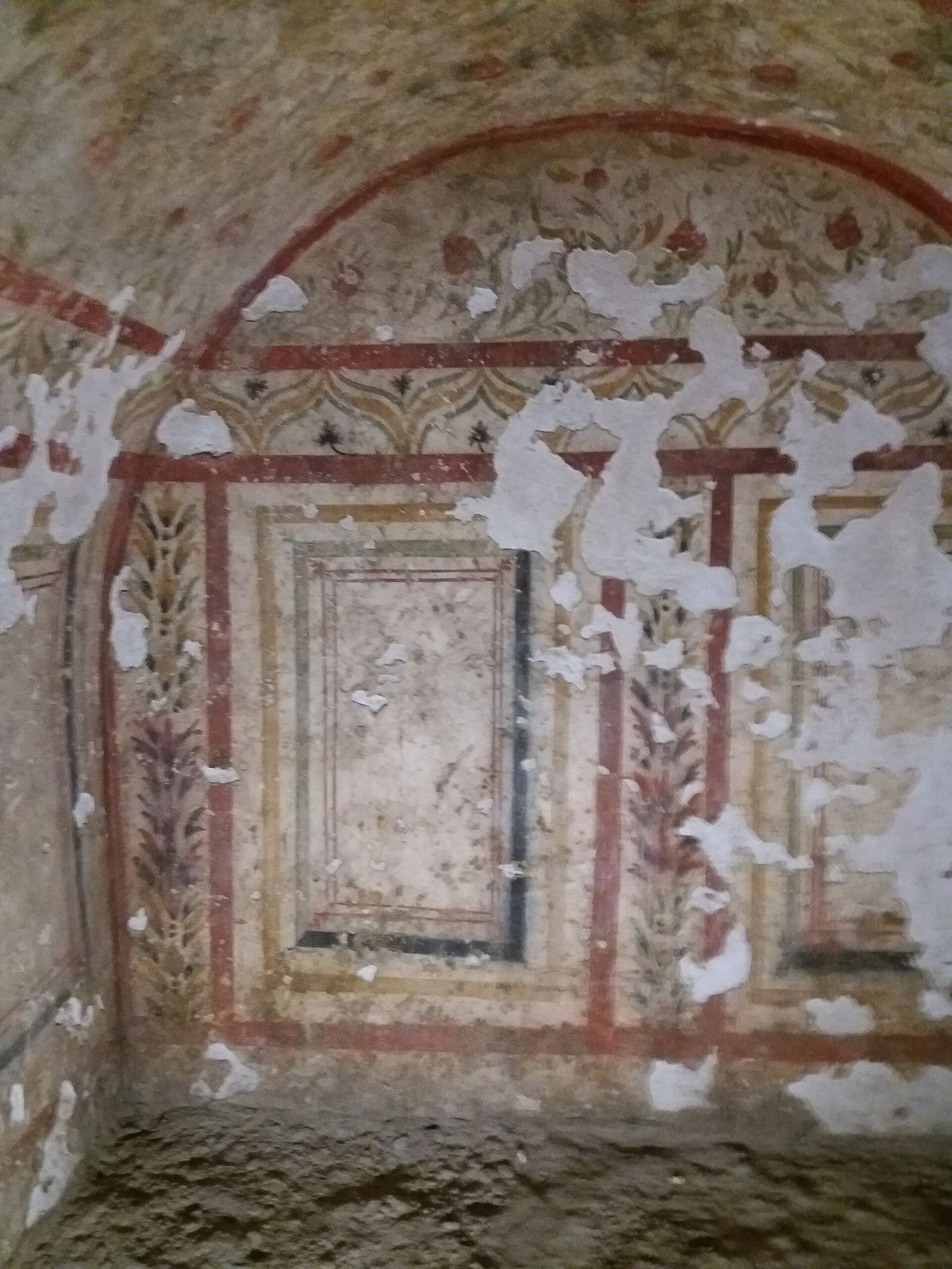
Under St Sofia Basilica, beside Alexander Nevsky Cathedral, lies the eastern cemetery of Roman Serdica: about 50 graves and tombs from the 3rd to the 5th centuries, a few with painted walls. Tickets cost €4 at 2 Parizh Street. It opens 10am to 5.30pm, every day from May to October and Tuesday to Sunday from November to April, and it's free on the second Thursday of each month.
A short history of Roman Serdica
Serdica takes its name from the Serdi, the tribe living here when Rome arrived. Constantine the Great is said to have called it "my Rome", and in 343 bishops from across the empire met here for the Council of Serdica.
| When | What happened |
|---|---|
| 6th century BC | People are already using the hot springs |
| Around 29 BC | The Romans take the area |
| 2nd and 3rd centuries | The oldest excavated parts of the city go up |
| 343 | The Council of Serdica meets, probably in the basilica of Protogenes |
| 4th to 6th centuries | Serdica's best years, and most of what you see today |
| 5th century | The Huns destroy the city |
| 6th century | Justinian rebuilds it, and Archbishop Leontius lives on the site by the century's end |
| 14th century | The city takes the name Sofia from St Sofia church |
| 1970s | The Western Gate is dug out |
| 2004 | Builders find the amphitheatre |
| 2010 to 2012 | Metro works open up the Serdica complex |
| 2015 and 2016 | Digs on St Nedelya Square find a hoard of coins |
Medieval Bulgarians called the town Sredets. Stand on the Largo and you see Bulgaria's history in layers: Roman paving at the bottom, the medieval church of St Petka sunk in the square, and the communist government blocks on top.
Getting to the Serdica ruins
Serdika station sits right beside the ruins, and 3 metro lines meet there: M1, M2 and M4. The M4 runs from Terminal 2 to Serdika in about 20 minutes for €0.80, paid by tapping a bank card at the barriers, so if you get from Sofia Airport to the centre by metro, the ruins can be your first stop on the way to the hotel.
From Alexander Nevsky Cathedral it's about 15 minutes on foot west along Tsar Osvoboditel Boulevard and its yellow paving bricks. The Largo, both gates and the Rotunda cost nothing, and they're the first free morning I'd plan on a Sofia budget trip.
Key takeaways
- Walk the free Largo zone any day of the week, and save the €3 covered exhibition for Tuesday to Sunday.
- Start at the Western Gate and head east along the line of the Roman main street to the Eastern Gate by the metro.
- Give the free sites about 80 minutes, or 2 hours with the covered exhibition and the Felix mosaic.
- Add the tombs under St Sofia (€4) and the amphitheatre in the Arena di Serdica hotel if you have another hour.
Frequently asked questions
Is the Serdica complex free?
The open-air part on the Largo is free and open every day from 7am to 10pm. The covered archaeological exhibition at 2 Maria Luiza Boulevard costs €3 for adults and €1.50 for children aged 7 to 18, students and seniors. Children under 7 go in free.
Where are the Roman ruins in Sofia?
They sit in the centre, mostly in and around Serdika metro station on the Largo. The Western Gate is beside St Joseph's Cathedral, the Rotunda's Roman street is behind the Presidency, and the Roman tombs lie under St Sofia Basilica, about 15 minutes' walk east.
Can you see the Roman ruins in Serdika metro station?
Yes. The Eastern Gate stands in the underpass by Serdika station, and the open-air streets lie right beside it, so you pass Roman walls without buying a ticket.
How old is Sofia?
People have used Sofia's hot springs since the 6th century BC, and the Romans took the area around 29 BC. Most of the Roman city you can see today was built between the 4th and 6th centuries, about 1,500 to 1,700 years ago.
What is the Largo in Sofia?
The Largo is the square at the centre of Sofia, officially Nezavisimost Square, lined by the Presidency, the Council of Ministers and the former Communist Party House. Ancient Serdica's open-air streets lie in the dig beside it.
How long do you need for the Serdica ruins?
Half an hour covers the open-air streets and the Eastern Gate. My full route, with the covered exhibition, the Western Gate, the Rotunda and Banya Bashi, takes about 2 hours, and the tombs under St Sofia add another 45 minutes.
Can you visit the Roman amphitheatre in Sofia?
Yes, the remains are on show inside the Arena di Serdica hotel, and visitors are welcome. The amphitheatre turned up in 2004, when the hotel was being built.
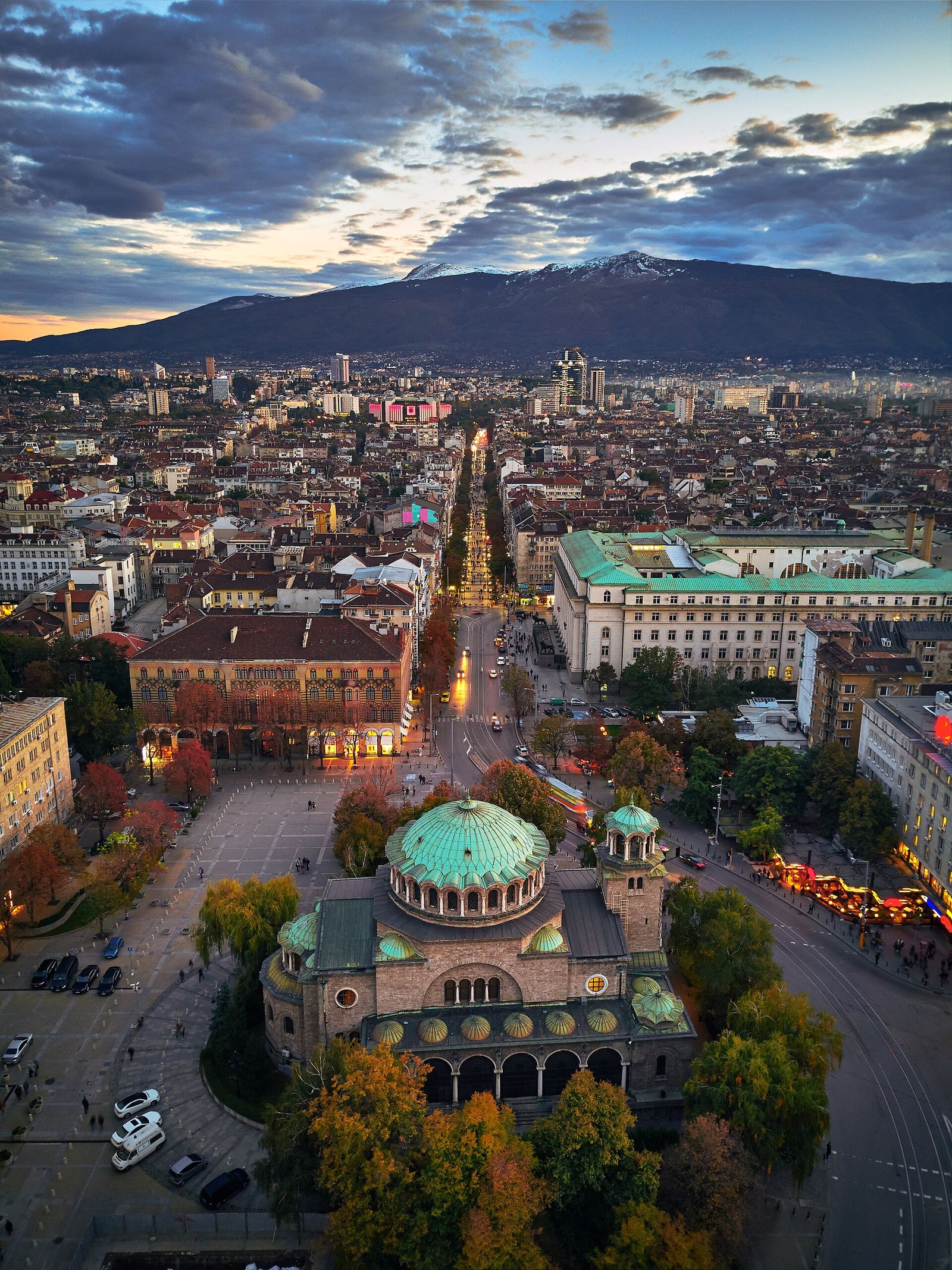
11 Best Things to Do in Sofia: My Personal Favourites
The best sights in Sofia sit close together and most are free. My 11 favourites, with prices, hours and a weekend plan.
Read the guide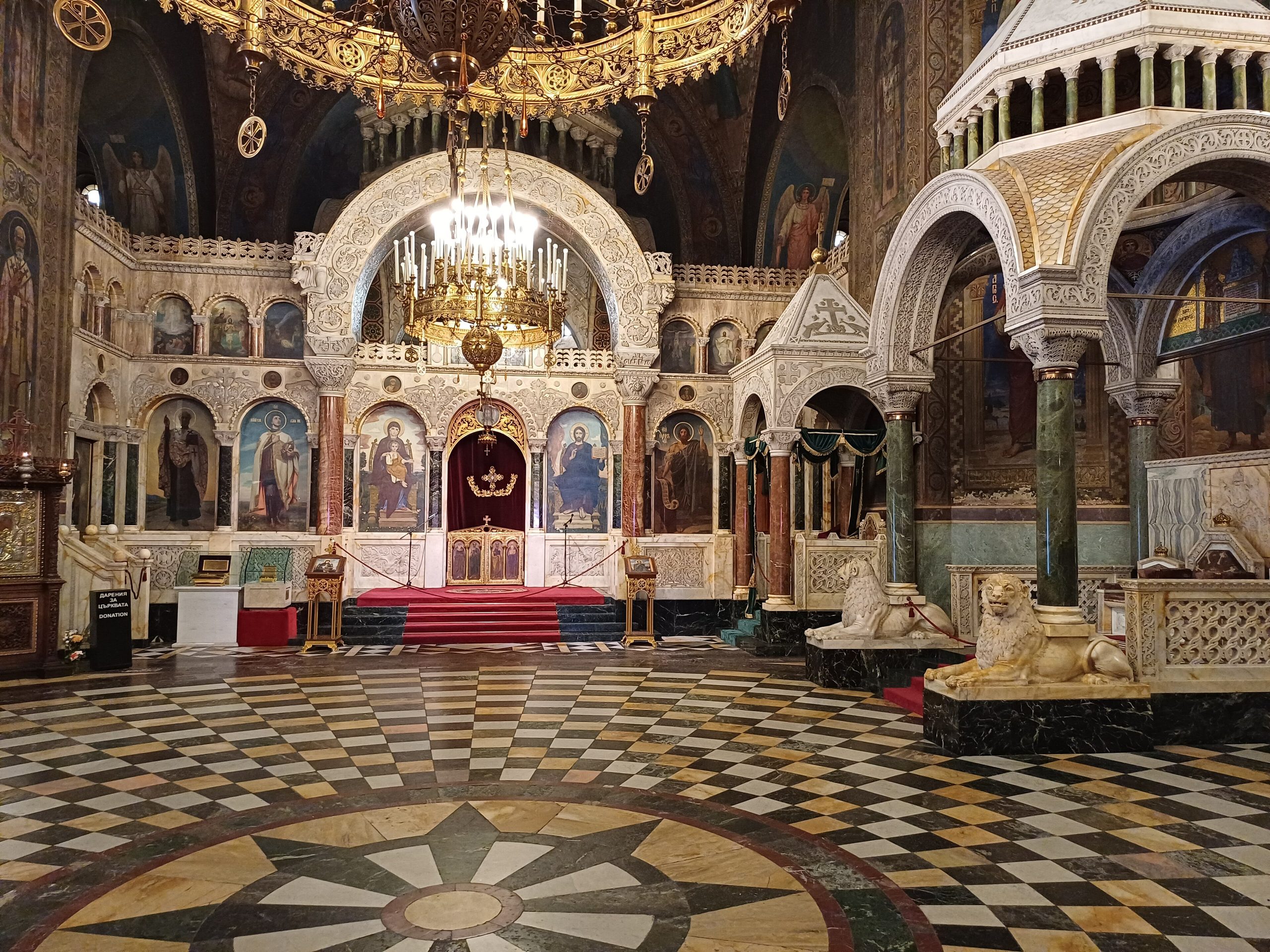
Alexander Nevsky Cathedral in Sofia: My Guide to Visiting
Sofia's gold-domed cathedral is free and open every day. How I visit it, from the crypt icons to the market outside.
Read the guide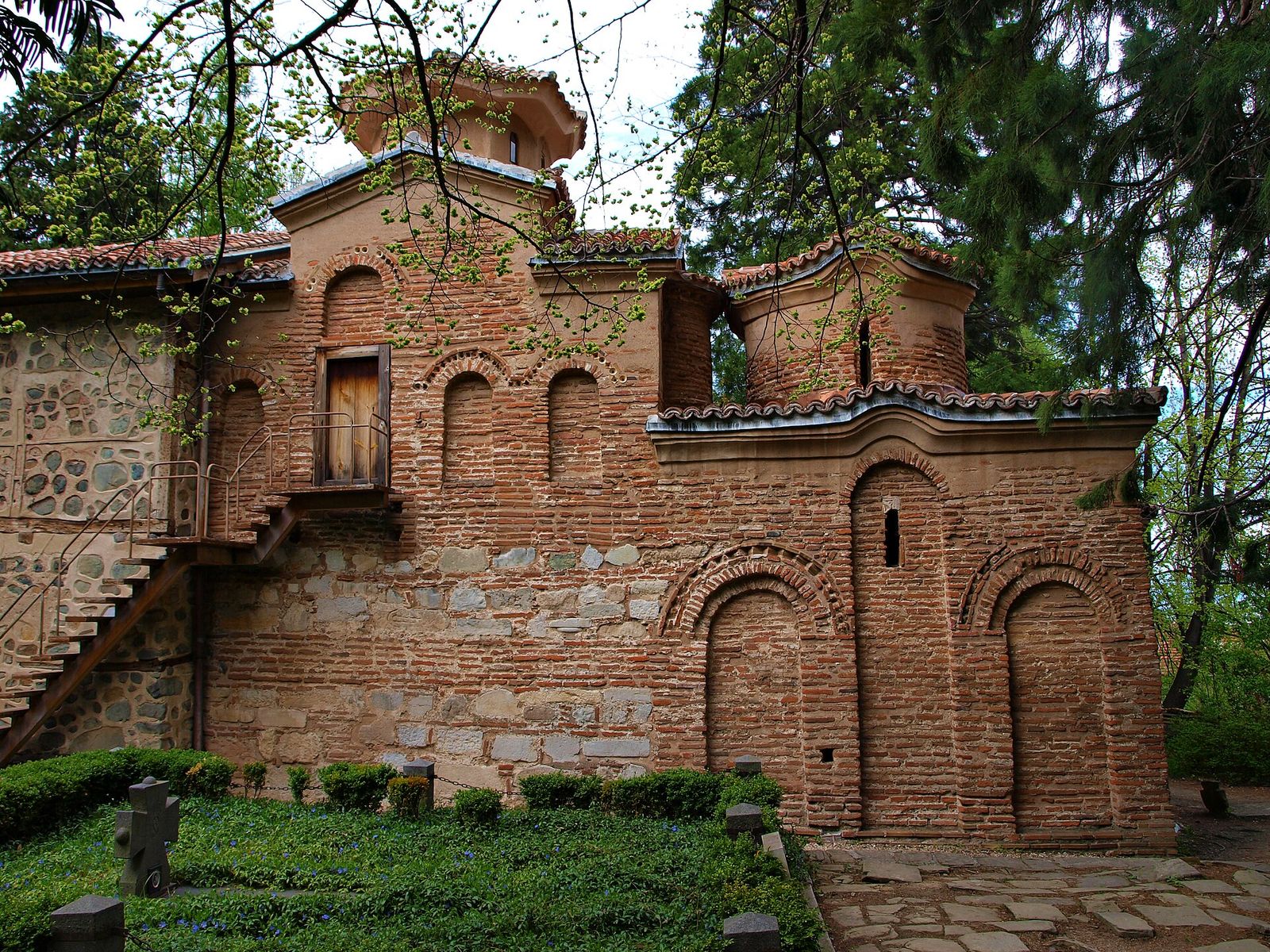
Boyana Church in Sofia: The Frescoes and How I'd Visit
A tiny UNESCO church at the foot of Vitosha, painted in 1259. What it costs, the rules and how I fit it in.
Read the guide