Easter in Bulgaria: Dates, Traditions and Easter Weekend in Sofia
Easter is the most important feast in the Bulgarian church year, and it runs on the Orthodox calendar, so it usually lands on a different Sunday from ours. In 2027 it falls on 2 May. It's my favourite weekend in Sofia: red eggs on every table, kozunak in every bakery and a square full of candles outside Alexander Nevsky at midnight. These are the dates, the customs and how I'd spend Easter weekend here.
When is Easter in Bulgaria?
Easter in Bulgaria is Orthodox Easter. The Bulgarian Orthodox Church works out the date from the old Julian calendar, and UK churches use the Gregorian one, so the two Sundays drift apart: one year by a week, another by five, and now and then they meet.
| Year | Orthodox Easter in Bulgaria | UK Easter | Gap |
|---|---|---|---|
| 2026 | 12 April | 5 April | 1 week |
| 2027 | 2 May | 28 March | 5 weeks |
| 2028 | 16 April | 16 April | Same day |
| 2029 | 8 April | 1 April | 1 week |
| 2030 | 28 April | 21 April | 1 week |
In 2027 Bulgarian Easter lands in May, so a spring break booked around UK Easter in late March misses it by over a month.
Easter public holidays in Bulgaria
Bulgaria takes four days off for Easter: Good Friday, Holy Saturday, Easter Sunday and Easter Monday, all on the Orthodox dates. In 2027 they run straight into two more: Holy Saturday falls on 1 May, Labour Day, and St George's Day, one of the spring holidays in Bulgaria, follows on Thursday 6 May.
Plenty of Sofians stretch that into a week away, at family in the villages or down in Greece, so the city gets noticeably calmer. When a fixed holiday such as 1 May lands on a weekend, Bulgaria moves the day off to the next working day, and I check the government's list of public holidays before I book anything that week.
Our early May bank holiday in 2027 is Monday 3 May, the same day as Bulgarian Easter Monday, so one day of leave on Friday 30 April buys a UK reader all four days of Easter in Sofia.
Holy Week in Bulgaria, day by day
Bulgarian Easter starts eight days early, on Lazarus Saturday, and every day of Holy Week has its own custom.
| Day | 2027 date | What happens |
|---|---|---|
| Lazarus Saturday | 24 April | Lazarki songs in the villages |
| Palm Sunday (Tsvetnitsa) | 25 April | Willow twigs blessed at church, flower name days |
| Monday to Wednesday | 26 to 28 April | The house gets its spring clean |
| Holy Thursday | 29 April | Eggs dyed at dawn, kozunak dough made |
| Good Friday | 30 April | Bells toll, evening service |
| Holy Saturday | 1 May | Cemetery visits, then the midnight service |
| Easter Sunday | 2 May | Egg-tapping and a roast lamb lunch |
| Easter Monday | 3 May | Family visits, public holiday |
Lazarus Saturday and Palm Sunday
Lazarus Saturday and Palm Sunday sit between Lent and Holy Week. In villages, Lazarus Saturday was the day girls called lazarki went from house to house singing. Bulgaria has no palms, so Palm Sunday goes by Tsvetnitsa (Цветница), Flower Day, or Vrabnitsa, Willow Day. People queue at church from early morning with flowers and willow twigs, leave the flowers at their favourite saint's icon and carry the blessed twigs home. At home the twigs are woven into a wreath for the front door or set beside the family icon to keep misfortune out.
Holy Thursday: dyeing the eggs
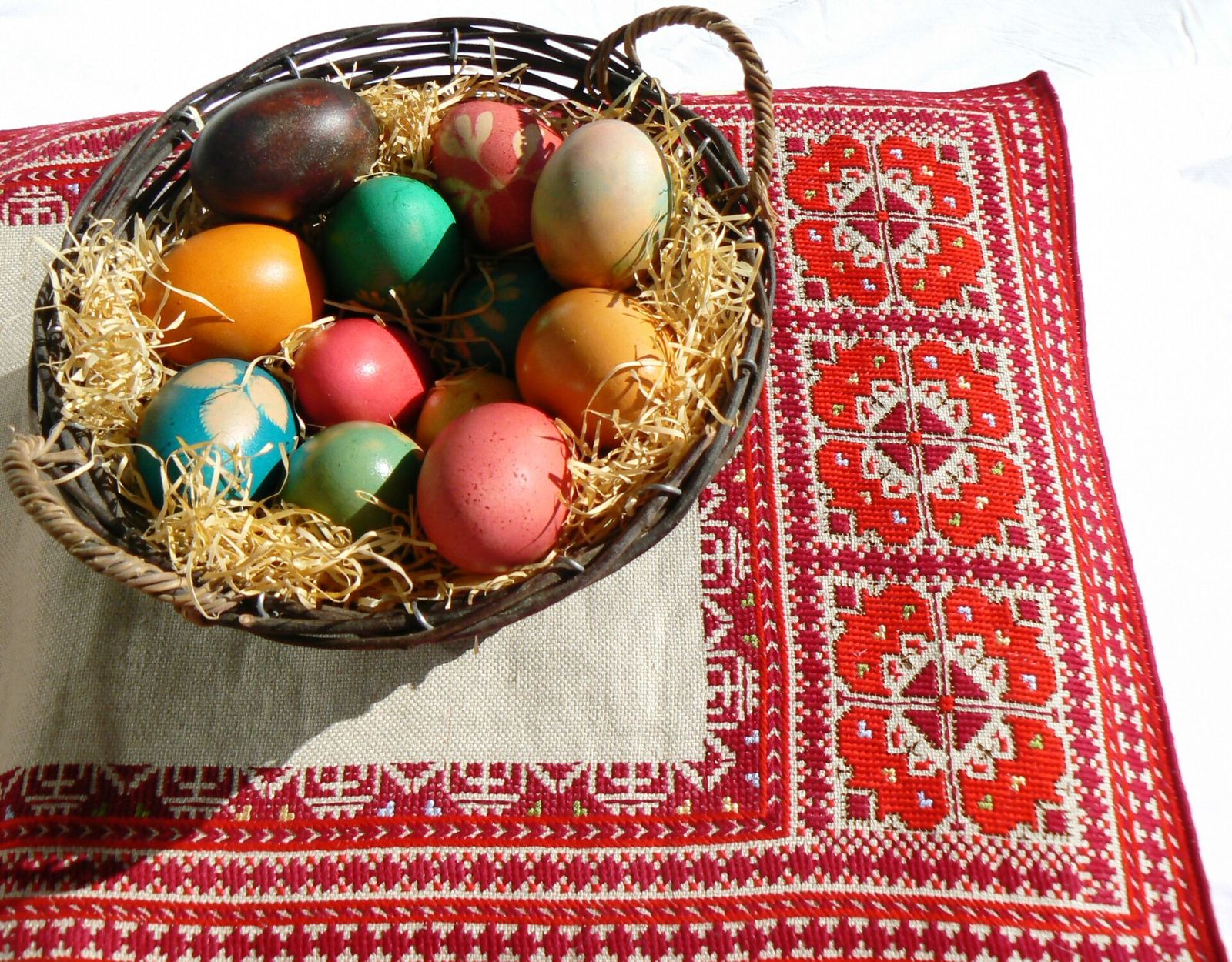
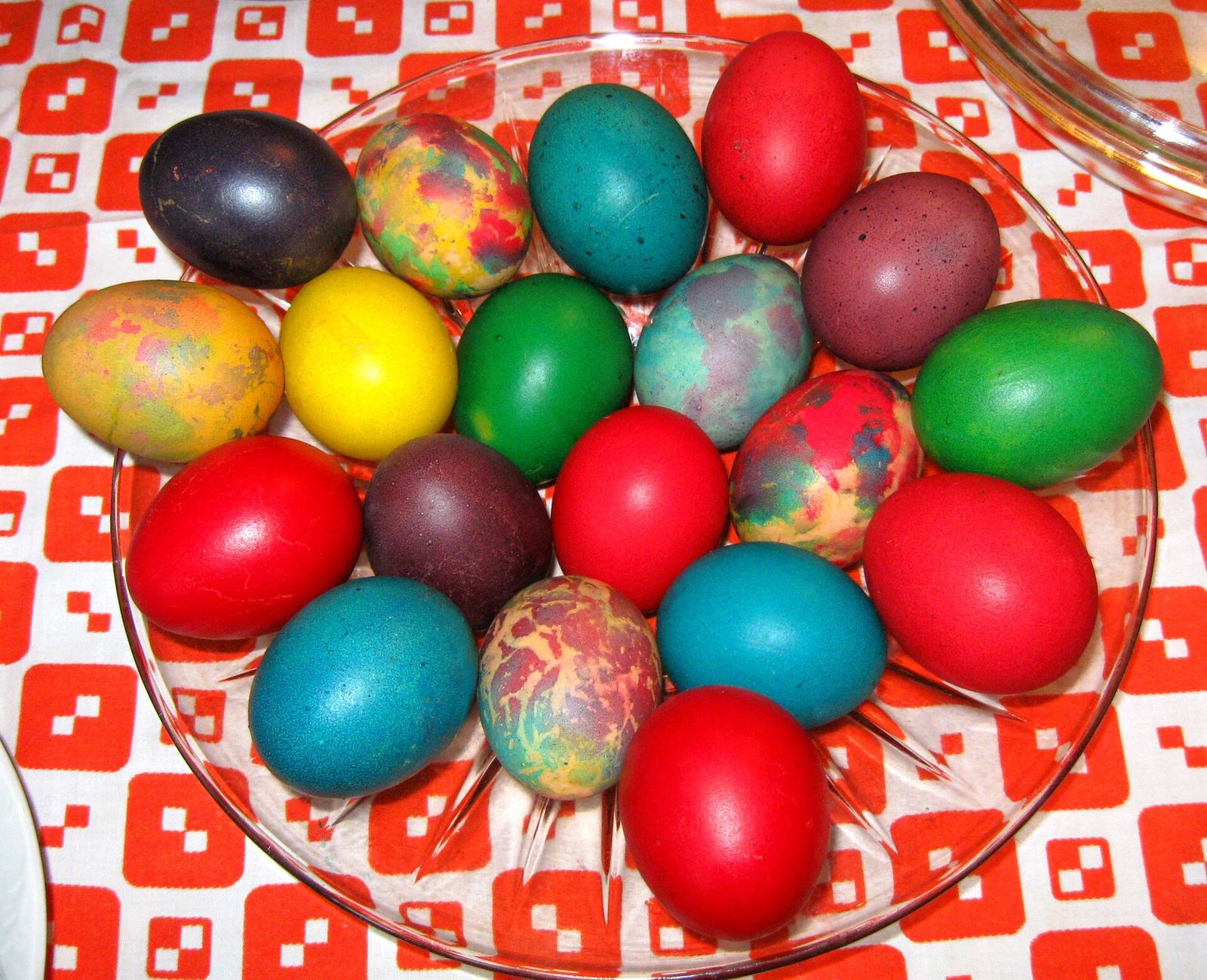
Holy Thursday (Велики четвъртък) is egg day. The eggs go into the dye at dawn so the first rays of sun fall on the first egg, and that first egg is always red, for the blood of Christ. By tradition the oldest woman of the house dyes it, and while it's still wet she draws a cross on each child's forehead for health. The red egg then sits by the family icon until the next Easter.
Before shop dyes, families coloured the rest with onion skins, nettles and walnuts. The kozunak dough is kneaded the same day.
Good Friday
Good Friday (Разпети петък) is the saddest day of the Orthodox year. Church bells toll, and by custom nobody works. In church, the devout crawl three times under a table covered in flowers that stands for Christ's tomb, which is said to bring good health for the year ahead.
The evening service is long and slow. If the midnight crush on Saturday puts you off, Good Friday evening in any of Sofia's old churches gives you the chanting and the candlelight with a fraction of the crowd.
Holy Saturday
On Holy Saturday (Велика събота) women visit the cemeteries, burn incense at family graves and hand out bread and coloured eggs so the dead may rest in peace. Kitchens are busy with kozunak and lamb, and by late evening people start walking to church.
The Easter midnight service
The Easter service begins at about 11.30pm on Holy Saturday, and it's the one night of the year when every church in Bulgaria overflows, with plenty of people who never go the rest of the year. Many Bulgarians bring a few eggs with them.
Shortly before midnight the lights go out. The priest comes out with a lit candle, the people nearest light theirs from it, and the flame passes back through the crowd until the church glows. That flame stands for the Holy Fire from the Church of the Holy Sepulchre in Jerusalem, which a Bulgarian government plane flies to Sofia each Easter for the country's churches and monasteries.
Then everyone goes outside. At midnight the bells ring and the priest calls out "Hristos voskrese" (Христос воскресе, Christ is risen), and the crowd answers "Voistina voskrese" (Воистина воскресе, truly he is risen). The congregation is meant to walk three times round the church with their candles, though in practice half of them are squeezing out of the doors at the same moment.
The Easter liturgy carries on inside after that, and many families walk home with their candles still burning. Until the early 2000s lots of people used the flame to smoke a cross onto the top of the front door frame. Fewer do it now, especially in the cities.
Where to go for the midnight service in Sofia
Every church in Sofia holds the service, and these four in the centre are my picks. Nevsky, St Sofia and the Russian Church are all within about 300 metres of each other, so you can start at one and hear the bells of the others at midnight.
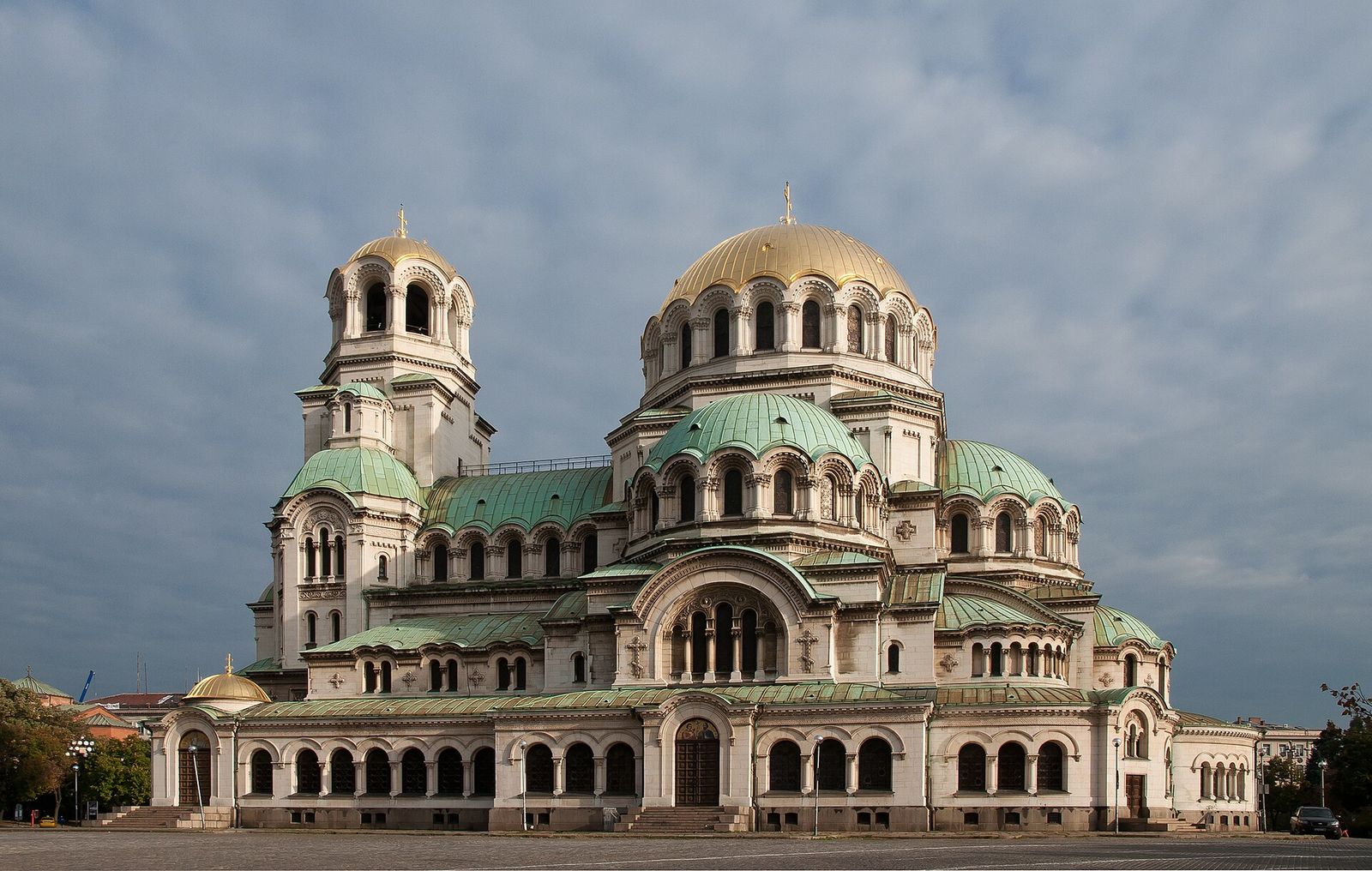
Alexander Nevsky Cathedral
Alexander Nevsky Cathedral is the patriarchal cathedral of the Bulgarian Orthodox Church and draws Sofia's biggest Easter crowd. The church can't hold everyone, so the square around it fills with people holding candles under the gold dome of a church 50.52 metres high. It was built between 1882 and 1912 for the soldiers who died freeing Bulgaria, and its 12 bells weigh about 25 tonnes between them.
On ordinary days it opens 7am to 7pm, with a 5pm evening service and a 6pm vigil on the eve of major feasts. The times on the cathedral's visiting page are in Bulgarian, so run them through a translator.
St Nedelya Church
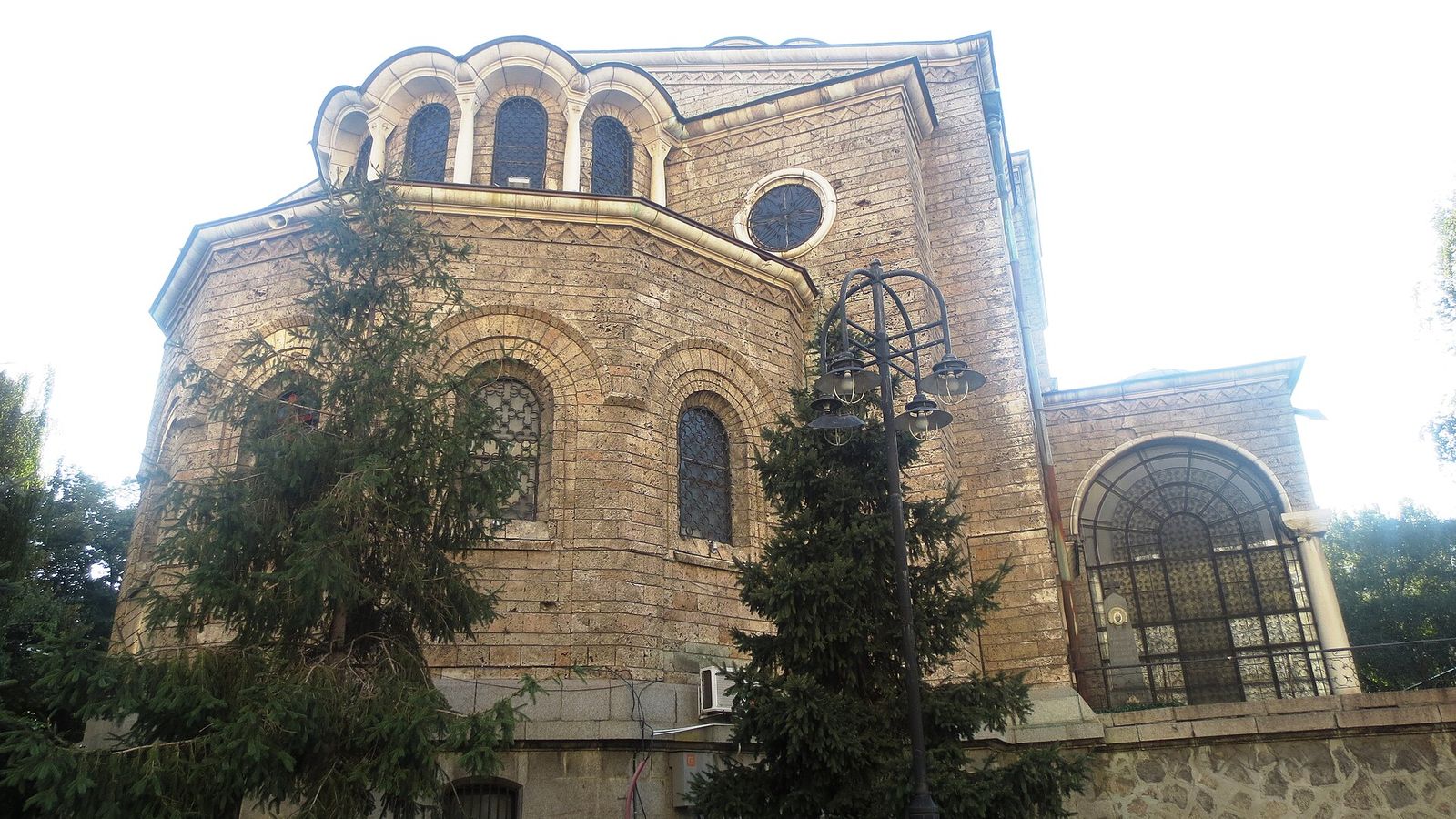
St Nedelya stands on its own square at the top of Vitosha Boulevard, two minutes from Serdika metro, and a church has stood on the spot since the 10th century. The present church has a 31-metre dome, and it's where I'd go if I were staying around Vitosha Boulevard, because you can walk back to bed with your candle still lit.
The Russian Church
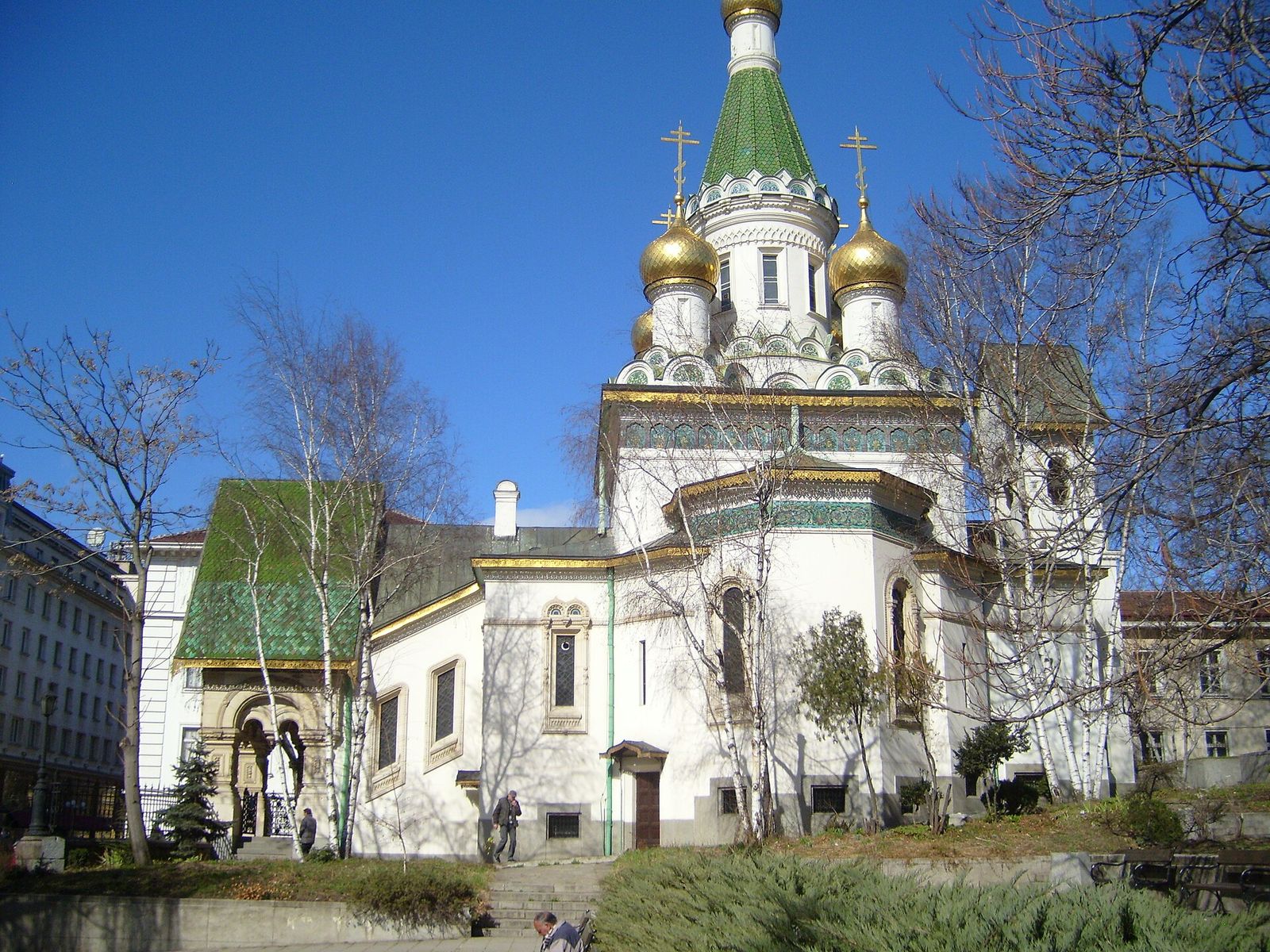
The Russian Church, St Nicholas the Miracle-Maker, is the small white church with gold onion domes on Tsar Osvoboditel Boulevard, built between 1907 and 1914 as the Russian embassy's church. Its nave is tiny, so most people stand in the garden, and all those candles under the gold domes make the prettiest Easter picture in Sofia. Photos are banned inside at Easter, as on every other day.
St Sofia Basilica
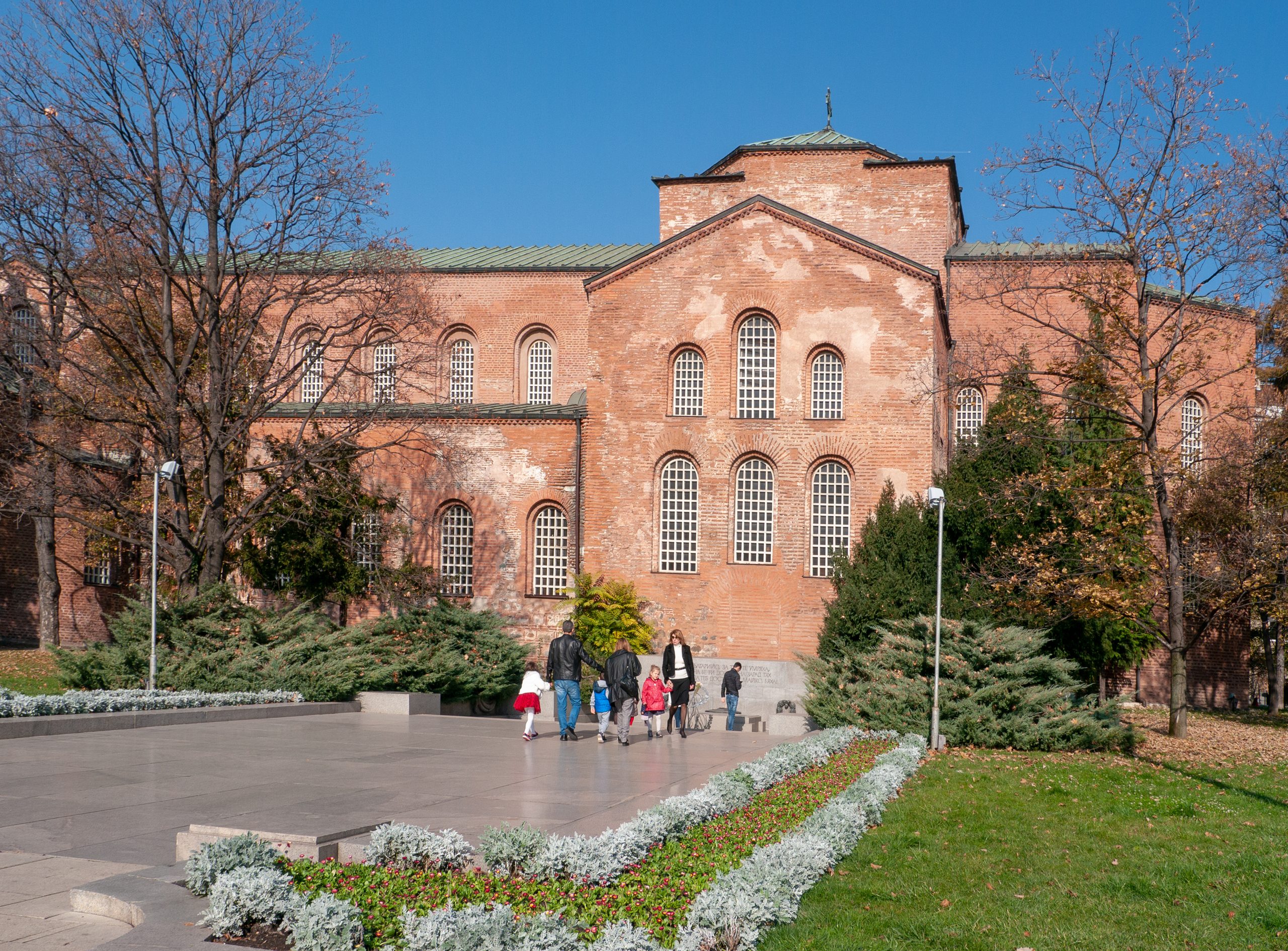
St Sofia Basilica is the 6th-century red-brick church across the square from Nevsky, and the city is named after it. It's my pick for Easter night. The crowd is smaller than Nevsky's, the bare brick walls look wonderful by candlelight, and when everyone steps out at midnight you're facing the Nevsky crowd across the square.
What Bulgarians eat at Easter
The Easter table comes after seven weeks of Lent, which in 2027 begins on Monday 15 March, the day after Sirni Zagovezni, one of the Sundays when kukeri come out in their masks and bells. Whether or not they kept the fast, almost everyone in Bulgaria eats red eggs, kozunak and roast lamb over Easter.
Red eggs and egg-tapping
Easter morning starts with the eggs. Two people hold an egg each and tap them together, and whoever's egg survives is in for a healthy, lucky year. The champion egg even has a name, biyach (бияч), the beater. Guests bring eggs to their hosts, and the godparents get a basket of their own.
Kozunak
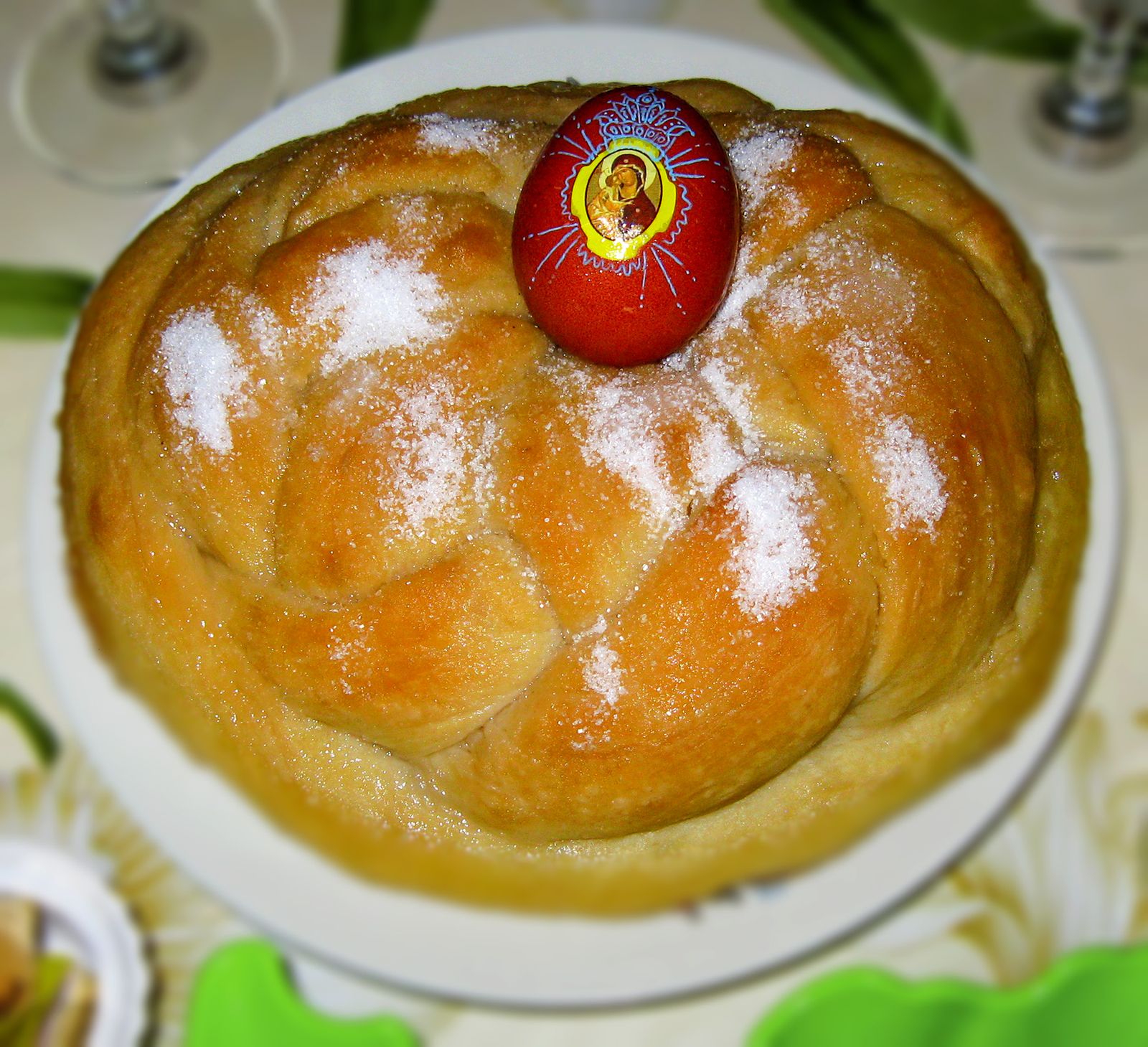
Kozunak (козунак) is the Easter bread, a sweet braided yeast loaf with a stringy, pull-apart crumb, close to brioche. The Easter version is round and plaited, with a red egg pressed into the middle, and families start eating it on Sunday morning. Bakeries sell it all through Holy Week, and many keep it on all year, which is how Sofia's cafes can put kozunak toast, thick slices fried in egg, on their breakfast menus.
Roast lamb
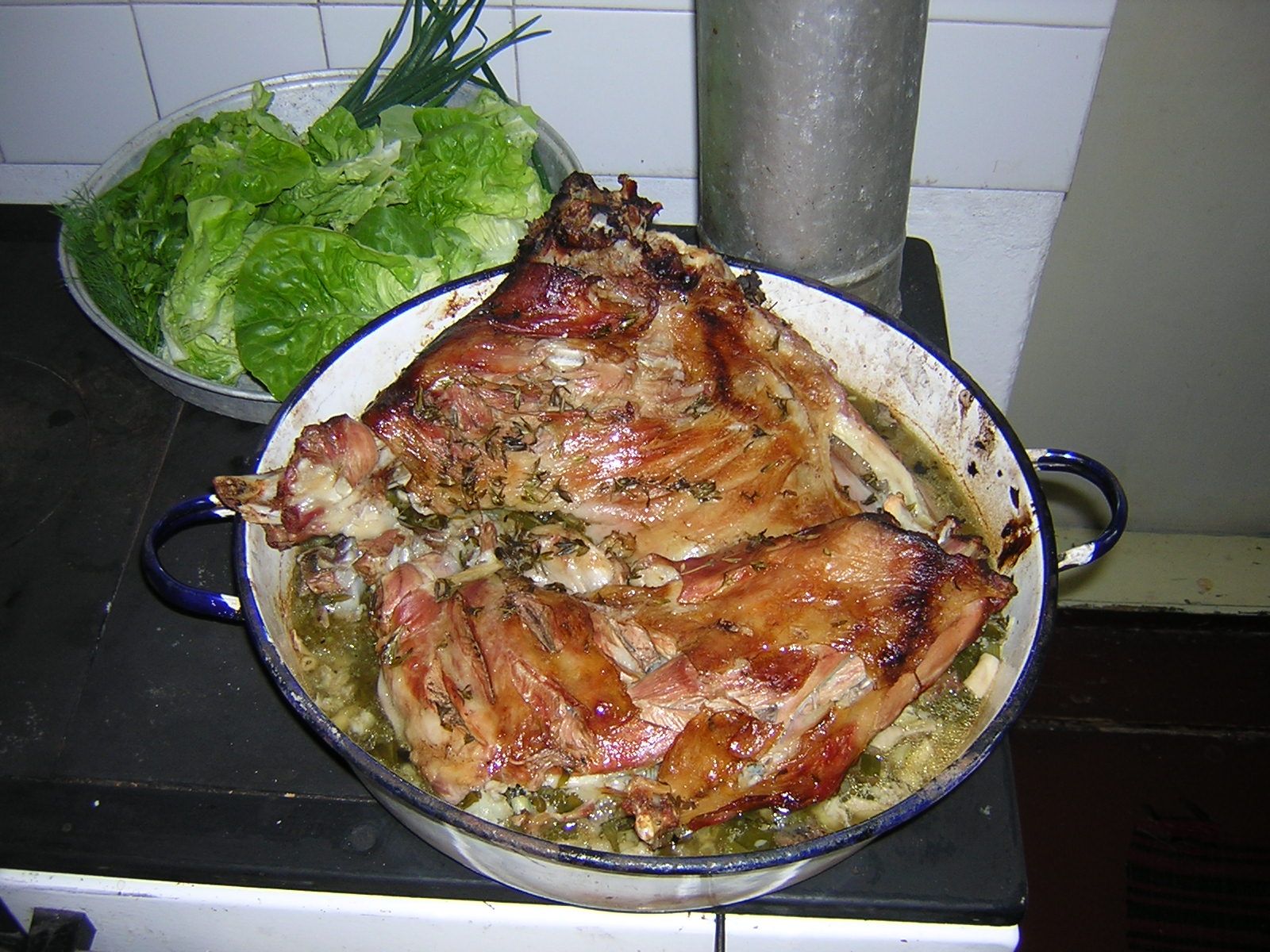
Sunday lunch is roast lamb, the first meat in seven weeks for anyone who fasted. The home version is a joint roasted in a deep pan with herbs, with a green salad of lettuce and spring onions on the side. In 2027 lamb comes straight back four days later, because it's the traditional dish for St George's Day on 6 May too.
What's open in Sofia over Easter
Sofia's churches open as normal over Easter and stay busy, but several of the big museums close on the holidays.
| Place | Easter closure |
|---|---|
| Boyana Church | Closed on Easter Sunday |
| National Historical Museum | Closed on Easter Sunday |
| Museum of Socialist Art | Closed over Easter, on public holidays and on Mondays |
| National Museum of Natural History | Closed for Easter |
| Nevsky, St Sofia, St Nedelya, the Russian Church | Open, busiest on Good Friday evening and Saturday night |
Boyana Church shuts on only four days a year: 1 January, Easter Sunday, 24 December and 25 December. I'd go on Good Friday morning and combine it with the National Historical Museum down the hill, which also closes on Easter Sunday. The Museum of Socialist Art closes on public holidays, which at Easter covers Good Friday right through to Easter Monday.
Is Easter a good time to visit Sofia?
Yes. Easter falls in April or early May, when Sofia's average high is 16.7°C in April and 21.4°C in May and the parks are fully green. The nights are cooler than they feel at lunch, with average lows of 5.3°C in April and 9.8°C in May, so bring a proper jacket for midnight on the square. Spring in Sofia brings showers too, with 52 mm of rain in April and 73 mm in May.
In the week before Easter, willow wreaths go up on front doors and the bakeries fill with kozunak, and for days afterwards people swap the Easter greeting in place of hello.
In 2028 the two Easters fall on the same day, 16 April, so the UK's Good Friday and Easter Monday bank holidays (Easter Monday outside Scotland) line up with Bulgaria's. I'd book flights from the UK to Sofia as soon as your dates are fixed, since a bank holiday weekend is when everyone else flies too.
My Easter weekend in Sofia, 2027
Four days, Good Friday to Easter Monday, with Boyana and the National Historical Museum done on Friday, since both shut on Easter Sunday.
| Day | Morning | Afternoon | Evening |
|---|---|---|---|
| Friday 30 April, Good Friday | Boyana Church, then the National Historical Museum | Vitosha Boulevard and a slice of kozunak | Good Friday service at Nevsky or St Nedelya |
| Saturday 1 May, Holy Saturday | Roman Serdica and the hot springs by the mineral baths | A rest and an early dinner | Midnight service at St Sofia, then the square |
| Sunday 2 May, Easter Sunday | A slow start and some egg-tapping | Roast lamb lunch, then a walk in Borisova Gradina | An early night |
| Monday 3 May, Easter Monday | Bus 66 from Vitosha metro up to Aleko | A walk on Vitosha Mountain, back on the bus before 8pm | Fly home |
Easter Sunday is the day I keep loose. The museums are shut and most of Sofia is at a family lunch, so the centre feels like a sleepy Sunday morning until late afternoon. Monday on Vitosha gets you out of the city while the roads below fill with people heading home.
Key takeaways
- Bulgarian Easter follows the Orthodox calendar: 2 May 2027, 16 April 2028 and 8 April 2029.
- Good Friday to Easter Monday are public holidays, and in 2027 they meet Labour Day on 1 May and St George's Day on 6 May.
- The midnight service on Holy Saturday starts at about 11.30pm; buy a candle early and dress for church.
- Eat red eggs, kozunak and roast lamb, and answer "Hristos voskrese" with "Voistina voskrese".
- Keep Easter Sunday for churches and parks, because Boyana and the main museums close, and save Vitosha for Easter Monday.
Frequently asked questions
Is Orthodox Easter the same as Catholic Easter in 2026?
No. In 2026 Catholic and UK Easter fell on 5 April, and Orthodox Easter, the one Bulgaria celebrates, fell a week later on 12 April. The two share a Sunday only in some years, and the next is 16 April 2028.
What date is Easter in Bulgaria?
Easter Sunday in Bulgaria is 2 May 2027. Good Friday is 30 April and Easter Monday 3 May, and every day from Friday to Monday is a public holiday.
Which date is Orthodox Easter?
Orthodox Easter falls on 2 May in 2027, 16 April in 2028 and 8 April in 2029. In 2028 it's the same Sunday as Western Easter, and in 2029 it's a week later.
Is April a good time to visit Bulgaria?
Yes. Sofia averages 16.7°C by day in April with about 195 hours of sunshine, and Orthodox Easter falls in April in 2026, 2028, 2029 and 2030. Nights still drop to around 5°C, so pack a warm layer.
What do Bulgarians say at Easter?
The Easter greeting is "Hristos voskrese" (Christ is risen), and the reply is "Voistina voskrese" (truly he is risen). It's the one seasonal line I'd add to your list of Bulgarian phrases, and people use it in place of hello from midnight on Holy Saturday.
Is Easter Monday a holiday in Bulgaria?
Yes. Easter Monday is a public holiday, as are Good Friday, Holy Saturday and Easter Sunday, all on the Orthodox dates. In 2027 it falls on 3 May, the same day as the UK's early May bank holiday.
Can tourists go to the Easter midnight service in Sofia?
Yes, anyone can join, and most of the crowd stands outside anyway. Dress for church, buy a thin candle at the stand by the door and follow what the people around you do.
Bulgarian Culture and Traditions: A Visitor's Guide
Nods that mean no, rakia sipped with salad and masked kukeri: the Bulgarian customs I'd want you to know before a trip.
Read the guide
Bulgarian Phrases for Travellers: The Words I Use Every Day in Sofia
Hello, thank you, cheers and the bill: the Bulgarian words I use every day in Sofia, and how to say each one.
Read the guide
A Short History of Bulgaria (and Where to See It in Sofia)
Thracian gold to the euro: Bulgarian history era by era, and the Sofia sights where I see each chapter.
Read the guide