Bulgarian Food: The Dishes I Tell Every Visitor to Try
Bulgarian food is salad, white cheese, yoghurt and grilled mince, eaten slowly with a small glass of rakia. I've lived in Sofia long enough to have firm favourites, so these are the dishes I tell every visitor to try, with the Cyrillic word to find each one on a menu, what to drink with them, what a meal costs and where I'd eat them.
What is Bulgarian food like?
Bulgarian cooking rests on a short list of ingredients: tomatoes and peppers that taste of summer, a white brined cheese called sirene, thick sour yoghurt, filo pastry and minced meat cooked over charcoal. Centuries of Ottoman rule left the filo, the syrupy sweets and Turkish dish names such as gyuvech and baklava, which is why Greece, Turkey, Serbia and North Macedonia all cook close cousins of the same dishes and argue about who had them first.
The menu follows the calendar: cold tarator in the July heat, clay pots and sarmi in January, pumpkin pastry in autumn. Dessert is optional, and the salad course can last half an hour.
Menus lean on meat, but salads, dips, cheese pastries and stuffed peppers mean a vegetarian eats well here. The seasoning is garlic, dill, cumin and a dried herb called savory (чубрица), with chilli served on the side for anyone who wants it.
The 10 Bulgarian dishes I'd eat first
If you only have a weekend, these are the ten I'd fit in. Between them they cover breakfast, lunch, dinner and the snack you buy on the street.
| Dish | On the menu | What it is | When I eat it |
|---|---|---|---|
| Shopska salad | шопска салата | Tomato, cucumber, pepper and onion under grated white cheese | Before any dinner, with rakia |
| Banitsa | баница | Filo pie with egg, yoghurt and sirene | Breakfast, with ayran or boza |
| Tarator | таратор | Cold soup of yoghurt, cucumber, dill and walnuts | Summer lunch |
| Kebapche | кебапче | Grilled finger of cumin-spiced mince | With beer, any time |
| Kavarma | кавърма | Pork or chicken stewed in a clay pot | Winter dinner |
| Sarmi | сарми | Cabbage or vine leaves rolled round rice and mince | Winter lunch |
| Lyutenitsa | лютеница | Roast red pepper and tomato relish | On bread, with everything |
| Chushki byurek | чушки бюрек | Peppers stuffed with egg and sirene, fried in batter | Starter |
| Mekitsa | мекица | Fried dough with jam, honey or icing sugar | Weekend breakfast |
| Kiselo mlyako | кисело мляко | Bulgarian yoghurt | Every day, sweet or savoury |
Bulgarian salads and dips
Salads go in the middle of the table with bread and the dips, and everyone shares them over the first drink.
Shopska salad (шопска салата)
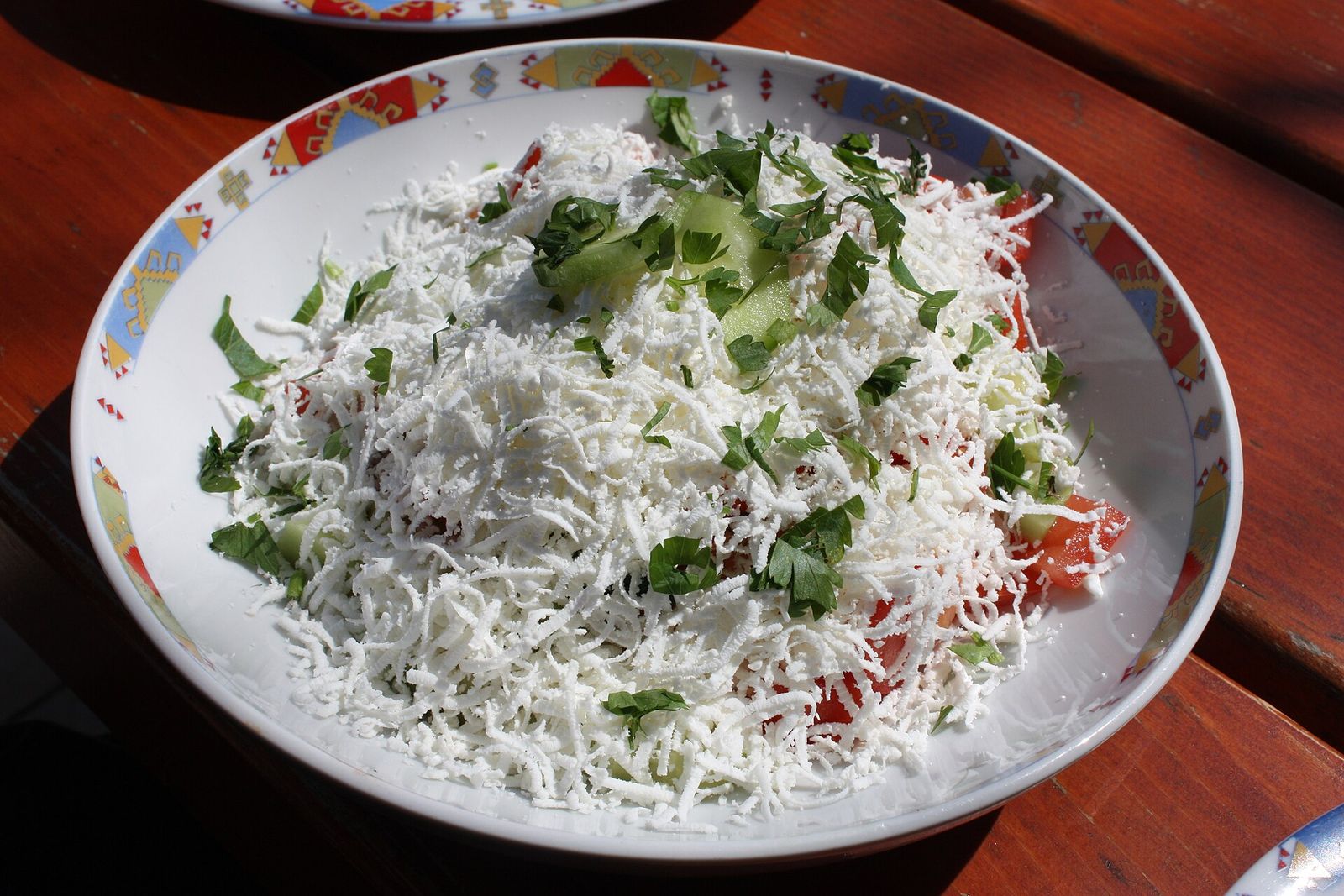
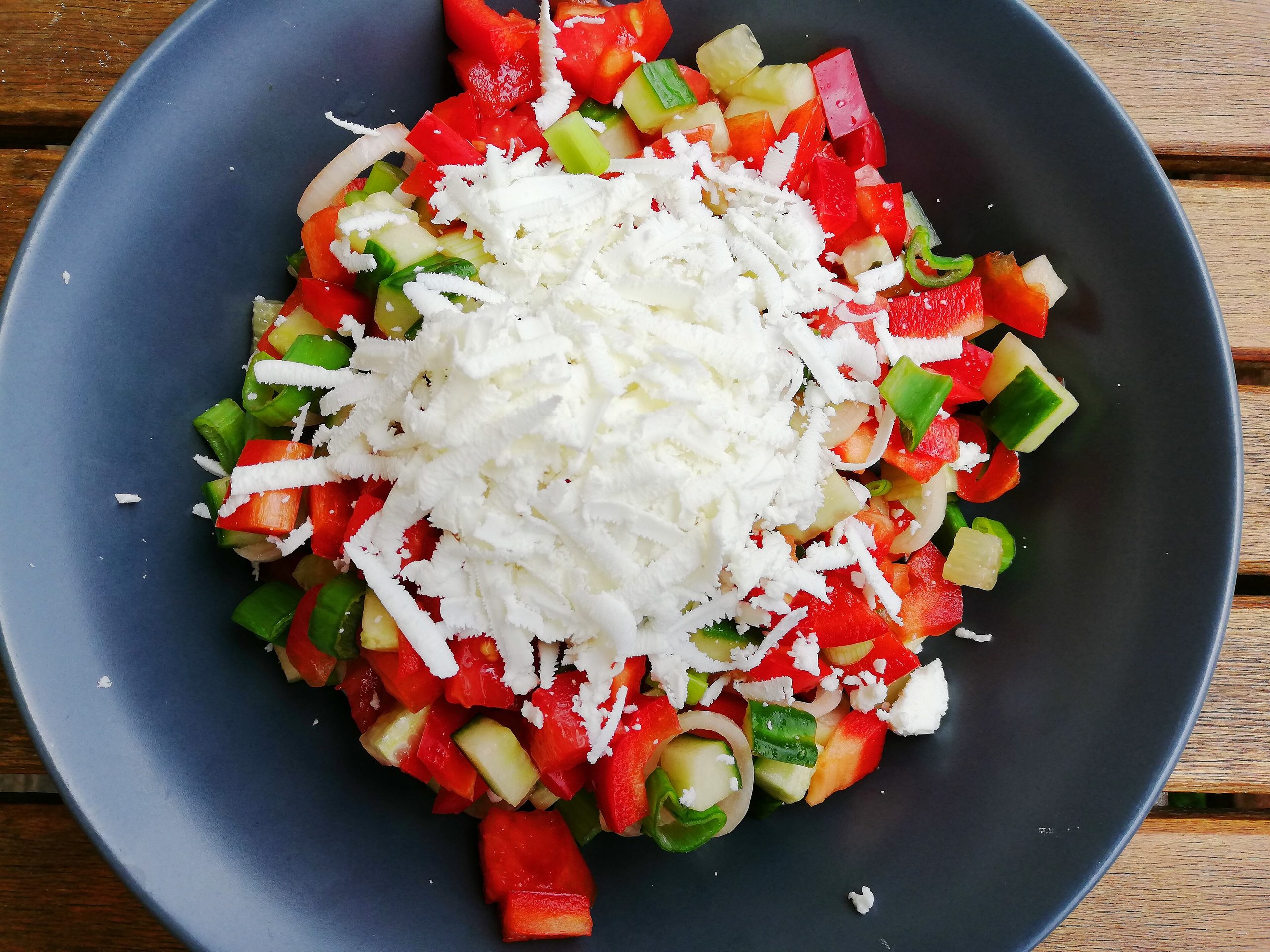
Chopped tomatoes, cucumber, peppers (raw or roasted) and onion, dressed with sunflower oil and buried under a snowdrift of grated sirene. It's Bulgaria's national dish in all but law, and the white, green and red match the flag by accident. The state tourism agency, Balkantourist, named it in 1956 and served it in its hotels, and the name comes from the Shopi, the people of western Bulgaria. In 2014 it was the most popular recipe in the European Parliament's "A Taste of Europe" initiative. I order it with every dinner on a first visit. From June to September the tomatoes alone justify the trip.
Snezhanka (снежанка)
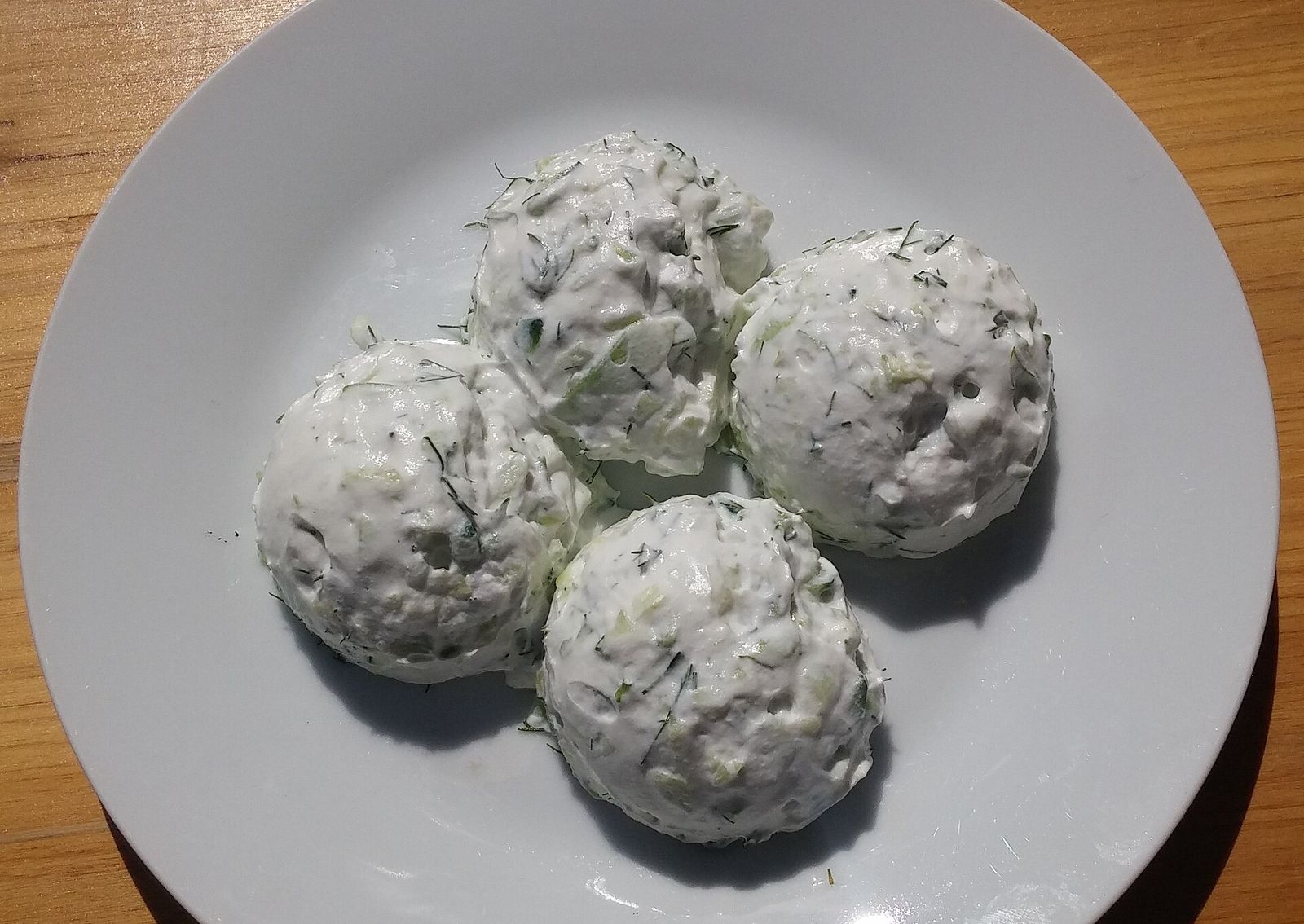
Snezhanka means Snow White: strained yoghurt with chopped cucumber, garlic, dill and walnuts, often served in scoops. Think of it as tarator thick enough to eat with a fork. I order it next to anything from the grill, because a spoon of cold garlicky yoghurt with a hot kebapche is the best combination on the menu.
Lyutenitsa (лютеница)
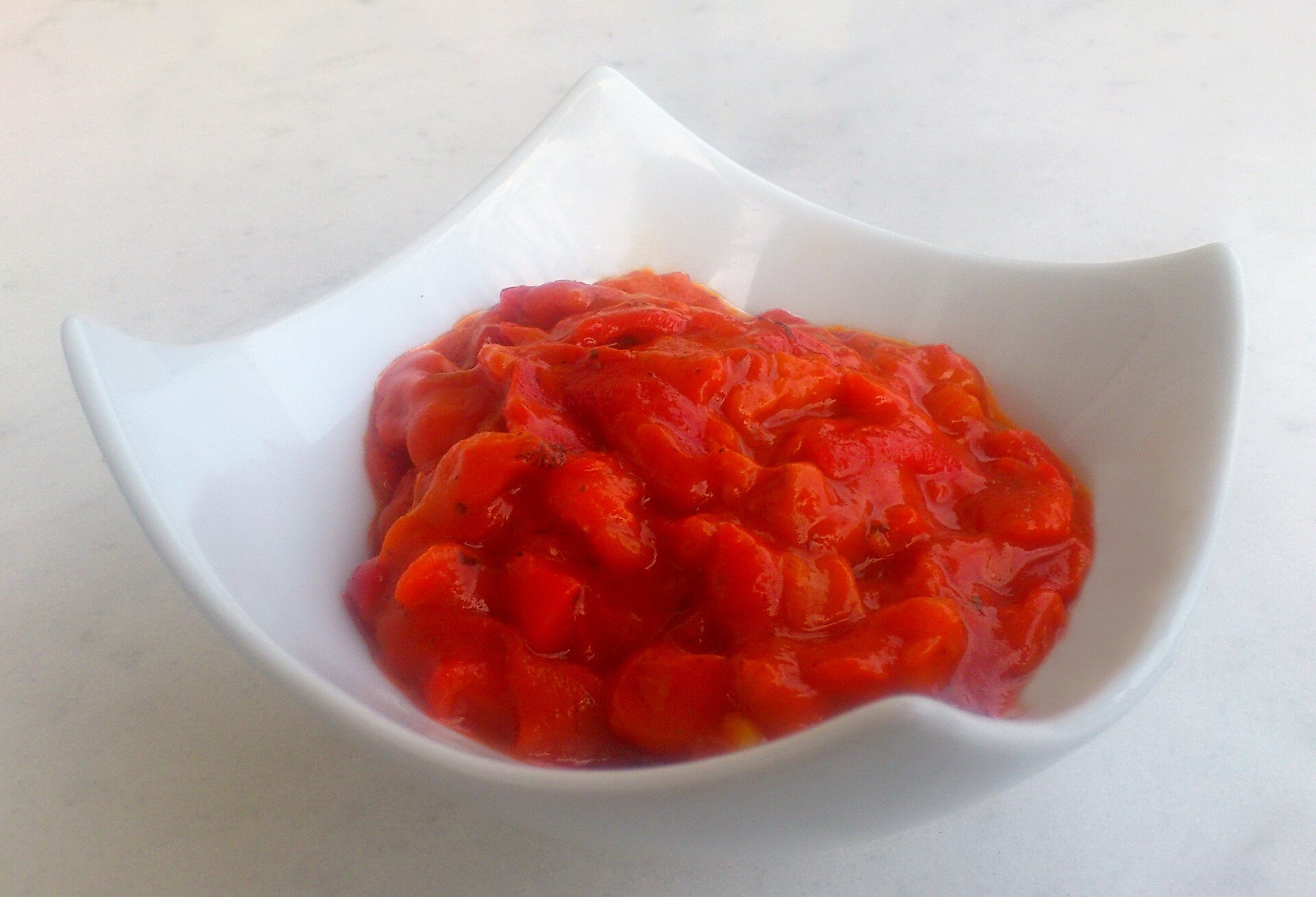
Roasted red peppers and tomatoes cooked down into a thick relish, sometimes with aubergine, garlic and a little chilli. "Lyut" means hot, though most jars are mild. Bulgarians spread it on bread, eat it with grilled meat and put it on toast with sirene for breakfast. Every family has its own version, and supermarkets sell dozens in jars, which makes it one of the easiest Bulgarian souvenirs to pack in a hold bag.
Kyopolou (кьопоолу)
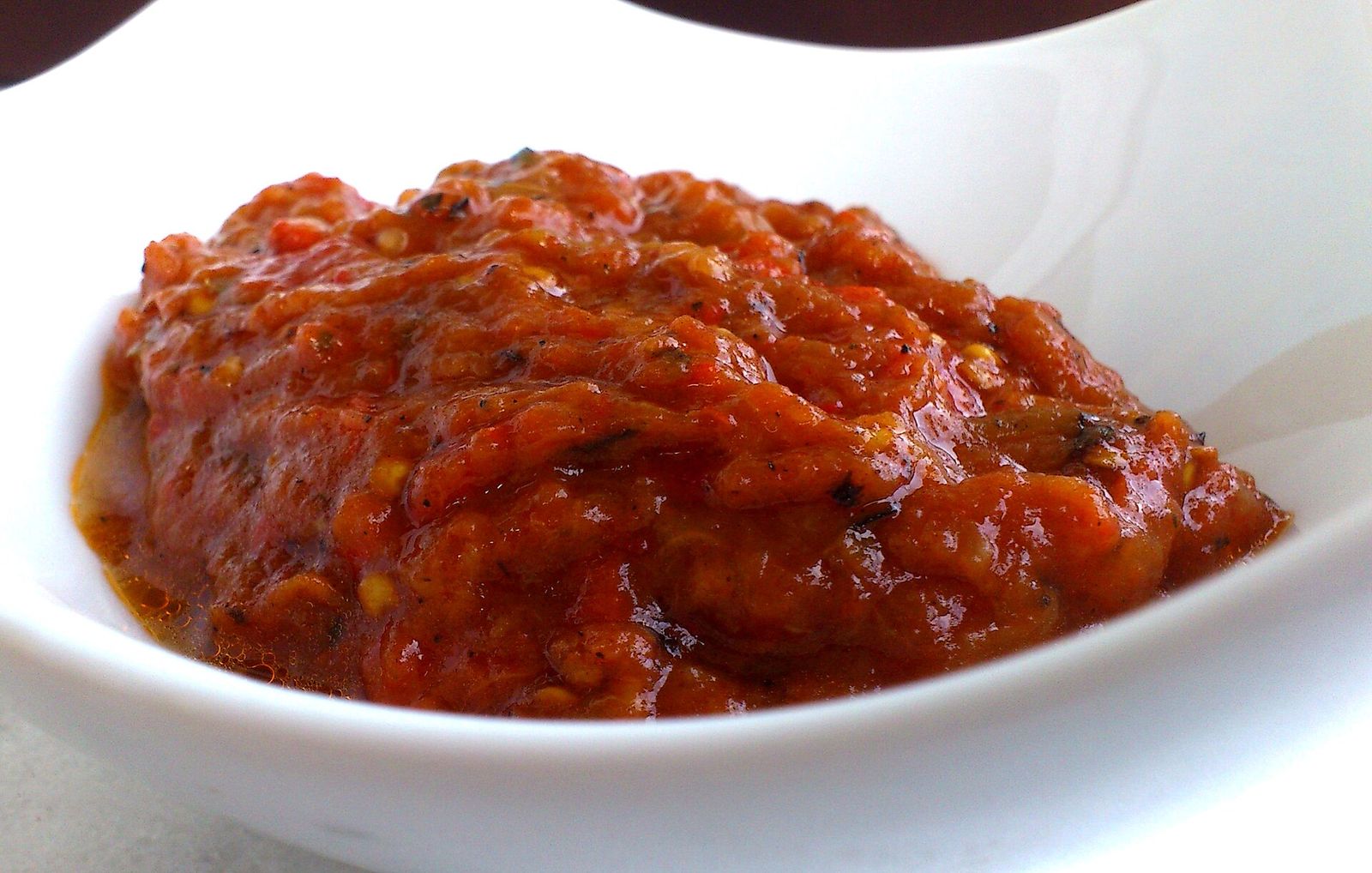
Roasted aubergine and peppers mashed with garlic, tomato and parsley. It tastes of the fire the vegetables were charred on, and it comes as a dip with bread. I order it with lyutenitsa and share both before the mains.
Bulgarian soups
Soup (чорба, chorba) is a lunch dish here, and a weekday lunch menu (обедно меню) almost always starts with one. The soup I leave to the brave is shkembe chorba (шкембе чорба), a tripe soup with garlic, vinegar and chilli that Bulgarians swear by after a heavy night.
Tarator (таратор)
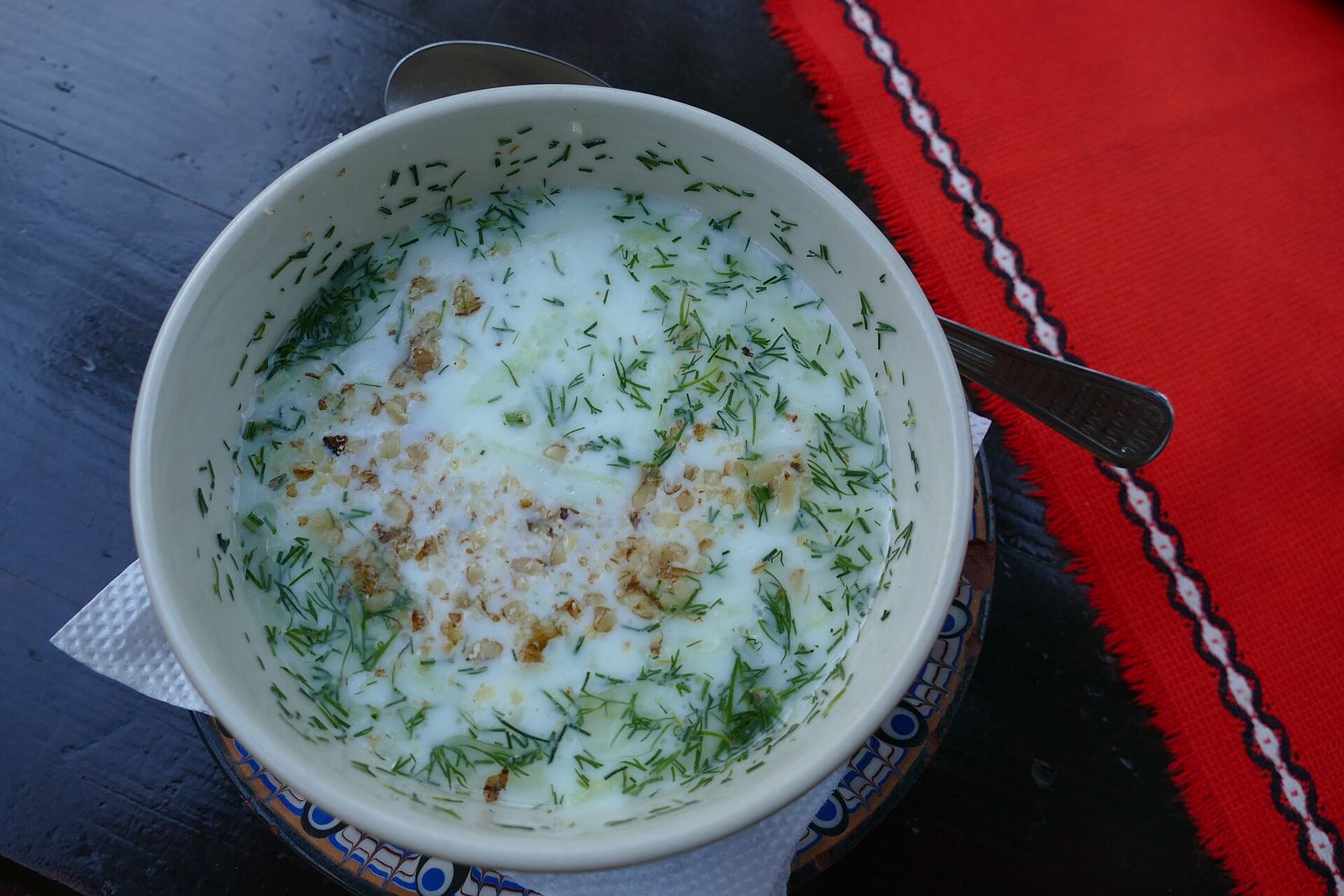
Tarator is cold soup made of yoghurt thinned with water, grated cucumber, dill, garlic, walnuts and a little sunflower oil. On a hot day in July it's the most refreshing thing you can order in Sofia, and some places add an ice cube. It's light enough to eat before a grilled main.
Bob chorba (боб чорба)
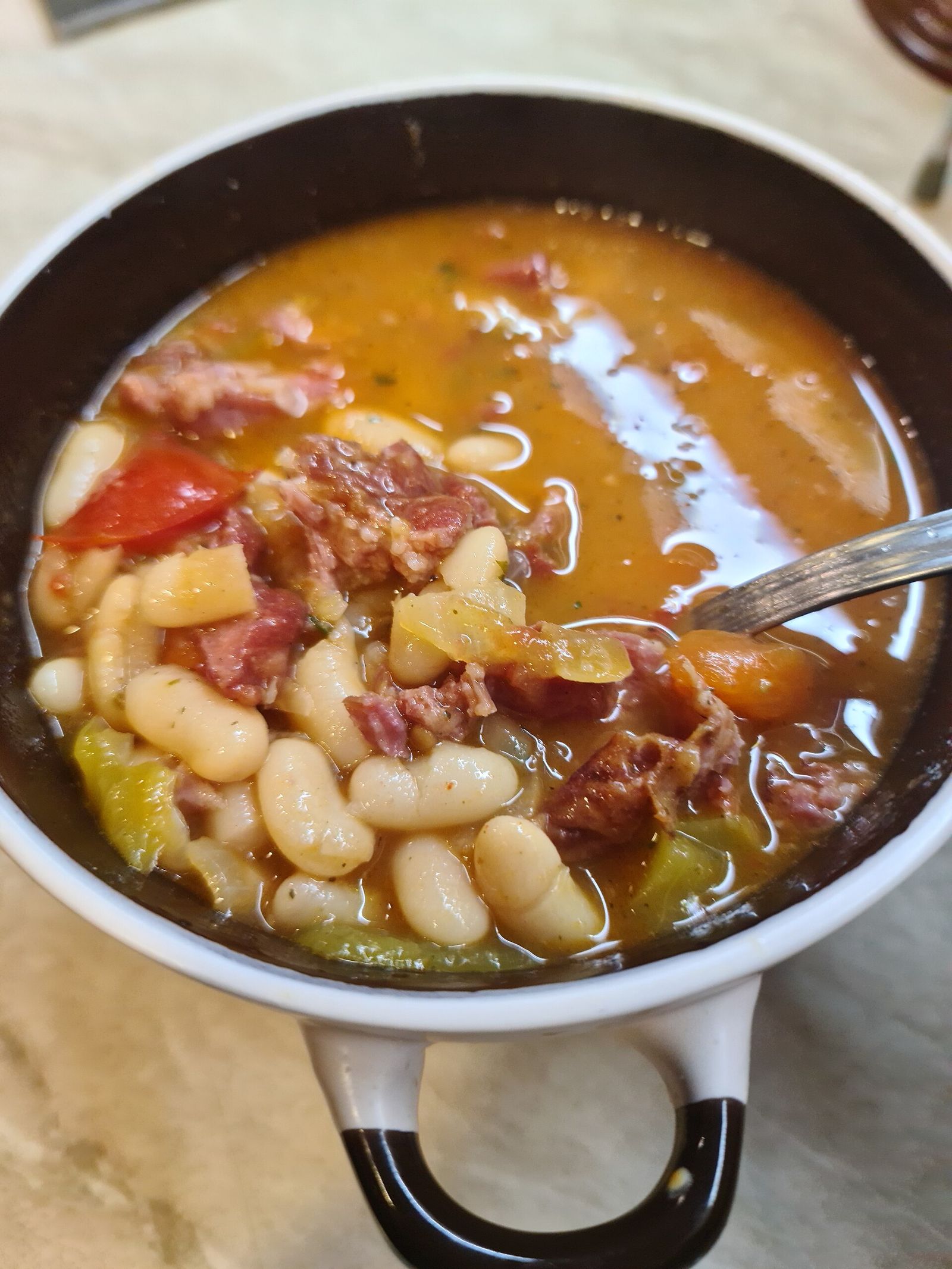
White bean soup with onion, carrot, peppers, tomato, dried mint and savory. The meatless version is the classic fasting dish, and some kitchens add smoked pork or sausage, as in the bowl above. It's cheap, filling and my winter lunch of choice, with bread and a few pickled chillies on the side.
Grilled meat: kebapche, kyufte and the mixed grill
Every mehana has a grill (скара, skara), and most neighbourhoods have a hatch selling grilled mince in a bun.
Kebapche and kyufte (кебапче, кюфте)
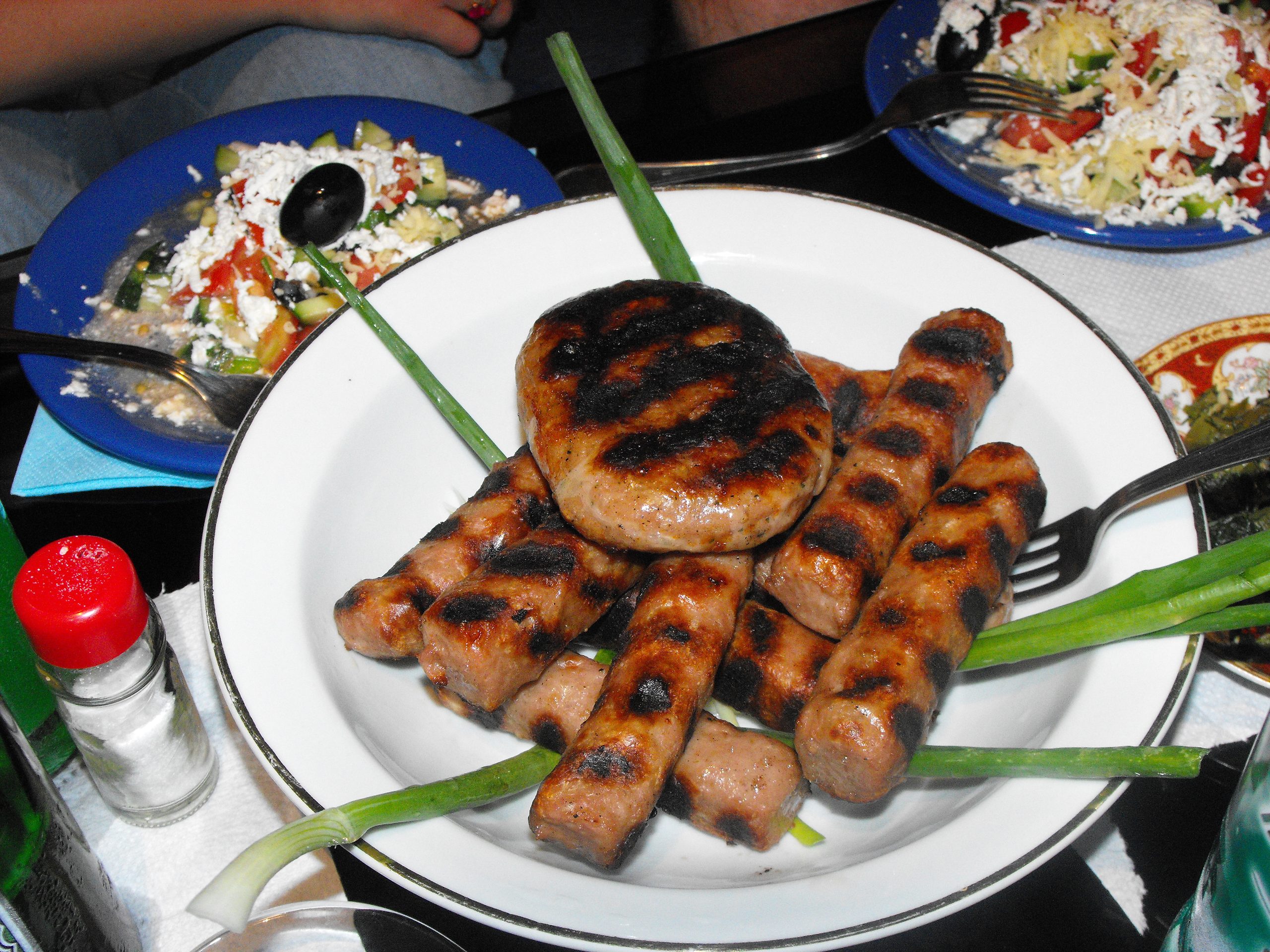
Kebapche is a finger of minced meat seasoned with cumin and grilled until charred at the edges. Kyufte is its round, flat sibling, made with onion and herbs. The classic side is chips under grated sirene, with a spoon of lyutenitsa. A mixed grill (мешана скара) adds them to other grilled meats on one plate. Drink beer or ayran with them, and if you want one on the go, the kebapche in a bun is the backbone of Sofia street food.
Clay-pot and oven dishes
Winter food in Bulgaria comes out of the oven in an earthenware pot and reaches the table still bubbling. These are the ones you'll see on most traditional menus.
| Dish | On the menu | What it is | When I order it |
|---|---|---|---|
| Kavarma | кавърма | Pork or chicken stewed with onion, peppers and mushrooms, sometimes with an egg baked on top | Cold evenings |
| Gyuvech | гювеч | Vegetables baked slowly in the pot, with or without meat | Autumn |
| Sirene po shopski | сирене по шопски | Sirene baked with tomatoes, peppers and an egg | Vegetarian main |
| Musaka | мусака | Potatoes and minced meat baked under a yoghurt and egg topping | Lunch |
Kavarma is my winter order and the dish I'd pick for a first mehana dinner, served in the pot it cooked in.
Sarmi (сарми)
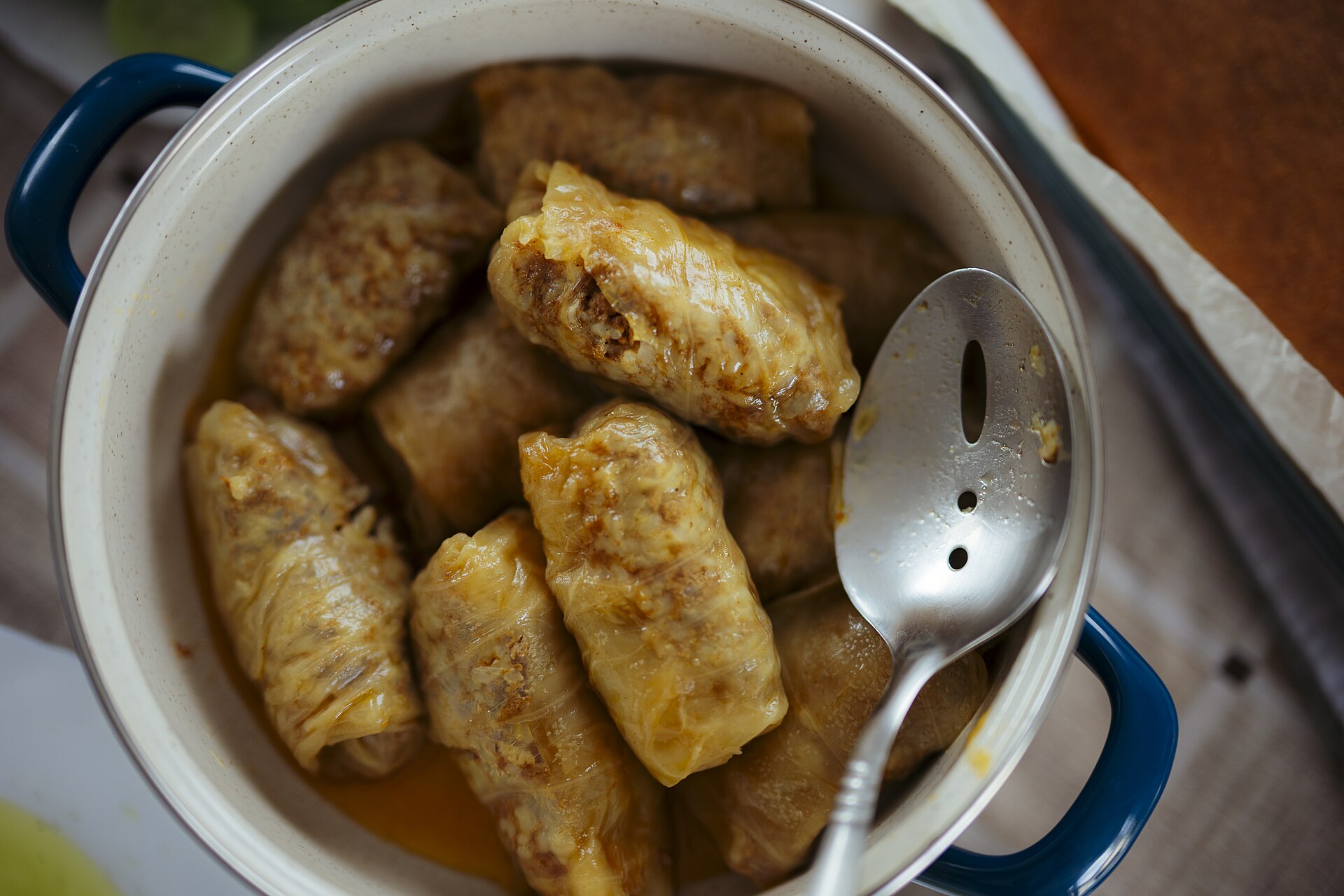
Pickled cabbage leaves or vine leaves (лозови сарми) rolled round rice and minced meat, then simmered slowly. The cabbage version is winter food and the vine-leaf version turns up in summer. Meatless sarmi, rice only, go on the Christmas Eve table and on fasting menus. A spoon of yoghurt on top is standard.
Stuffed peppers and chushki byurek (пълнени чушки, чушки бюрек)
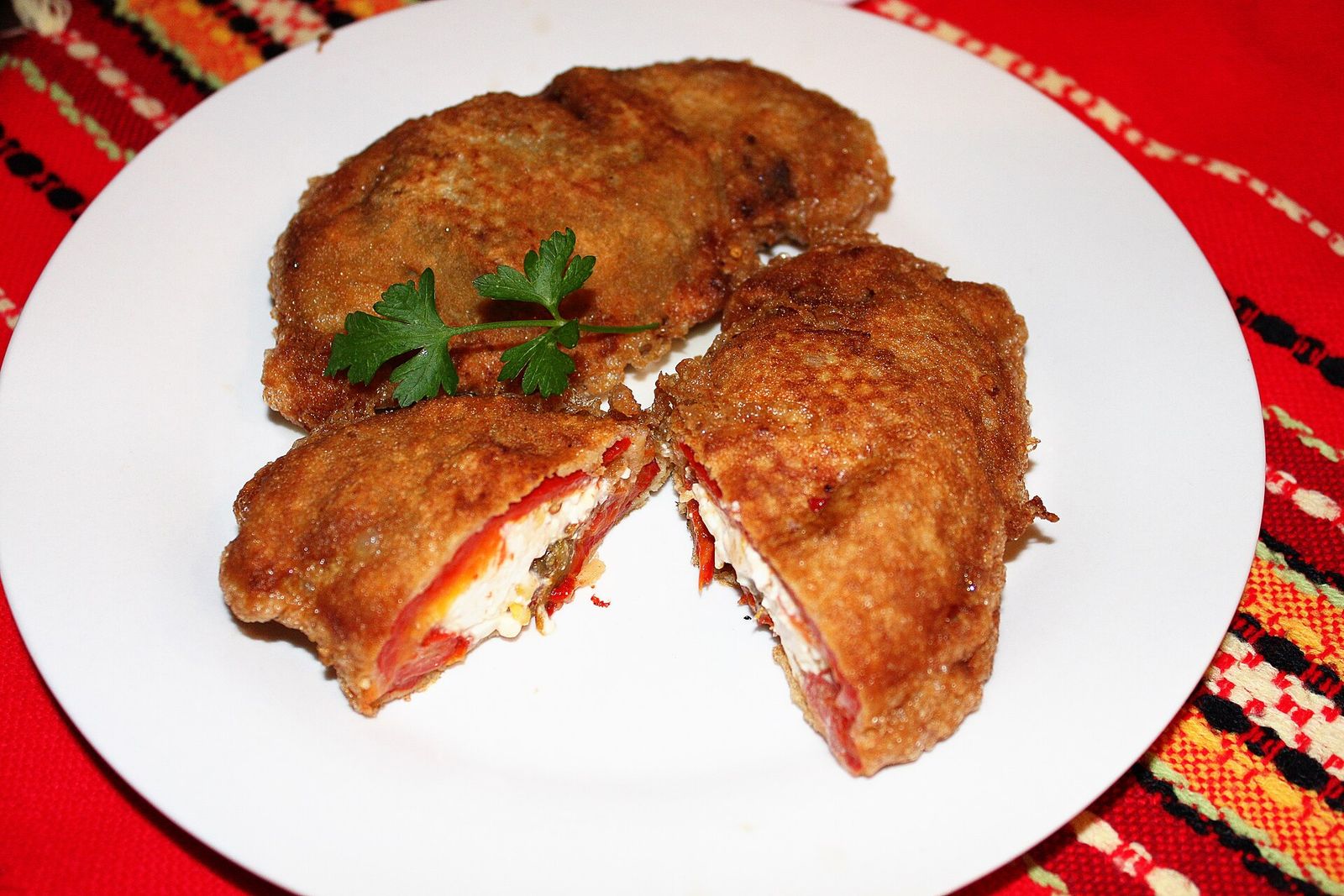
Bulgarians stuff peppers two ways. Pulneni chushki are peppers filled with rice and mince, or rice alone, baked and served with a yoghurt sauce. Chushki byurek are roasted peppers filled with egg and sirene, dipped in batter and fried. The byurek is my favourite starter in the country and the one I order for vegetarian friends.
Banitsa, mekitsa and the Bulgarian breakfast
Breakfast in Sofia means pastry from a bakery counter, eaten standing up or on the walk to work. Palachinki (палачинки), thin pancakes rolled round chocolate, honey and walnuts, jam or sirene, fill the gaps, and gevrek (геврек), a sesame bread ring, sells from kiosks near the metro.
Banitsa (баница)
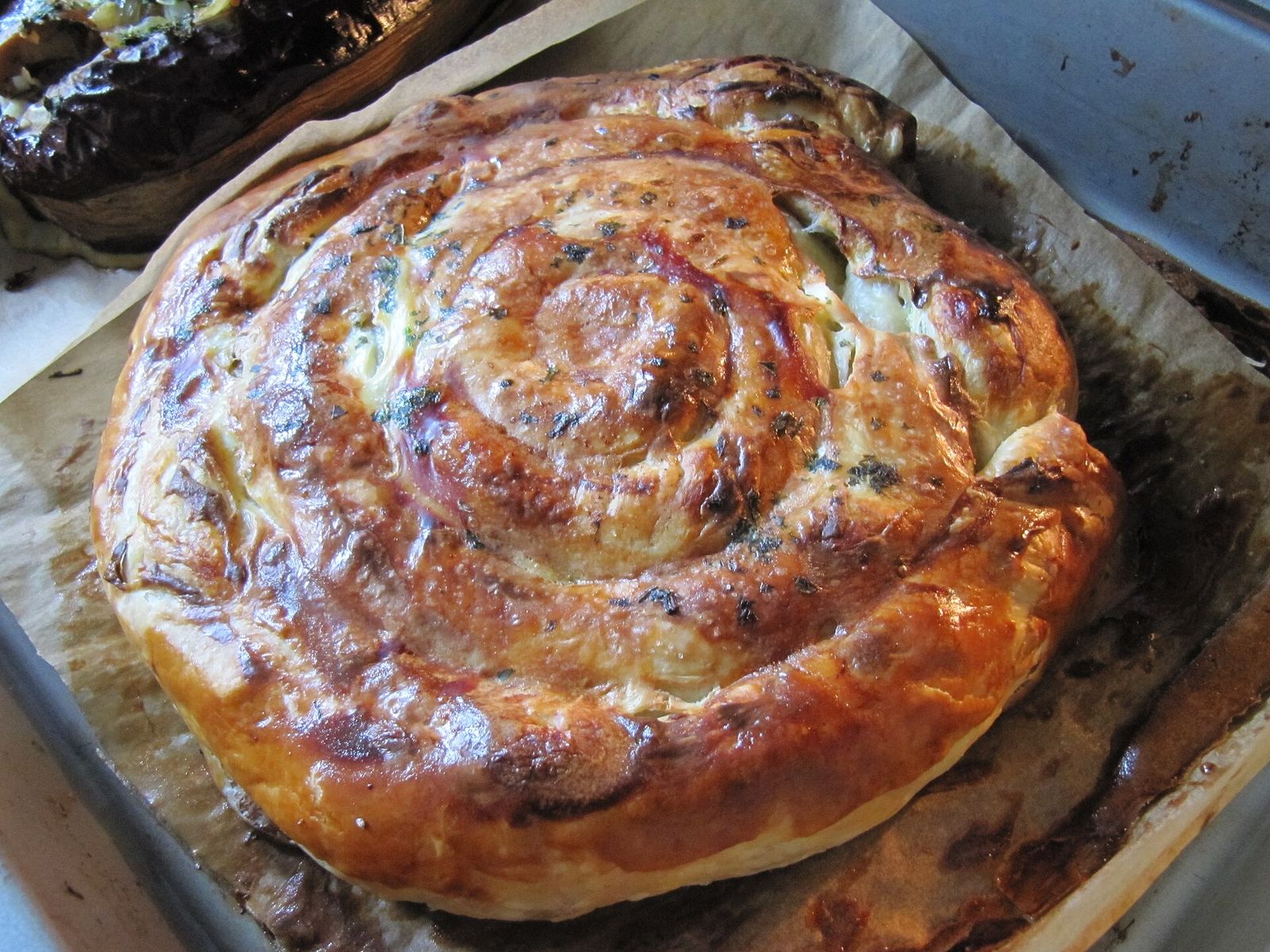
Banitsa is layers of filo with whisked eggs, yoghurt and crumbled sirene, baked until the top is golden. It comes flat in a tray or coiled into a spiral. The variants use spinach (спаначник), leek or pumpkin, and there's a sweet milk banitsa (млечна баница). Bulgarians eat it for breakfast, hot or cold, with yoghurt, ayran or boza. At Christmas and on New Year's Eve the banitsa hides lucky charms called kasmeti, one of the Christmas and New Year traditions in Sofia I love most: usually small pieces of dogwood branch, sometimes a coin or a paper fortune, with an extra slice cut for the house. My favourite filling is plain sirene, and the best banitsa in Sofia comes from small neighbourhood bakeries.
Mekitsa (мекица)
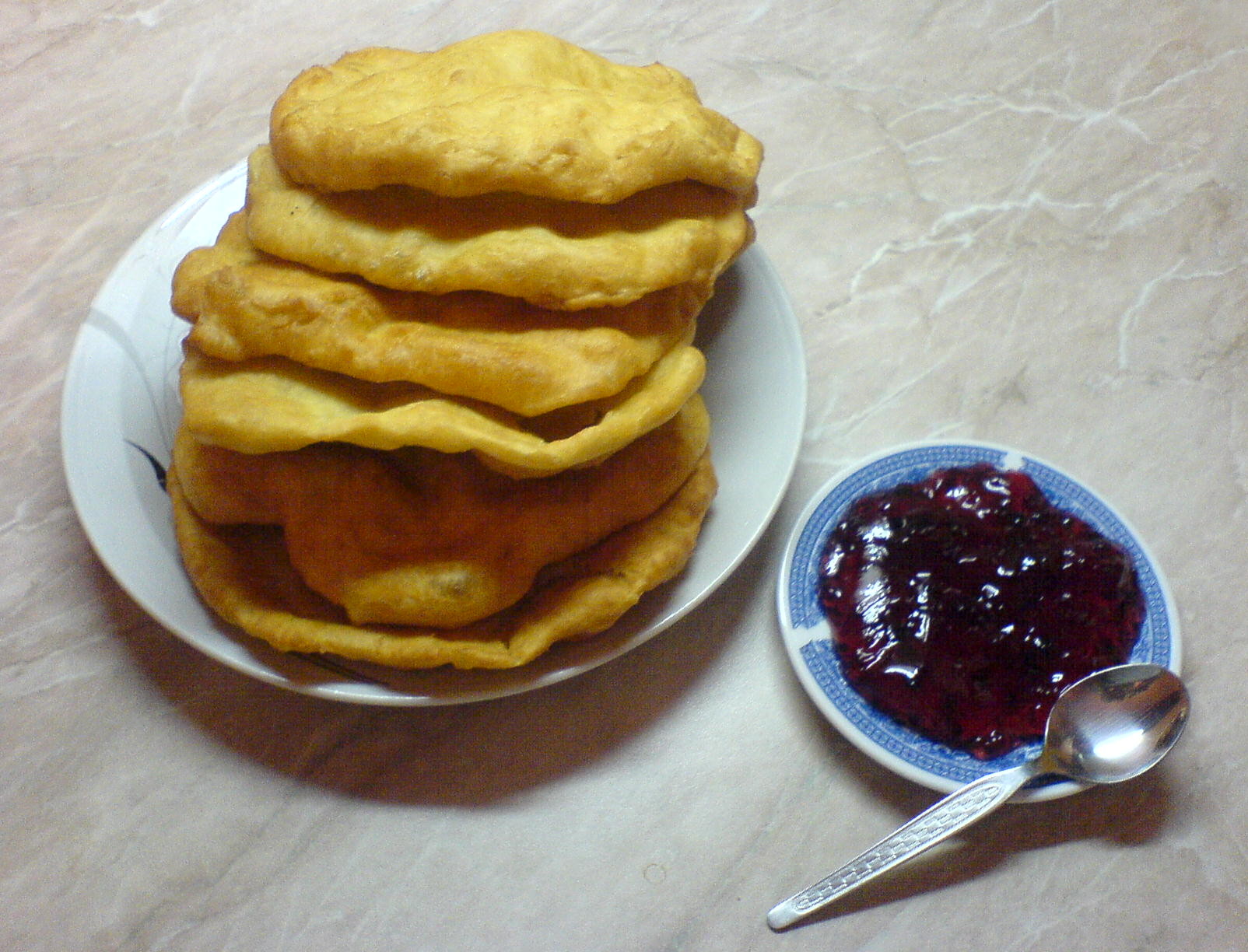
Mekitsa is dough made with yoghurt, stretched and deep-fried until puffed and golden. Sweet, it comes dusted with icing sugar or with jam or honey. Savoury, it comes with crumbled sirene. Sofia has small shops that make nothing else, and a mekitsa with jam and a coffee is my weekend breakfast.
Cheese, yoghurt and cured meat
Sirene and kashkaval (сирене, кашкавал)
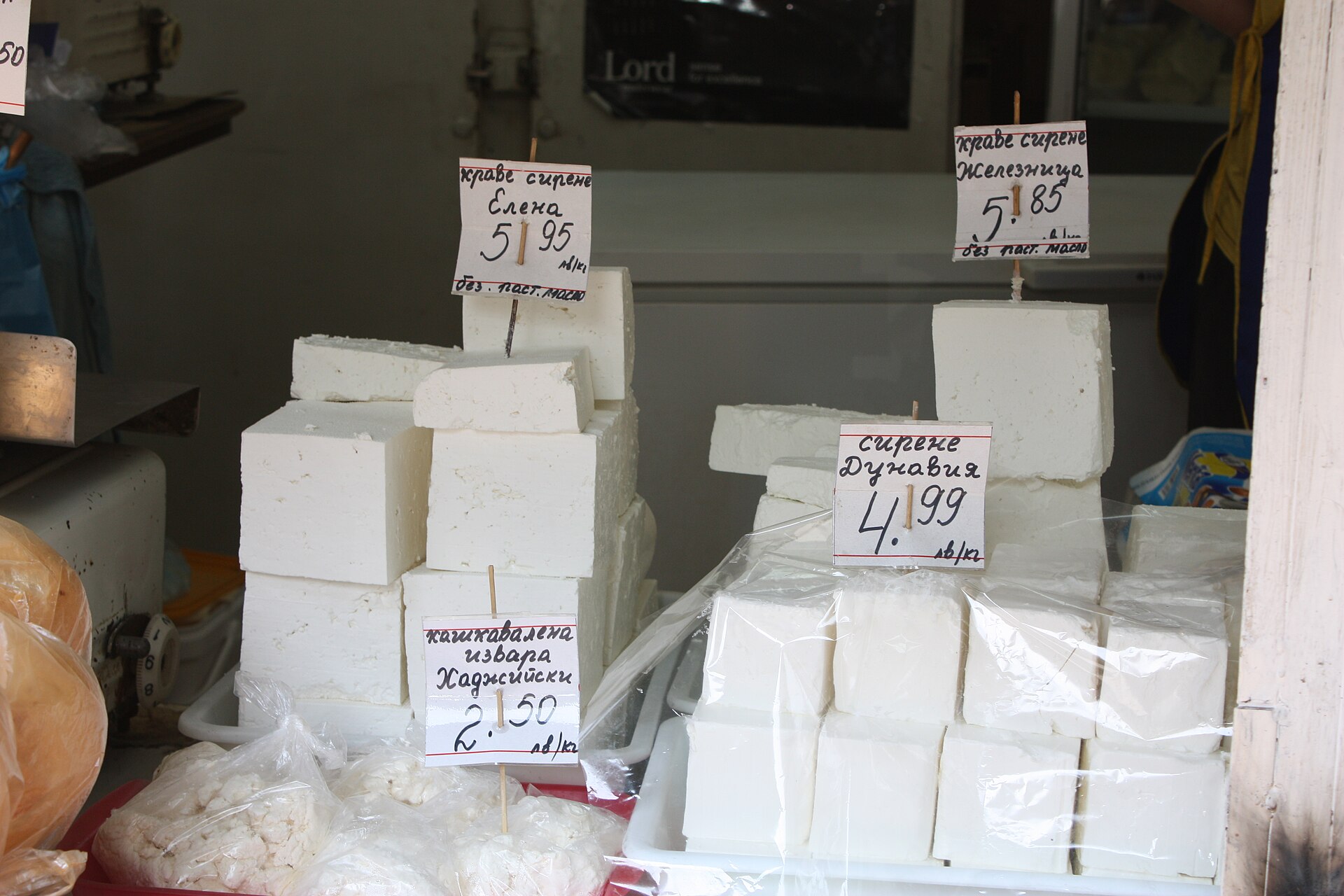
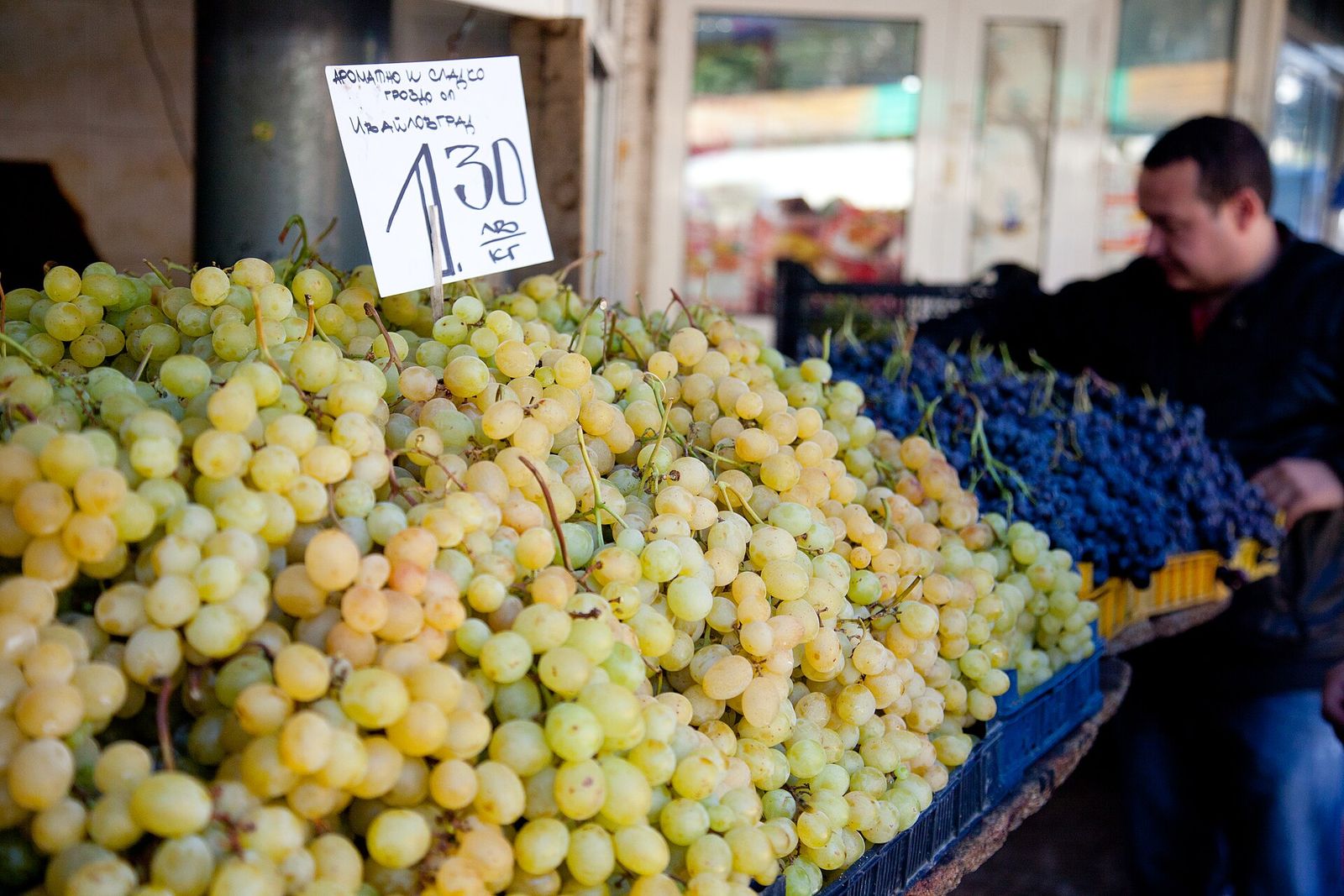
Sirene is Bulgaria's white brined cheese, crumbly and salty, made from cow's milk (краве), sheep's milk (овче) or goat's milk. It goes on the shopska, into the banitsa and over the chips. Kashkaval is the yellow cheese, eaten sliced or as kashkaval pane, breaded and fried. The signs in the photo say краве сирене, cow's milk sirene. Sheep's milk sirene costs more and tastes stronger, and it's the one I buy.
Kiselo mlyako, Bulgarian yoghurt (кисело мляко)
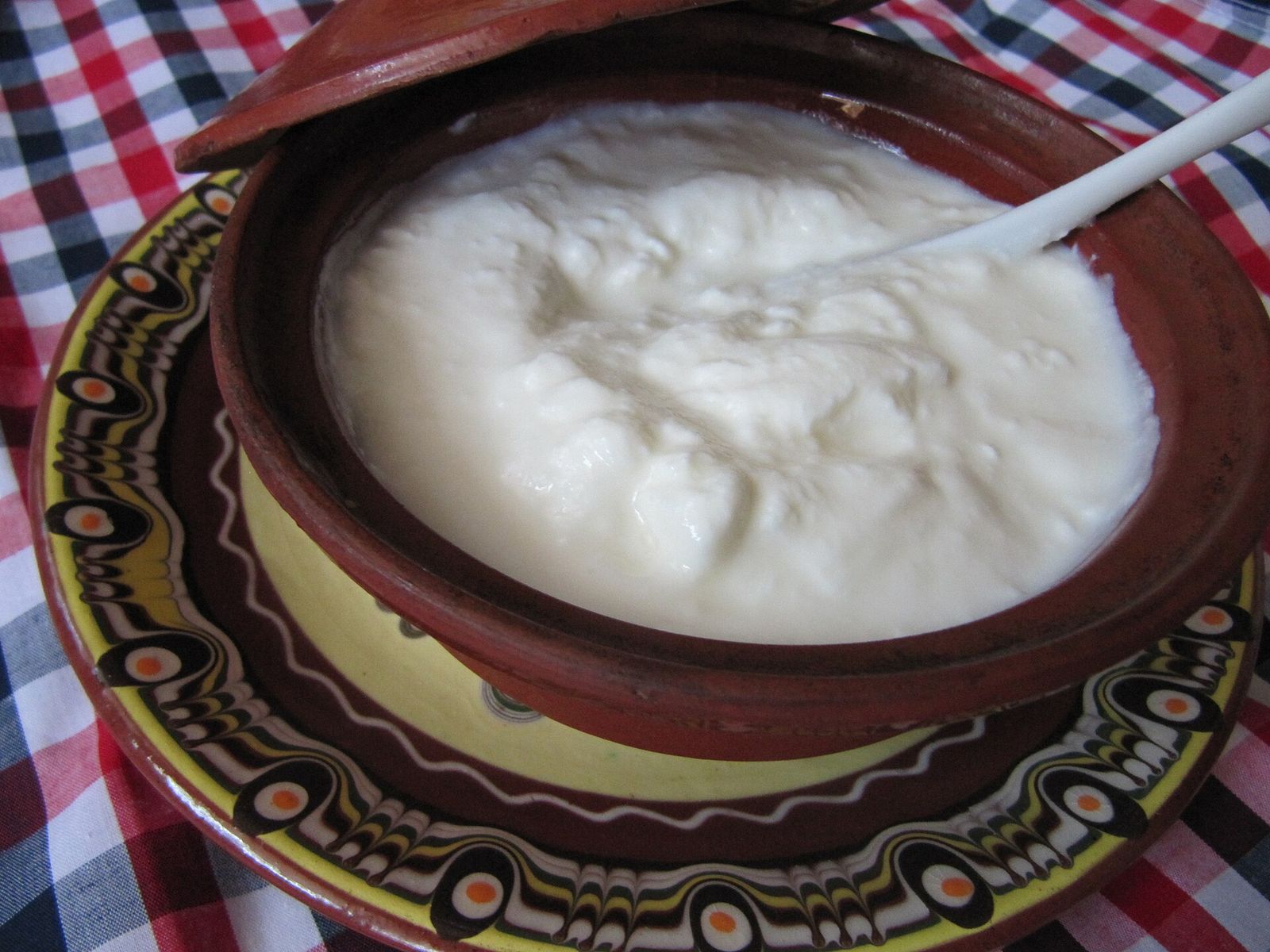
The name means sour milk. It's thick and tangy, and in 1905 the Bulgarian doctor Stamen Grigorov identified the bacterium behind it, now called Lactobacillus bulgaricus. Bulgarians eat it with everything: in tarator and snezhanka, on top of musaka and sarmi, and plain with honey and walnuts. The starter for Bulgarian yoghurt pairs that bacterium with a second one, Streptococcus thermophilus, and a plain tub from any Sofia supermarket is the cheapest way to taste it.
Lukanka (луканка)
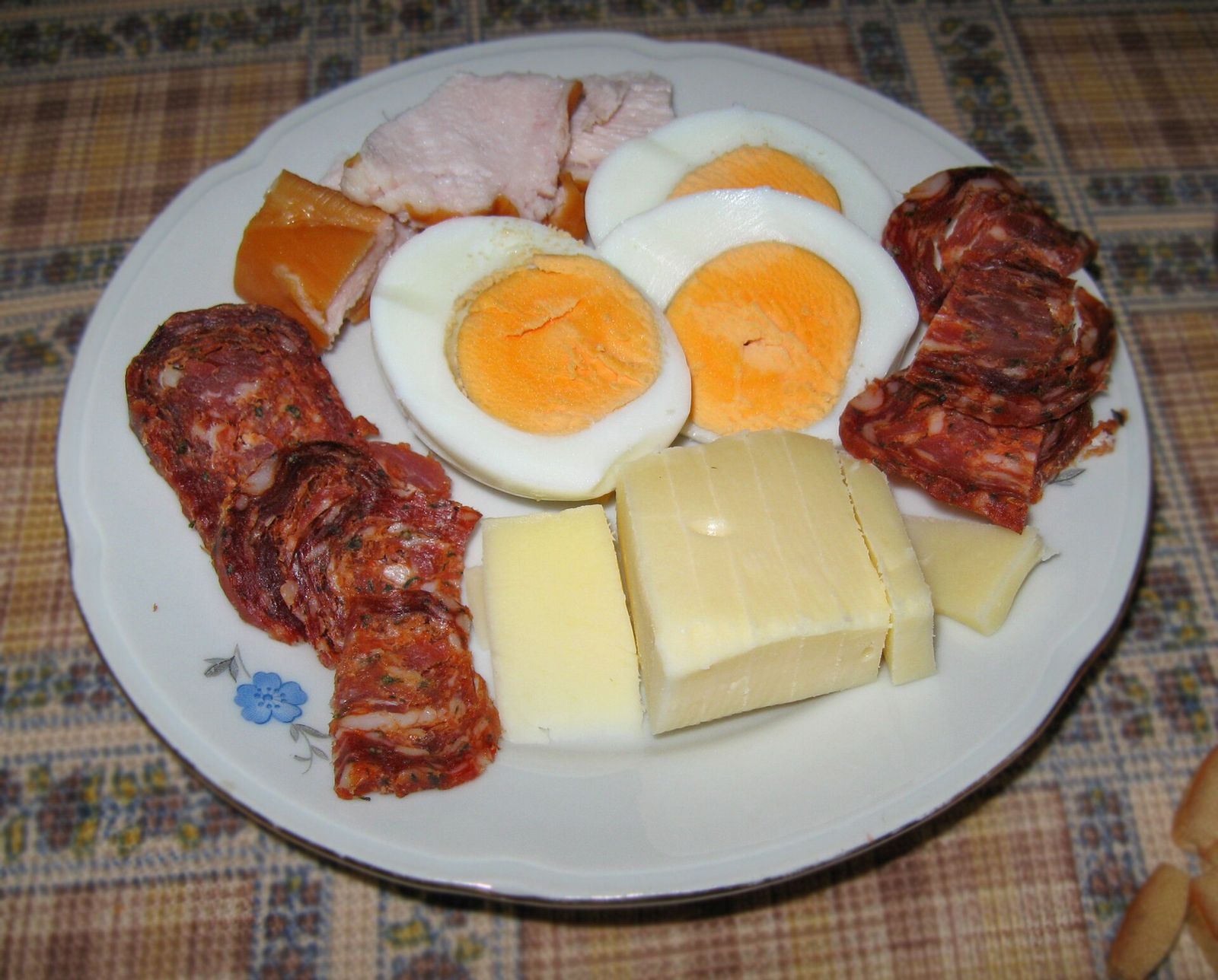
Lukanka is a flat, dry-cured sausage of pork and veal with cumin and black pepper, and the version from Panagyurishte (луканка панагюрска) carries an EU traditional speciality label. Sliced thin, it goes on a cold plate with kashkaval and a glass of rakia, or on the breakfast table with boiled eggs.
Bulgarian desserts
Dessert here is either very simple, yoghurt with honey and walnuts, or very sweet, anything soaked in syrup. Sofia's sweet shops (сладкарница) sell most of the Bulgarian desserts below by the slice or the piece.
Tikvenik (тиквеник)
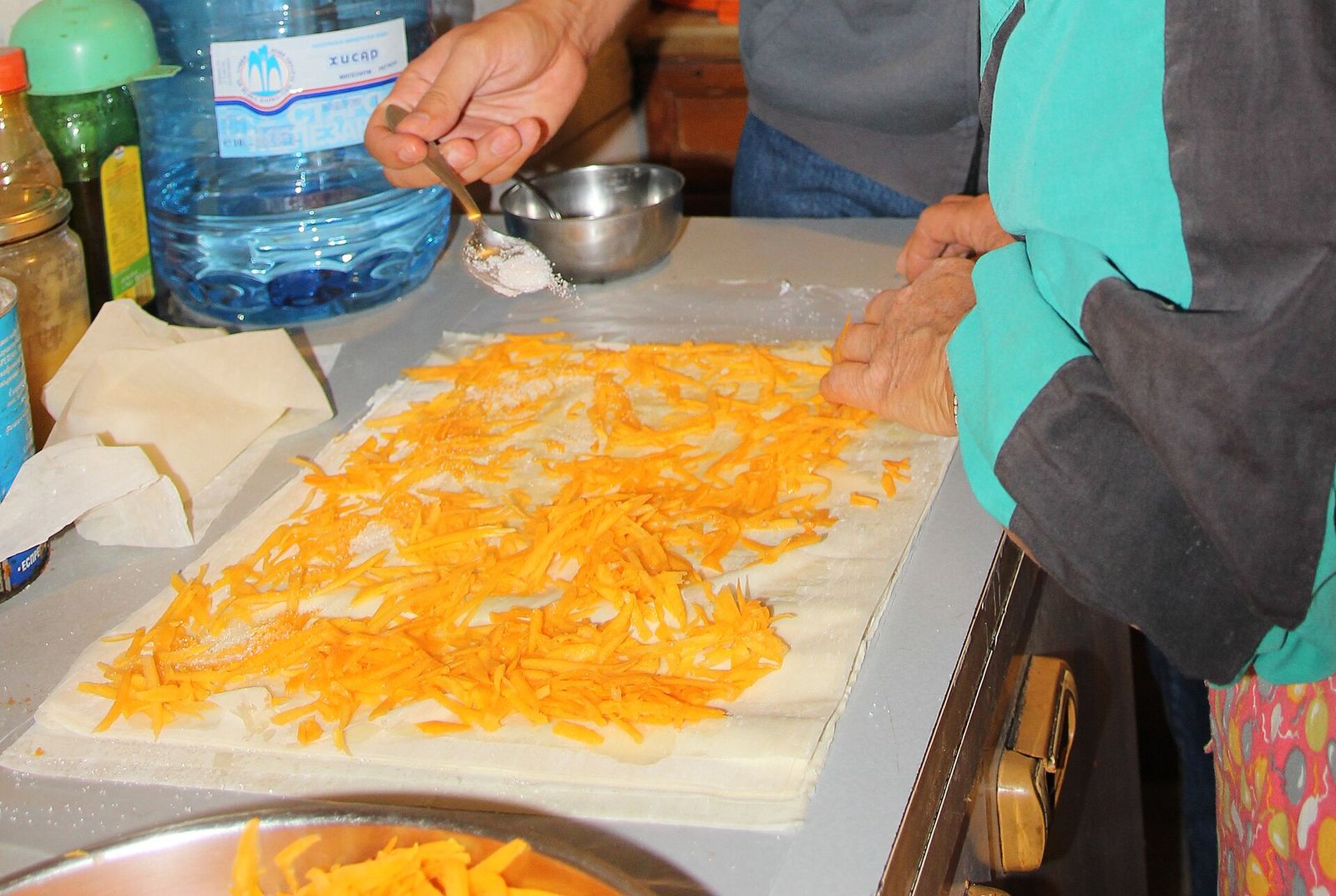
Tikvenik is a sweet banitsa: sheets of filo brushed with oil, scattered with grated pumpkin, sugar, cinnamon and walnuts, then rolled and baked. It's autumn food, and when the pumpkins pile up at the markets the bakeries start selling it by the slice.
Baklava (баклава)
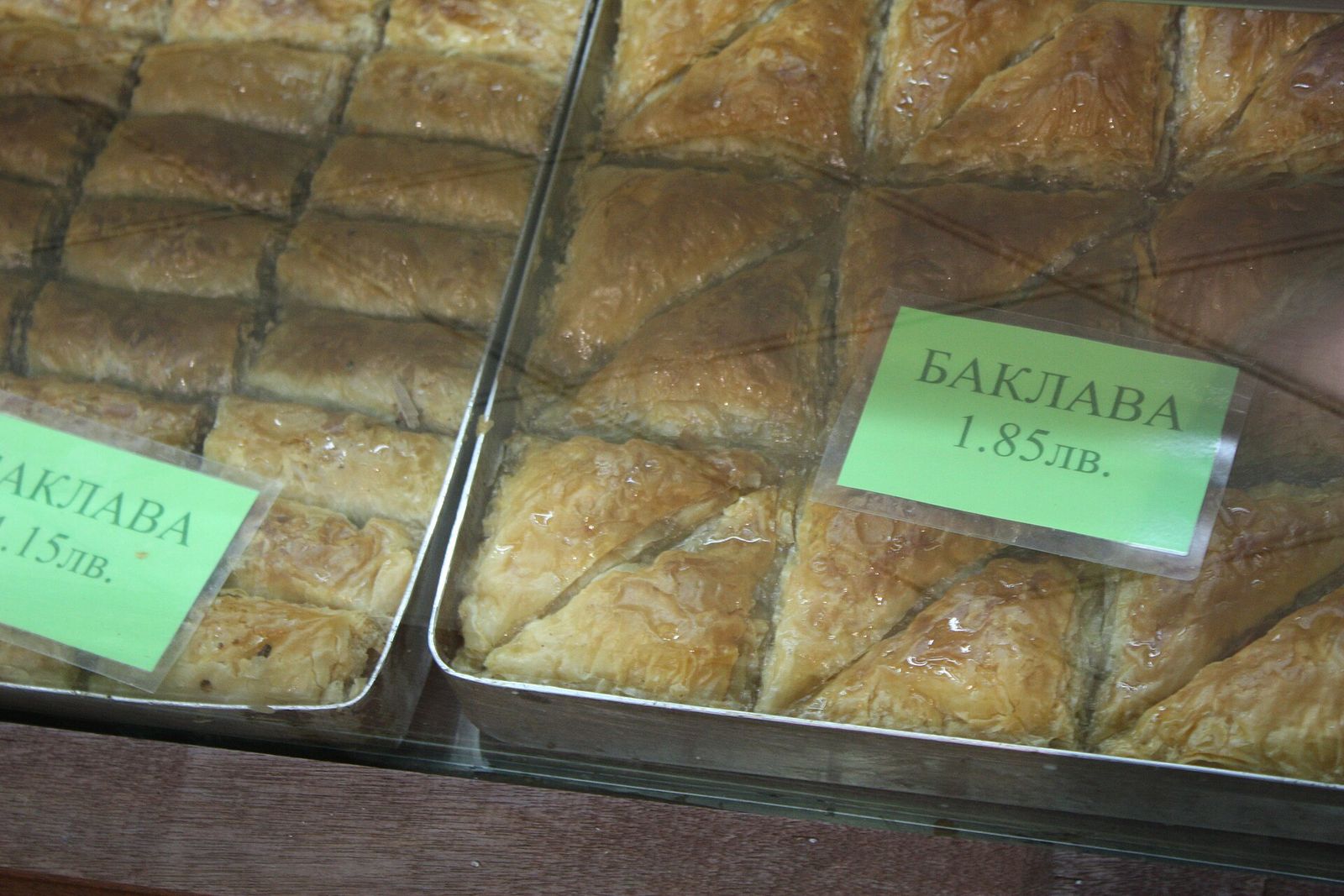
Thin layers of filo with chopped walnuts, baked and drenched in syrup. Every Balkan country claims it, and in Sofia it comes by the piece from the sweet-shop counter.
| Sweet | On the menu | What it is |
|---|---|---|
| Yoghurt with honey and walnuts | кисело мляко с мед и орехи | The simplest Bulgarian dessert and my favourite |
| Garash cake | гараш торта | Chocolate and walnut layer cake |
| Biscuit cake | бисквитена торта | Biscuits layered with cream, no baking |
| Milk with rice | мляко с ориз | Rice pudding with cinnamon |
| Crème caramel | крем карамел | Baked custard with caramel |
| Kozunak | козунак | Sweet braided bread for Easter |
Kozunak is baked for Easter in Bulgaria, when it shares the table with dyed eggs, and supermarkets sell it the rest of the year too.
What to drink with Bulgarian food
Bulgarians match the drink to the course: rakia with the salad, beer or ayran with the grill, wine with the clay pots, boza with breakfast.
Rakia (ракия)
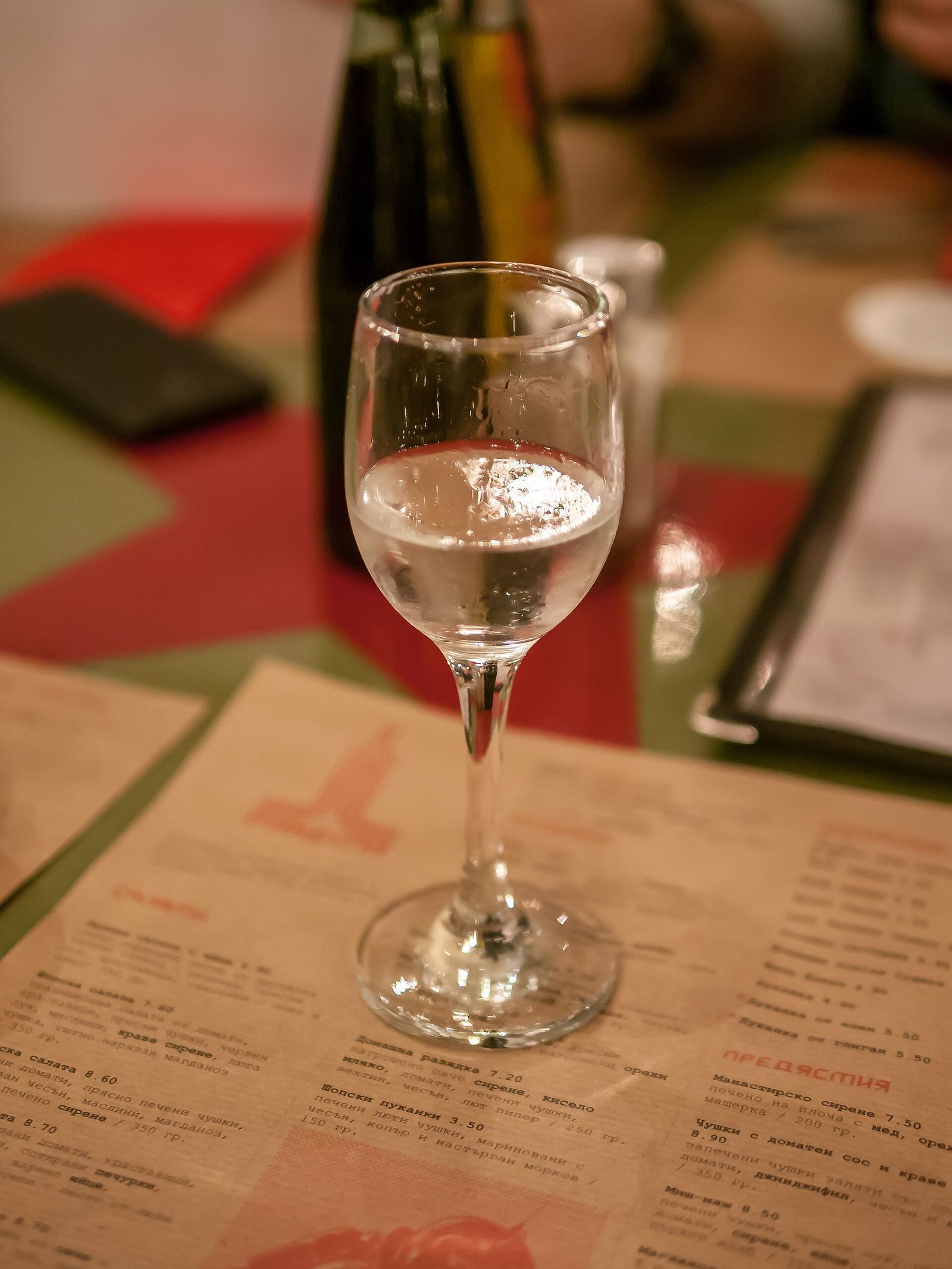
Rakia is fruit brandy, most often grape (гроздова) or plum (сливова), and it's Bulgaria's national drink. Shop bottles run at about 40%, and homemade rakia from a village still runs stronger. It comes in a small glass with the salad, and you sip it slowly over the first course. Say "nazdrave" (наздраве) and look each person in the eye as you clink.
Ayran and boza (айрян, боза)
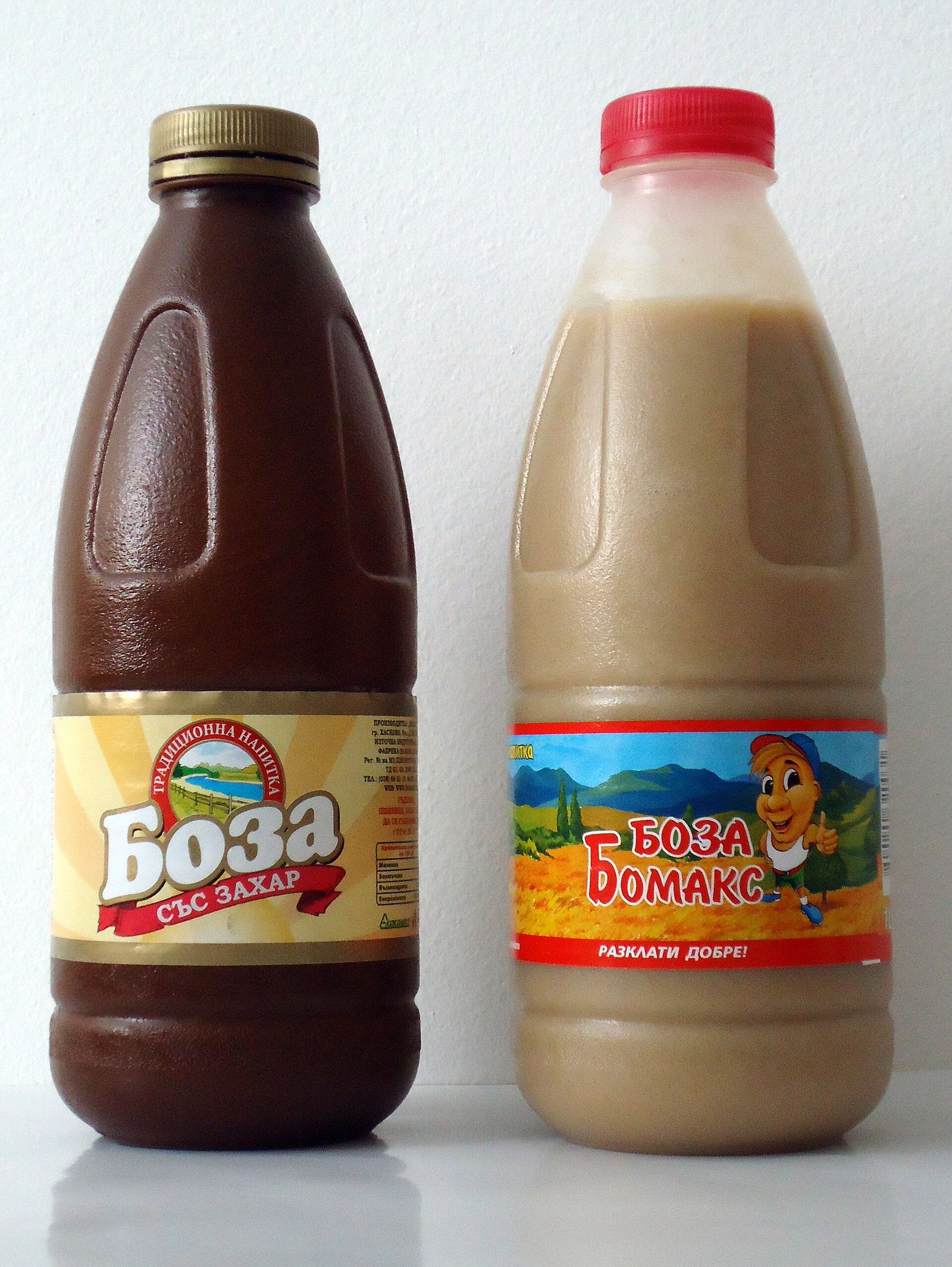
Ayran is yoghurt whisked with water and salt, the drink Bulgarians pour with kebapche. Boza is thick, sweet and sour, made from fermented grain, at about 1% alcohol. A bottle of boza or ayran with a slice of banitsa is the classic Bulgarian breakfast, and visitors either love boza or never order it again.
Bulgarian wine
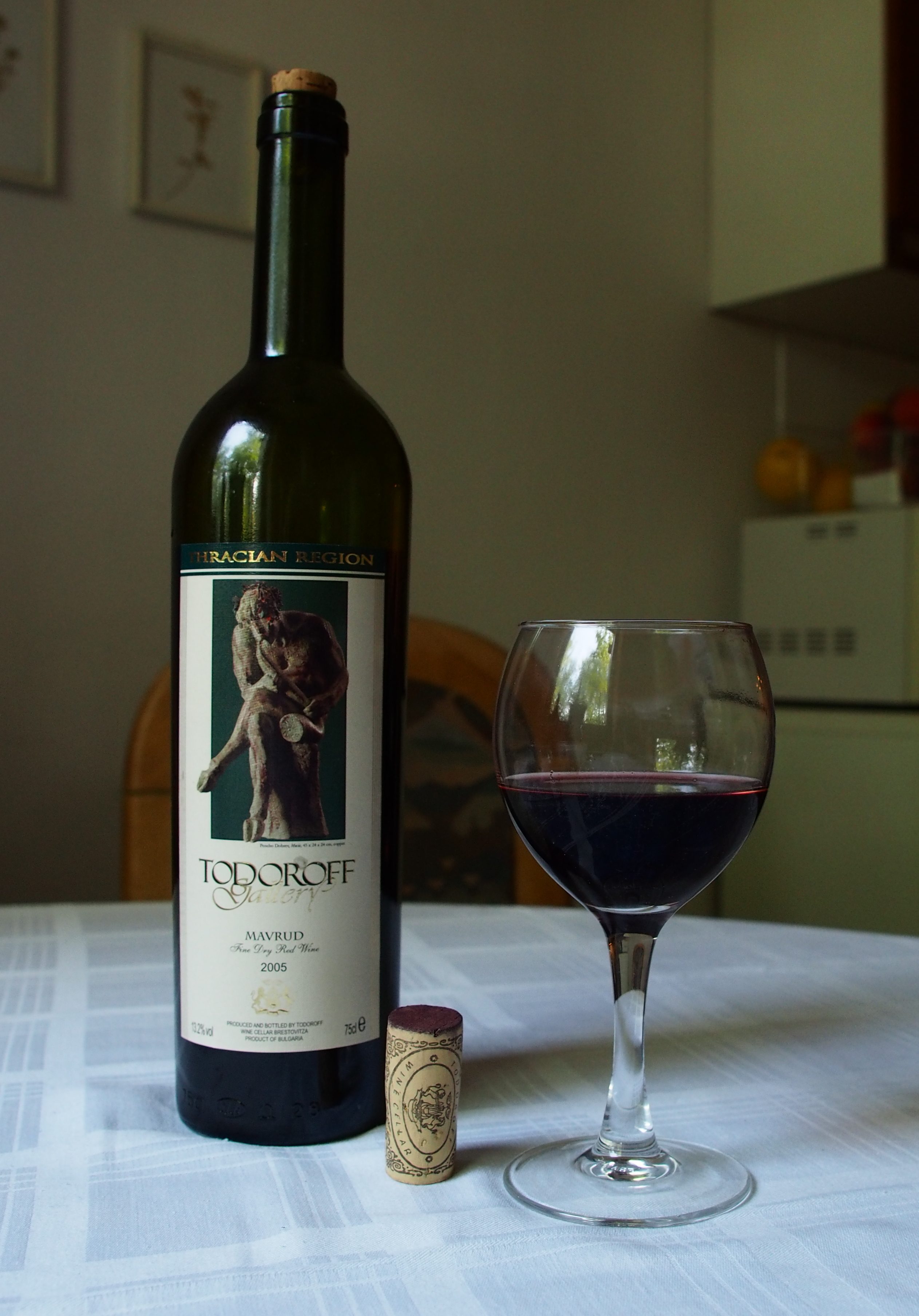
A decent bottle of Bulgarian wine costs about €7 in a Sofia shop. Mavrud is the local red grape I'd try first, dark and plummy, and it suits kavarma and grilled meat. Beer is the other everyday choice: Zagorka, Kamenitza and Shumensko are the lagers you'll see on tap.
How to order Bulgarian food in Sofia
Most restaurants in the centre have an English menu, but learning a handful of the Cyrillic words in the tables above gets you further in a neighbourhood mehana, and the Bulgarian alphabet takes an afternoon to learn well enough to read a menu.
Dishes arrive when the kitchen finishes them, so a starter and a main can land together; tell the waiter if you want them in turn. Share the salads and the clay pots. If you eat no meat, look for the word постно (postno), which marks the meatless dishes Bulgarians eat during fasting periods and makes vegetarian and vegan Sofia easier than the meat-heavy menus suggest.
Pay at the table and ask for the bill (сметката, smetkata). Tipping in Bulgaria runs at about 10% for good table service, and rounding up is fine for a coffee.
Food is where Sofia prices feel lowest to a UK visitor, and these are the numbers I budget with in 2026.
| What you're buying | Typical price in Sofia |
|---|---|
| Weekday lunch menu (обедно меню) | €6 to €7 |
| Casual lunch out | €8 to €10 |
| Dinner in a cheap restaurant, no drinks | €15 to €20 a head |
| Three-course dinner for two, mid-range, no drinks | about €60 |
| Half-litre of draught Bulgarian beer | €2 to €3.50 |
| Cappuccino | about €3 |
Where to eat Bulgarian food in Sofia
Sofia eats Bulgarian food in five kinds of place, and each one does a few dishes best.
| Place | What to eat there | When to go |
|---|---|---|
| Mehana (механа), a traditional tavern | Salads, grills, clay pots, rakia | Dinner, booked at weekends |
| Banitsa shop (баничарница) | Banitsa, ayran, boza | Mornings |
| Mekitsa shop | Mekitsa with jam, honey or sirene | Breakfast |
| Restaurant with a lunch menu | Soup, a main and bread | Weekday lunch |
| Women's Market (Женски пазар) | Fruit, vegetables, cheese, honey, cheap snacks | Mornings |
For a first mehana dinner I take visiting friends to Hadjidraganovite Izbi (Hadjidraganov's Cellars) on Hristo Belchev Street, near Vitosha Boulevard. It's a cellar restaurant with clay pots, rakia and live folk music every evening except Monday. It is touristy, and it is also good fun. Book a table on the Hadjidraganovite Izbi website for a weekend.
The best restaurants in Sofia run from mehanas like this one to modern Bulgarian kitchens that rework the classics. My ideal day of eating in Sofia is banitsa at breakfast, tarator or bob chorba at lunch and a clay pot at dinner.
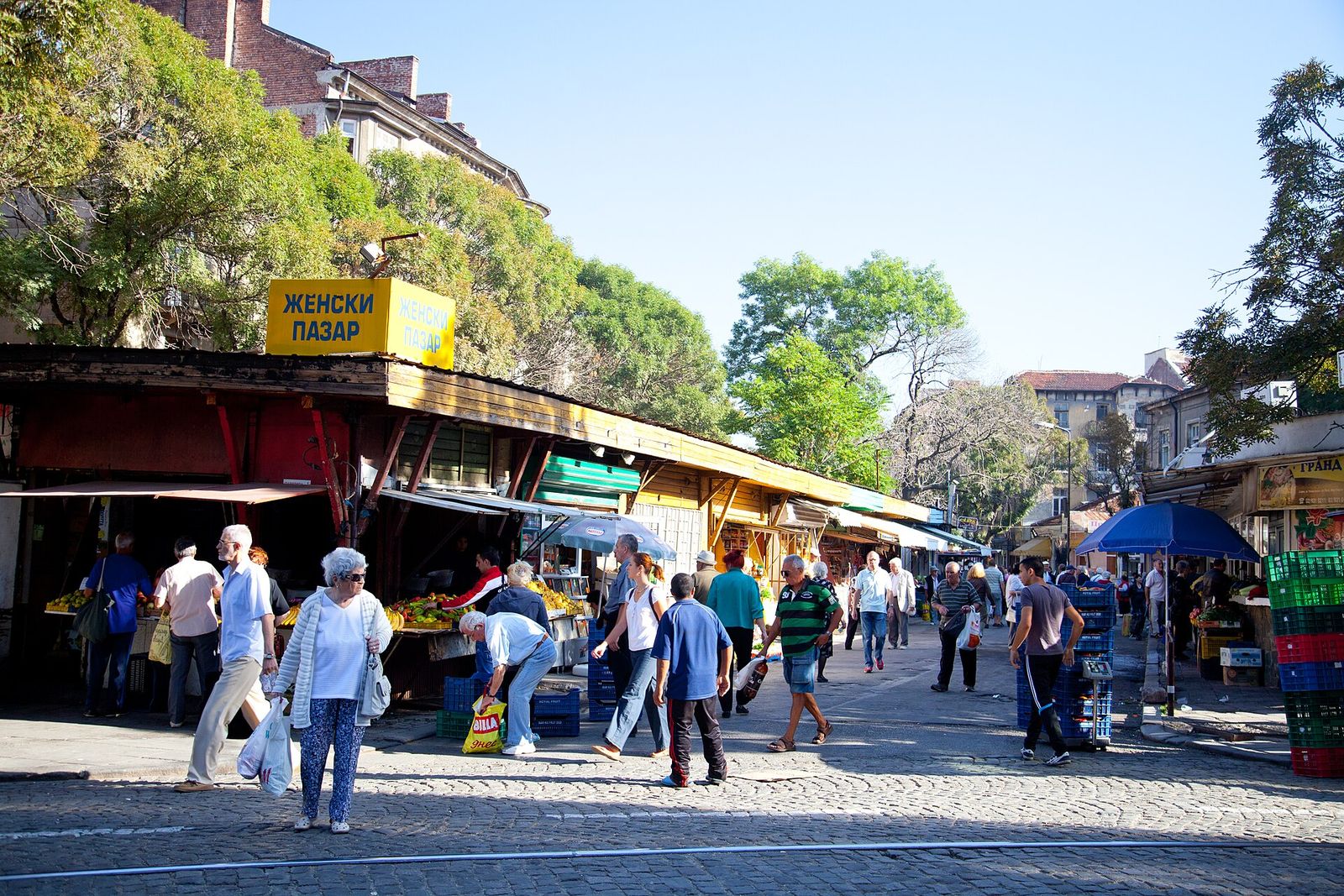
For the raw ingredients, go to Zhenski Pazar, the Women's Market, Sofia's big open-air food market. In summer the tomatoes and peppers piled on its stalls are the reason a shopska salad tastes the way it does, and the cheese and honey sellers are there all year.
Key takeaways
- Eat with the seasons: tarator in the summer heat, tikvenik in autumn, kavarma and sarmi in winter.
- Every dish on a Bulgarian menu shows its weight in grams, and bread is a separate order.
- Kebapche is priced by the piece, so ask for three kebapcheta (три кебапчета) for a normal plate.
- Vegans should look for постно (postno) on a menu, the label for dishes made for Orthodox fasting.
- Learn the Cyrillic for your favourite dishes; it opens up neighbourhood mehanas without English menus.
Frequently asked questions
What is the most traditional drink in Bulgaria?
Rakia is the most traditional drink in Bulgaria. It's a fruit brandy, usually made from grapes or plums, at about 40% in shop bottles and stronger when homemade. Bulgarians sip it slowly from a small glass with a salad before the meal.
What are the top 10 Bulgarian dishes?
My top 10 are shopska salad, banitsa, tarator, kebapche, kavarma, sarmi, lyutenitsa, chushki byurek, mekitsa and Bulgarian yoghurt. Together they cover a salad, a breakfast pastry, a soup, the grill, a clay-pot stew, a stuffed dish, a relish, a starter, a sweet and the yoghurt Bulgaria is famous for.
What are five traditional Bulgarian foods?
Shopska salad, banitsa, tarator, kebapche and kavarma are five traditional Bulgarian foods you'll find on almost every traditional menu in Sofia. Add sirene, the white brined cheese, and kiselo mlyako, the yoghurt, and you have the base of most Bulgarian cooking.
What is food like in Bulgaria?
Food in Bulgaria is fresh, seasonal and built on vegetables, white cheese, yoghurt, filo pastry and grilled meat. Meals start with salad and rakia, mains are hearty grills or clay-pot stews, and portions are generous. It's also cheap: a weekday lunch menu in Sofia costs about €6 to €7.
What is the national dish of Bulgaria?
Shopska salad is Bulgaria's national dish: tomato, cucumber, pepper and onion under grated sirene. Bulgaria's state tourism agency gave it its name in 1956, and in 2014 it was the most popular recipe in the European Parliament's "A Taste of Europe" initiative. Banitsa is the national breakfast.
Is Bulgarian food spicy?
No, most Bulgarian food is mild. The flavour comes from garlic, dill, cumin and savory, and the heat comes from a hot pepper served on the side or a spoon of lyutenitsa. Shkembe chorba, the tripe soup, is the dish people season at the table with chilli and garlic vinegar.
Is Bulgarian food good for vegetarians?
Yes, as long as you eat dairy and eggs. Shopska salad, snezhanka, lyutenitsa, kyopolou, tarator, banitsa, chushki byurek and sirene po shopski are all meat-free, and the word постно (postno) on a menu marks dishes with no meat or animal products at all.
Sofia Food Guide: What to Eat and Where
Banitsa, shopska and rakia: what to eat in Sofia, the places I eat it, and what a meal costs in euros.
Read the guide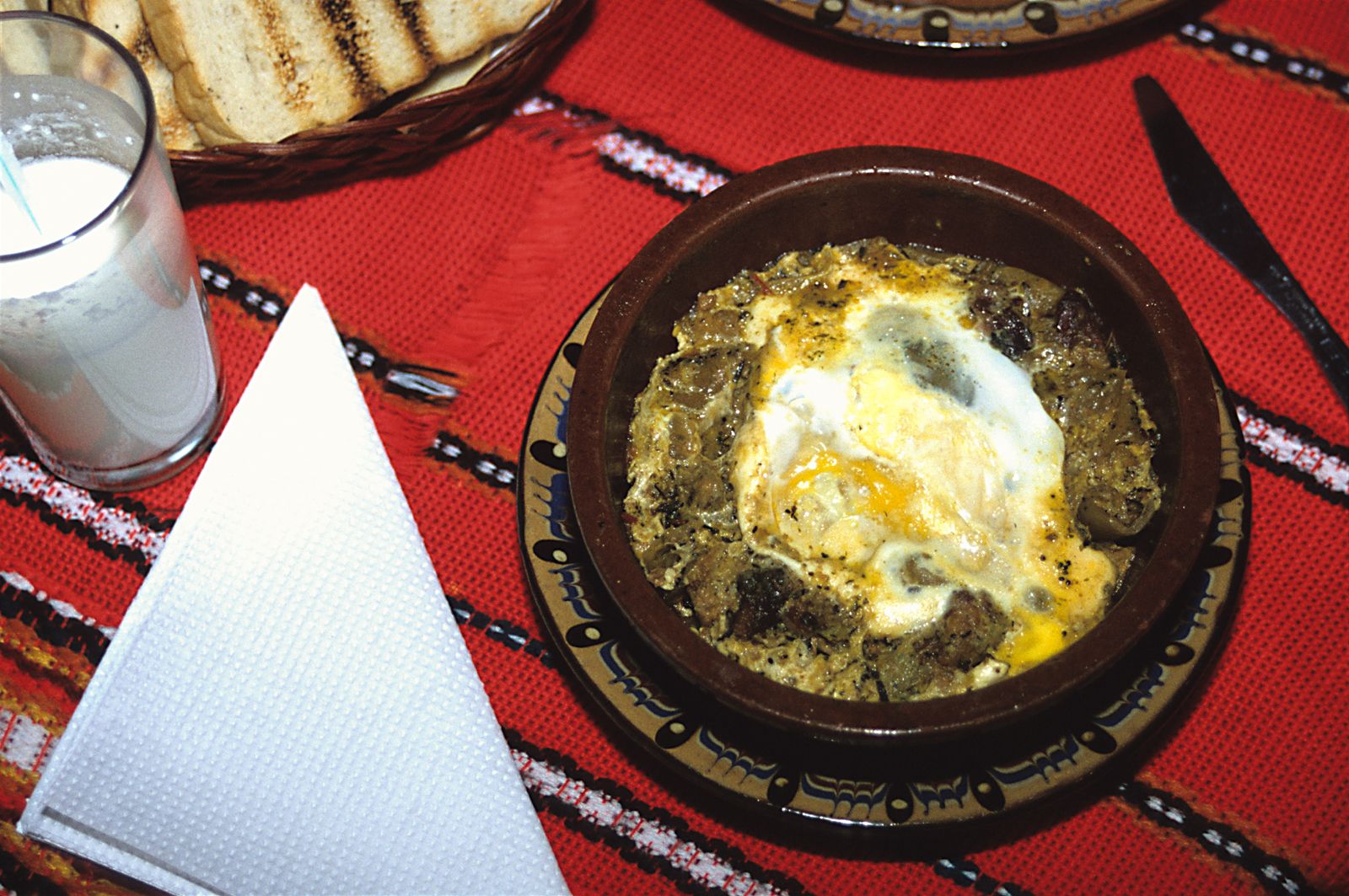
The Best Restaurants in Sofia: 11 Places I Send Friends
The 11 Sofia restaurants I send friends to, from folk-music cellars to award-winning fine dining, and what to order.
Read the guideWhere to Eat Banitsa in Sofia
Sofia's breakfast pastry: the bakeries I queue at, the fillings to try and how to order at the counter.
Read the guide