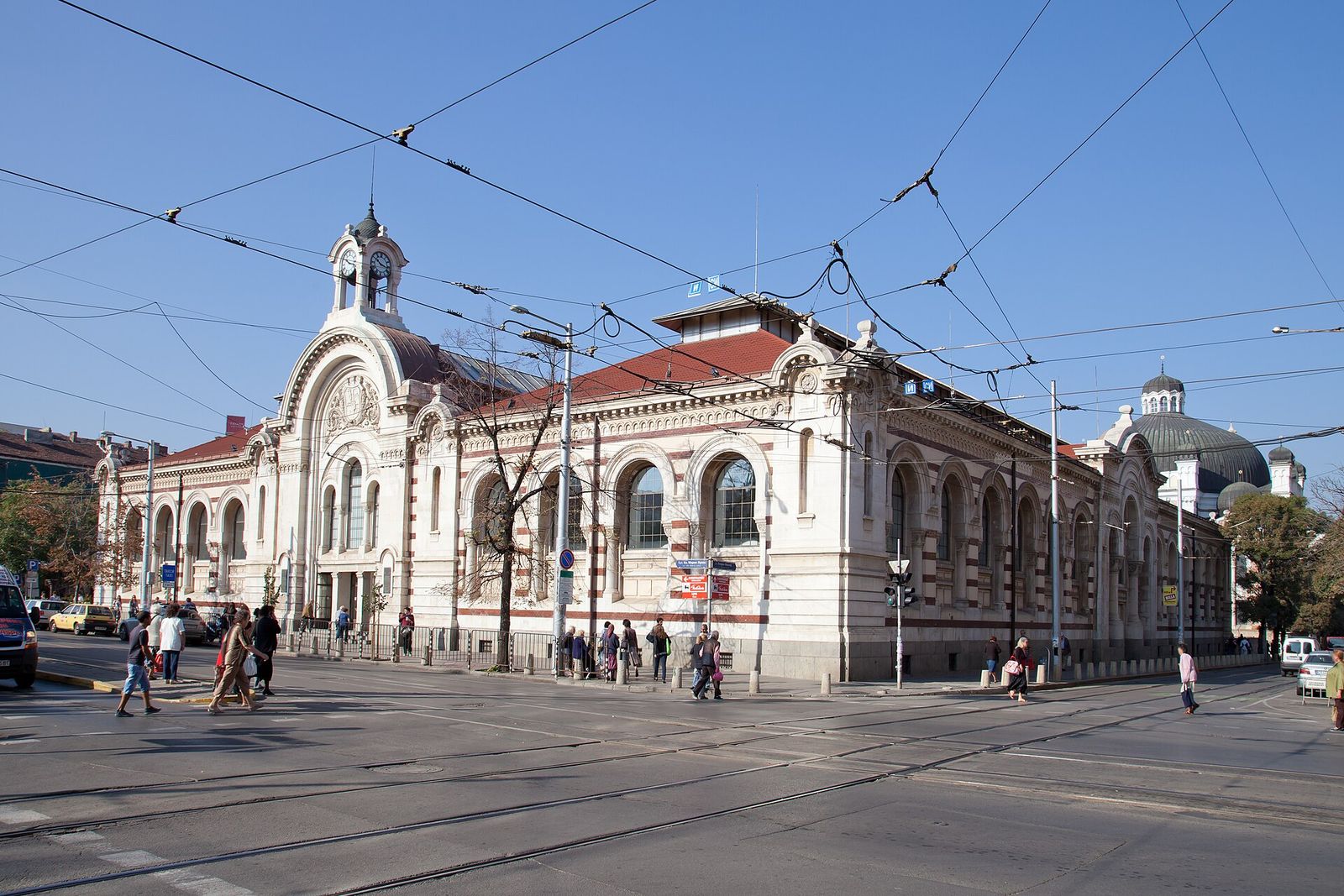
Central Market Hall in Sofia: What's Inside Halite Now
Central Market Hall is the striped 1911 building on Maria Luiza Boulevard with a clock tower on top, and locals call it Halite (Халите), "the halls". It reopened in May 2024 as a food market with Roman walls in the basement and a stage for events. Here's what's inside now, what I buy there, whether it's worth your time and what to pair it with nearby.
What Central Market Hall is today
Central Market Hall (Централни хали) stands at Knyaginya Maria Luiza Boulevard 25, in the old centre between Serdika metro and the Women's Market. It opened in 1911 as Sofia's first modern covered market, selling meat, dairy, poultry, fish and vegetables, and it has been a listed monument of national significance since 1955.
Kaufland Bulgaria bought the building in 2022 and spent over €25 million on it, about €7.7 million of that on bringing back the original look. The doors reopened on 23 May 2024. It's part supermarket, part history exhibition and part arts venue, and I find it the easiest rainy-day stop in the centre.
What's inside Halite, floor by floor
The 2024 renovation took out the gallery added in 2000, so the main hall is one tall, open space again under its iron roof. The main door on Maria Luiza Boulevard opens straight into it.
The ground floor market
Kaufland stocks over 14,000 products on the ground floor, and nearly 90% of them come from Bulgarian suppliers. The fruit and vegetables come from 45 Bulgarian growers year-round, and over 170 Bulgarian suppliers bring in the meat, sausages, fish, bread and dairy.
In the middle stands a green marble fountain, made from sketches by the original architect, Naum Torbov, with seating round it. A staircase and a glass lift link the floors, and a relief of Torbov by the sculptor Georgi Chapkanov sits by the main entrance.
It looks like a grand food hall and shops like a supermarket: you fill a basket, read the shelf labels and pay at the tills. Prices are fixed and marked in euros.
The basement: Roman walls and the history zone
The basement is the part I bring visitors for. Under the market sit the excavated remains of Roman Serdica, with a stretch of the city wall and Roman baths. The renovation opened them up to the public with an interactive zone on Sofia's history and archaeology, which explains the walls, their towers, the public baths and how the thermae were heated.
Sofia has been lived in for at least 8,000 years. The Thracian Serdi tribe gave it its first recorded name, Rome took it early in the 1st century AD, and Emperor Trajan renamed it Ulpia Serdica. These walls are part of the same Roman city you walk through under Serdika metro, in the ancient Serdica complex a few minutes south.
Down here you'll also find a big children's bookshop from the Greenwich chain, play areas for kids and space for exhibitions and meetings.
The stage
The culture and arts stage, Сцена Централни хали, sits in the basement beside the Roman excavations. It runs a daily programme of music, stage shows, art, talks and children's events, built round four themes: cultural heritage, culture and arts, a children's stage and culinary culture.
Artists apply each year through an open call, and the first round picked 71 projects from more than 90. In November 2026 the listings run from a puppet show to a two-day tea festival on 21 and 22 November. Tickets depend on the event, and the programme is on the hall's own site.
The panorama level
Upstairs, a panorama level is open to every visitor as well. I go up there for a look over the main hall and its fountain before I start on the shelves.
What to buy at Halite
I treat Halite as my food-gift stop. The shelves carry the jars and bottles I'd otherwise hunt down across town. These are the things I pick up, and the Bulgarian souvenirs I'd pack for friends at home.
| What | On the label | Why I buy it |
|---|---|---|
| Lyutenitsa | лютеница | Roast pepper and tomato relish, the taste I miss most |
| Sirene | сирене | White brined cheese, salty and crumbly |
| Kashkaval | кашкавал | Yellow cheese for sandwiches |
| Lukanka | луканка | Flat cured sausage, sliced thin |
| Rakia | ракия | Fruit brandy, the national drink |
| Mavrud wine | мавруд | Bulgaria's own dark red grape |
| Mountain tea | мурсалски чай or планински чай | Herbal tea, light to pack |
| Sharena sol | шарена сол | The mixed spice salt on every Bulgarian table |
Lyutenitsa
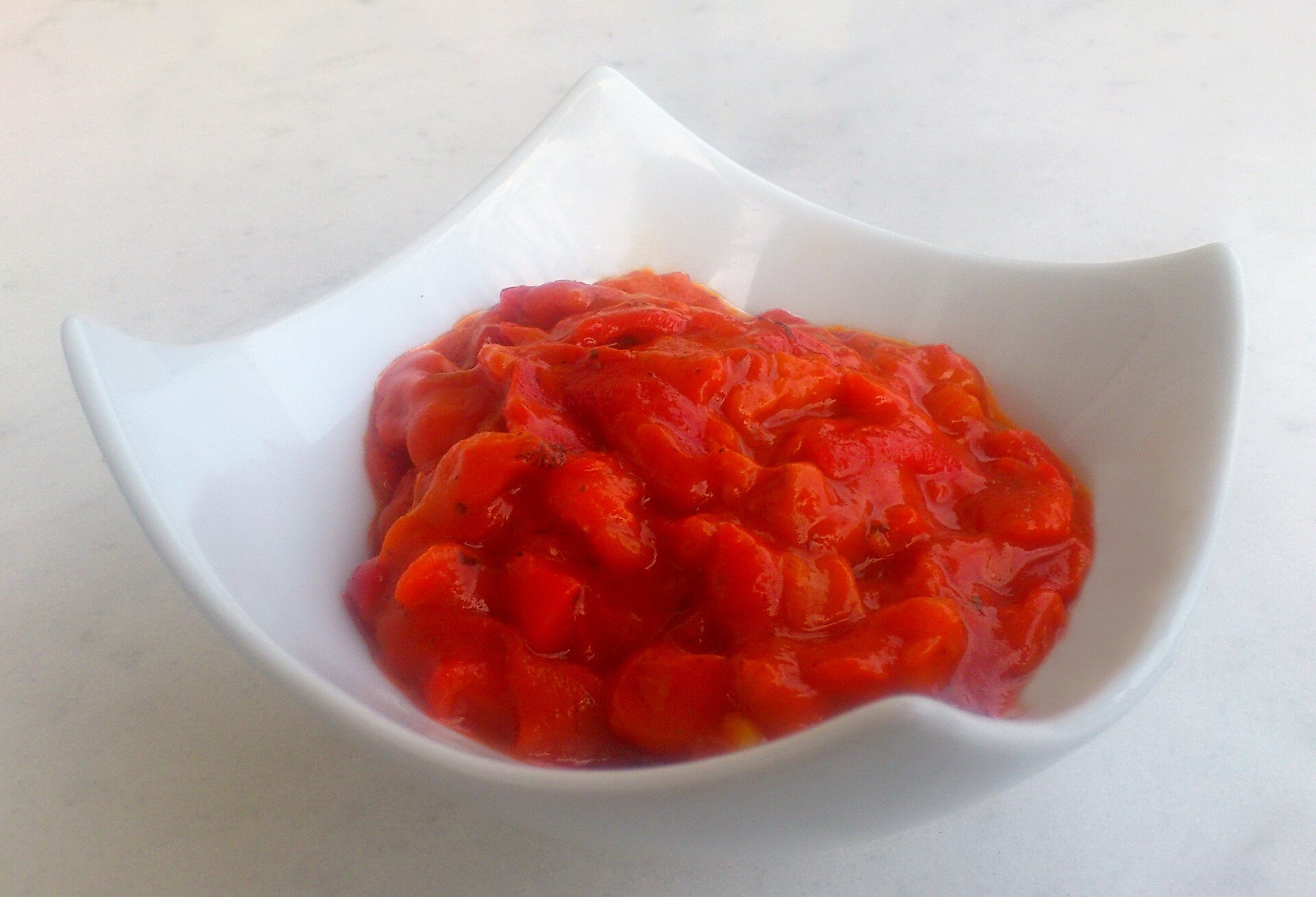
Lyutenitsa is the roast red pepper and tomato relish that Bulgarians spread on bread, and the shelf carries several brands side by side. Of all Bulgarian food, it's the one I'd take home first. I reach for jars marked домашна, homemade-style.
Sirene
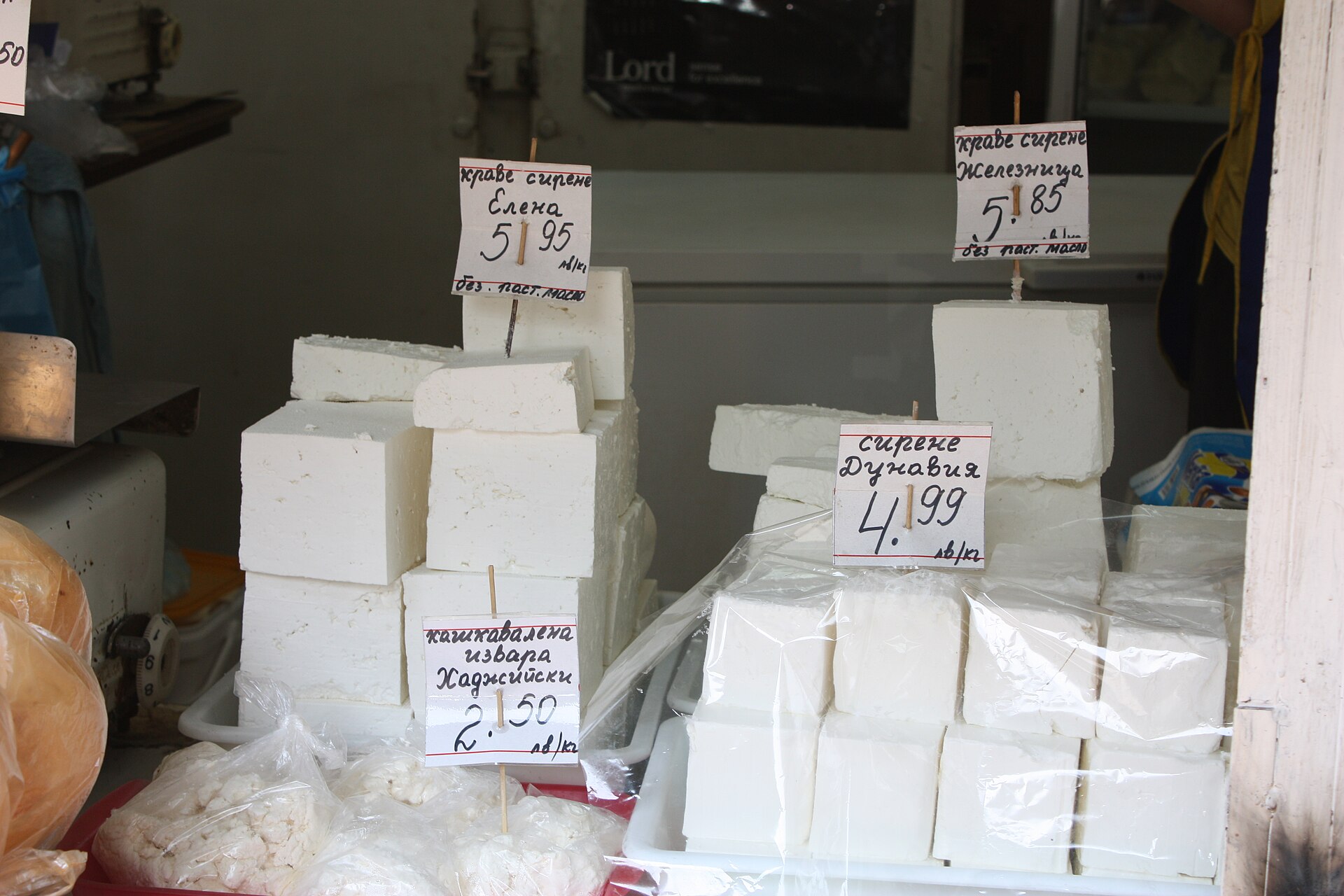
Sirene is the white brined cheese that crumbles over shopska salad and fills banitsa. Cow's milk is the everyday one, and sheep's milk sirene is saltier and richer. I buy a slab with bread, tomatoes and cucumbers and eat it in the park.
Rakia
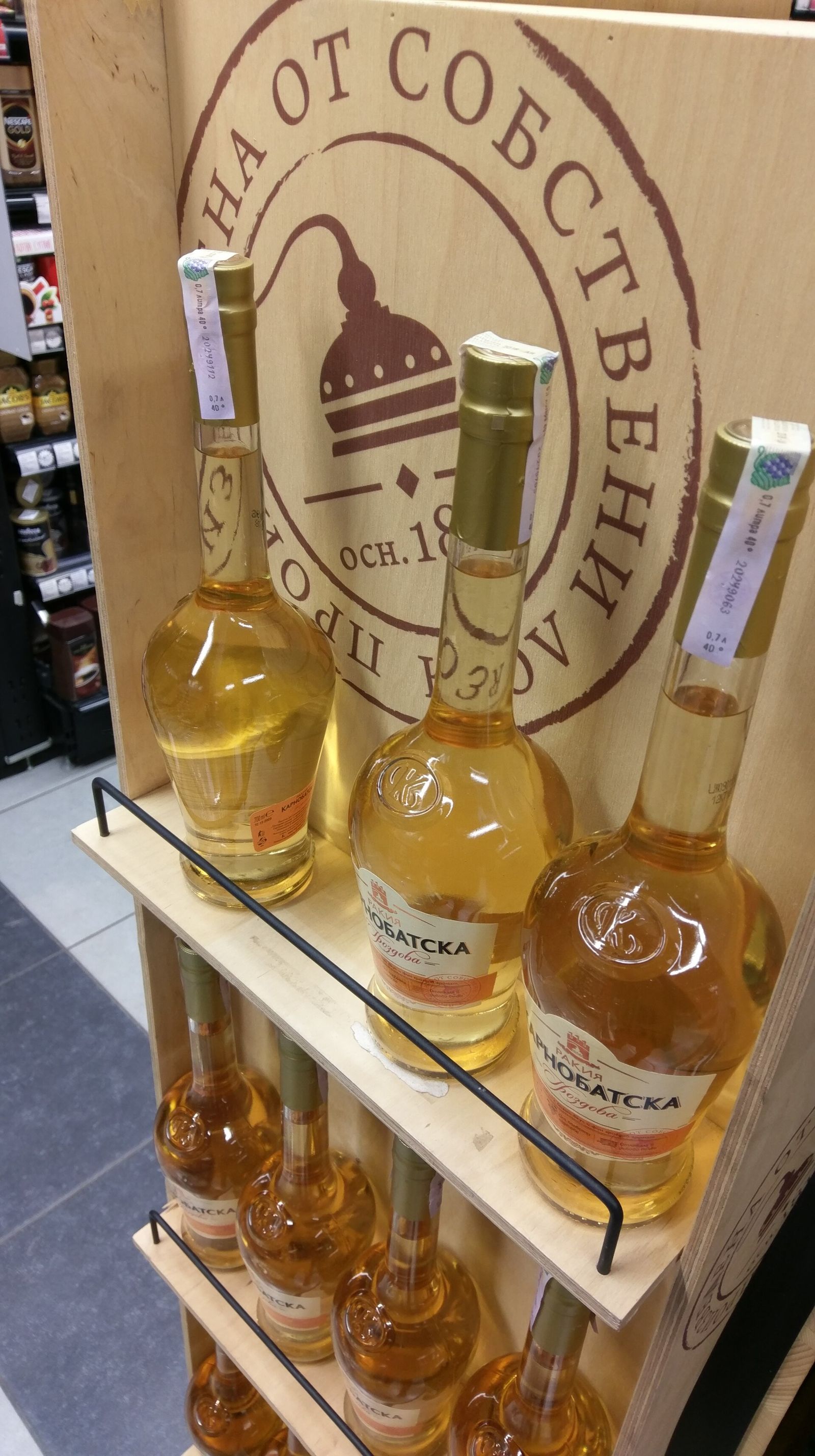
Rakia is the fruit brandy made from grapes (grozdova) or plums (slivova), and Bulgarians sip rakia slowly with a salad at the start of a meal. The shelves hold everyday bottles from the big distilleries, and a 70cl bottle makes an easy present.
Central Market Hall history, from Butchers' Bazaar to Kaufland
Before the hall, this corner of the Ottoman-era bazaar quarter was the Butchers' Bazaar, which supplied the city's meat. Sofia became Bulgaria's capital in 1879, and the new capital wanted a modern market in its place.
| Year | What happened |
|---|---|
| 1907 | The plan for a covered market is drawn up |
| 1909 to 1911 | The hall is built and opens in 1911 |
| 1915 | The clock goes into the small tower |
| Mid-1940s | About 170 shops and stalls still trade inside |
| 1950s | Rebuilt, then run as a supermarket for decades |
| 1955 | Declared a monument of culture of national significance |
| 1988 | Closed for repairs |
| 2000 | Reopens, with a new gallery inside |
| 2022 | Kaufland Bulgaria buys it and gets its building permit in May |
| 23 May 2024 | Reopens after about a year of restoration |
The architect, Naum Torbov, was born in Gopesh near Bitola, graduated in Bucharest in 1904 and ran Sofia's municipal architecture department from 1906. His hall mixes Secession and Neo-Byzantine styles, with a granite base, limestone walls, ceramic detail and a strict symmetry along Maria Luiza Boulevard.
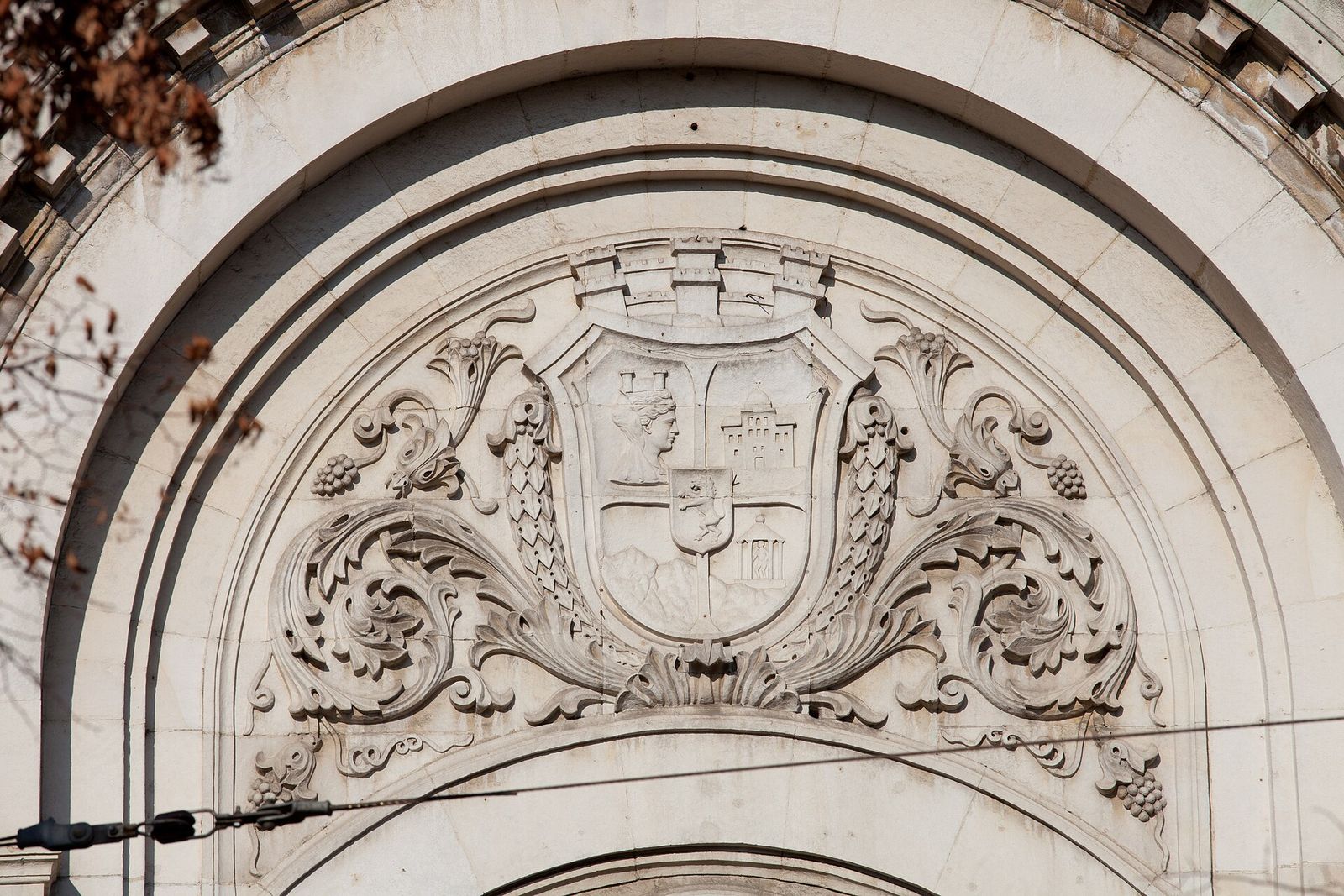
The iron frame inside was ordered by the contractor Spas Temelkov from the Paris workshops of Gustave Eiffel. Georgi Kiselinchev carved the stone decoration, and Sofia's coat of arms over the main entrance follows a design by the painter Haralambi Tachev. Look up as you walk in.
Below ground, the 1911 building held Sofia's first artificial ice plant, along with a boiler room, coal stores, a cooling room and cellars. The 2024 restoration kept the original Eiffel-workshop iron frame and cleared the trading hall back to one open volume, as Torbov drew it.
Is Central Market Hall worth visiting?
Yes, if you're already in the old centre, which you will be. It's free, it's dry and it's 2 minutes from three other sights. Inside, it's a smart supermarket in a 1911 building with Roman walls underneath, so 20 to 40 minutes covers it.
Who I'd send:
- History fans, for Serdica's wall and baths in the basement.
- Food-gift shoppers, for lyutenitsa, rakia and Mavrud under one roof.
- Rainy-day planners, since it pairs with the mosque, the synagogue and the museum in the baths without much time outside.
- Families, for the children's bookshop and the kids' events on the stage.
- Picnic makers, for bread, cheese and fruit before an afternoon in a park.
Who should skip it: anyone after open-air stalls and Bulgarian farmers' fruit and veg piled high. That's Zhenski Pazar, the Women's Market (Женски пазар), 5 minutes west, and it's the one I'd pick of all the markets in Sofia if you only have time for one.
How to get to Central Market Hall
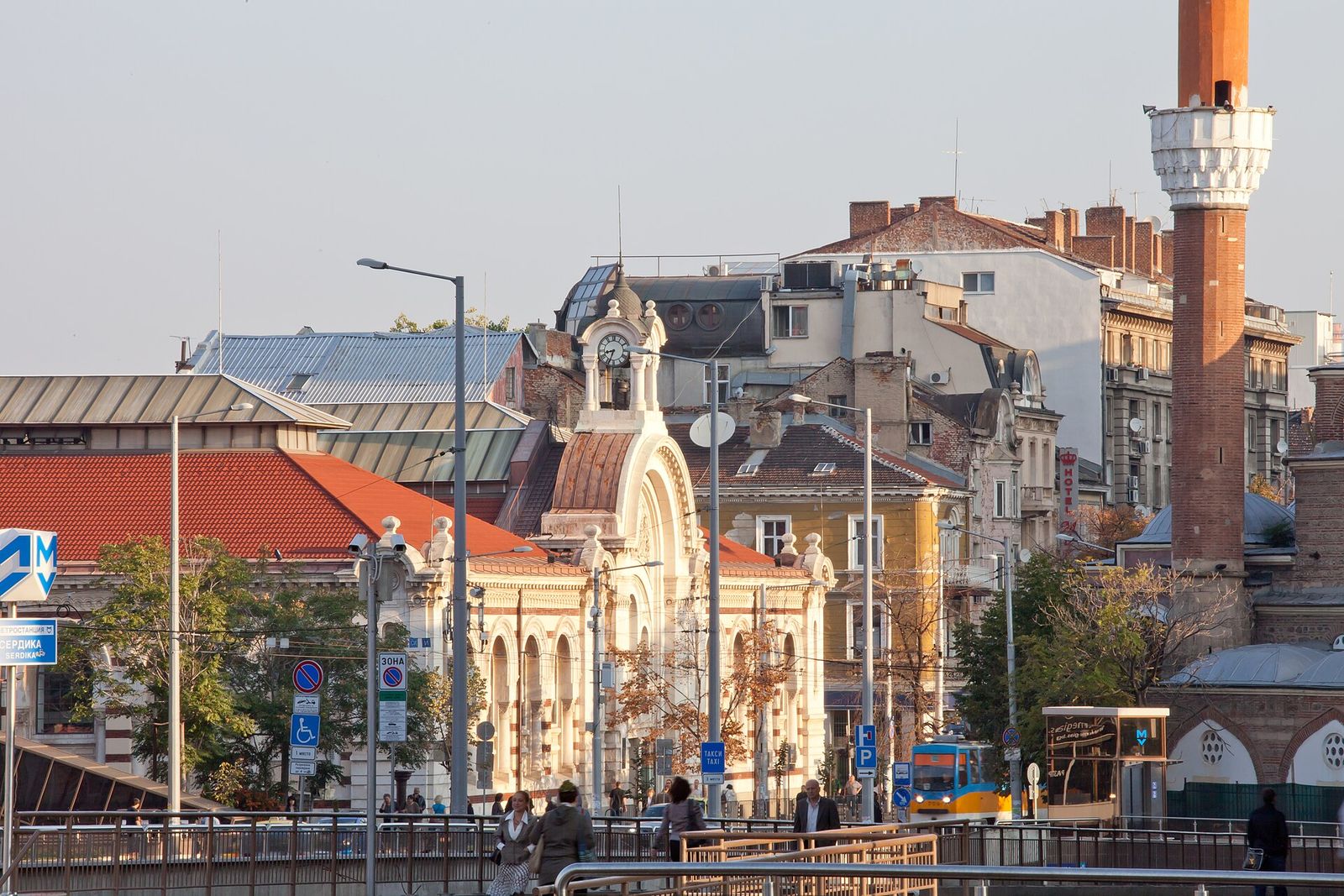
Halite stands on Maria Luiza Boulevard, across the road from Banya Bashi Mosque. Serdika is the nearest metro station, about 5 minutes' walk south, and trams run along Maria Luiza Boulevard right past the door.
A ride on Sofia's metro, trams and buses costs €0.80, and if you tap the same contactless card each time, the fares stop at €2 for the day. From the top of Vitosha Boulevard by St Nedelya Church, walk north for about 7 minutes. From Alexander Nevsky Cathedral it's about 15 minutes west on foot.
What's next to Central Market Hall
Three sights and the city's oldest market sit within about 5 minutes' walk of Halite, with a folk-music restaurant a little further north. This corner is where I'd spend a morning.
Banya Bashi Mosque
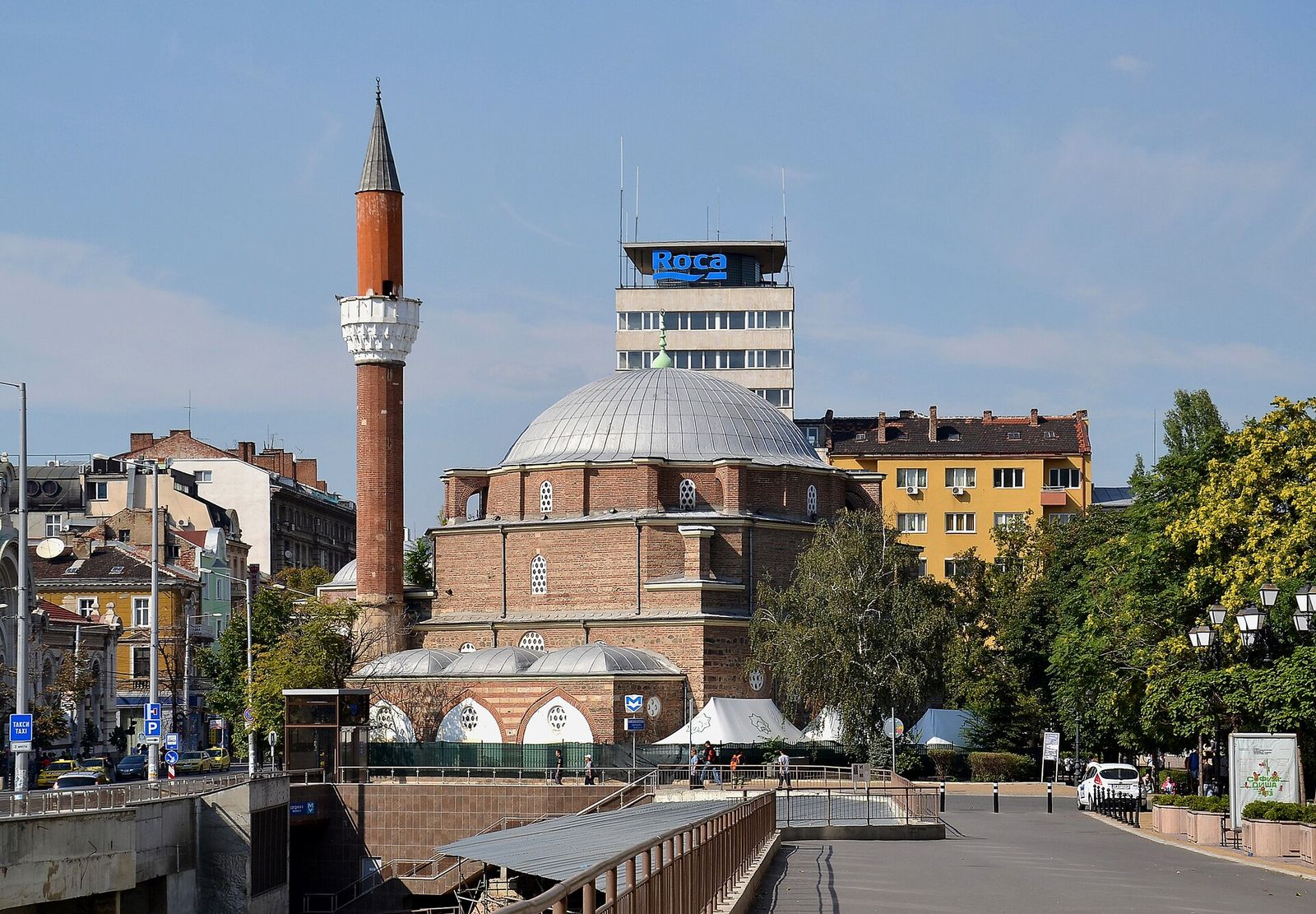
Banya Bashi Mosque stands across the boulevard at Maria Luiza 2. It dates from 1566, it's credited to the Ottoman architect Mimar Sinan, and it's the only working mosque in Sofia, under a 15-metre dome. Visitors are welcome between prayers from 5am to 8pm, with shoulders and knees covered.
The hot mineral taps
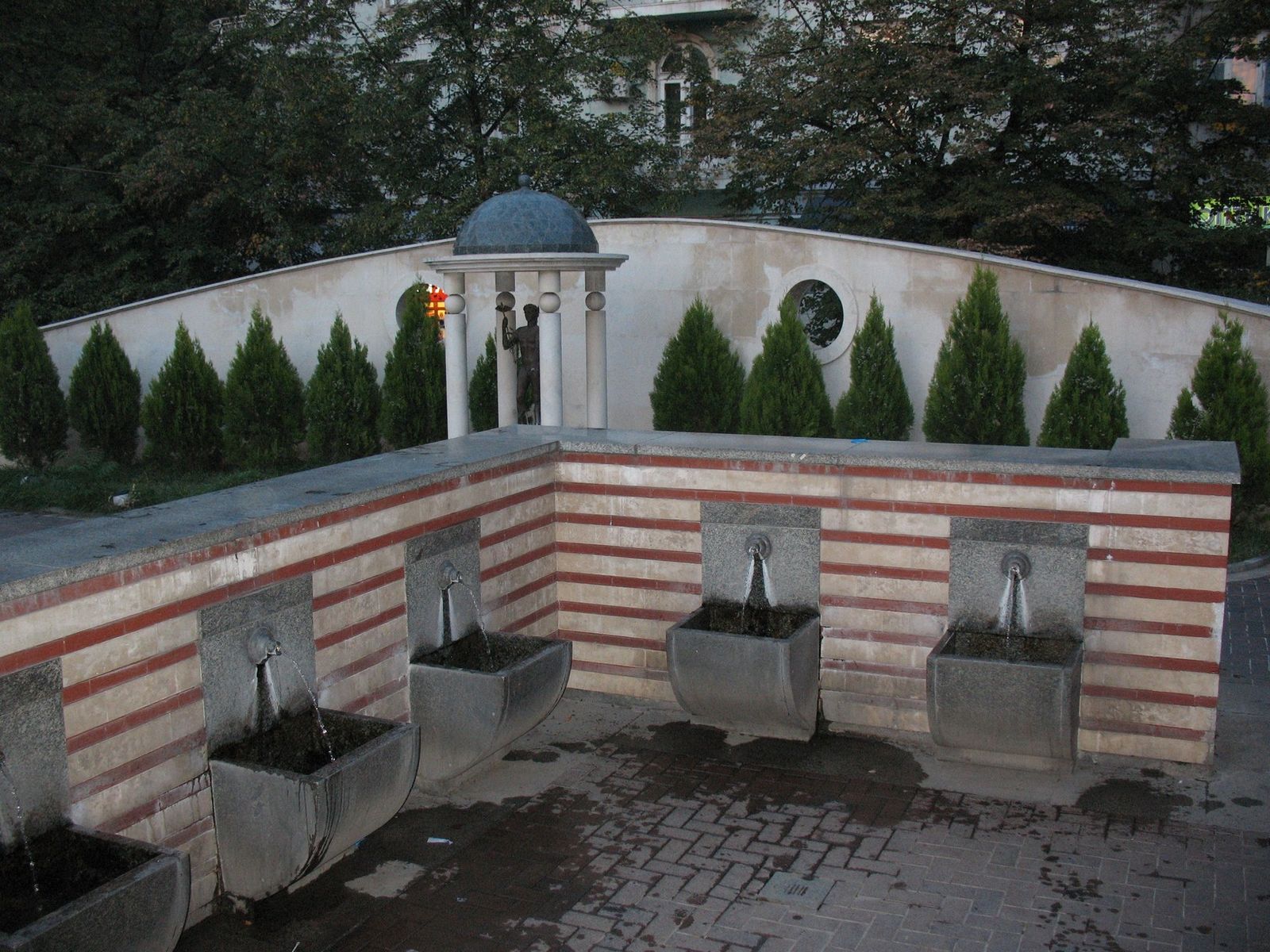
Behind the mosque, by the striped bath house of the Central Mineral Baths, a row of spouts pours free hot mineral water, and locals queue with bottles to take it home. The bath house holds the Museum of the History of Sofia, €5 for adults.
Sofia Synagogue
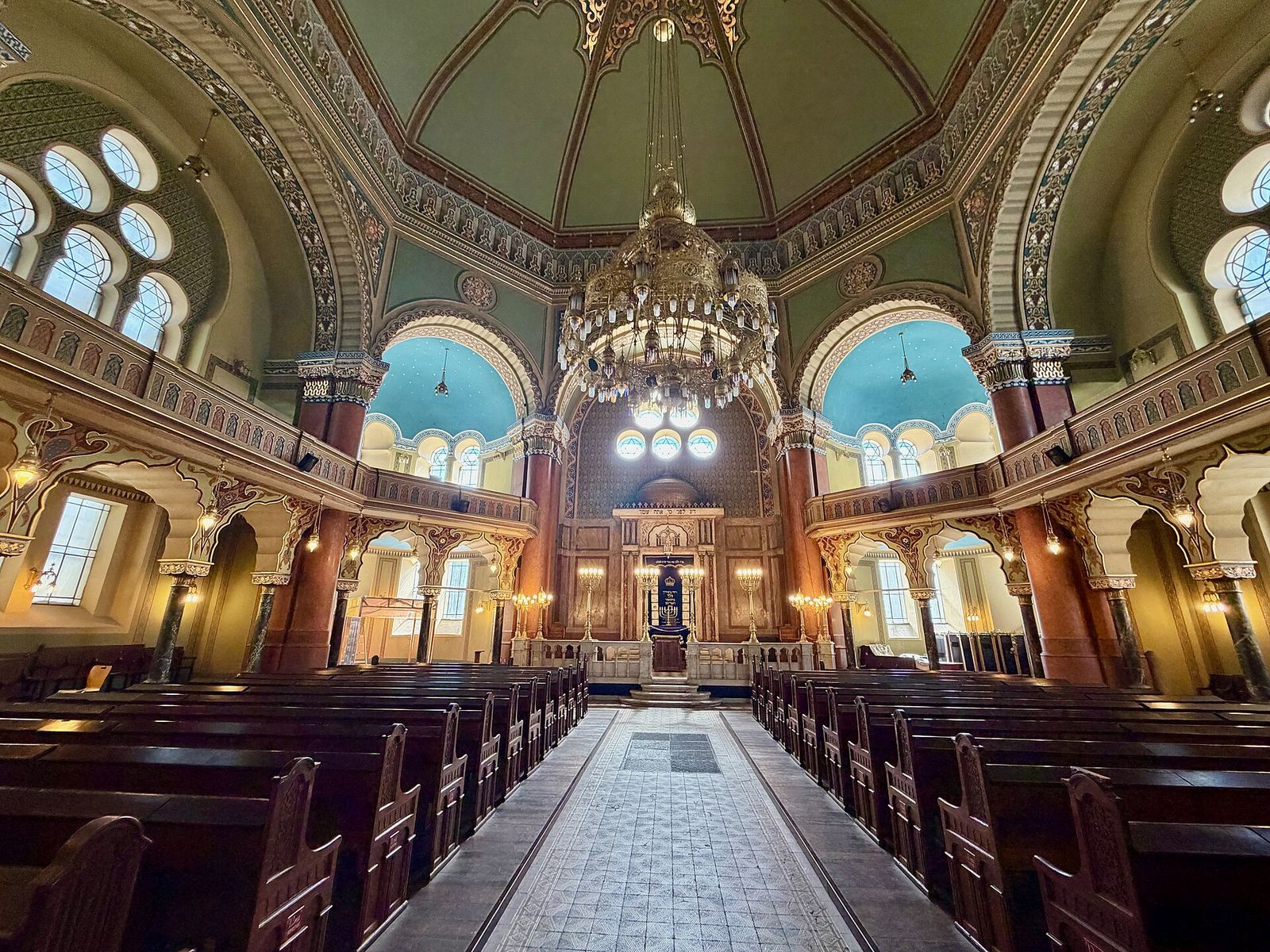
The Sofia Synagogue, whose dome rises right behind Halite, is at 16 Exarch Joseph Street. It opens Sunday to Friday from 9am to 5pm, and a €10 ticket covers its small museum, an audio guide and photos. I go for the huge brass chandelier under the painted dome.
Zhenski Pazar
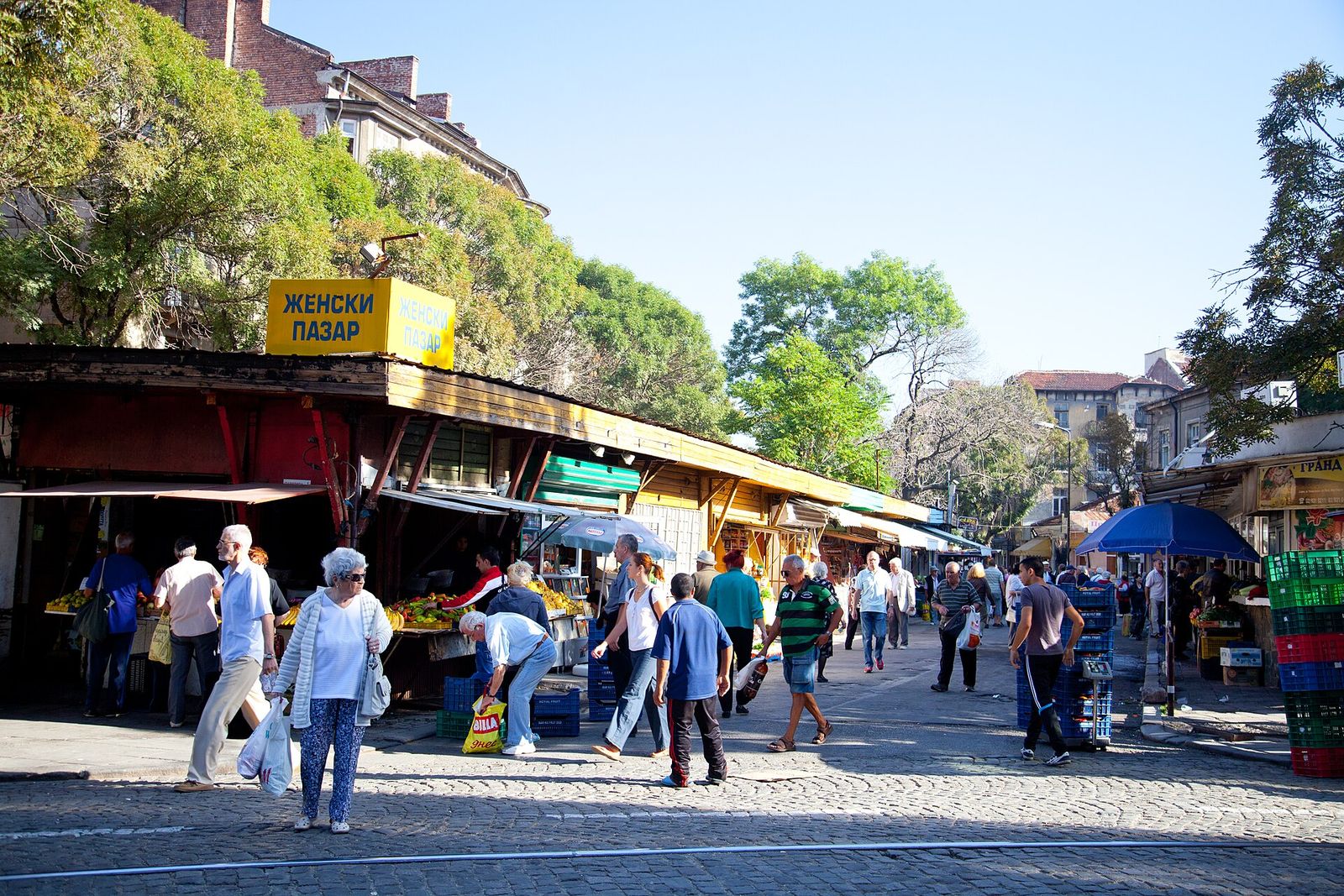
The Women's Market is Sofia's oldest, set up around 1878, and it runs for several blocks along Stefan Stambolov Boulevard. Its stalls sell fruit and vegetables, meat and dairy, and Arabic spices, and I carry small euro notes and coins for them. I go in the morning, when the produce is freshest.
Hadjidraganovite Kashti for lunch
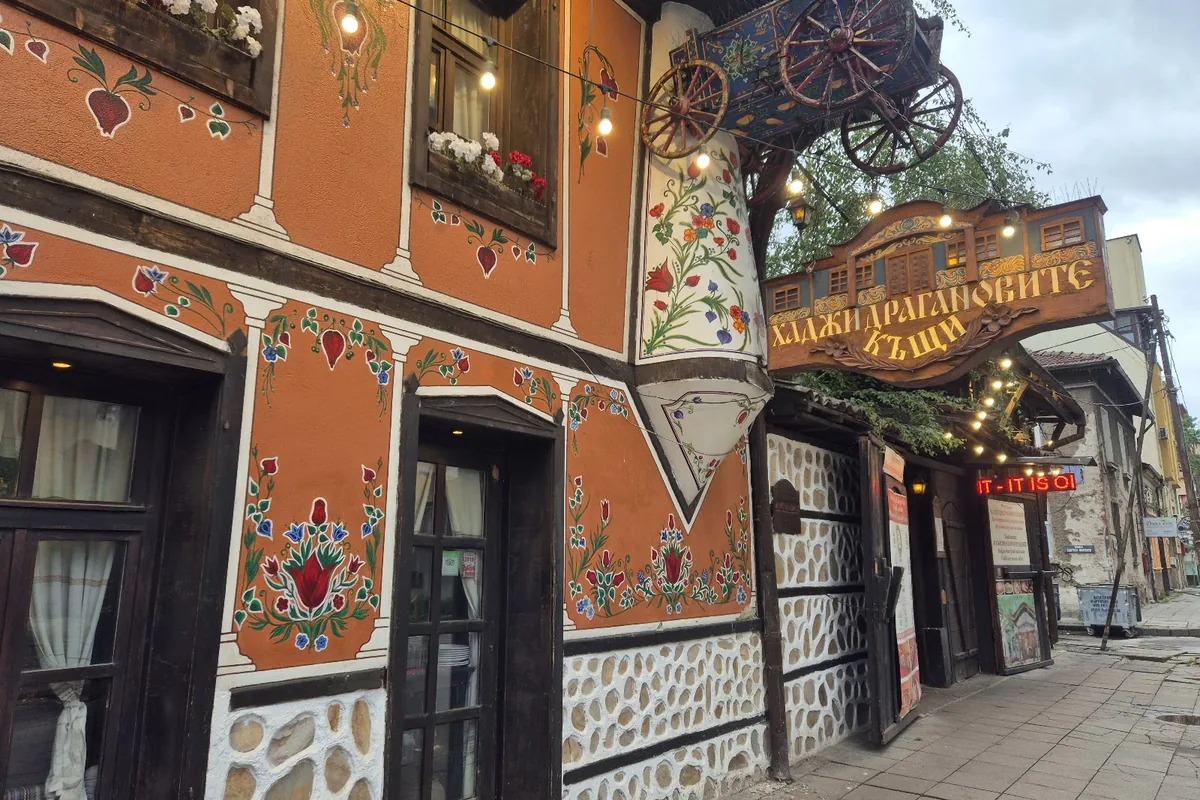
For a sit-down Bulgarian lunch after the loop below, I walk north up Maria Luiza Boulevard to Hadjidraganovite Kashti (Хаджидрагановите къщи), the Houses, at Kozloduy 75, near Lion's Bridge. It opens every day from 11.30am to 11.30pm. A folk band plays from 8pm to 11pm every evening except Tuesday, which puts it on my list of the best restaurants in Sofia, and for a weekend dinner I book on +359 899 917 837.
My morning loop around Halite
This is the loop I give friends who want the old centre's food and history in one go. Everything is free except the synagogue.
| Time | Stop | Cost |
|---|---|---|
| 10am | Fill a bottle at the hot mineral taps | Free |
| 10.10am | Banya Bashi Mosque, between prayers | Free |
| 10.30am | Halite: the Roman basement, then the shelves | Free to walk in |
| 11am | Sofia Synagogue | €10 |
| 11.30am | Zhenski Pazar for fruit and spices | Cash for stalls |
On a weekend in Sofia, this loop fills a Friday or Sunday morning and leaves the afternoon free for Alexander Nevsky and Vitosha Boulevard.
Key takeaways
- Central Market Hall, Halite to locals, is a 1911 covered market on Maria Luiza Boulevard that reopened on 23 May 2024.
- Entry is free, and the basement with Roman Serdica's city wall and baths is open without buying anything.
- The ground floor is a Kaufland market with nearly 90% Bulgarian products, good for lyutenitsa, rakia and wine.
- For open-air stalls and farmers' produce, go to Zhenski Pazar instead, 5 minutes west.
- Pair it with Banya Bashi Mosque, the hot mineral taps and the Sofia Synagogue, all within 5 minutes' walk.
Frequently asked questions
Is Central Market Hall in Sofia free to enter?
Yes. Anyone can walk in through the main entrance on Maria Luiza Boulevard, and the basement with the Roman remains is open without a purchase. Only events on the stage can carry a ticket.
What does Halite mean in Sofia?
Halite (Халите) means "the halls". It's the short name locals use for Central Market Hall, whose official name is Централни хали (Tsentralni hali), "Central Halls".
Is Central Market Hall just a supermarket now?
No. Kaufland runs the ground floor as a supermarket, and the same building holds an archaeology and history zone in the basement, a stage with a daily programme and a panorama level upstairs.
Can you see Roman ruins at Central Market Hall?
Yes. The basement shows excavated remains of Roman Serdica's city wall and baths, opened to the public in the 2024 renovation with a history zone around them. They belong to the same Roman city on show under Serdika metro.
Who designed Central Market Hall in Sofia?
Naum Torbov, head of Sofia's municipal architecture department, designed it, and it was built from 1909 to 1911. Its iron frame came from Gustave Eiffel's workshops in Paris.
What are the major supermarkets in Bulgaria?
Kaufland, Billa, Lidl and Fantastico are the big chains you'll see in Sofia. Kaufland ran 65 hypermarkets in 35 cities in 2023, and it runs the supermarket inside Central Market Hall.
Is Sofia a cheap city to visit?
Yes, by UK standards. A metro or tram ride costs €0.80, a cappuccino about €3.10 and a pint €2 to €3.50, so everyday Sofia prices sit well below London's.
Sofia Food Guide: What to Eat and Where
Banitsa, shopska and rakia: what to eat in Sofia, the places I eat it, and what a meal costs in euros.
Read the guide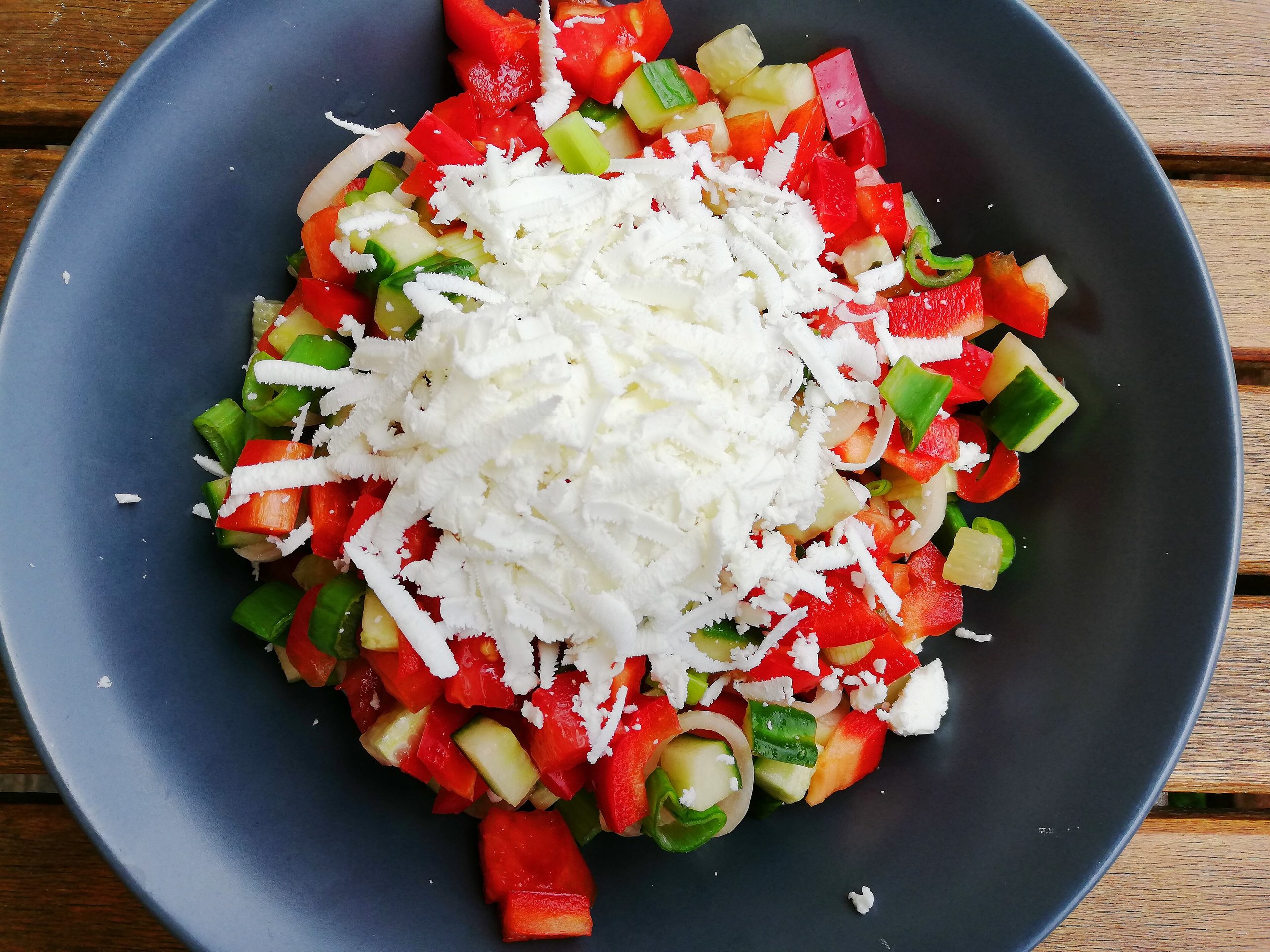
Bulgarian Food: The Dishes I Tell Every Visitor to Try
Salads, white cheese, yoghurt, grills and clay pots: the Bulgarian dishes I order, with the menu word for each.
Read the guide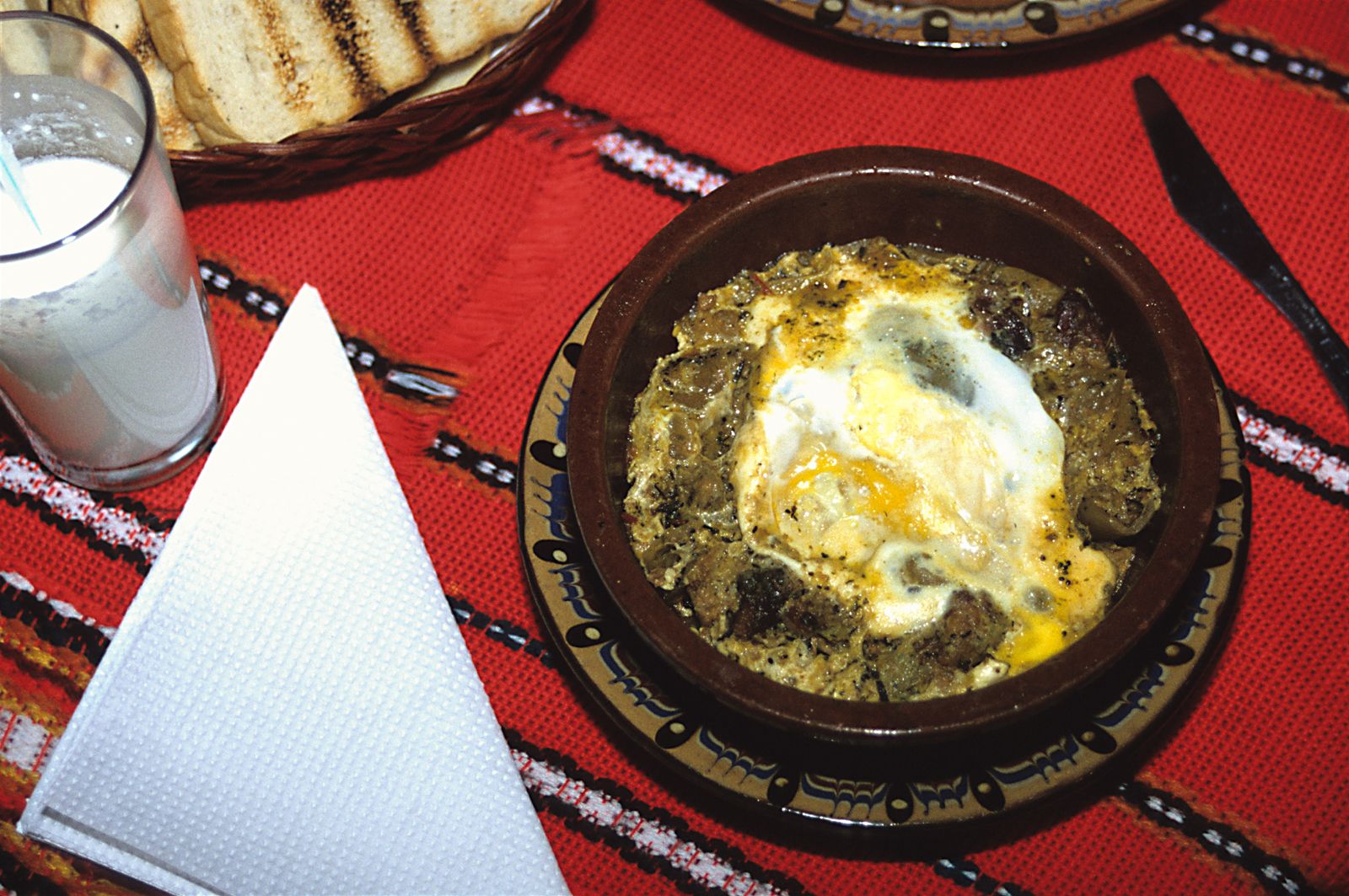
The Best Restaurants in Sofia: 11 Places I Send Friends
The 11 Sofia restaurants I send friends to, from folk-music cellars to award-winning fine dining, and what to order.
Read the guide