Vegan and Vegetarian Sofia: Where I Eat and What to Order
Bulgarian menus lean on the grill, yet the salads, dips and cold yoghurt soups that start a meal have no meat in them, and nor does the cheese pastry locals eat for breakfast. That makes the city easy for vegetarians and very doable for vegans who know one menu word. Here are the vegan and vegetarian places I go back to, the dishes I'd order anywhere and the words you need to ask for them.
How easy is it to eat vegetarian or vegan in Sofia?
Vegetarian is easy here, and vegan takes a little planning. A Bulgarian dinner starts with salads, dips and soup, and most of them are meat-free. For vegans the snag is dairy: sirene, the salty white cheese, gets grated over salads and chips, and yoghurt goes into soups, dips and pastry.
The fix is постно (postno), a menu word for Orthodox fasting food. Sofia also has a handful of fully vegan places, and Loving Hut and Furna are the two I use most. Eating out is cheap whatever you eat: a weekday set lunch in Sofia of soup and a main costs €6 to €7, and a simple dinner €15 to €20 a head before drinks.
| Where you eat | Vegetarian | Vegan |
|---|---|---|
| Traditional restaurant (mehana) | Easy: salads, dips, cheese dishes, banitsa | Order kyopolou and lyutenitsa, a shopska without cheese and anything marked постно |
| Bakery and banitsa counter | Easy: cheese, leek, spinach and pumpkin banitsa | Furna's vegan banitsa, Monday to Saturday |
| Cafe and brunch | Easy: eggs, pancakes, pastries | Harder: ask for plant milk, which Furna has |
| Supermarket | Easy: sirene, yoghurt, lyutenitsa | Lyutenitsa, pickles, fruit, bread and lokum |
Bulgarian dishes that are already vegetarian
These are the Bulgarian dishes I order with vegetarian friends, and you'll find most of them on any traditional menu in Sofia. I've said which ones are vegan as I go.
Shopska salad (шопска салата)
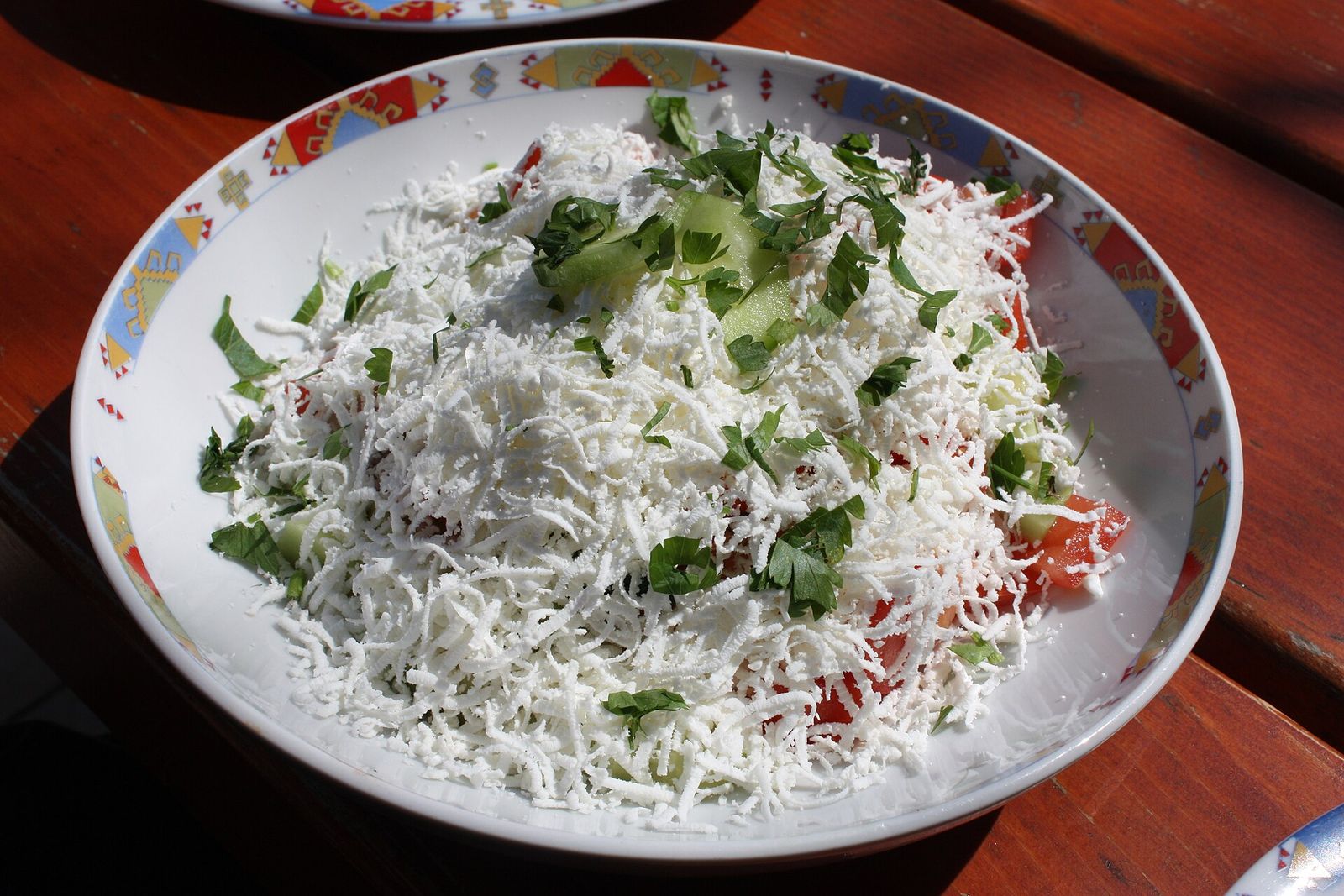
Tomato, cucumber, pepper and onion, chopped and buried under grated sirene. It's Bulgaria's national salad, and it opens almost every dinner I eat out. For a vegan version, ask for it без сирене (bez sirene), without the cheese: you get the chopped vegetables dressed with oil and vinegar, and in August that's still the best plate on the table.
Tarator (таратор)
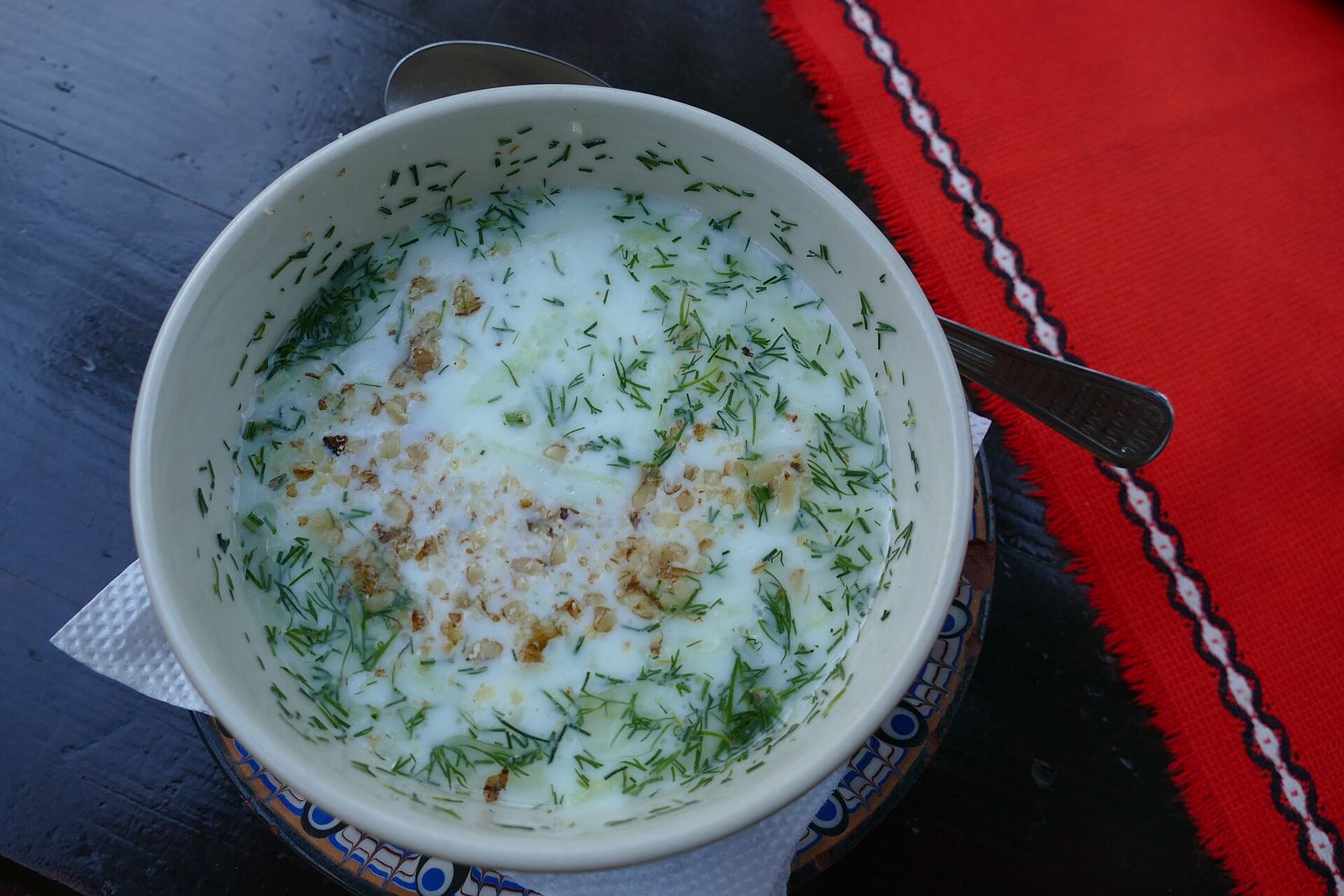
Tarator is a cold soup: yoghurt thinned with water, with grated cucumber, garlic, dill and crushed walnuts. Bulgarians eat it at lunch all summer. It's vegetarian, and the base is Bulgarian yoghurt, so vegans skip it. Supa Star, a tiny soup bar on Tsar Shishman Street, makes six soups a day with tarator among them.
Snezhanka (снежанка)
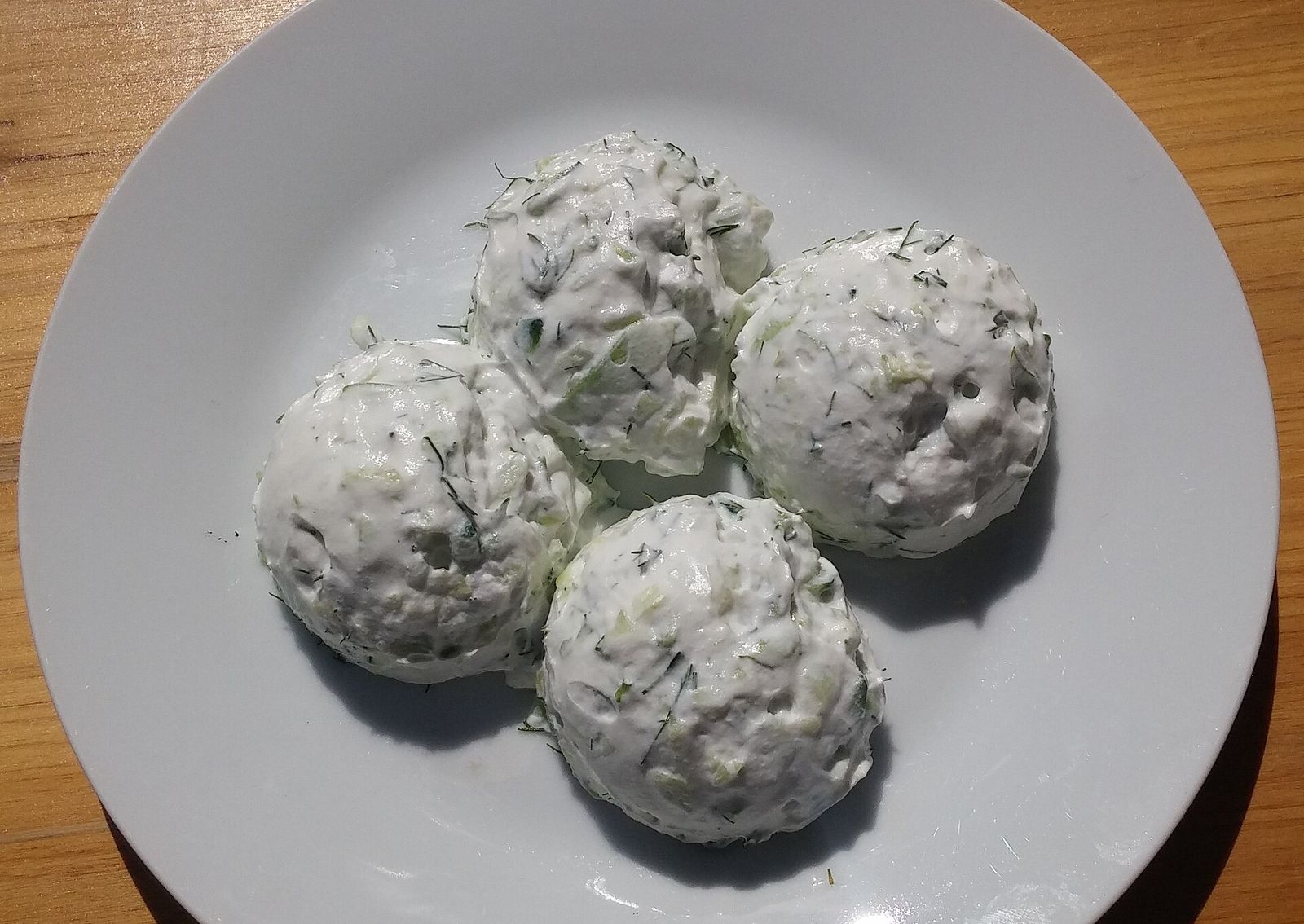
Snezhanka means Snow White. It's tarator thick enough to eat with a fork: strained yoghurt with chopped cucumber, garlic, dill and walnuts, served in scoops. I order it as a starter with warm bread, next to a plate of chushki byurek.
Kyopolou (кьопоолу)
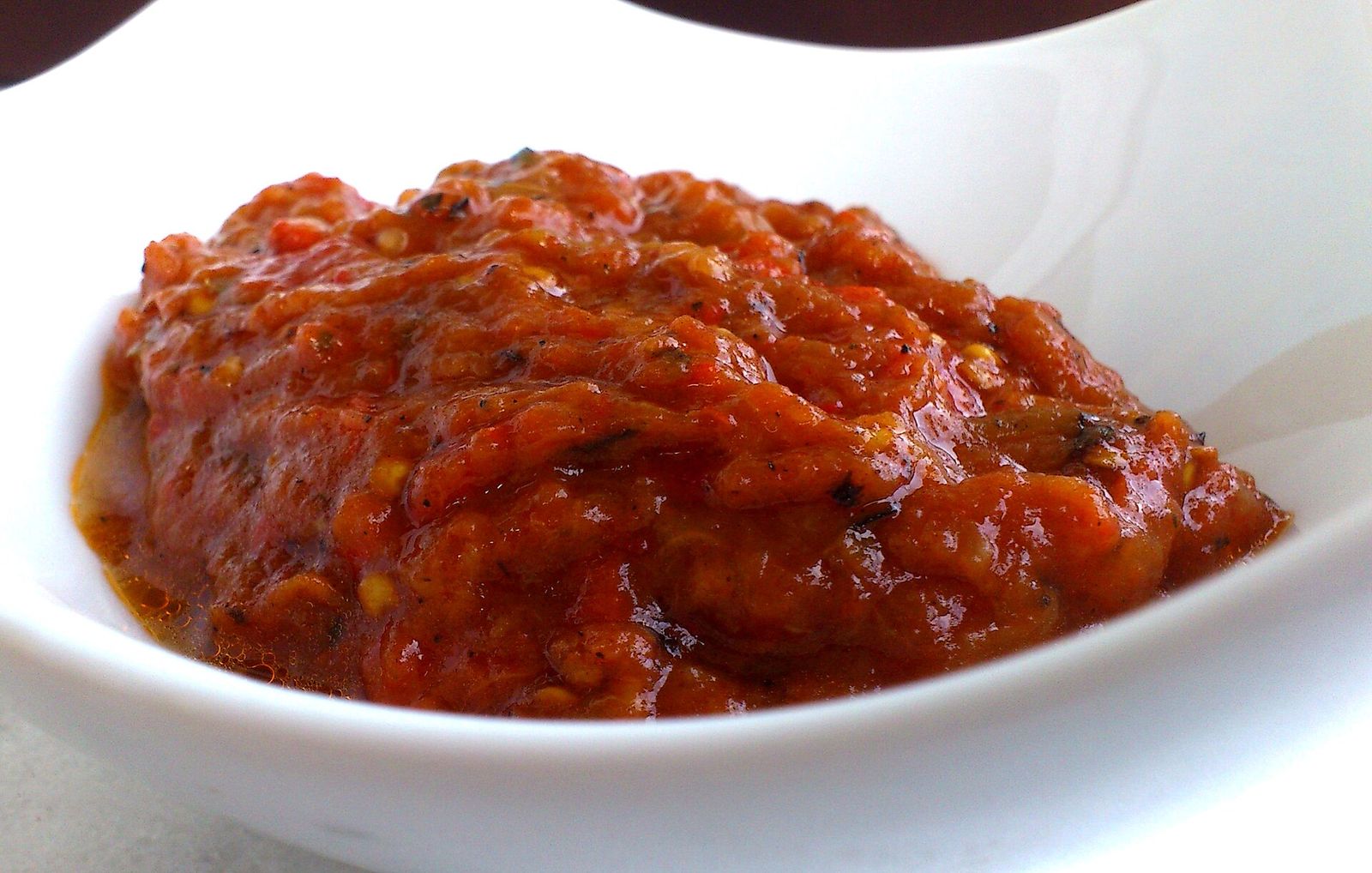
Kyopolou is roasted aubergine and peppers mashed with garlic, tomato and parsley, and it's vegan as it comes. It tastes of the fire the vegetables were charred on. It's my first order for a vegan friend in a mehana, because it needs no special request.
Lyutenitsa (лютеница)
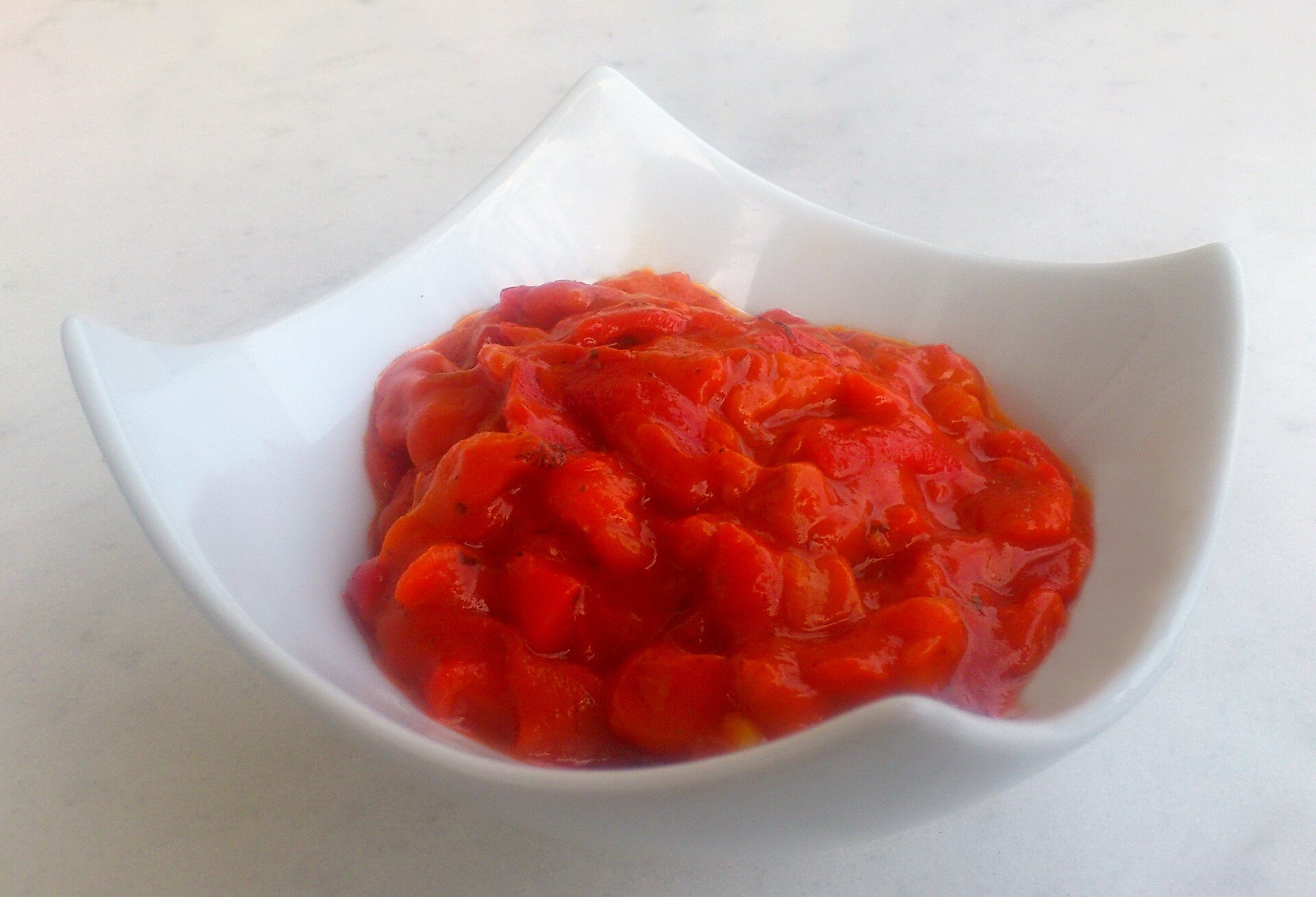
Lyutenitsa is a thick relish of roasted red peppers and tomatoes, and it's vegan. Restaurants serve it with bread or next to the chips. Supermarkets sell it in jars, and I always have one open in my fridge.
Chushki byurek (чушки бюрек)
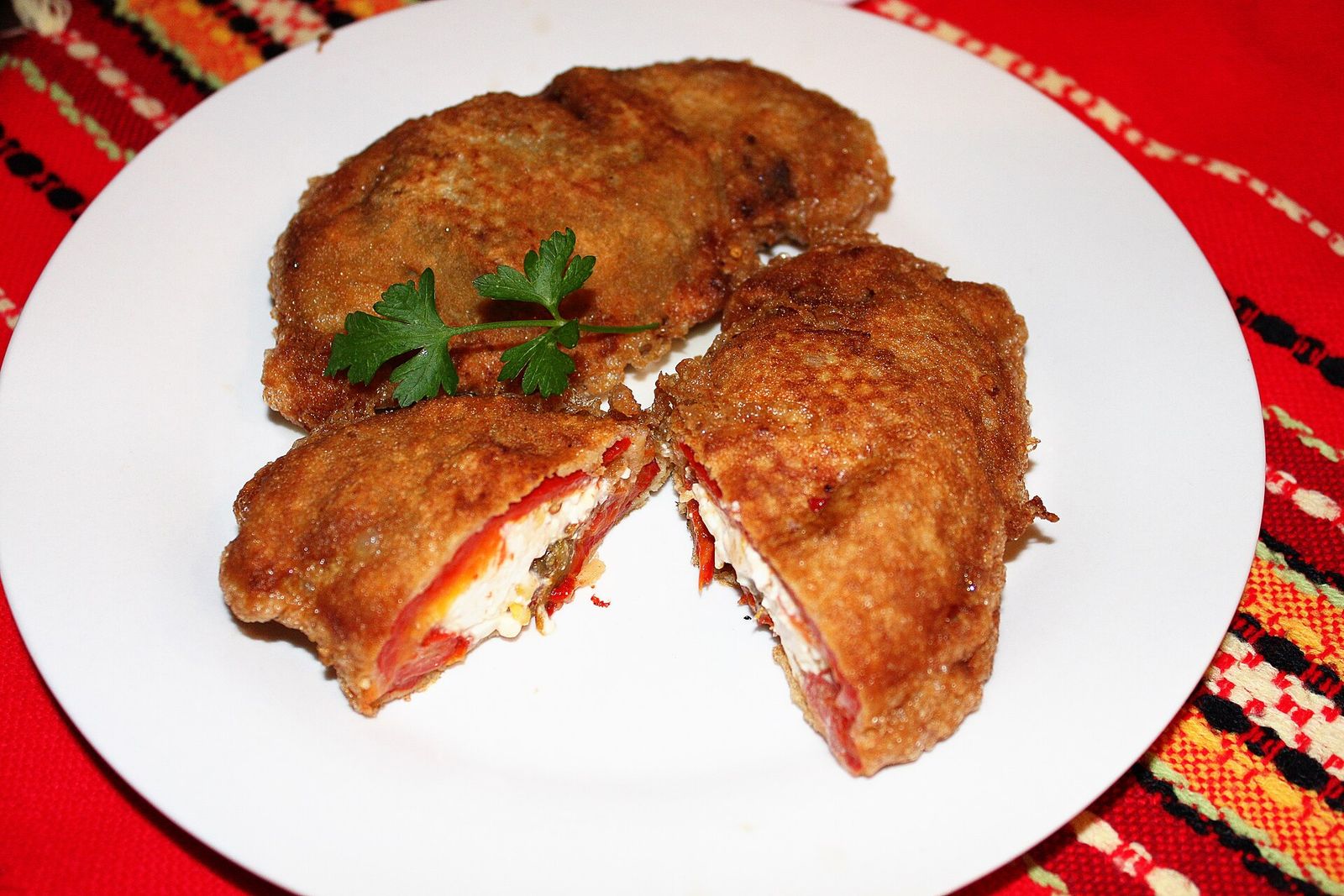
Roasted red peppers stuffed with sirene and egg, dipped in batter and fried. It's vegetarian, and it's the starter I order for vegetarian friends who want something hot and very Bulgarian. A plate of them makes a light main.
Banitsa (баница)
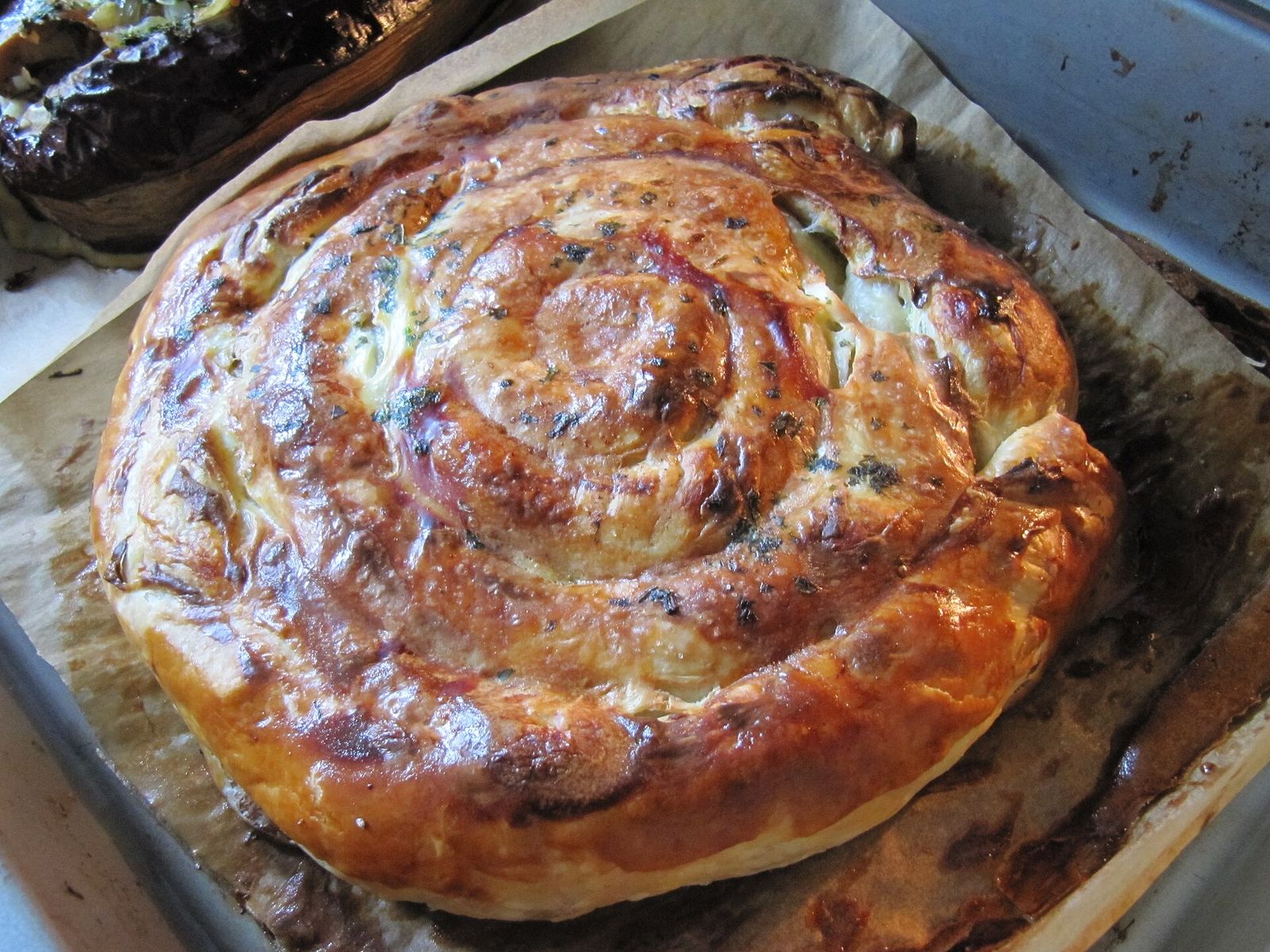
Banitsa is filo pastry baked with eggs and sirene, and it's the city's breakfast. The vegetarian fillings go past cheese to leek, spinach and pumpkin. My favourite of the best banitsa in Sofia is the leek one at Handmade Banitza, Solunska 17, open daily from 8am to 6pm. Bulgarians drink ayran or boza with it, and boza, the thick, sweet-sour drink made from fermented grain, is vegan.
More meat-free dishes on Bulgarian menus
| Dish | Bulgarian | What it is | Vegetarian or vegan |
|---|---|---|---|
| Bean soup | боб чорба (bob chorba) | Beans with peppers, onion, dried mint and savory | Often vegan; ask if there's meat in it |
| Lenten sarmi | постни сарми | Vine or cabbage leaves rolled round rice | Vegan |
| Peppers stuffed with beans | пълнени чушки с боб | Peppers filled with beans and baked | Vegan |
| Vegetable gyuvech | зеленчуков гювеч | Vegetables baked slowly in a clay pot | Vegan unless cheese or egg goes on top |
| Turshiya | туршия | Pickled vegetables | Vegan |
| Sirene po shopski | сирене по шопски | Sirene baked in a clay pot with tomato, pepper and an egg | Vegetarian |
| Mish-mash | миш-маш | Scrambled eggs with peppers, tomato and sirene | Vegetarian |
| Kashkaval pane | кашкавал пане | Breaded, fried yellow cheese | Vegetarian |
| Chips with sirene | картофи със сирене | Chips under grated white cheese | Vegetarian |
| Palachinki | палачинки | Thin pancakes with honey, jam or cheese | Vegetarian |
How to order vegan food in Sofia: постно and the words to know
Постно (postno) means lenten. The Bulgarian Orthodox Church keeps fasting days with no meat, dairy or eggs, and food cooked for them is called постно, so a dish marked with the word has none of the three in it. Some menus put постно next to the dish, and some give lenten food its own page. Bean soup, lenten sarmi and vegetable stews are the usual entries.
In a neighbourhood mehana with a Cyrillic-only menu, these Bulgarian phrases get you a meat-free meal.
| English | Bulgarian | Say it |
|---|---|---|
| I'm vegetarian (man / woman) | Аз съм вегетарианец / вегетарианка | az sum veh-geh-tah-ree-AH-nets / veh-geh-tah-ree-AHN-ka |
| I'm vegan (man / woman) | Аз съм веган / веганка | az sum VEH-gan / VEH-gan-ka |
| Without meat | Без месо | bez meh-SO |
| Without cheese | Без сирене | bez SEE-reh-neh |
| Without eggs | Без яйца | bez yai-TSA |
| Is there anything lenten? | Има ли нещо постно? | EE-ma lee NESH-to POST-no |
When you ask "bez meso?", listen for the word as well as watching the head. Bulgarians nod for no and shake their head for yes, so I wait for a да (da, yes) or не (ne, no) before I trust the answer.
My favourite vegan and vegetarian restaurants in Sofia
Three of these are vegan or vegetarian, and two are ordinary places where a vegetarian orders well.
| Place | Food | Where | When I go |
|---|---|---|---|
| Loving Hut | Fully vegan | Georgi S. Rakovski 113, near the National Opera | Weekday lunch |
| Furna | Vegan bakery | Stefan Stambolov Boulevard | Breakfast, before 10am |
| Sun Moon | Vegetarian, with a vegan menu | 6th September Street | Dinner |
| Manastirska Magernitsa | Traditional, with lenten dishes | Han Asparuh 67 | Dinner, any day of the week |
| Fabrika Daga | Brunch cafe | Sheynovo 13V | Weekend brunch |
Loving Hut
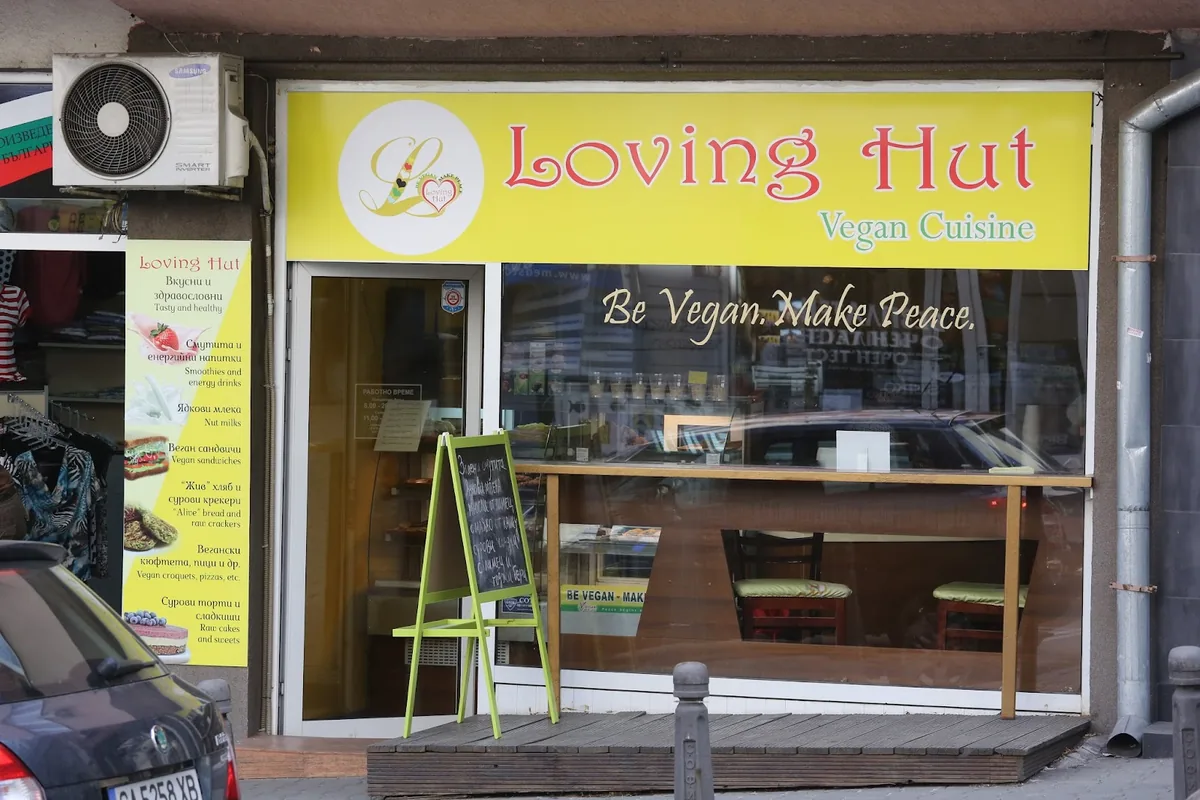
Loving Hut belongs to an international chain of vegan restaurants, and the Sofia branch on Rakovski Street, near the National Opera, is my cheapest vegan lunch in the centre. Everything it serves is vegan, from the döner to the cakes, which come in gluten-free and sugar-free versions too. I send friends here after a few days of shopska and bread, when they want a full, hot plate.
It shuts before dinner, so it's a lunch stop for me, and I check Loving Hut's website before going on a public holiday.
Furna
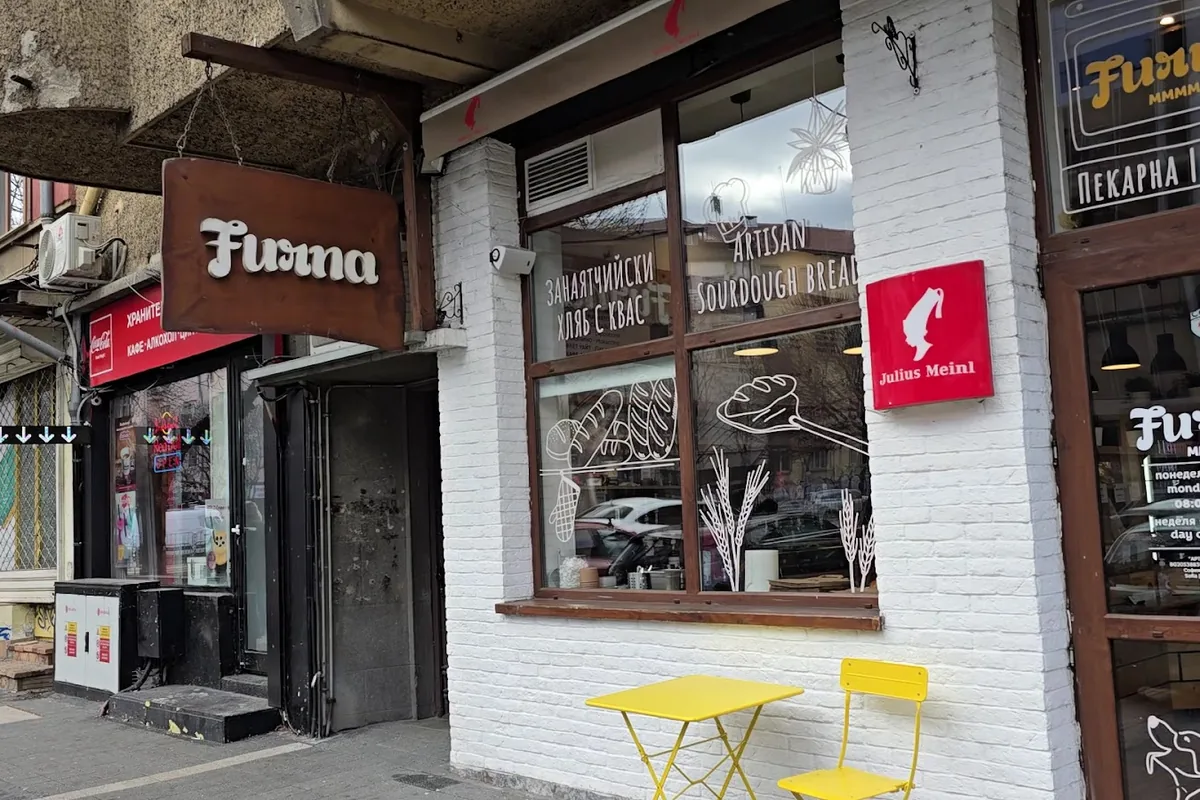
Furna is a vegan bakery on Stefan Stambolov Boulevard, the same street as the Women's Market, and its banitsa has no egg or cheese in it. The savoury fillings change with the day: mushroom, potato with onion and thyme, beans with peppers, red lentil, lentil with curry. The sweet ones are apple with walnut and cinnamon, and pumpkin with walnut. There's plant milk for the coffee, so a vegan gets the full Bulgarian breakfast here.
Sun Moon (Слънце Луна)
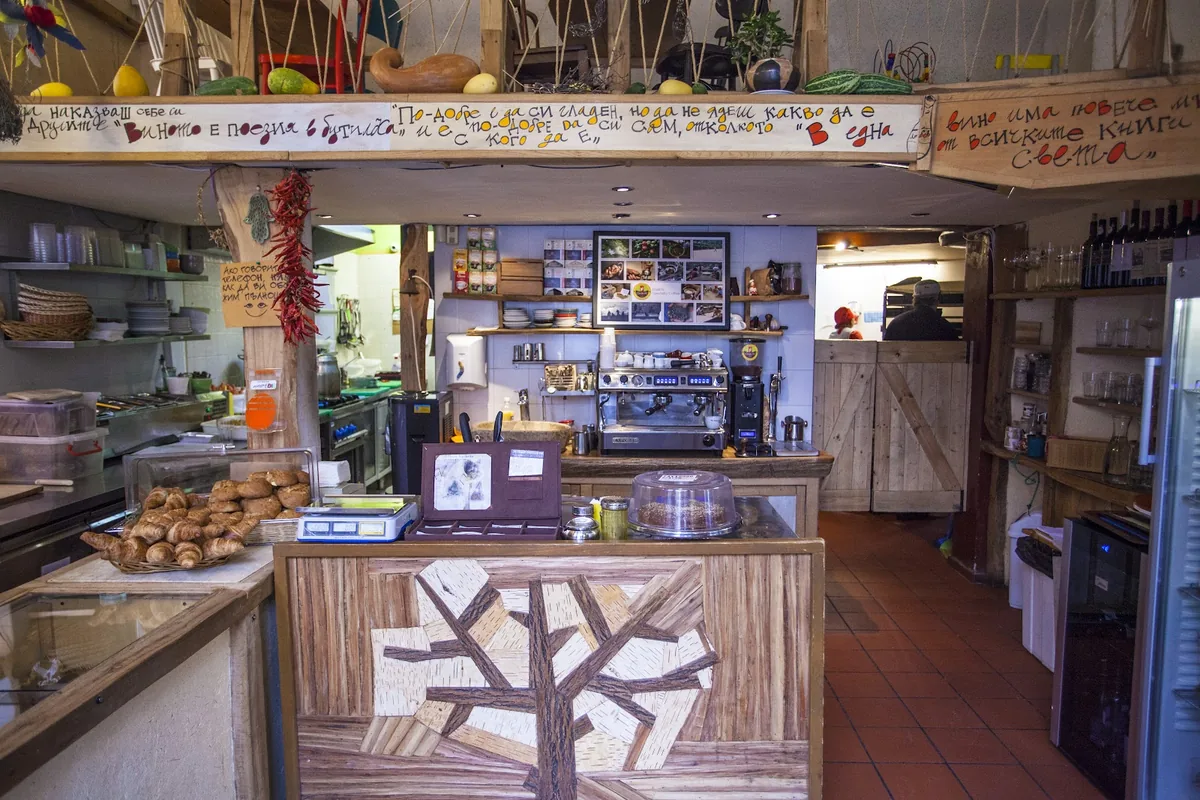
Sun Moon is a vegetarian restaurant on 6th September Street with a separate vegan menu, and it's where I book when vegetarian friends want a sit-down dinner. The cooking is modern Bulgarian, and Sun Moon runs its own bakery and shop as well as the restaurant. On a busy night the food can take 30 to 45 minutes to arrive, so I never turn up starving.
Vegetarian-friendly restaurants and cafes in Sofia
These two cook meat too, and each has enough meat-free dishes for a vegetarian to eat well.
Manastirska Magernitsa
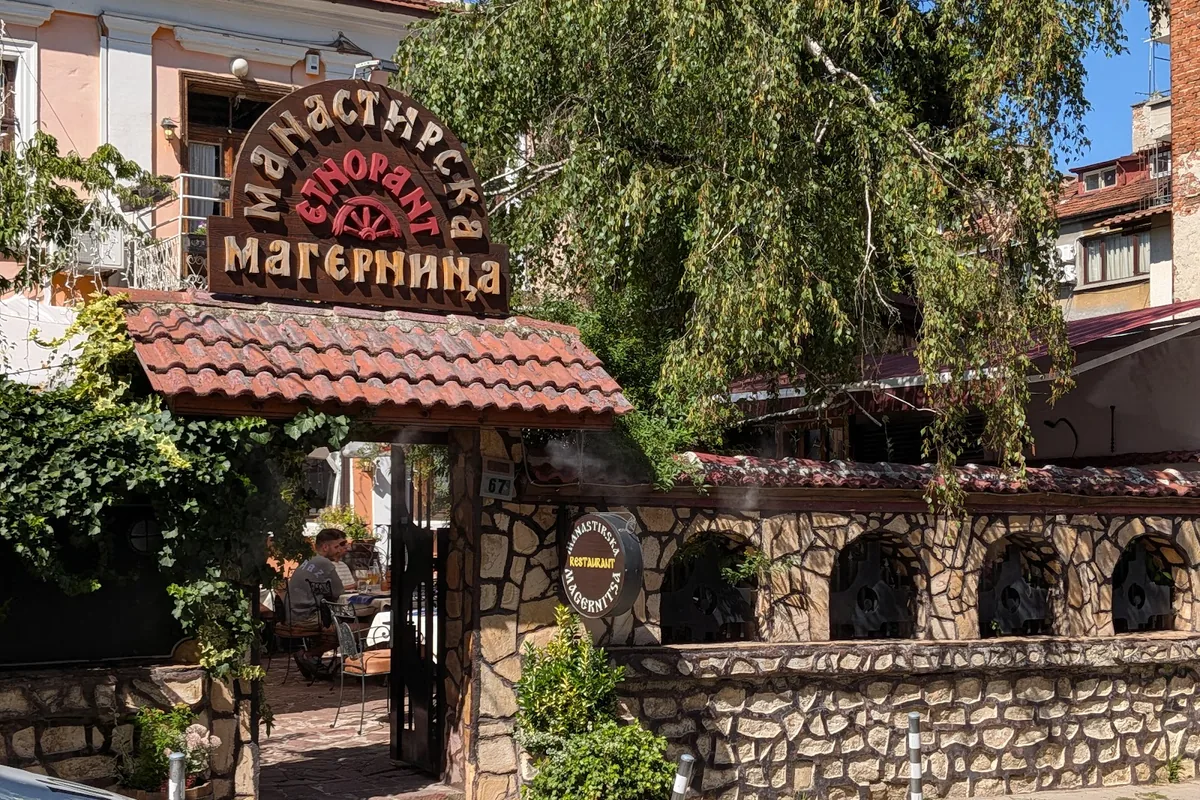
Manastirska Magernitsa (Манастирска магерница, the monastery kitchen) cooks recipes collected from monasteries across Bulgaria, and its menu has meatless lenten dishes alongside the meat. That's why I take vegetarian friends here for a traditional Bulgarian dinner: everyone orders from the same menu, and nobody gets a side salad as a main. Of the traditional restaurants in Sofia I'd book, it gives a vegetarian the most choice.
The restaurant fills an old house at Han Asparuh 67. My order is the nettle soup. It's open every day from noon to 11pm, which makes it my Sunday answer too. I book weekend dinners a few days ahead on +359 899 949 400, a number that takes Viber and WhatsApp messages as well.
Fabrika Daga
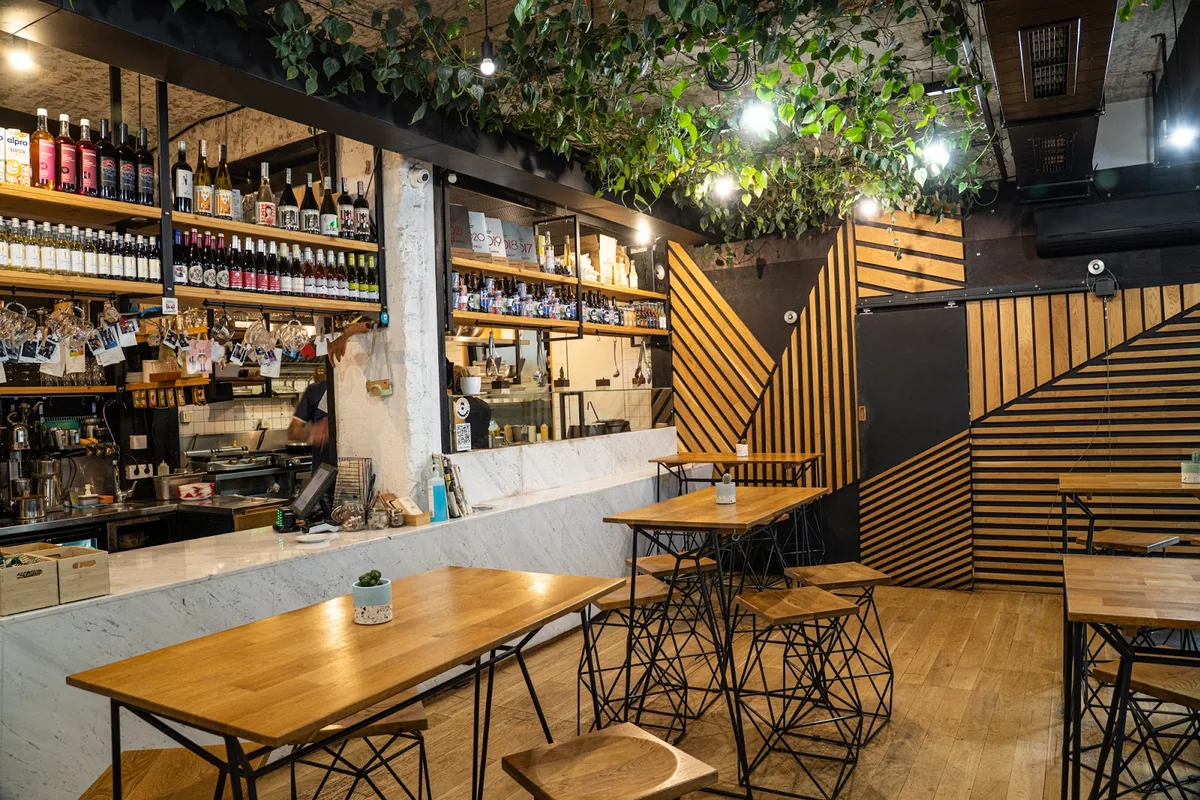
Fabrika Daga, also called Rainbow Factory, is my pick for a vegetarian brunch in Sofia. Order the panagyurski eggs, named after the town of Panagyurishte: poached eggs on garlicky yoghurt and sirene, with paprika butter poured over the top. The cafe is at Sheynovo 13V, near the Doctors' Garden, and it opens at 8am on weekdays and 9am at weekends, closing at 8pm.
Where to buy vegan and vegetarian food in Sofia
For a self-catering day or a picnic in the park, I shop in two places.
Zhenski Pazar, the Women's Market (Женски пазар)
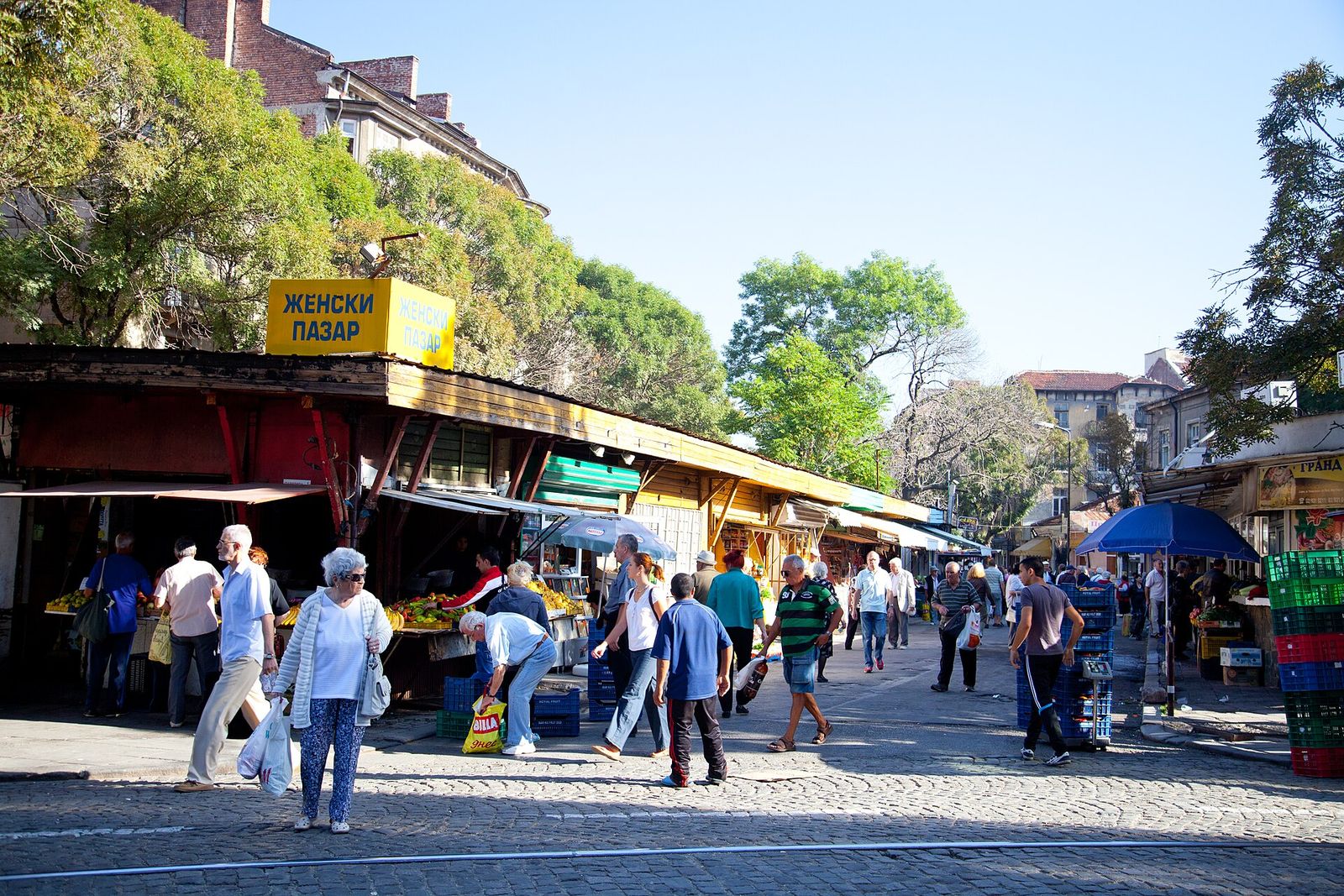
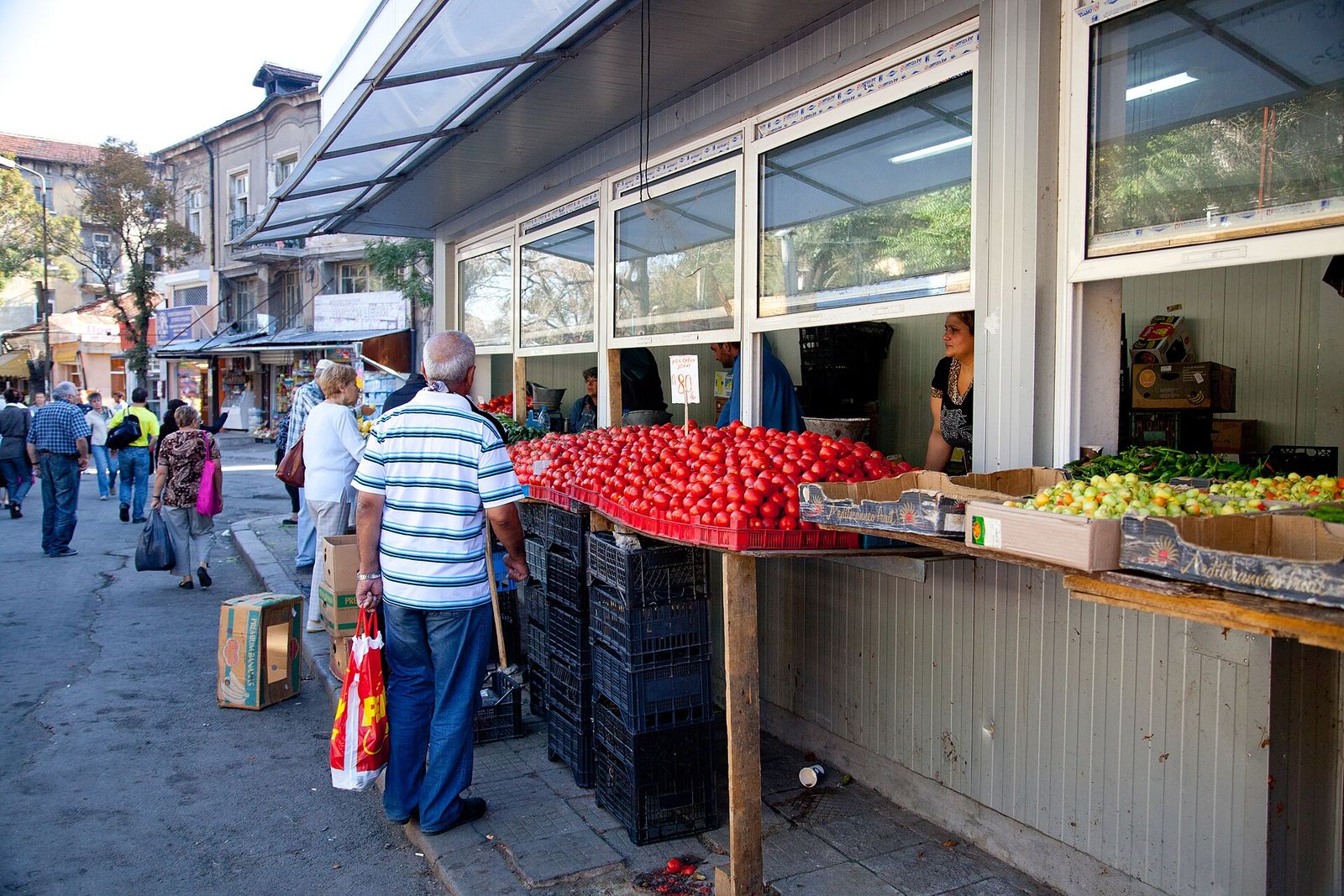
Zhenski Pazar is Sofia's largest open-air market, along Stefan Stambolov Boulevard between Todor Aleksandrov and Slivnitsa boulevards, near Lavov Most. The stalls sell fruit, vegetables, spices, meat and dairy, and mornings are the best time to go.
The Central Market Hall on Maria Luiza Boulevard, next to the Banya Bashi Mosque, reopened in May 2024 as a supermarket with a culture stage, inside its 1911 building. Supermarkets sell lyutenitsa and turshiya in jars, and those two plus bread and fruit are my vegan picnic.
A vegetarian day of eating in Sofia
This is the weekday I'd plan for a vegan friend. A vegetarian can follow it too and add the nettle soup at dinner.
| Time | Where | What I order |
|---|---|---|
| 8.30am | Furna, Stefan Stambolov Boulevard | A savoury vegan banitsa and a coffee with plant milk |
| 10am | Zhenski Pazar | Fruit for later, and tomatoes if I'm cooking |
| 1pm | Loving Hut, Rakovski Street | The vegan döner, and a vegan cake for later |
| 8pm | Manastirska Magernitsa, Han Asparuh 67 | A lenten dish from the meatless part of the menu |
On a Saturday the plan still works, since Loving Hut stays open until 5pm. On a Sunday Furna and Loving Hut are both shut, so I swap in brunch at Fabrika Daga from 9am and keep dinner at Magernitsa.
Key takeaways
- Kyopolou, lyutenitsa, lenten sarmi and a shopska without cheese are the vegan orders in a traditional restaurant; vegetarians can add tarator, snezhanka, chushki byurek and banitsa.
- Постно on a menu means no meat, dairy or eggs, and lenten dishes are easiest to find from 15 November to Christmas Eve and in Lent.
- Loving Hut for lunch and Furna for breakfast are fully vegan and shut on Sundays, and Sun Moon is my vegetarian dinner.
- Manastirska Magernitsa opens every day and keeps lenten dishes on the menu, so it's my Sunday dinner with vegetarian friends.
Frequently asked questions
Is Sofia good for vegans?
Yes, with a little planning. Sofia has fully vegan places such as Loving Hut near the National Opera and Furna, a vegan bakery, and traditional restaurants mark their meatless fasting dishes with the word постно. Dairy is the hard part, because sirene and yoghurt go into so much Bulgarian cooking.
Is Bulgarian food vegetarian-friendly?
Yes. Shopska salad, tarator, snezhanka, kyopolou, lyutenitsa, chushki byurek and banitsa are all meat-free and on most traditional menus. A vegetarian can eat a full Bulgarian dinner from the starters alone.
What does постно mean on a Bulgarian menu?
Постно (postno) means lenten: food made for Orthodox fasting days, with no meat, dairy or eggs. Lenten sarmi, bean soup and vegetable stews are the dishes that carry the label most often.
Where can I eat traditional Bulgarian vegetarian food in Sofia?
Manastirska Magernitsa at Han Asparuh 67 is my pick, because it cooks monastery recipes and keeps meatless lenten dishes on the menu next to the meat. Sun Moon on 6th September Street is fully vegetarian, with modern Bulgarian cooking and a vegan menu.
Is there vegan street food in Sofia?
Yes, and most of it is pastry. Furna on Stefan Stambolov Boulevard bakes vegan banitsa from 8am, Monday to Saturday, and the roasted chestnuts sold on the street in winter are vegan too. The rest of Sofia's street food leans on cheese, yoghurt and the grill.
Where can I find vegan cakes and sweets in Sofia?
Furna's sweet banitsa (apple with walnut and cinnamon, or pumpkin with walnut) and Loving Hut's vegan cakes, which include gluten-free and sugar-free ones, are my two answers. Lokum, the Bulgarian version of Turkish delight, is made from sugar and starch and sold in supermarkets, while most other Bulgarian desserts use butter, eggs or yoghurt.
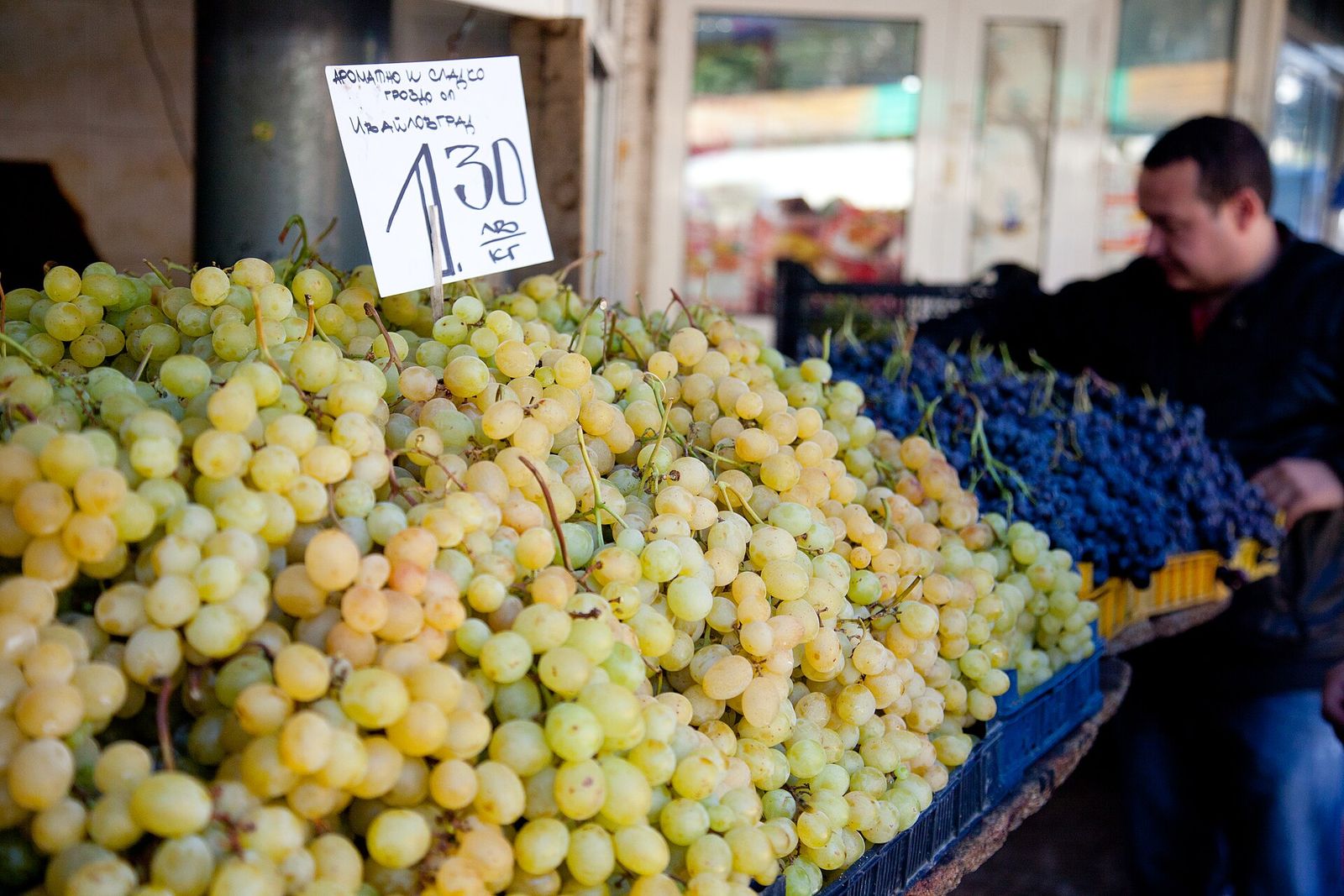
Sofia Food Guide: What to Eat and Where
Banitsa, shopska and rakia: what to eat in Sofia, the places I eat it, and what a meal costs in euros.
Read the guide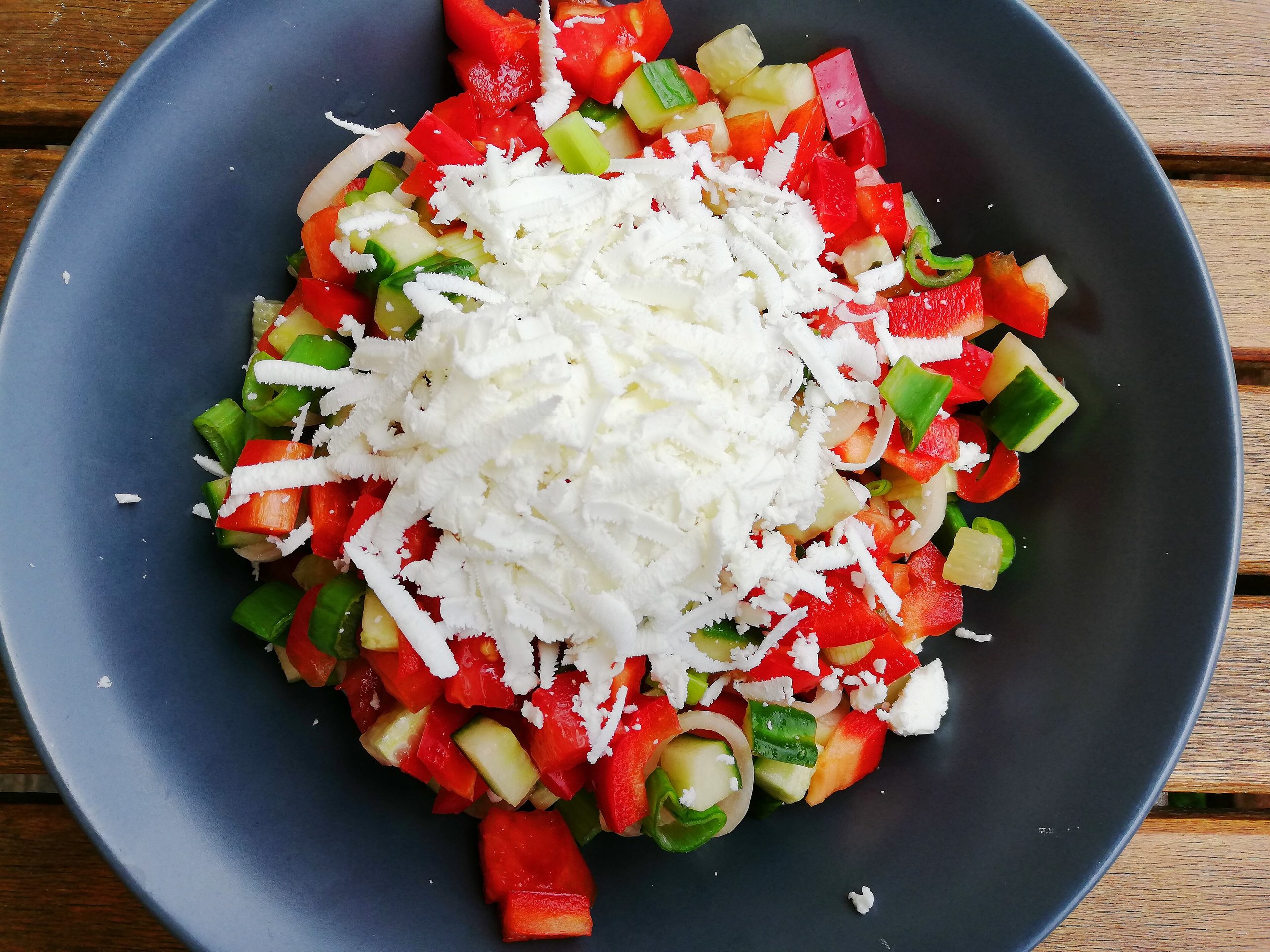
Bulgarian Food: The Dishes I Tell Every Visitor to Try
Salads, white cheese, yoghurt, grills and clay pots: the Bulgarian dishes I order, with the menu word for each.
Read the guide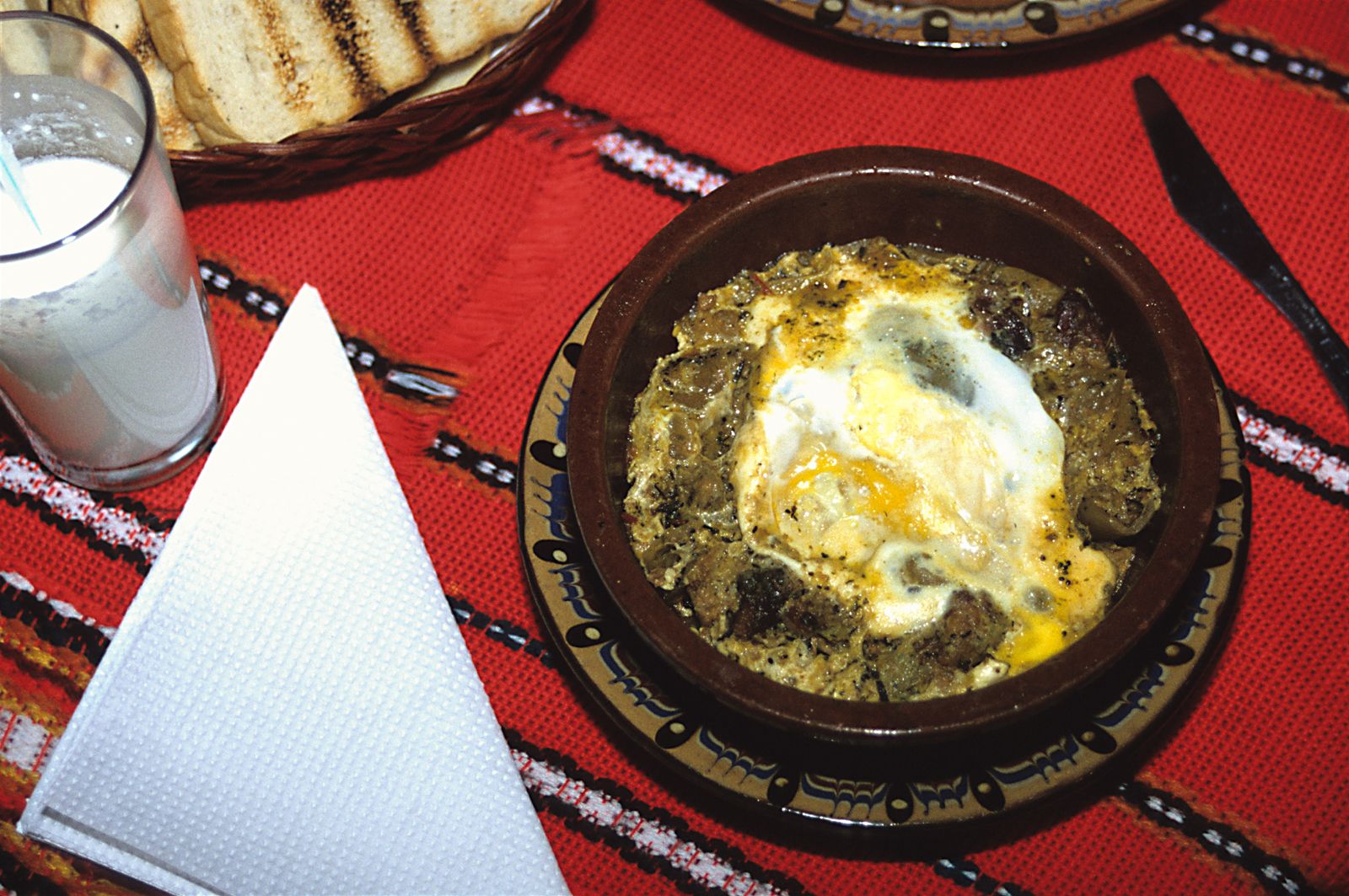
The Best Restaurants in Sofia: 11 Places I Send Friends
The 11 Sofia restaurants I send friends to, from folk-music cellars to award-winning fine dining, and what to order.
Read the guide