Kukeri and the Surva Festival: Masks, Bells and a Day in Pernik
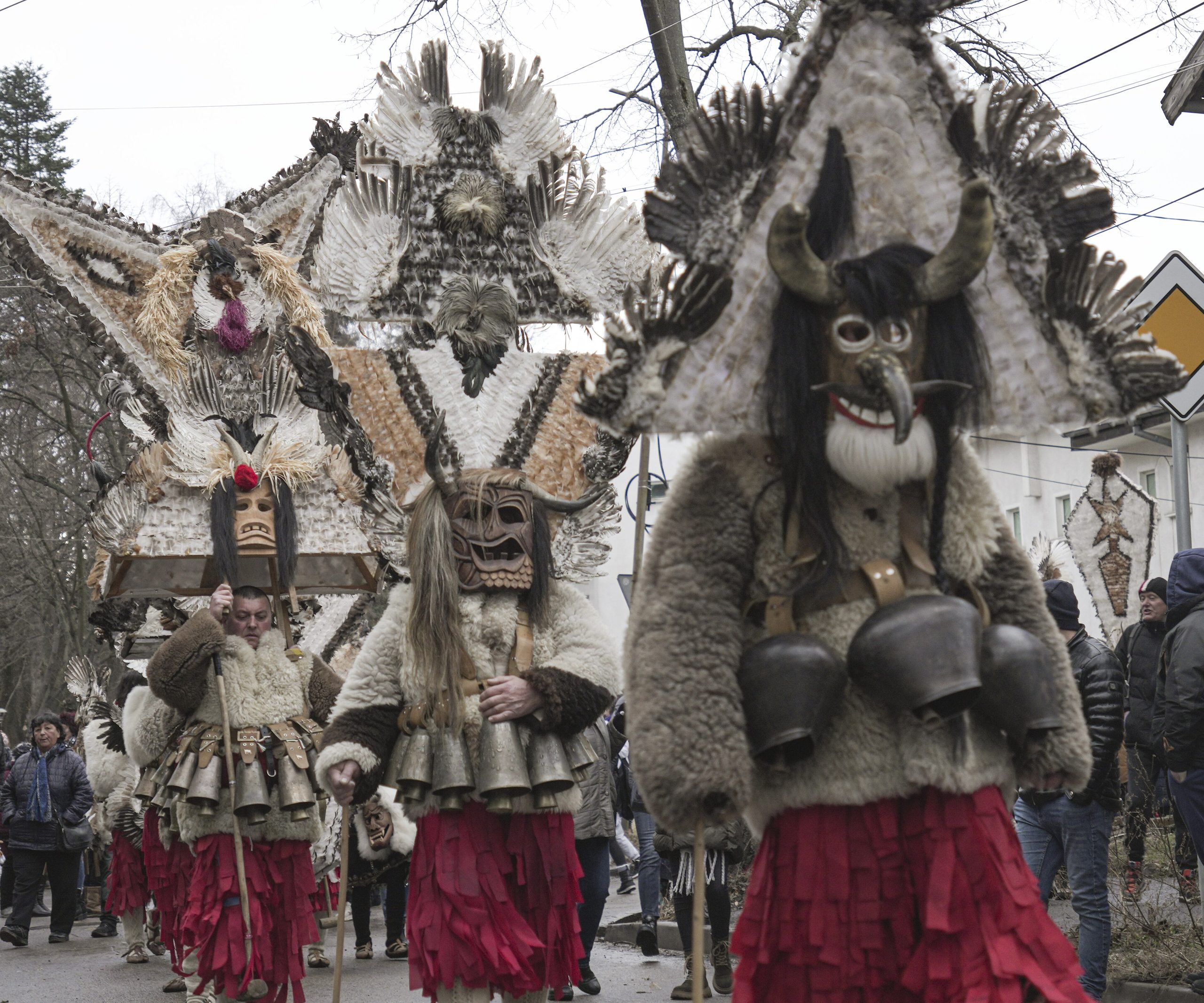
Kukeri are Bulgaria's winter monsters: dancers in carved masks, shaggy fur and belts of cowbells who stomp through villages to chase off evil spirits and bring a good year. Every January the biggest gathering takes over Pernik, 30 km from Sofia, and it's the one winter day out I'd never skip. This is what the costumes and rituals mean, when to see them, and how I do Surva from Sofia.
What are kukeri?
Kukeri (кукери; one is a kuker) are masked dancers, traditionally men, who dress in goat or sheep fur, a carved wooden mask and a belt of huge bells. They go through a village in winter to frighten away evil spirits, and in return the village gets health, a good harvest and luck for the year ahead. They come out twice in the calendar: around New Year and in the weeks before Lent.
In the old custom the kukeri visited houses at night, so that the sun wouldn't catch them on the road. Then they gathered in the village square and danced, jumped and clanged until the crowd was in stitches. It sits beside name days and the martenitsa among the Bulgarian customs that still run on the village calendar, and it's the loudest of the lot.
The same custom turns up across the Balkans, and in parts of Bulgaria itself, under other names.
| Where | What they call them |
|---|---|
| Most of Bulgaria | Kukeri or babushari |
| Pernik region, west of Sofia | Survakari (сурвакари) |
| Greek Thrace | Kalogeros |
| North Macedonia | Babari or mechkari, the "bear men" |
| The Pontic Greeks of northern Anatolia | Momogeros |
| Romania | A goat figure called capra, turca or brezaia |
Where the kukeri tradition comes from
Nobody knows for sure where the name comes from. One theory traces it to an old Slavic word for an evil spirit, which would make a kuker a chaser of evil spirits. Another links it to the Latin cuculla, a hood.
The bigger question is age. In the 19th century, scholars tied the kukeri to a Thracian cult of Dionysus, the god of wine and fertility, and Bulgarian folklorists ran with the idea, which made the custom older than the first Bulgarian state. Most modern scholars disagree. They place kukeri in a Balkan tradition of winter mumming from the early modern period, shaped by Greek, Slavic, Albanian and Turkish customs, with close cousins still alive in Greece, North Macedonia and Romania.
You'll still hear the Thracian story at every festival, and I like it as much as anyone. I just wouldn't put money on it.
The kukeri costume: masks, fur and bells
A kuker's costume is built at home, and in the Pernik region families collect the materials through the year and teach the children how to make the masks.
The masks
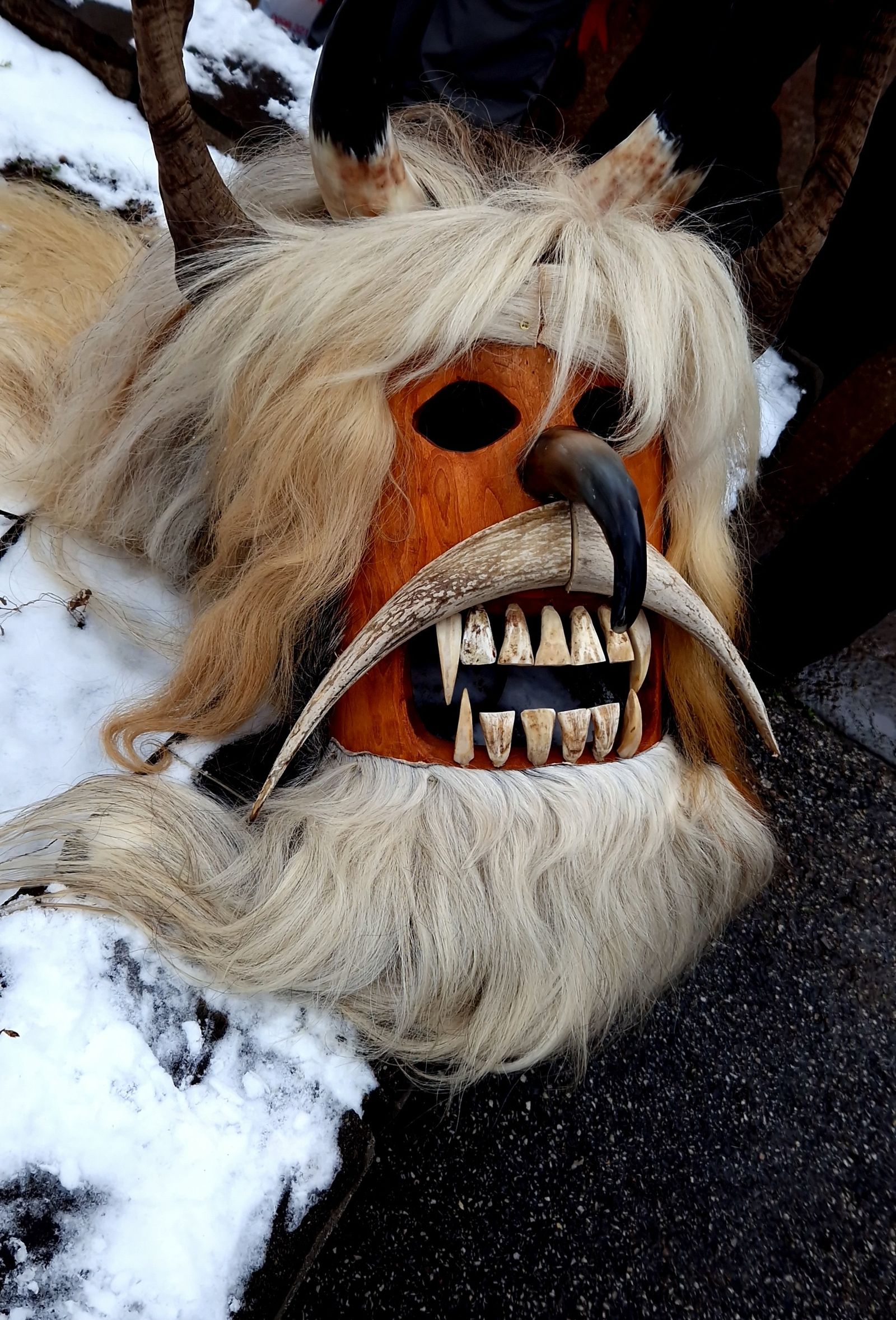
Most masks are carved from wood and painted, usually as an animal face with horns, teeth, a beard of goat hair and sometimes a hinged jaw that snaps. Some are double-faced, one face looking forward and one back. Others grow upwards into tall headdresses of feathers, wool and rags that tower over the crowd, and carrying one through a day of dancing is a feat of neck strength.
The bells
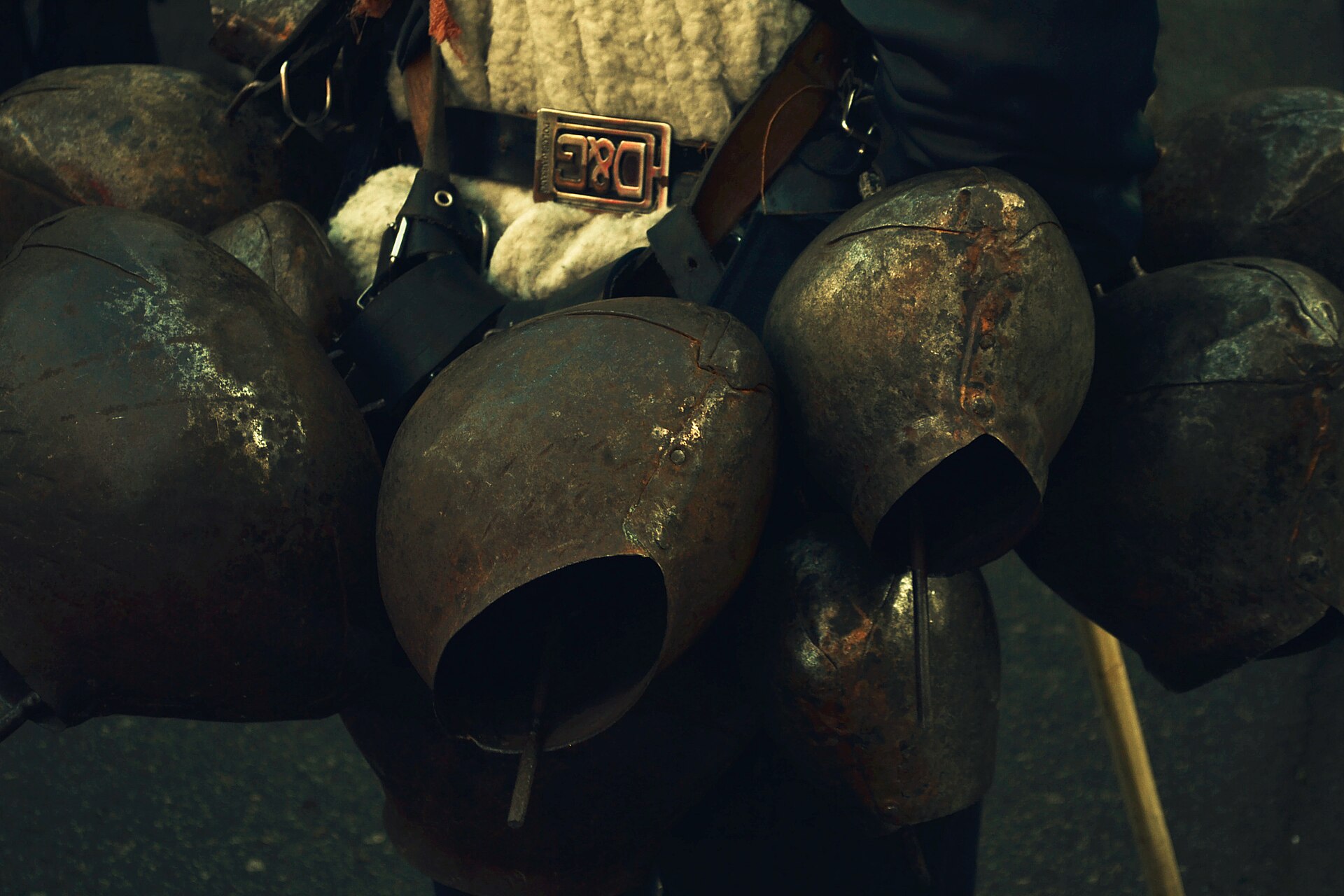
The bells hang from a thick leather belt round the waist: big, dented copper and iron cowbells. The kukeri jump and twist their hips to make them ring, and the noise is the point, since the clanging is what drives the evil spirits out of the village. Close up, you feel the clang in your chest.
The fur and the props
Under the mask goes a full suit of goat or sheep pelts, or in some villages a costume of coloured rags in red, white and green. The dancers carry wooden staffs, wooden swords or mock scythes, and wave them at the crowd. A full outfit takes weeks to make, and dancing in one all day is hard, heavy work.
What happens at a kukeri ritual
The fullest version of the ritual I know is the Surova feast in the villages around Pernik, and it runs over two days.
On the night of 13 January, New Year by the old calendar, the survakari gather in the village centre in their masks. In the Pernik region the groups take in men, women and children. They light fires and tease the people watching. The next morning, 14 January, they walk through the village and visit the houses one by one. They marry young couples in a mock wedding, the bear "mauls" people for good health, and the hosts wait for them with a ritual meal and gifts. Groups often give the money they collect to orphans and people in need.
In other parts of Bulgaria, the kukeri who come out before Lent act out the start of the farming year: ploughing a furrow, sowing seed and staging a symbolic wedding, with a "bride" who appears pregnant and mimes giving birth. In that tradition the kuker himself stands for fertility.
These are the characters I look out for in a group.
| Character | What they do |
|---|---|
| The leader | Heads the group from house to house |
| The newly-weds | The couple at the centre of the mock wedding |
| The priest | Marries the young couples in the mock wedding |
| The bear | "Mauls" people for good health |
| The king or emperor | Appears with his entourage in the pre-Lent ploughing rituals |
| The ploughman | Ploughs and sows a furrow for a good harvest |
When to see kukeri: the season and 2027 dates
The kukeri season runs from New Year to the start of Orthodox Lent. These are the dates I'd plan around in 2027.
| Date in 2027 | What happens | Where |
|---|---|---|
| 1 January | St Basil's Day (Vasilyovden), New Year's Day, and the first masked groups of the year | Villages across Bulgaria |
| 13 and 14 January | Surova, the old-calendar New Year: survakari go house to house | Villages of the Pernik region |
| Second half of January | Surva, the International Festival of the Masquerade Games | Pernik, 30 km from Sofia |
| 7 March | The first Sunday of March, kukeri day in the Rhodope village of Shiroka Laka; also Mesni Zagovezni, Meatfare Sunday | Shiroka Laka and villages across Bulgaria |
| 14 March | Sirni Zagovezni, Cheesefare Sunday, the last day before Lent | Yambol and the villages of the Thracian plain |
Pre-Lent kukeri overlap with 1 March, when Baba Marta and the martenitsa arrive and everyone in Sofia starts wearing red and white threads on their wrists. In 2027, with kukeri out until 14 March, early March is the one stretch of the year when you can see both customs in a single trip. The rest of Bulgaria's festival calendar moves outdoors in late spring and summer, with the Rose Festival in Kazanlak and the fire-dancers of Strandzha.
The Surva festival in Pernik
Surva (Сурва) is the International Festival of the Masquerade Games in Pernik, run by the Municipality of Pernik and billed as the biggest masquerade festival in Europe. The first one was in 1966, so 2026 marked 60 years. The 32nd edition opened with a show on Friday 16 January 2026 and, for the first time, ran its parades over two weekends: 17 to 18 and 24 to 25 January. About 13,000 people took part, including more than 30 groups from abroad.
The groups parade past the jury on Krakra Pernishki Square in the centre of Pernik and compete for prizes. There's an audience vote by text message too.
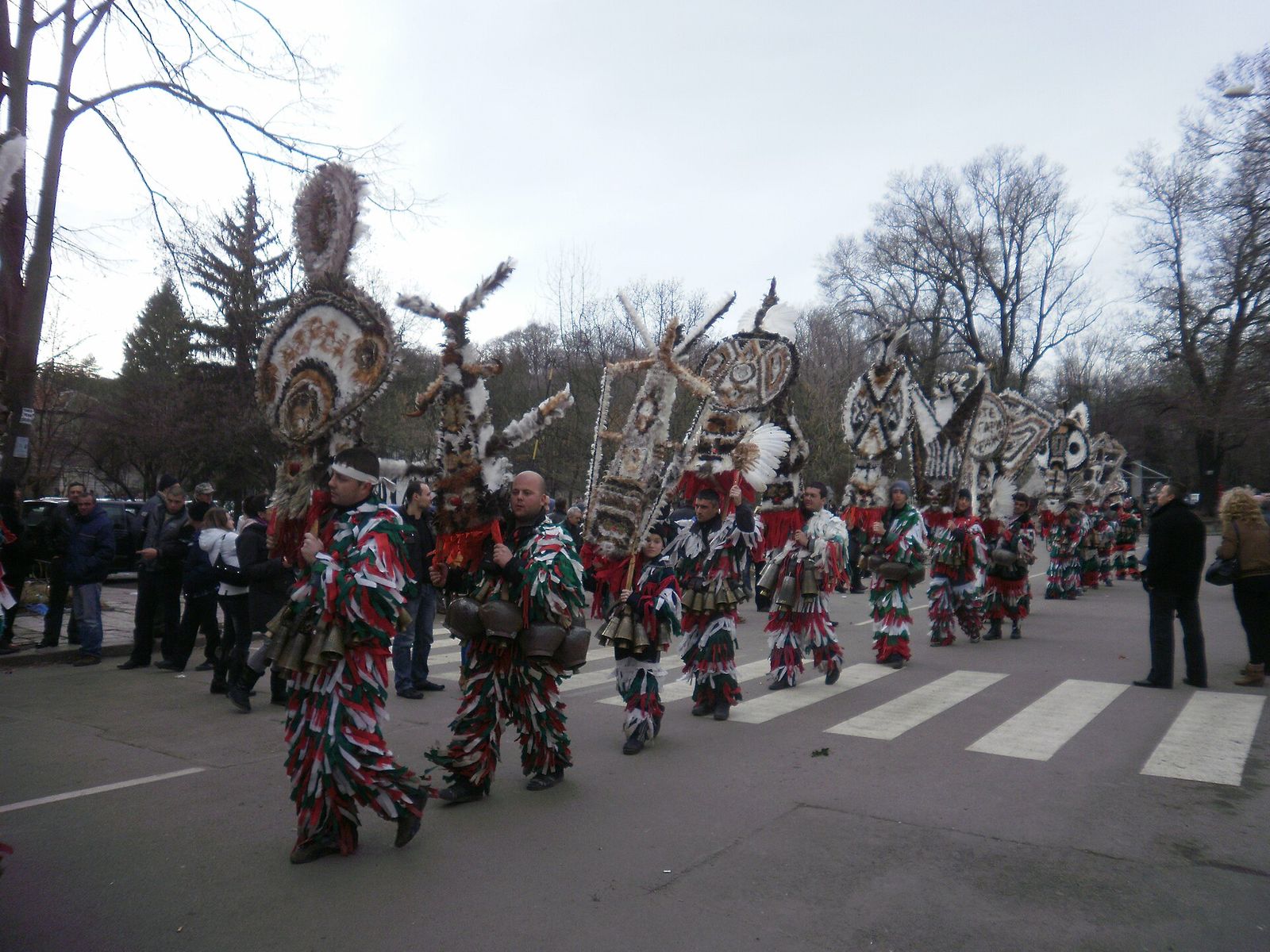
Groups come from every corner of Bulgaria and from abroad, so one day at Surva shows you more regional styles than a month of village festivals: feathered headdresses taller than the dancers, horned wooden faces over goat fur, and the beaded masks of the Thracian plain.
The 2024 edition opened on 26 January, ten days later in the month than 2026, so I keep the second half of January free and check the festival's own site from December, before I book anything.
How to get to Surva from Sofia
Pernik is 30 km south-west of Sofia, which makes it one of the easiest day trips from Sofia to do without a car.
| Option | Leaves from | What I'd know before going |
|---|---|---|
| Train | Sofia Central Station, north of the centre | Pernik is on the line south-west towards Radomir; check times on the BDZ timetable |
| Bus | Ovcha Kupel bus station, south-west Sofia | The bus station for the towns south-west of Sofia, reached by tram 5 from behind the Palace of Justice |
| Taxi | Anywhere in Sofia | No timetable to follow, and you'll be dropped short of the closed streets |
| Car | Anywhere in Sofia | Roads close across Pernik on parade days |
The train is my pick. Bulgarian trains are old, slow and cheap, and on a 30 km run you barely notice the first two. The bus suits you better if you're staying near Ovcha Kupel or the south-west of the city.
This is how I'd spend a parade Saturday.
| When | What I'd do |
|---|---|
| Early morning | Train from Sofia Central Station, with a banitsa for breakfast on the way |
| Mid-morning | Walk to Krakra Pernishki Square and find a spot at the barriers |
| Midday | Warm up with something hot in a café off the square |
| Afternoon | Back to the barriers for the afternoon groups |
| Late afternoon | Train back to Sofia before the crowds leave the square |
| Evening | Dinner in Sofia with a folk band, to keep the gaida in your ears |
How to watch the kukeri: etiquette and photos
Kukeri dance right up to the crowd, and that is part of the show. They'll bang their bells at you, wave a staff over your head or grab you for a twirl, and the bear may "maul" you for your health. Take it as good luck and laugh along.
A few things I'd never do: pull at a mask or a costume, touch the bells while a dancer is moving, or step into the parade route for a better photo. The dancers can barely see out of the masks, and a dancer in a full costume and bells doesn't stop quickly.
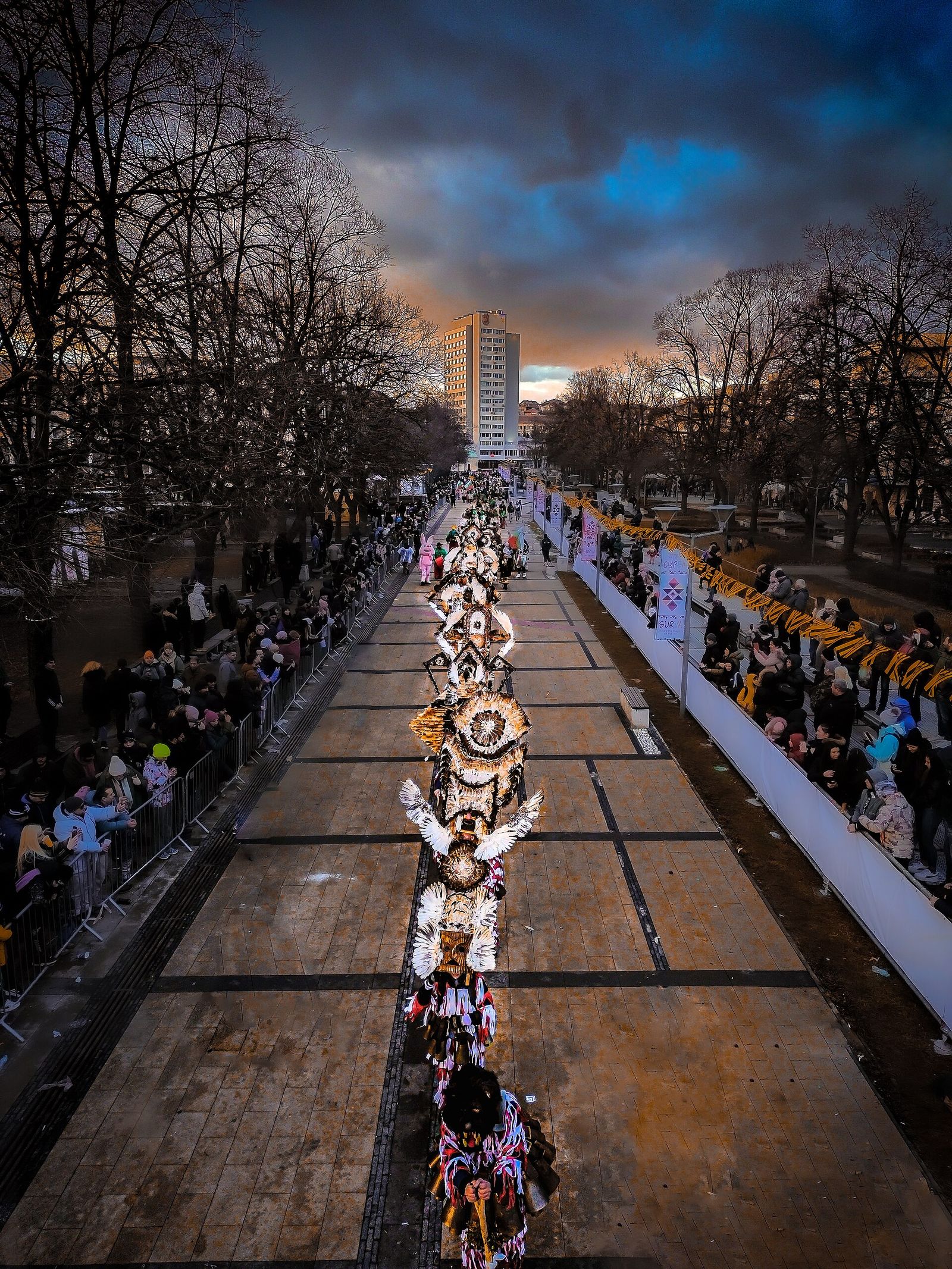
Dress for standing still outside in January in the Balkans. Days hover around freezing, and in Pernik you're on your feet on cold stone for hours, so boots with thick soles, a hat and gloves matter more than anything else on my list for packing for a Bulgarian winter. Small children can find the masks terrifying; older ones usually love them, and plenty of the dancers are children themselves.
For photos, the dancers expect cameras and many will stop and pose. Without the mask it's a different matter: if a dancer has pushed it up for a cigarette or a breather, ask before you point a lens at their face.
Where else to see kukeri in Bulgaria
Surva is the easy one from Sofia, but kukeri come out in villages all over the country. These are the places on my list.
| Where | When | Why I'd go |
|---|---|---|
| Villages of the Pernik region | 13 and 14 January | Survakari going house to house, the custom UNESCO listed in 2015 |
| Pernik | Second half of January | Surva, the national and international festival |
| Shiroka Laka, Rhodope mountains | First Sunday of March | A village kukeri day in the mountains |
| Yambol and the Thracian plain | Sirni Zagovezni, the Sunday before Lent | The pre-Lent kukeri, which Yambol calls Kukuvden |
Yambol and the Thracian plain
The kukeri of the Thracian plain, around Yambol in south-east Bulgaria, swap the fur for tall masks sewn with beads and trimmed with ribbons, embroidered white shirts and white leg wraps bound with black cord, with a ring of bells at the waist. Their big day is Sirni Zagovezni, the Sunday before Lent, which falls on 14 March in 2027.
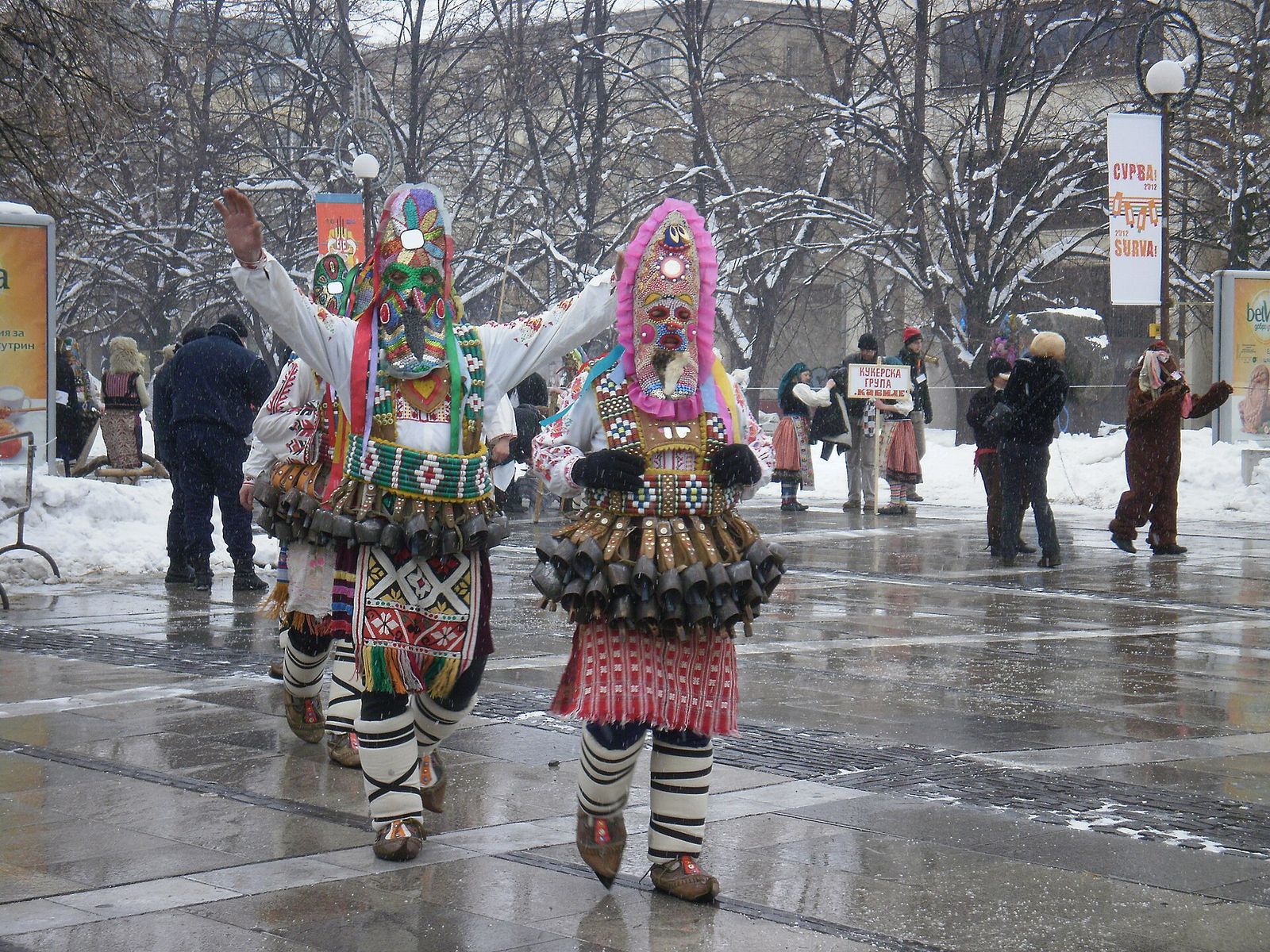
The two in the photo came from Kabile, a village outside Yambol, to dance at Surva in 2012, which is how I'd see Thracian kukeri without crossing the country.
Kukeri groups from Sofia
Sofia has kukeri of its own, and in 2026 they took the top two places in Surva's audience vote: Yordanovi Art, a group from the city, came first, and Dolni Bogrov, a village in the Kremikovtsi district on the north-eastern edge of Sofia, came second. I look for both names on the programme.
When friends visit in January in Sofia, Surva goes on the plan before any museum.
Key takeaways
- The kukeri season runs from 1 January to Sirni Zagovezni, the Sunday before Orthodox Lent, which falls on 14 March in 2027.
- Surva in Pernik, 30 km from Sofia, is the biggest gathering: about 13,000 participants in 2026, with 2027 dates still to come in the second half of January.
- The Surova feast in the villages around Pernik on 13 and 14 January has been on UNESCO's intangible heritage list since 2015.
- Go by train from Sofia Central Station or by bus from Ovcha Kupel, stand at the barriers by mid-morning, and bring earplugs and warm boots.
Frequently asked questions
Where did the kukeri tradition originate?
The kukeri tradition comes from the villages of Bulgaria and the wider Balkans, where close relatives of the custom survive in Greece, North Macedonia and Romania. Nineteenth-century scholars traced it to the Thracians, while most modern scholars see it as part of a Balkan mumming tradition from the early modern period.
Is kukeri Thracian?
Many Bulgarians link the kukeri to Thracian rites for Dionysus, an idea that 19th-century scholars made popular. Most modern scholars reject it and point to a shared Balkan custom with Greek, Slavic, Albanian and Turkish influences. Nobody can date it to one people.
Where is kukeri from?
Kukeri are from Bulgaria, where every region has its own style of mask and costume. Well-known centres are around Pernik west of Sofia, in the Rhodope mountains and on the Thracian plain around Yambol, and Pernik's Surva festival brings them together every January.
What are some traditional Bulgarian rituals?
The best-known Bulgarian rituals are the kukeri and survakari of winter, the martenitsa on 1 March, nestinarstvo fire-dancing on embers in the Strandzha mountains, and egg-tapping at Orthodox Easter. Kukeri, the martenitsa and nestinarstvo all appear on UNESCO's intangible heritage lists, the kukeri through the Surova feast of the Pernik region.
When is Surva 2027?
Surva 2027 has no dates yet. Recent editions have opened in the second half of January: 26 January in 2024 and 16 January in 2026, when the parades ran on 17 to 18 and 24 to 25 January. The festival announces its programme on its own site.
Is the Surva festival free?
Yes, watching the Surva parades from the street is free. The groups parade past the jury on Krakra Pernishki Square, and you stand at the barriers along the route.
Can women be kukeri?
Kukeri are traditionally men. In the Pernik region, though, the survakari groups take in men, women and children, so you'll see all three in the villages on 13 and 14 January.
How far is Pernik from Sofia?
Pernik is 30 km south-west of Sofia, close enough for a day trip. Trains run from Sofia Central Station, buses leave from Ovcha Kupel bus station, and a taxi takes you door to door, though parade days close roads across Pernik.
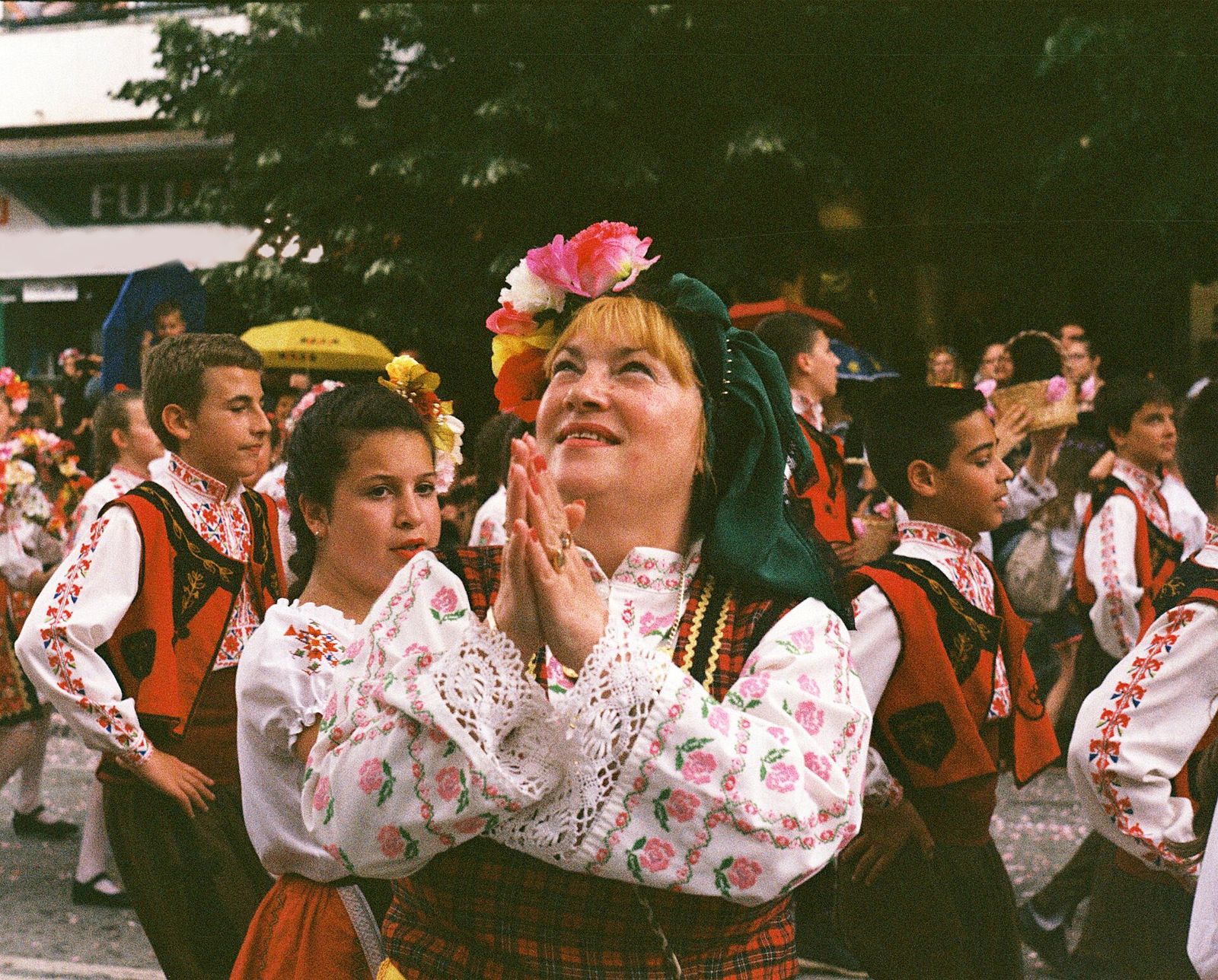
Bulgarian Culture and Traditions: A Visitor's Guide
Nods that mean no, rakia sipped with salad and masked kukeri: the Bulgarian customs I'd want you to know before a trip.
Read the guide
Bulgarian Phrases for Travellers: The Words I Use Every Day in Sofia
Hello, thank you, cheers and the bill: the Bulgarian words I use every day in Sofia, and how to say each one.
Read the guide
A Short History of Bulgaria (and Where to See It in Sofia)
Thracian gold to the euro: Bulgarian history era by era, and the Sofia sights where I see each chapter.
Read the guide