Plovdiv Day Trip from Sofia: Bus, Train and My One-Day Route
Plovdiv is the city everyone told me was prettier than Sofia, and annoyingly, they were right. It sits 144 km south-east of the capital, with a Roman theatre that still stages concerts, a Roman stadium under the high street and an Old Town of painted merchants' houses on three hills. This is how I do it in a day on my own: bus or train, the route I walk, what it costs and the last bus home.
Is Plovdiv worth a day trip from Sofia?
Yes, and of all the day trips from Sofia it's my second favourite. Plovdiv has been lived in since about 6,000 BC and calls itself the oldest continuously inhabited city in Europe. It was a European Capital of Culture in 2019.
The city grew up on seven syenite hills. Six are left, because Markovo Hill was quarried away for stone in the early 20th century, and the Old Town covers three of them: Dzhambaz, Nebet and Taksim. In one day on foot you can see the Roman Stadium, a 15th-century mosque, the Old Town houses, the Roman theatre and the view from Nebet Tepe, with time for a long lunch.
My first choice of trip out is still Rila Monastery, for the mountains. Plovdiv wins on food and on transport: buses run through the day, so no single departure decides your plans. If you'd like the house museums at a slower pace, the wineries or an evening in Kapana without watching the clock, give Plovdiv a night or two instead.
Sofia to Plovdiv: bus, train or car
Buses and trains both leave from the same corner of Sofia: the Central Bus Station and the Central Railway Station stand side by side on Maria Luiza Boulevard, north of the centre.
| Bus | Train | Car | |
|---|---|---|---|
| Leaves from | Central Bus Station, Sofia | Central Railway Station, Sofia | Anywhere, via the Trakia motorway |
| Arrives at | South bus station or North bus station, Plovdiv | Plovdiv Central Station | Wherever you park |
| Time each way | About 2 hours | About 3 hours, usually with a change | Under 2 hours |
| Cost each way | €8.50 to €11 | About €5.60 | Fuel and parking |
| Best for | Speed and the most departures | The lowest fare and legroom | Adding Bachkovo Monastery |
Sofia to Plovdiv by bus
The bus is how I go. It's quicker than the train, with no change, and costs €3 to €5 more. Karat-S, Union Ivkoni and Meritrans all run the route, with departures through the day.
Metro line M2 runs from Serdika to Central Railway Station, the stop for both stations. A single ride costs €0.80, and tapping a bank card on the validator caps a day of getting around Sofia at €2. Buy your ticket at the company's window in the bus station, or online from Karat-S and Union Ivkoni.
Sofia to Plovdiv by train
The train is the cheap option at about €5.60 each way. Plovdiv sits on the main line from Sofia towards Svilengrad and Burgas, and the trip takes about 3 hours, with a change near Sofia on most daytime trains. Tickets are easy to buy at the windows in Sofia's Central Railway Station, and trains in Bulgaria are slow but roomy.
Times change with each timetable, so I look up the morning departures and the last train back on BDZ, the Bulgarian railway, the night before. Plovdiv's Central Station is about 20 minutes on foot from the Old Town: up through Tsar Simeon Garden, past the big fountain and onto the main pedestrian street.
Sofia to Plovdiv by car or taxi
Driving takes under 2 hours on the Trakia motorway. A car is also the only easy way to add Bachkovo Monastery on the way home. The Old Town lanes are steep, narrow and cobbled, so I park in the modern centre and walk up. A taxi all the way from Sofia makes no sense to me when the bus costs €11 at most.
The last buses from Plovdiv to Sofia
The return bus decides how long your day is, so I check it before I check anything else. These are the afternoon and evening buses from Plovdiv to Sofia as they ran in June 2026.
| Leaves Plovdiv | Company | Leaves from | Fare |
|---|---|---|---|
| 17:00 | Karat-S | Beside the Central Railway Station | About €11 |
| 17:30 | Union Ivkoni | North bus station | About €10 |
| 18:00 | Karat-S | Beside the Central Railway Station | About €11 |
| 19:00 | Karat-S | Beside the Central Railway Station | About €11 |
| 21:10 | Union Ivkoni | North bus station | About €10 |
Karat-S also leaves at 13:00 and 15:10 if you want a shorter day. The North bus station is out on the north side of the city, so I take a taxi there from Kapana.
My one-day Plovdiv route
This route starts at the station end of town, climbs into the Old Town for the morning, drops down to Kapana for lunch and finishes with a second climb up Nebet Tepe. I aim to leave Sofia by about 7.30am.
| Time | Stop | Cost |
|---|---|---|
| About 9.30am | Arrive, walk up the main street | Free |
| 10am | Roman Stadium and Dzhumaya Mosque | Free |
| 10.45am | Hisar Kapia and the Old Town houses | €3.58 a house, or €10.74 for up to 5 sites |
| Noon | Ethnographic Museum | Separate ticket |
| 1pm | Ancient Theatre | €3.58, or part of the combined ticket |
| 2pm | Late lunch in Kapana | Your bill |
| Late afternoon | Nebet Tepe | Free |
| Evening | Bus back to Sofia | About €10 to €11 |
The Roman Stadium of Philippopolis
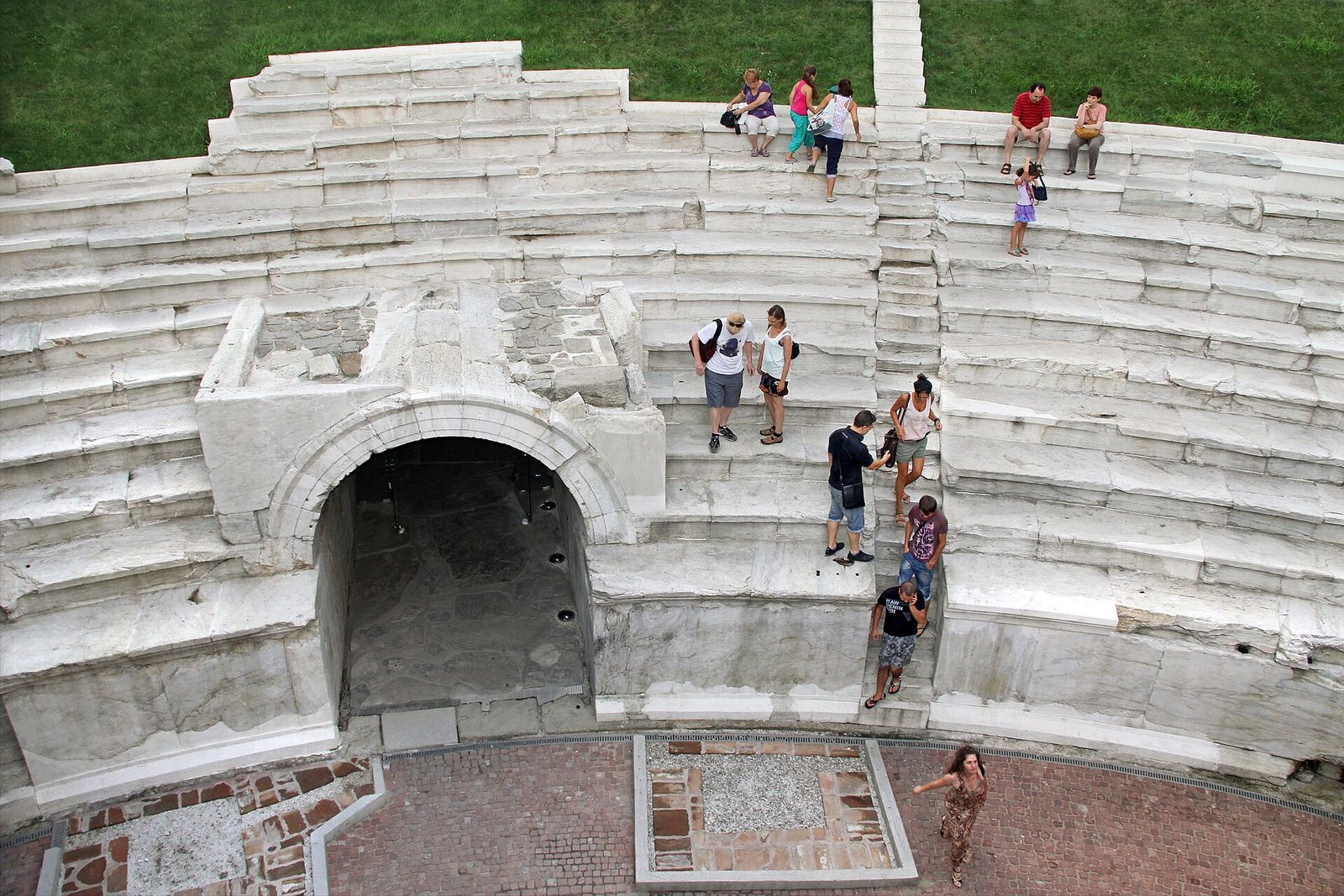
At the top of the main pedestrian street, the pavement opens onto marble seats a few metres below your feet. The stadium was built under the emperor Hadrian, who ruled from 117 to 138 AD, and it held up to 30,000 spectators. The curved northern end is the part dug out in the open, at Dzhumaya Square, and most of the rest still lies under the shops of the main street.
You can walk down among the seats for free. A small hall beside them shows a 3D film about the stadium for €3.68, and €5.11 gets you the film plus the excavated eastern sector, which opens from 10am to 6.30pm. I skip the film and sit on the marble instead.
Dzhumaya Mosque
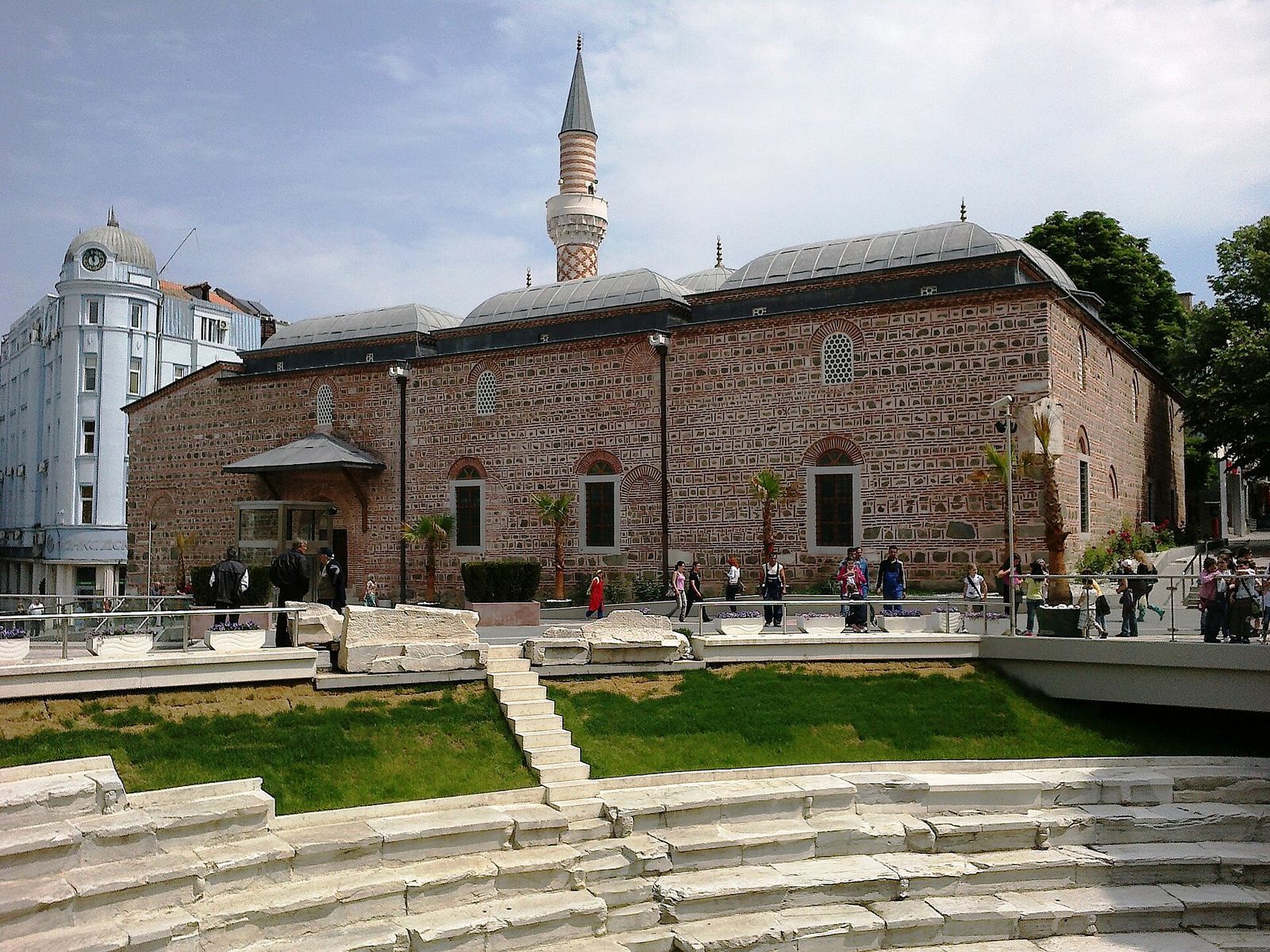
Dzhumaya Mosque stands right above the stadium, on the same square. The first mosque here went up in 1363 and 1364, on the site of a church, soon after the Ottomans took the city. The building you see dates from the 15th century, with nine domes, one minaret and a prayer hall 33 metres by 27.
Inside, the walls carry paintings from the late 18th and early 19th centuries. It's a working mosque, so dress as you would for a church and step in between prayer times.
Hisar Kapia and the Old Town houses
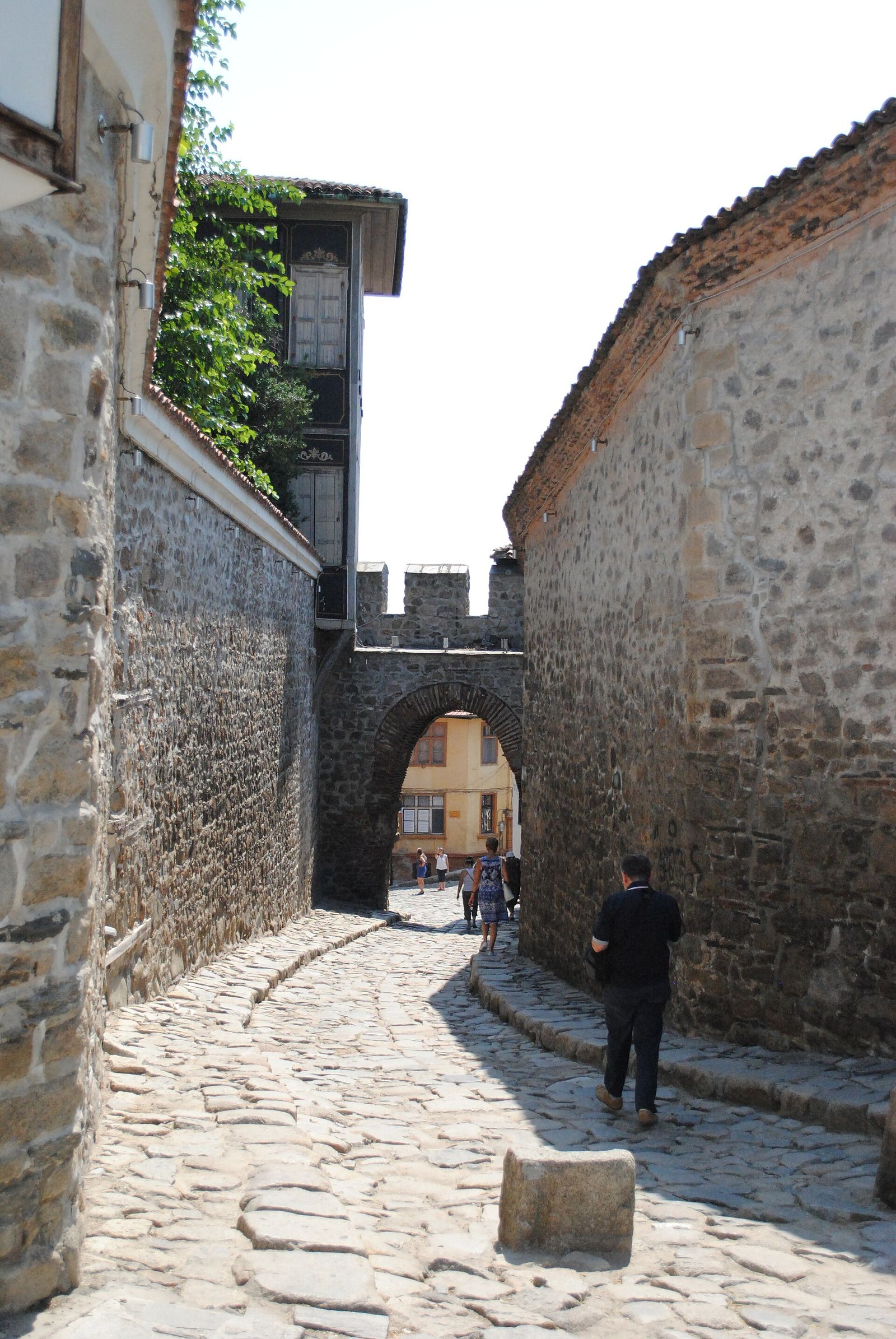
From Dzhumaya Square the cobbles climb into the Old Town, an architectural reserve of 19th-century merchants' houses restored in the 1970s and 1980s. Hisar Kapia, a stone gate in the old fortress walls, is the photo everyone takes, with a timber-fronted house leaning out over the arch.
The houses are the reason I come. Balabanov House and Hindliyan House are both house museums, at €3.58 each. Both close on Mondays. This is where the combined ticket earns its keep: €10.74 covers up to 5 Old Plovdiv sites, the same as 3 single tickets, so it saves money from your 4th site. If your list runs to the theatre and three houses, buy it at the first house you reach.
The Ethnographic Museum in Kuyumdzhioglu House
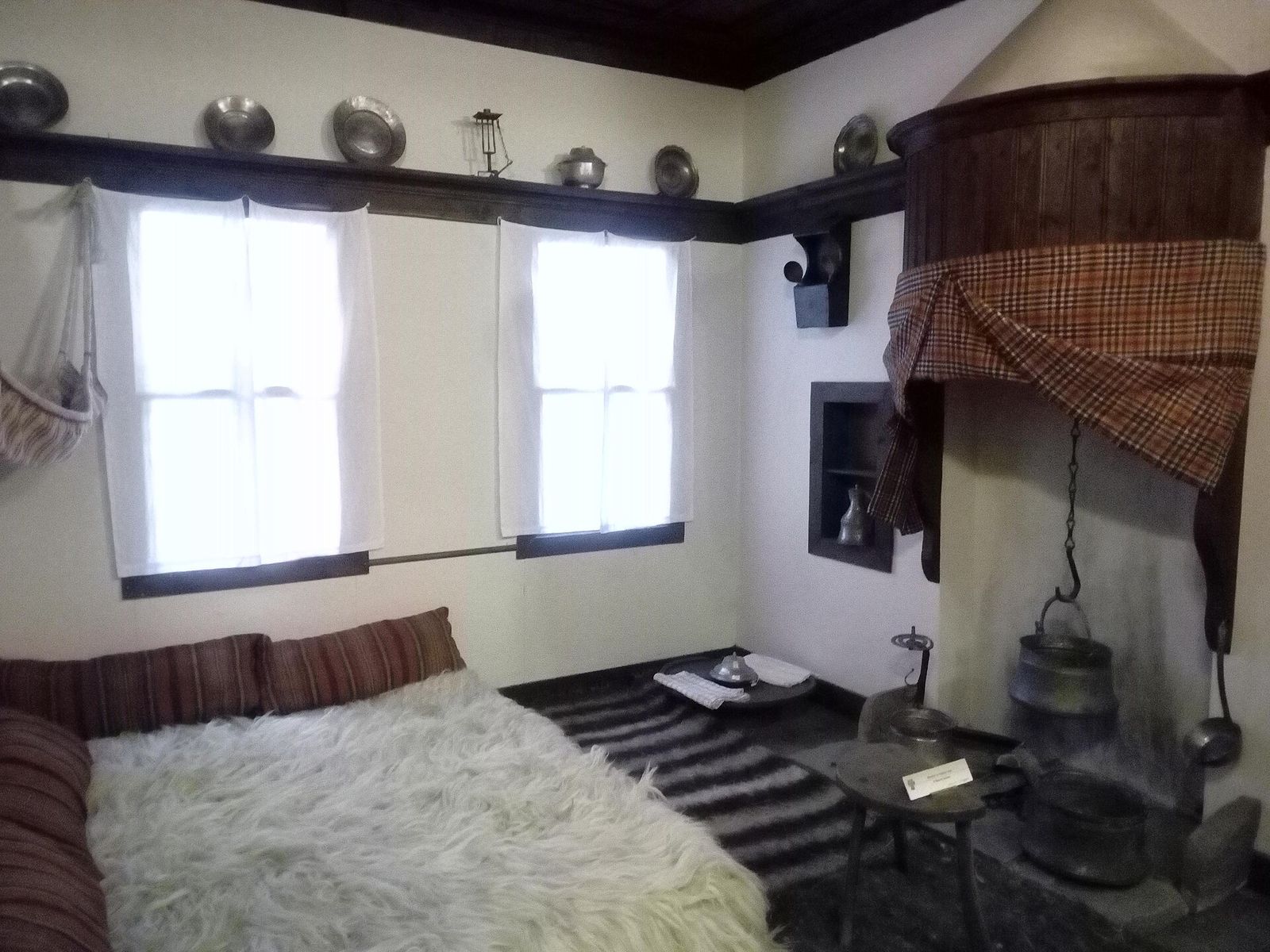
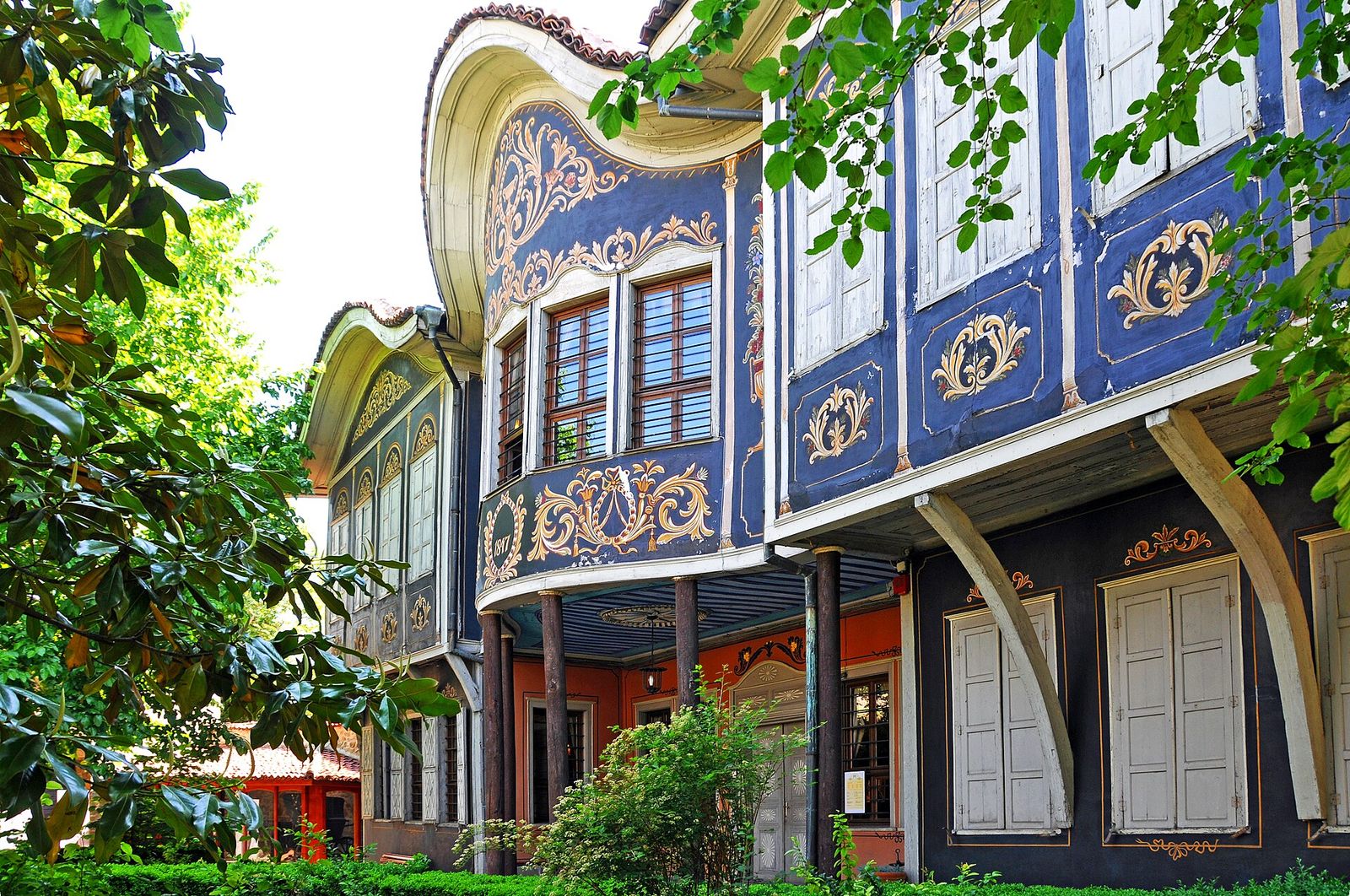
The blue house with the curved, painted front is the one on the postcards. It was built in 1847 for the merchant Argir Kuyumdzhioglu, and since 1938 it has held the Regional Ethnographic Museum. Inside, the rooms cover crafts, costume, music and farming, and one is set out as a 19th-century home with a hearth, woven rugs, cushions and copper plates on the shelf.
It's run separately from the other Old Town houses, so the combined ticket doesn't cover it and you pay at its own door. If you only have time for one house museum, I'd make it this one, for the facade alone.
The Ancient Theatre
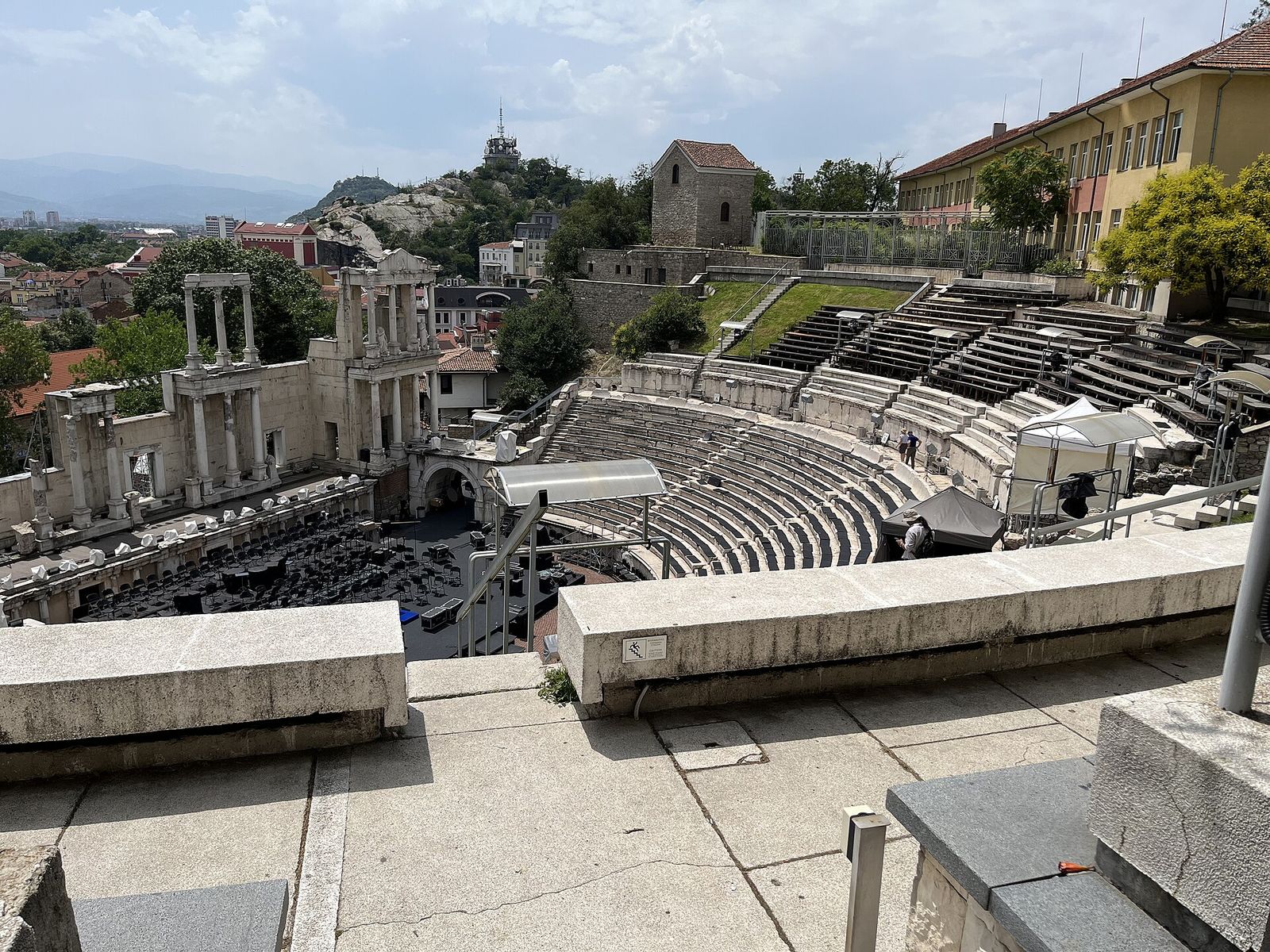
Plovdiv's Roman theatre is almost 2,000 years old. It held about 6,000 people. Its 28 rows of marble seats are cut into the slope of the Old Town, facing a two-storey columned stage front. From the top row you look out over the rooftops to the Rhodope Mountains.
It's open every day for €3.58, with a half-hour lunch break from 12.30pm, and I get there at 1pm as it reopens.
Lunch and the evening in Kapana
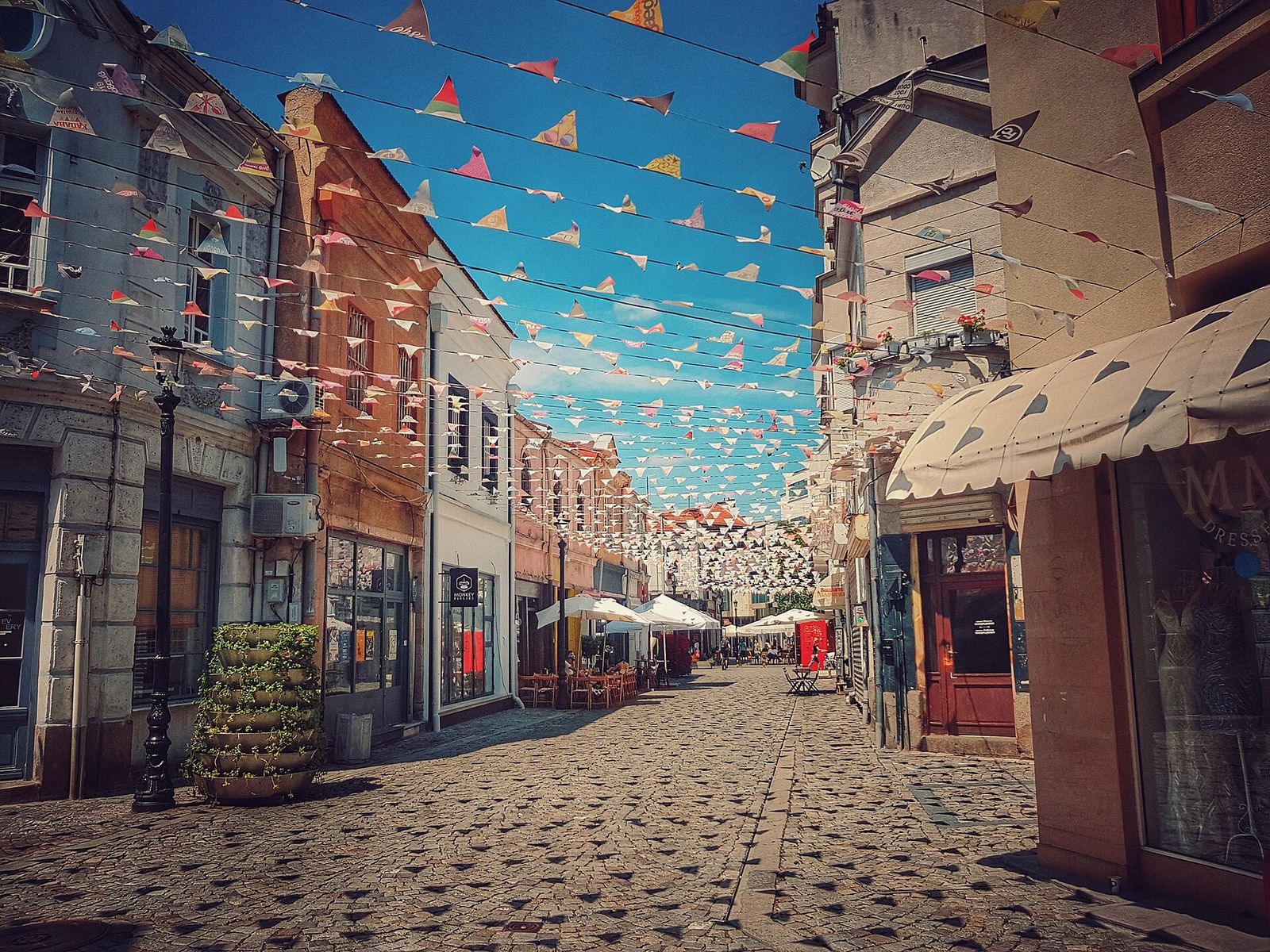
Kapana means "the trap", after its tangle of narrow streets just north of Dzhumaya Square. It's now a few pedestrian blocks of cafes, bars and small restaurants under strings of bunting, and it's where I eat.
Lunch is the time for a glass of Mavrud, the dark red that grows on the plains around Plovdiv and the first Bulgarian wine I'd pour for anyone. Kamenitza beer is brewed in Plovdiv too, if you'd rather. On a Friday or Saturday night Kapana fills up, so book dinner if you're staying for the 21:10 bus.
Nebet Tepe at sunset
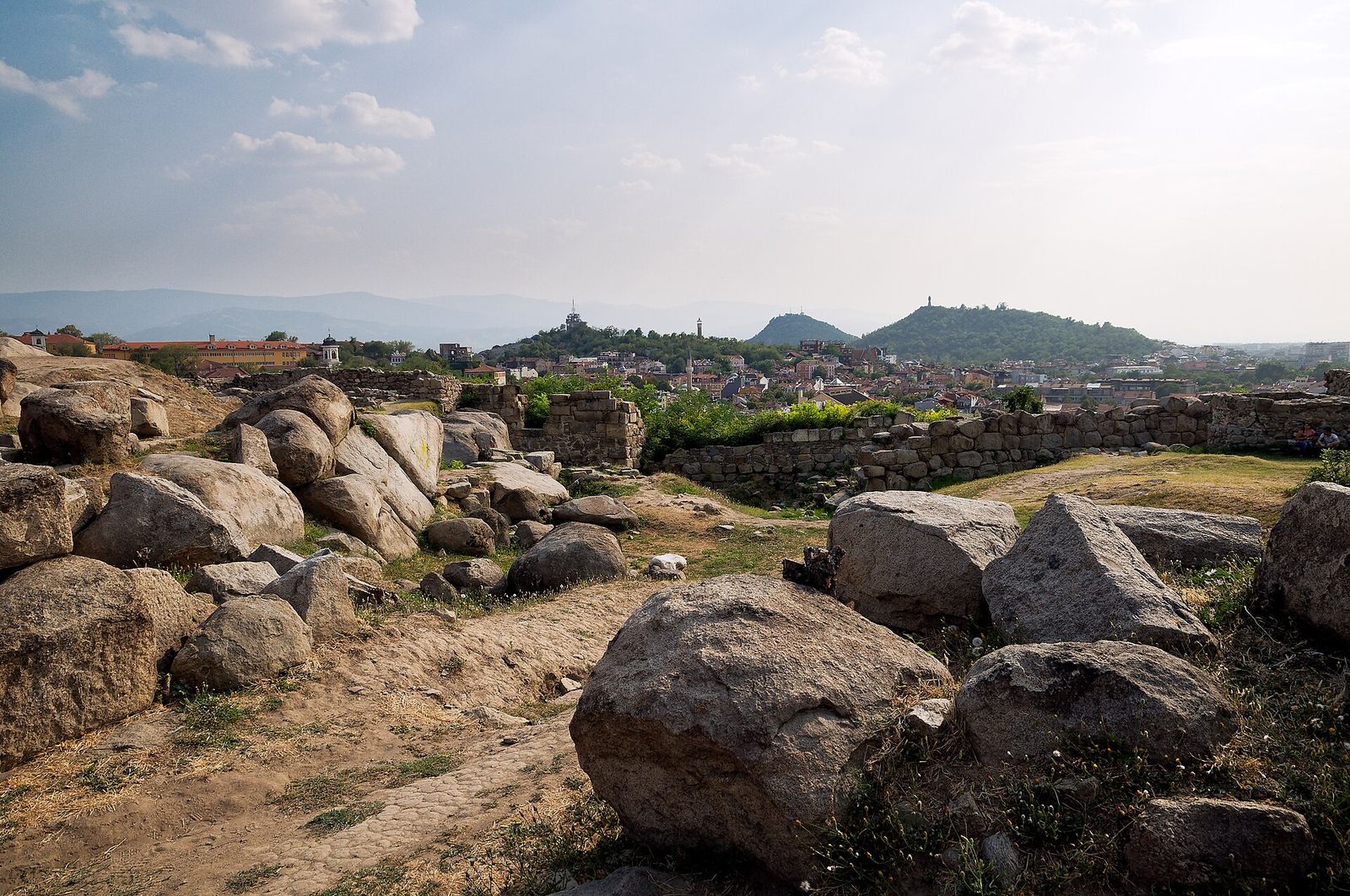
Nebet Tepe is the hill where Plovdiv began. People have lived up here since the end of the 4th millennium BC. Boulders and the remains of Thracian and later fortress walls cover the top. It's free to walk up, and the view from here is my favourite in Plovdiv: the other hills, the river and the Old Town rooftops.
Old Plovdiv tickets and opening hours
The Old Plovdiv institute runs the theatre, the stadium and most of the house museums, and its official ticket page lists the prices in euros.
| Ticket | Adult | Student | Family |
|---|---|---|---|
| One site (theatre, a house museum) | €3.58 | €1.53 | €7.16 |
| Combined, up to 5 sites | €10.74 | €4.09 | €21.47 |
| Bishop's Basilica of Philippopolis | €7.57 | €3.58 | €15.34 |
| Roman Stadium, to walk among the seats | Free | Free | Free |
| Stadium 3D film | €3.68 | €1.23 |
The family tickets cover parents with children aged 7 to 16, and the combined ticket leaves out the Small Basilica and the Bishop's Basilica.
Most sites open from 9am to 5.30pm between November and March and from 9.30am to 6pm between April and October, and each closes for half an hour at lunch.
| Site | Open | Closed |
|---|---|---|
| Ancient Theatre, Roman Stadium, Klianti House | Every day | |
| Balabanov House, Hindliyan House | Tuesday to Sunday | Mondays |
| Hippocrates Pharmacy Museum, Zlatyu Boyadzhiev exhibition | Tuesday to Sunday | Mondays |
| Ancient Odeon | Tuesday to Sunday, 9am to 6pm | Mondays |
| Nedkovich House, Stambolyan House | Monday to Saturday | Sundays |
| Bishop's Basilica of Philippopolis | Every day, 9am to 6pm |
Bachkovo Monastery by car on the way back
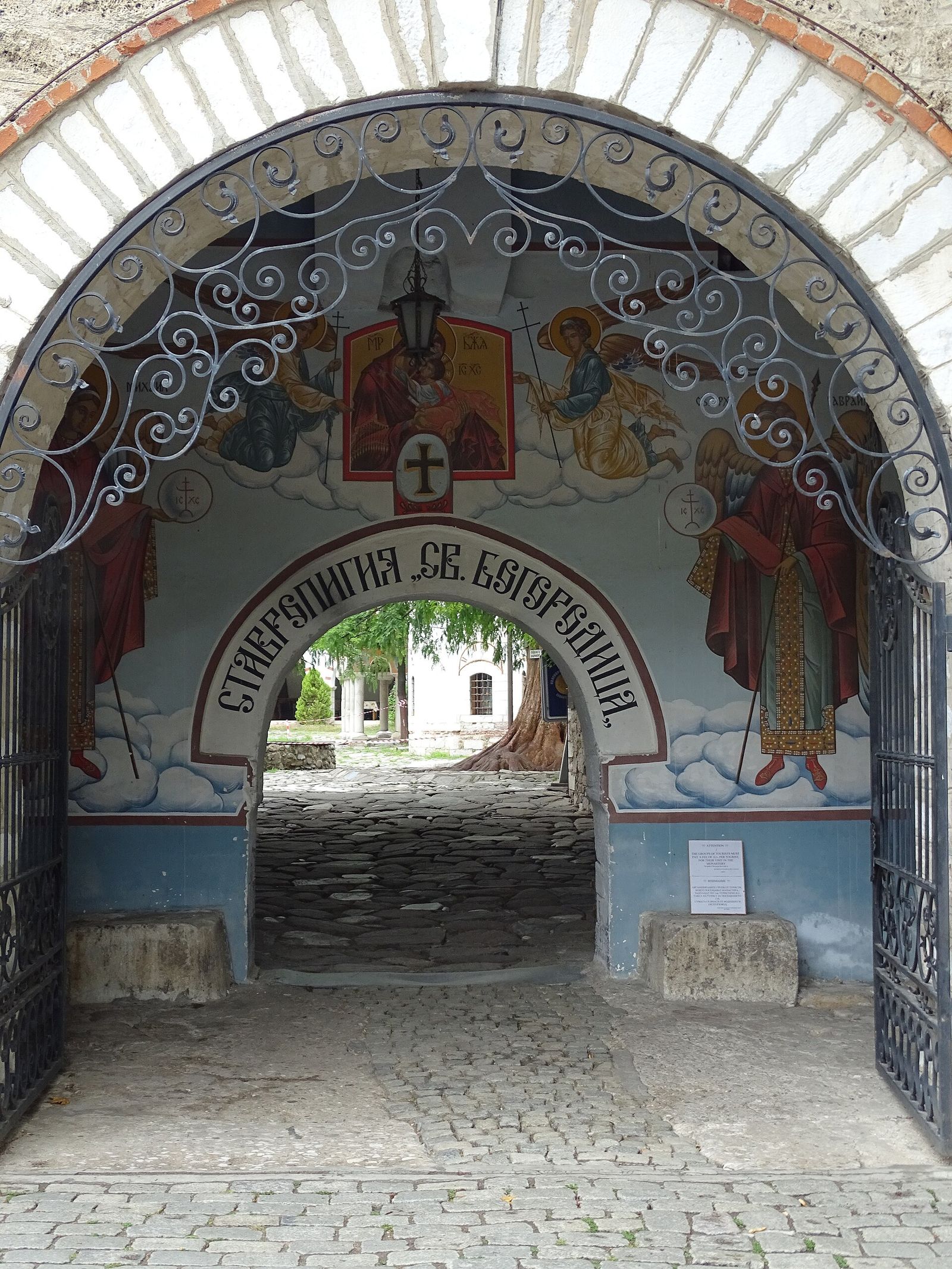
With a car, I'd swap Nebet Tepe for Bachkovo Monastery. It sits south of Asenovgrad on the road into the Rhodopes, and it was founded in the 11th century. Its gateway is painted with the Virgin and angels before you even reach the courtyard.
Asen's Fortress is close by as well, but with one afternoon I leave Plovdiv by about 3pm and give Bachkovo an hour before the drive back to Sofia.
When to go to Plovdiv
Tuesday to Saturday is the window. A Monday loses you Balabanov House, Hindliyan House, the pharmacy museum, the Zlatyu Boyadzhiev paintings and the Odeon, and a Sunday loses Nedkovich House and Stambolyan House, though the theatre and the stadium open every day.
Winter has shorter opening hours but earlier sunsets, so a December day gets you the theatre, Kapana and Nebet Tepe and still puts you on the 19:00 bus. In July and August I start early and do the Old Town climb, all cobbles and stone steps, before midday. On a Sofia itinerary of 3 to 5 days, Plovdiv is the trip I'd put on day five.
Key takeaways
- Take the bus for speed, about 2 hours for €8.50 to €11, or the train for the fare, about 3 hours for about €5.60.
- Walk the route from the Roman Stadium and Dzhumaya Mosque up through the Old Town to the theatre, then down to Kapana.
- Buy the €10.74 combined ticket if you'll see more than 3 Old Plovdiv sites.
- Plan around the last buses back: 19:00 from beside the railway station or 21:10 from the North bus station.
- Go Tuesday to Saturday, when every Old Plovdiv house museum is open.
Frequently asked questions
Is Plovdiv worth a day trip from Sofia?
Yes. Its Roman ruins, Ottoman mosque and hilltop Old Town all sit within walking distance of each other, and the bus gets you there in about 2 hours, which leaves 7 to 9 hours in the city.
Is the bus or train better from Sofia to Plovdiv?
The bus is quicker and runs more often, at about 2 hours for €8.50 to €11. The train costs about €5.60 and takes about 3 hours, usually with a change, but with more room to stretch out. I take the bus because the extra time in Plovdiv is worth a few euros to me.
How long is the train from Sofia to Plovdiv?
About 3 hours from Sofia's Central Railway Station to Plovdiv's Central Station, and 2 hours 45 minutes on the quickest connection. Most daytime trains need a change near Sofia. Departure times shift between timetables, so check them on the BDZ website before you travel.
What is Plovdiv famous for?
Plovdiv is famous for its Roman theatre, its Roman stadium under the main street and the painted merchants' houses of its Old Town. People have lived there since about 6,000 BC, and the city held the European Capital of Culture title in 2019.
How much does a day trip to Plovdiv cost?
About €28 to €33 for the bus there and back plus a combined Old Plovdiv ticket, or about €22 by train. Add €1.60 for two metro rides in Sofia, a separate ticket for the Ethnographic Museum and whatever lunch costs you in Kapana.
Can you do Plovdiv and Koprivshtitsa in one day?
Not without a car, and I wouldn't with one. They sit on different railway lines, and Koprivshtitsa is a full day out of Sofia in its own right, so I give each its own trip.
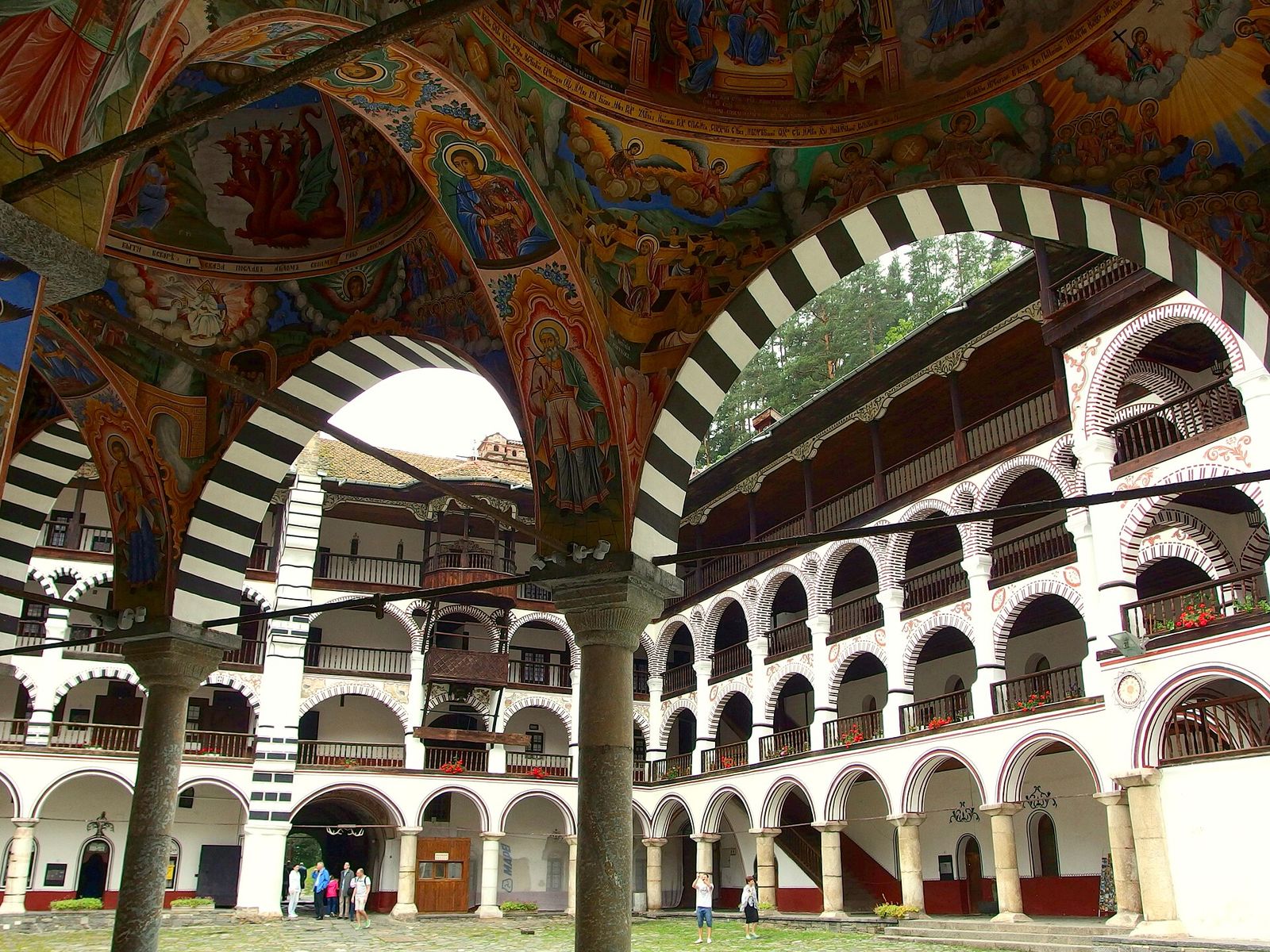
12 Best Day Trips from Sofia (and How I Get There)
My 12 favourite trips out of Sofia by bus, train and hire car, and the ones that deserve a night away.
Read the guide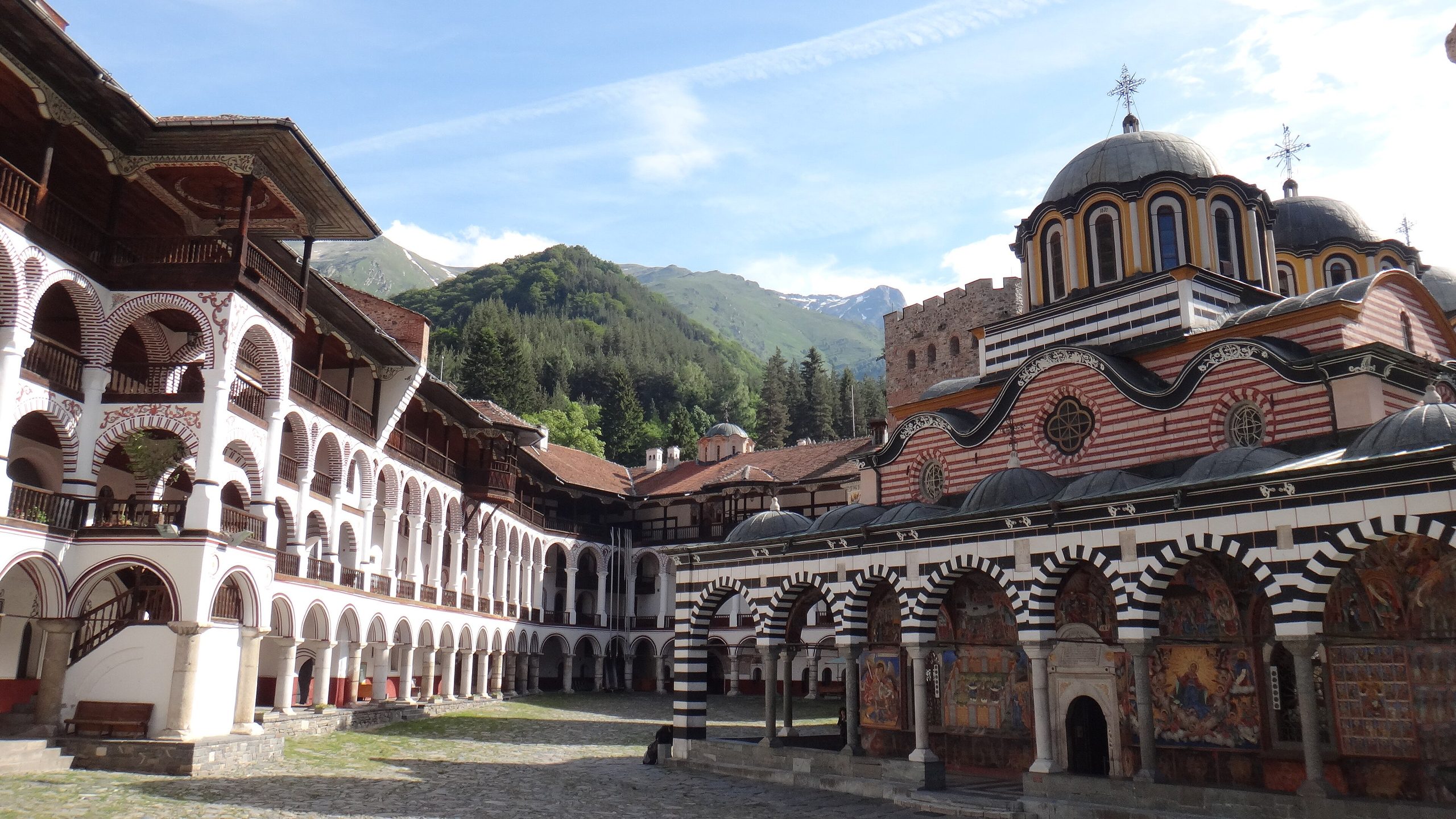
Rila Monastery Day Trip from Sofia: Bus, Car and Timings
Bulgaria's biggest monastery is free to walk into and 2 hours from Sofia. How I get there myself, and what to see.
Read the guide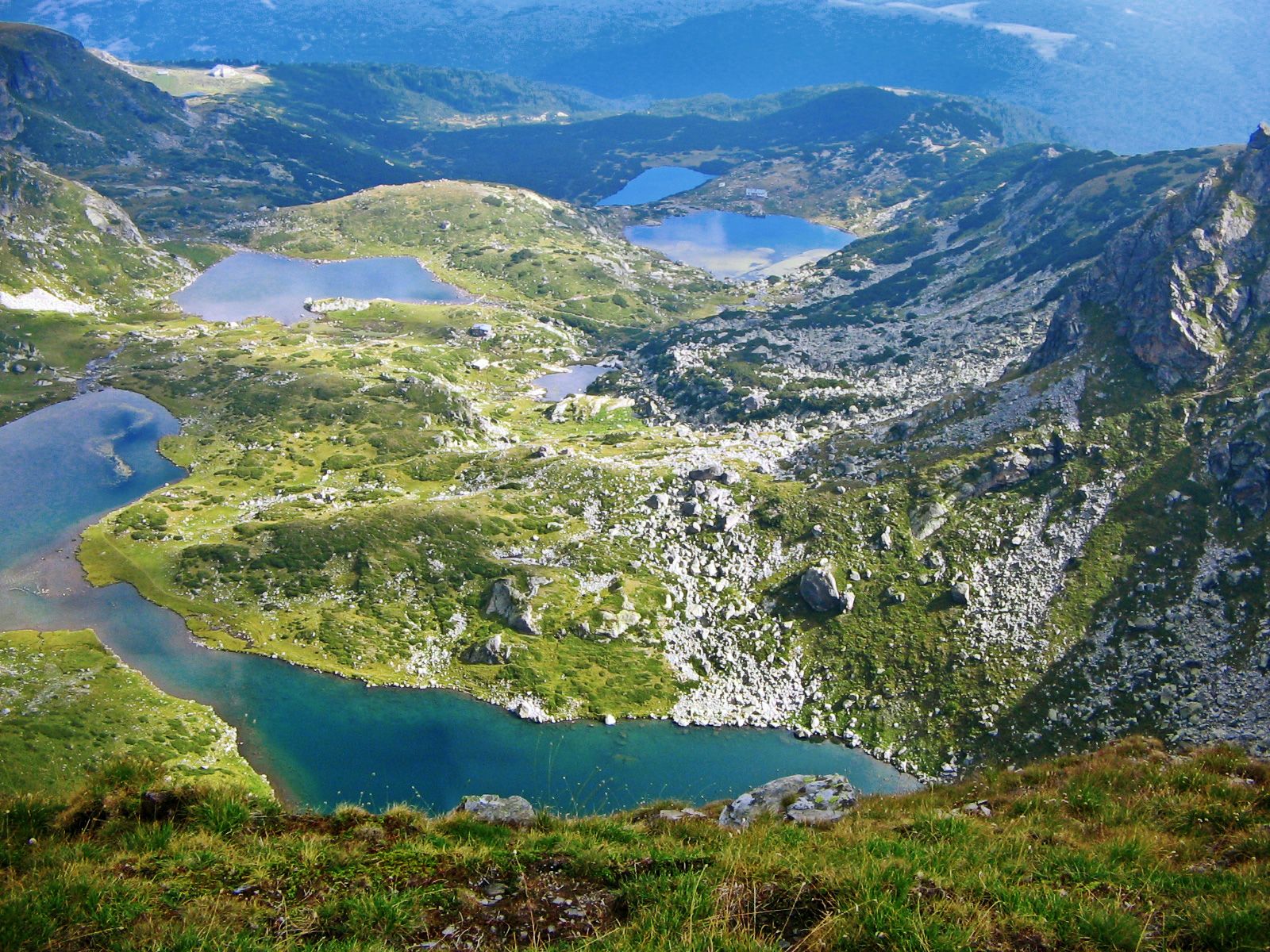
Seven Rila Lakes from Sofia: Chairlift, Hike and Getting There
Seven glacial lakes, a chairlift and a 5-hour loop, 95 km from Sofia. How I get there myself, and when to go.
Read the guide