Borisova Gradina: My Guide to Sofia's Oldest Park
Borisova Gradina is the park Sofia has been strolling in since the 1880s: about 300 hectares of oak and chestnut avenues, two old lakes, a rose garden and a Japanese Corner, 15 minutes on foot from Alexander Nevsky. It's where I go to do nothing at all. Here's what's where, the loop I walk, how to get there by metro and what each season brings.
Borisova Gradina at a glance
Of all Sofia's parks, Borisova Gradina (Борисова градина) is the oldest and the one I mean when I tell a friend to meet me in the park. It starts at Eagles' Bridge (Orlov Most) and runs south-east between Tsarigradsko Shose and Dragan Tsankov Boulevard. At 3.02 km², it's about twice the size of Hyde Park.
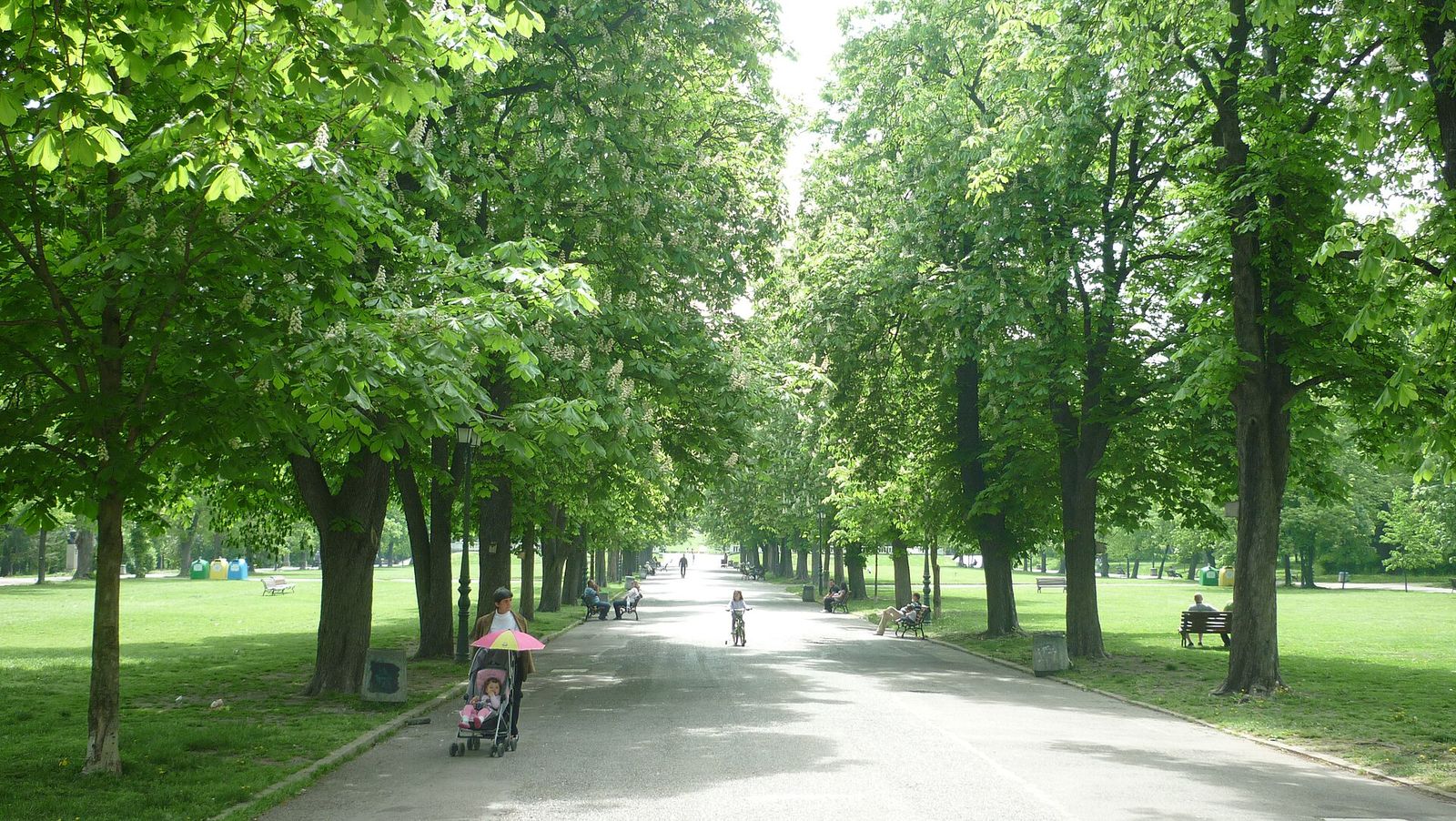
Joseph Frei, the park's second gardener, planted its lime and chestnut avenues after 1906, and their shade is where I spend July afternoons.
What to see in Borisova Gradina
The first five sights below are the ones I walk to on purpose. The national stadium is the big landmark I'd only go into for a match.
| Sight | What it is | Best for |
|---|---|---|
| Lake Ariana | An 8,900 m² lake with an island, at the northern corner | Boats in summer, skating in winter |
| The Lily Lake | A lily pond with a fountain ringed by frog statues | A bench in the shade |
| The Japanese Corner | A small garden planted in 1940 above the Lily Lake | Ten quiet minutes |
| The Rosarium | A 7,000 m² rose garden | Late May and June |
| Bratska Mogila | A 41-metre obelisk and bronze memorial from 1956 | Socialist-era sculpture |
| Vasil Levski National Stadium | Bulgaria's national football ground, beside Lake Ariana | Match days |
Lake Ariana
Lake Ariana (езеро Ариана) is the first thing you see when you come out of Orlov Most metro. It sits in the park's northern corner where Tsarigradsko Shose meets Hristo and Evlogi Georgievi Boulevard, with the national stadium beside it. The lake is 175 metres long and 75 wide but only 1.2 metres deep, and a white stone bridge from 1904 crosses to a small island.
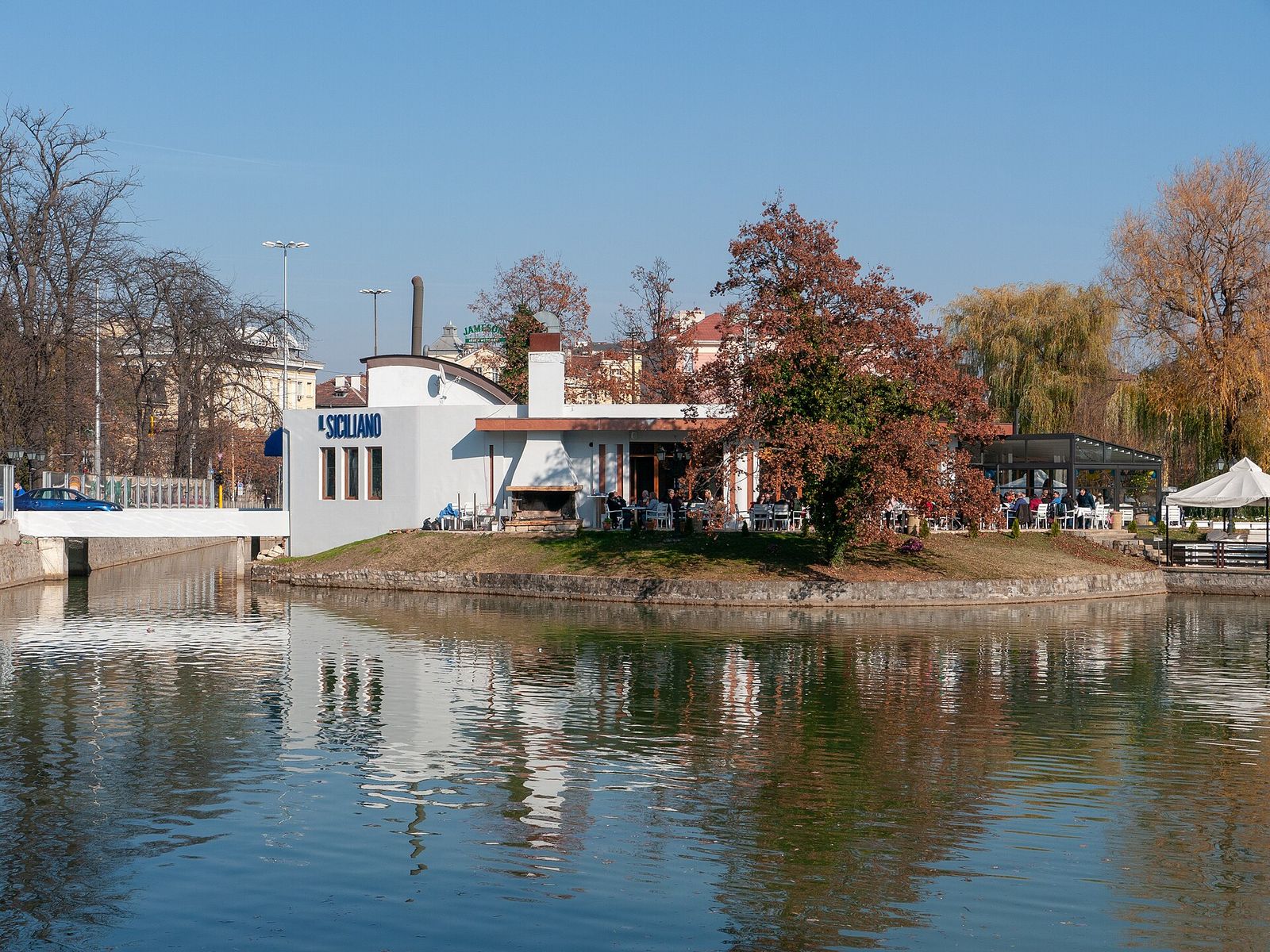
In the warmer months you can hire a pedal boat or a rowing boat and do slow laps of the island. That's the first thing I do when I'm showing Sofia to friends with kids, and the playgrounds further into the park take care of the next hour.
The lake took its name from a restaurant called Ariana that stood on the island until the early 1970s. In 1972 it got "singing fountains" with coloured lights and music. It was drained for repairs in 1984 and sat empty for about 20 years, until a renovation in 2006 and 2007 brought the water back, and it reopened on 11 April 2008.
The Lily Lake and the Japanese Corner
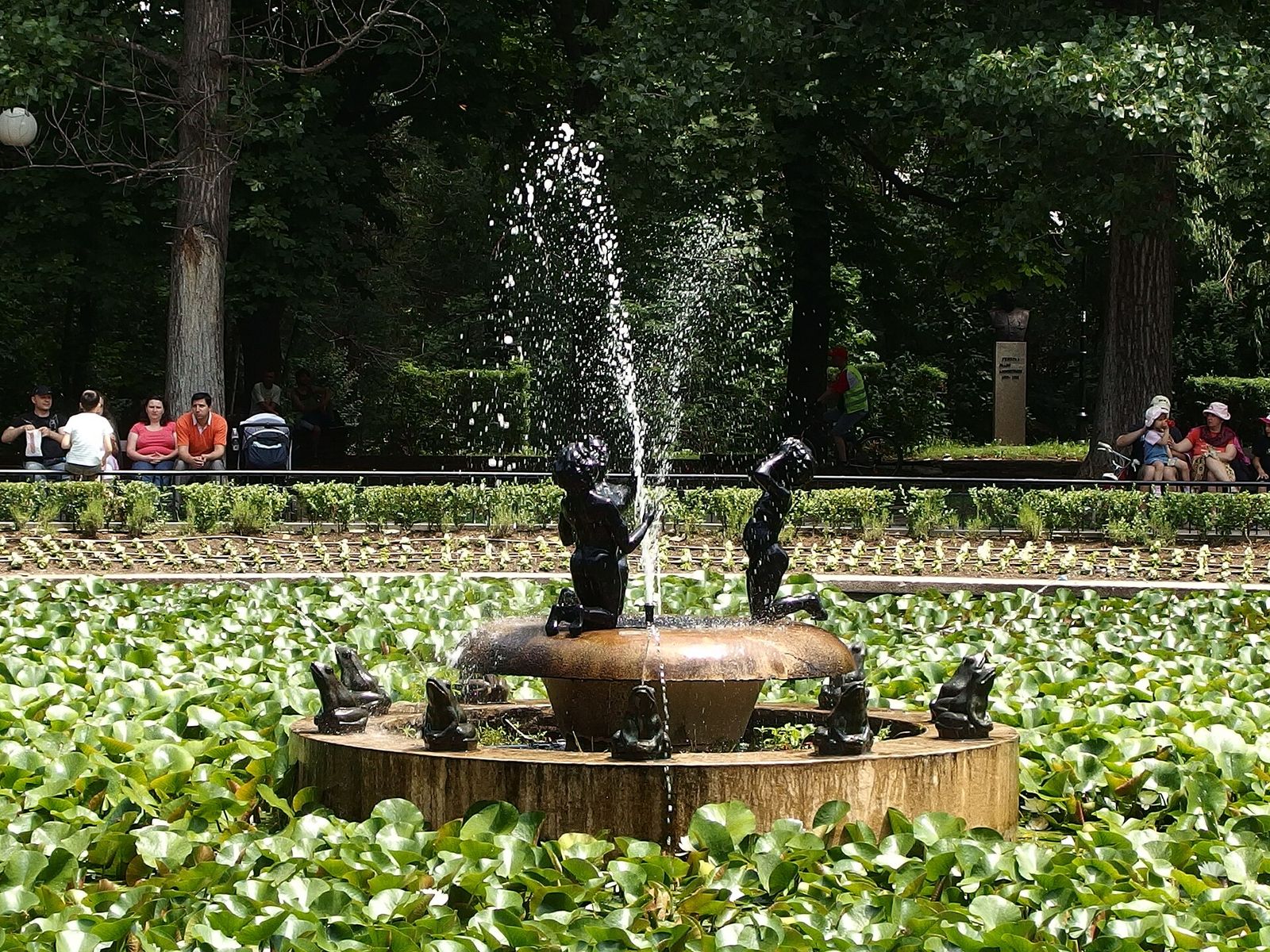
The Lily Lake (Езерото с лилиите) was dug where a marsh had been and was first called Fish Lake. Joseph Frei gave it its balustrades and the fountain in the middle, which is ringed by frog statues. By midsummer the lily pads cover almost every bit of water between the fountain and the rim.
Just above it, on the Tsarigradsko Shose side, is the Japanese Corner (Японски кът). It was planted in 1940 with plants sent by Japan's envoy to Bulgaria, a gift of friendship between the two countries. It's small, a few minutes to walk round, and it's where I go when the benches by the Lily Lake are full on a Sunday.
Bratska Mogila, the 41-metre obelisk
Bratska Mogila (Братска могила, "the brotherly mound") is the big communist memorial in the park. It opened on 2 June 1956 for the members of the communist resistance who died in the Second World War, and its 41-metre obelisk is visible over the trees from the meadow in front.
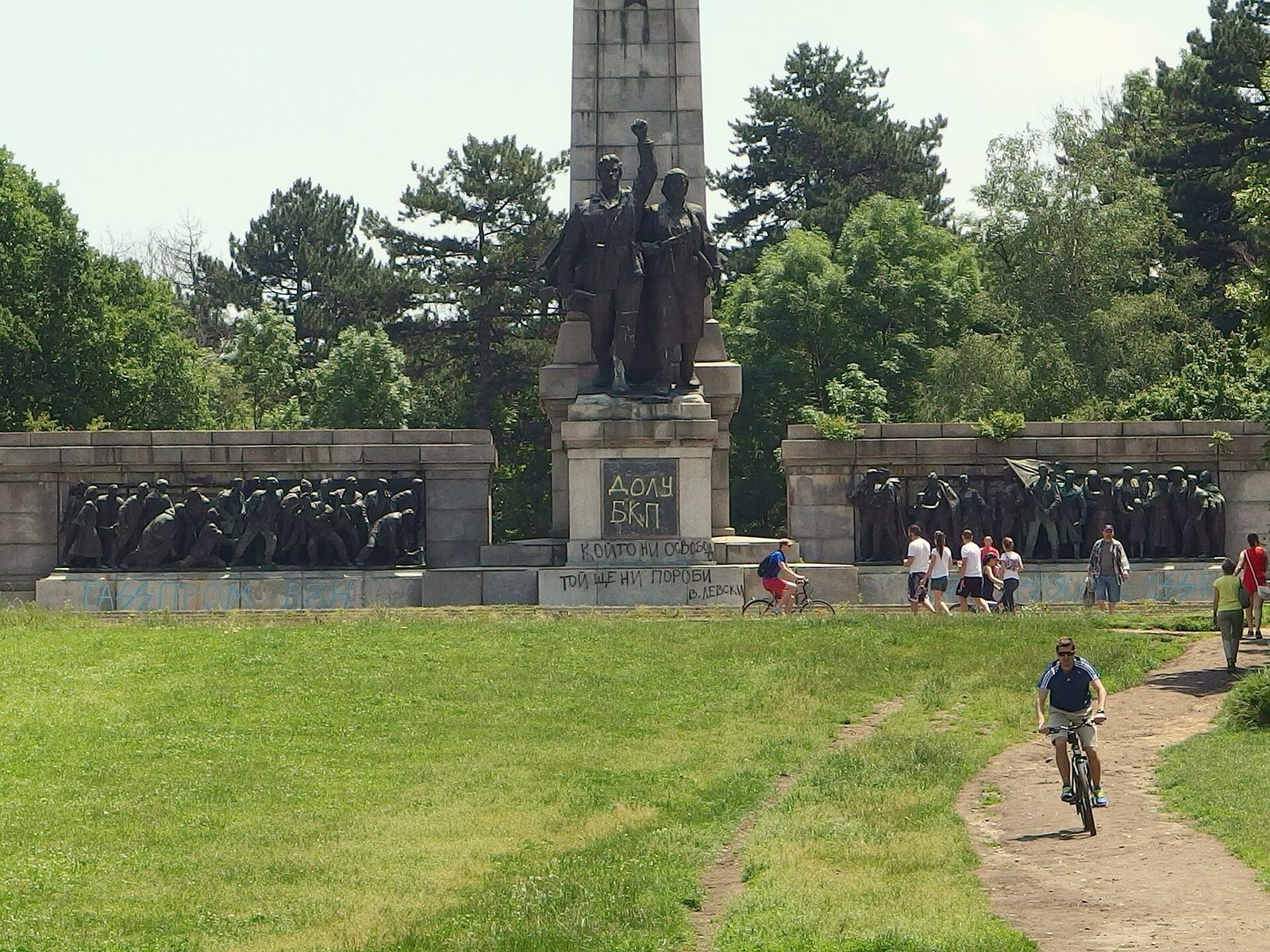
A bronze partisan man and woman stand at the foot of the obelisk. To the right, a sculpture group shows a mother sending her son off to fight; to the left, a worker, a peasant woman and an intellectual stand together. The crypt under the granite slab holds the remains of 17 members of the Communist Party and its youth union.
It's the same heroic style you see at the Museum of Socialist Art, standing in a meadow you can visit for free. From Lake Ariana it's about a kilometre, 15 minutes at a stroll.
Stadiums, the observatory and the TV tower
The Vasil Levski National Stadium stands beside Lake Ariana. Further in is the site of CSKA Sofia's Bulgarian Army Stadium, whose old stands were knocked down in 2024 to make way for a new ground. You'll also pass Sofia University's observatory among the trees, and the TV tower, built in 1958 and 1959, sticks up above the canopy.
My walking loop through Borisova Gradina
I start at Orlov Most metro on line M3, which comes out right by Lake Ariana. After a lap of the water I head into the park to the Lily Lake and the Japanese Corner, then carry on to Bratska Mogila. From the obelisk I wander back towards Eagles' Bridge on whichever tree-lined avenue looks shadiest, and finish at Sofia University station for lines M1 and M4.
| Stop | What I do there | Time I spend |
|---|---|---|
| Lake Ariana | A lap of the water, or a boat round the island | 20 to 30 minutes |
| The Lily Lake | A sit on a bench by the frog fountain | 15 minutes |
| The Japanese Corner | A slow walk round the garden | 10 to 15 minutes |
| Bratska Mogila | A close look at the bronze groups | 15 minutes |
| The avenues back to Eagles' Bridge | The walk out under the limes and chestnuts | 30 minutes |
That's about two hours, and it fits a free morning on a weekend in Sofia without a single ticket beyond the metro fare.
Borisova Gradina by season
Spring: the Rosarium
The Rosarium is the rose garden Joseph Frei laid out where the park's old farm buildings had stood. Georgi Duhtev, the third gardener, spread it to 7,000 m² after 1934 and planted more than 1,400 rose varieties. It flowers in late May and June.
May is one of the two months I'd pick for a trip to Sofia, because the trees here have just come into full leaf, the grass is still green and the evenings are light enough for a walk after dinner.
Summer: boats, lawns and outdoor gigs
Summer is when the park fills up. Boats go out on Lake Ariana and families spread out on the lawns. Maimunarnika puts on summer gigs in the park, from hip hop to drum and bass and rock. On the hottest afternoons I give up the shade for one of the outdoor pools in Sofia.
In July I pick up a scoop of ice cream in Sofia's centre on the walk over, then sit under the chestnuts until the heat goes out of the day.
Autumn: the colour
In 1888 Prince Ferdinand ordered most of the park's acacias replaced with oak, sycamore, ash and birch. Those are the trees that turn in October and early November, and Lake Ariana with gold and red leaves round it is my favourite autumn photo in Sofia.
Winter: snow and skating on Lake Ariana
Once the cold sets in, Lake Ariana is drained almost dry and turned into an ice rink of 1,400 m², which first opened in December 2013. One side is for skating, and the other has snow ramps for snowboarders. If you're planning winter in Sofia, an hour on the ice here is my pick for a cold afternoon.
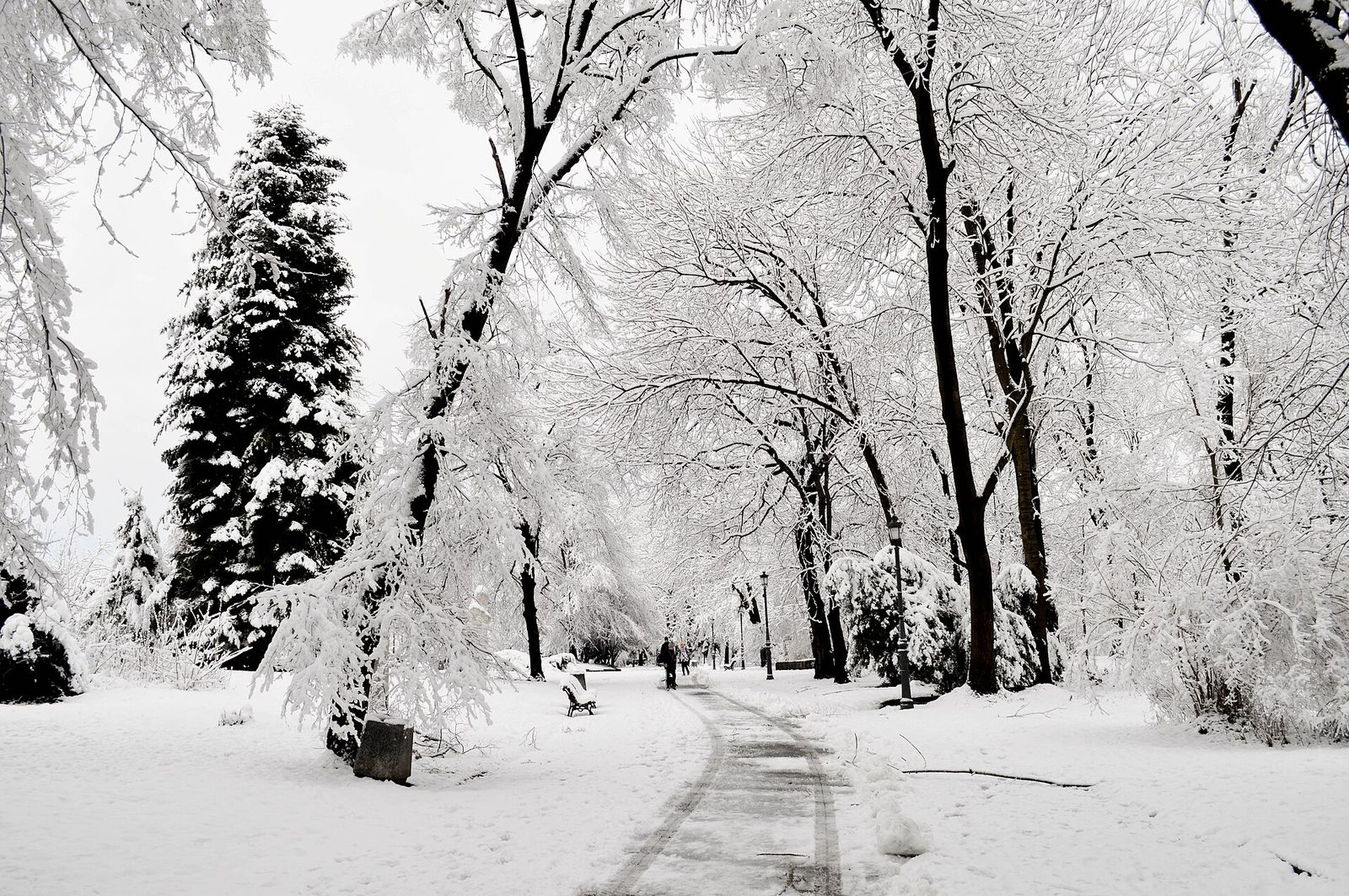
When it snows, the park is the prettiest place in the city for an hour, before the paths turn to slush.
The history of Borisova Gradina, told through its names
Before Bulgaria's liberation from Ottoman rule in 1878, this land was a Turkish army firing range on the edge of town, and in 1879 part of it became a Turkish cemetery. On 22 March 1882 the city council voted unanimously for a park. Mayor Ivan Hadzhienov brought the Swiss gardener Daniel Neff from Bucharest, and Neff planted the first trees and flowers in 1883 and 1884.
It started life as the city nursery, selling saplings to the people of Sofia, and went by Tsarigradska Garden. It then took the name of Prince Boris, the heir to the throne, who became Tsar Boris III in 1918. After the communist takeover in 1944 the new government renamed it Freedom Park, and Boris's name came back in the early 1990s. A monument to Tsar Boris III now stands at the entrance.
In 1903 villagers from Slatina, who were losing their pastures to the new park, fought police and soldiers in a shoot-out that left two people dead.
Three gardeners shaped what you walk through today:
| Gardener | In charge | What he left |
|---|---|---|
| Daniel Neff, Swiss | 1882 to 1906 | The first plan and the nursery, 30 hectares with four main alleys by 1886, a large lake in 1889 |
| Joseph Frei, Alsatian | 1906 to 1934 | The lime and chestnut avenues, the Lily Lake's fountain and balustrades, the first Rosarium |
| Georgi Duhtev, Bulgarian | 1934 to 1944 | The enlarged Rosarium and the Japanese Corner |
Frei's years also gave the park the People's Fountain, later faced in freestone and renamed the Freestone Fountain. Look out, too, for a carved wooden house by the self-taught woodcarver Racho Angelov. Under communism the park gained play areas, summer stages and tennis courts. In 1986 it was rebuilt and declared a monument of park and garden art.
How to get to Borisova Gradina
The Sofia metro stops at both ends of my loop, so I never take a taxi here.
| Start | Line | Where it leaves you |
|---|---|---|
| Orlov Most station | M3 | Beside Lake Ariana and the national stadium |
| Sofia University station | M1, M4 | A short walk from Eagles' Bridge and the park's city end |
| Alexander Nevsky Cathedral | On foot | About 15 minutes down Tsar Osvoboditel Boulevard |
Sofia metro fares start at €0.80 for a single ticket, and a one-day card is €2. You can also tap a contactless bank card at the barrier instead of buying a ticket.
Borisova Gradina after dark and on match days
Sofia is a safe city for a weekend away, and the lit main avenues of Borisova Gradina are fine for an evening walk. The side paths under the trees are much darker, so after dark I stick to the main avenues or walk round the outside of the park.
Key takeaways
- Borisova Gradina is free, open all year and covers 3.02 km², with Orlov Most metro (M3) at its northern corner.
- Lake Ariana, the Lily Lake and Japanese Corner, and the Bratska Mogila obelisk fit into an easy two-hour loop.
- Come in late May or June for the Rosarium, in summer for boats and outdoor gigs, and in winter to skate on Ariana.
- The park's names tell its story: city nursery, Prince Boris's garden, Freedom Park from 1944, then Borisova Gradina again.
Frequently asked questions
How big is Borisova Gradina?
Borisova Gradina covers 3.02 km², about 300 hectares, roughly twice the size of London's Hyde Park. In 1886, four years into the work, it was 30 hectares with four main alleys.
Who is Borisova Gradina named after?
It's named after Boris III, who was Prince Boris, heir to the Bulgarian throne, when the park took his name. He became Tsar in 1918. Under communism, from 1944, the park was called Freedom Park, and his name came back in the early 1990s.
How do I get to Borisova Gradina?
Take the metro to Orlov Most on line M3, which leaves you beside Lake Ariana, or to Sofia University on M1 and M4 for the city end. A single ticket costs €0.80, and the walk from Alexander Nevsky Cathedral takes about 15 minutes.
Is Borisova Gradina safe at night?
The lit main avenues are fine after dark, and I walk them in the evening. The side paths under the trees are much darker, so I keep off those at night and avoid the stadium end on match days.
What is the Japanese Corner in Borisova Gradina?
It's a small garden above the Lily Lake, on the Tsarigradsko Shose side, planted in 1940 while Georgi Duhtev ran Sofia's parks. The plants were sent by Japan's envoy to Bulgaria as a gift of friendship.
Can you go boating or skating on Lake Ariana?
Yes, both. Pedal boats and rowing boats are for hire in the warmer months, and in winter the lake becomes a 1,400 m² ice rink, which first opened in December 2013.
11 Best Things to Do in Sofia: My Personal Favourites
The best sights in Sofia sit close together and most are free. My 11 favourites, with prices, hours and a weekend plan.
Read the guide
Alexander Nevsky Cathedral in Sofia: My Guide to Visiting
Sofia's gold-domed cathedral is free and open every day. How I visit it, from the crypt icons to the market outside.
Read the guide
Boyana Church in Sofia: The Frescoes and How I'd Visit
A tiny UNESCO church at the foot of Vitosha, painted in 1259. What it costs, the rules and how I fit it in.
Read the guide