Sofia Food Guide: What to Eat and Where
Sofia runs on white cheese, yoghurt, roast peppers and the grill, and it feeds you cheaply: a casual lunch costs €8 to €10. This is my food guide to the city I live in. It covers the 9 dishes and drinks I order first, the places I take friends to eat them, from bakery windows to a cellar with live folk music, what everything costs in euros and how I'd eat my way through one day.
What food in Sofia is like
Bulgarian cooking is built on dairy and vegetables. Sirene (сирене), a salty white brined cheese a lot like feta, goes on salads, into pastries and over chips. Yoghurt goes into soup, sauces and pudding. In summer the tomatoes, cucumbers and peppers taste the way they did when you were a kid, and in autumn people roast peppers by the sackful for lyutenitsa, the red relish on every table.
Meat mostly means the grill: minced pork and beef shaped into kebapche and kyufte, pork neck steaks and chicken skewers. Slower dishes come baked in clay pots, and soups run from cold tarator in July to bean soup in January.
Menus list every portion by weight in grams, so 350 g of shopska is a big bowl for one. Away from the centre menus are often in Cyrillic only, which is where the Bulgarian names in brackets below come in handy.
What to eat in Sofia: the 9 things I order first
This is my shortlist for a first visit, the food first and the drinks after.
Banitsa (баница)
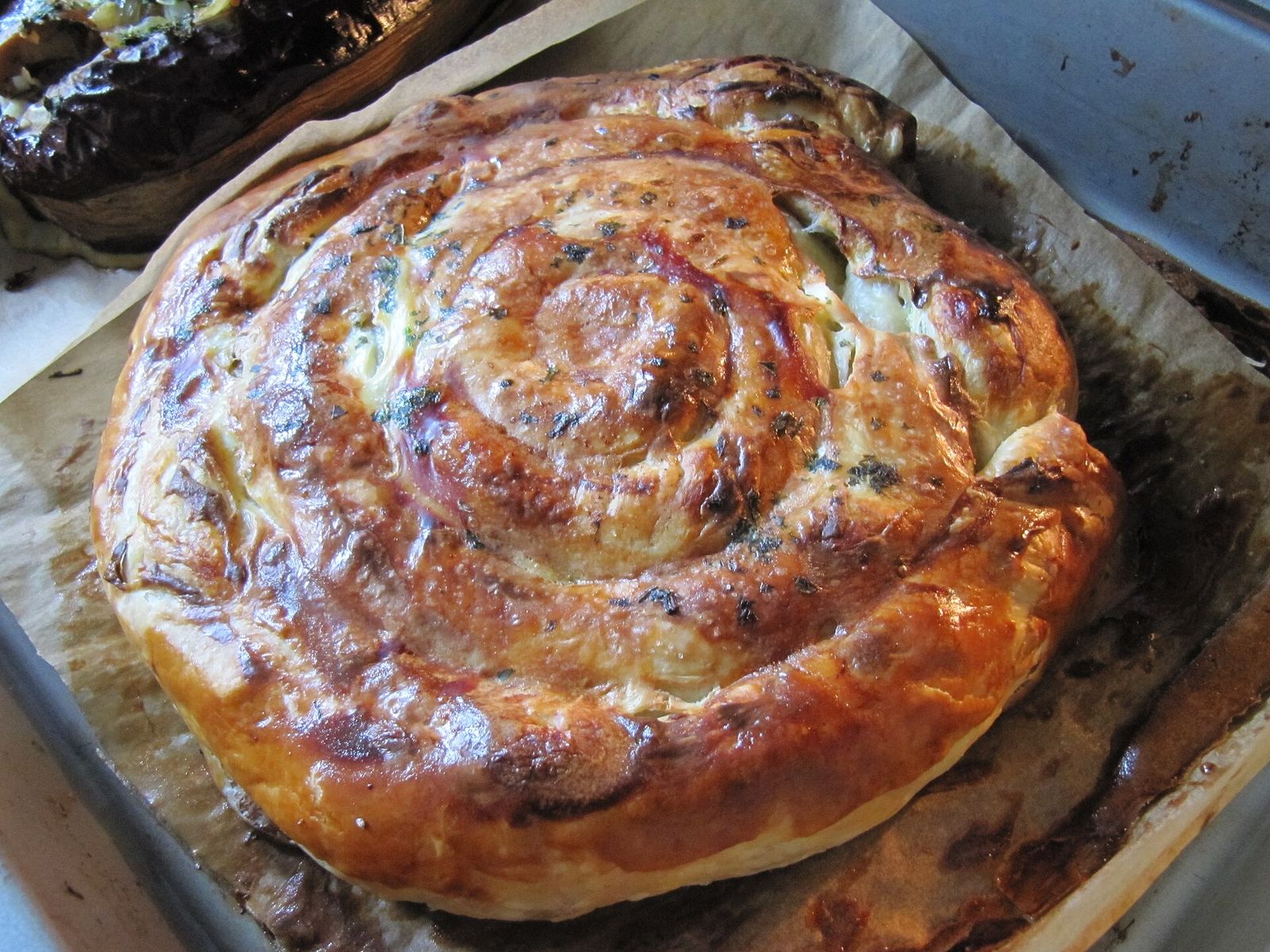
Banitsa is filo pastry layered with eggs and sirene and baked until the top shatters, and it's how Sofia does breakfast. Bakeries and street kiosks sell it hot in the mornings, by the piece or by weight. Plain cheese is the classic, and leek, spinach and a sweet pumpkin version called tikvenik (тиквеник) turn up too. The best banitsa in Sofia comes from places with a queue at 8am and a handwritten price sign, and I eat it standing up with a bottle of ayran or boza.
Shopska salad (шопска салата)
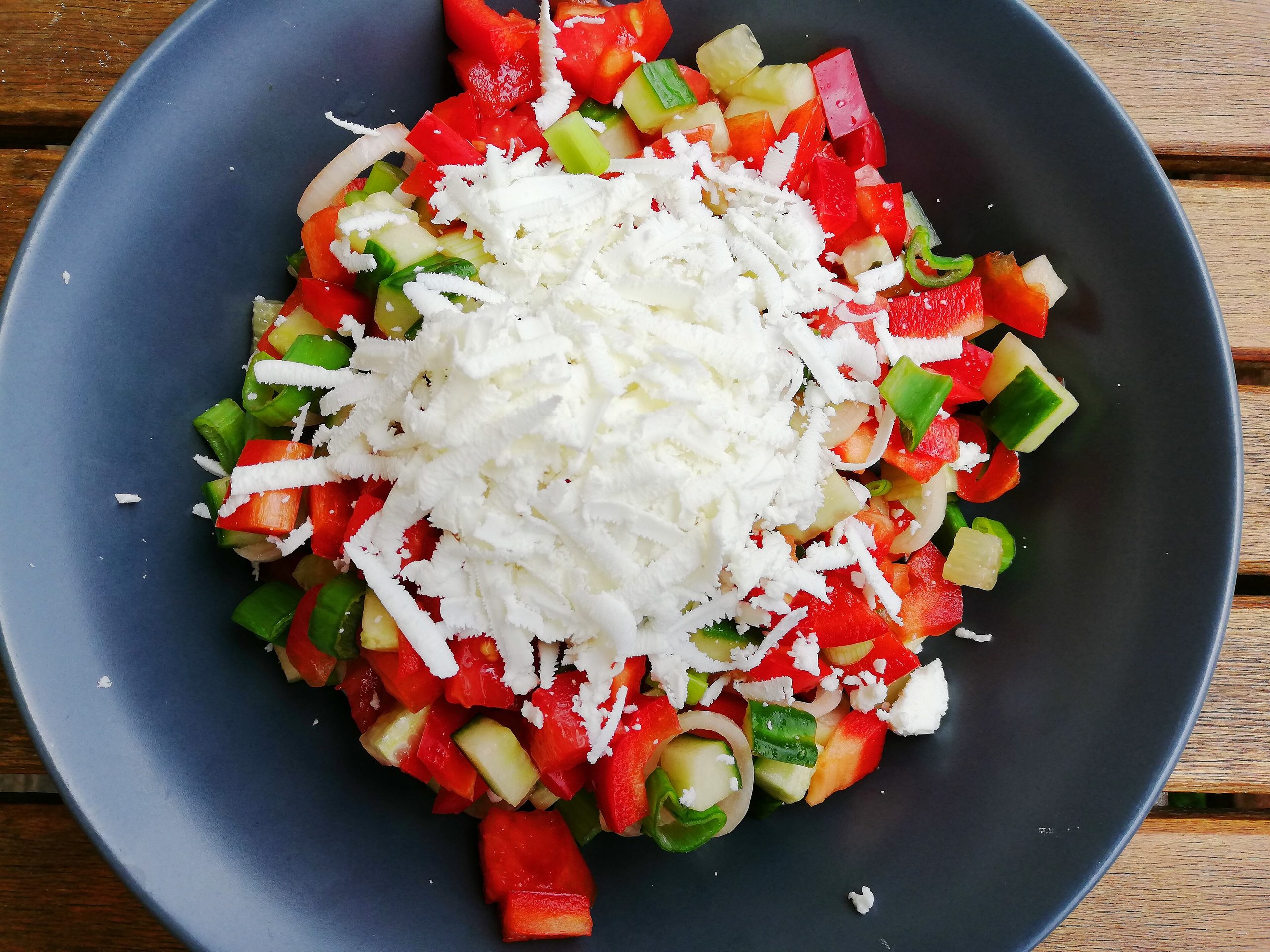
Almost every restaurant table in Bulgaria gets a shopska salad: chopped tomato, cucumber, peppers and onion buried under grated sirene, sometimes with an olive or a roast pepper on top. It's white, green and red, the colours of the flag. I order it first at almost every dinner, with a glass of rakia beside it, and in August, when the tomatoes are at their sweetest, a big bowl with bread is my lunch.
Tarator and snezhanka
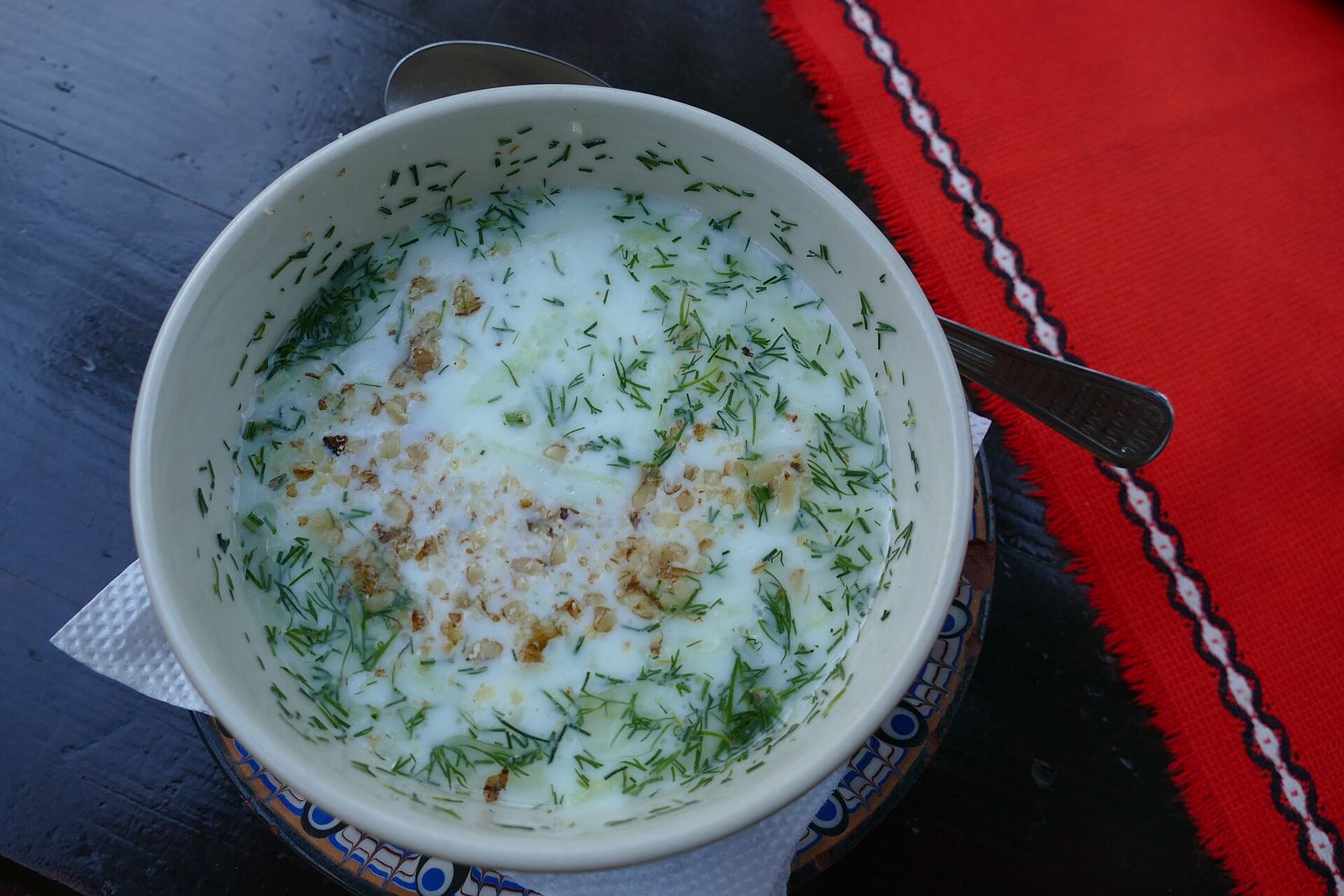
On a hot July afternoon in Sofia, tarator (таратор) is the best thing on any menu: cold soup of yoghurt thinned with water, with grated cucumber, garlic, dill and crushed walnuts, served in a bowl or sometimes a glass. Snezhanka (снежанка), "Snow White", is the thick version, strained yoghurt with the same cucumber, garlic, dill and walnuts, eaten as a salad or scooped up with bread.
Kebapche and kyufte
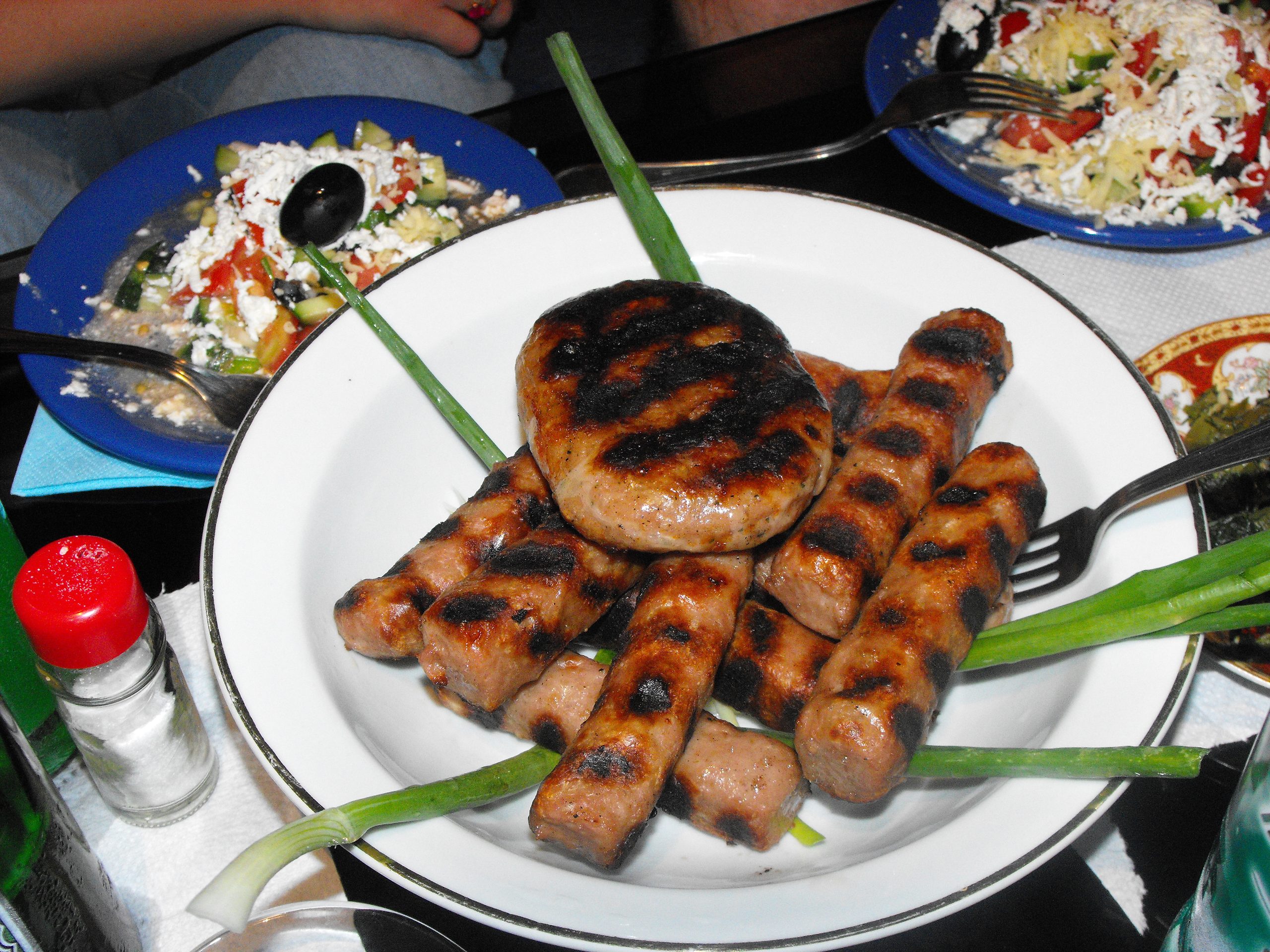
Order kebapche (кебапче) by the piece: it's a finger of minced meat seasoned with cumin and grilled, and kyufte (кюфте) is its flatter, round cousin with onion in the mix. I have mine with chips under grated sirene and a spoon of lyutenitsa, and it's my default dinner when I want something quick with a cold beer.
Mekitsa (мекица)
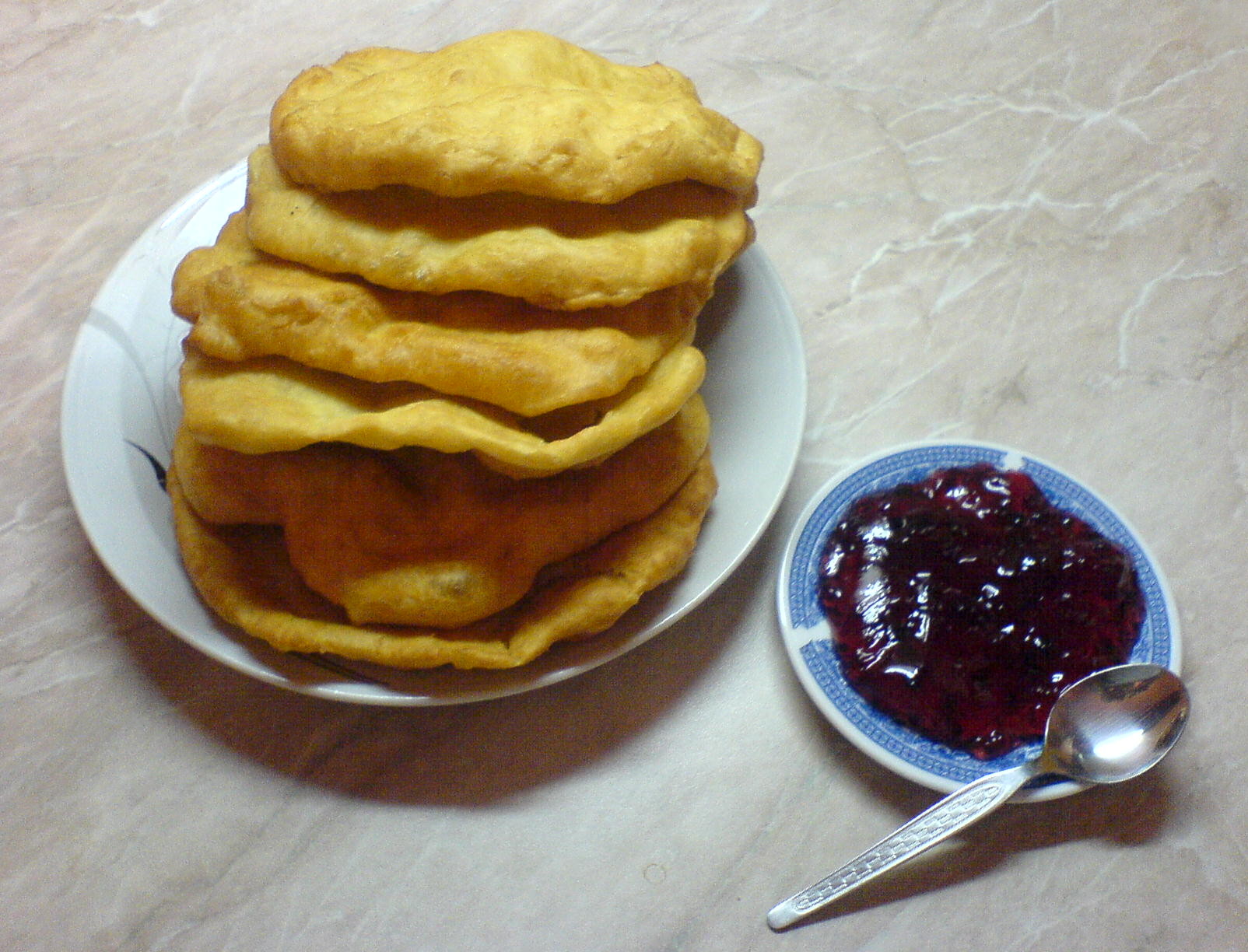
Mekitsa comes out of the fryer as a flat, puffy round of dough, and you eat it warm, dusted with icing sugar or spread with jam, honey or sirene. It's breakfast food, best within minutes of leaving the oil, and it's a lot heavier than it looks. One with a coffee keeps me going until lunch.
Bulgarian yoghurt (кисело мляко)
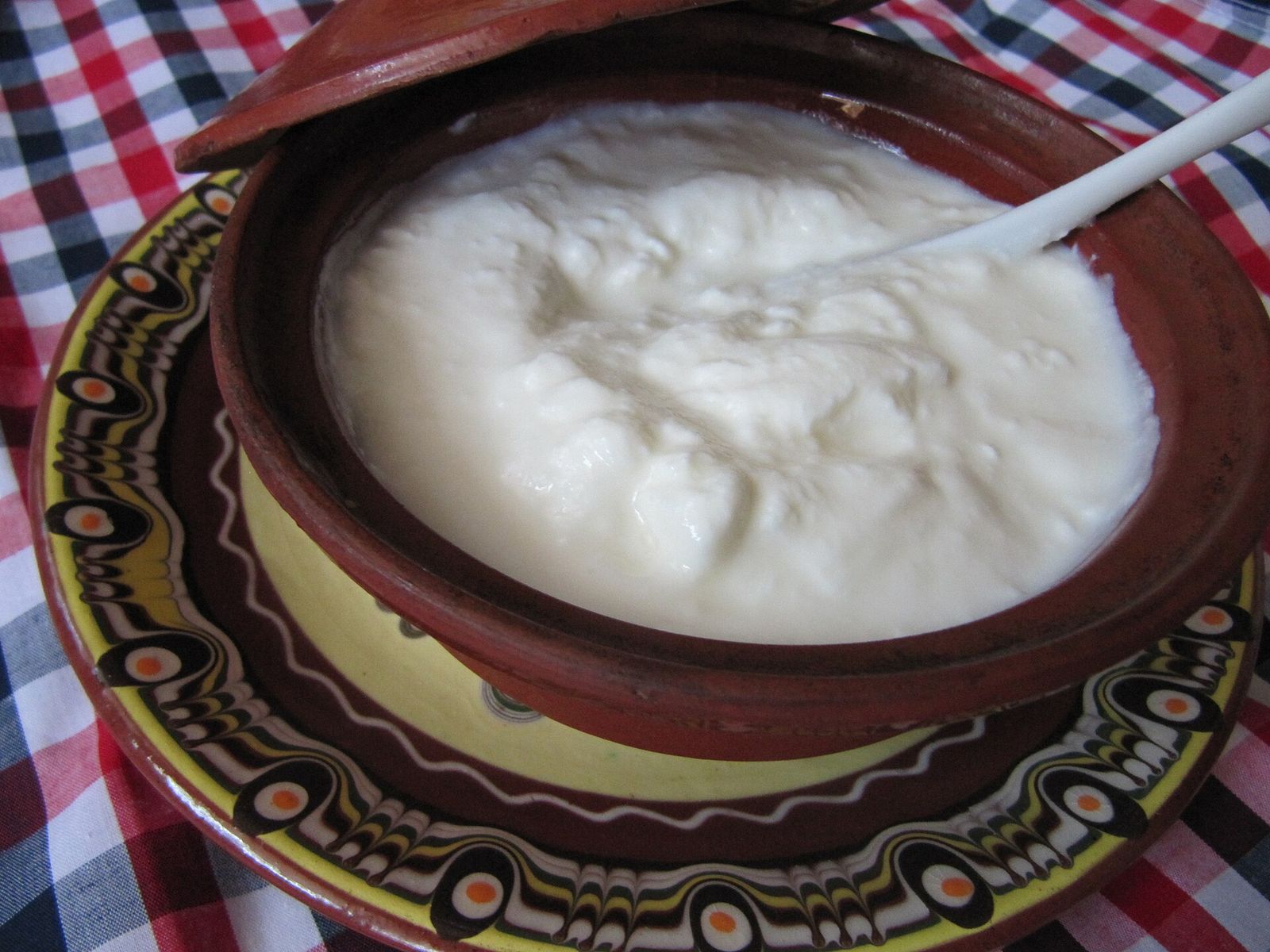
Kiselo mlyako means "sour milk", and it's thicker and sharper than the yoghurt in a British supermarket. The bacterium that makes it, Lactobacillus bulgaricus, carries the country's name: a Bulgarian doctor, Stamen Grigorov, identified it in 1905. Bulgarian yoghurt is in tarator, snezhanka and the top layer of musaka, and I eat it most nights as pudding, with honey and walnuts.
For something sweeter, the Bulgarian desserts I'd try first are tikvenik, baklava and garash cake, a rich chocolate and walnut torte.
Rakia (ракия)
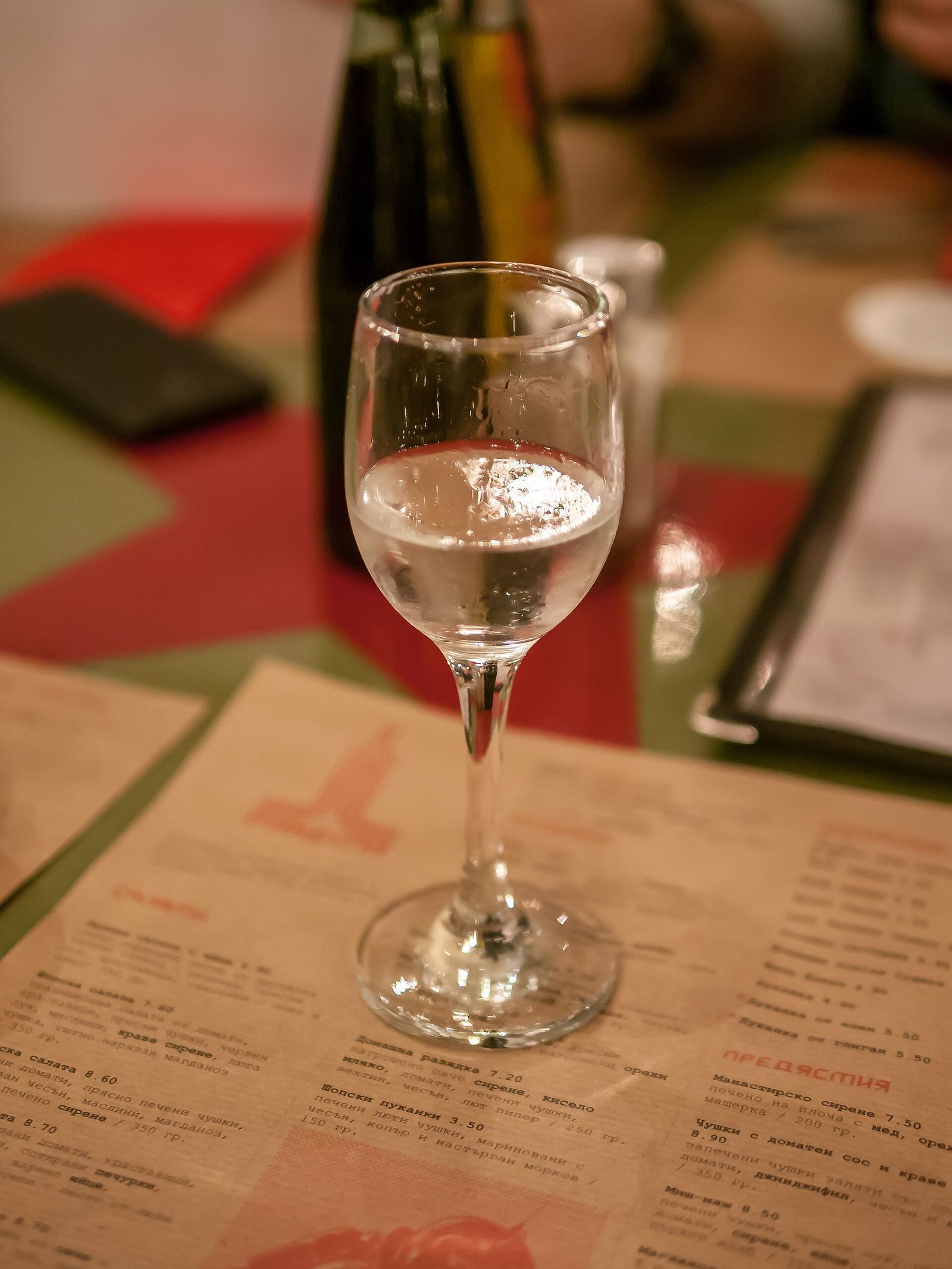
Rakia, the fruit brandy Bulgarians drink with their salad, is usually grape or plum, sometimes apricot or quince, and about 40% in a shop bottle. It arrives in a small glass of up to 50 ml, and you sip it slowly through the first course. Look the other person in the eye, clink and say "nazdrave". In winter some mehanas serve greyana rakia, warmed with honey and black pepper.
Boza and ayran
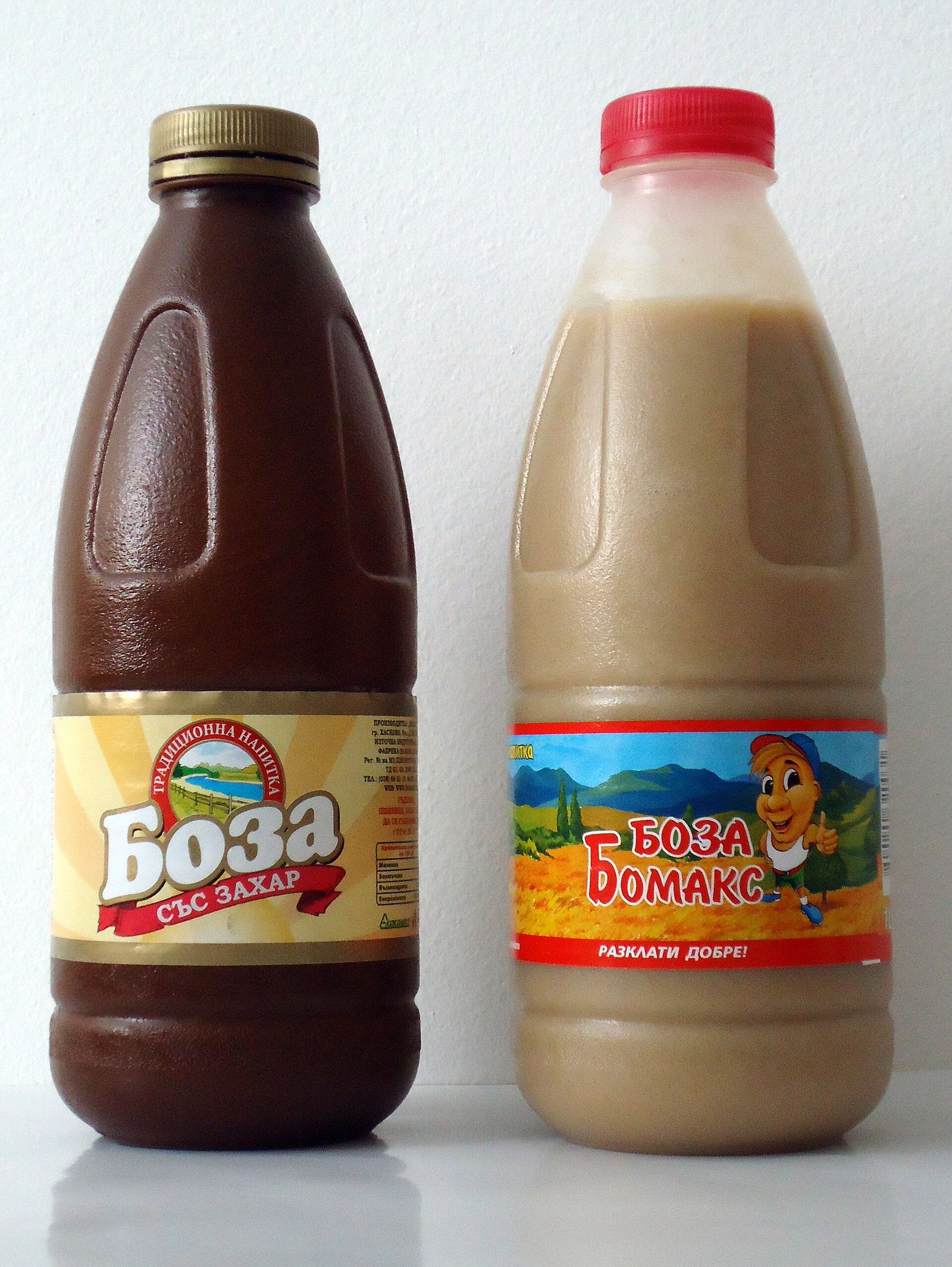
These are the 2 breakfast drinks that go with banitsa, and most bakery fridges in Sofia stock both. Ayran (айрян) is yoghurt whisked with water and salt, cold and sharp. Boza (боза) is thick, sweet and slightly sour, made from fermented wheat with about 1% alcohol, and I'd describe it as liquid malt loaf. Boza and ayran both come in plastic bottles, and Bulgarians argue about which one banitsa deserves.
Bulgarian wine
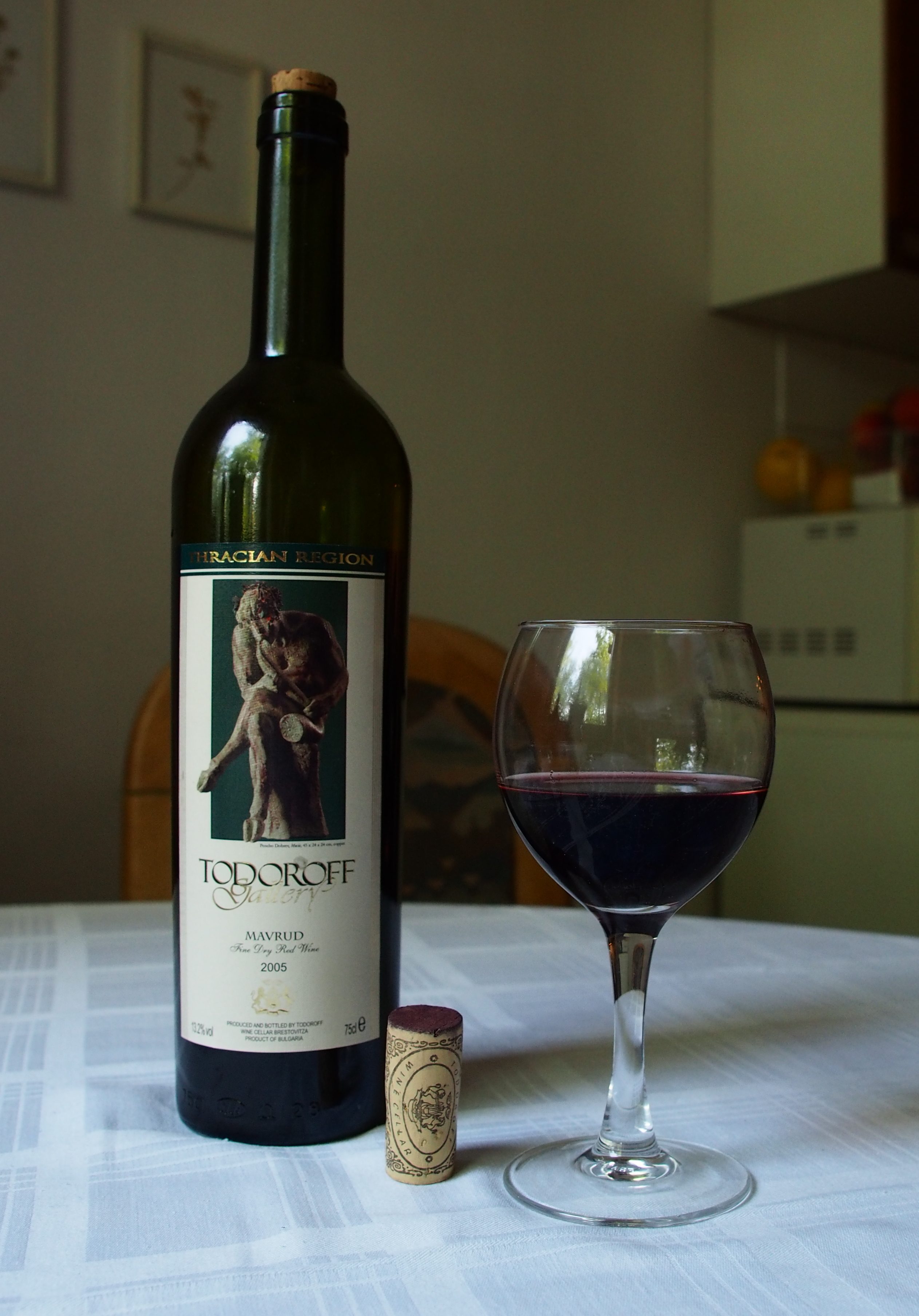
The red I'd order first is Mavrud, a dark, tannic local grape, and after it Melnik and Gamza, two more Bulgarian reds. For white, look for Dimyat and Misket. A mid-range bottle of Bulgarian wine costs about €6.60 in a Sofia shop.
More dishes to point at on a menu
These are the other Bulgarian dishes I see on almost every mehana menu, with the Cyrillic so you can match them up.
| Dish | On the menu | What it is |
|---|---|---|
| Kavarma | кавърма | Pork or chicken stewed with onion and peppers in a clay pot |
| Gyuvech | гювеч | Vegetables, often with meat, baked slowly in a clay dish |
| Sarmi | сарми | Vine or cabbage leaves rolled round rice and mince |
| Stuffed peppers | пълнени чушки | Peppers filled with rice and mince, or rice alone in the meatless version |
| Chushki byurek | чушки бюрек | Roast peppers stuffed with egg and sirene, then fried in breadcrumbs |
| Musaka | мусака | Potato and mince bake with a yoghurt and egg top |
| Kyopolou | кьопоолу | Dip of roast aubergine and peppers |
| Lyutenitsa | лютеница | Red pepper and tomato relish, on bread or beside the grill |
| Bob chorba | боб чорба | Bean soup with dried herbs, a winter staple |
| Lukanka | луканка | Flat, dry-cured spicy sausage, sliced as a starter |
| Palachinki | палачинки | Thin pancakes with honey, jam or chocolate |
Where to eat in Sofia, by type of place
These are the places I eat at, 1 or 2 for each kind of meal, all in the centre. Izbi and Magernitsa head my own list of the best restaurants in Sofia for a first night.
A mehana with live folk music: Hadjidraganovite Izbi
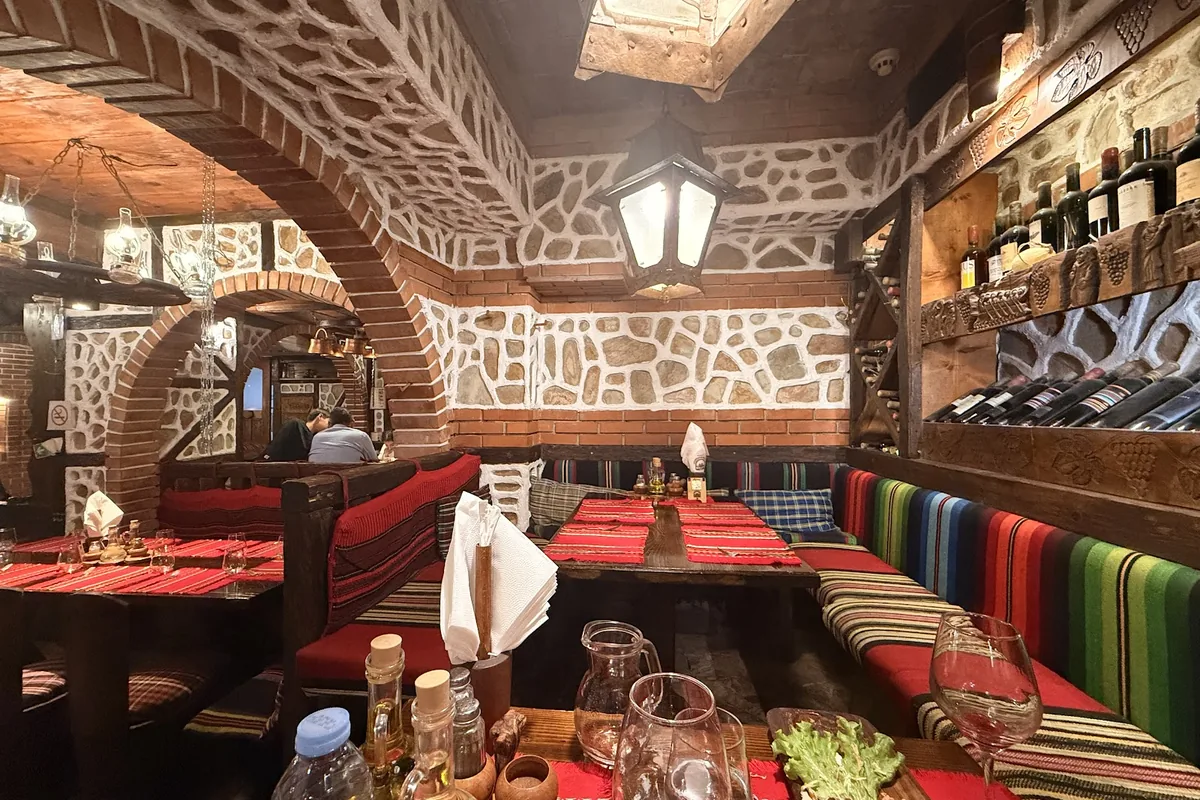
A mehana (механа) is a traditional tavern, and Hadjidraganovite Izbi, Hadjidraganov's Cellars, is the one I book when friends want a big Bulgarian night out. It's touristy and I still go: a cellar restaurant on Hristo Belchev Street, close to Vitosha Boulevard, where a live band plays Bulgarian folk music through dinner. Order the pork knuckle or a clay-pot dish, with a quince rakia to start.
You can book a table at izbite.com. Its sister restaurant, Hadjidraganovite Kashti (the Houses), sits on Kozloduy Street by Maria Luiza Boulevard and keeps the same hours, with its band's night off on Tuesday, which helps if you're in town on a Monday.
Monastery cooking at Manastirska Magernitsa
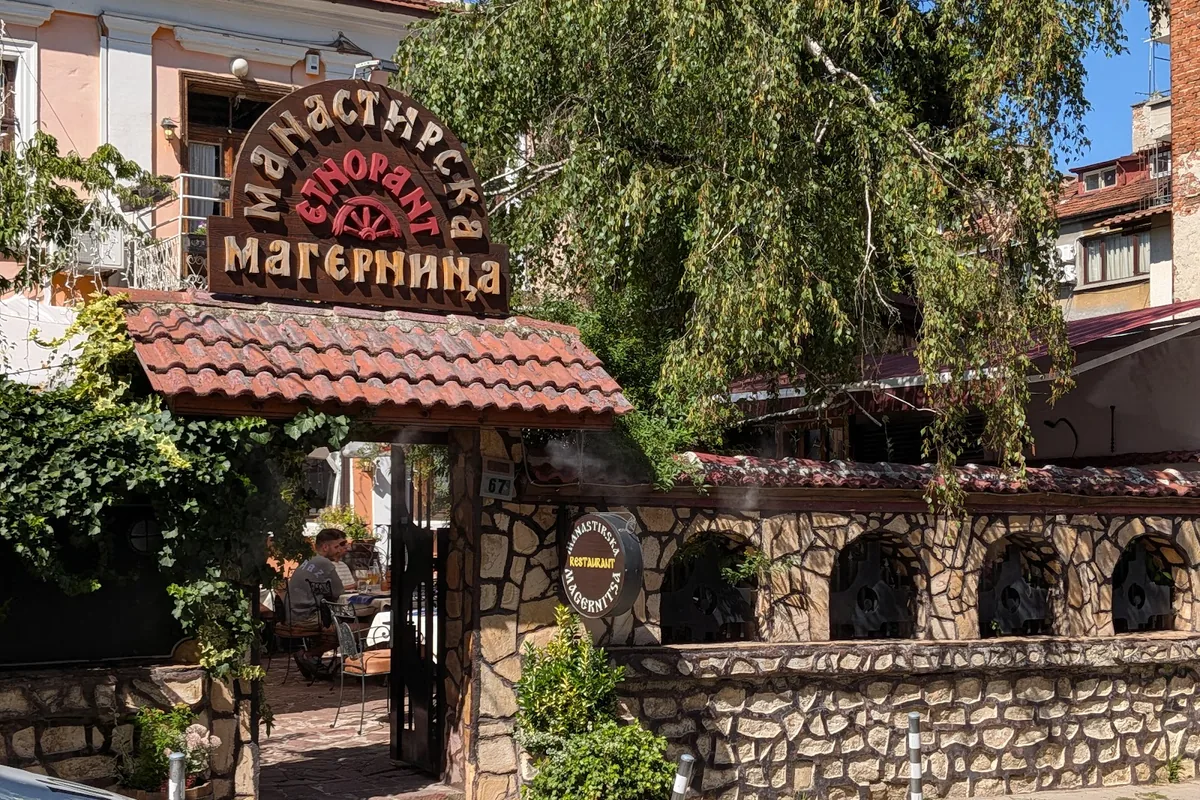
Manastirska Magernitsa, the Monastery Kitchen, builds its menu from recipes collected from monasteries across Bulgaria, and the portions are big. It's on Han Asparuh Street, open from noon to 11pm every day, and it's one of the cheaper sit-down dinners in the centre. Try the raspberry wine. For a weekend table, ring ahead: the number is on magernitsa.com.
Modern Bulgarian at Moma
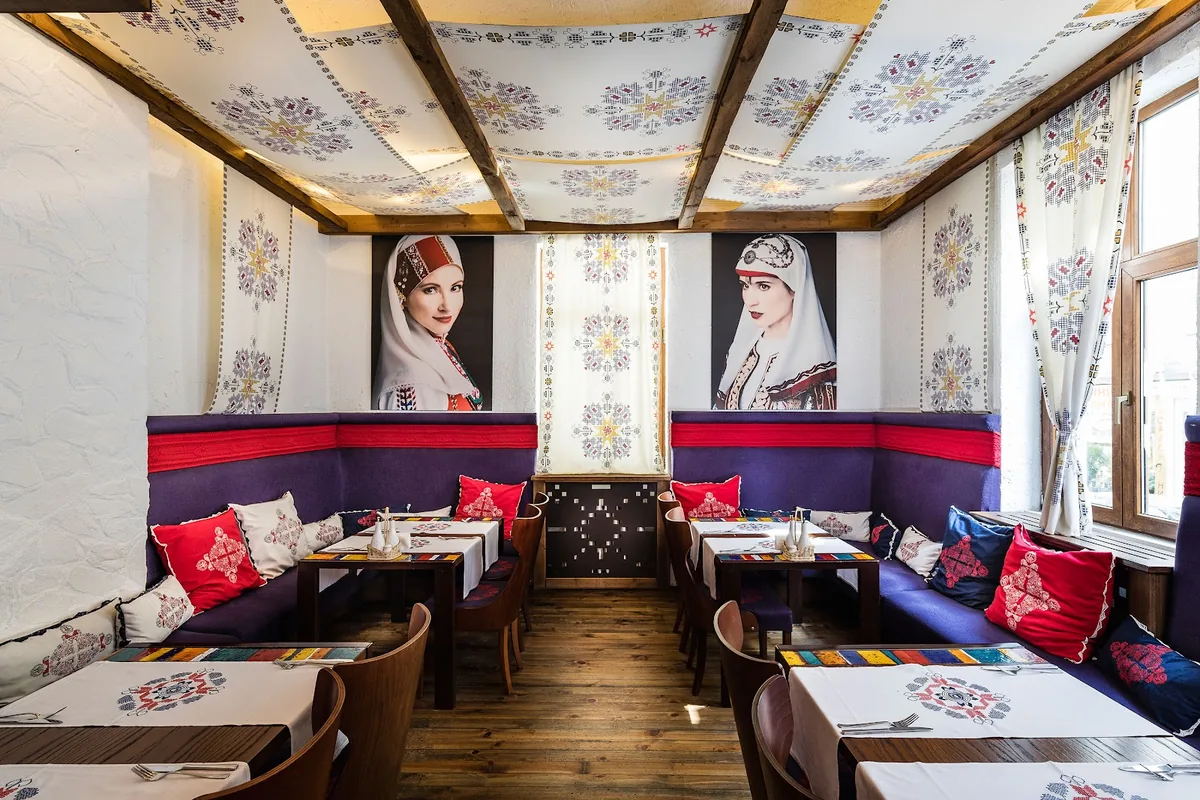
Moma Bulgarian Food and Wine, on Solunska Street, cooks Bulgarian classics with a lighter hand and a menu that changes with the seasons. The dish people come for is duck roasted inside a dough crust. It's my pick for a birthday dinner, with a bottle of Mavrud.
Mekitsa and banitsa for breakfast
Mekitsa & Coffee is my mekitsa stop, and it sells exactly what the name says. For banitsa, any bakery window on my way does the job. Banitsa, mekitsa and gevrek, a sesame bread ring, are the cheapest street food in Sofia, and you eat all 3 on your feet. When I want to sit down for eggs, I go to one of the brunch places in Sofia, and Fabrika Daga is my first choice.
Coffee and brunch at Fabrika Daga
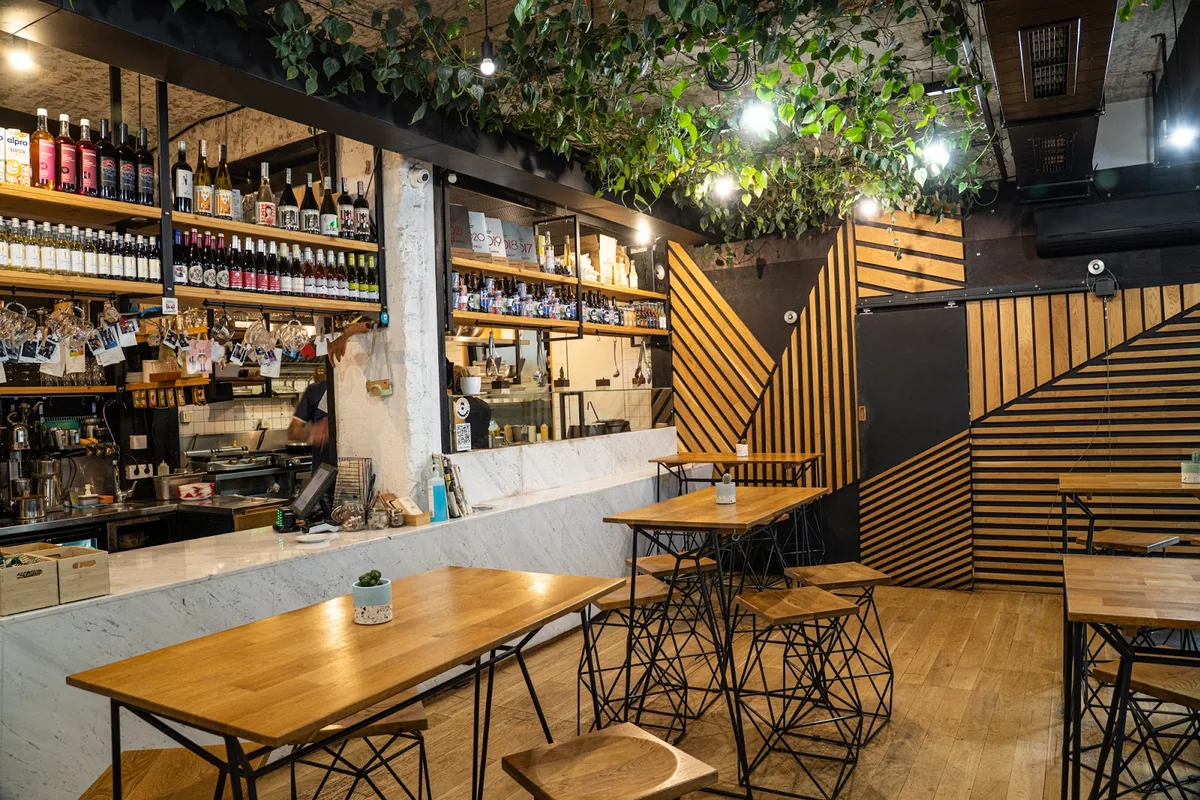
Fabrika Daga, also called Rainbow Factory, is a cafe on Sheynovo Street, near the Doctors' Garden, that has served coffee and brunch since 2014. Order panagyurski eggs, poached eggs on garlicky yoghurt with butter and paprika poured over, named after the town of Panagyurishte. Of all Sofia's cafes, it's the one I send people to for a slow weekend brunch.
The weekday set lunch
From Monday to Friday, many restaurants put out an обедно меню (obedno menyu), a daily lunch menu of soups and mains cooked that morning. Soup and a main come to about €6 to €7, which makes it the best-value meal in the city. Hadjidraganovite Izbi runs one on weekdays too, and it's the cheapest way to eat from a mehana kitchen.
Vegetarian food in Sofia
A lot of the Bulgarian table has no meat in it at all: shopska, tarator, snezhanka, banitsa, kyopolou, lyutenitsa and chushki byurek are all vegetarian. Look for постно (postno) on menus, which marks Orthodox fasting dishes with no meat, dairy or eggs, so those are vegan too. Loving Hut on Rakovski Street, near the National Opera, is cheap, fully vegan and the first of the vegan places in Sofia I'd send a visiting friend to. Go for lunch: it closes at 6pm on weekdays, 5pm on Saturdays and all day Sunday.
Zhenski Pazar, the Women's Market
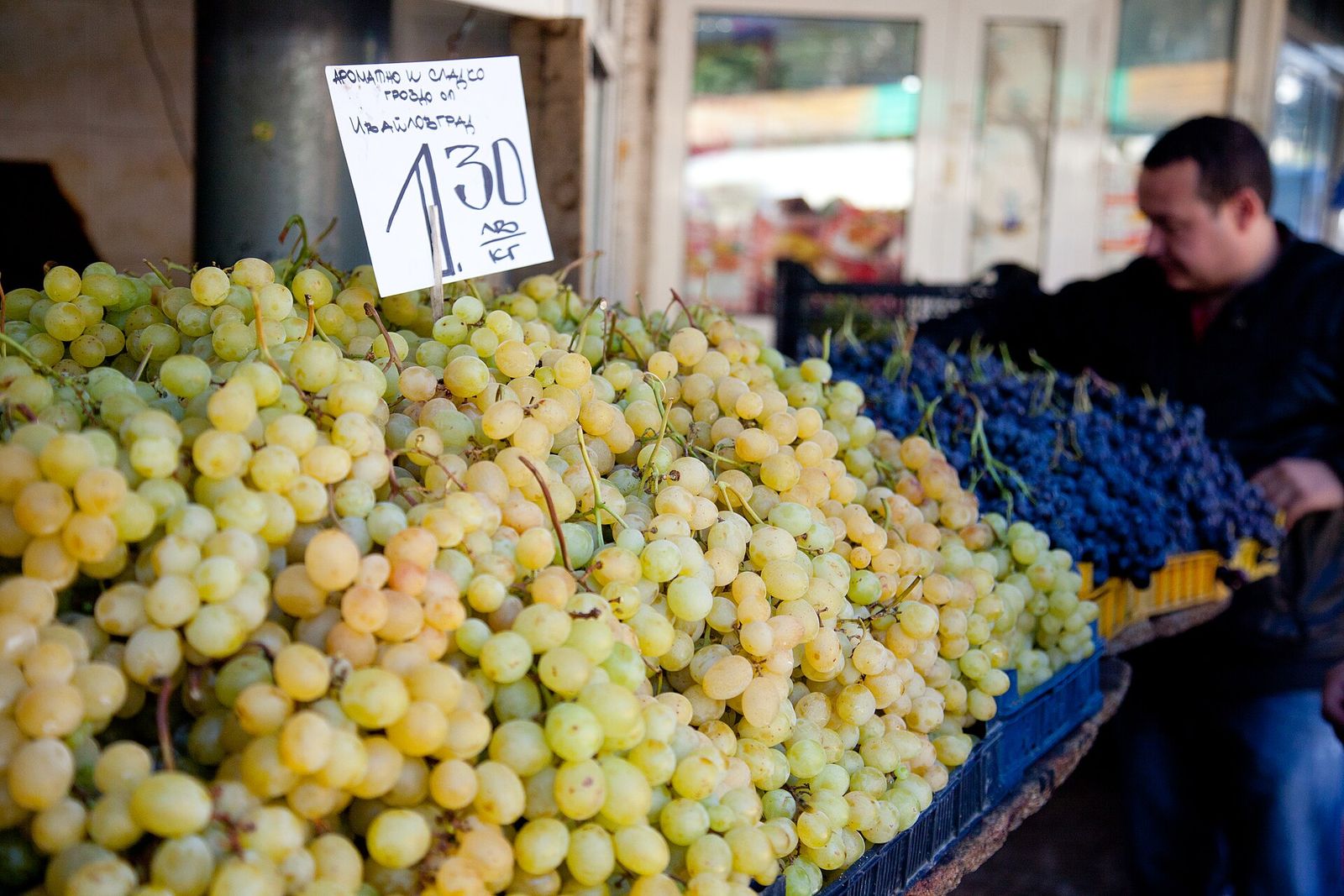
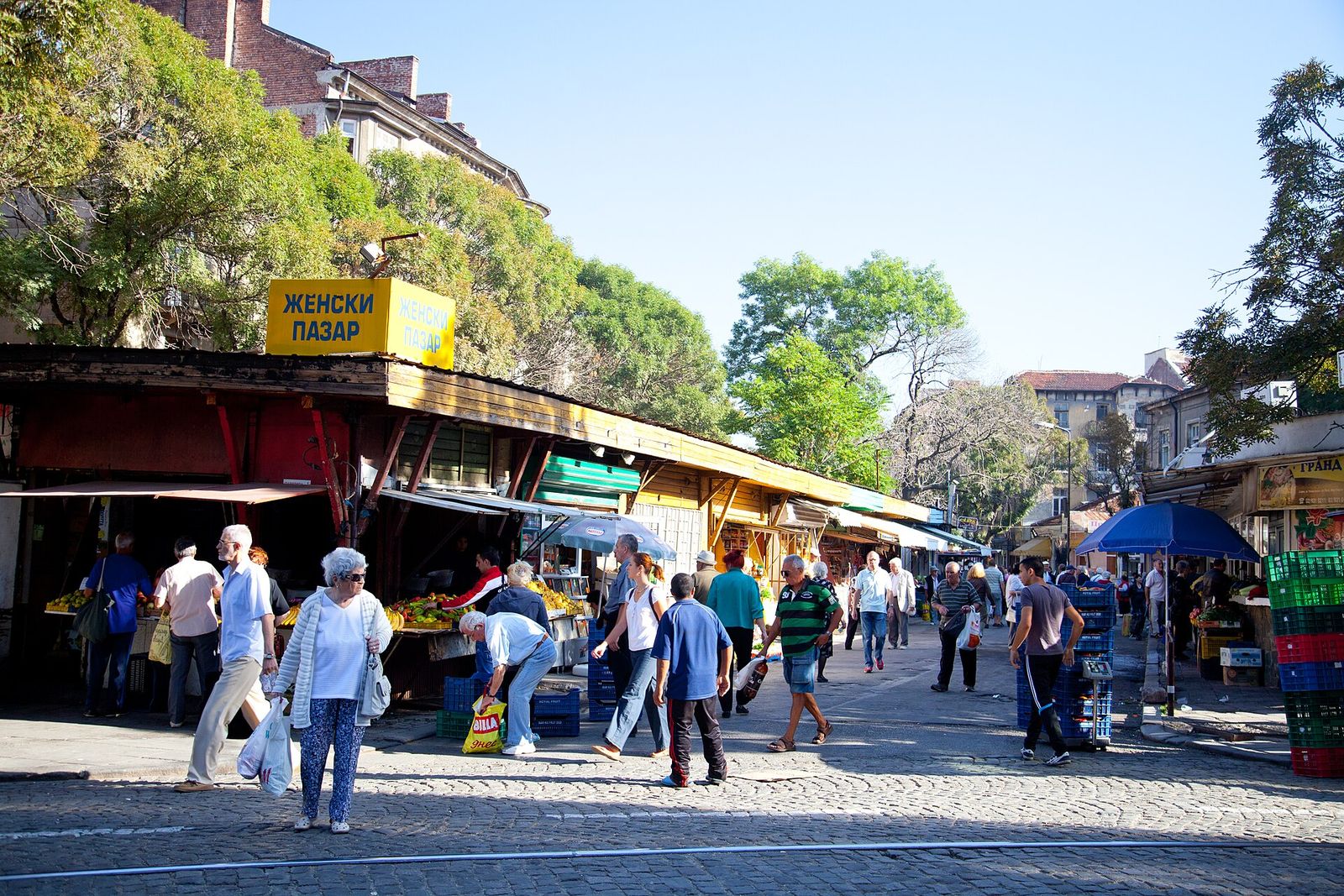
Zhenski Pazar (Женски пазар) is the open-air market I shop at most, several blocks of stalls along Stefan Stambolov Boulevard between Todor Aleksandrov and Slivnitsa boulevards, north-west of Banya Bashi Mosque. It sells fruit, vegetables, spices, honey and white cheese, with crates of red peppers for roasting from late summer. Mornings are busiest.
The Central Market Hall
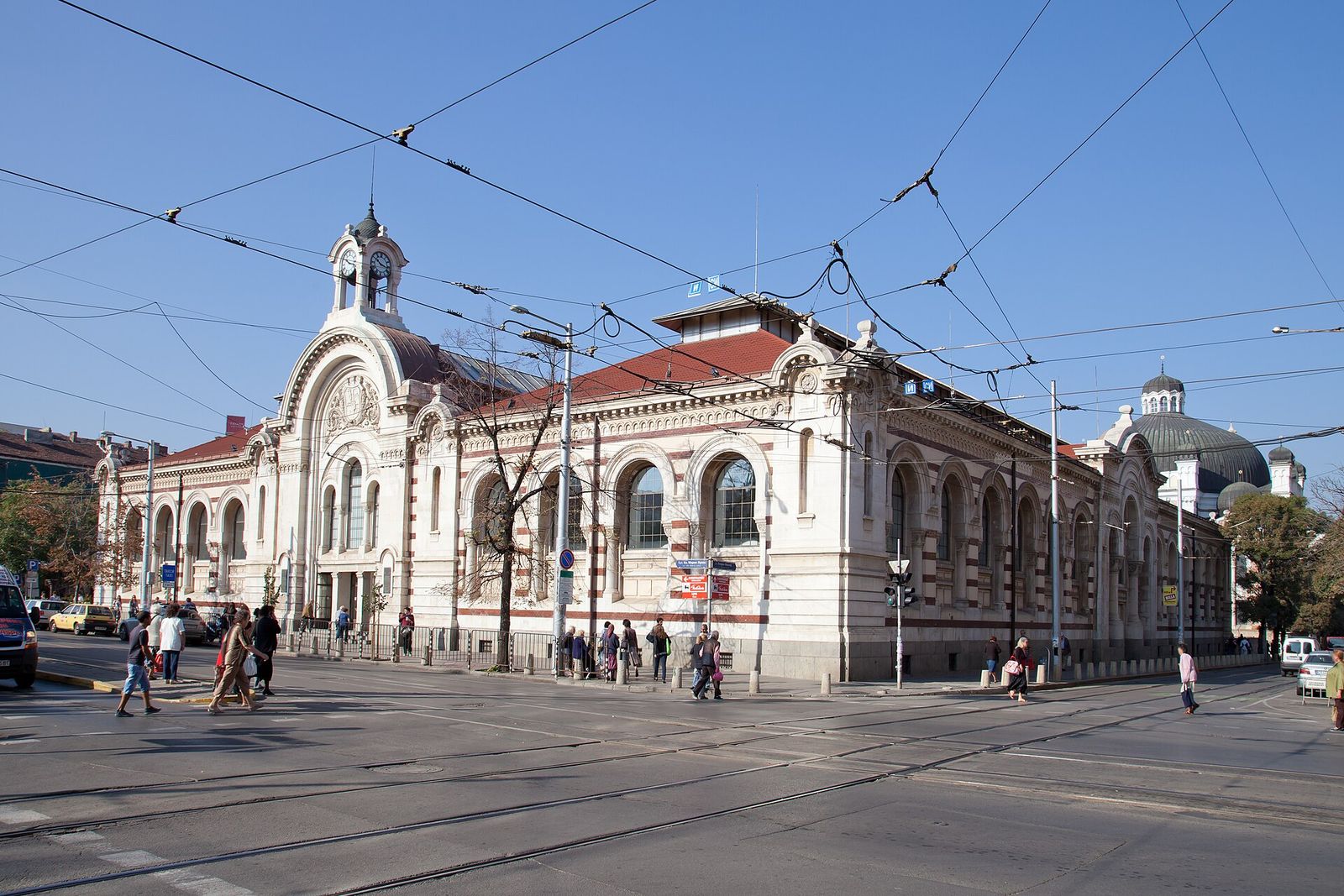
The Central Market Hall, Halite to locals, is the covered market on Maria Luiza Boulevard, in a 1911 building designed by Naum Torbov. It reopened on 23 May 2024 after about a year of renovation, with a supermarket inside, an archaeology and history zone and a stage for events. I go on rainy days, and Banya Bashi Mosque and the Sofia Synagogue are both a minute's walk away.
What food costs in Sofia
These are 2026 prices in euros. Food is where Sofia's prices feel lowest to a British visitor, and a half-litre of local draught beer costs a fraction of a London pint.
| What | Typical price |
|---|---|
| Espresso or cappuccino in a cafe | €2 to €3 |
| Weekday set lunch, soup and a main | €6 to €7 |
| Casual lunch | €8 to €10 |
| Dinner for one in a simple restaurant, no drinks | €15 to €20 |
| Three courses for two, mid-range, no drinks | About €60 |
| Half a litre of local draught beer | €2 to €3.50 |
| Half a litre of beer from a shop | About €1 |
| Mid-range bottle of wine from a shop | About €6.60 |
Banitsa, mekitsa and a bottle of ayran cost a few coins each at a bakery window, which makes breakfast the cheapest meal of my day.
How eating out in Sofia works
Order in 2 rounds. Salad, rakia and maybe a dip come first, and I order mains once the salad is half gone, which is how the table runs at every mehana I know. Bread usually needs ordering separately.
The bill comes when you ask for it. Say "smetkata, molya" (сметката, моля), the bill, please, and add "blagodarya" (благодаря), thank you; those are the 2 Bulgarian phrases I use most in restaurants. I leave about 10% for table service, which is what tipping in Bulgaria usually means, and nothing at kiosks or bakeries.
I pay by card in restaurants and keep euro coins for banitsa windows and market stalls. For the mehanas with music, I book a Friday or Saturday a few days ahead, and I walk in everywhere else.
One day of eating in Sofia
This is the day I'd plan for a friend on their first full day, starting near Serdika and ending on Hristo Belchev Street.
| Time | What I'd eat | Where |
|---|---|---|
| 8.30am | Banitsa with ayran or boza | A bakery window near Serdika |
| 10.30am | Coffee | A cafe on Vitosha Boulevard |
| 12.30pm | Soup and a main from the обедно меню | Any restaurant with a lunch board outside |
| 3pm | Fruit, honey or a tub of yoghurt | Zhenski Pazar |
| 6pm | A glass of Mavrud | A wine bar in the centre |
| 8pm | Shopska and rakia, then kebapche or a clay-pot dish | Hadjidraganovite Izbi, with the band |
The gap between breakfast and lunch is for a stroll along Vitosha Boulevard, the high street that runs 2.7 km from St Nedelya Square south to South Park, car-free between Patriarh Evtimiy Boulevard and Alabin Street. On a Monday, swap Izbi for Kashti, where the band plays.
Key takeaways
- Buy banitsa before 10am, make shopska and rakia the first round at dinner, and save tarator for a hot day.
- Eat your big meal at lunch on weekdays, from the обедно меню board outside a restaurant, for €6 to €7.
- Izbi's band is off on Mondays and Kashti's on Tuesdays, so one of the two always has live music.
- Look for постно on a menu for vegan dishes, and divide any old leva price by 1.95583.
Frequently asked questions
What is Bulgaria's most famous food?
Banitsa and shopska salad are Bulgaria's best-known dishes, and they're the 2 I'd point any visitor to first. Banitsa is the filo and white cheese pastry eaten for breakfast, and shopska is the tomato, cucumber and pepper salad under grated sirene. Yoghurt comes a close third, since the bacterium that sets it is named after Bulgaria.
What is food like in Bulgaria?
Bulgarian food is fresh, filling and heavy on dairy and vegetables. Expect white cheese and yoghurt in most dishes, grilled minced meat, slow-cooked clay-pot stews and big salads, with rakia at the start of the meal.
Is eating out in Sofia cheap?
Yes, eating out in Sofia costs well under London prices. Coffee is €2 to €3, a weekday set lunch €6 to €7 and a simple restaurant dinner €15 to €20 per person before drinks. Breakfast from a bakery window is cheaper still.
Do you tip in restaurants in Sofia?
Yes, about 10% is normal for table service in Sofia, left in cash or rounded up on the bill. Nobody tips at bakeries, kiosks or market stalls.
What do people in Sofia eat for breakfast?
Banitsa from a bakery window is the usual Sofia breakfast, with a bottle of ayran or boza, often eaten on the way to work. Mekitsa with jam or honey is the weekend treat, and a gevrek, a sesame bread ring, is the quick option.
Is Sofia good for vegetarians?
Yes, Sofia is easy for vegetarians, because shopska, tarator, banitsa, kyopolou and chushki byurek are meat-free. Dishes marked постно (postno) on a menu are vegan, and the city has fully vegan restaurants such as Loving Hut near the National Opera.
What is the most traditional drink in Bulgaria?
Rakia is the most traditional drink in Bulgaria, a fruit brandy made mostly from grapes or plums. It's sipped slowly from a small glass with salad at the start of a meal, and every toast is "nazdrave" with eye contact.
Bulgarian Food: The Dishes I Tell Every Visitor to Try
Salads, white cheese, yoghurt, grills and clay pots: the Bulgarian dishes I order, with the menu word for each.
Read the guide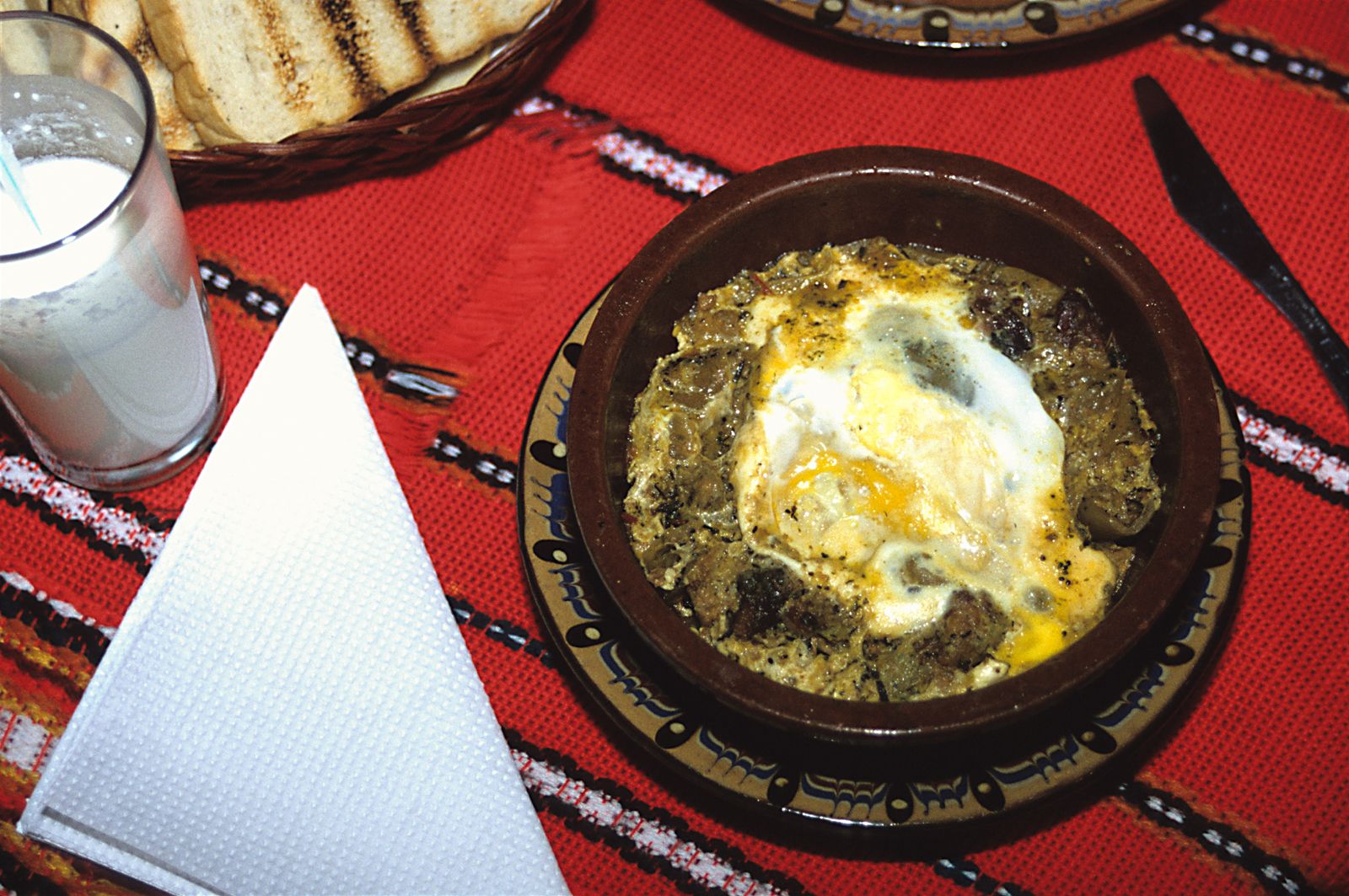
The Best Restaurants in Sofia: 11 Places I Send Friends
The 11 Sofia restaurants I send friends to, from folk-music cellars to award-winning fine dining, and what to order.
Read the guideWhere to Eat Banitsa in Sofia
Sofia's breakfast pastry: the bakeries I queue at, the fillings to try and how to order at the counter.
Read the guide