Koprivshtitsa Day Trip from Sofia: Train, House Museums and My Route
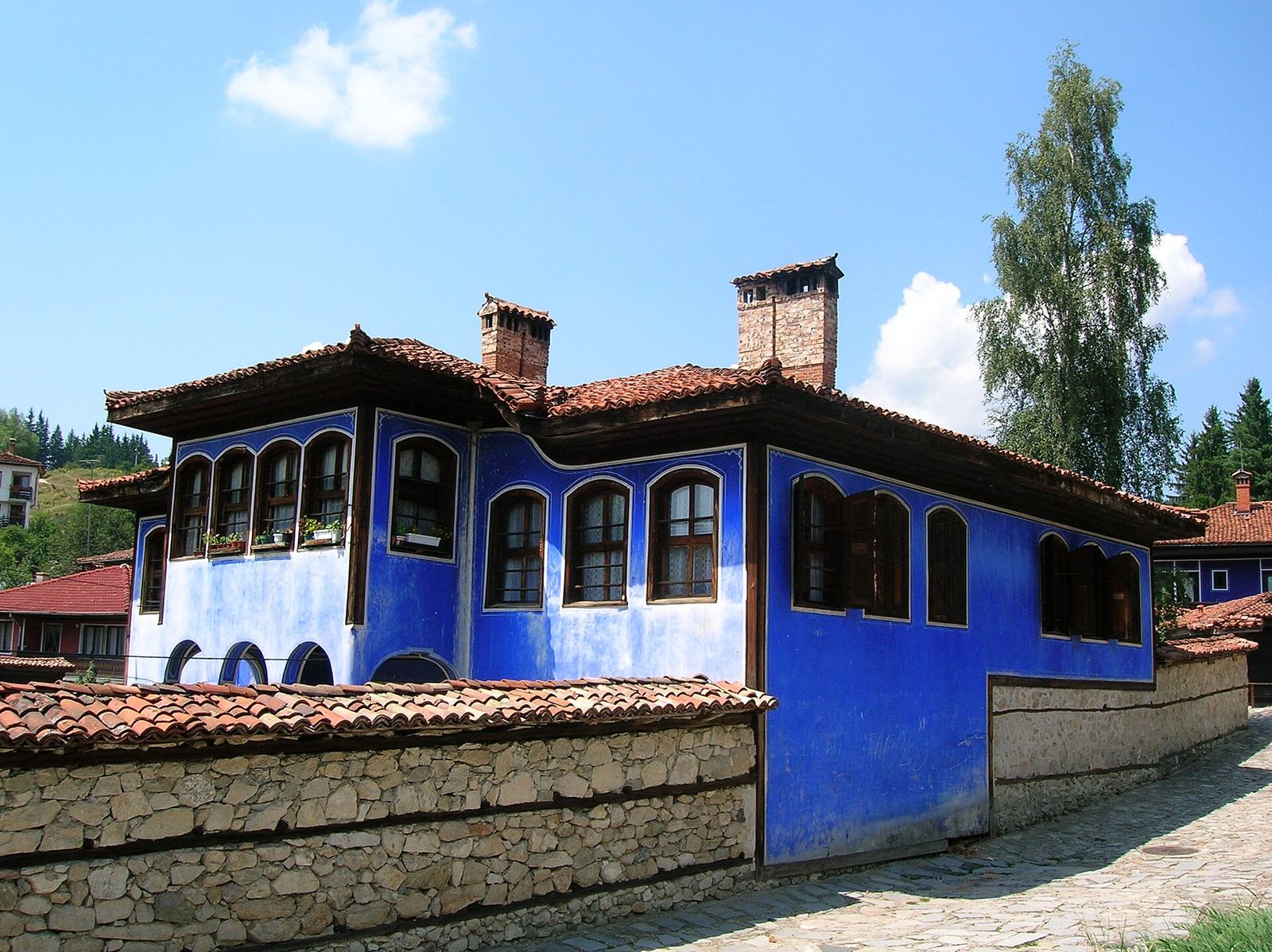
Koprivshtitsa is the painted town of the April Uprising: cobbled lanes, stone bridges and 19th-century merchants' houses in blue, ochre and red, 1,030 metres up in the Sredna Gora hills. It's my favourite small town within reach of Sofia. This is how I do it in a day without a car: the train and the station minibus, the house museums worth your €10, my route and when to go.
Is Koprivshtitsa worth a day trip from Sofia?
Yes. Of all my day trips from Sofia, it's the prettiest, and the train makes it easy without a car. Fewer than 3,000 people live here, about 110 km east of the capital, and the old centre is a protected architectural and historical reserve of houses built by wealthy wool and livestock merchants.
On 20 April 1876 local rebels fired the first shot of the April Uprising against Ottoman rule at a small stone bridge here, led by Todor Kableshkov, a son of the town. The Ottomans crushed it within weeks, but the reprisals turned opinion across Europe and led to the war that freed Bulgaria in 1878. Every Bulgarian schoolchild learns this chapter of Bulgarian history, and two of the town's house museums belong to its leaders, Kableshkov and Georgi Benkovski.
Rila Monastery is still the first trip I'd make out of Sofia, for the mountains and the frescoes. In one day in Koprivshtitsa you see 5 house museums, the bridge, the blue church and the Benkovski monument, with a long lunch in the middle. Skip it if house museums bore you, because in Koprivshtitsa the houses are the sights.
How to get from Sofia to Koprivshtitsa
The train is my way in. Koprivshtitsa's railway station stands 8 km from the town, so every train trip ends with a short minibus ride.
| Train and minibus | Car | |
|---|---|---|
| Leaves from | Sofia Central Railway Station | Anywhere in Sofia |
| Time each way | About 2 hours on the direct train, plus 10 to 15 minutes by minibus | About 1.5 to 2 hours |
| Cost each way | About €4 for the train, about €2 for the minibus | Fuel |
| Distance | 8 km from the station to the centre | About 110 km |
| Best for | A day trip on your own | Setting your own hours |
Sofia to Koprivshtitsa by train
Trains to Koprivshtitsa leave from Sofia's Central Railway Station on the line east towards Karlovo and Burgas. Metro line M2 gets you there from Serdika in 2 stops, at €0.80 a ride on the Sofia metro.
The direct regional trains take 2 to 2.5 hours and cost about €4 each way, and the quickest connections, with a change on the edge of Sofia, take about 1 hour 40 minutes. Departures are few, and only the early ones leave you a full day, so I check the BDZ timetable the night before and aim for the earliest direct train. BDZ sells tickets online as well as at the station windows. I buy ahead for a summer weekend, and I note the afternoon trains home before I leave Sofia.
Trains in Bulgaria are slow and cheap, and on this line the view makes up for the speed: past Sofia's suburbs it runs east through the valley between the Balkan range and the Sredna Gora.
The minibus from Koprivshtitsa station
A minibus waits for most trains at Koprivshtitsa station and takes 10 to 15 minutes to reach the centre. The fare is about €2, paid to the driver. Its timetable is pinned up at the station, so photograph it on the way in: the same sheet shows which minibus meets your train home.
Sofia to Koprivshtitsa by car
The drive is about 110 km and takes 1.5 to 2 hours, mostly east along Route 6 and then up into the hills. A car sets your hours, which helps on a short winter day, and it spares you the minibus at both ends.
The lanes in the reserve are steep, narrow and cobbled, so I park on the edge of the old centre and walk.
Koprivshtitsa house museums: tickets, hours and closing days
Koprivshtitsa's Directorate of Museums runs the house museums and sets its ticket prices in euros. The combined ticket covers 6 museums, and I buy it at the first house I reach.
| Ticket | Adults | Pupils, students and pensioners |
|---|---|---|
| Combined ticket, 6 museums | €10 | €5 |
| Single museum | €5 | €3 |
| Family ticket, 6 museums, with children under 18 | €20 | |
| Palaveev Houses Gallery, seasonal | €5 | €3 |
| Audio guide in 7 languages | €15 |
From 1 April to 1 November the museums open 9.30am to 5.30pm, and from 1 November to 1 April they open 9am to 5pm. Each house closes one day a week, and the closing days split between Monday and Tuesday.
| Museum | Who lived there, and what you see | Closed |
|---|---|---|
| Kableshkov House | Todor Kableshkov, who declared the April Uprising | Mondays |
| Lyutova House | A merchant's house of 1854, furnished, with felted wool rugs | Mondays |
| Debelyanov House | Dimcho Debelyanov, the poet, born here in 1887 | Mondays |
| Karavelov House | Lyuben Karavelov, the writer and rebel leader, born here in 1834 | Tuesdays |
| Benkovski House | Georgi Benkovski, leader of the uprising's mounted band | Tuesdays |
The Museum of Education (Просветно дело) closes on Tuesdays too. The Palaveev Houses Gallery, which has a pottery studio, closes on Mondays, and so does the Tepavitsa, the old wool workshop by the river, which opens in summer only.
My route round Koprivshtitsa in a day
I start at the bridge and see the houses in the middle of town before lunch, then cross to Karavelov House and up the slope to Benkovski in the afternoon.
| Time | Stop | Cost |
|---|---|---|
| About 9.30am | Minibus into the centre | About €2 |
| 10am | Kalachev Bridge | Free |
| 10.15am | Kableshkov House | Combined ticket |
| 11am | Oslekov House from the lane, then Lyutova House | Combined ticket |
| Noon | Debelyanov House and the Church of the Assumption | Combined ticket |
| 1pm | Lunch | Your bill |
| 2.30pm | Karavelov House | Combined ticket |
| 3.30pm | Benkovski House and the Benkovski monument | Combined ticket, monument free |
| Late afternoon | Minibus back to the station | About €2 |
Kalachev Bridge, where the first shot was fired
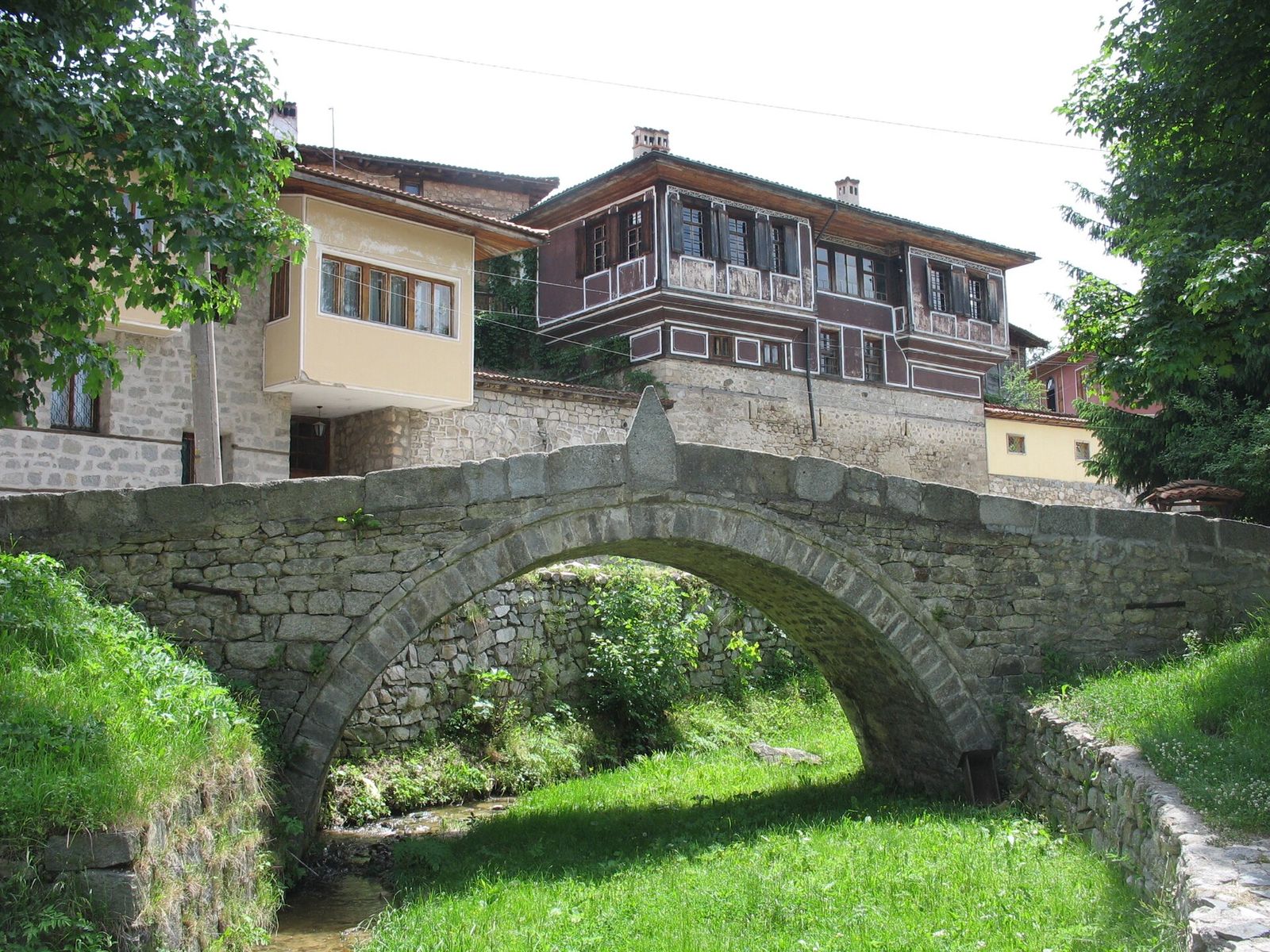
Kalachev Bridge crosses a stream in the middle of town on a single stone arch. The first shot of the April Uprising was fired here on 20 April 1876, and Bulgarians call it the Bridge of the First Shot. It's small enough to walk past without noticing, so I make it my first stop of the day.
Kableshkov House
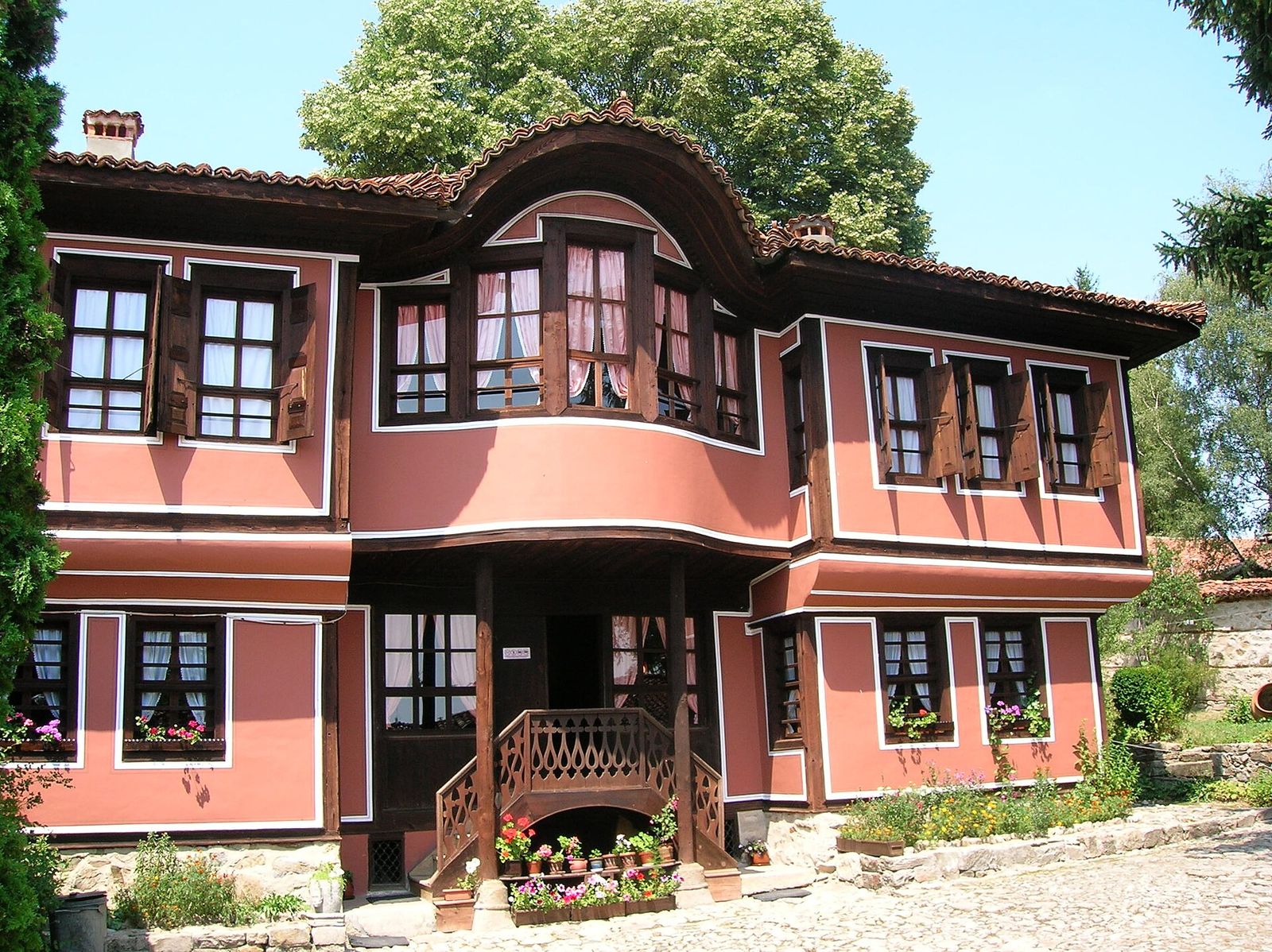
Kableshkov House was the family home of Todor Kableshkov, who led the local rebels and wrote the letter that told Panagyurishte the uprising had begun. He died in 1876, the year of the rising. To my eye it's the handsomest house in town, with a curved bay of windows across the upper floor and deep eaves over a wooden porch.
Inside you'll find the family rooms and the story of the uprising. The museum shows a film on Kableshkov and the April Uprising for €2 extra, and I'd watch it first, before the other houses.
Oslekov House
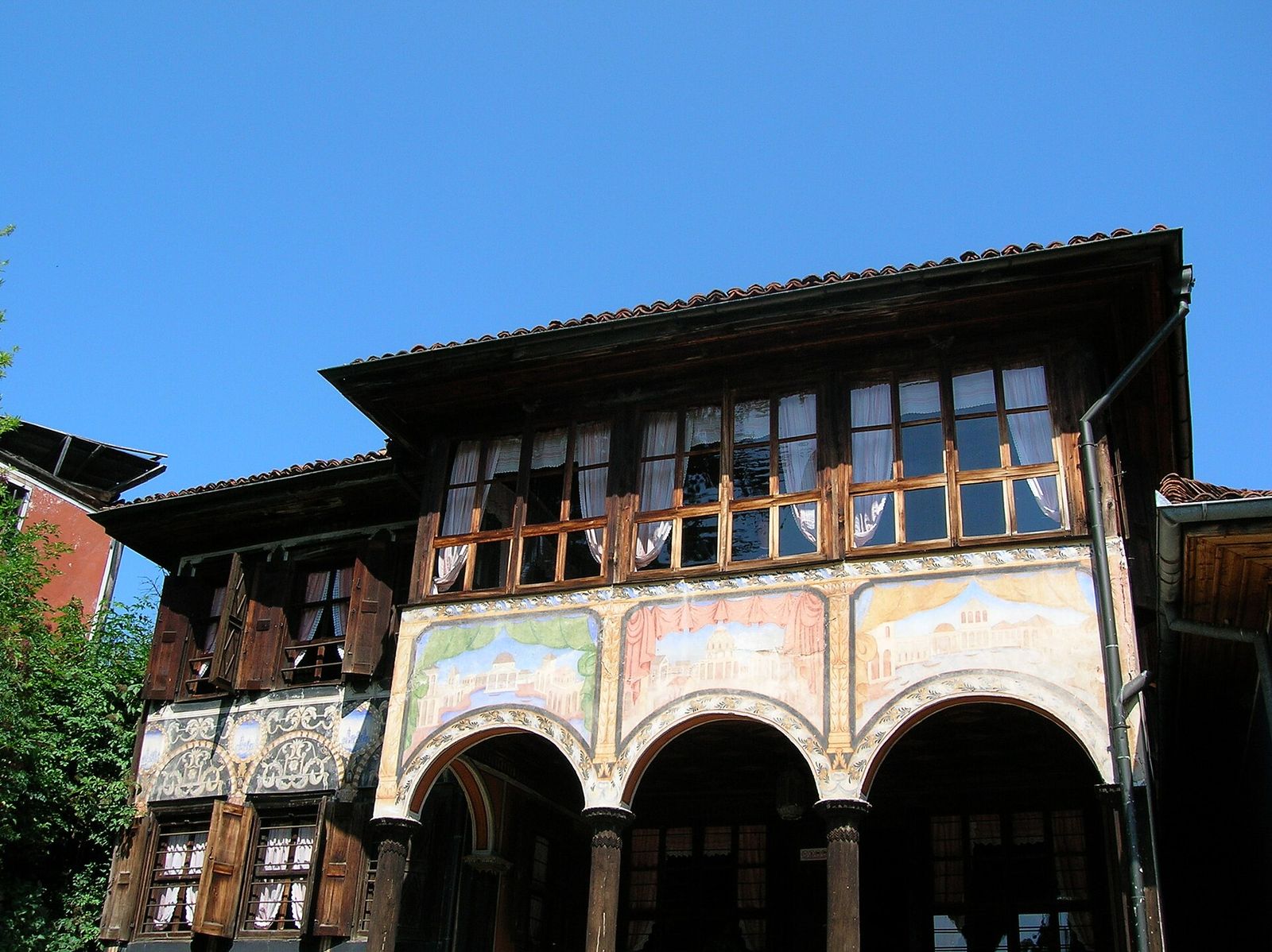
Three arches on wooden columns hold up the front of Oslekov House, the one on every Koprivshtitsa postcard, with a band of painted panels showing towns above them. The merchant Nencho Oslekov built it in the 1850s. I come for the painted front and look at it from the lane.
Lyutova House
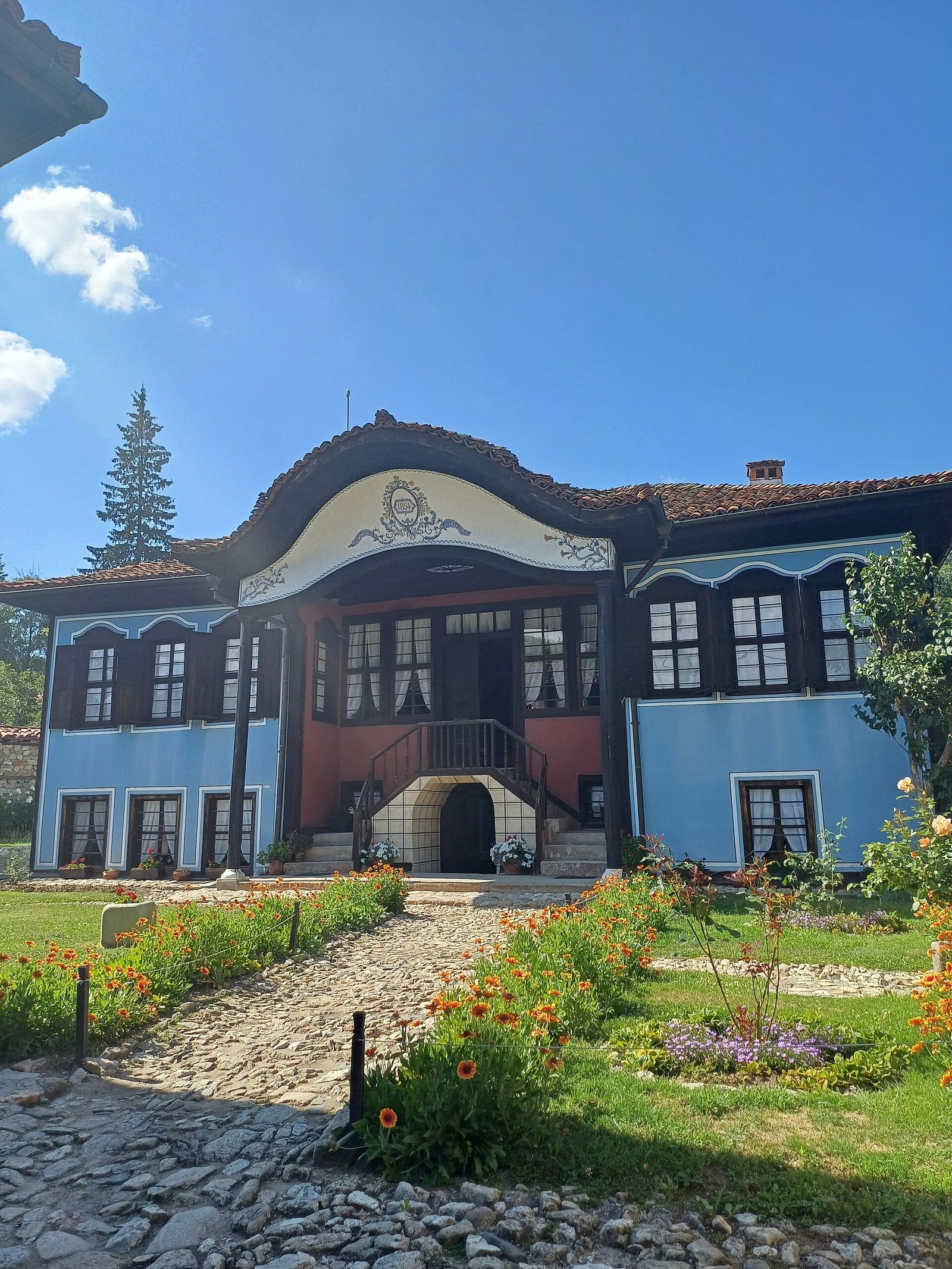
Built in 1854, Lyutova House has a curved white pediment over a red central bay, between two blue wings. The museum keeps it furnished as a merchant family lived in it. I like it most for the plasti, the thick felted wool covers once made at the tepavitsa down by the river.
Debelyanov House
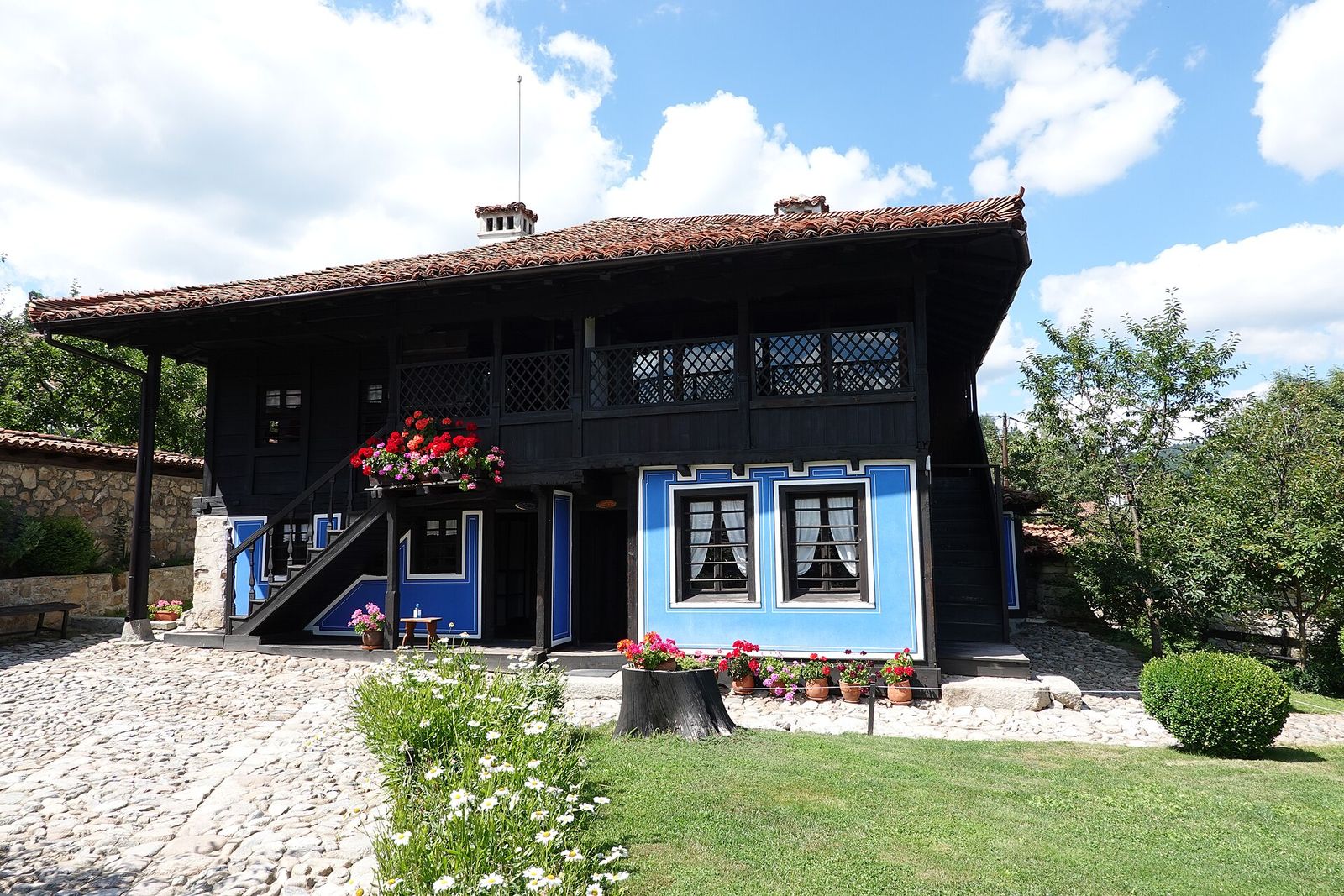
Dimcho Debelyanov was born in this house in 1887 and wrote some of the best-loved poems in Bulgarian before he was killed in the First World War at 29. The house is small, dark timber over blue walls, with a garden. In the yard sits a stone statue of his mother, chin in hand, waiting for a son who never came home, and I find it the hardest sight in town to walk past.
The Church of the Assumption
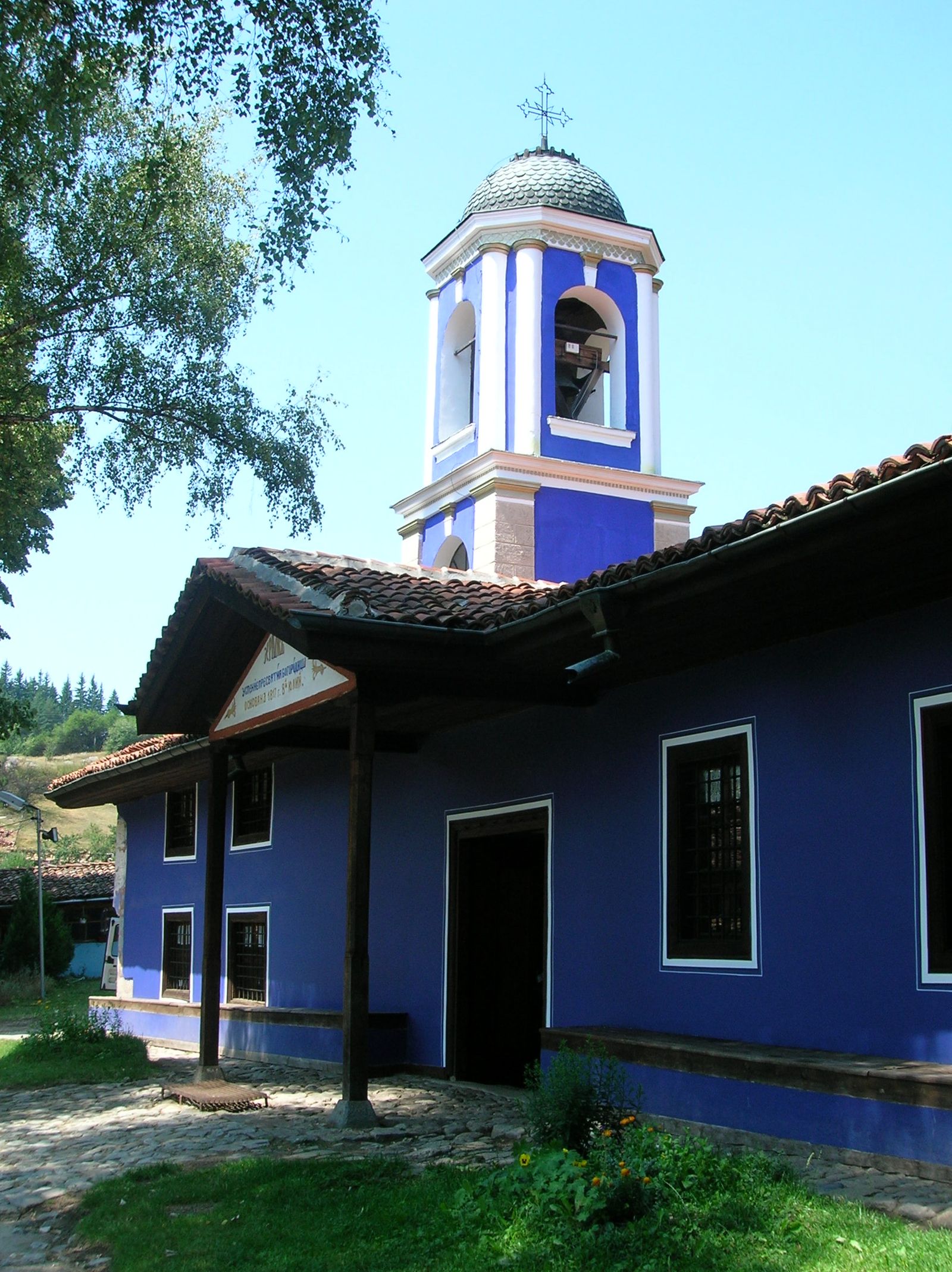
The Church of the Assumption (Успение Богородично) was built in 1817, and its walls and bell tower are painted a deep blue. It's a working Orthodox church, so cover your shoulders and keep your voice down. The town also keeps an ossuary for the rebels of 1876.
Karavelov House
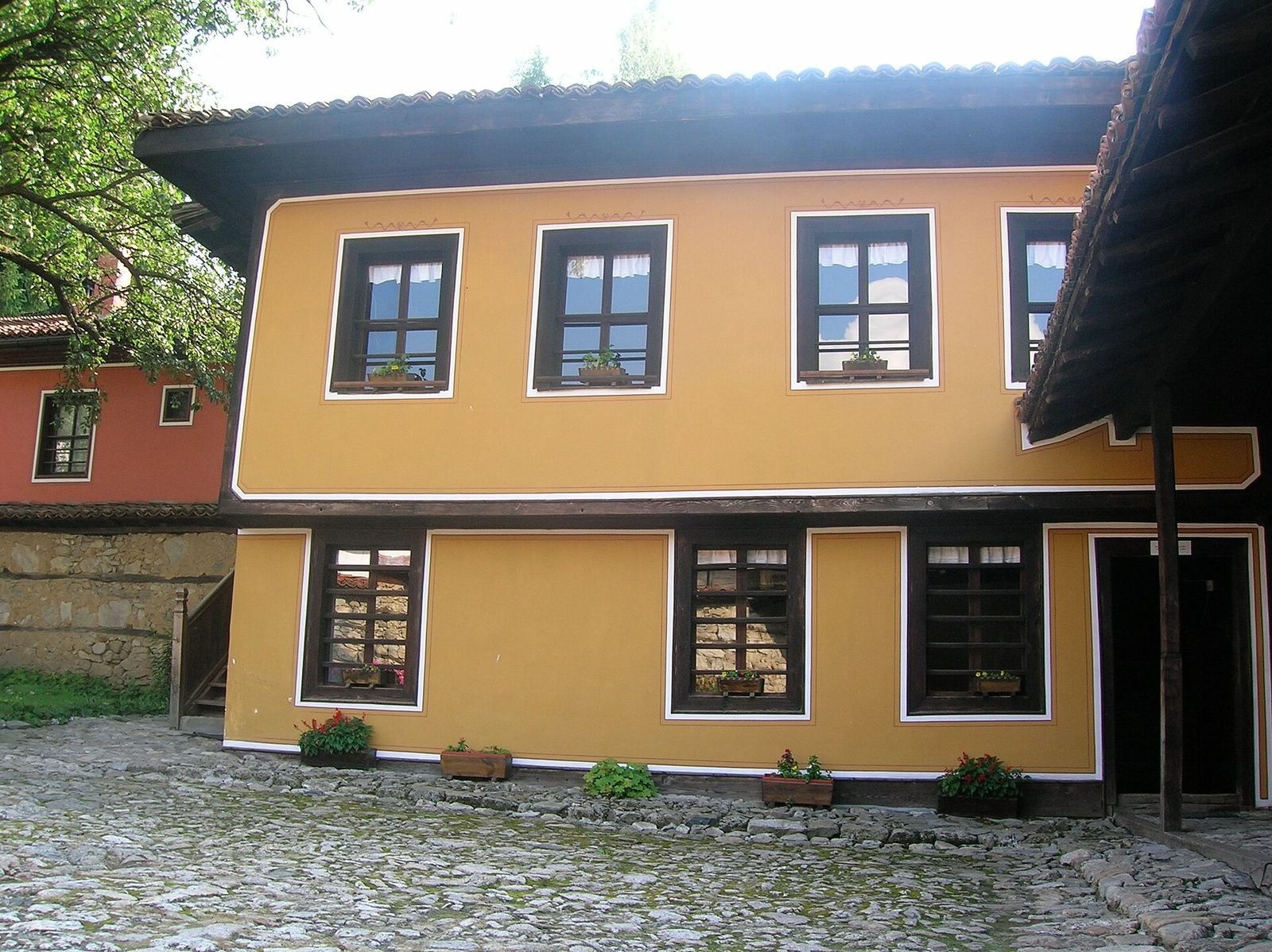
Lyuben Karavelov was born here in 1834 and grew into a writer and rebel leader who printed newspapers from exile in Bucharest. The museum is a group of buildings round a cobbled yard, in ochre and red. If time runs short after lunch, this is the house I'd drop, because Kableshkov and Benkovski tell the uprising story better.
Benkovski House
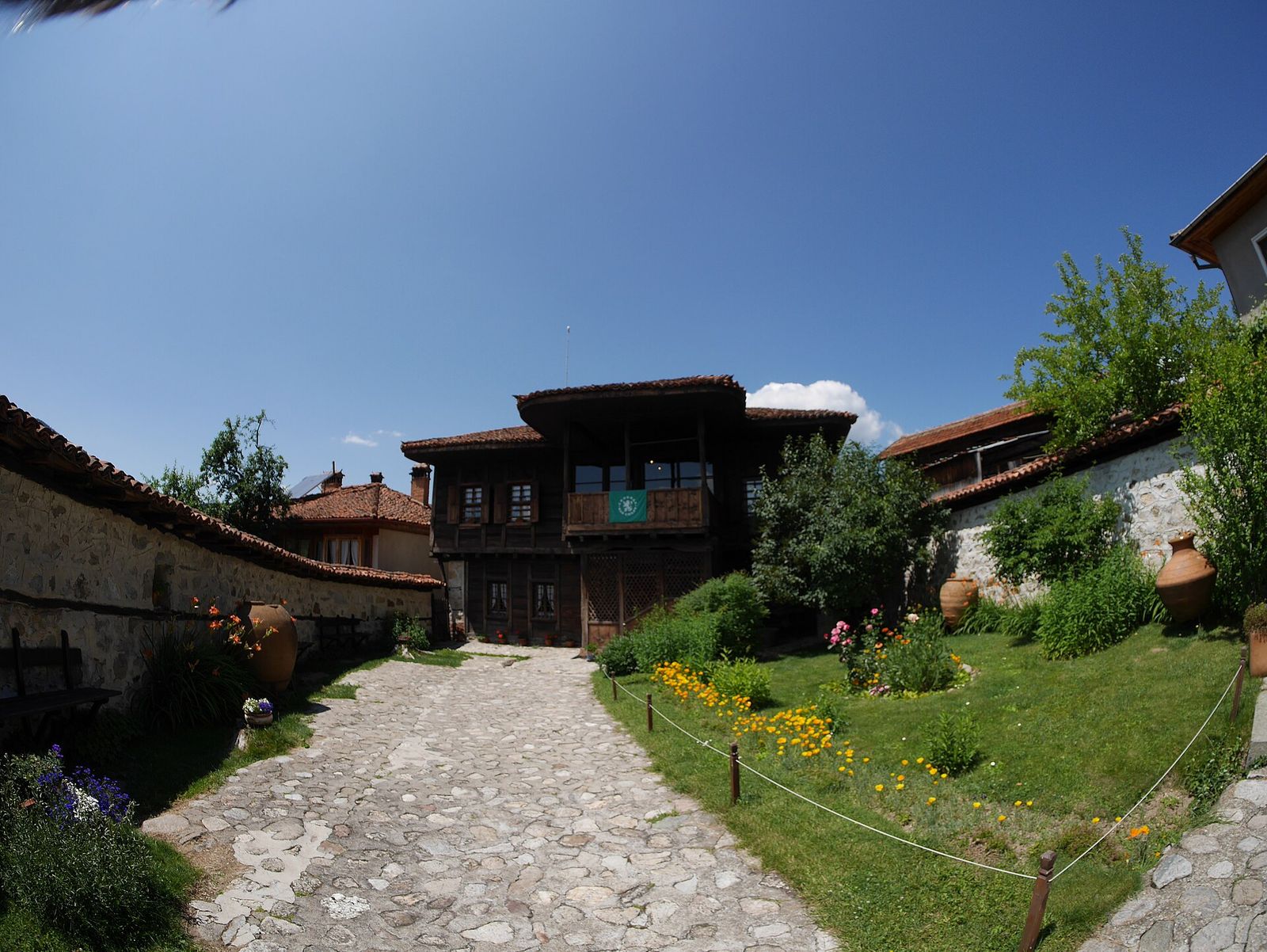
Georgi Benkovski, 1843 to 1876, led the uprising's mounted band. His house sits up the slope at the end of a cobbled path, a dark timber house with a balcony, behind a garden of flowers and big clay jars. The path to the monument starts above it.
The Benkovski monument
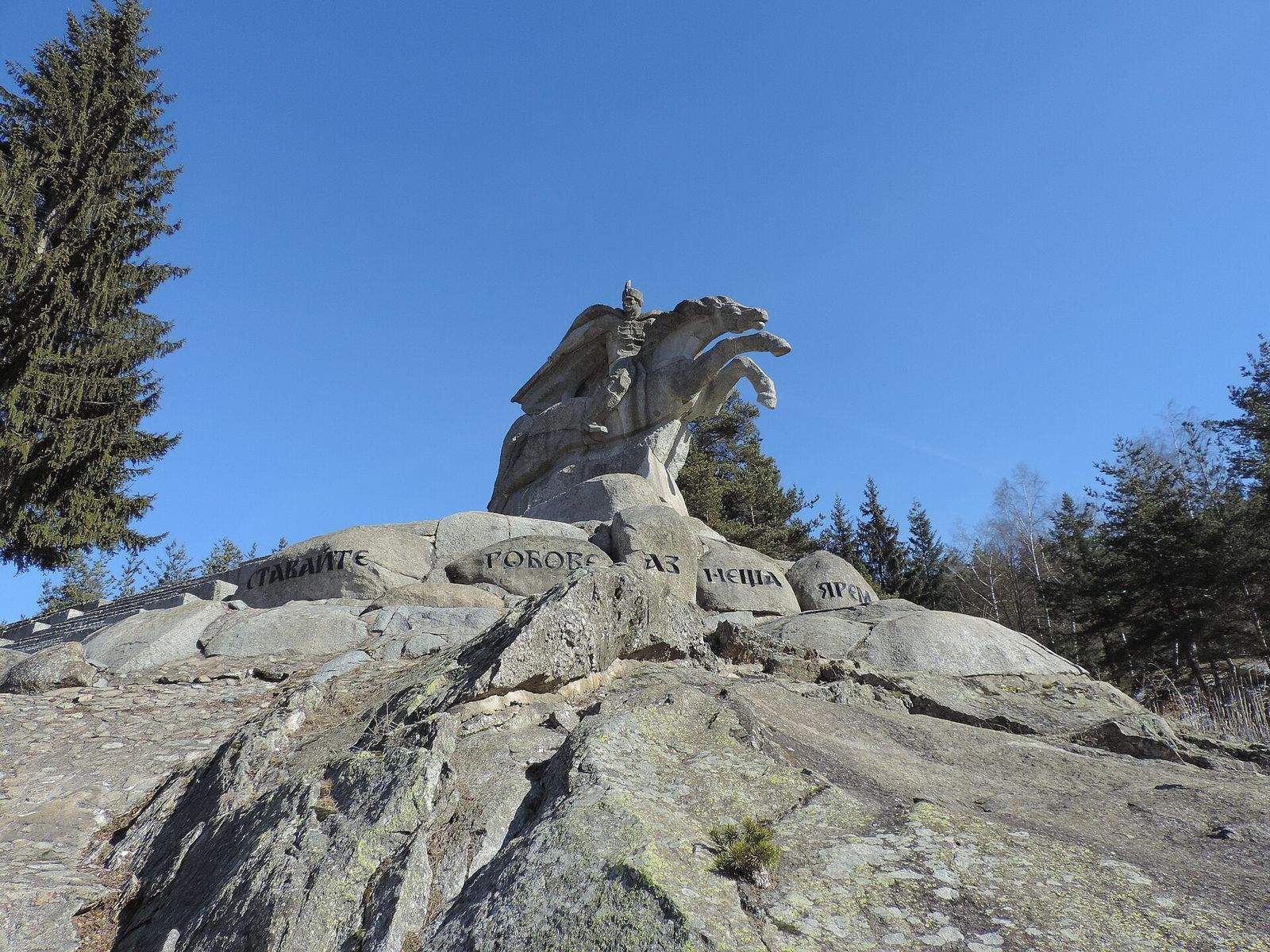
Above the house, Benkovski rides a rearing stone horse on a rocky outcrop, 11 metres tall. The path up is a stair climb that children manage, and from the top you look down over the red roofs of the town and across the Sredna Gora.
Where to eat in Koprivshtitsa
The restaurants round the centre cook Bulgarian mountain food: kavarma stewed in a clay pot, banitsa, shopska salad, tarator on hot days and parlenka, a flatbread straight from the oven. I eat at about 1pm, between the morning houses and the afternoon ones.
Chuchura, a small family hotel with a restaurant, is where I'd book for a long lunch, and it works for dinner if you stay the night.
Staying the night in Koprivshtitsa
A night turns Koprivshtitsa from a race into a stroll. The day-trippers leave on the afternoon trains, the lanes empty out, and the next morning is free for the houses you skipped or for a hike up Bogdan, at 1,604 metres the highest peak of the Sredna Gora. Rooms are mostly in family guesthouses, many of them in restored Revival houses, and some want cash, so ask when you book.
At 1,030 metres the town sits nearly 500 metres higher than Sofia, so evenings run cooler, even in July. Pack a jumper whatever the season.
The Koprivshtitsa Folklore Festival and the 1 May re-enactment
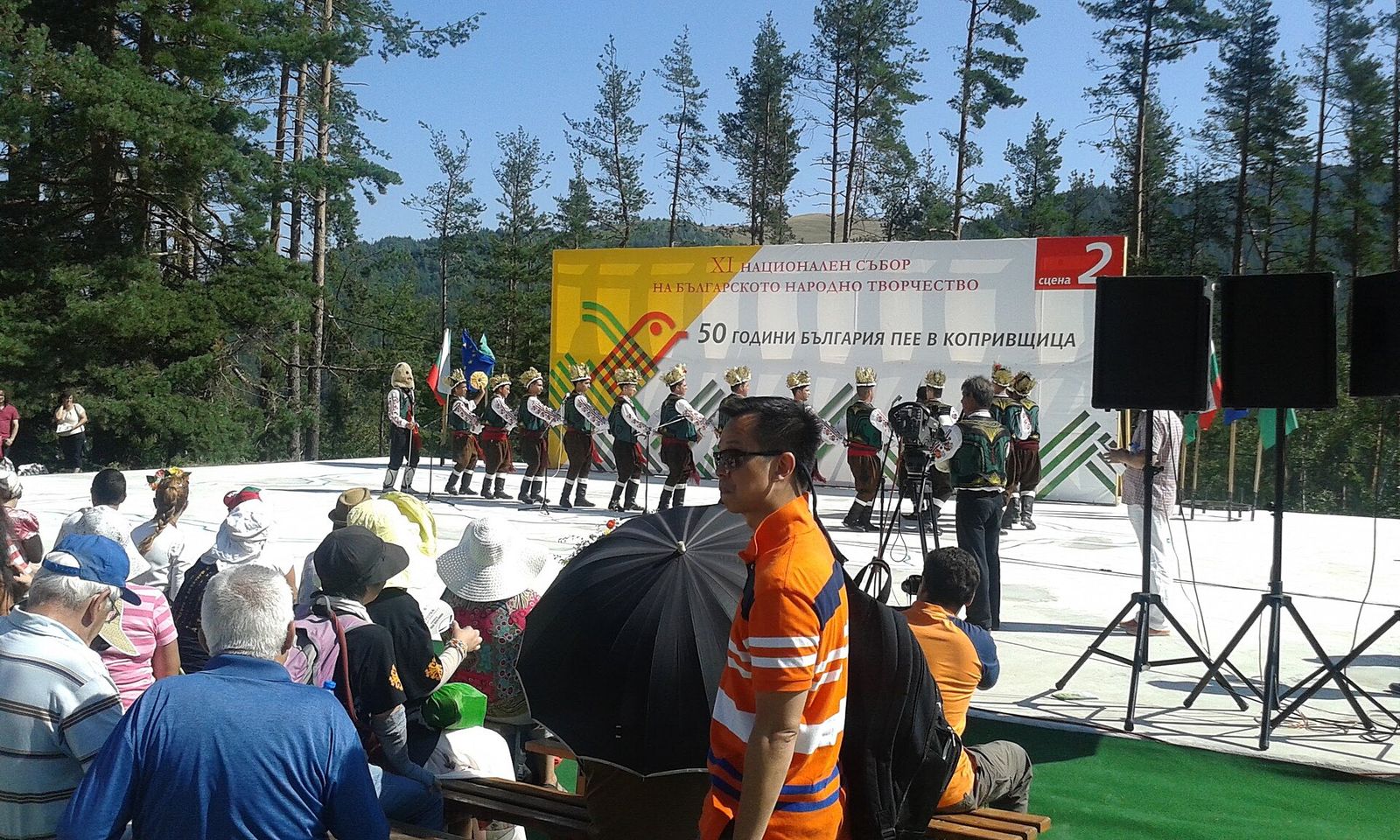
The National Folklore Festival (Национален събор на българското народно творчество) has filled the meadows above town roughly every five years since 1965. Village groups from every corner of the country bring their own costumes, songs and Bulgarian folk dances to open-air stages for a weekend in August. The 13th festival ran from 8 to 10 August 2025, three years after the 12th, and in a festival year I'd book a room in town months ahead.
When to go to Koprivshtitsa
Wednesday to Sunday is the window, when every house museum is open. From late spring the gardens in front of the houses are in flower. Winter brings snow on the roofs and icy cobbles and stone steps, so wear boots with grip.
On a Sofia itinerary of 3 to 5 days, Koprivshtitsa is the day trip I'd add after Rila and Plovdiv.
Key takeaways
- Take the earliest direct train from Sofia Central, about 2 hours for about €4, then the €2 minibus that meets it at the station.
- Buy the €10 combined ticket at the first house and see Kableshkov, Lyutova, Debelyanov, Karavelov and Benkovski houses.
- Go Wednesday to Sunday, because Mondays and Tuesdays each close half the museums.
- Carry euro cash for the minibus, the museum desks and guesthouses.
- Finish at the Benkovski monument for the view over the roofs.
Frequently asked questions
Is Koprivshtitsa worth visiting?
Yes. It has some of the best-kept 19th-century houses in Bulgaria, the bridge where the April Uprising began and 6 museums on one €10 ticket, all within about 2 hours of Sofia.
How do you get from Sofia to Koprivshtitsa?
Take the train from Sofia's Central Railway Station, about 2 hours on the direct train for about €4, then the minibus that meets the trains for the 8 km into town, about €2. By car the drive is about 110 km and takes 1.5 to 2 hours.
How long do you need in Koprivshtitsa?
5 to 7 hours covers the bridge, 5 house museums, the church, lunch and the Benkovski monument. Stay a night if you want to hike Bogdan or see the lanes once the day-trippers have gone.
What is Koprivshtitsa famous for?
Koprivshtitsa is famous for the April Uprising of 1876, whose first shot was fired at Kalachev Bridge on 20 April, and for its painted Revival houses. It also hosts the National Folklore Festival roughly every five years.
What is the most beautiful town in Bulgaria?
For a small town, my answer is Koprivshtitsa, for its painted houses and cobbled lanes. Plovdiv's Old Town, Veliko Tarnovo and Melnik run it close, and they sit near the top of my list of the best places to visit in Bulgaria.
Can you do Plovdiv and Koprivshtitsa in one day?
Not by public transport, and I wouldn't with a car. They sit on different railway lines and each fills a day, so I give Plovdiv its own day trip and Koprivshtitsa another.
What should I know before visiting Koprivshtitsa?
Bring cash, because the minibus and the museum desks don't take cards. Check the closing days, since half the houses shut on Mondays and the other half on Tuesdays, and wear shoes with grip for the cobbles.
12 Best Day Trips from Sofia (and How I Get There)
My 12 favourite trips out of Sofia by bus, train and hire car, and the ones that deserve a night away.
Read the guide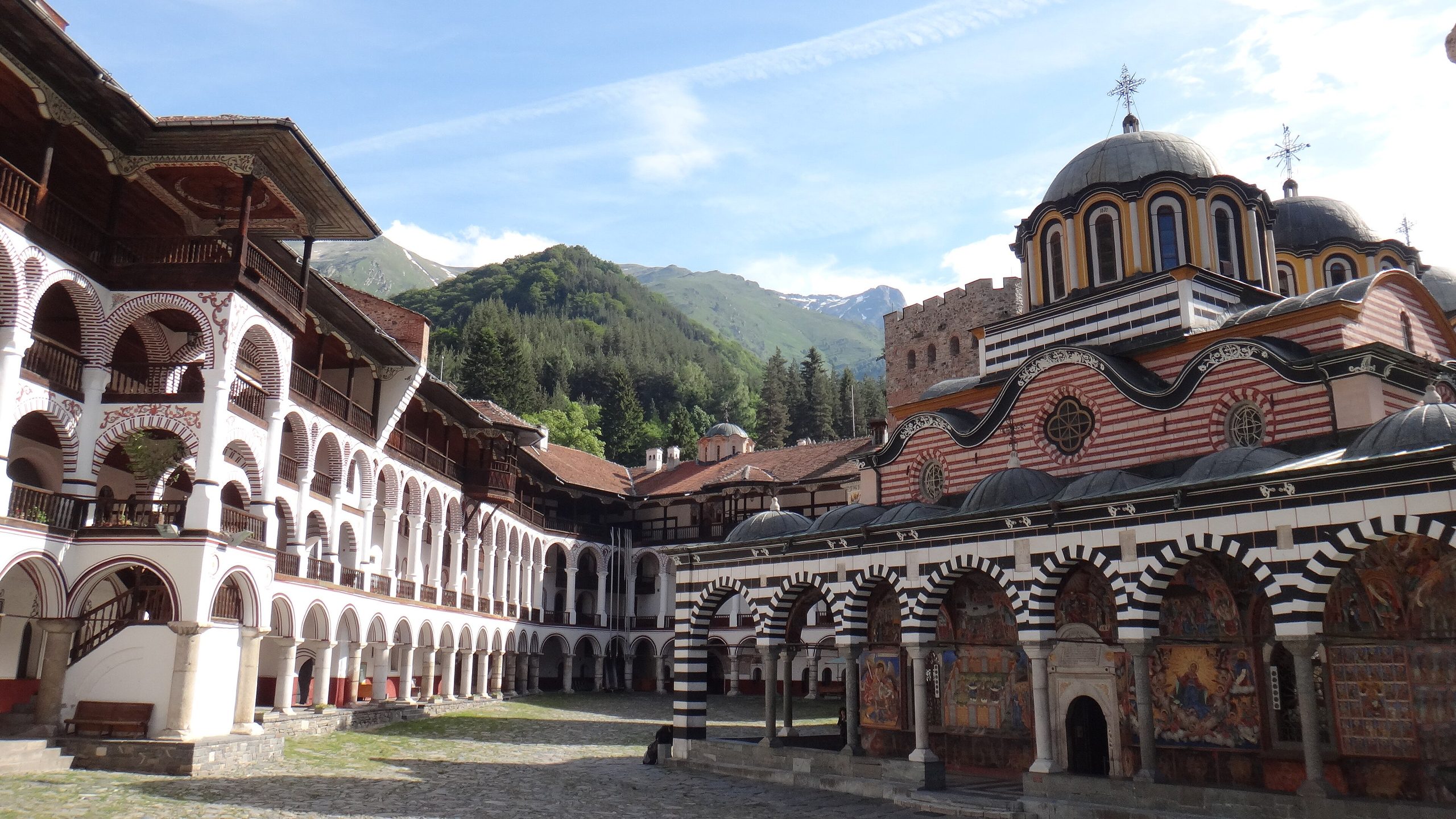
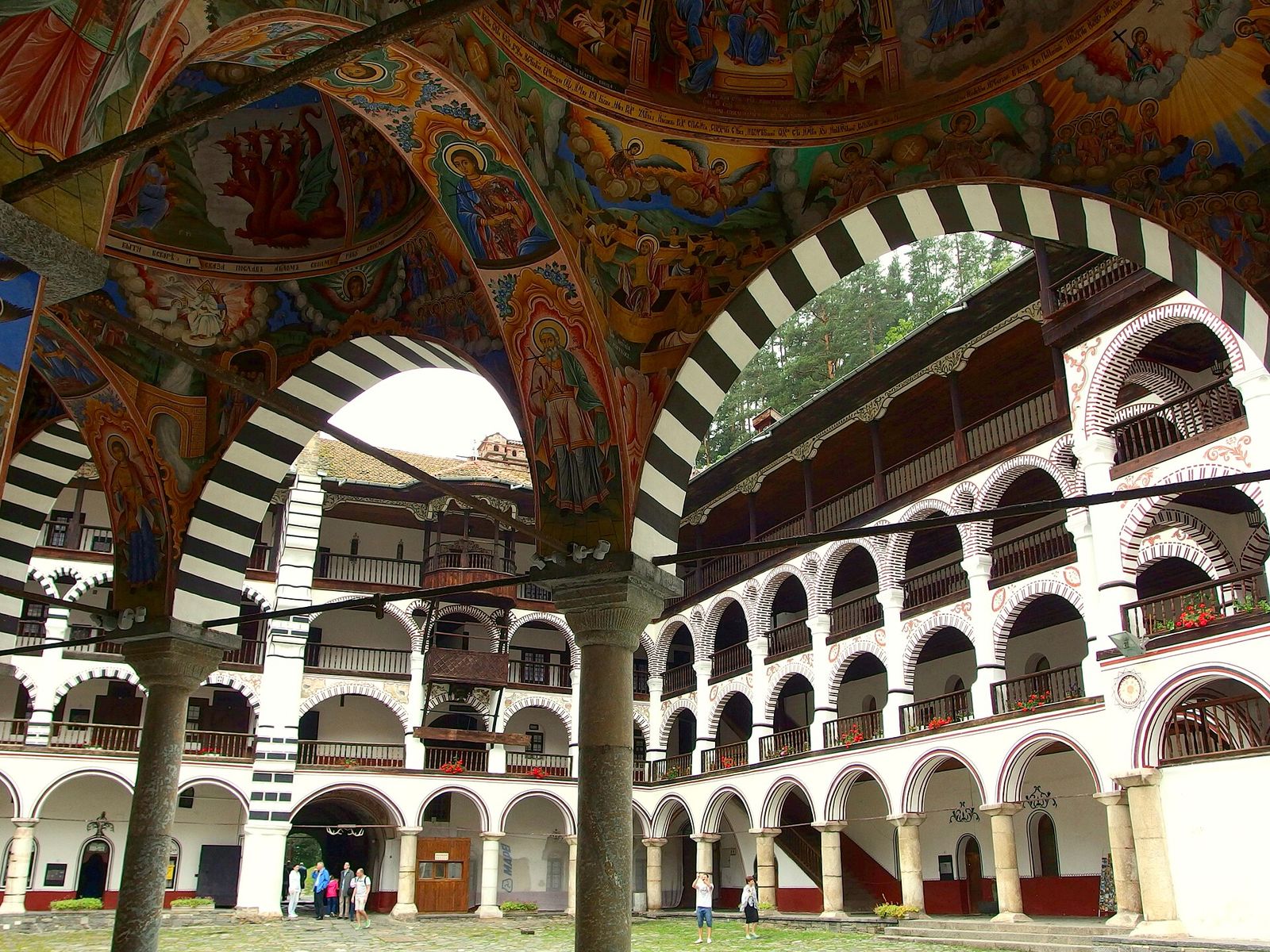
Rila Monastery Day Trip from Sofia: Bus, Car and Timings
Bulgaria's biggest monastery is free to walk into and 2 hours from Sofia. How I get there myself, and what to see.
Read the guide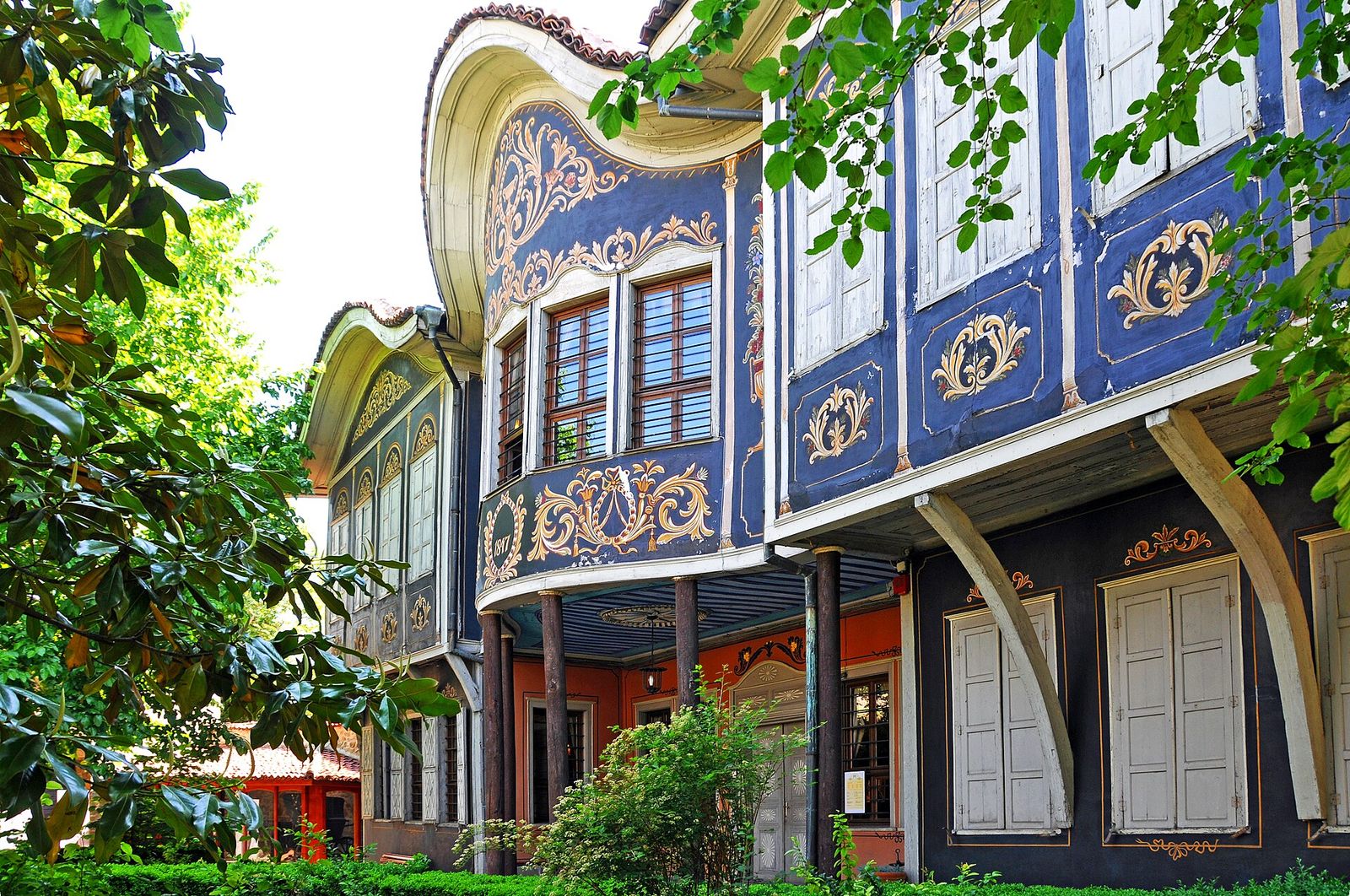
Plovdiv Day Trip from Sofia: Bus, Train and My One-Day Route
Plovdiv by bus or train from Sofia, and the route I walk to fit the Old Town, the Roman theatre and Kapana into one day.
Read the guide