Bulgarian Folk Music and Dance: Where I Hear It in Sofia
Bulgarian folk music is known for dance tunes counted in sevens and elevens, a goatskin bagpipe called the gaida and women's choirs singing in tight, buzzing harmony. The dance that goes with it is the horo, a long line of people holding hands. I can't play a note, but a folk night is my favourite evening in Sofia. This is what to listen for, how the horo works and where I hear it live in the city.
What is Bulgarian folk music?
Bulgarian folk music is village music: songs for the harvest, the wedding and the village fete, and tunes played for the horo. Each region has its own sound and its own costume. It sits with the rest of the Bulgarian customs and traditions, and a village wedding or fete still ends in a horo.
Four regional sounds are worth learning to tell apart, and Shopluk is the one on Sofia's doorstep.
| Region | Where it is | What to listen for |
|---|---|---|
| Shopluk (Шопско) | Sofia and the villages around it | Close two-voice singing, the Bistritsa Babi |
| Thrace | The plains south-east of Sofia, around Plovdiv | Wedding music, and the gaida tuned in D or A |
| Rhodopes | The mountains along the Greek border | The deep kaba gaida, and singers like Valya Balkanska |
| The south-west | Pirin, and the villages of Dolen and Satovcha in the far south-west | Multipart singing, with Visoko singing on UNESCO's list since 2021 |
Bulgarian rhythms and time signatures
Bulgarian folk tunes are built from short beats and long beats, grouped in 2s and 3s. A long beat lasts half as long again as a short one, so a bar counted 2+2+3 feels like quick, quick, slow. Add the groups together and you get the odd totals of 5, 7, 11 and even 15 beats in a bar.
| Dance | Beats in a bar | Count | How it feels |
|---|---|---|---|
| Pravo horo | Even | 4/4 or 6/8 | Steady, the easiest to join |
| Paydushko horo | 5 | 2+3 | Quick, slow |
| Rachenitsa | 7 | 2+2+3 | Quick, quick, slow, played fast |
| Lesnoto | 7 | 3+2+2 | Slow, quick, quick |
| Eleno mome | 7 | 2+2+1+2 | Lopsided, with a clipped third beat |
| Kopanitsa | 11 | 2+2+3+2+2 | Quick, quick, slow, quick, quick |
| Bucimis | 15 | 2+2+2+2+3+2+2 | Four quick, one slow, two quick |
The song "Polegnala e Todora" runs on the kopanitsa count of 2+2+3+2+2, and clapping along to it once is the fastest way I know to feel an eleven.
Bulgarian folk singing and the female choirs
The Shope sound and the Bistritsa Babi
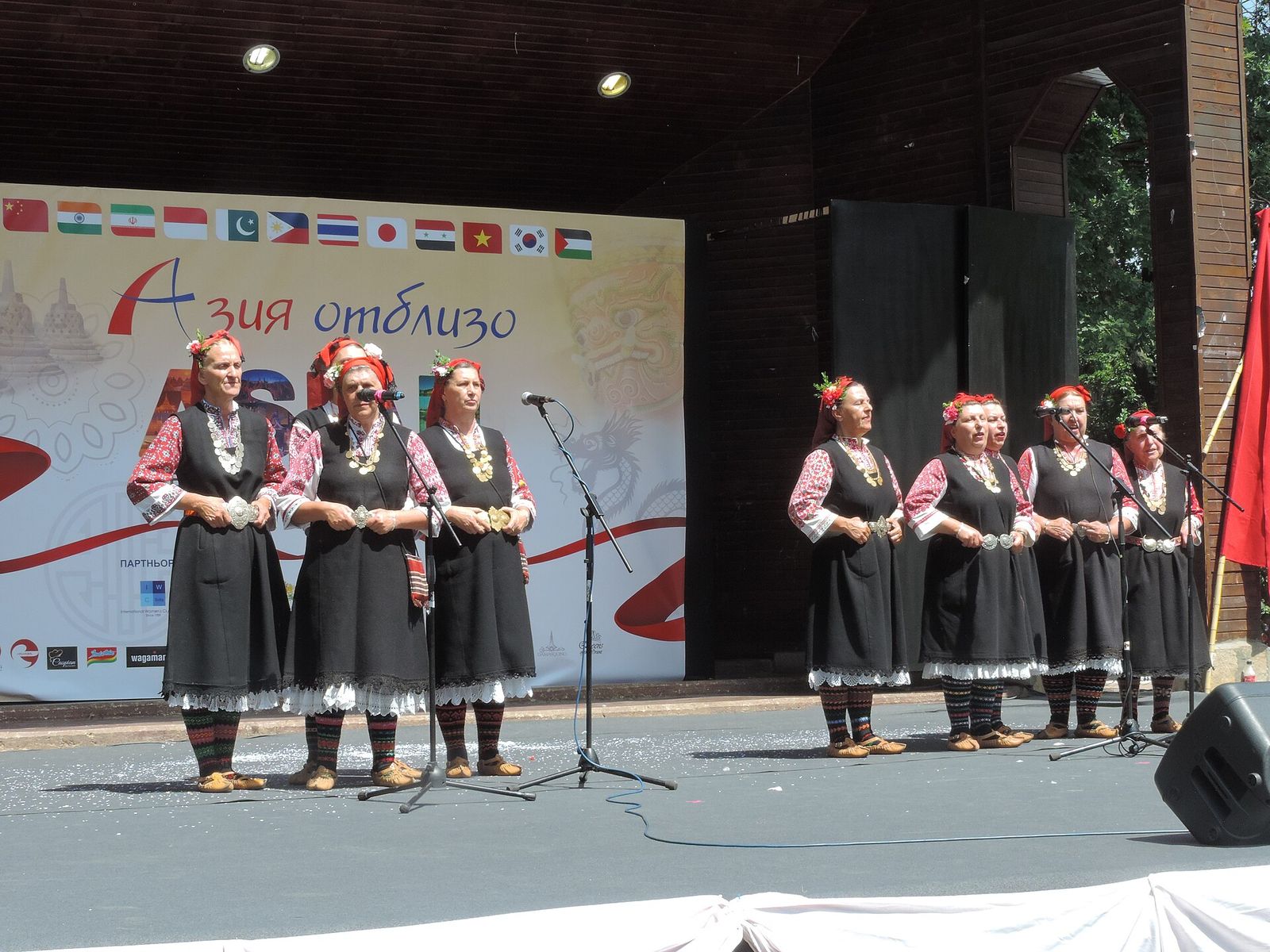
The Shope region around Sofia has its own close two-voice singing, shopski dvuglas (шопски двуглас). One voice holds a long note while the other sings the tune against it, often a single step apart, so the two voices rub and buzz. It sounds harsh for about a minute, then it gets under your skin.
The Bistritsa Babi, the grandmothers of Bistritsa, sing it. Bistritsa is a village on Sofia's southern edge at the foot of Vitosha mountain, and UNESCO listed the women's archaic polyphony, dances and rituals in 2008. If I see their name on a poster in Sofia, I buy a ticket.
Le Mystère des Voix Bulgares
If you own one Bulgarian record, it's probably this one. Le Mystère des Voix Bulgares is a series of albums by the Bulgarian State Radio and Television Female Vocal Choir, begun by the Swiss producer Marcel Cellier with a first record in 1975. 4AD re-released it in the UK in 1986, and the second volume won a Grammy in 1990.
Valya Balkanska, a singer from the Rhodopes, recorded "Izlel e Delyo Haydutin", and in 1977 the song left Earth on the Voyager Golden Record.
Bulgarian folk instruments
A Bulgarian folk band is small: a bagpipe or a flute on the tune, a fiddle or a lute beside it and a drum underneath. These are the six instruments I'd learn to spot.
| Instrument | In Cyrillic | What it is | The sound |
|---|---|---|---|
| Gaida | гайда | A bagpipe with a goatskin bag | A reedy drone under a fast, twisting tune |
| Kaba gaida | каба гайда | The big Rhodope bagpipe, tuned in F | Deeper and slower than the gaida |
| Kaval | кавал | A long wooden flute, blown from the end | Breathy and soft |
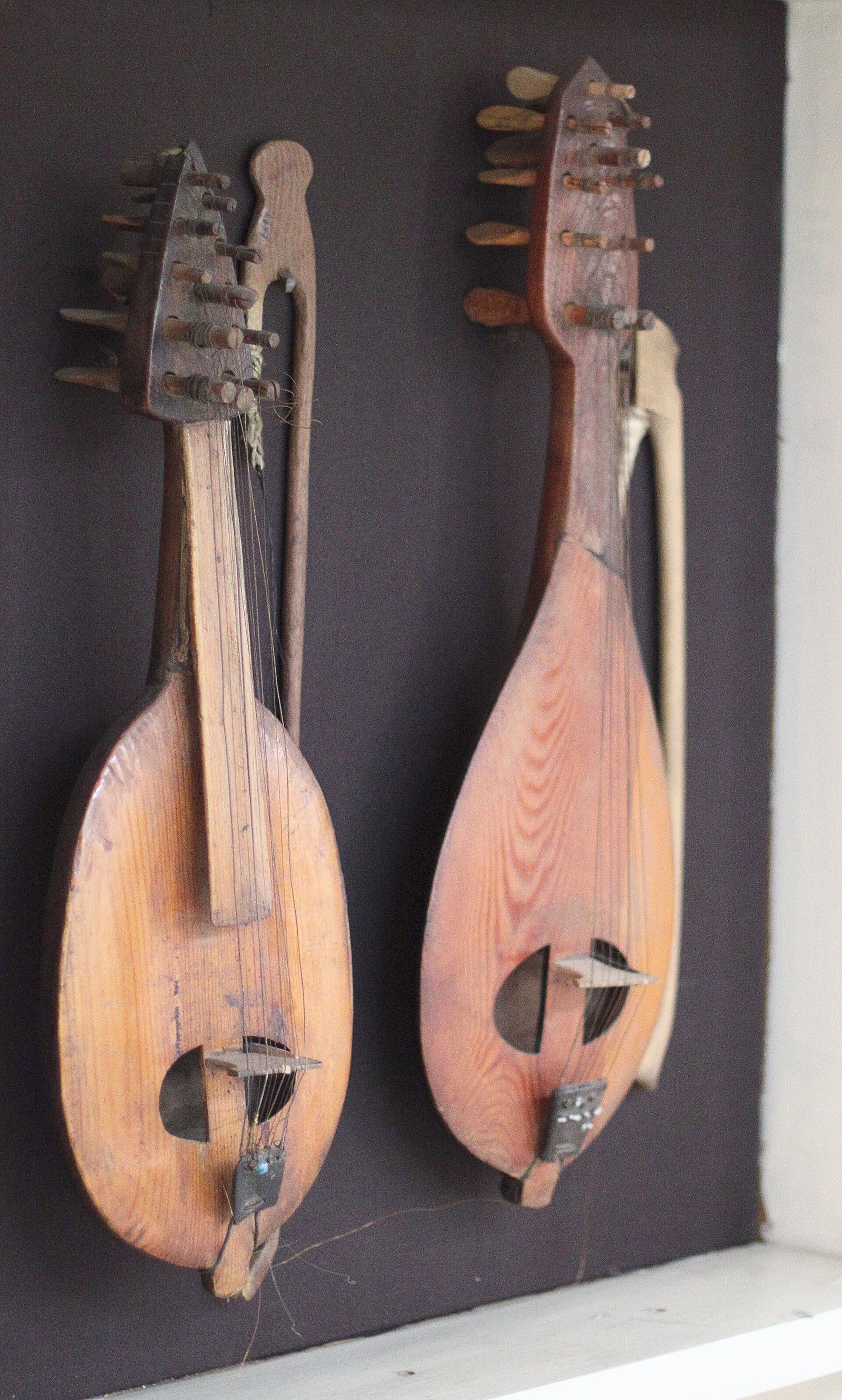
| Gadulka | гъдулка | A pear-shaped fiddle held upright and bowed, with extra strings that ring in sympathy | Nasal and ringing |
| Tambura | тамбура | A long-necked lute with frets and metal strings | Bright plucked chords and fast runs |
| Tapan | тъпан | A big double-headed drum worn over the shoulder | A thump from the heavy beater, a crack from the thin stick |
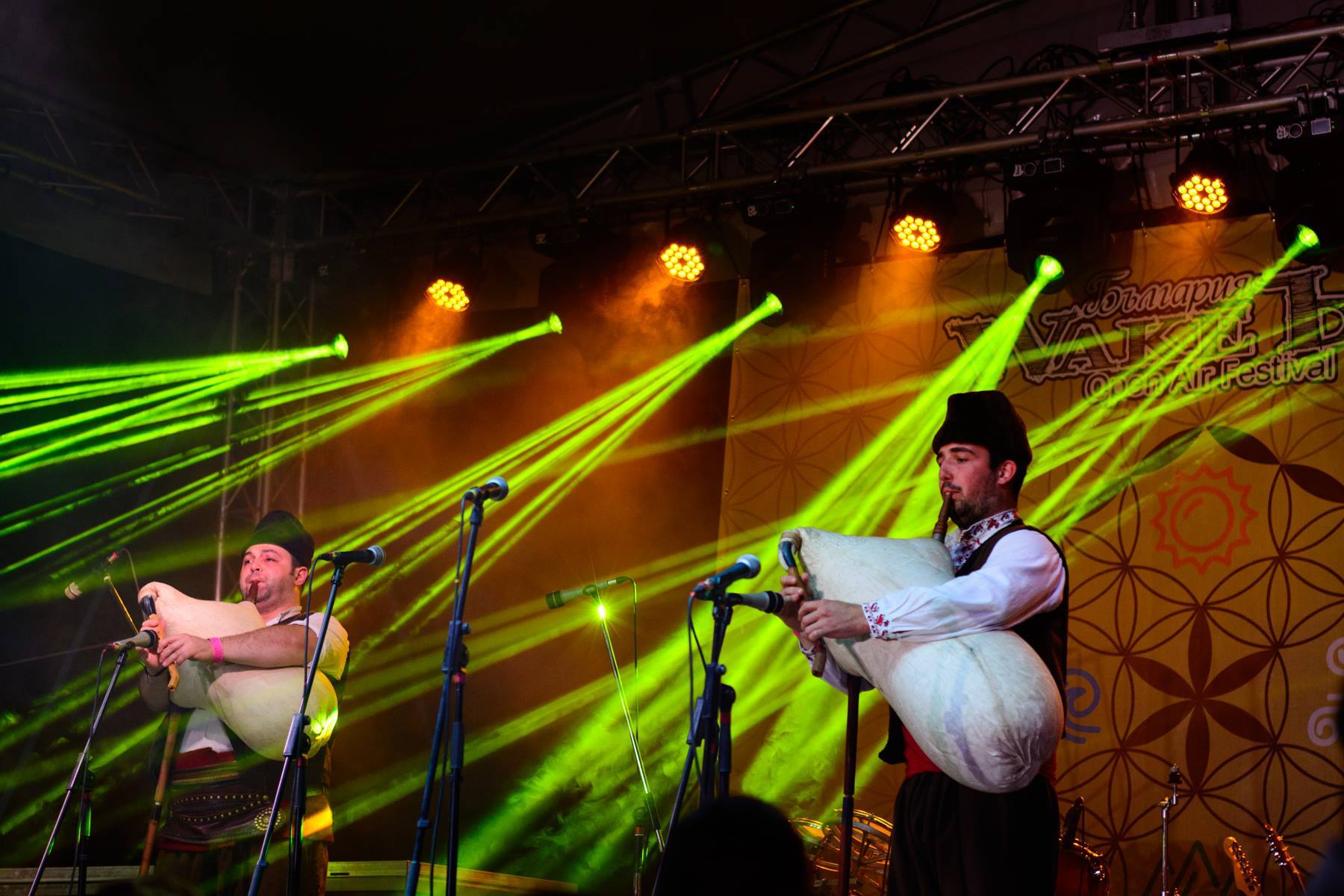
The gaida is the sound of Bulgaria for most Bulgarians I know, and in 2025 UNESCO added bagpipes and bagpipe playing in Bulgaria to its heritage list. The Rhodope version, the kaba gaida, has its own massed ensemble, the "100 kaba gaidi".
The gadulka once came in a bass size too, and in most bands the double bass has taken its place.
Wedding bands are the loud end of Bulgarian folk. They add clarinet, accordion, violin and guitar to the old instruments, and play fast enough to wear out a horo line. Thrace was a centre of this wedding music, and the clarinettist Ivo Papazov is one of the players who made its name. It stayed underground until 1986, when the village of Stambolovo held its first wedding music festival, and that festival became an event every two years.
The horo, Bulgaria's folk dance
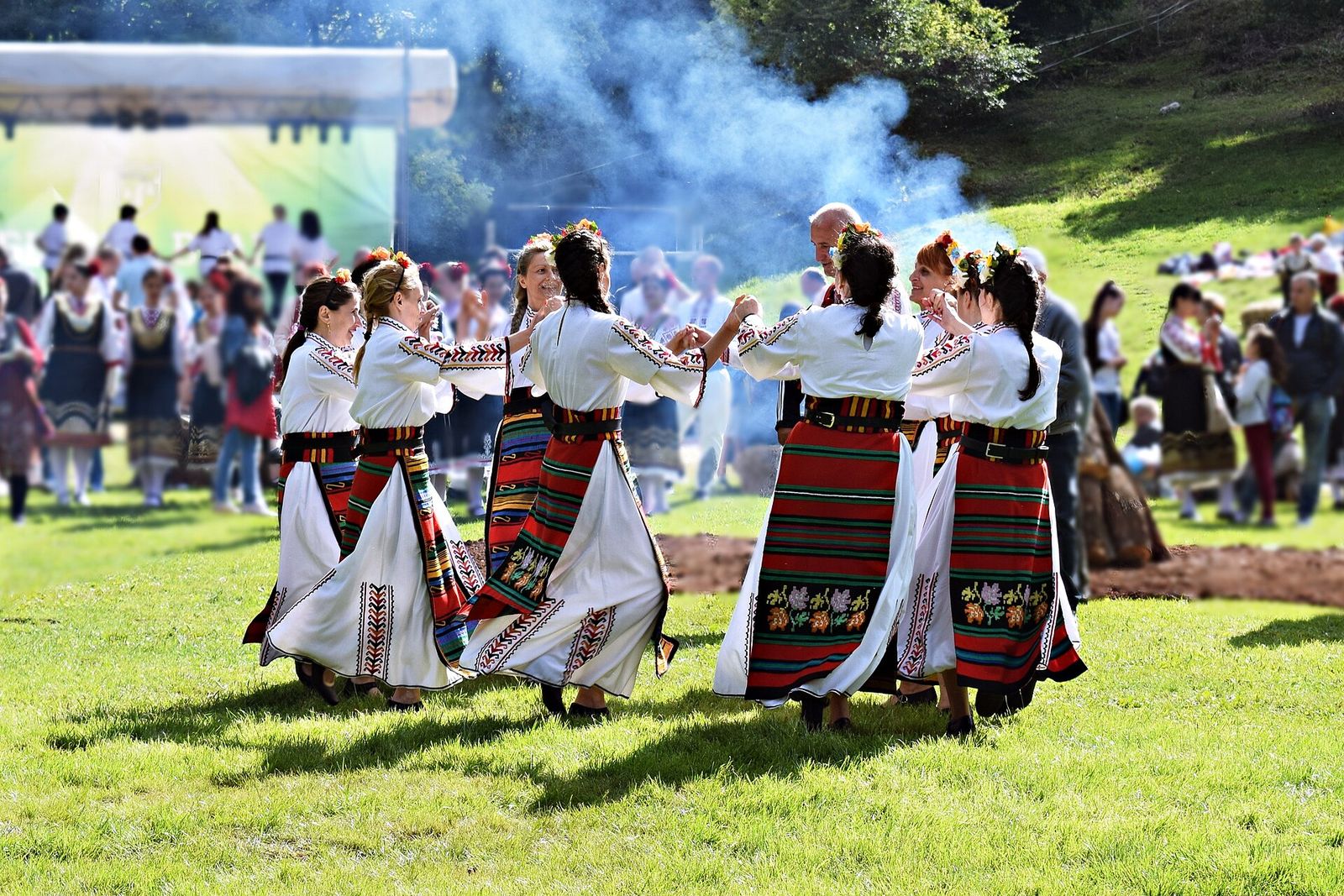
The horo (хоро) is a line or open circle of dancers holding hands, or holding the belt of the person beside them, stepping together to the band. Each region has its own horo, with its own steps and rhythm, and depending on the type a horo moves three to eight steps forward and one to six back. The simplest take five to ten minutes to learn. Others take real practice.
Pravo horo, the straight horo, is the one to start with: an even beat and a short pattern that repeats until the band stops. The rachenitsa is the fast one, in seven. You'll see a horo at weddings and village fetes (събор, sabor), and sometimes at folk dinners in Sofia when a table gets up to dance.
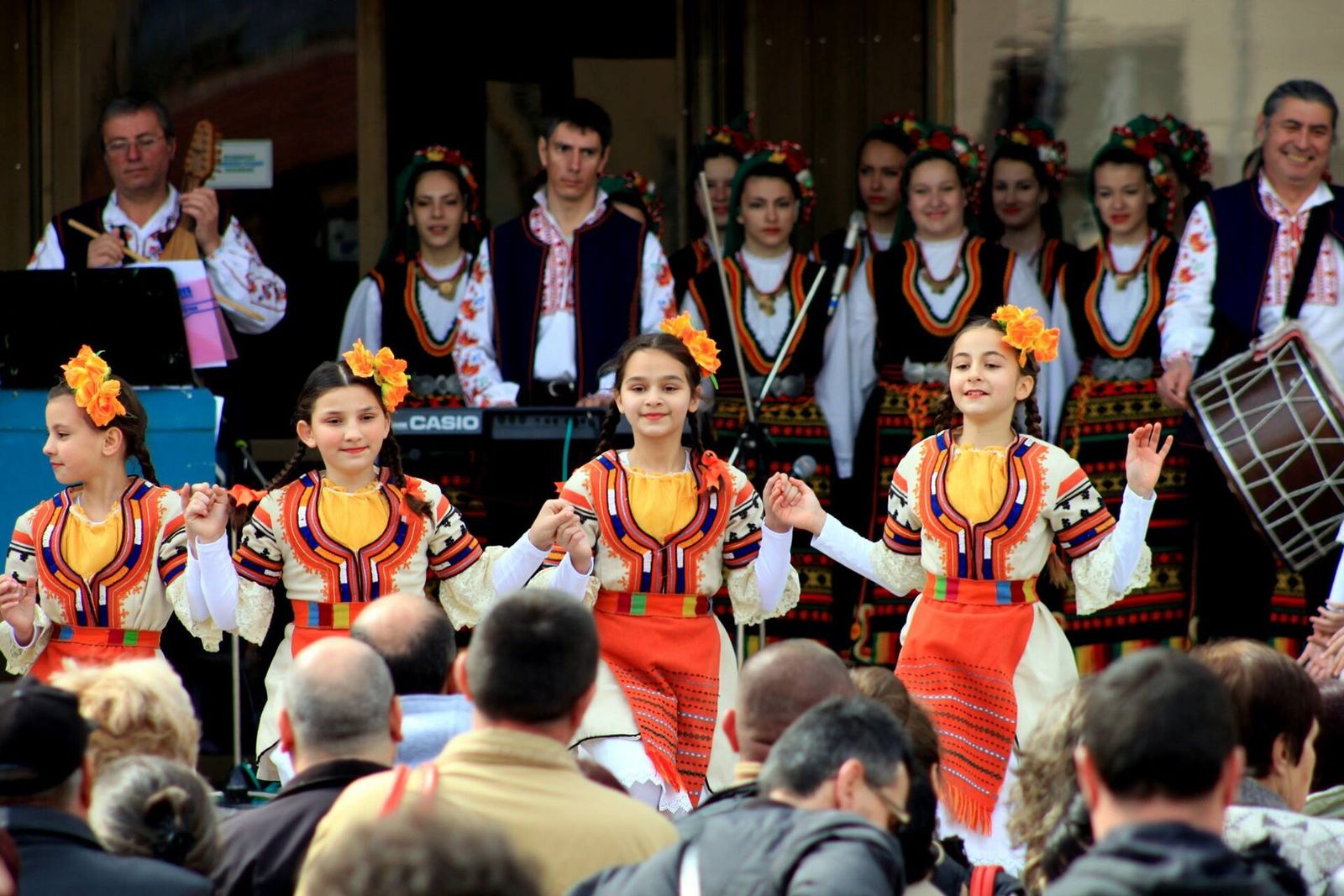
Folk music and chalga: how Bulgarians tell them apart
Chalga is Bulgarian pop-folk: folk melodies with Greek, Serbian, Turkish, Romani and Arabic influences over a club beat. Bulgarians draw a firm line between it and folk music, and plenty of them will tell you they can't stand it. The two still meet on the dance floor, because a folk number from the singer in one of the chalga clubs in Sofia can pull a horo line out between the tables.
For folk in its old form, with the gaida and the kaval and no synths, book a mehana.
Where to hear Bulgarian folk music in Sofia
The easiest way to hear folk music in Sofia is over dinner in a mehana, a Bulgarian tavern, with a band in the corner. The two Hadjidraganov restaurants share owners and a name, and between them there's a live folk band every night of the week.
Hadjidraganovite Izbi
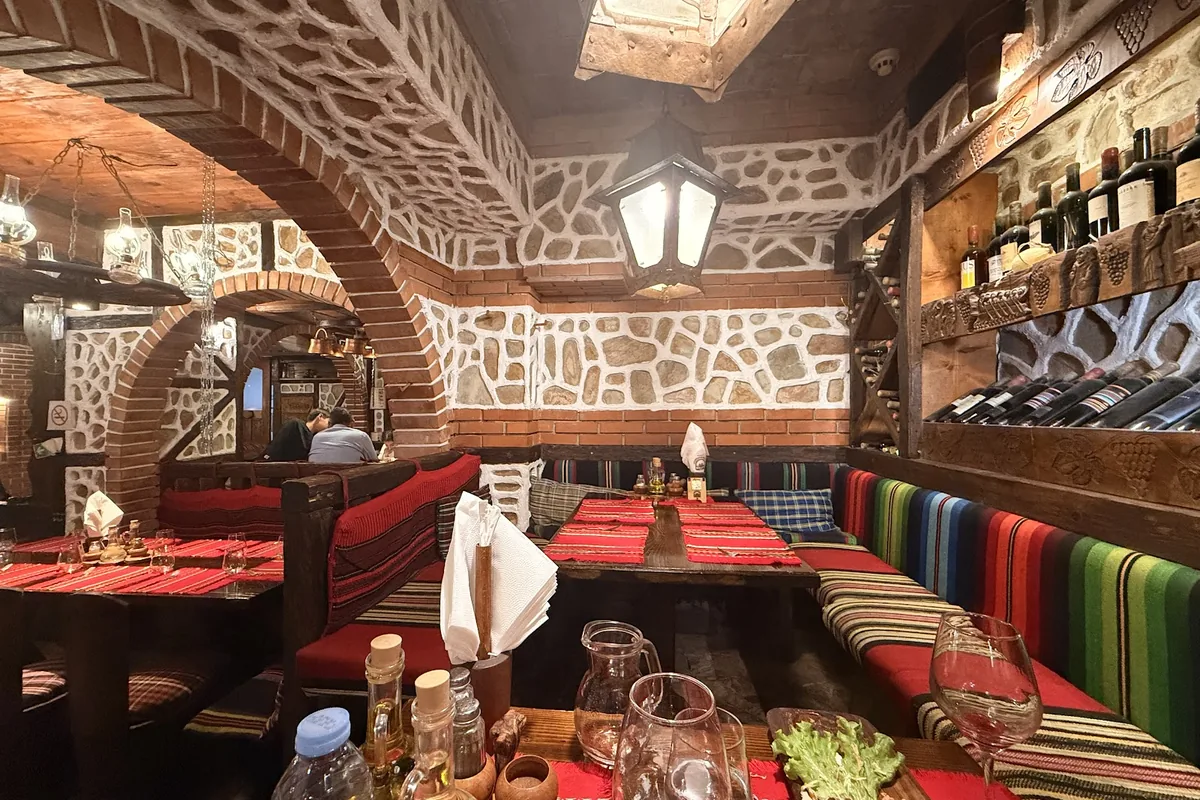
Hadjidraganovite Izbi (Хаджидрагановите изби), Hadjidraganov's Cellars, is at 18 Hristo Belchev Street, on the corner with Solunska Street, a short walk off Vitosha Boulevard. A live folk band plays every evening except Monday, and on weekdays there's a lunch menu too.
It's the one I book for friends on their first night. I order a shopska salad and a small glass of rakia, the fruit brandy, and sip it slowly with the salad while the band tunes up. Book on 0898 775 936 or at izbite.com.
Hadjidraganovite Kashti
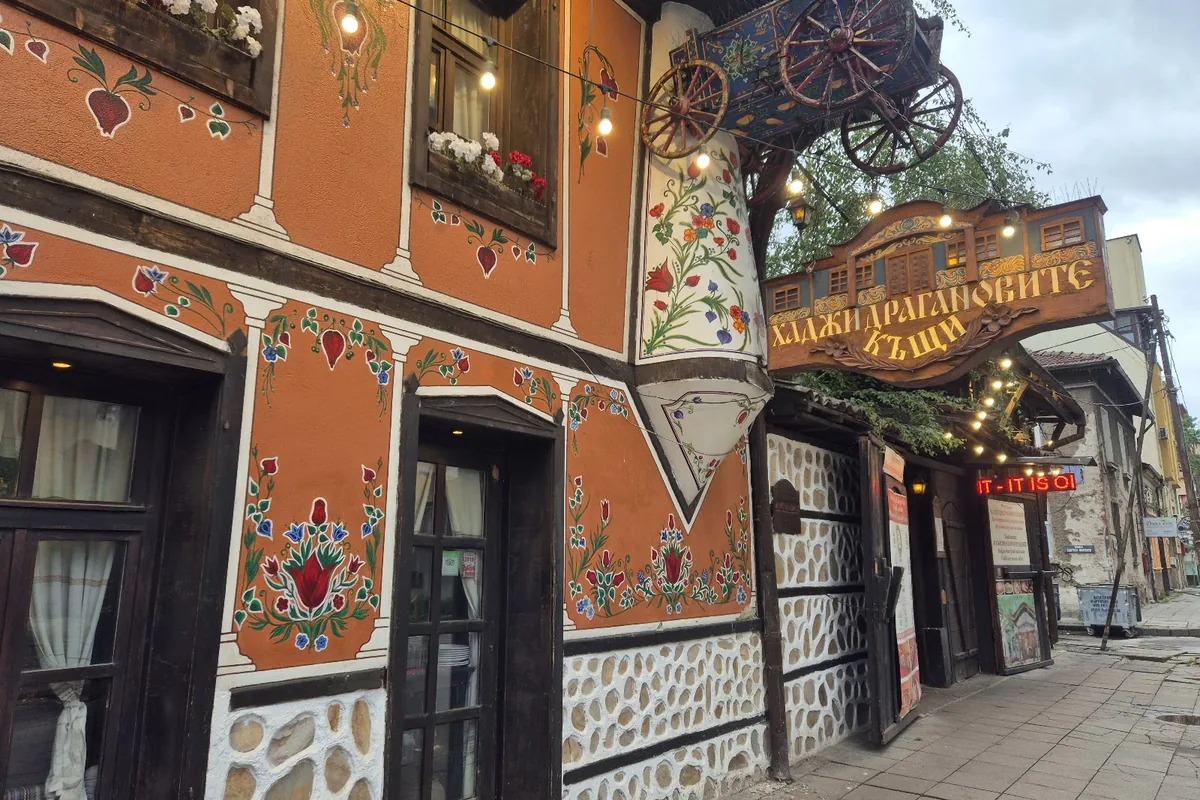
Hadjidraganovite Kashti (Хаджидрагановите къщи), the Houses, stands north of the centre at 75 Kozloduy Street, by the junction with Maria Luiza Boulevard near Lion's Bridge. Dinner is served in a set of Revival-era houses from 1866, and the band plays every evening except Tuesday, so it covers Izbi's night off. Book on 0899 917 837 or at kashtite.com.
National Ethnographic Museum
The National Ethnographic Museum shares the former royal palace on Knyaz Alexander I Square with the National Gallery, under ten minutes on foot from Serdika metro. Its rooms are full of regional folk costume and embroidery, the clothes horo dancers still wear on stage. I go before a folk night so I can tell a Shope costume from a Rhodope one.
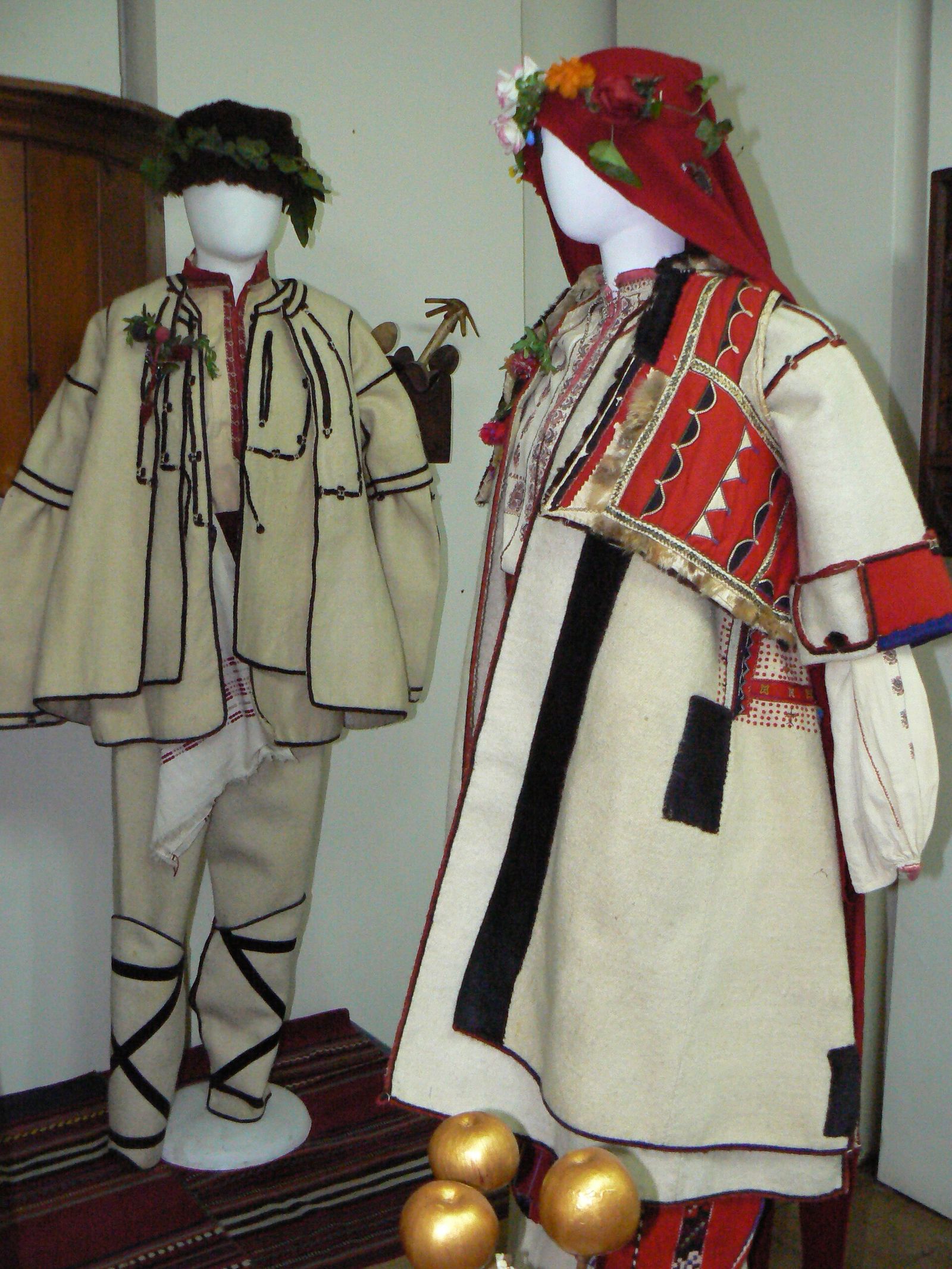
The museum shop sells Bulgarian embroidery by master craftspeople, the same kind of stitching you see on the costumes in the rooms. Of all the museums in Sofia, it's the one I pair with a folk evening. Hours and prices are on the museum's visitor page, which is in Bulgarian, so I run it through a translation app before I go.
Concerts by the national folk ensembles
The big folk ensembles play Sofia's concert halls. The Philip Kutev Ensemble, founded in Sofia in 1951 as the State Ensemble for Folk Songs and Dances, is the name I look for: songs, dances and a band in one show. Its dates move, so I check the ticket listings about a month before a trip. When there's no folk date, I go for jazz at Sofia Live Club in the NDK underpass, my favourite of the live music venues in Sofia.
Bulgarian folk festivals within reach of Sofia
Bulgaria's main folk festivals happen outside the capital, and two of them are an easy trip from Sofia by train or bus. These are the folk dates I'd plan around, while saints' days and public holidays fill the rest of the Bulgarian festival calendar.
| Festival | Where | When | From Sofia |
|---|---|---|---|
| National Folklore Festival | Koprivshtitsa | A weekend in August, in festival years | 110 km east, by train and minibus |
| Surva, the masquerade games | Pernik | Late January | 30 km south-west |
| Nestinarstvo, dancing barefoot on embers (UNESCO, 2009) | Bulgari, in the Strandzha mountains | 3 and 4 June, the feast of Saints Constantine and Helena | The far south-east, near the Turkish border |
Koprivshtitsa National Folklore Festival
Roughly every five years since 1965, the National Folklore Festival (Национален събор на българското народно творчество) has filled the meadows above Koprivshtitsa. Village groups from every corner of Bulgaria bring their own costumes, songs and dances to open-air stages over a weekend in August, and UNESCO added it to its register of good safeguarding practice in 2016.
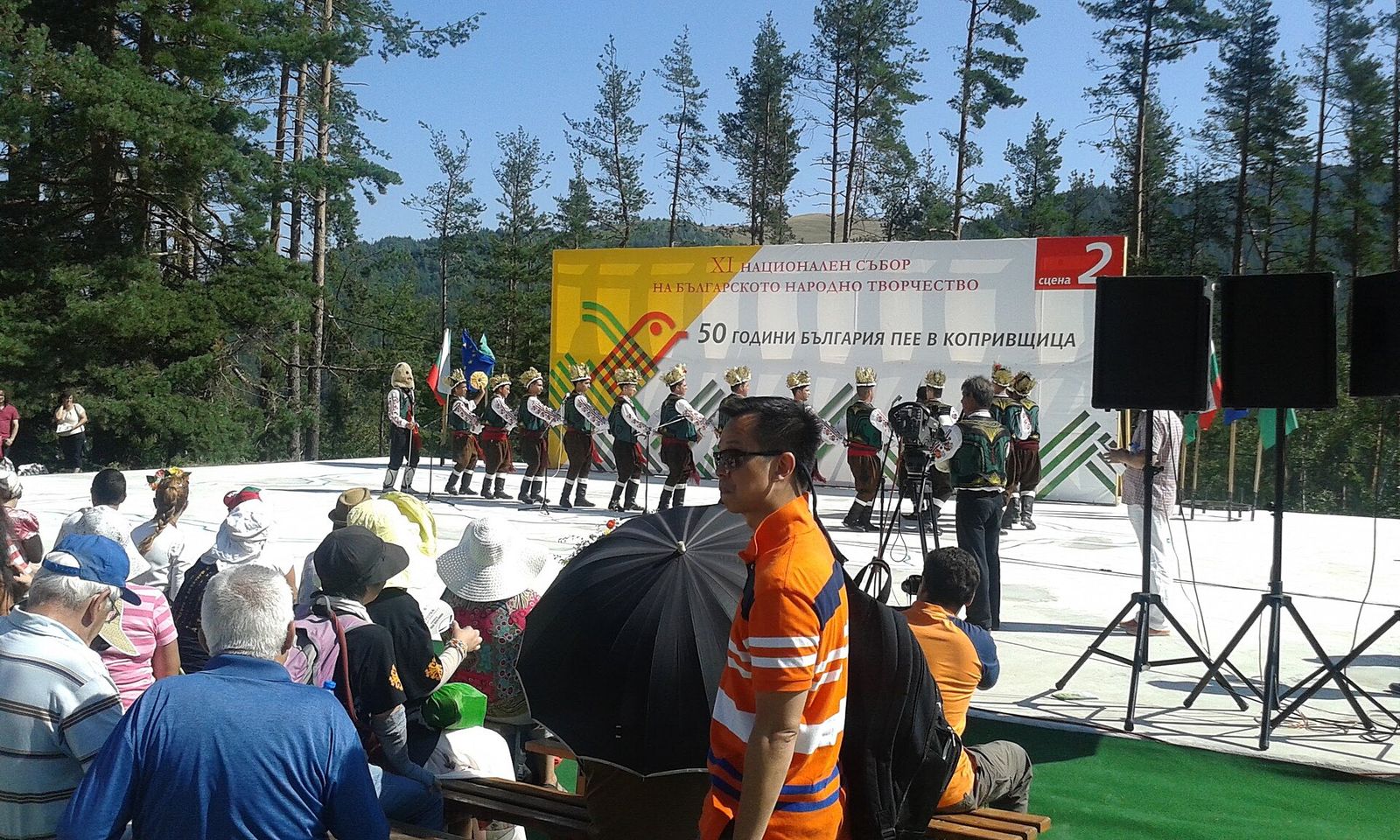
The direct train from Sofia takes about 2 hours for about €4, and a minibus timed to the trains covers the 8 km from the station into town for about €2 in cash. In a festival year I'd book a room in town months ahead.
Surva and the kukeri dances in Pernik
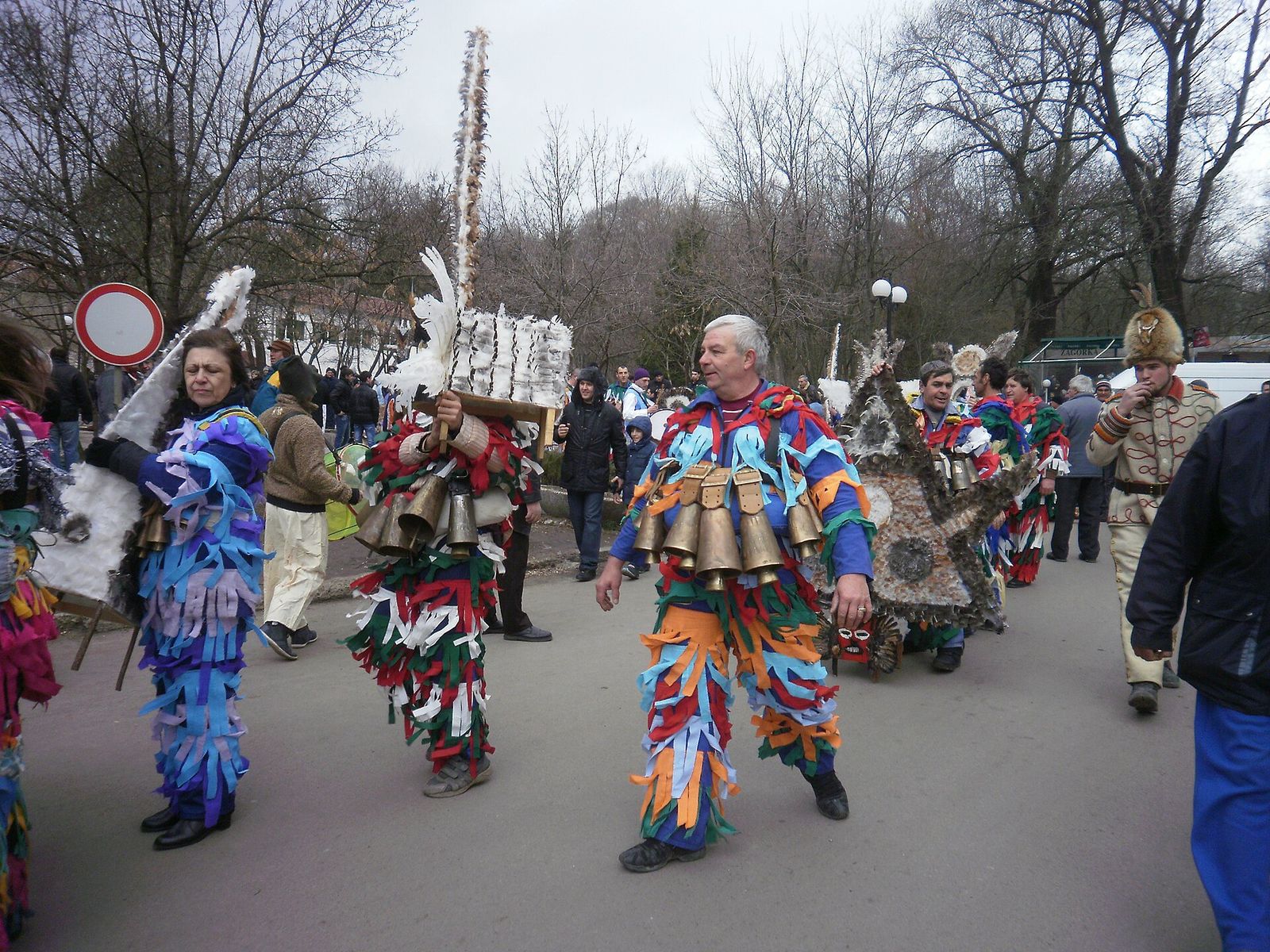
Surva is the winter festival of kukeri, the masked dancers in fur or rag costumes, carved masks and heavy bells who dance to chase away evil spirits and bring good luck. Pernik hosts the biggest gathering, and in 2026 the 32nd edition ran over two weekends in late January. UNESCO listed the Surova folk feast of the Pernik region in 2015.
A folk Saturday in Sofia: my plan
On a weekend in Sofia, I give folk music the Saturday and leave Friday for bars.
| Time | What I'd do |
|---|---|
| 3pm | National Ethnographic Museum: the costume rooms, then the shop for embroidery |
| 5pm | Walk south through the centre towards Vitosha Boulevard |
| 7.30pm | Table at Hadjidraganovite Izbi, shopska salad and a rakia |
| 8pm to 11pm | The folk band, and a horo if a table gets up |
If the date lands in late January, I'd add a day trip to Surva in Pernik, and in a Koprivshtitsa festival year I'd give the festival its own weekend.
Key takeaways
- Bulgarian folk music counts in 2s and 3s, which is why dances come in 5, 7, 11 and 15 beats to the bar.
- Listen for the gaida, the kaval, the gadulka, the tambura and the tapan, and for close two-voice Shope singing from the villages round Sofia.
- The horo is a line of linked hands: join at the end and copy the feet beside you.
- In Sofia, the Hadjidraganov restaurants put on a folk band with dinner every night, and the Ethnographic Museum shows the costumes for €5.
Frequently asked questions
What is the Bulgarian folk dance called?
The Bulgarian folk dance is the horo (хоро), a line or open circle of dancers holding hands or belts. There are regional versions with different steps and rhythms, from the steady pravo horo to the fast rachenitsa in seven.
What instruments are used in Bulgarian folk music?
The main instruments are the gaida (bagpipe), the kaval (end-blown flute), the gadulka (a fiddle held upright), the tambura (a long-necked lute) and the tapan (a big drum). Wedding bands add clarinet, accordion, violin and guitar.
Why is Bulgarian music in odd time signatures?
Bulgarian dance tunes combine short beats and long beats, grouped as 2s and 3s, and the totals come out odd. A rachenitsa is 2+2+3, seven beats, and a kopanitsa is 2+2+3+2+2, eleven beats. The steps of each dance follow the same groups.
Where can I see folk dancing in Sofia?
The easiest place is a folk dinner at Hadjidraganovite Izbi or Hadjidraganovite Kashti, where a band plays from 8pm to 11pm and diners sometimes get up for a horo. For a full stage show, look for the Philip Kutev Ensemble on Sofia's concert listings.
What is Le Mystère des Voix Bulgares?
Le Mystère des Voix Bulgares is a series of albums by the Bulgarian State Radio and Television Female Vocal Choir, first released in 1975 by the Swiss producer Marcel Cellier. The UK label 4AD reissued it in 1986, and the second volume won a Grammy in 1990.
Is chalga Bulgarian folk music?
No. Chalga is pop-folk, built on folk melodies with a club beat and Greek, Serbian, Turkish, Romani and Arabic influences, and Bulgarians keep it in a separate box from folk music.
Can tourists join a horo?
Yes. Join at the end of the line, hold hands with the dancer beside you and copy their feet; the simplest horo takes five to ten minutes to pick up, and nobody expects a visitor to get it right first time.
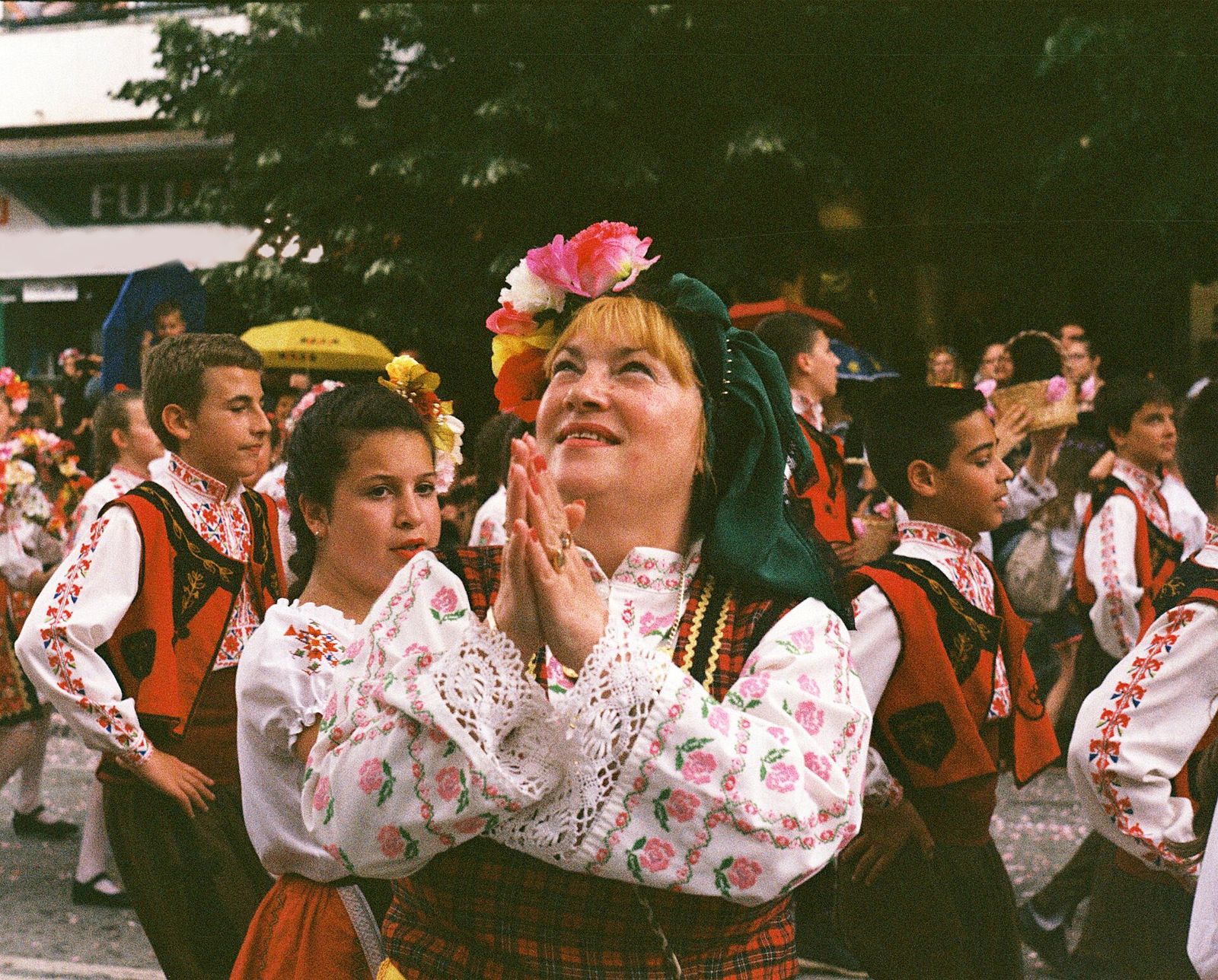
Bulgarian Culture and Traditions: A Visitor's Guide
Nods that mean no, rakia sipped with salad and masked kukeri: the Bulgarian customs I'd want you to know before a trip.
Read the guide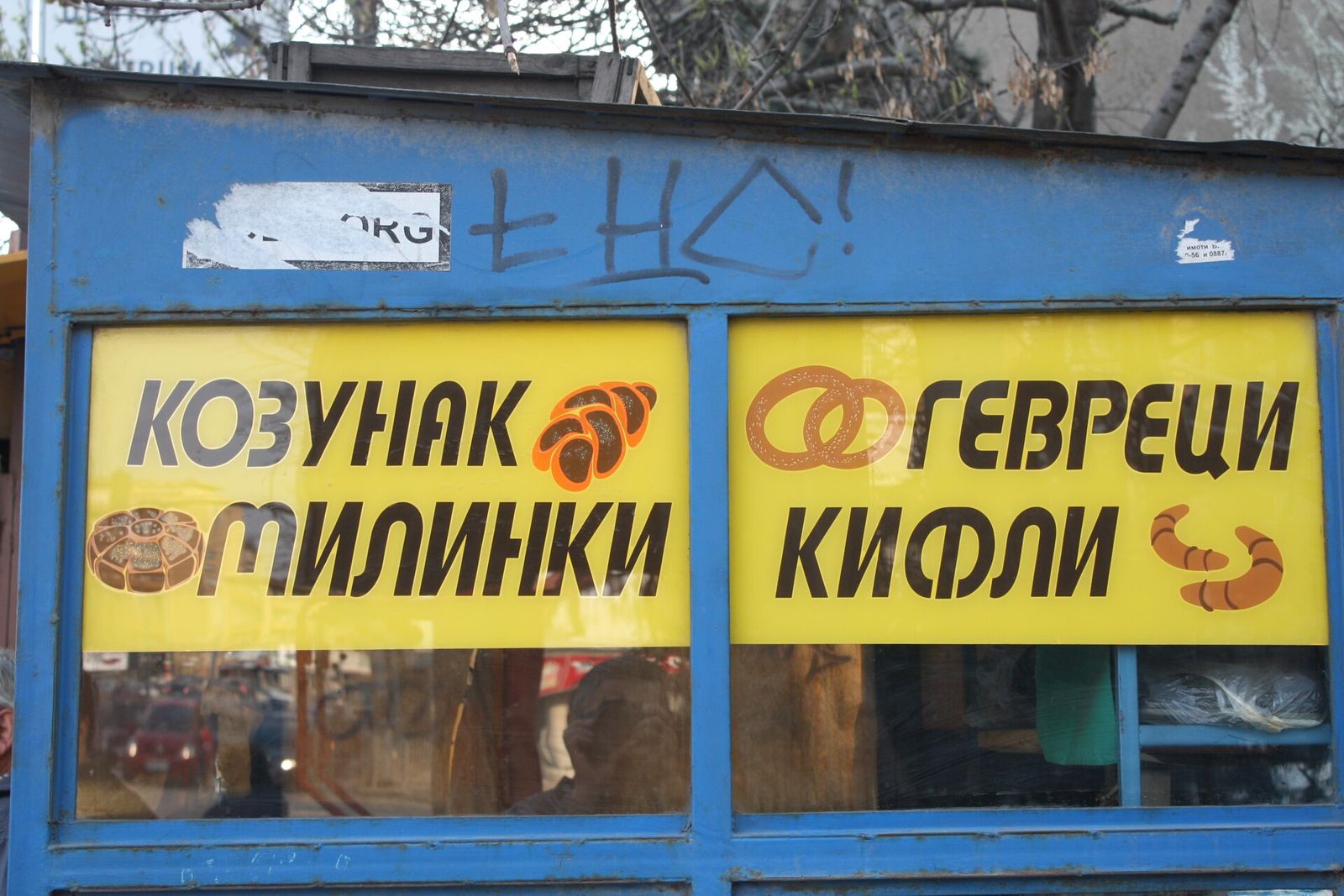
Bulgarian Phrases for Travellers: The Words I Use Every Day in Sofia
Hello, thank you, cheers and the bill: the Bulgarian words I use every day in Sofia, and how to say each one.
Read the guide
A Short History of Bulgaria (and Where to See It in Sofia)
Thracian gold to the euro: Bulgarian history era by era, and the Sofia sights where I see each chapter.
Read the guide