Buzludzha Monument: My Guide to Bulgaria's Communist UFO
Buzludzha is the concrete flying saucer of Bulgarian communism, parked on a bare peak in the Balkan Mountains since 1981 and abandoned since the regime fell. It's the strangest building I've seen in Bulgaria, and I still think it's worth the drive even though you can't go in. Here's its story, what you see from outside in 2026, how I get there from Sofia and how I fill the rest of the day at Shipka and Kazanlak.
What is the Buzludzha Monument?
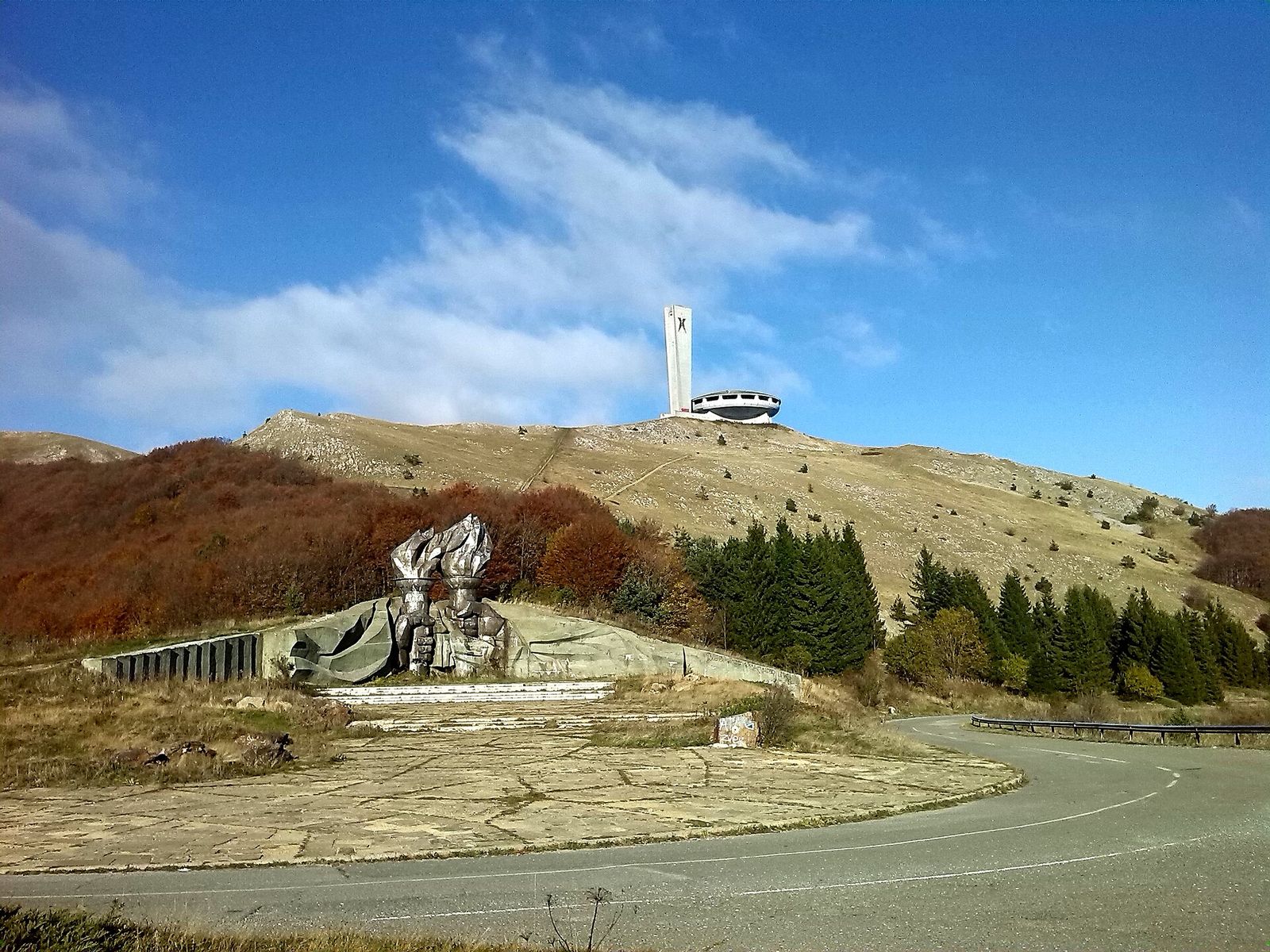
The Buzludzha Monument is the House-Monument of the Bulgarian Communist Party, a round concrete hall with a tower beside it on Buzludzha Peak in the central Balkan Mountains. From the road below, the hall looks like a grey saucer that has landed on the ridge, and the mountains fall away on every side of it.
Long before the saucer, in 1868, the rebel leader Hadzhi Dimitar fought his last battle against Ottoman troops on this peak. In 1891 Dimitar Blagoev gathered a group of socialists on the summit in secret and founded the Bulgarian Social Democratic Party, the forerunner of the Communist Party, and the monument was built to mark that meeting.
Work began on 23 January 1974. Builders blasted more than 15,000 cubic metres of rock off the summit, which took it down from 1,441 to 1,432 metres. The architect was Georgi Stoilov, a former mayor of Sofia. Bulgaria's communist party opened it on 23 August 1981, the same year Sofia got NDK, its giant palace of culture, at the end of Vitosha Boulevard.
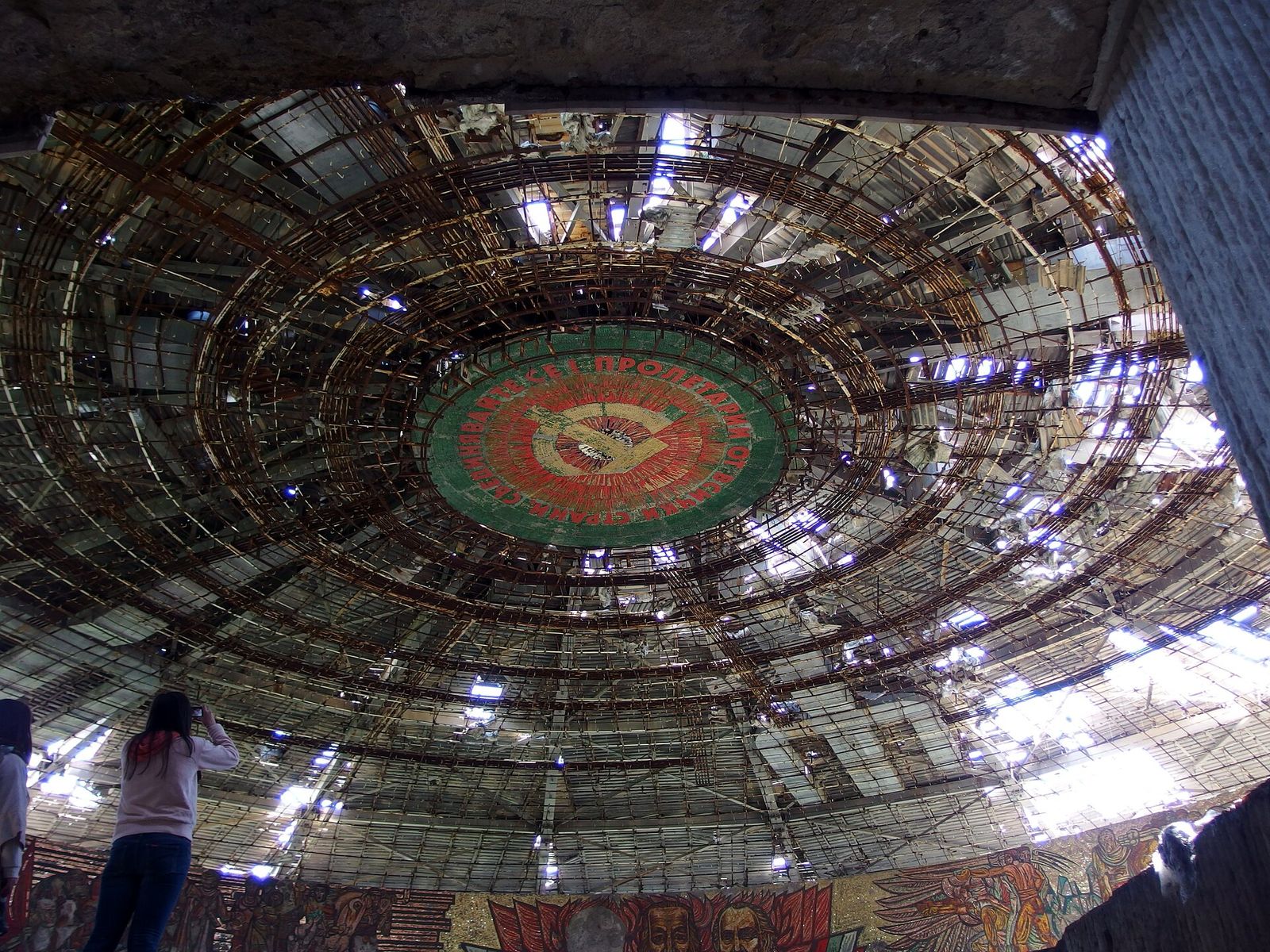
Inside, about 937 square metres of mosaics covered the walls of the main hall. Marx and Lenin got the biggest panels, and the centre of the ceiling carries a hammer and sickle ringed by the slogan "Proletarians of all countries, unite!"
Why was Buzludzha abandoned?
Buzludzha was abandoned because the regime it celebrated collapsed. Communist rule in Bulgaria ended in late 1989, and all maintenance on the monument stopped that year. Through the 1990s the building was looted and left open to the weather, and about a fifth of the mosaics have since been lost to age, weather and vandalism.
In Sofia the regime's statues came down, and many of them now stand in the garden of the Museum of Socialist Art, with the red star from the Party House at the entrance. Buzludzha was far too big to move, so it stayed on its hill and slowly fell apart.
Can you go inside Buzludzha in 2026?
No. Entry is strictly prohibited for safety, every entrance is sealed and a police box stands by the monument, but the ground around it is open and free to walk.
The Buzludzha Project Foundation, set up in 2015 by the architect Dora Ivanova, is working to save it. In 2018 Europa Nostra named Buzludzha one of the 7 most endangered heritage sites in Europe, and conservation started in 2019 with ICOMOS Germany. Grants from the Getty Foundation paid for a conservation plan and then, in July 2020, for emergency work to stabilise the surviving mosaics. The foundation's long-term aim is to reopen the building as a centre about Bulgarian history.
Is Buzludzha worth visiting?
Yes, if you have a car and a soft spot for odd buildings, recent history or mountain roads. It's the day out I pick when visiting friends have had their fill of monasteries, and I'd put it in any first week in Bulgaria with a hire car. Of my day trips from Sofia, it's one that really needs wheels, so on a train-only weekend I'd do Plovdiv or Koprivshtitsa first.
It suits:
- Concrete and architecture fans: Stoilov's saucer and tower are the first building in Bulgaria I'd send them to.
- History readers: 1868, 1891 and 1981 all happened on this one summit.
- Drivers: the Shipka Pass road and the side road up give you hairpins, beech forest and a ridge-top finish.
- Photographers: a clear morning puts the saucer against blue sky with the Balkan ridges behind.
Skip it if:
- You're without a car on a short weekend, since train plus taxi works but costs you most of 2 days.
- The mosaics are the reason you want to go, because they're behind sealed doors.
- Your trip falls in deep winter, when I wouldn't count on the side road being open.
How to get to Buzludzha from Sofia
Buzludzha (Бузлуджа on the road signs) sits in the Balkan Mountains north of Kazanlak, east of the Shipka Pass. No bus goes up, so the choice is a hire car or a train to Kazanlak and a taxi.
| Hire car | Train and taxi | |
|---|---|---|
| Leaves from | Sofia Airport or the city | Sofia Central Railway Station |
| Route | East along the valley road to Kazanlak, north up the Shipka Pass road, then a side road | Train to Kazanlak, then a taxi up the pass road and the side road |
| The climb | 16 km of side road from the Kazanlak side, or 12 km from the Gabrovo side | The same 16 km side road, in the taxi |
| As a day trip | Yes, with an early start | Only with a night in Kazanlak |
| Best for | Buzludzha, Shipka and Kazanlak in one day | A slower trip without driving |
Driving to Buzludzha
I pick up a hire car at Sofia Airport and head east on the valley road through Pirdop, Karlovo and Kalofer to Kazanlak, with the Balkan range on the left and the Sredna Gora on the right. The trains stop in the valley at Kazanlak, at the foot of the mountain, so getting around Bulgaria by car is what turns Buzludzha into a day trip.
From Kazanlak the road runs north through the village of Shipka and climbs towards the Shipka Pass. Two side roads leave the pass road for Buzludzha: the southern one runs 16 km from the Kazanlak side, and the northern one runs 12 km from the Gabrovo side. I go up from Kazanlak, because it's the side I'm already on, and I park at the torches monument just below the summit.
Without a car: train to Kazanlak and a taxi
Trains from Sofia Central reach Kazanlak in about 3 hours. Trains in Bulgaria are slow, so I check the BDZ timetable the night before: the early trains decide whether the day works. From Kazanlak a taxi takes you up the pass road and the southern side road to the monument.
There's no taxi rank on the peak, so agree the return trip and an hour of waiting time with the driver before you set off. With 3 hours on the train each way, I'd sleep in Kazanlak: arrive in the afternoon, see the tomb and the Museum of Roses, then go up to Buzludzha first thing the next morning.
What you see at Buzludzha from outside
Just below the summit, the road curls past a monument of two giant fists gripping torches, set into a concrete wall beside a paved lay-by. The saucer sits on the hilltop above it, and a path runs straight up the grass between them. This is the view in the photo at the top of this page, and it's my favourite spot for a shot of the saucer and the tower together.
At the top you walk the ring of the saucer and stand under the tower, close enough to see the stains and cracks in the concrete. Turn round and the views run along the Balkan ridges to the east and west, and south over the Kazanlak valley towards the Sredna Gora. An hour covers the torches, the walk round and the photos.
Shipka Pass: Shipka Memorial Church and the Shipka Monument
The Shipka Pass road is your way up to Buzludzha from Kazanlak, and two stops on it fill the rest of my morning. Both belong to the Russo-Turkish War of 1877 to 1878, the war that freed Bulgaria from Ottoman rule.
Shipka Memorial Church
The Shipka Memorial Church, the Church of the Nativity, stands in the trees above the village of Shipka. It's a Russian-style church with gilded onion domes and a 53-metre belfry, built in memory of the Russian and Bulgarian soldiers who died in the war and opened in 1902, 25 years after the battles on the pass. Entry and parking are both free.
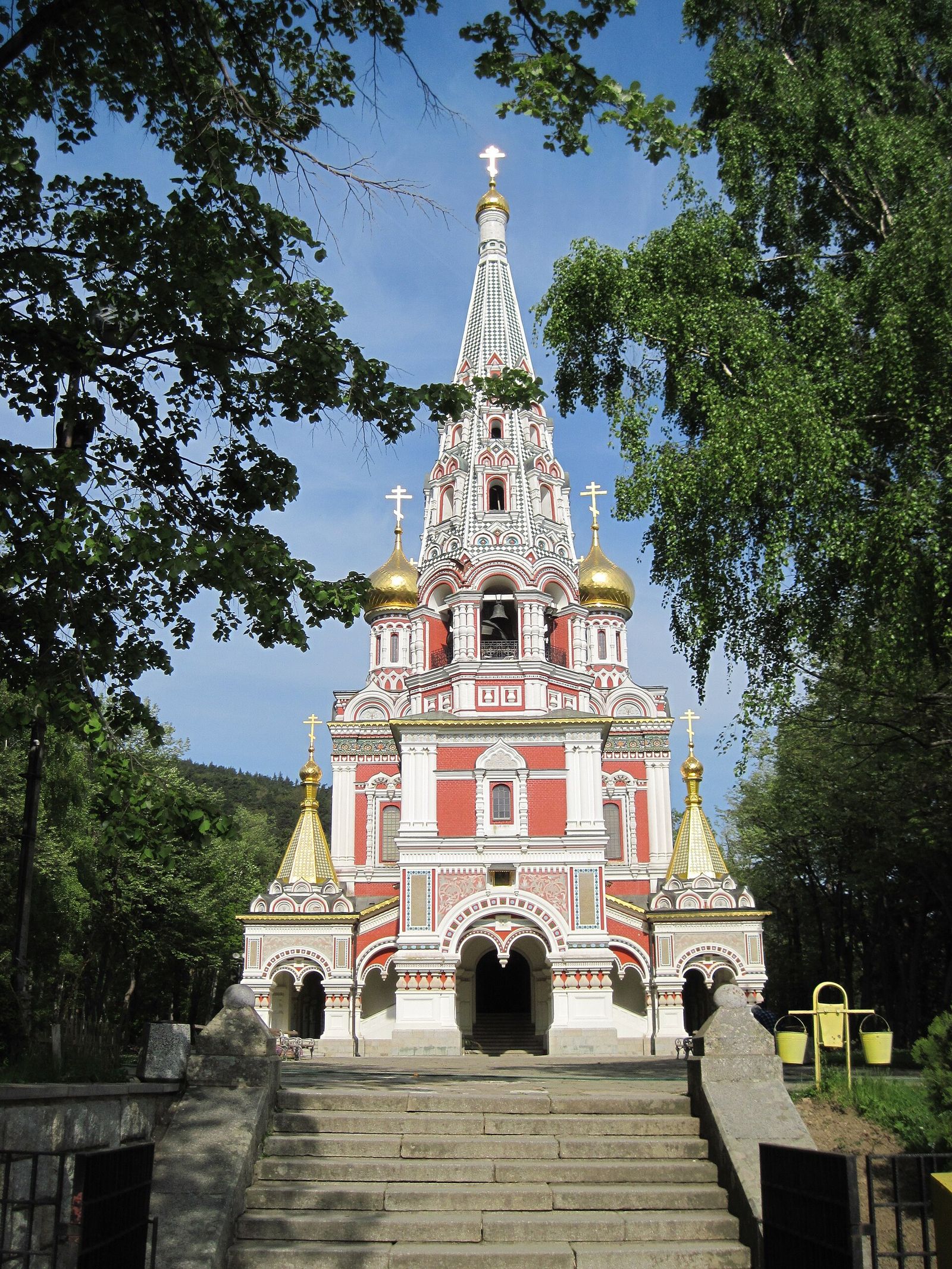
It's a working church, so cover shoulders and knees and keep your voice down inside. I give it 30 minutes, mostly for the outside and the steps up from the road.
Shipka Monument
At the top of the pass, the Shipka Monument, the Monument to Freedom, stands on Stoletov Peak: a 31.5-metre stone tower with a bronze lion guarding its entrance. It opened in 1934 and marks the battle of 1877, when Russian troops and Bulgarian volunteers held the pass against the Ottoman army.
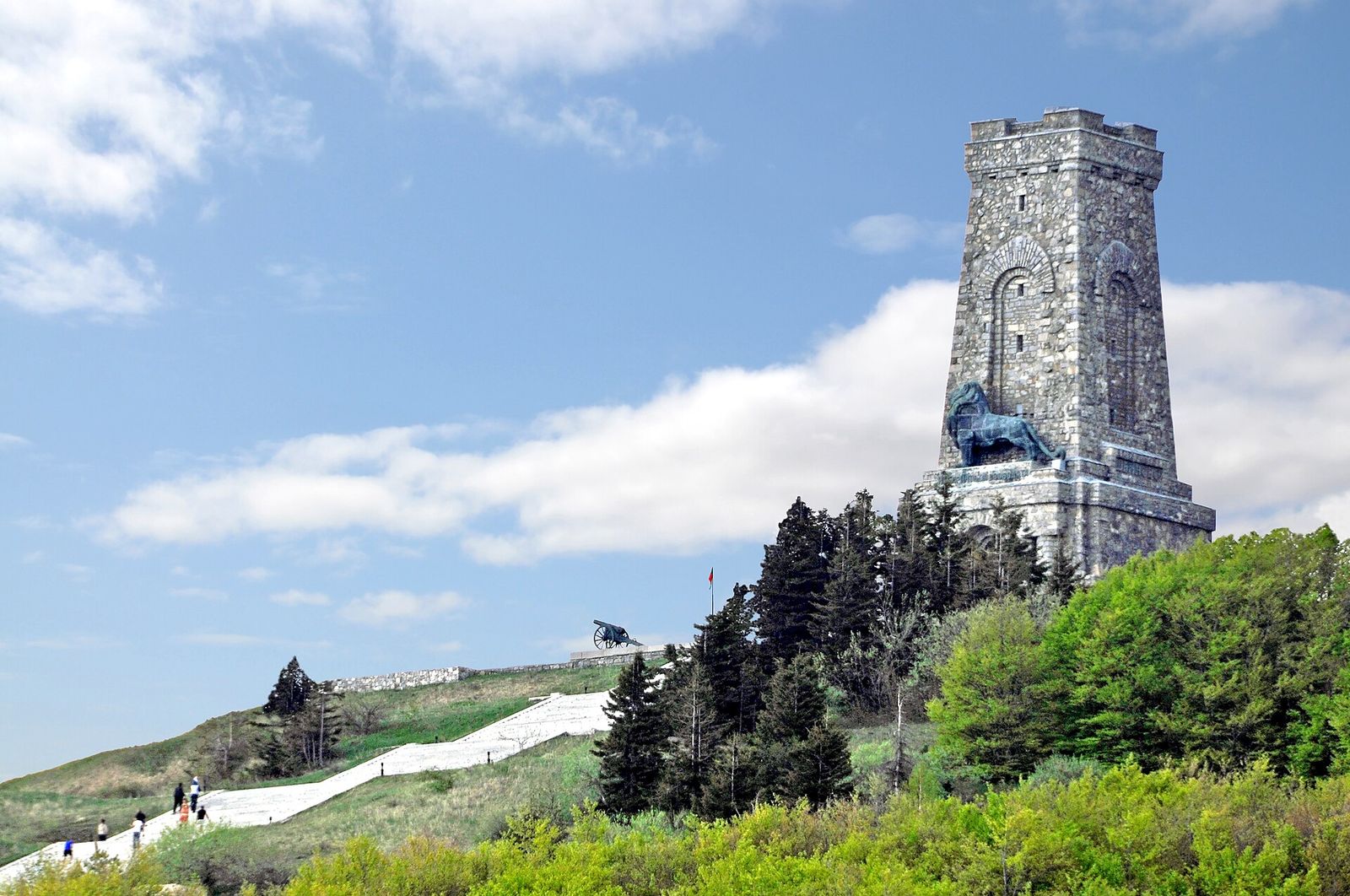
A long white staircase of 890 steps climbs from the road to the tower, and from the top the view runs down both sides of the Balkan range. Allow 45 minutes, most of it on the steps.
Kazanlak: the Thracian tombs and the Rose Valley
Kazanlak sits in the valley between the Balkan Mountains and the Sredna Gora, in the heart of the Rose Valley, and it's where I eat lunch and finish the day. The Thracians buried their kings and nobles in mounds across this valley, so the town's sights run from tombs to rose oil. The Iskra Historical Museum runs the sites below, all open daily.
| Site | What you see | Hours |
|---|---|---|
| Replica of the Kazanlak Thracian Tomb | A full-size copy of the painted 4th-century BC tomb | 9am to 5pm |
| Tomb of Seuthes III | A Thracian king's tomb inside the Golyama Kosmatka mound, outside Shipka village | 9am to 5pm |
| Museum of Roses | How rose oil is grown and distilled | 9am to 5.30pm |
| Iskra Historical Museum | Kazanlak's main history museum | 9am to 5.30pm |
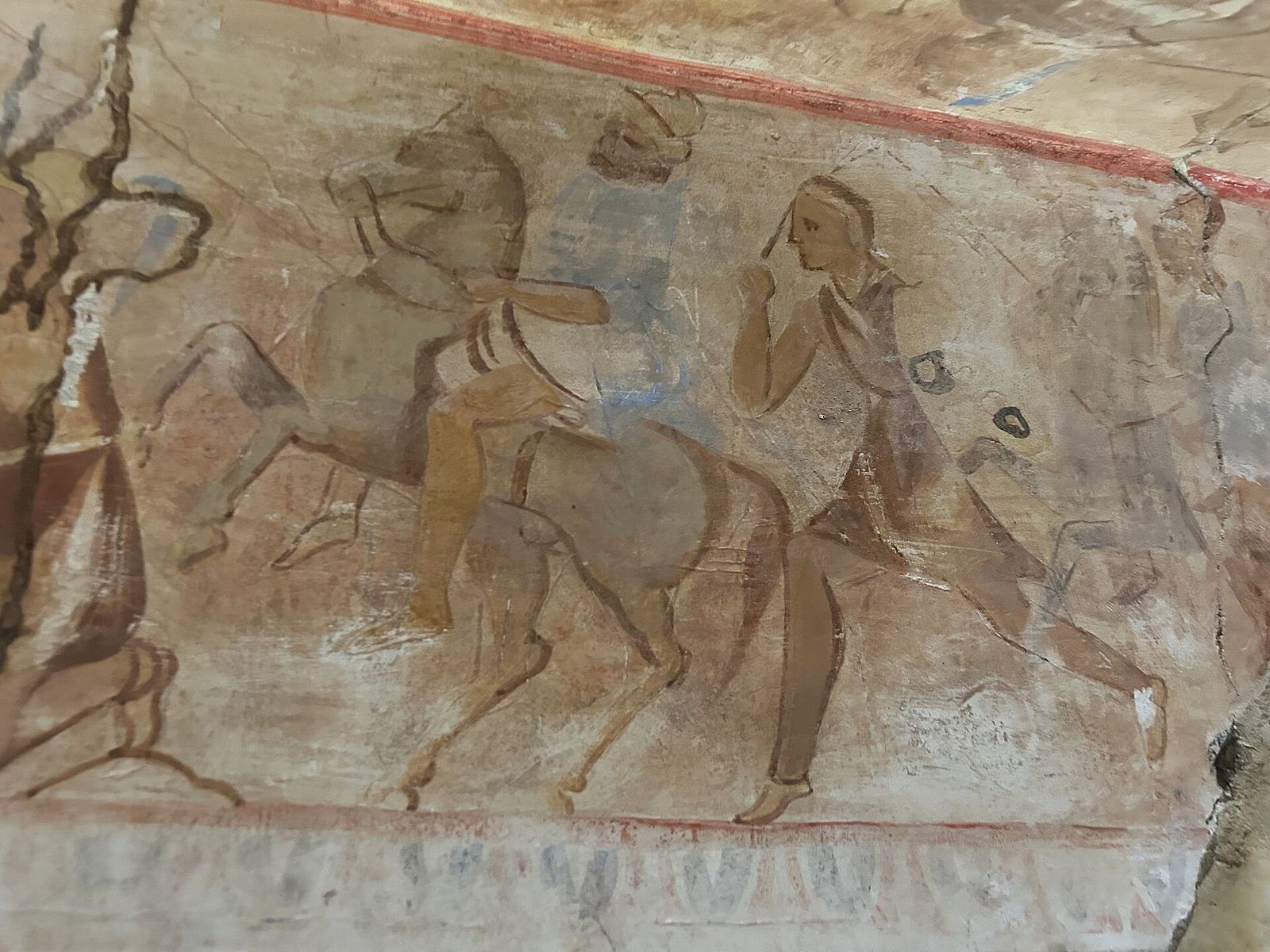
The Kazanlak tomb is the one I'd see if you only have time for one. A Thracian couple sit at their funeral feast on the walls, with horses and a chariot race around the dome, and the paintings date from the 4th century BC.
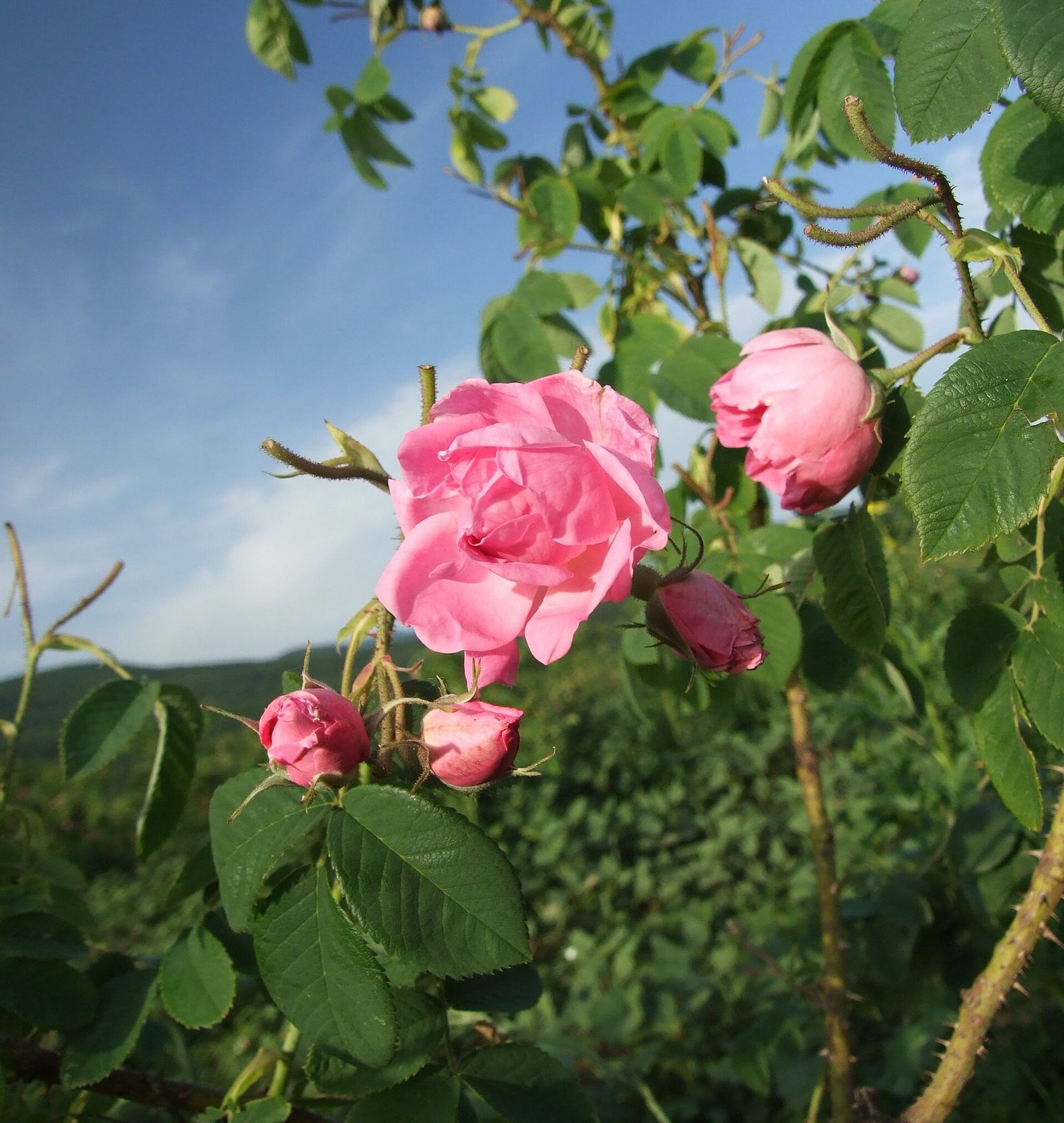
Kazanlak is also rose oil country. The Damask roses in the fields around town bloom from mid-May and are picked by hand for their oil, and the town's Rose Festival is traditionally held on the first weekend of June. Rose oil, rose water and rose jam are the Bulgarian souvenirs I buy here, a few kilometres from the fields they come from.
My Buzludzha day trip from Sofia by car
This is the day I'd drive with a friend who has one free day and a hire car. It runs uphill first, while the light is good on the pass, and saves Kazanlak's museums for the afternoon, since they shut at 5pm or 5.30pm.
| Stop | What I do there | Time I give it |
|---|---|---|
| Leave Sofia | East on the valley road through Karlovo | 7am start |
| Shipka Memorial Church | The domes, the steps and a look inside | 30 minutes |
| Shipka Monument | The staircase, the lion and the view from the pass | 45 minutes |
| Buzludzha | The torches, the walk round the saucer and the views | 1 hour |
| Kazanlak | Lunch, the tomb replica and the Museum of Roses | 2 to 3 hours |
| Back to Sofia | The same valley road west | Home in the evening |
With more time, I'd skip the drive back and keep going. The Shipka Pass road runs north over the mountains to Gabrovo and on to Veliko Tarnovo, the old capital, and that's how I'd build a first week in Bulgaria by car: Plovdiv, then Kazanlak and Buzludzha, then two nights in Veliko Tarnovo.
When to visit Buzludzha
May to October is when I go, the same months I'd pick as the best time to visit Sofia for a trip with mountain days in it. From mid-May the rose fields around Kazanlak are in bloom, and October turns the beech woods below the summit copper and red. In midsummer, start early, because the valley gets hot by the afternoon.
Key takeaways
- Buzludzha is sealed inside, so a visit is a free walk round the saucer and tower, with the torches monument below for the classic photo.
- By car, Kazanlak, the Shipka Pass road and the southern side road make it a day trip from Sofia with a 7am start.
- Without a car, take the train to Kazanlak, sleep there and take a taxi up the next morning.
- Go between May and October, do the mountain in the morning and keep the afternoon for Kazanlak's tombs and Museum of Roses before they close.
Frequently asked questions
Why was the Buzludzha Monument abandoned?
It was abandoned when communist rule in Bulgaria ended in 1989 and the state stopped maintaining it. Through the 1990s it was looted and left open to the weather, and the building is now closed because its structure is unsafe.
Can you go inside Buzludzha?
No. Entry is strictly prohibited and the entrances are sealed, so you can only walk round the outside. Conservation work started in 2019, and the surviving mosaics were stabilised with Getty Foundation money from 2020.
Was Bulgaria a communist country?
Yes. The communists took power in 1944, and the country was the People's Republic of Bulgaria from 1946 until 1990, a close ally of the Soviet Union. Buzludzha was the party's monument to its own founding in 1891.
What happened in 1989 in Bulgaria?
On 10 November 1989, the day after the Berlin Wall fell, the party removed Todor Zhivkov, who had led Bulgaria since 1954. The Communist Party gave up its monopoly on power soon after, and Bulgaria held free multi-party elections in June 1990.
How do you get to Buzludzha without a car?
Take the train from Sofia to Kazanlak, which takes about 3 hours, then a taxi up the Shipka Pass road and the side road. Agree the return trip and the waiting time with the driver before you leave, and sleep in Kazanlak so you're not racing the last train.
What is Bulgaria famous for?
Rose oil from the valley around Kazanlak, yoghurt, rakia and Rila Monastery are the four I'd name first. Thracian gold and tombs come next, and Buzludzha is the communist-era building visitors ask me about most.
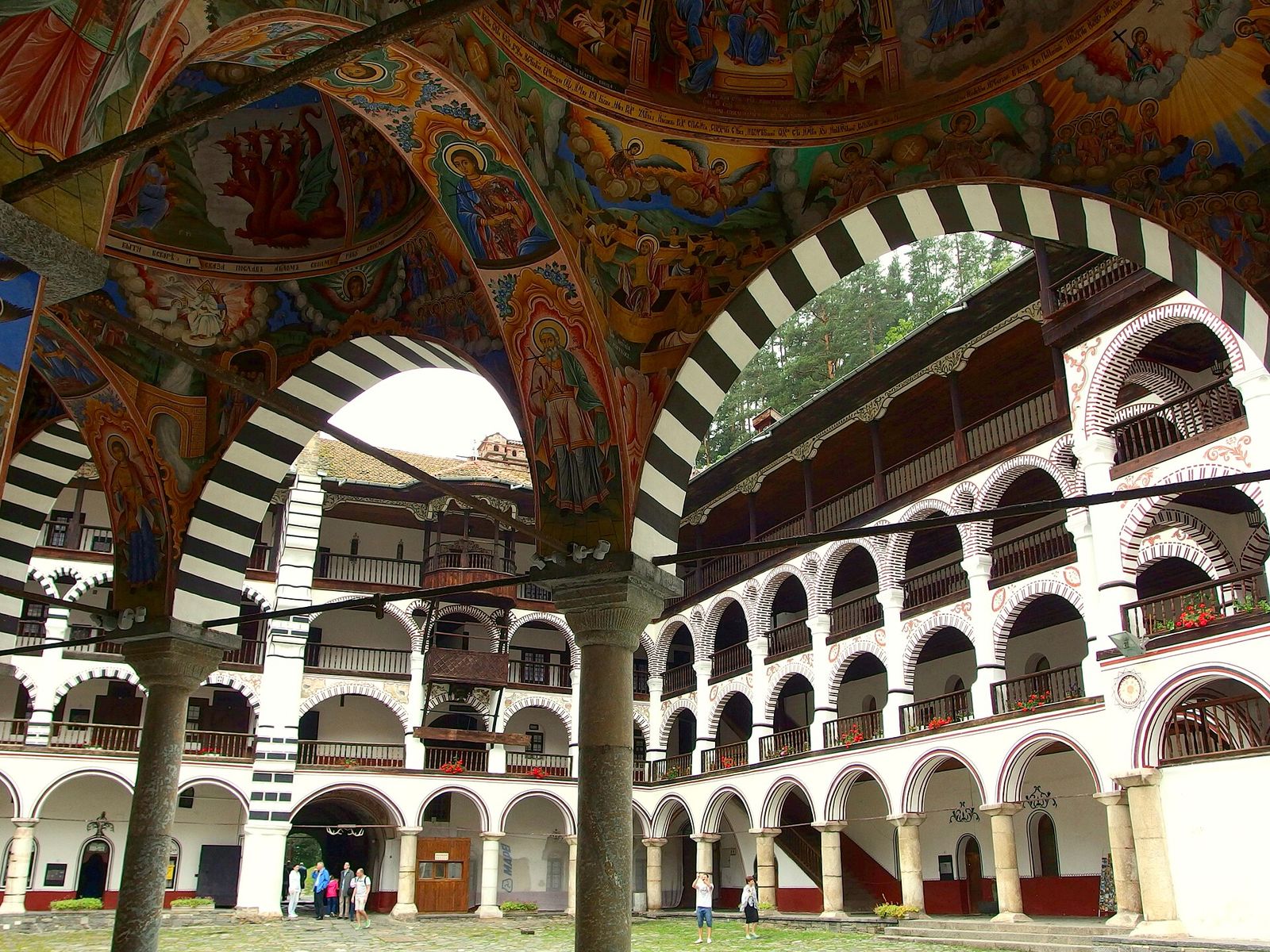
12 Best Day Trips from Sofia (and How I Get There)
My 12 favourite trips out of Sofia by bus, train and hire car, and the ones that deserve a night away.
Read the guide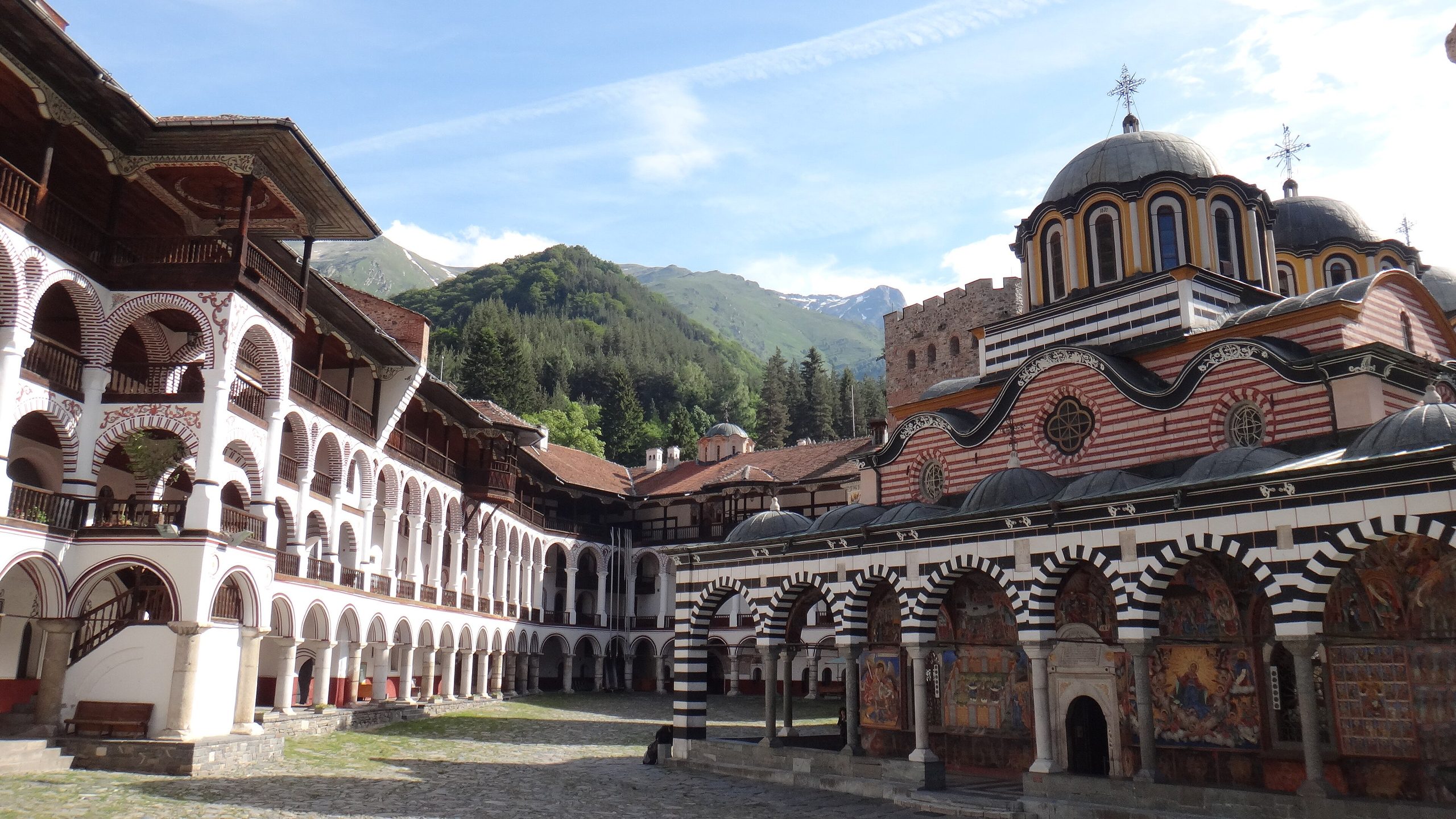
Rila Monastery Day Trip from Sofia: Bus, Car and Timings
Bulgaria's biggest monastery is free to walk into and 2 hours from Sofia. How I get there myself, and what to see.
Read the guide
Plovdiv Day Trip from Sofia: Bus, Train and My One-Day Route
Plovdiv by bus or train from Sofia, and the route I walk to fit the Old Town, the Roman theatre and Kapana into one day.
Read the guide